Lagos Portugal: The Complete 2026 Guide to the Algarve's Best Coastal Town
Lagos is the western Algarve's most beautiful town — cliffs, cove beaches, Ponta da Piedade, and the gateway to Benagil cave. Everything you need to plan a 2026 trip.
On this page
TL;DR: Lagos is the western Algarve's most beautiful coastal town and the single best base for a first Portugal south-coast trip in 2026. Plan three to five days. Stay inside the old-town walls or near Meia Praia. Walk the Ponta da Piedade clifftop early, swim at Praia Dona Ana or Praia do Camilo, take a speedboat or kayak tour to Benagil cave, and add a day trip to Sagres or Silves. Travel May–June or September for the best balance of warm sea, full opening hours, and shoulder-season prices (typically 30–50% below August).
If you only have time for one stop on Portugal's south coast in 2026, make it Lagos. The western Algarve's unofficial capital is, quite simply, the most beautiful town on the entire coastline — a walled medieval old town where whitewashed houses spill toward a working marina, hemmed in by golden sandstone cliffs that the Atlantic has spent millennia sculpting into arches, sea caves, and improbable rock stacks. The cove beaches here, tucked between ochre bluffs and reached by wooden staircases, look like they belong in a travel brochure because half the Algarve's brochures were actually shot here.
Lagos sits about 90 km west of Faro airport (FAO), making it one of the most accessible corners of the Algarve for international visitors. It is compact enough to walk across in twenty minutes, historic enough to keep you busy for days, and perfectly positioned as a base for exploring the rest of the west Algarve — including the world-famous Benagil sea cave just up the coast. This pillar guide pulls together everything our Portugal Wander editors recommend for planning a trip in 2026: how to get here, the beaches that are actually worth your time, Ponta da Piedade, Benagil boat tours, the old town, day trips, where to stay, costs, a sample 3-day plan, and when to come.
Lagos at a glance
Lagos (pronounced LAH-goosh, not like the Nigerian megacity) is a coastal town of roughly 25,000 year-round residents in the Faro District of southern Portugal. It anchors the western Algarve — the stretch of coastline running from Albufeira west to Sagres — and is widely considered the region's most photogenic town. Its historic centre is wrapped in 16th-century city walls, with narrow cobbled lanes, baroque churches, and a small castle overlooking the Bensafrim river.
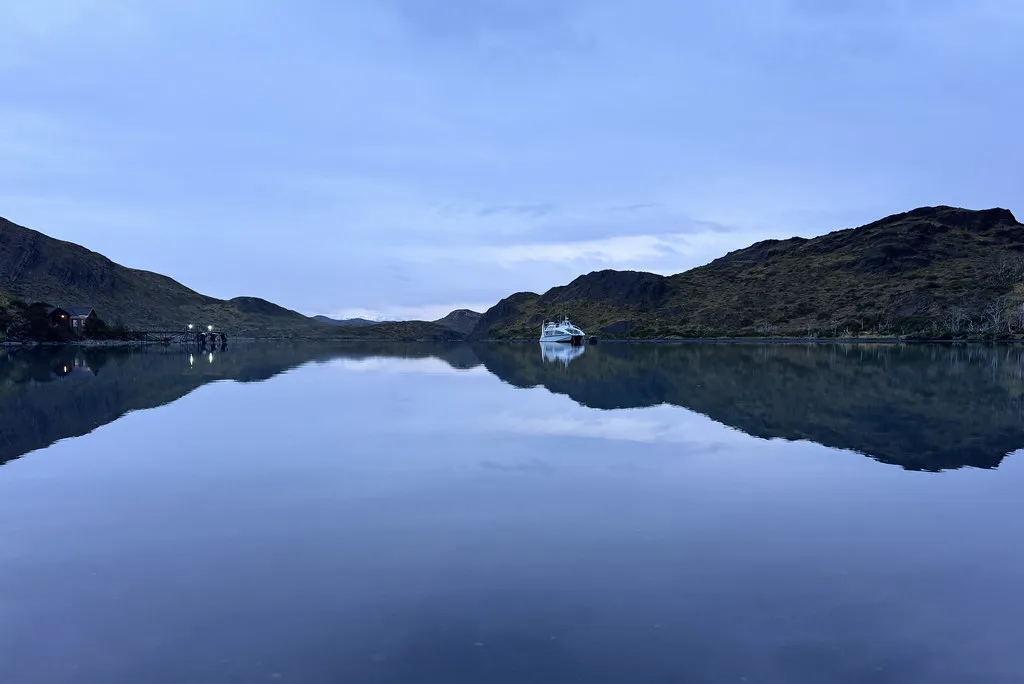
Direct answer: Lagos in 2026 is a 25,000-person walled town in Portugal's western Algarve, 90 km west of Faro airport, famous for the Ponta da Piedade cliffs, four cove beaches within walking distance, and being the closest base to Benagil sea cave (20 km east).
Unlike Albufeira, which leans heavily into nightlife and resort tourism, Lagos keeps a much more balanced profile. You will find plenty of bars and restaurants, but the vibe skews toward couples, small groups of friends, and families rather than stag weekends. Historical layers are everywhere: this was Prince Henry the Navigator's launchpad for the 15th-century Age of Discoveries, and the town still wears that legacy in its monuments and street names.
Above all, Lagos is the practical launchpad for exploring the cliffs and caves of the Barlavento coast — including Ponta da Piedade on its doorstep and Benagil cave twenty minutes up the road. If your Algarve wishlist includes dramatic scenery, cove swimming, and boat tours into hidden grottoes, Lagos is where you base yourself.
Quick facts for 2026
- Population: ~25,000 (swells to ~80,000 in August)
- Region: Western Algarve (Barlavento), Faro District
- Nearest airport: Faro (FAO), 90 km / ~1 hr drive
- Currency: Euro (€); cards accepted almost everywhere, ATMs widespread
- Language: Portuguese; English fluently spoken in tourism settings
- Time zone: WET (UTC+0) winter, WEST (UTC+1) summer — same as the UK, one hour behind Spain
- Tourist tax (2026): €2 per person per night, capped at 7 nights, ages 13+
How to get to Lagos in 2026
Most international visitors arrive via Faro airport (FAO), the Algarve's main gateway, which handles direct flights from across the UK, Ireland, Germany, the Netherlands, and most major European hubs. From Faro you have three realistic options to reach Lagos, roughly 90 km west.
By train (best for solo travellers and couples)
The Linha do Algarve runs along the entire south coast and terminates in Lagos. From Faro, Regional trains take about 1 hour 40 minutes with a change at Tunes, and fares in 2026 sit around €8.30 one-way. The Lagos train station is a 10-minute walk across the footbridge from the old town — very convenient if you are travelling light. Buy tickets at the station or via the Comboios de Portugal app.
By bus (cheapest, terminates in town)
Rede Expressos and Vamus Algarve run frequent coaches from Faro airport and Faro city to Lagos. Journey time is about 1 hour 30 minutes and 2026 fares are around €10. The Lagos bus terminal is next to the marina, a 5-minute walk from the old town.
By rental car (best for exploring the wider Algarve)
The A22 motorway connects Faro and Lagos in roughly 1 hour. The A22 is an electronic toll road — rental companies handle this via their own systems for an admin fee of €1–3 per day plus tolls (~€8 Faro→Lagos). A car is the best option if you plan to explore beaches and villages beyond town, but you do not actually need one to enjoy Lagos itself.
From Lisbon
Coming from Lisbon, the Intercidades train takes 3 hours 30 minutes and costs about €23 in 2026 — a scenic and stress-free ride. Rede Expressos coaches run in a similar time for about €20. By car, Lisbon to Lagos is roughly 3 hours via the A2 and A22. For full timetables, ticket-booking screenshots, and which seats to pick, see our Lisbon to Lagos train guide.
Best beaches in Lagos
Lagos has more postcard-grade beaches within 10 minutes of the old town than most entire countries. The four you absolutely cannot miss:
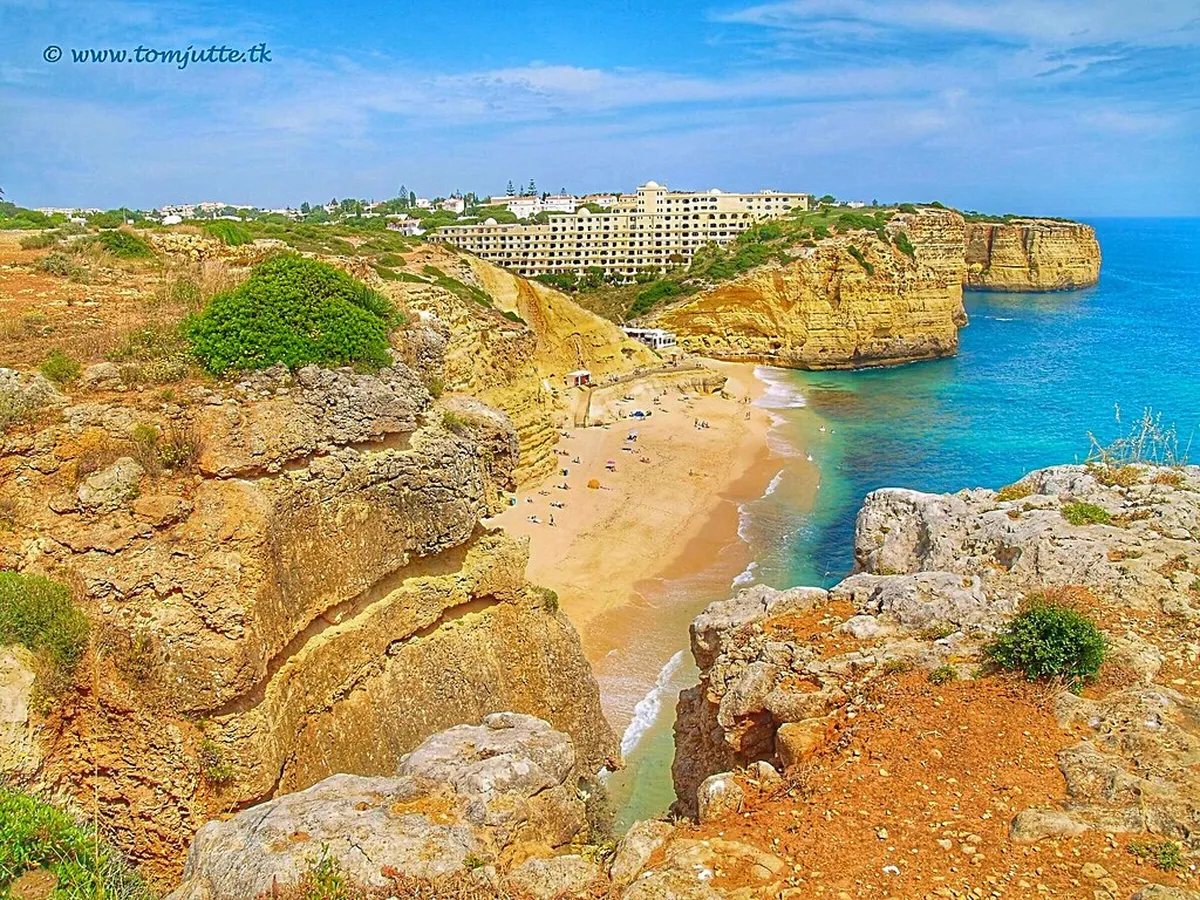
Praia Dona Ana is the iconic one — the single most photographed cove in the Algarve, and with good reason. Golden cliffs ring a sheltered bay of fine sand, punctuated by jagged sea stacks rising straight out of the water. A 2018 widening of the sand means it is no longer as cramped as older guides suggest, and the swimming is excellent. It sits about 2 km south of the old town; walk, cycle, or take the seasonal tourist train.
Praia do Camilo, a little further along the clifftop path, is arguably even more beautiful — a double cove split by a rock tunnel, reached via a wooden staircase of roughly 200 steps. Go early (before 10am) in summer. You will be rewarded with clear turquoise water and, if you hit low tide, the chance to walk through the tunnel between the two halves of the beach.
Praia do Pinhão sits between the two above and is the quietest of the cliff beaches — a small hidden cove that most tour groups skip. It is a favourite with locals and anyone willing to take the extra few minutes of walking.
Meia Praia is the long one: a three-kilometre crescent of soft sand stretching east from the marina. This is where you come to actually swim, walk, or paddleboard without cliff-induced crowd pressure. It is also the best Lagos beach for families with young children because of the gentle shelf and easy parking.
Direct answer: The best beach in Lagos for first-time visitors in 2026 is Praia Dona Ana — golden cliffs, sheltered swimming, and a 25-minute walk or 5-minute drive from the old town. For fewer crowds, Praia do Camilo (next cove west) and Praia do Pinhão (between them) are equally beautiful.
For sunbed prices, lifeguard hours, exact paths from the old town, and hidden coves like Porto de Mós and Praia do Canavial, see our deep-dive on the Best Beaches in Lagos Portugal: Top 10 for 2026.
Praia do Camilo has roughly 200 steps down to the sand — go before 10am in summer to beat the crowds and find the rock tunnel between the two coves at low tide. Praia do Pinhão, just next door, is the quietest of the cliff beaches and often overlooked by tour groups.
Ponta da Piedade
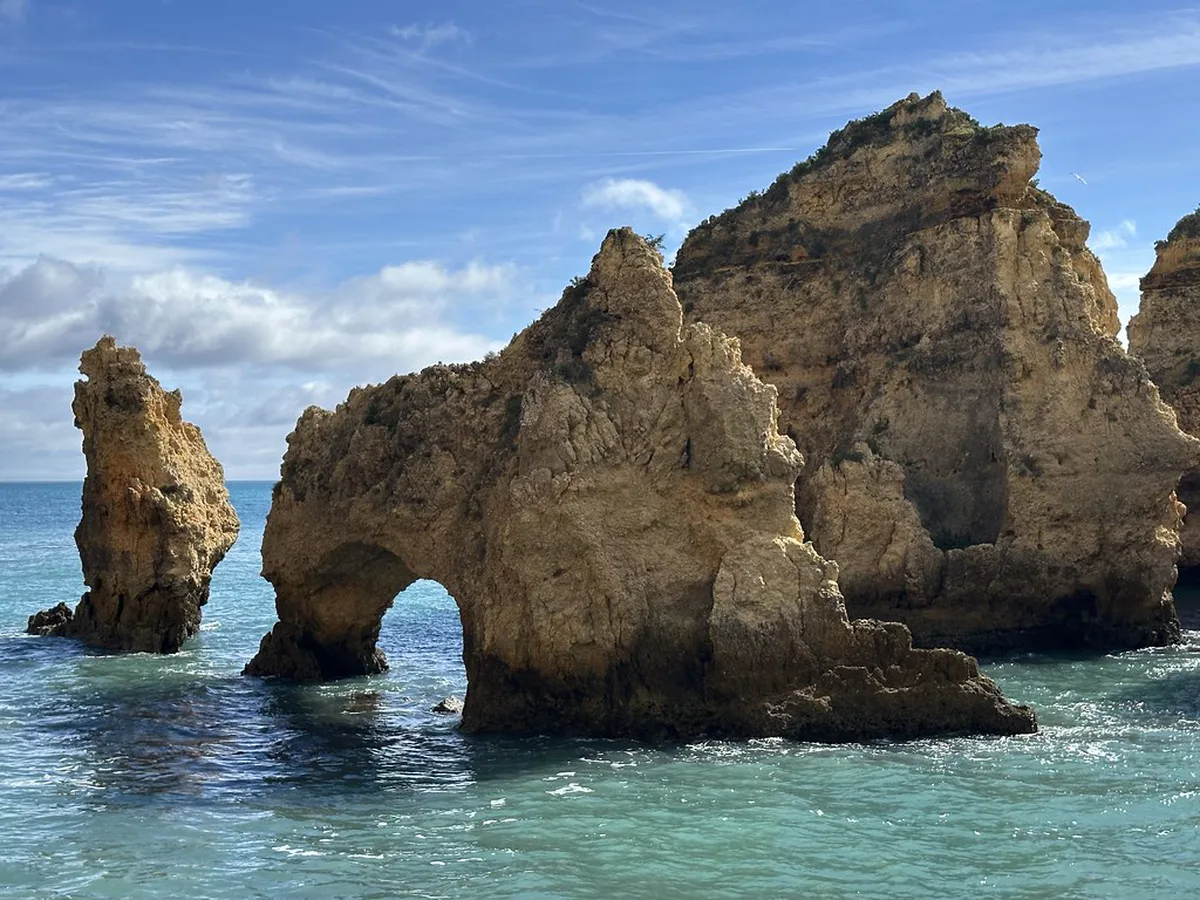
If there is one landmark that defines Lagos, it is Ponta da Piedade — the 20-metre sandstone headland at the southernmost tip of town where the Atlantic has carved the cliffs into a surreal gallery of arches, sea stacks, grottoes, and hidden beaches. It is not an exaggeration to say that this is one of the most beautiful stretches of coastline in Europe, and it is reachable on foot from central Lagos in about 40 minutes.
There are three ways to experience it, and we recommend doing at least two.
1. The clifftop boardwalk (free, ~1 hour)
A wooden path runs from Praia Dona Ana south to the Ponta da Piedade lighthouse, offering one photo stop after another. Open all hours, no ticket. Wear closed shoes — the planks can be slippery after rain.
2. Fishermen's grotto skiffs from the lighthouse landing (€15–20)
Descend the 182 steps at the lighthouse car park down to the small landing stage, where local fishermen offer 30–45 minute grotto tours for around €15–20 per person in 2026. The skiffs are small enough to nose right into the sea caves — the most intimate way to see the rock formations.
3. A larger boat tour from Lagos marina (€25–40)
These typically combine Ponta da Piedade with other sections of coast. Slightly less intimate than the fishermen's skiffs but cover more ground and often include Benagil cave in a half-day package.
Whichever way you go, visit early in the morning or in the last two hours before sunset — the low, warm light turns the cliffs bronze and the sea impossibly turquoise. Midday is harsh and crowded. For a full breakdown of the boardwalk, kayak rentals, the staircase, and exact 2026 boat-tour prices, see our Ponta da Piedade guide.
Benagil cave from Lagos
Benagil cave is the Algarve's single most famous natural attraction — a cathedral-like sea cave with a circular skylight in its roof, a golden sand floor, and aquamarine water lapping at its edges. Every photo you have seen of "the Portugal cave" was taken here. It sits about 20 km east of Lagos, between Carvoeiro and Armação de Pêra, and it is reachable only by water. There is no land access — the hiking path on the clifftop above only lets you peer down through the skylight, which is dangerous and increasingly restricted by GNR maritime authorities.
Direct answer: To reach Benagil cave from Lagos in 2026, take a 2.5-hour speedboat tour from Lagos marina (€40–60), drive 25 minutes to Benagil beach and join a kayak or SUP tour (€25–40), or book a half-day catamaran cruise. There is no land route — the cave is accessible only from the sea.
From Lagos, you have three realistic ways to visit:
- Speedboat tours from Lagos marina — 2.5 hours round trip, €40–60 per person in 2026. Fastest option and usually includes Ponta da Piedade.
- Kayak and SUP tours from Benagil beach — €25–40 for a 2-hour guided session. Lets you actually paddle inside the cave on calm days.
- Catamaran cruises from Lagos marina — half-day trips that usually pause outside the cave rather than entering.
A word of warning: sea conditions matter. The cave is only accessible when swells are low, and tour operators will cancel without hesitation in rough weather. Book for early in your trip so you have flexibility to reschedule. Mornings are calmer than afternoons nine times out of ten. For operator recommendations, exact cancellation policies, and what to bring, see our full guide on Benagil Cave from Lagos: 2026 Guide to Tours, Kayak & Prices.
Lagos old town
The walled historic centre of Lagos is small — you can walk its perimeter in 20 minutes and cover every major sight in an unhurried half-day — but it repays slow exploration. The 16th-century city walls, built and repeatedly reinforced to defend against Moroccan and Spanish raids, still hem in the old town on three sides. You can walk sections of them for free and enjoy views out over the marina and river.
Igreja de Santo António and the Municipal Museum
Inside the walls, do not miss the Igreja de Santo António — a deceptively plain 1769 baroque church whose interior is an explosion of gilded woodwork, hand-painted azulejo tiles, and carved cherubs. The adjoining Museu Municipal Dr. José Formosinho is worth the €3 entry (2026 price) for its eclectic collection of Roman mosaics and Algarve folk art.
Lagos Castle (Castelo dos Governadores)
A short walk away, Lagos Castle survives only in ruins after the 1755 earthquake but still offers good views of the marina. Free to enter.
Mercado de Escravos — the slave-market museum
The single most historically significant — and sobering — spot in town is the Mercado de Escravos, the restored building on Praça Infante Dom Henrique that served as Europe's first documented slave market in 1444. It is now a small, well-curated museum (€3 entry in 2026) that confronts the darker side of Portugal's Age of Discoveries, and a visit is essential context for understanding the town's wealth.
Mercado Municipal
Finish your walk at the Mercado Municipal on Avenida dos Descobrimentos — the working food market where locals actually shop, best visited before 11am for the fish counters downstairs. Closed Sundays.
For a cobble-by-cobble walking route, opening hours, and the best pastel de nata stop in the centre, see the Lagos Old Town Guide: 2026 Walking Route Through Algarve History.
Day trips from Lagos
Lagos's position near the western edge of the Algarve makes it a brilliant base for half-day and full-day excursions.
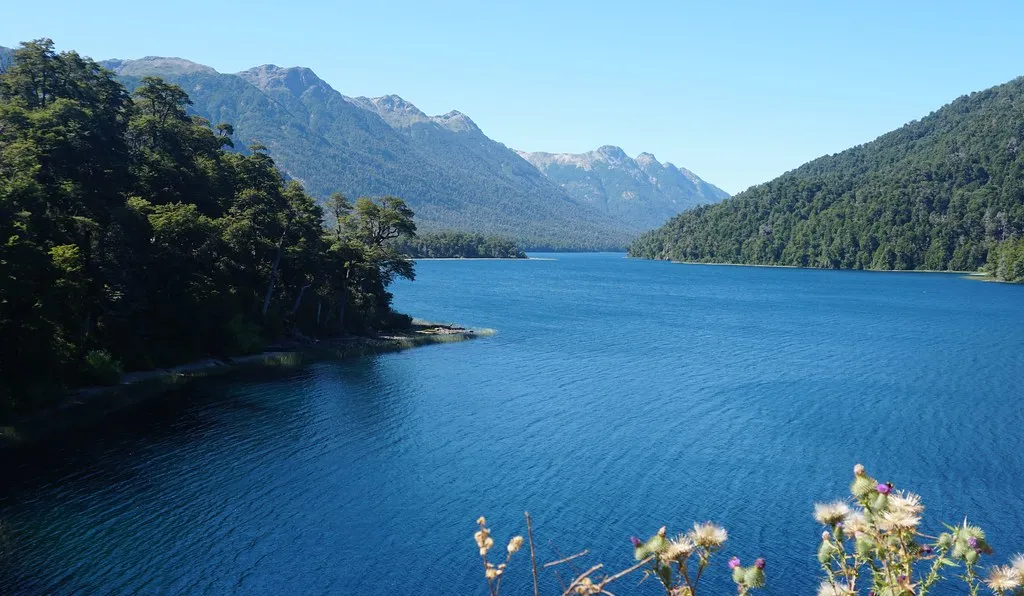
Sagres and Cabo de São Vicente (30 minutes west) is the classic. This is continental Europe's southwestern tip — a windswept headland where the Atlantic meets the Mediterranean and a 19th-century lighthouse stands sentinel over dramatic 75-metre cliffs. Combine it with the Fortaleza de Sagres, Prince Henry the Navigator's navigation school, for a half-day loop.
Silves (30 minutes north) is the Algarve's former Moorish capital and still its most atmospheric inland town. The red-sandstone Castelo de Silves crowning the old quarter is the best-preserved Moorish castle in southern Portugal (€2.80 entry in 2026), and the town's cafés and orange groves make it an easy, non-beach half-day trip.
Albufeira (1 hour east) is worth a day if you want to compare the two largest Algarve towns. It is louder and more resort-heavy than Lagos, but the old town (Baixa) and its fisherman's beach are genuinely charming. For a side-by-side comparison plus Faro, see our Lagos vs Albufeira vs Faro: Where to Stay in the Algarve in 2026 breakdown.
Seville, Spain (2 hours by car) is a realistic long day trip for travellers with a rental car — the A22 links seamlessly into the Spanish motorway network via the Guadiana International Bridge at Vila Real de Santo António. Leave by 7am and you will be sipping coffee in Plaza de España by 10. Remember to set your clock forward one hour when crossing into Spain.
Lagoa and Carvoeiro (25 minutes east) deserve a mention for travellers who want a half-day of gentler cove-hopping closer than Sagres. The Seven Hanging Valleys trail (Percurso dos Sete Vales Suspensos) starts near Praia da Marinha and is arguably the most beautiful coastal walk in Portugal — 5.7 km of cliff-edge path past sea arches, stacks, and the Benagil skylight. Allow 2.5 hours one way and bring water.
Monchique (40 minutes north) is the Algarve's mountain retreat — a cool, green escape into cork oak forests when the coast gets too hot. The spa village of Caldas de Monchique and the Fóia summit (the highest point in the Algarve at 902 m) make a relaxing half-day counterpoint to all the beach time.
For a ranked, time-budgeted list with driving directions and what to skip in shoulder season, see our full 10 Best Day Trips From Lagos Portugal: 2026 Travel Guide guide.
Where to stay in Lagos
Lagos offers four distinct lodging zones and the right one depends on what you want out of your trip.
Inside the old town walls (most atmospheric)
Boutique guesthouses and small hotels on cobbled lanes, steps from restaurants and the bar scene. The trade-off is noise — summer nights can get loud, and cars are restricted, so plan your luggage strategy. Expect €120–250/night for a double in 2026 high season. For where the music actually plays, see our Lagos nightlife, bars and clubs guide.
The marina area (modern, family-friendly)
Just east of the old town: modern, clean, larger hotels and apartment complexes, easy parking, and a 5-minute walk into the historic centre. Best for travellers who want comfort without sacrificing walkability. Typical 2026 rates: €110–220/night.
Meia Praia (beach-first)
Along the long east-side beach, where you stay if the beach itself is the main event. Less character, but you roll out of bed onto the sand. Good for families with kids. €100–180/night.
Praia da Luz (quieter, slightly cheaper)
5 km west of Lagos, a quieter resort village with its own beach, a calmer pace, and slightly lower prices. A 10-minute drive or local bus ride brings you into Lagos proper. Ideal for travellers who want a beach-village base with day-trip access to the town, and for families looking to minimise the walking and parking stress of staying in the old town. €90–160/night.
Whichever zone you choose, book ahead for anything in July or August — Lagos fills up completely at peak, and the best-rated apartments inside the walls are typically reserved four to six months in advance. In the shoulder months you can often walk in and negotiate a rate, especially midweek.
Best time to visit Lagos
The Algarve has one of the kindest climates in Europe, but the difference between months matters more than you might expect.
May, June, and September are the sweet spot in 2026: sea temperatures are warm enough for comfortable swimming (19–22°C), daytime highs sit in the mid-20s Celsius, the beaches are busy but not overwhelmed, and accommodation prices are well below peak. Early October is also excellent and even quieter, though the sea starts cooling by the end of the month.
July and August are peak season. The weather is reliably hot (highs of 28–30°C), the water is at its warmest (22°C), and every cove beach, boat tour, and restaurant is fully booked. Expect to pay 40–60% more for accommodation than in shoulder months, and book Benagil tours at least 2–3 weeks in advance.
November through March is mild (daytime highs of 15–18°C) and dry compared with northern Europe, but many beachfront restaurants and some boat-tour operators close for the winter. Ponta da Piedade, the old town, and day trips to Sagres and Silves all remain rewarding, and you will have the cliffs largely to yourself.
Direct answer: The best month to visit Lagos in 2026 is September — sea temperature peaks at 22°C, daytime highs hold at 27°C, hotels drop 25–30% from August prices, and the European school crowds are gone after August 31.
If you visit in July or August, book your Benagil cave boat tour at least 2–3 weeks in advance — tours fill up completely at peak and operators cancel without notice when swells are high. Always pick the earliest morning slot for the calmest sea conditions.
Costs and budget for a 2026 Lagos trip
Lagos is one of Western Europe's better-value destinations, but pricing has crept up since 2022. Here is what to budget per person per day in 2026:
- Backpacker: €60–80/day — hostel dorm (€25–35), pastry-and-coffee breakfast, supermarket lunch, one tasca dinner with wine (€15)
- Mid-range: €130–180/day — boutique guesthouse double (split, €80–110), one boat tour, two sit-down meals, gelato
- Comfort: €230–320/day — 4-star hotel double (split, €130–180), private grotto tour, a tasting-menu dinner, taxis
One-off costs to factor in: Faro airport transfer (€10 bus or €70 taxi), a 2-hour Benagil tour (€40–60), a Ponta da Piedade fishermen's grotto tour (€15–20), the €2/night tourist tax, and rental car (~€35/day plus tolls in shoulder season, €70/day in peak).
Sample 3-day Lagos itinerary
If you have only three days, this is the order our editors recommend.
Day 1 — Old town and a sunset cliff walk
Coffee at the Mercado Municipal. Walk the city walls, visit the Mercado de Escravos slave-market museum, see the Igreja de Santo António's gilded interior, and lunch on grilled sardines at a tasca near Praça Gil Eanes. In the afternoon, walk south through Praia da Batata to Praia Dona Ana for a swim. Time the walk back along the clifftop boardwalk to catch sunset over Ponta da Piedade.
Day 2 — Benagil cave and Praia do Camilo
Book the earliest speedboat tour to Benagil from Lagos marina (calmer seas, fewer boats inside the cave). Back by lunch. Afternoon: descend the wooden staircase to Praia do Camilo, walk through the rock tunnel at low tide, and finish with sunset drinks on a marina terrace.
Day 3 — Day trip to Sagres or Silves
Sagres for windswept cliffs, the Fortaleza, and Cabo de São Vicente. Or Silves for the Moorish castle and a slower inland pace. Back to Lagos for a final dinner inside the walls.
Add a fourth day for a kayak tour into the Ponta da Piedade grottoes, and a fifth for Meia Praia or the Seven Hanging Valleys hike.
Lagos travel tips for 2026
- Cash vs card: Cards work everywhere except a handful of fishermen's grotto skiffs. Carry €40–50 in cash for tips and small markets.
- Driving in the old town: Don't. The walled centre is mostly pedestrianised; park at the free lots near the marina (Avenida dos Descobrimentos) or the paid lot at Praia da Batata.
- Boat-tour booking: Book Benagil tours at least 2 weeks ahead in July–August, 3–4 days ahead in shoulder season. Always book the earliest morning slot — the Atlantic kicks up by 1pm.
- Sunscreen: The Algarve sun is stronger than it feels because of the Atlantic breeze. UV index hits 9–10 in July. Reapply every two hours.
- Tipping: Not expected, but rounding up or leaving 5–10% in restaurants is appreciated.
- Safety: Lagos is one of the safest towns in Europe. The main hazards are clifftop edges (no railings on the wild boardwalk sections) and slippery wooden stairs to the cove beaches. Keep children well back from cliff edges.
- Accessibility: The old town's calçada (cobblestones) and the long staircases to Praia do Camilo and the Ponta da Piedade landing are not wheelchair-friendly. Meia Praia and the marina-side promenade are.
Frequently Asked Questions
Is Lagos Portugal worth visiting in 2026?
Yes. Lagos is widely considered the most beautiful town on the Algarve coast in 2026. The combination of a walled medieval centre, four cove beaches within walking distance, the Ponta da Piedade cliffs, and easy access to Benagil cave makes it the single best base for a first Algarve trip.
How many days do you need in Lagos?
Plan a minimum of three full days in Lagos: one for the old town and nearby cove beaches, one for a Benagil cave boat tour plus Ponta da Piedade, and one for a day trip to Sagres or Silves. Four or five days lets you add Meia Praia, kayaking, and a more relaxed pace.
Is Lagos better than Albufeira?
For most travellers in 2026, yes. Lagos has more dramatic scenery, a more intact historic centre, and a more balanced atmosphere. Albufeira has livelier nightlife and larger resort hotels, which some visitors prefer. If you are choosing one, start with Lagos.
Can you swim at Lagos beaches?
Yes. Praia Dona Ana, Praia do Camilo, Praia do Pinhão, and Meia Praia are all safe, lifeguarded in summer, and have some of the clearest water in Portugal. Sea temperatures range from around 17°C in winter to 22°C in August.
How do you get to Benagil cave from Lagos?
Benagil cave is only reachable by water in 2026. From Lagos you can take a speedboat tour directly from the marina (2.5 hours, €40–60), drive 25 minutes to Benagil beach and join a kayak or SUP tour from there (€25–40), or book a half-day catamaran cruise. There is no land access — the clifftop above offers only a distant view through the skylight.
What is the best time to visit Lagos in 2026?
September is the single best month: 27°C daytime highs, sea temperature at its annual peak of 22°C, 9 sun hours per day, and hotel rates 25–30% below August. May, June, and early October are similarly pleasant with even lower prices.
How do I get from Lisbon to Lagos?
The Intercidades train takes 3 hours 30 minutes from Lisbon Oriente to Lagos and costs about €23 in 2026. Rede Expressos buses cover the same route in similar time for around €20. By car, it is roughly 3 hours via the A2 and A22 motorways.
Do I need a rental car in Lagos?
No, not for the town itself. Lagos is walkable end-to-end in 20 minutes, the train and bus stations are central, and all four major beaches are reachable on foot. A car is useful only if you plan to do multiple day trips (Sagres, Silves, Benagil, Monchique) or stay outside the walls.
Plan your Lagos trip — what's next
Lagos rewards thoughtful planning more than almost any other destination in Portugal: the right beach at the right time of day, a Benagil tour booked early in your trip, and a base that matches your travel style will turn a good visit into a great one. Use the deep-dive guides below to plan each piece in detail.
Related Guides
- Best Beaches in Lagos Portugal: Top 10 for 2026
- Benagil Cave from Lagos: 2026 Guide to Tours, Kayak & Prices
- Ponta da Piedade guide
- Lagos Old Town Guide: 2026 Walking Route Through Algarve History
- 10 Best Day Trips From Lagos Portugal: 2026 Travel Guide
- Lisbon to Lagos train guide
- Lagos nightlife, bars and clubs guide
- Lagos vs Albufeira vs Faro: Where to Stay in the Algarve in 2026
Explore More Lagos Guides
Deep-dive guides for every part of a Lagos trip — from beaches and boat tours to where to stay, day trips, and seasonal planning.
Beaches & Coastline
- Best Beaches in the Algarve: 17 Top Beaches for 2026 (Western, Central &
- Best Beaches in Lagos Portugal: Top 10 for 2026
- Meia Praia Lagos Beach Guide: 9 Essential Tips for Visitors
- Ponta Da Piedade Kayak Tour: The Ultimate Guide
- Ponta da Piedade Lagos: 2026 Visitor Guide to the Algarve's Best Cliffs
- Praia Da Luz From Lagos: Complete Hiking & Transport Guide
- 10 Essential Tips for Visiting Praia do Camilo, Lagos
- 10 Things to Know Before Visiting Praia Dona Ana Lagos
Boat & Water Activities
- Benagil Cave from Lagos: 2026 Guide to Tours, Kayak & Prices
- Lagos Portugal Dolphin Tours: 8 Essential Things to Know
- 7 Essential Tips for Lagos Portugal Surfing
Day Trips & Day Adventures
- 10 Best Day Trips From Lagos Portugal: 2026 Travel Guide
- Lagos to Albufeira: 5 Essential Transport and Travel Tips
- Lagos to Faro Airport Transfer: 7 Key Travel Insights
- Lagos to Sevilla Day Trip Guide: Best Ways to Travel in 2026
- Lagos vs Albufeira vs Faro: Where to Stay in the Algarve in 2026
- Sagres From Lagos Day Trip Travel Guide
- 7-Step Silves Day Trip From Lagos: The Ultimate Itinerary
Itineraries & Trip Planning
- Is Lagos Portugal Worth Visiting? 7 Key Things to Know
- Lagos Portugal 2 Day Itinerary: 8 Essential Planning Steps
- Lagos Portugal 3 Day Itinerary: 8 Essential Planning Tips
- Lagos Portugal For Couples: The Ultimate Romantic Guide
- Things To Do In Lagos Portugal: The Ultimate Travel Guide
Family & Kids
Where to Stay
- 11 Best Hotels in Lagos Portugal for Every Budget
- 10 Best Lagos Portugal Vacation Rentals & Booking Guide
- Where to Stay in Lagos Portugal: 11 Best Areas
Transport & Getting Around
- Getting Around the Algarve by Train and Bus: A Complete Guide
- Lagos Portugal Car Rental: 8 Essential Tips for Your Trip
- Lisbon to Lagos Train: 2026 Guide (Alfa Pendular vs Intercidades)