LX Factory Lisbon: The Ultimate Guide to Alcântara's Creative Hub
Plan your visit to LX Factory Lisbon with our expert guide. Discover the best street art, shops like Ler Devagar, Sunday markets, and top restaurants in Alcântara.
On this page
LX Factory Lisbon: The Ultimate Guide to Alcântara's Creative Hub
LX Factory is a vibrant creative village tucked beneath the steel arches of the 25 de Abril Bridge in Alcântara, one of Lisbon's most energetic riverside neighborhoods. A derelict 19th-century textile complex was converted in 2008 into a thriving cluster of independent shops, restaurants, galleries, and studios. The result is one of the most compelling urban regeneration projects in Portugal. Thousands of visitors make the trip here each week, drawn by the street art, the Sunday market, and a dining scene that punches well above its neighborhood weight.
Alcântara sits between the historic city center and Belém, making it a natural stop on any west Lisbon itinerary. Many travelers use a Lisbon's essential neighborhoods to plan their route through this eclectic district. The area rewards those who go beyond the factory gates — the riverside walk, a world-class Asian art museum, and some of the city's best nightlife spots are all within a short walk. This guide covers everything you need to know for a visit in 2026.
The History of LX Factory: From Industrial Hub to Creative Village
The story of this site began in 1846 with the founding of the Companhia de Fiação e Tecidos Lisbonense, one of the most important textile manufacturers in Portugal. The factory employed thousands of Lisboetas for over a century, and its brick buildings became an architectural landmark of the Alcântara waterfront. When the industry declined in the late 20th century, the buildings fell into disuse and the site sat largely abandoned for years.
In 2008, the Mainside group acquired the lease on the complex and launched LX Factory as a creative village. The key decision — one that defines its character today — was to leave the original industrial bones untouched. Raw concrete, exposed ironwork, and peeling paint became the aesthetic backdrop for everything that followed. That deliberate restraint is what sets LX Factory apart from more polished redevelopment projects elsewhere in Europe.
Today the site hosts over 60 tenants, from architecture studios and design agencies to restaurants, a yoga school, and a recording studio. It has become a globally cited example of adaptive reuse, studied by urban planners and emulated in cities from Berlin to São Paulo. For visitors, the history is not just a backstory — you feel it in every crumbling cornice and century-old floor tile.
Top Things to Do and See at LX Factory
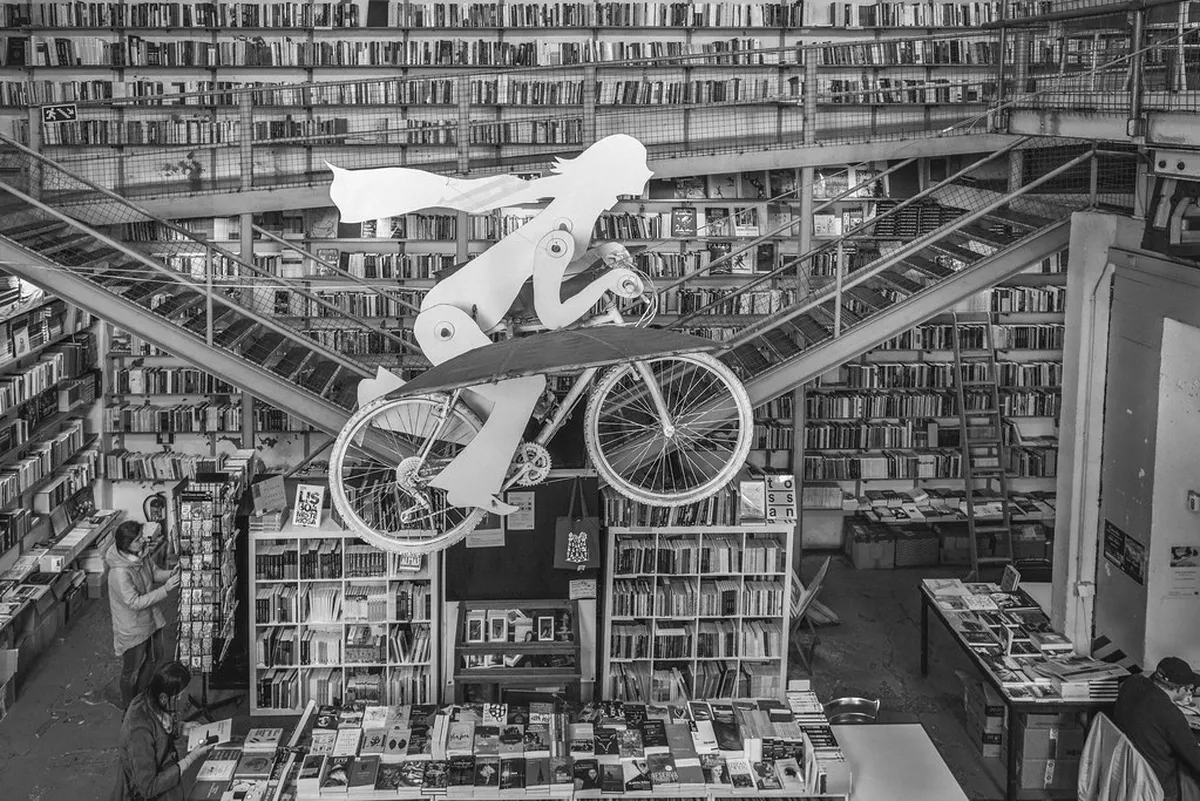
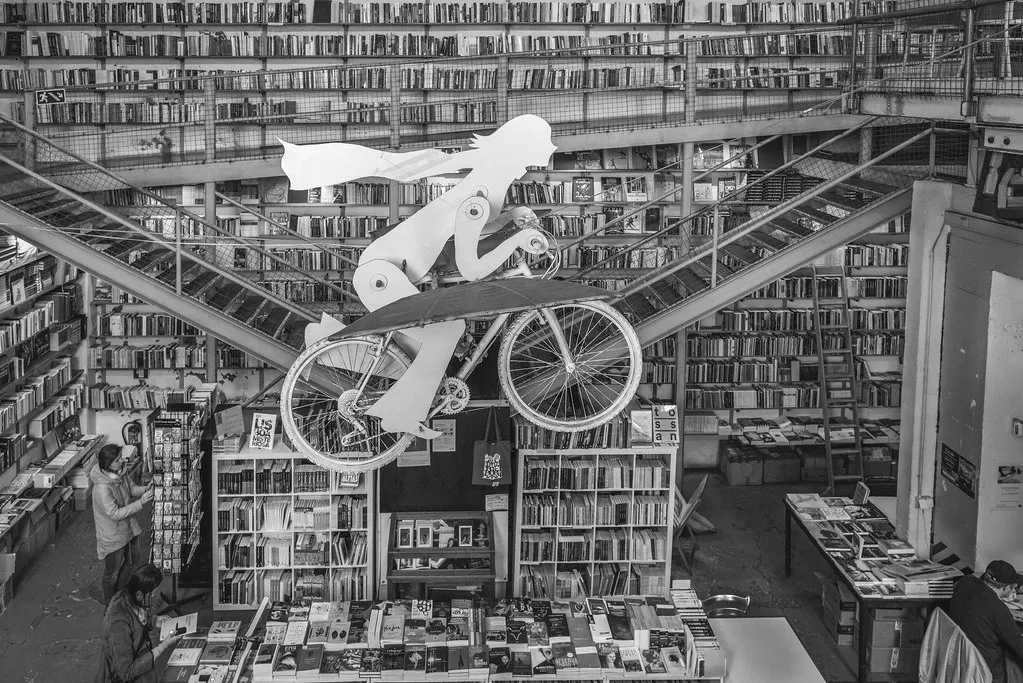
The Ler Devagar bookstore is the most famous single space inside the complex. It occupies a former printing hall with soaring ceilings, and a giant flying bicycle sculpture suspended overhead signals you have arrived somewhere genuinely unusual. You can browse thousands of titles across multiple floors, including an excellent Portuguese literature section, and there is an in-house cafe where you can read undisturbed for as long as you like. Entry is free.
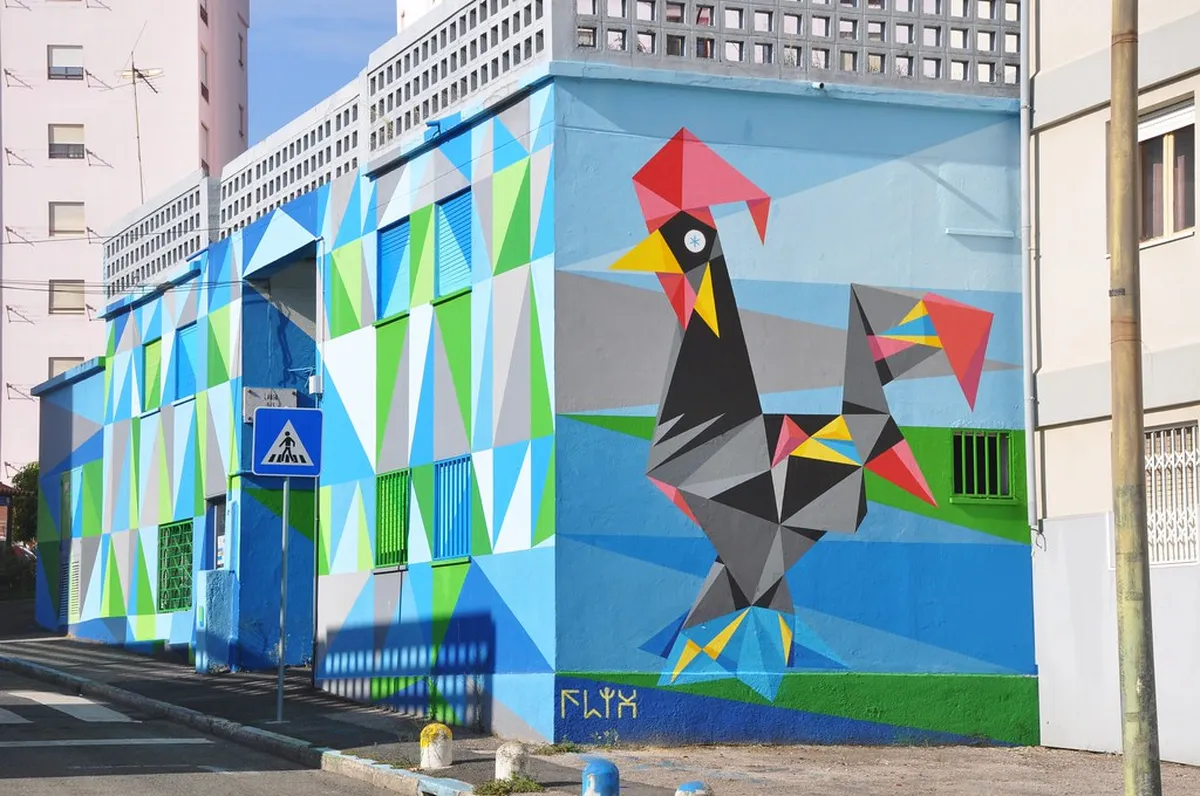
Street art enthusiasts will find a concentrated open-air gallery across almost every surface. The most striking piece is a monumental bee by the artist Bordalo II, constructed almost entirely from recycled industrial waste including tyres, plastic drums, and scrap metal. It sits near the main entrance and is impossible to miss. New murals appear regularly, so the experience shifts slightly with each visit.
Village Underground Lisbon — adjacent to the factory's main entrance — stacks repurposed shipping containers and old double-decker London buses into a cluster of creative studios. It is an outstanding photography subject, particularly in the late afternoon when the light hits the bridge above. Travelers often pair a visit here with a trip to see the Belem Lisbon guide attractions just fifteen minutes further west along the waterfront.
Shopping Guide: Best Boutiques and Designer Studios
Shopping here is a deliberate departure from the generic retail found in central Lisbon. The roughly 30 shops inside the complex are almost entirely independent, and many are run by the designers or craftspeople who make the goods on site. You will find handmade jewelry, sustainable fashion, cork accessories, hand-painted ceramics, and illustrated prints — the kind of items that are actually made in Portugal rather than imported and stamped with a Lisboa label.
Several stores double as working studios, so browsing often means watching someone at their wheel or sewing machine. This is especially true in the corridor running along the eastern building, where leather workers and bookbinders have permanent workshops. Prices reflect genuine craft: expect to pay €30–80 for quality ceramics, €15–40 for cork wallets and bags, and €60–150 for one-off fashion pieces.
Vintage collectors should set aside an extra hour. A handful of stores specialize in mid-century Portuguese furniture, retro clothing, and rare vinyl records. The curation is tighter than what you find at the Sunday market, and the prices are fixed. If you are looking for a meaningful souvenir rather than a souvenir shop souvenir, this is the right place.
Where to Eat: Top Restaurants and Cafes
Landeau Chocolate is the place most visitors come specifically to eat. The chocolate cake — dense, barely sweet, somewhere between a brownie and a mousse — earned praise from the New York Times and has been replicated across Lisbon without success. A slice costs around €5 and pairs best with a Portuguese espresso. There is usually a short queue on weekends; arriving just after opening at 11:00 avoids the worst of it.
Cantina LX serves Portuguese lunch and dinner in the old factory canteen. The long communal tables, tiled walls, and daily specials board make it feel like a genuine workers' refectory updated for the 21st century. Mains run €12–18 and portions are generous. It is a good choice for a sit-down meal after a morning of walking the complex.
Rio Maravilha deserves its own paragraph because the rooftop terrace changes what a restaurant visit means in this part of the city. On a clear evening you get an unobstructed view of the Tagus and the bridge lit up in orange. Cocktails cost €10–13 and the kitchen serves creative international plates until late. It is much more relaxed than the bars in the Bairro Alto area, and significantly quieter after 22:00 on weekdays.
Vegetarians and vegans have genuine options beyond salad. Therapia focuses on organic, plant-based dishes and smoothie bowls, and several other cafes now run fully vegan menus during lunchtime. The diversity of the food offer is one reason the complex draws such a broad crowd — you are not choosing between a tourist trap and a fine dining reservation.
The Sunday LX Market: What to Expect
The Sunday market transforms the main pedestrian street of the factory into one of the liveliest outdoor markets in Lisbon. Around 100 vendors set up from 10:00, selling vintage clothing, antiques, handmade jewelry, ceramics, old cameras, vinyl records, and artisanal food. Live musicians play throughout the day, and the industrial backdrop gives the whole thing an atmosphere that flea markets in more pristine settings cannot replicate.
Food stalls are an integral part of the market experience, not an afterthought. You will find stalls selling aged cheeses, cured meats, sourdough bread, local wines, and freshly grilled seafood. The smells and the noise combine into something genuinely festive. This is also when the complex draws its largest crowds of Lisbon residents, which gives the Sunday visit a more local character than a weekday.
Arriving before 11:00 is the most important practical tip. By midday the main corridor becomes genuinely congested, and the best vintage pieces disappear fast. Bargaining is normal for larger antique items but not expected on smaller goods. Plan to spend at least two hours if you want to cover the stalls properly and still have time for lunch at one of the restaurants nearby.
The Sunday LX Market runs from 10:00 and draws around 100 vendors. Arriving before 11:00 is the single most effective way to beat the crowds and secure the best vintage finds before they disappear.
Events and Nightlife at LX Factory
The Sunday market is the best-known event, but LX Factory runs a regular programme of concerts, film screenings, art installations, design fairs, and themed night markets throughout the year. In 2026, the complex continues its tradition of hosting the annual Indie Lisboa film festival screenings and a series of summer outdoor concerts on the main terrace. The LX Factory events calendar is updated monthly and is the only reliable source for what is on during your visit.
Some events require advance tickets and the main gate closes to general visitors during these. This is a detail that catches people out: if you arrive on a Saturday evening and find the entrance blocked by ticketing staff, it almost certainly means a private event or concert is underway. Checking the events page 24 hours before you plan to visit will save you a wasted journey.
On regular evenings the complex stays open late, and the bars and restaurants draw a mixed crowd of creative-industry workers, tourists, and Lisbon locals. The vibe is low-key but social — nothing like the rowdy clubs further into the city. If you want dinner followed by cocktails in an industrial-cool setting without having to queue, a Wednesday or Thursday evening at LX Factory is one of the better options in the western half of Lisbon.
Alcântara Beyond LX Factory: The Wider Neighborhood
Most visitors treat LX Factory as the sole destination in Alcântara and miss what surrounds it. The Museu do Oriente sits barely 200 metres north of the factory gates and is one of the most undervisited major museums in Lisbon. Its permanent collection covers Portuguese trade relationships with Asia from the 16th century onward, with extraordinary displays of Namban screens, Chinese export porcelain, and Japanese lacquerwork. Admission costs €6 (€3 concessions), and Friday evenings after 18:00 are free. It makes a natural pairing with LX Factory: spend the morning at the factory, the early afternoon at the museum.
The riverside walkway running west from the factory toward Belém is another overlooked asset. The path along the Tagus offers uninterrupted views of the suspension bridge and the Cristo Rei statue on the south bank. On weekday mornings it is almost empty. On weekend afternoons, cyclists and joggers share it with families. The walk to the Tower of Belém from LX Factory takes roughly 35 minutes on foot and passes the Doca de Santo Amaro marina, where several fish restaurants serve lunch with the water twenty metres away.
The Alcântara district page on Visit Lisboa lists smaller cultural venues, pop-up exhibitions, and seasonal events that do not appear on most travel blogs. It is worth a quick scan before you visit, particularly if you are in Lisbon for more than two days and want to see something genuinely off the standard circuit. Alcântara rewards slow exploration in a way that the more obviously touristic neighborhoods no longer can.
Practical Visitor Information: Hours and Best Time to Visit
The main gates are open daily from approximately 08:00 until midnight, but individual shops and restaurants set their own hours. Most boutiques open at 11:00 and close around 20:00. Restaurants typically serve from 12:00 to 15:00 and again from 19:00 to 23:00. Some bars stay open until 02:00 on Friday and Saturday. Always check the official LX Factory site for specific event-related closures before you go.
The ground surface throughout the complex is original industrial cobblestone — extremely uneven in places. Navigating with a pushchair is genuinely difficult, and wheelchair users will find several sections inaccessible. Wear flat shoes with good grip regardless of your mobility situation. This is not a criticism of the venue so much as a practical warning: comfortable footwear makes a significant difference over a two- or three-hour visit.
Mornings on weekdays offer the quietest and most photogenic conditions. The light is good, the streets are largely empty, and you can have Ler Devagar almost to yourself. Evenings bring a social energy that is very different but equally appealing. Sunday afternoons are the most crowded time of the week by a considerable margin. Choose your timing based on whether you prioritize atmosphere or ease of movement.
The entire complex is paved with original industrial cobblestones that are extremely uneven in places. Wheelchair users will find several sections inaccessible, and pushchairs are genuinely difficult to navigate. Wear flat shoes with good grip for any visit.
How to Get to LX Factory in Alcântara
The most scenic route from central Lisbon is Tram 15E, departing from Praça do Comércio. Alight at the Santo Amaro stop — the factory is a two-minute walk from there. The tram takes around 20 minutes and costs €2 with a Viva Viagem card (free with the Lisbon Card). It is the option most visitors use and it works well outside of rush hour.
The Cascais commuter train from Cais do Sodré is faster. Alcântara-Mar station is three stops and under five minutes by train, departing every 20 minutes. From the station it is a ten-minute walk to the factory gates. This is the better option on Sunday mornings when the tram can be extremely crowded due to the market.
Uber and Bolt are reliable and inexpensive by northern European standards. A ride from Baixa or Chiado typically costs €5–9 and takes 10–15 minutes outside peak traffic hours. Buses 714, 727, and 732 also serve the Alcântara area. Walking from Belém takes roughly 35 minutes along the river if you want to combine the journey with the riverside promenade. Check real-time schedules on the Carris website for 2026 updates.
For the full picture of how these districts fit together, see our guide to Lisbon's essential neighborhoods.
Frequently Asked Questions
Why is LX Factory famous?
It is famous for its creative transformation of an old industrial site. The complex hosts iconic spots like the Ler Devagar bookstore and impressive street art. Visitors love the mix of history and modern culture. You can learn more about similar areas in our Alfama guide.
What is the best day to visit LX Factory?
Sunday is the best day if you want to experience the vibrant outdoor market. However, it is also the most crowded time of the week. For a quieter experience, visit on a Tuesday or Wednesday morning. This allows you to explore shops without the heavy weekend foot traffic.
Is LX Factory free to enter?
Yes, there is no entry fee to walk around the factory grounds. You can explore the street art and public spaces for free. You only pay for what you buy in the shops or restaurants. It is one of the best free activities for art lovers in Lisbon.
How do I get from central Lisbon to LX Factory?
The easiest way is taking Tram 15E from Praça do Comércio to the Santo Amaro stop. You can also take a short train ride from Cais do Sodré to Alcântara-Mar. Rideshare apps are another quick and affordable option. The journey usually takes between 10 and 20 minutes.
LX Factory remains one of the most rewarding places to spend time in Lisbon — not because it is polished, but because it is not. The cobblestones, the peeling walls, and the mix of locals and visitors give it an authenticity that purpose-built tourist districts rarely achieve. From the famous chocolate cake at Landeau to the Bordalo II bee sculpture at the entrance, every corner offers something genuinely worth seeing.
Pair your visit with the Museu do Oriente next door and the riverside walk toward Belém, and Alcântara becomes a half-day or full-day destination in its own right. Whether you come for the Sunday market or a quiet Tuesday morning coffee, the energy of this neighborhood stays with you. For more travel tips, explore the rest of the Portugal Wander blog for ideas across the country.
 Graca Lisbon: 8 Essential Things to See and DoMay 29, 2026