Graca Lisbon: 8 Essential Things to See and Do
Discover the authentic charm of Graça, Lisbon. Our guide covers the 8 best things to do, from the highest viewpoints to hidden gardens and vibrant street art.
On this page
Graca Lisbon: 8 Essential Things to See and Do
Graça sits on the highest of Lisbon's seven hills, offering a unique blend of old-world charm and modern artistic energy. While the neighboring Alfama district feels like a maze, Graça offers wider streets and grander historical monuments. This neighborhood provides a local feel that remains authentic despite its growing popularity with travelers. You will find stunning vistas, historic churches, and quiet gardens tucked away in its winding corners.
The area is famous for its miradouros, which provide the best sunset spots in the entire city. Local residents still gather at traditional kiosks to share coffee and news under the shade of pine trees. On Tuesday and Saturday mornings, the lower end of the hill transforms into one of Europe's oldest flea markets. This guide covers the essential sights — and a few practical details — that make this hilltop district a must-visit destination in 2026.
Miradouro da Senhora do Monte: The Highest View
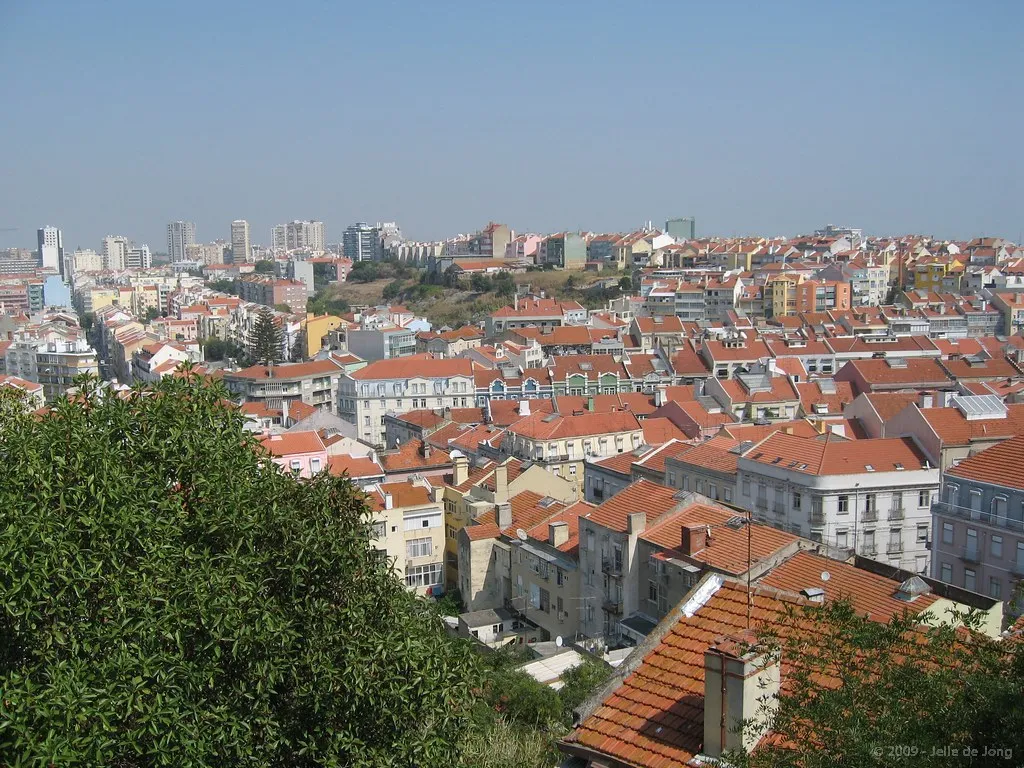
Miradouro da Senhora do Monte is widely considered the most spectacular viewpoint in all of Lisbon. It offers a 250-degree panorama that sweeps from the Tagus River and the 25th of April Bridge across to the São Jorge Castle. Because it stands at the highest point in the neighborhood, the view remains unobstructed by other buildings. Visitors consistently find this spot quieter and more romantic than the lower, more crowded terraces closer to Alfama.
A small chapel dedicated to Our Lady of the Hill stands at the edge of the square. Local tradition holds that pregnant women visit to seek protection for their unborn children, and the door is often lined with small votive offerings. The atmosphere is peaceful, with few commercial distractions — no kiosk, no vendor stalls. You can sit on the low stone walls and watch the city lights begin to gather at dusk.
Try to arrive at least thirty minutes before sunset to secure a good spot on the ledge. The walk up can be steep, so many visitors take the Graça Funicular from Mouraria and then continue on foot for the final few hundred metres. Musicians sometimes play acoustic sets here in the early evening, adding a quiet soundtrack to the panorama. According to Visit Lisboa, this is the recommended viewpoint for seeing the full sweep of the Lisbon skyline.
Miradouro da Senhora do Monte has no kiosk or vendor stalls, so bring your own water. Arrive at least thirty minutes before sunset to claim a spot on the low stone walls before the terrace fills up.
Miradouro da Graça: The Social Terrace
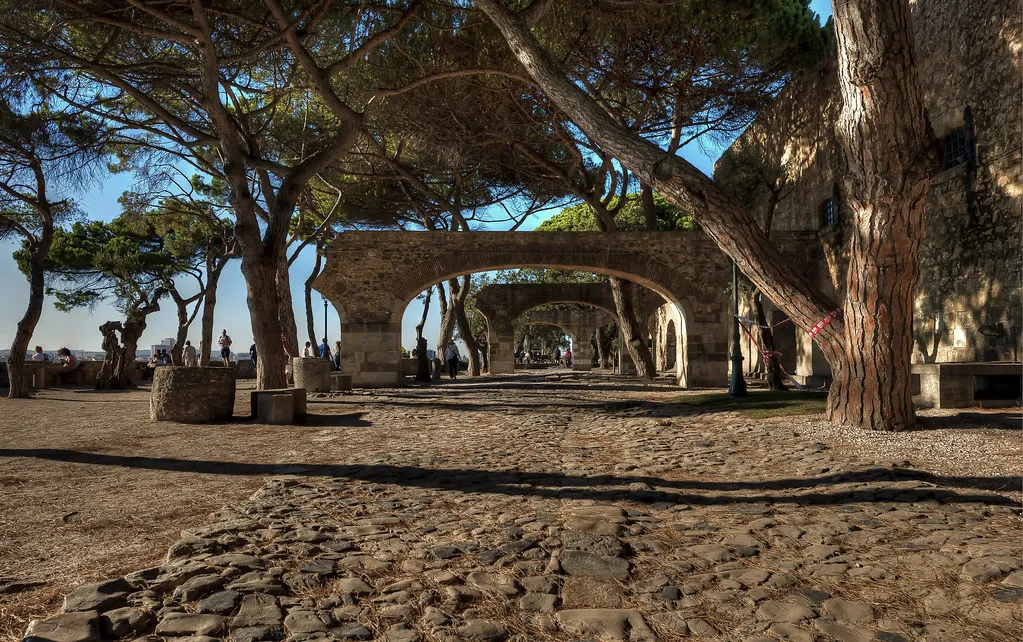
The Convento da Graça is the social heart of the neighborhood, and its terrace — Miradouro da Graça — is where locals and visitors mix most naturally. The open-air kiosk here serves cold drinks, wine, and snacks from mid-morning until late evening. Pine trees provide generous shade, making it comfortable even during hot July afternoons. The direct view of São Jorge Castle framed by the trees is one of the most photographed scenes in the district.
The church attached to the convent was rebuilt after the 1755 earthquake and features a richly gilded altar. Inside the cloisters, 18th-century tile panels trace the history of the Augustinian order that founded the complex. The interior is almost always less crowded than the terrace outside, offering a moment of cool, quiet reflection after the busy viewpoint. Entry to the main church is free, though there may be a small charge for the museum areas.
The terrace becomes particularly lively from around 17:00 when the workday ends for local residents. It serves as a natural gateway between the historic center and the more residential upper streets. For a practical comparison: Senhora do Monte delivers the wider, more dramatic panorama; Graça delivers the social scene and the convenience of refreshments. Both are within five minutes' walk of each other, so there is no reason to choose just one.
Feira da Ladra: Lisbon's Famous Flea Market
Feira da Ladra — literally "Thieves' Market" — sets up every Tuesday and Saturday in Campo de Santa Clara, at the foot of the hill below the National Pantheon. It is one of the oldest street markets in Europe, with records tracing back to at least the 12th century. Stalls spread across the entire square from around 07:00 until approximately 17:00, and the market is free to enter and browse. On Saturdays the market is noticeably larger, drawing more vendors from outside the city.
You can find everything here: vintage linen, old postcards of Lisbon, hand-painted azulejo tiles, brass hardware salvaged from demolished buildings, vinyl records, military surplus, and hand-embroidered tablecloths. Genuine antiques sit alongside tourist trinkets, so bring patience. The best pieces move early — arriving by 08:30 puts you ahead of the afternoon tourist rush. Prices are negotiable, and vendors generally expect it; starting at roughly half the asking price is a reasonable opening.
Even if you buy nothing, the market is worth visiting for its atmosphere. Locals haul trolleys through the crowd, old men debate the value of tools, and the smell of grilled chouriço from the nearby food stalls drifts across the square. The area around the market also holds several affordable seafood restaurants that open for lunch — a good option after a morning of browsing. For more context on the market's history, Wikipedia's Feira da Ladra article covers its origins and evolution in detail.
Feira da Ladra is free to enter and runs every Tuesday and Saturday from around 07:00 to 17:00. Saturday is the larger market day — arriving by 08:30 puts you ahead of the tourist rush and gives you first pick of genuine antiques.
Panteão Nacional: The National Pantheon
The National Pantheon occupies the former Church of Santa Engrácia at Campo de Santa Clara, directly adjacent to the Feira da Ladra market. Its enormous white Baroque dome is visible from the Tagus River and from most of the eastern viewpoints in the city. Construction began in 1681 and was only completed in 1966 — a delay so notorious that "obras de Santa Engrácia" (works of Santa Engrácia) became a Portuguese idiom for any project that never ends. The building was repurposed in 1916 to honor the nation's most distinguished citizens.
Inside, you will find the tombs or cenotaphs of Portuguese presidents, writers, and explorers, including Vasco da Gama and Luís de Camões, though both are symbolic monuments rather than actual burial sites. The interior is striking: cold white marble floors, ornate side chapels, and the vast emptiness beneath the dome create a genuinely imposing space. Tickets cost around €4 for adults in 2026, and the Lisbon Card covers entry. Opening hours are Tuesday to Sunday, 10:00–17:00 (18:00 in summer).
The rooftop terrace is the main reason to pay for a ticket rather than just admire the dome from below. The 360-degree view rivals both Graça miradouros for the quality of its sight lines, yet far fewer people make the climb. You can see the full expanse of Campo de Santa Clara with the market below, the Alfama rooftops to the west, and the river to the south. Combine this with Feira da Ladra next door for a half-day itinerary that covers two of the area's biggest draws in one visit.
Mosteiro de São Vicente de Fora: Royal History
The Monastery of São Vicente de Fora is a masterpiece of Mannerist architecture that dominates the skyline between Graça and Alfama. It was dedicated to the patron saint of Lisbon and served as a major religious and political center for centuries. Inside, the monastery holds one of the world's largest collections of Baroque azulejos — over 100,000 blue and white tiles depicting historical battles, hunting scenes, and the fables of Jean de La Fontaine. The tile gallery alone is worth the entrance fee.
The Royal Pantheon of the House of Braganza is housed within the monastery's south wing. This is the actual burial site of most Portuguese kings and queens from João IV, who died in 1656, through to Manuel II, the last king, who died in 1932. The marble tombs are arranged in neat rows and are beautifully crafted. It is a genuinely moving space, free of the theatrical pageantry that similar royal crypts in other European countries tend to attract.
The rooftop terrace offers a close-up view of the monastery's white domes alongside the National Pantheon to the east. It is an excellent spot for photography, letting you look down on the red-tiled rooftops as they descend toward the river. The monastery is generally open Tuesday through Sunday, with tickets priced around €5–€8 for adults. Plan for at least ninety minutes if you want to move through the tile gallery, the pantheon, and the rooftop without rushing. Visit Portugal's official portal has full visiting details for São Vicente de Fora.
Jardim da Cerca da Graça: The Hidden Garden
Jardim da Cerca da Graça is the largest green space in Lisbon's historic center. It was once the private walled orchard of the Graça Convent but opened to the public in 2015 after a major restoration project. The garden features sloping lawns, a small productive orchard, beehives, and several winding gravel paths. It is a genuine local retreat — on weekday mornings you are likely to find only retirees walking dogs and parents with young children.
The park acts as a natural pedestrian bridge between the Graça hill and the Mouraria district below. You can enter from the Graça Convent side at the top and exit through the lower gate in Mouraria, saving yourself the steep road descent. The elevation change across the garden is considerable, and the views of the castle from the upper paths are excellent without requiring a dedicated miradouro visit. A small kiosk near the top entrance serves coffee, sandwiches, and cold drinks.
The garden is particularly beautiful in March and April when the fruit trees are in blossom, and again in autumn when the orchard produces its harvest. It remains one of the city's most overlooked spaces — many first-time visitors walk past the entrance gate without realising the garden exists behind it. The entrance is free and the park is open daily. If you are combining it with a visit to the Convent terrace, allow an extra thirty minutes to wander down through the garden at a relaxed pace.
Graça's Street Art: An Open-Air Mural Gallery
Graça has become one of the most significant outdoor galleries in the city, where historic tilework and contemporary murals occupy the same building facades. The American street artist Shepard Fairey painted his large-scale "Peace Guard" mural on a residential building near the main square — a woman holding a flower-tipped rifle in muted earth tones. It remains one of the most recognizable pieces in Lisbon's urban art scene. The contrast between the weathered 19th-century plaster around it and the sharp graphic lines of the mural is striking in person.
Walking down Rua da Senhora do Monte and the surrounding side streets reveals dozens of smaller pieces by Portuguese and international artists. Many works pay tribute to traditional fado culture — you will find painted portraits of fadistas on the walls of buildings where musicians once lived. Rua da Graça itself, particularly the blocks below the convent, has seen a concentration of new commissions in 2024 and 2025. The art changes: pieces painted over one year may be replaced by something new the next.
Guided street art tours frequently begin in Graça before moving toward the Anjos district and the northern neighborhoods. If you prefer to explore independently, start at the convent square and work your way toward Senhora do Monte, checking every side alley. Photographing the murals is free and widely encouraged by the artists. Allowing ninety minutes for a self-guided tour gives you enough time to find the major pieces without feeling rushed.
Getting to Graça: Transport, Budget, and What the Iron Balconies Tell You
The yellow No. 28 tram is the most iconic way to reach Graça and connects the hill to Baixa and Estrela. It is authentic — it genuinely runs on old tracks through streets barely wider than the tram itself — but it is also chronically overcrowded during peak hours. Board at the Martim Moniz terminus or at Campo de Ourique early in the morning if you want a seat. Pickpockets operate on this line; keep bags in front of you.
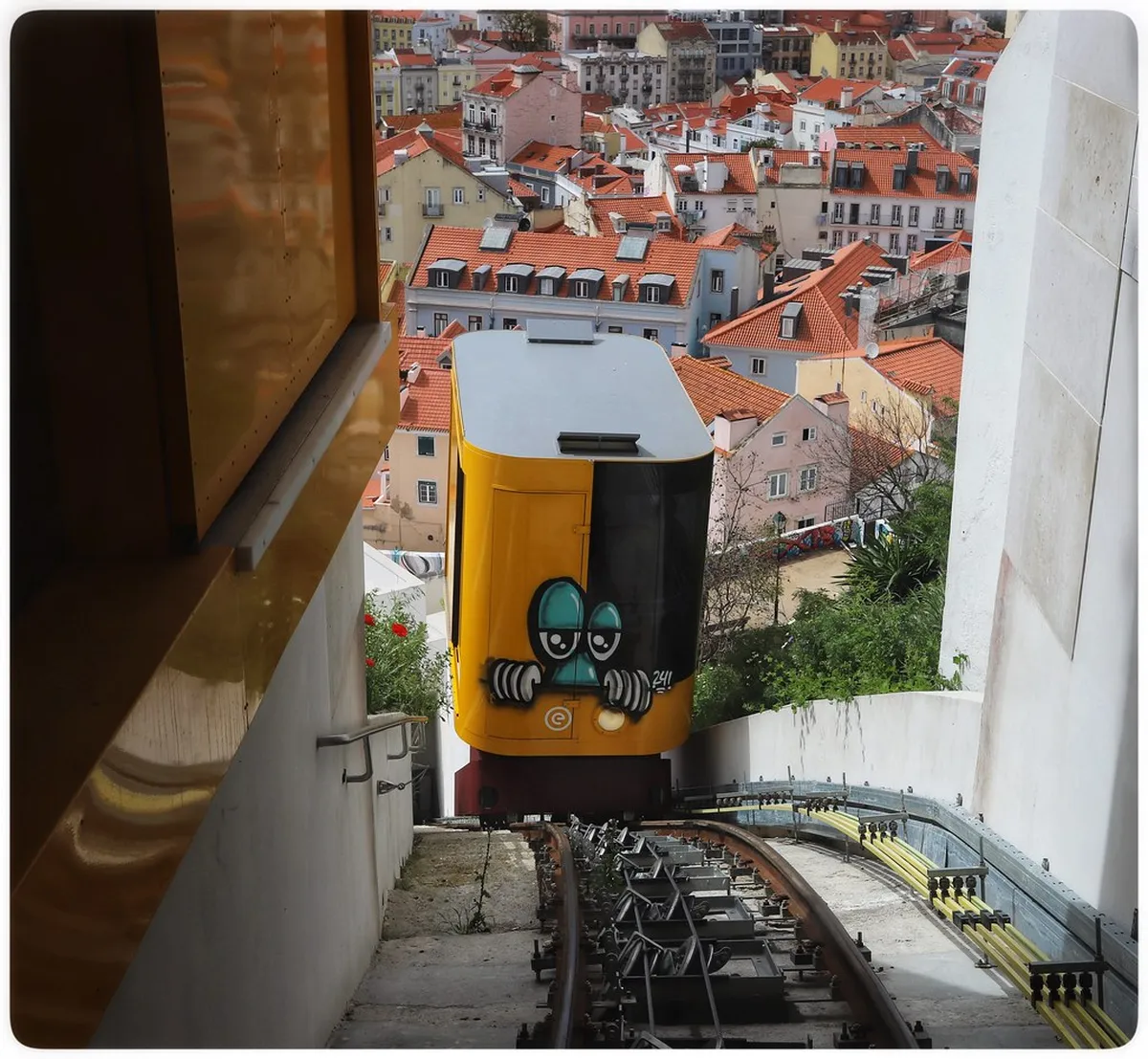
The faster alternative is the Ascensor da Graça, the funicular that opened in 2024. It connects Rua dos Lagares in Mouraria directly to the Miradouro da Graça in under two minutes. The key budget detail: the funicular is covered by the standard Navegante 24-hour pass, which costs approximately €6.85 in 2026. If you are already using a day pass for buses and metro, the funicular is effectively free. Most guides do not mention this — they list it as a separate attraction rather than a standard transit connection.
As you ride or walk through the neighborhood, pay attention to the iron-railed balconies. Graça has the highest density of inhabited, working balconies in Lisbon — residents grow herbs, hang laundry, keep cats, and watch the street from these narrow ledges. This "varanda culture" is what makes photographing the streets here different from Alfama or Chiado. The neighborhood still functions as a place where outdoor domestic life is conducted semi-publicly, and that quality is more visible here than almost anywhere else in the city. It is a practical detail, but it explains why photographers consistently return to these streets.
Where to Eat and Drink in Graça
Graça remains one of the best areas in Lisbon to find traditional Portuguese tascas still serving a working local clientele. These small, family-run restaurants offer dishes like grilled sardines, bacalhau à brás, and octopus rice at prices well below the tourist center. Ordering the prato do dia — the daily special — typically gets you a main course with soup, bread, and a drink for €8–€12. The atmosphere is reliably loud and communal, with long lunches extending past 14:30.
For a more contemporary option, several brunch cafes and specialty coffee shops have opened near the convent and along Rua da Graça over the past three years. These tend to occupy renovated spaces that preserve original stone walls and decorative tiles. If you are looking for the best areas to stay in Lisbon and want easy access to quality morning coffee, this neighborhood delivers it without the premium prices of Chiado or Príncipe Real.
Do not leave without stopping at one of the neighborhood pastelarias for a morning coffee and a pastel de nata. The ritual — espresso, custard tart, standing at the counter — costs around €1.80–€2.20 and is unchanged from how residents have been starting their days here for decades. In the evening, the wine bars around the main square come alive. A glass of Portuguese vinho verde runs about €3–€4, and the terrace tables fill up well before sunset as people claim their spots before the views draw the crowds.
Vila Sousa and the Neighborhood's Working-Class Roots
Vila Sousa is one of the finest surviving examples of the "pátio" or worker-village complexes built in Lisbon during the late 19th century. These enclosed residential courtyards were designed to house the industrial workforce in a concentrated space, with shared laundry areas and small communal gardens. Vila Sousa is particularly notable for its green and white azulejo facade and its ornate wrought-iron balconies. The building stands near Rua da Graça and is easy to walk past without realizing there is an inhabited courtyard behind the street entrance.
The social history of the neighborhood is inseparable from these pátio communities. Graça was a hub for bakers, stonemasons, and dock workers through the early 20th century, and many of the families who live there today are descended from those original residents. While gentrification is gradually changing the demographic, the presence of these protected historic buildings maintains a tangible link to the district's origins. Look for the small decorative tile plaques that mark the entrances — each pátio has its own name and often its own founding date.
Walking through this history is one of the things that separates a visit to Graça from a visit to more polished districts. The neighborhood does not feel curated. The pátios, the old men at the cafe tables, the vegetable gardens on balconies — these are not preserved for tourism. They are just what the neighborhood still looks like. For anyone interested in Lisbon's social history, the area around Rua do Açúcar and the streets behind the convent reward slow, attentive walking more than any single monument does.
Planning where to base yourself? Compare every district in our Lisbon's essential neighborhoods. Nearby, Alfama is an easy add-on — see our Alfama guide.
Frequently Asked Questions
Is Graça Lisbon worth visiting?
Yes, Graça is absolutely worth visiting for its authentic atmosphere and the city's best views. It offers a more local experience than the busier tourist districts nearby. You can explore historic sites and enjoy vibrant street art in one afternoon.
How do I get to Graça Lisbon?
You can reach the neighborhood by taking the historic Tram 28 or the new Graça Funicular from Mouraria. Walking from the Cais do Sodré or Baixa areas is possible but involves a steep climb. Buses also serve the main square regularly.
What is the best viewpoint in Graça?
Miradouro da Senhora do Monte is widely considered the best because it is the highest point. It offers a full panoramic view of the city and the river. Miradouro da Graça is also excellent for its social kiosk and castle views.
Where can I see street art in Graça?
Most street art is located along Rua da Senhora do Monte and near the Graça Convent. Look for the large Shepard Fairey mural on the side of a residential building. Many smaller pieces are hidden in the narrow side alleys of the district.
Graça remains one of the most enchanting neighborhoods for anyone visiting the Portuguese capital. It successfully balances its working-class heritage with a thriving modern art scene. From the heights of Senhora do Monte to the flea market at Campo de Santa Clara, there is more here than most visitors expect to find. Check out our Lisbon's essential neighborhoods to see how this area compares to other districts.
Plan your visit to include a mix of historic sightseeing and relaxed terrace time. On a Tuesday or Saturday, start early at Feira da Ladra before the heat builds, then climb to the convent viewpoint for a mid-morning coffee, and finish with lunch at a local tasca. The authentic flavors and friendly atmosphere make it a place you will want to return to often. Enjoy the unique charm of this historic hill during your 2026 trip to Lisbon.