8 Things to Know Before Visiting Bairro Alto Lisbon
Discover the best of Bairro Alto Lisbon with our local guide. From Fado houses and viewpoints to the best restaurants and hotels, plan your perfect visit.
On this page
8 Things to Know Before Visiting Bairro Alto Lisbon
Bairro Alto is the beating heart of Lisbon's social scene and a must-visit for every traveler. By day, its narrow streets offer a peaceful glimpse into traditional local life, with colorful tiles and laundry hanging from wrought-iron balconies under the bright sun.
As the sun sets, the neighborhood transforms into a lively hub of music and dining. This district is famous for its dual identity, blending old-world charm with high-energy nightlife. Exploring this area is one of the most essential things to do in Lisbon during your stay.
Whether you want to hear soulful Fado or find a trendy bar, this quarter has something special. Our guide covers everything from historic churches to the best places for a late-night drink, so you arrive with a plan instead of a hangover.
Why Bairro Alto? (The Neighborhood's Dual Identity)
Bairro Alto functions like two different neighborhoods depending on the hour. Before 19:00 it feels like a sleepy hilltop village — elderly residents chatting over coffee, galleries raising their shutters, empty alleys to photograph in flat afternoon light. There are almost no major monuments here, and that is the point — you come to walk, not to tick off a checklist.
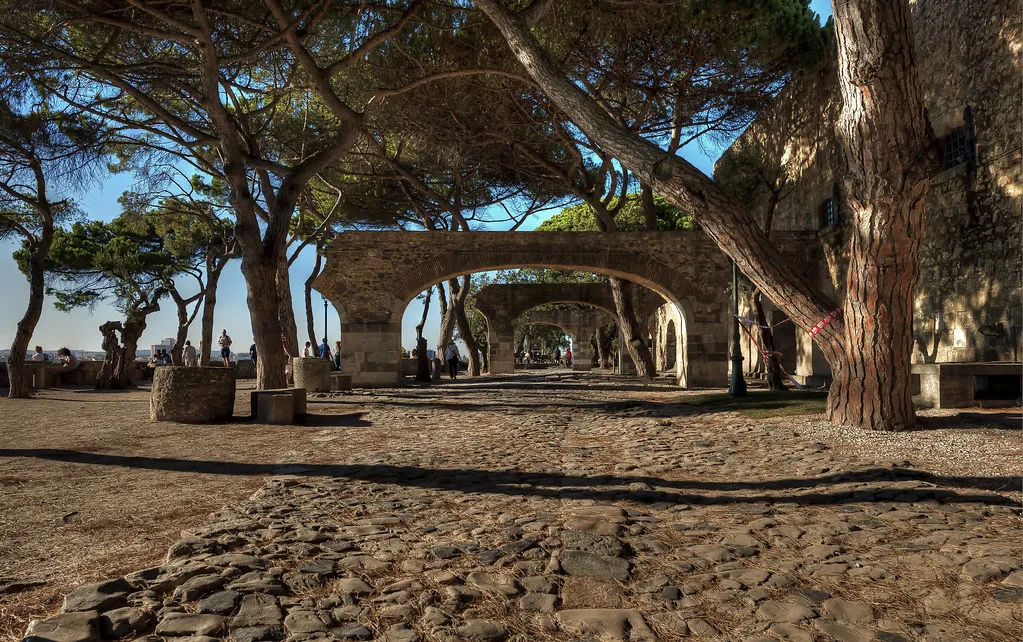
After 22:00 the same five-block grid becomes one of Europe's most condensed bar districts. Tiny ground-floor taverns spill drinkers onto the cobblestones, Fado guitars drift through open doors on Rua do Norte, and the air smells of grilled sardines and spilled Sagres. Understanding this rhythm — quiet morning, dinner from 20:00, full chaos by 23:00 — is the single most important thing a first-timer can know about visiting Bairro Alto in 2026.
A Brief History of the Bohemian Quarter
Bairro Alto was laid out in 1513 as Lisbon's first planned district, a small grid pushed beyond the medieval wall that once stood where Praça Luís de Camões is today. Aristocrats and wealthy merchants built townhouses here to escape the cramped lower city, and the orderly grid still makes Bairro Alto far easier to navigate than the Moorish maze of Alfama next door.
The 1755 earthquake that flattened Baixa mostly spared Bairro Alto, so you still see pre-Pombaline facades and quirky 17th-century stone reliefs above shopfronts. By the late 1800s the neighborhood became the city's media district — major newspapers including Diário de Notícias and O Século set up presses here, and the streets still carry their names. Journalists working late shifts spawned the first wave of after-hours bars; artists and writers followed, and the bohemian identity calcified across the 20th century while Fernando Pessoa drifted between the cafés of nearby Chiado.
Must-See Attractions and Scenic Viewpoints
Igreja de São Roque has the plainest exterior of any major church in Lisbon and one of the most spectacular interiors. The 16th-century Chapel of St. John the Baptist, assembled in Rome from lapis lazuli, amethyst, and gilded bronze before being shipped to Lisbon, was once described as the most expensive chapel in Europe. Entry to the church is free; the attached museum costs around 2.50 EUR.
Miradouro de São Pedro de Alcântara is the postcard view — two landscaped terraces facing São Jorge Castle and the Tagus River. Arrive 45 minutes before sunset for a kiosk drink and a bench. For a quieter alternative, walk five minutes south to Miradouro de Santa Catarina, where students sit on stone steps and street musicians play until late. The Museu da Farmácia next door is a strange, almost-empty museum tracing the history of pharmacy from the 15th century, complete with a transplanted 19th-century Macau apothecary — worth an hour on a rainy afternoon.
The Glória Funicular Hack: Photos vs. the Easy Ride
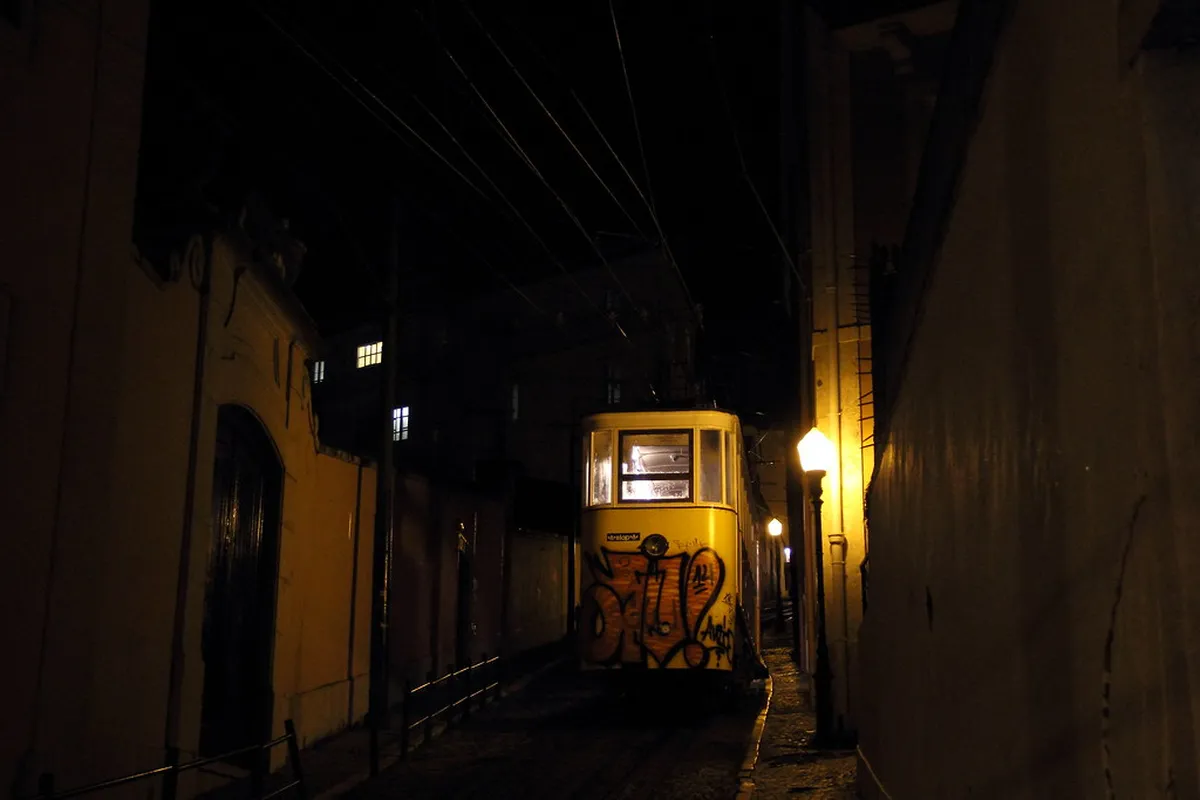
The Elevador da Glória has connected Praça dos Restauradores to the Miradouro de São Pedro de Alcântara since 1885. A single ride costs 4.10 EUR onboard in 2026, is included free with the 24-hour Carris/Metro pass (around 6.80 EUR) and with the Lisboa Card. The climb takes about three minutes and saves your knees from a 265-metre uphill on slick calçada portuguesa.
Here is the trade-off most guides miss. If your priority is the easiest ascent, board at the bottom in Praça dos Restauradores and ride up — you arrive five steps from the viewpoint kiosks. If your priority is the iconic photo of a graffiti-covered yellow tram framed against the lower city, do the opposite. Walk up via Calçada do Glória, then position yourself at the top of the slope as the next car descends. The downhill angle, the street-art panels along the rails, and the rooftops of Baixa behind it produce the shot that fills Instagram. Cars depart every 10 to 15 minutes and shut down around 21:00.
The Bica Funicular on the southern edge of the neighborhood is the smaller, prettier sibling. It connects Largo do Calhariz down to Rua de São Paulo via Lisbon's most photographed street. Bica is less crowded, the cars frame a clean view of the river, and the surrounding street is often empty mid-afternoon. If you only photograph one funicular, photograph Bica from below at golden hour.
Bairro Alto After Dark: Fado and Nightlife
Fado is the soulful Portuguese folk music UNESCO listed as Intangible Cultural Heritage in 2011, and Bairro Alto remains one of the easiest neighborhoods to hear it without traveling to Alfama. The party itself does not start until 23:00 — bars open from 19:00 and dinner runs until about 22:30, but the streets fill only after the kitchens close. Most venues are tiny, so the crowd spills onto Rua da Atalaia, Rua da Rosa, and Rua do Diário de Notícias. That street-drinking density is the Bairro Alto experience. A guided Lisbon nightlife crawl is reasonable if you want a curated route, but most travelers do better just wandering between three or four small bars.
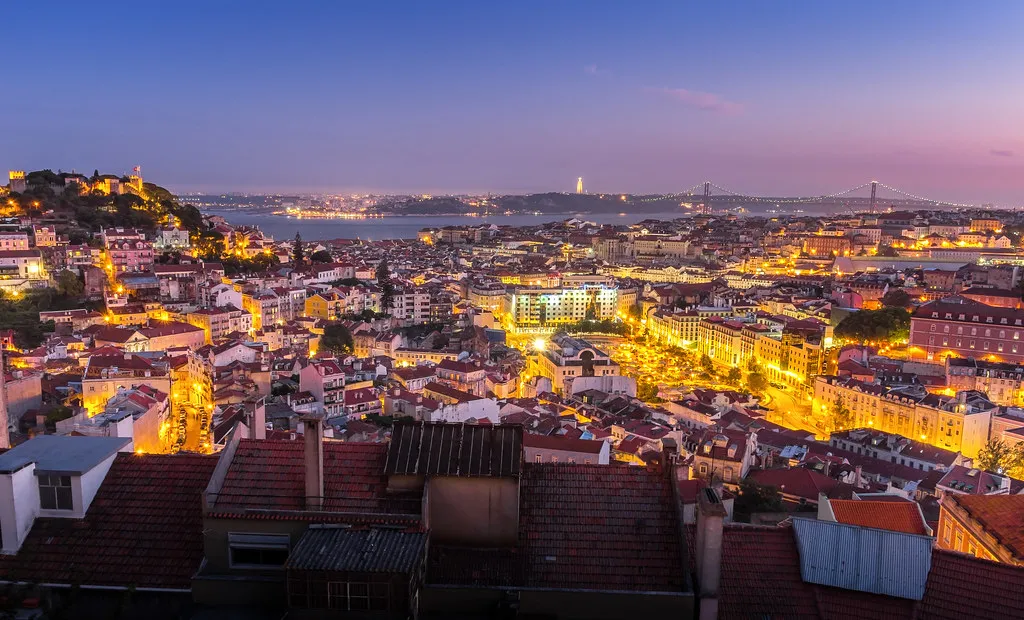
Two practical 2026 notes. Lisbon City Council has tightened noise enforcement on the most-residential streets — drinking outside is no longer permitted on certain blocks after 02:00, and police will ask crowds to disperse. When the Bairro Alto crowd thins around 03:00, the party migrates downhill to Cais do Sodré and Pink Street (Rua Nova do Carvalho), where larger clubs run until 06:00.
Outdoor drinking on certain residential streets in Bairro Alto is restricted after 02:00 under 2026 noise enforcement rules — police will disperse crowds. Move to Cais do Sodré for late-night clubs that run until 06:00.
Fado Booking Guide: Prices, Etiquette, and Tourist Traps
The first rule of Fado is total silence during a song. No talking, no clinking glasses, no phone screens, no flash photography — staff will shush you and other diners will glare. Performances run in 20 to 30 minute sets across an evening, with breaks between sets where conversation is welcome. Clap at the end of each song, not in the middle.
Expect to pay 35 to 60 EUR per person for a dinner-and-show at a respected Bairro Alto Fado house in 2026, plus drinks. Reliable choices include O Faia on Rua da Barroca (the classic, with menus from 50 EUR), Adega Machado nearby, and Senhora do Fado for a slightly more touristic but well-run experience. Reservations are essential on Friday and Saturday — book 5 to 7 days ahead. Most houses have two seatings, around 20:00 and 22:30; the later one tends to draw a more local crowd. See our Lisbon fado music guide for venues across the city.
Avoid spots with menu boards in five languages, plastic photos of food outside, and touts hustling for "authentic Fado" on Rua do Norte after 21:00 — these are nearly always tourist traps with frozen bacalhau and recorded music between live sets. A genuine Fado house has no menu out front, a reservation book at the door, and a quiet room at 21:00 because diners are listening, not eating.
Top Bairro Alto Fado houses like O Faia and Adega Machado require reservations 5 to 7 days ahead on weekends. The later 22:30 seating tends to draw a more local crowd than the 20:00 sitting.
Foodie Paradise: Best Restaurants in Bairro Alto
Bairro Alto's dining mix runs from family-run tascas charging 12 EUR for grilled mackerel to Michelin-listed kitchens serving 90 EUR tasting menus. For a true tasca experience, look for chalkboard menus in Portuguese only, paper tablecloths, and a TV showing football — places like Cervejaria Trindade in a converted convent on Rua Nova da Trindade. Browse our wider list of best restaurants in Lisbon for cross-neighborhood picks, including Michelin-star options.
For modern Portuguese cuisine the standouts are 100 Maneiras (one Michelin star, around 130 EUR), Páteo - Bairro do Avillez (José Avillez's casual concept, octopus tartare in the 30 to 50 EUR range), and Essencial for upscale French-Portuguese. Carnal on Rua do Norte does Mexican gastro-pub well; Tantura serves the area's best hummus and falafel; Casanostra has been doing solid Italian pasta since the 1980s. Finish dinner with a Ginjinha — Lisbon's sour-cherry liqueur — at a standing-only counter for around 1.50 EUR a shot, then walk five minutes downhill to the Time Out Market at Mercado da Ribeira for a nightcap or a late bite under one roof.
Where to Stay: Top Neighborhood Hotels
Sleeping inside Bairro Alto requires honest answers about your noise tolerance. The grid's main bar streets stay loud until 03:00 or 04:00 on Friday and Saturday, and even soundproof double-glazing only does so much when 200 people are talking under your window. Light sleepers should book at the edges of the neighborhood. Browse our wider guide to the best areas to stay in Lisbon for full-city context.
The flagship is the Bairro Alto Hotel on Praça Luís de Camões, with a rooftop bar that has the best Tagus view of any hotel in the area. The Lumiares Hotel & Spa offers serviced apartments with kitchens — useful for longer stays. The Palácio Ludovice Wine Experience Hotel sits across from the Glória Funicular in an 18th-century palace. Boutique stays like Almaria Edificio Oficina Real and Bairro House Charming Suites cost less and put you in the middle of the action.
Use the matrix below to pick a street that matches your tolerance. Streets near Praça Luís de Camões are quieter; streets near Rua da Atalaia are the loudest in the city.
- Rua da Atalaia — High noise, packed with bars, loudest option after midnight
- Rua da Rosa — High noise, action central, popular with younger travelers
- Rua do Diário de Notícias — Medium-high noise, restaurant-heavy, slightly calmer than Atalaia
- Praça Luís de Camões edge — Medium noise, walkable to everything, double-glazing handles it
- Rua da Misericórdia (Chiado side) — Low-medium noise, polished, quick walk into the action
- Rua do Século (western edge) — Low noise, residential, the quietest sleep in the area
Bairro Alto vs. Chiado vs. Cais do Sodré: Picking Your Base
Three neighborhoods sit shoulder-to-shoulder at the top of central Lisbon and travelers routinely confuse them. Chiado is the elegant ground-floor of Bairro Alto's hill — wide pedestrian streets, big-name shopping on Rua Garrett, the A Brasileira café where Fernando Pessoa drank his coffee. Bairro Alto sits directly above Chiado with the bohemian grid and the bars. Cais do Sodré is the riverfront strip below, anchored by the painted cobblestones of Pink Street.
Choose Chiado if you want Bairro Alto without the noise — uphill into the bars in five minutes, then back to a calm hotel. Choose Bairro Alto itself if you want to step out of your door into the chaos. Choose Cais do Sodré if you came specifically for the hardest-running club scene and like a grittier feel. For first-timers comparing Bairro Alto with Alfama, the contrast is starker — Alfama is the ancient, residential, Moorish-era labyrinth east of Baixa with Tram 28 and the Castle, while Bairro Alto is younger, better organized, and far louder after dark. Pick Alfama for atmosphere and history, Bairro Alto for nightlife and dining variety.
Practical Logistics: Getting There and Around
The fastest route from anywhere in central Lisbon is the metro. Take the green or blue line to Baixa-Chiado, follow signs for the "Largo do Chiado" exit, and ride the long escalators up — they spit you out a five-minute walk from Praça Luís de Camões. From the airport, take the red line to Alameda, switch to the green line, and ride to Baixa-Chiado in roughly 25 minutes. Our Lisbon transport guide covers passes and trams in detail.
From Avenida da Liberdade or Rossio, ride the Glória Funicular up from Praça dos Restauradores. From Cais do Sodré, walk uphill via Rua do Alecrim or take the Bica Funicular from Rua de São Paulo. Tram 28 makes a stop in the area but is overcrowded and prone to pickpockets — use it for the experience, not the journey. Once inside the grid, walk. Wear shoes with grip — Lisbon's calçada portuguesa cobblestones become genuinely slippery in light rain. A common first-timer mistake is showing up at 19:00 expecting nightlife already in full swing; bars are still half-empty and dinner has not started. Aim for 21:00 for dinner and 23:00 for bars, and you will arrive on Lisbon's actual schedule.
Frequently Asked Questions
Is Bairro Alto safe at night?
Yes, Bairro Alto is generally safe at night because the streets are very crowded. However, you should watch out for pickpockets in the dense crowds. Always keep your belongings close and avoid poorly lit alleys away from the main bars.
What is the best time to visit Bairro Alto?
The best time to visit depends on your goals for the trip. Visit in the late morning for quiet streets and photography. Head there after 9:00 PM if you want to experience the famous nightlife and dining scene.
Is Bairro Alto too noisy to stay in?
It can be very noisy on Friday and Saturday nights. If you are a light sleeper, choose a hotel with soundproof windows or stay on a quieter side street. Most noise subsides by the early morning hours. Learn more about choosing the right stay.
How do I get from Baixa to Bairro Alto?
You can take the Elevador da Glória funicular for a scenic ride. Alternatively, use the escalators inside the Baixa-Chiado metro station to reach the top of the hill. Walking is also an option if you enjoy steep climbs.
Bairro Alto remains one of the most charismatic corners of Lisbon. Its ability to switch from a quiet historical village to a vibrant party hub is unique — you can spend your morning admiring 16th-century gold and your evening dancing in the street.
Respect the Fado houses, time your dinner past 21:00, and pick a hotel street that matches your noise tolerance. When the night winds down, the adjacent Cais do Sodré district just downhill offers a different energy — Pink Street, the Time Out Market, and the ferry terminal all within easy walking distance. Wear shoes with grip for the cobblestones. The soul of Lisbon lives in these narrow streets and friendly taverns, and a thoughtful visit in 2026 will easily be a highlight of your Portuguese trip. For the full picture of where Bairro Alto fits among Lisbon's distinct districts, see our guide to Lisbon's essential neighborhoods. Pair this guide with our Nazaré From Lisbon and 8 Essential Stops & Routes for a Lisbon Walking Tour for a fuller Lisbon picture.