

Getting Around the Algarve by Train and Bus: A Complete Guide
Master the Algarve public transport system. Learn how to use the Linha do Algarve train, Vamus buses, and Faro Airport transfers without needing a rental car.
On this page
Getting Around the Algarve by Train and Bus
The Algarve is one of the few European coastal regions where you can ditch the rental car and still reach almost every postcard town on the map. A single regional rail line runs the length of the coast, and a tight web of Vamus buses fills in everything off the tracks. Once you understand how the two networks fit together, navigating from Lagos to Tavira costs less than a beach lunch.
This 2026 guide focuses on the practical mechanics: which app to install, where the trains and buses actually stop, what tickets cost, and how to get out of Faro Airport after a late-evening EasyJet landing. The goal is to give you a publishable plan before you board the plane.
Public Transport in the Algarve: An Overview
The Algarve runs on two parallel systems. Comboios de Portugal (CP) operates the Linha do Algarve, a single regional railway that hugs the coast from Lagos in the west to Vila Real de Santo António on the Spanish border. Vamus Algarve, the regional bus consortium that absorbed the old Eva Transportes network, runs everything else, and Rede Expressos handles long-distance coaches to Lisbon, Porto and Seville.

Most visitors who skip the Lagos car rental route end up using a mix of both. Trains are faster and more comfortable for the main coastal corridor; buses are essential for cliff-top viewpoints, mountain villages, and the western Costa Vicentina, where no track has ever been laid.
Three apps cover almost everything: CP for trains, Vamus for regional buses, and Google Maps as a sanity check on schedules. Download all three before you arrive — Portuguese station Wi-Fi is patchy and you do not want to be buying a ticket on roaming data.
Traveling the Algarve by Train (Linha do Algarve)
The Linha do Algarve is a single 140 km regional line with roughly 22 stations. Faro is the operational hinge: trains coming from the west (Lagos, Portimão, Albufeira-Ferreiras, Tunes) terminate or pass through Faro, and a separate set of services runs east toward Olhão, Fuseta, Tavira and VRSA. End-to-end Lagos to VRSA takes about 3 hours 30 minutes with a transfer.
Regional fares are flat and cheap. Lagos to Faro is around €7.30, Faro to Tavira €3.80, Albufeira (Ferreiras) to Faro €3.90. Buy at the platform machine, the manned counter, or in the CP app — there is no advance-booking advantage for regional trains and no seat reservation. Trains run roughly hourly during daytime and thin out after 21:00.
Two big caveats. First, the Lagos branch breaks off the main Lisbon line at Tunes, so anything coming from north of the Algarve usually means a transfer there. Second, several Algarve stations are nowhere near the towns they are named after — covered in detail below — so always check the walking distance before you commit.
There is no advance-booking advantage for regional trains on the Linha do Algarve and no seat reservation is needed — you can buy your ticket at the platform machine or in the CP app while walking to the platform. Trains run roughly hourly during daytime.
The East-West Split: Why Faro Is Always a Transfer
The Linha do Algarve is technically one line, but in practice CP timetables it as two: a western leg (Lagos–Faro) and an eastern leg (Faro–VRSA). Almost no through-trains run the full length, which means a Lagos-to-Tavira journey will involve walking across a platform at Faro. Transfer windows are usually 10 to 25 minutes — long enough to grab an espresso, short enough that you should not wander.
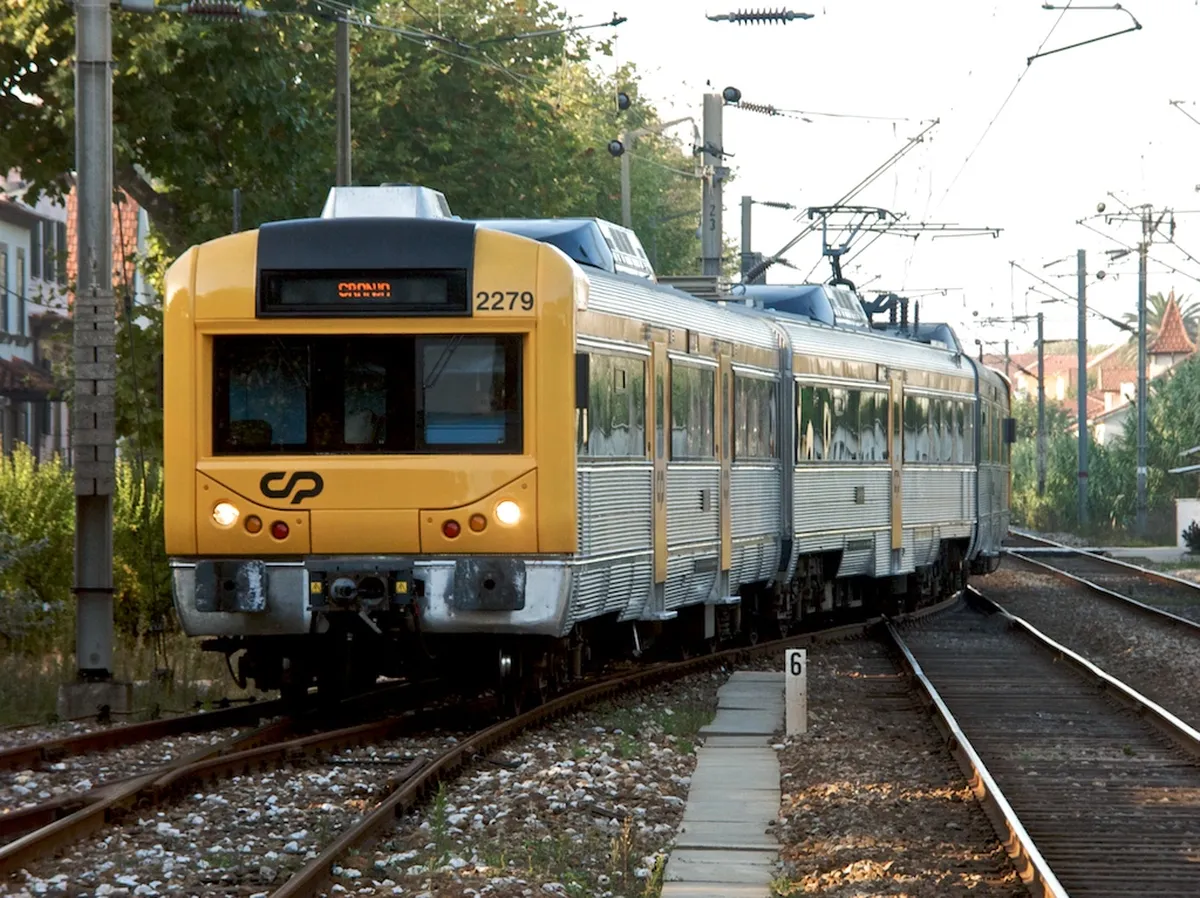
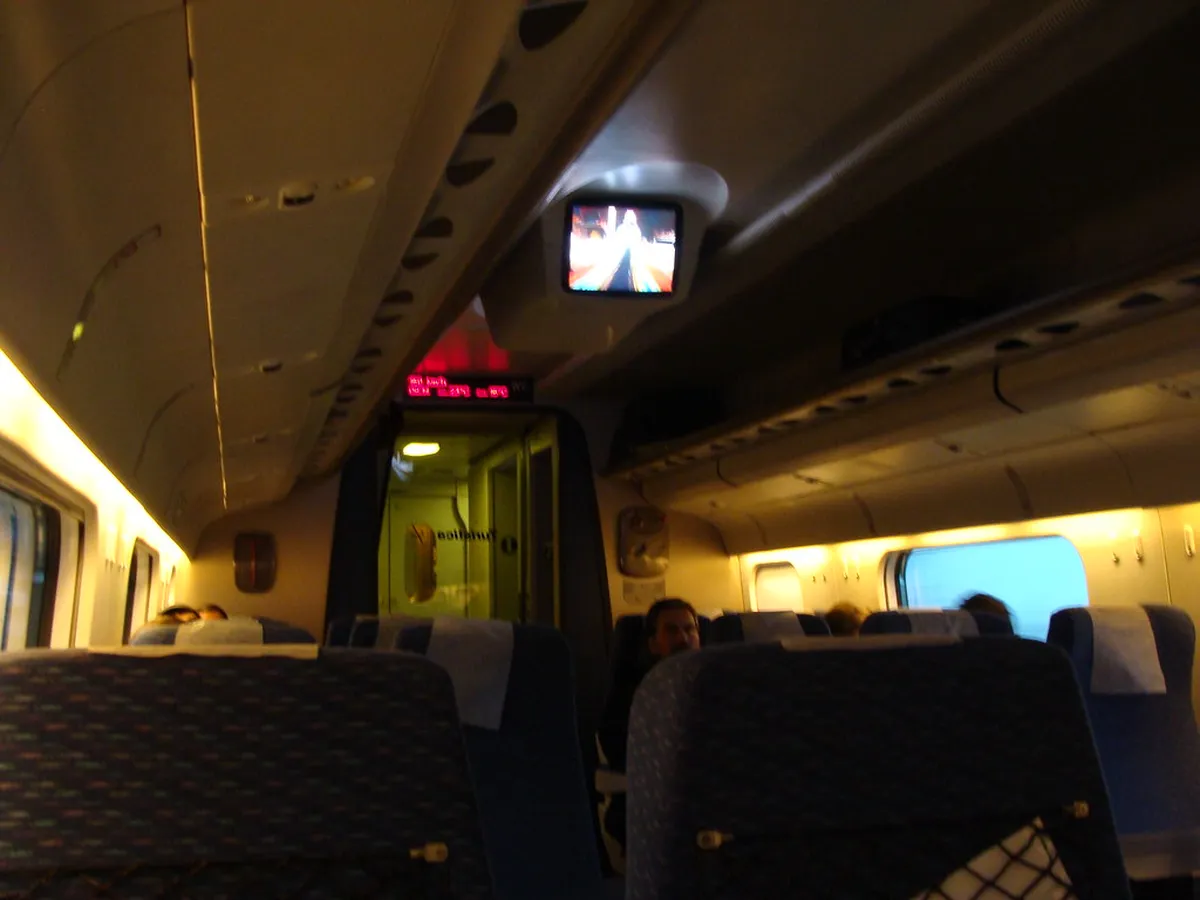
The eastern leg has the older rolling stock and the prettiest views: salt pans, the Ria Formosa lagoon, fishing villages with tile facades. The western leg uses newer Class 0350 units and is the workhorse for tourists shuttling between Albufeira, Portimão and Lagos. Knowing which leg you are on matters because the eastern line skips a beat on Sundays — service can drop to one train every two hours after lunch.
Navigating the Algarve Bus Network (Vamus & Rede Expressos)
Vamus is the brand that now covers the regional network previously run by Eva Transportes, Frota Azul and Renex. One website (vamusalgarve.pt), one app, one fare structure. Tickets scale by distance, from €1.30 for a 2 km hop to roughly €8.50 for a 120 km long-haul. You can pay the driver in cash or contactless on most coastal lines.
The most useful Vamus routes for visitors are line 56 (Faro Airport ↔ Albufeira ↔ Portimão ↔ Lagos), line 14/16 (Faro Airport ↔ Faro city), and the cliff-and-village runs out of Lagos to Sagres, Luz and Salema. Line 56 is the one to memorise: it is often faster than the train for airport transfers because it skips the Faro city detour entirely.
For longer hops outside the region, Rede Expressos coaches run from Faro, Albufeira and Lagos to Lisbon (3h45m–4h, around €20–22 booked ahead) and Seville (3h, around €19). Book through rede-expressos.pt; printed or screenshot tickets are both accepted at the platform.
- Line 56 — Faro Airport to Lagos via Albufeira and Portimão; the airport-to-coast workhorse.
- Lines 14 and 16 — short shuttles between Faro Airport and Faro bus/train station; €2.45 single, every 20 minutes daytime.
- Vamus regional — covers Sagres, Monchique, Alte, Cacela Velha and the inland villages no train serves.
- Rede Expressos — long-distance coaches to Lisbon, Porto, Seville and Madrid.
Getting to and from Faro Airport via Public Transport
There is no train station at Faro Airport (FAO). To reach the rails, you take a 6 km bus or taxi ride into Faro city. Vamus lines 14 and 16 stop directly outside the terminal arrivals hall, run roughly every 20 minutes from 05:20 to about 23:00, cost €2.45, and reach Faro train station in 20 to 25 minutes. Buy on board with cash or contactless.
If you are heading west to Albufeira, Portimão or Lagos, skip the Faro detour entirely and grab line 56, which leaves from the same airport stop. Faro Airport to Lagos by line 56 takes around 1h50m and costs €15. Compared with the bus-train-train chain via Faro and Tunes, it is cheaper, simpler and only 15 minutes slower. For the reverse trip, see our Lagos to Faro Airport guide.
Late arrivals are the painful edge case. Public transport from Faro Airport effectively ends around 23:00; the last line 56 to Lagos typically departs around 19:55, and even the airport shuttles into Faro city stop before midnight. If your flight lands after 22:30, plan for a taxi (around €15 to Faro centre, €75 to Lagos) or a pre-booked transfer. Do not assume Uber will be available — supply thins out fast in low season.
The last Vamus line 56 bus from Faro Airport to Lagos departs around 19:55, and all airport shuttles to Faro city stop before midnight. If your flight lands after 22:30, budget for a taxi (around €15 to Faro centre or €75 to Lagos) — do not rely on public transport.
Regional Train vs. Bus: A Route-by-Route Comparison
The honest answer is that neither always wins. Trains are faster and more comfortable on the main coastal spine; buses get you closer to the actual town centre and reach places the rails do not. Here is how the most-searched routes break down in 2026:
- Faro ↔ Lagos: Train ~1h45m, €7.30, hourly. Bus (line 56) ~1h50m, €8.50, every 1–2 hours. Train wins on price; bus wins if you are starting at the airport.
- Faro ↔ Albufeira: Train ~30m to Albufeira-Ferreiras station, €3.90 — but the station is 6 km from the resort strip. Bus ~50m, €4.85, drops you in central Albufeira. Bus wins for most travellers.
- Faro ↔ Tavira: Train ~35m, €3.80, frequent. Bus ~55m, €4.30. Train wins clearly.
- Lagos ↔ Sagres: No train. Vamus bus only, ~1h, €4.30, roughly every 1–2 hours.
- Faro ↔ Lisbon: Alfa Pendular train ~3h, €23–32 (cheaper booked 5+ days out). Rede Expressos coach ~3h45m, €20. Train wins on speed and comfort.
One pattern to internalise: if your destination ends in "-Ferreiras" or has the suffix "(estação)", the train station is genuinely far from town and you will need a connecting bus or taxi. Albufeira, Loulé and Silves are the worst offenders.
| Route | Best Option | Journey Time | Price (2026) | Notes |
|---|---|---|---|---|
| Faro ↔ Lagos | Train | ~1h 45m | €7.30 | Bus (line 56) is better from the airport |
| Faro ↔ Albufeira | Bus | ~50m | €4.85 | Train station is 6 km from resort strip |
| Faro ↔ Tavira | Train | ~35m | €3.80 | Frequent service, station is central |
| Lagos ↔ Sagres | Vamus bus | ~1h | €4.30 | No train; roughly every 1–2 hours |
| Faro ↔ Lisbon | Alfa Pendular train | ~3h | €23–32 | Cheaper booked 5+ days ahead |
The Station Trap: Why "Albufeira" on the Map Is 6 km from the Beach
This is the single biggest mistake first-time Algarve visitors make, and almost no SERP guide flags it clearly. Several Algarve train stations sit several kilometres inland from the towns whose name they share. Albufeira-Ferreiras station is 6 km north of Albufeira old town. Loulé station is 5 km from Loulé itself. Silves station is 2 km from the castle. Ferragudo "station" is actually 4 km from the village across the Arade river.
Plan for the connection before you book. From Albufeira-Ferreiras, the Vamus Giro shuttle runs to the old town for €1.30 and is timed to most train arrivals. From Silves and Loulé, expect a 10-minute walk to a local bus stop or a €6–8 Bolt ride. The official CP app does not show this last-mile gap, which is exactly why luggage-laden tourists end up stranded at empty platforms in the heat. Treat the train as door-to-station, not door-to-door.
Buying Tickets and Using the CP.pt App
The CP app (search "Comboios de Portugal" in the App Store or Play Store) is the single most useful tool you will install for this trip. It does five things competitors usually skip past: live train running status, digital ticket purchase with QR code, seat selection on Alfa Pendular and Intercity, your Apple/Google Wallet pass, and price-by-date calendar so you can see when advance fares unlock.
Setup takes three minutes. Create an account with email, add a payment card, and enable notifications so you get a ping if your platform changes at Faro. For regional trips (Lagos ↔ Faro, Faro ↔ Tavira), you can buy a ticket while walking to the platform — there is no booking lead time and no seat assignment. For long-distance Alfa Pendular and Intercity, the app shows green/yellow/red dots on the calendar; green dates mean discounted "Promo" fares are still available, often 40 to 65 percent off the walk-up price.
One quirk: the CP app sometimes fails to load schedules for the Vamus-operated airport shuttles or for regional buses in general. That is normal — buses are not in the CP system. Use the Vamus app or vamusalgarve.pt for those, or fall back on Google Maps, which has full integration with both networks.
Long-Distance Connections: Algarve to Lisbon, Porto and Seville
For Lisbon, the choice is Alfa Pendular (AP) versus a Ryanair or TAP flight from Faro. On paper the plane wins — 50 minutes in the air versus 3 hours on the rails. In practice, the door-to-door comparison is much closer. Add 90 minutes for FAO check-in and security, 30 minutes from Lisbon Airport into the city via metro, and your "fast" flight becomes 3h10m. The AP train delivers you straight into Estação do Oriente in the heart of the new city, with no luggage limits and a power outlet at every seat. Booked 5+ days ahead in 2026, AP fares from Faro to Lisbon start around €23 second class and €30 first.
The cheaper rail option is the Intercity (IC) service, around €19, roughly 30 minutes slower. Both run from Faro and stop at Albufeira-Ferreiras, Tunes, and a couple of Alentejo towns. From Lagos or Portimão you must change at Tunes — the connection is timed but tight, so do not book the next train if you are running with checked baggage.
For our Lisbon to Lagos train route in reverse, the same rules apply. To Seville, skip the rails — there is no direct train. Take a Rede Expressos or Alsa coach from Faro (3 hours, around €19) or, in summer, the seasonal ferry-and-bus combo from VRSA across the Guadiana.
Places in the Algarve Not Accessible by Train
The rails stop at Lagos. Everything west — Sagres, Cape St Vincent, Aljezur, Carrapateira, the wild Costa Vicentina beaches — is bus-only. A Sagres from Lagos day trip means catching the Vamus bus from the Lagos rodoviária next to the train station; it runs roughly every 1–2 hours and takes about an hour each way.
The mountainous interior is also off the rail map. Monchique, the spa town beneath the Algarve's highest peak, is reached by Vamus bus from Portimão (about 45 minutes). Alte, Querença and the cobbled hill villages above Loulé require either a bus and a long walk, or your own wheels. Cliff-top beaches like Praia da Marinha and the Benagil cave are not on any timetable — you walk in from Carvoeiro or join a tour.
Algarve Without a Car: Practical Tips for Success
Pick a base with a real train station inside the town, not a satellite halt. Lagos, Faro, Olhão and Tavira are the four towns where the platform is genuinely walkable to your hotel. Build your day trips from Lagos around the rail spine and use Vamus only for the cliff-and-cape detours.
Travel light. Algarve trains have no dedicated luggage car and overhead racks are narrow; a 55 cm cabin case is fine, two large suitcases per person are misery. Keep your CP and Vamus tickets accessible — inspectors board at random and a paper or QR fine is €120+ if you cannot produce one.
Sundays and shoulder season demand respect. From November to March, several Vamus routes drop to two or three departures a day, and the last bus back from Sagres or Monchique can leave as early as 17:30. Always photograph the timetable at the stop when you arrive somewhere remote — Portuguese rural bus shelters do not always have signal, and the Vamus app caches poorly offline.
Essential Resources and Local Transport Apps
Three apps and one website cover 95 percent of what you need: the Comboios de Portugal app for trains, the Vamus Algarve app and site for buses, Google Maps for cross-network sanity checks, and the volunteer-maintained Algarve Bus Info for the most reliable English-language timetable archive — particularly during the May and October timetable changeovers when official sources lag.
Tourist offices in Faro, Lagos and Tavira hand out a free folded map with both the Linha do Algarve and the main Vamus lines printed on one side. Pick one up on day one; it is the fastest way to spot which towns have a station, which need a bus, and where the connecting numbers lie. Combine it with the apps above and you will navigate the Algarve more reliably than most rental-car drivers stuck in N125 summer traffic.
Frequently Asked Questions
Is it easy to get around the Algarve without a car?
Yes, it is quite manageable to explore the region using the train and bus networks. Most major tourist towns are well-connected, though you may need to walk or take a taxi to reach some remote beaches. Choosing to stay in Lagos provides an excellent base with great transit links.
How much does a train ticket cost in the Algarve?
Regional train tickets are very affordable, typically costing between three and eleven Euros depending on the distance. For example, a one-way trip from Lagos to Faro usually costs around seven Euros. You can purchase these tickets easily at any station window or through the official mobile app.
Can I use contactless payment on Algarve buses?
Most regional Vamus buses now accept contactless credit cards or mobile payments for single fares. However, it is always a good idea to carry some small change in Euros just in case the electronic system is down. For the best value, consider purchasing a pre-paid tourist pass at a local ticket kiosk.
Does the train go directly to Faro Airport?
The train does not stop at the airport terminal, so you must first go to the Faro city station. From there, you can take the frequent Bus 14 or 16 for a short ride to the airport. This transfer is simple and takes about twenty minutes during regular daytime hours.
Travelling the Algarve by train and bus is not just a budget hack — it is the most relaxing way to see a coastline that punishes drivers with summer traffic and €30 beach-town parking. Master the CP and Vamus apps, respect the station-to-town gap, and plan a backup for late flights, and you can cover Lagos to the Spanish border without ever touching a steering wheel.
For the wider city context, see our complete Lagos travel guide.
For related Lagos deep-dives, see our Lagos Portugal Car Rental: 8 Essential Tips for Your Trip and Ponta Da Piedade Kayak Tour: The Ultimate Guide guides.
 Lisbon To Coimbra By Train Travel GuideMay 26, 2026