
Top Porto Attractions: The Complete 2026 Guide to Porto's Best Sights
Porto's best attractions for 2026 — from UNESCO Ribeira and the Dom Luís Bridge to Livraria Lello, São Bento's azulejo hall, the gilded São Francisco church, rooftop viewpoints, and the neighborhoods every first-timer should walk.
On this page
Porto's greatest trick is how compact it is. The city's headline sights cluster inside a UNESCO-protected old town barely a kilometer across, meaning first-time visitors can walk between nearly every must-see on this list in a single day. You'll climb granite staircases, cross a double-decker iron bridge, step into a neo-Gothic bookshop, and stand inside a church dripping with gold leaf — all without ever catching a tram.
This 2026 guide goes beyond the standard top-10 checklist. Below you'll find the 13 landmark attractions, a neighborhood-by-neighborhood breakdown, Porto's best miradouros (viewpoints), the day trips worth your time, a season-by-season planning guide, and the practical info that makes the difference between a rushed visit and a confident one. If you're building a broader plan, see our full guide to things to do in Porto for food stops and experience ideas beyond this list.
1. Ribeira District
Ribeira is the Porto most travelers picture before they arrive — a tumble of pastel houses stacked above the Douro, laundry strung from balconies, and cobbled alleys spilling down to the Cais da Ribeira waterfront. The district has held UNESCO World Heritage status since 1996, and wandering its lanes is free at any hour.
Start at Praça da Ribeira and follow the riverfront east. You'll pass traditional rabelo boats — the flat-bottomed wooden vessels once used to ferry port wine barrels downriver from the Douro Valley — now moored for photo ops. The arcaded cafés behind the square charge a premium for the view, so grab a pastel de nata at a backstreet bakery instead and eat it on the quay.
Photographers should return at golden hour, when the setting sun lights up the east-facing houses and the Dom Luís I Bridge throws a long shadow across the water. This is also the launch point for most Douro river cruises and the ferry to Vila Nova de Gaia, where the port wine lodges line the opposite bank. For a lane-by-lane route including the best photo stops, miradouro tie-ins, and the golden-hour bridge-crossing strategy, see our complete Porto Ribeira riverfront walking guide.
2. Dom Luís I Bridge
The Dom Luís I Bridge is Porto's most recognizable structure and one of the best free experiences in the city. Completed in 1886, the double-decked iron arch was designed by Théophile Seyrig — a former partner of Gustave Eiffel — and at the time of its opening held the world record for the longest iron arch span at 172 meters.
Cars and the Metro use the upper deck; pedestrians can walk either level, but the top is the one to aim for. From there you get a sweeping panorama of Ribeira below, the terracotta rooftops of Porto's old town, and the port lodges of Vila Nova de Gaia on the south bank. It's the single best free viewpoint in the city.
To reach the upper deck, walk up through Ribeira's staircases or take the Funicular dos Guindais from the riverfront. Cross at sunset — roughly 6 pm in April, 8:30 pm in summer — and you'll share the deck with every photographer in Porto. Allow 15–20 minutes to walk across and back.
3. Livraria Lello
Livraria Lello has been called the most beautiful bookshop in the world, and even after the crowds and the entrance fee, it's hard to argue with the claim. Opened in 1906, the neo-Gothic interior is built around a sinuous forked red staircase, stained-glass skylight, and carved wood shelving that looks carved from a single piece of mahogany (it isn't — the columns are painted plaster, a clever 1900s trick).
Since 2015, Lello has required a timed ticket to control crowds after daily visitor numbers topped 4,000. In 2026, tickets run €8 for standard entry and €10 for priority, both bookable on the official livrarialello.pt site. The fee is fully refunded against any book purchase, which is why you'll see visitors leaving with slim paperbacks or a Lello-branded edition of The Little Prince.
The worst time to visit is between 11 am and 2 pm, when tour groups and day-trippers from Lisbon converge. Book the first slot of the day (usually 9:30 am) or the last (around 6:30 pm) and you'll actually have room to photograph the staircase. The shop is just a five-minute walk from Clérigos Tower, making the two easy to combine.
Though often linked to Harry Potter because J.K. Rowling taught English in Porto in the early 1990s, Lello's staff are careful to note the author has never confirmed the shop inspired Hogwarts. Believe what you like — the building is extraordinary on its own merits.
Book the first slot (9:30 am) or the last slot (around 6:30 pm) at Livraria Lello to avoid tour groups and actually have room to photograph the staircase. The €8 ticket fee is fully refunded against any book purchase.
4. São Bento Railway Station
São Bento is the rare attraction that's free, open all day, and hidden in plain sight. It's still a working commuter station, but step into the entrance hall and you'll find yourself surrounded by roughly 20,000 hand-painted blue-and-white azulejo tiles depicting scenes from Portuguese history — the battles, royal weddings, and rural life of centuries past.
The artist Jorge Colaço spent eleven years on the project, installing the tiles between 1905 and 1916. The effect is immersive: a ceramic chronicle wrapping the entire atrium from floor to ceiling, muted and calm despite the bustle of passengers wheeling suitcases beneath it.
Because it's a train station, there's no ticket and no queue. Drop in for ten minutes on your way between Ribeira and Bolhão, or time your visit for early morning when the light streams through the upper windows and the hall is nearly empty. São Bento sits in the heart of central Porto, two minutes' walk from both Avenida dos Aliados and the Clérigos district.
5. Clérigos Tower
The Torre dos Clérigos is the granite exclamation mark of central Porto. Designed by the Italian architect Nicolau Nasoni and completed in 1763, the 75-meter baroque bell tower was once the tallest structure in Portugal and served as a navigation landmark for ships arriving at the mouth of the Douro.
A narrow spiral staircase of 240 steps corkscrews up to the top. It's tight in places — two-way traffic on the final flights can stall for a minute or two — but the reward is a 360-degree view over terracotta roofs, the Douro, and the Serra do Pilar monastery on the Vila Nova de Gaia side. Entry in 2026 is €8, which also includes the church, museum, and a small exhibition in the tower base.
Skip it in heavy rain: the viewing platform is partly open and the iron railings get slippery. On clear afternoons, climb just before sunset and you'll catch Porto's skyline in soft gold light. The tower is less than five minutes' walk from Livraria Lello, so most visitors combine the two.
6. Porto's Azulejo Facades: Carmo, Igreja dos Congregados & Capela das Almas
Beyond São Bento's interior, Porto's other great azulejo moment happens outside — on the tiled facades that cover entire walls of three central churches. All three are free to admire from the street, and together they're walkable in under 20 minutes.
The Igreja do Carmo, near the university, has the largest of the three: a vast blue-and-white side wall installed in 1912 depicting the founding of the Carmelite Order. It's famously positioned beside the Igreja dos Carmelitas, separated by one of the world's narrowest houses — a 1.5-meter-wide "hidden house" built to keep monks and nuns from sharing a wall.
The Capela das Almas, on the edge of the Bolhão market district, is the most photogenic of the set. Its entire facade is sheathed in roughly 16,000 tiles added in 1929 by Eduardo Leite, depicting scenes from the lives of Saint Francis and Saint Catherine. Morning light hits it best. The Igreja dos Congregados, opposite São Bento, rounds out the trio with a smaller but equally rich facade from 1912. Together they make a perfect self-guided "tile trail" through central Porto.
7. Igreja de São Francisco
From the outside, São Francisco looks like a restrained Gothic church. Step inside and the contrast is almost dizzying: the entire baroque interior is smothered in carved wood covered with an estimated 200 to 400 kilograms of gold leaf, applied during the 18th century when Portugal was flush with Brazilian gold.
Altars, columns, cherubs, grapevines, and the famous Tree of Jesse on the north wall all drip with gilding. The church has been deconsecrated since a 19th-century fire, which is partly why photography is permitted and why it functions today as a museum. Entry in 2026 is €7.50 and includes access to the attached catacombs beneath the floor — worth the detour for the ossuary window showing the bones of the faithful below.
It's the one attraction in Porto that genuinely rewards a guidebook or an audio tour; without context, the gilt all blurs together. Plan on 45 minutes inside. São Francisco is a three-minute walk from Ribeira and handily sits between the riverfront and the Clérigos cluster.
8. Palácio da Bolsa
Next door to São Francisco, the Palácio da Bolsa is Porto's 19th-century stock exchange building — and it hides one of Iberia's most extravagant rooms. The Arabian Room (Salão Árabe), completed over 18 years and finished in 1880, is a Moorish-revival fantasy of gilded arabesques, arched windows, and stucco inscriptions copied from the Alhambra in Granada.
Access is by 30-minute guided tour only (€12 in 2026, running every half hour in English, French, Portuguese, and Spanish). Book online if you're visiting in summer — walk-up slots fill by mid-morning. The tour also covers the grand courtyard with its glass-and-iron roof and the old tribunal room still used for ceremonial events.
9. Mercado do Bolhão
Reopened in 2022 after a four-year restoration, the Mercado do Bolhão is Porto's historic two-story market hall and the best place to feel the city's daily rhythm. Fishmongers shout prices, bacalhau stacks tower behind counters, and stallholders offer slivers of Serra da Estrela cheese to anyone who lingers.
Entry is free. Come hungry: the upper gallery has a cluster of small tasca-style restaurants serving €10 lunches of grilled sardines, octopus salad, or the local francesinha. The market is open Monday to Saturday and closes on Sundays. It's a ten-minute walk from São Bento and sits directly across from the Capela das Almas, making an easy morning loop.
10. Miradouro da Vitória
If you only have time for one viewpoint beyond the Dom Luís I Bridge, make it the Miradouro da Vitória. Tucked behind the old Jewish quarter, this small terrace delivers a postcard angle of Porto: the Sé cathedral on the left, the jumble of Ribeira rooftops tumbling down to the Douro, and the Vila Nova de Gaia port lodges across the water.
It's free, never crowded, and open 24 hours. Sunset is the obvious call, but early morning — before the tour buses arrive at the cathedral — is almost as good and you'll have it to yourself. Bring a coffee from a nearby café; there are no vendors at the viewpoint itself.
11. Boat Trips on the Douro River
No visit to Porto is complete without seeing the city from the water. The traditional rabelo boats — flat-bottomed wooden vessels that date from the Middle Ages — were originally built to transport port wine barrels downriver from the Douro Valley vineyards to the cellars of Vila Nova de Gaia. Today they've been converted into passenger cruisers, and their distinctive square sails and curved hulls remain the most photographed boats in Porto.
The classic outing is the 6-bridges cruise, a one-hour loop that passes beneath all six bridges spanning the Douro between Porto and Gaia, including the Dom Luís I, the Maria Pia (designed by Gustave Eiffel), and the modern Infante. Tickets run roughly €18–25 in 2026, with departures every 30 minutes from Cais da Ribeira on the Porto side and Cais de Gaia opposite. No booking required outside peak summer.
For a more atmospheric experience, time your trip for a sunset cruise (around 6 pm in spring, 8:30 pm in summer), when the low light catches the pastel houses of Ribeira and the port lodges glow on the south bank. Several operators add a glass of port wine to the sunset slot for a few euros more — a fitting toast on a boat that once hauled the very same barrels. For the bigger picture of how this fits into a Porto trip, see our things to do in Porto guide.
12. Teleférico de Gaia (Cable Car)
The Teleférico de Gaia is a small but genuinely useful aerial cable car that runs from the upper level of the Dom Luís I Bridge down to the Vila Nova de Gaia waterfront. Opened in 2011, the 600-meter route takes about 5 minutes one way and glides over the rooftops of the port lodges, delivering a panoramic angle on Porto's old town, the river, and the bridge itself that you can't get on foot.
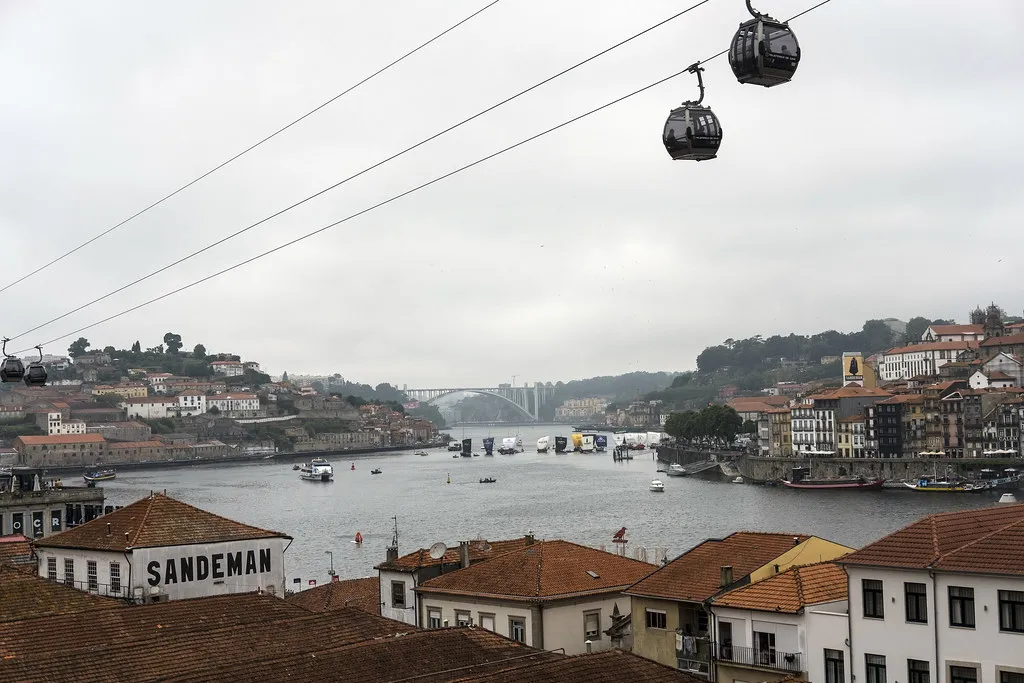
Tickets in 2026 cost €7 single or €10 return, with cabins running every couple of minutes from roughly 10 am to sunset. It's the most convenient way to descend after walking across the upper deck of the bridge — far easier on the knees than the steep staircases that zigzag down through the Serra do Pilar gardens. Most visitors buy a single and walk back across the lower deck of the bridge to return.
13. Sé do Porto (Porto Cathedral)
The Sé do Porto sits on the highest point of the historic center and is one of the city's oldest buildings, begun in the 12th century in a stout Romanesque style. Its fortified granite towers and crenellated outline reflect an era when cathedrals doubled as defensive strongholds, and the rose window above the main entrance is among the finest Romanesque examples surviving in Portugal.
Inside, baroque additions from the 18th century — gilded altarpieces, a silver altar in the Blessed Sacrament chapel, and a grand organ — overlay the older medieval bones. The €3 entry fee includes the adjoining cloister, whose walls are lined with magnificent blue-and-white azulejo panels depicting biblical scenes and the life of the Virgin Mary. Don't miss the upper-floor terrace, which offers a quiet rooftop view across Ribeira to the Douro.
The cathedral is open daily from roughly 9 am to 6 pm and sits just a 5-minute uphill walk from São Bento railway station. Most visitors gravitate toward the Igreja de São Francisco for its gold-leaf dazzle, leaving the Sé refreshingly underbooked even in peak season — making it one of central Porto's better-value stops for travelers willing to climb a short hill.
14. Casa da Música
Most visitors are so focused on Porto's medieval core that they miss its most striking piece of contemporary architecture — the Casa da Música, a concert hall that looks like a white monolith dropped into the middle of the Boavista roundabout. Designed by Rem Koolhaas and opened in 2005, the 1,300-seat Grande Auditório hosts the Porto National Orchestra and visiting international ensembles almost every week of the year.
You don't need a concert ticket to visit. Free guided tours of the building run daily in English (check the official site for times; roughly €9 in 2026) and take you through the main hall, backstage corridors, and the remarkable VIP rooms designed by Ávaro Siza and other Portuguese architects. The main auditorium is built with two full glass walls — an architectural choice that floods the stage with daylight and frames the surrounding city like a living backdrop. Even if music isn't your priority, the building alone is worth the 20-minute Metro ride from the city center (Linha A, stop Casa da Música).
Porto by Neighborhood: Where to Focus Your Time
Porto is not one neighborhood — it's a patchwork of distinct villages that grew together over centuries. Understanding which district to anchor in changes the entire character of your visit. Here's a direct answer: for first-timers with 2–3 days, split your base between Ribeira (riverside atmosphere, UNESCO core) and Baixa/Clérigos (central, near the bookshop and tower). Return visitors should add Cedofeita and Foz do Douro to the itinerary.
Ribeira & Sé — the UNESCO heart
The city's most photographed district and the oldest continuously inhabited neighborhood in Porto. Most of the 13 attractions above fall within or just above it. The Ribeira riverfront walking guide covers every lane worth exploring, including the hidden stairways that most visitors skip.
Baixa & Clérigos — central Porto
The grand beaux-arts spine of the city, anchored by Avenida dos Aliados and São Bento station. Walking distance from Lello, Clérigos Tower, and the azulejo churches. Most mid-range hotels cluster here. Also where you'll find the Mercado do Bolhão and the covered market district that feeds the city every morning.
Cedofeita & Bonfim — Porto's creative quarter
West and east of Baixa respectively, these two neighborhoods are where Porto's younger energy lives. Cedofeita's Rua Miguel Bombarda is lined with contemporary art galleries and independent design shops — the best gallery crawl in northern Portugal. Bonfim is street art, minimalist coffee shops, and the kind of unrenovated old houses that attract photographers. Neither district has a single "must-see" attraction, but both reward an afternoon of wandering. Our Porto neighborhoods guide maps out the best streets in each.
Foz do Douro — where the river meets the Atlantic
Porto's coastal fringe, 8 km west of the center along the river. Foz is residential and quiet, with a long esplanade, good seafood restaurants, the Baroque Forte de São João da Foz, and the Parque da Cidade — the largest urban park in Portugal at 83 hectares. Take the historic tram 1 (runs along the Douro from Infante to Foz; €3.50 single, 2026 fare) for the most scenic ride in the city.
Vila Nova de Gaia — the south bank
Technically a separate municipality across the Dom Luís I Bridge, but functionally part of the Porto visitor experience. Gaia is where the great port wine lodges operate: Sandeman, Graham's, Taylor's, Ferreira, and a dozen others, all on the hillside facing Porto's old town. The Cable Car (Teleférico de Gaia) connects the upper bridge level to the riverfront. Our dedicated Porto port wine cellars guide covers which lodges are worth the queue, with 2026 tour prices and booking tips.
Best Views & Miradouros in Porto
Porto sits on a series of granite ridges above the Douro, which means the city is generous with viewpoints — locals call them miradouros. The city has more than a dozen, and they're almost all free. Here are the ones that matter, ranked by what each delivers:
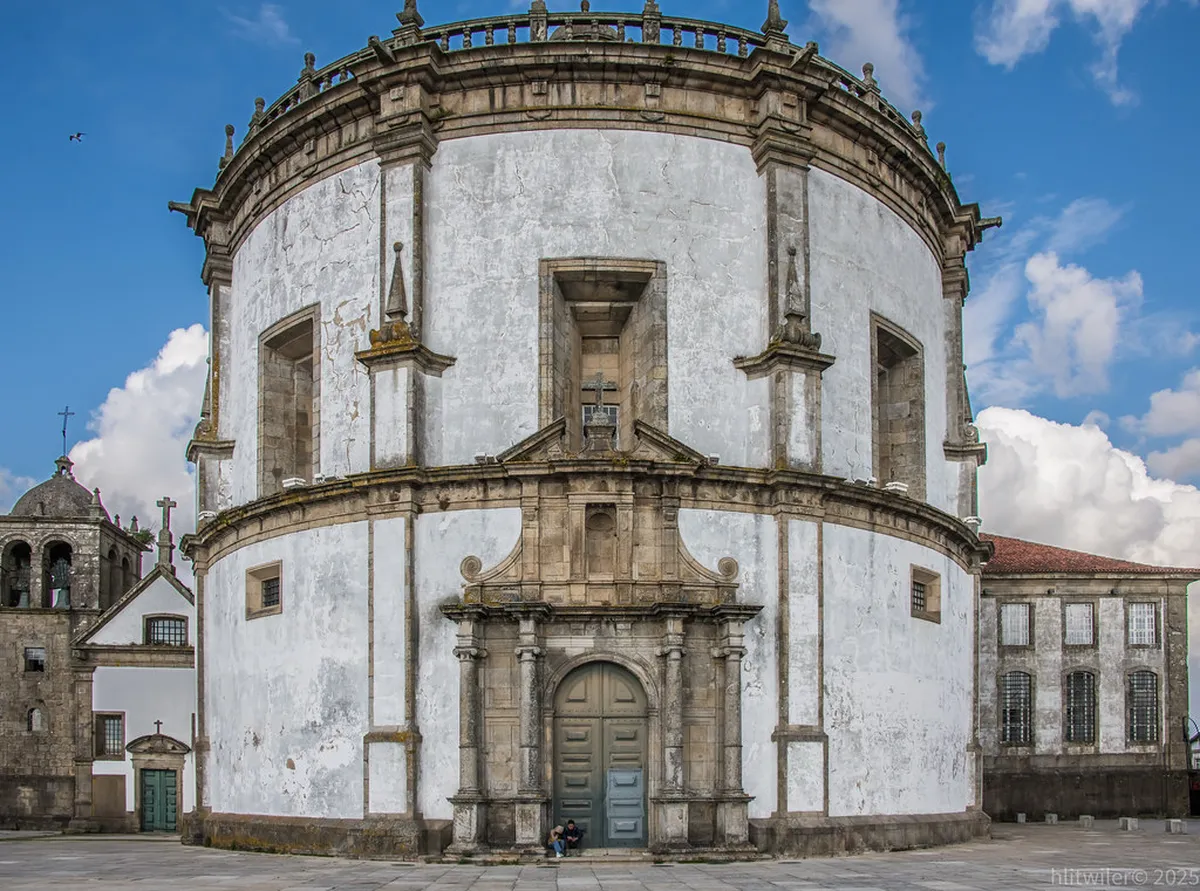
- Serra do Pilar (Vila Nova de Gaia): The single best panorama of Porto. Standing on the circular terrace of this 17th-century monastery, you see the full sweep of the old town — Ribeira, the bridges, and the rooftops — from the south bank. It's technically in Gaia, reached via the upper deck of Dom Luís I Bridge. Free. Open daily, no entry required for the terrace.
- Dom Luís I Bridge upper deck: Covered under Attraction 2 above, but worth restating: the middle of the upper deck at sunset is the most photographed angle in Porto. Free, open 24 hours.
- Miradouro da Vitória: Covered under Attraction 10 above. Best for a straight-on view of the Sé cathedral and Ribeira rooftops. Free, never crowded.
- Palácio de Cristal Gardens (Jardins do Palácio de Cristal): A 19th-century park on a bluff above the Douro, with peacocks wandering the lawns and a terrace overlooking the river and Foz in the distance. Best in late afternoon. Free entry. About 15 minutes' walk west from the Clérigos district.
- Miradouro Jardim das Virtudes: A hillside garden above the Douro in the Miragaia district — grassy terraces, couples on picnic blankets, and a river view without the crowds of the more famous lookouts. Free. Best at golden hour.
- Clérigos Tower: Porto's highest accessible viewpoint at 75 m — the only one on this list that charges entry (€8 in 2026, includes church and museum). Worth it for the 360° view and the straight-down angle over the narrow streets below.
For the full rundown including the hidden gems, see our Porto miradouros guide, which covers all 10+ viewpoints with walking directions from the city center.
Day Trip Anchors from Porto
Porto makes an excellent base for day trips into northern Portugal. The city's Campanhã and São Bento rail connections and a well-developed tour operator network mean you can reach the region's highlights without a hire car. For a full comparison of all major destinations — including Aveiro, Coimbra, Viana do Castelo, Ponte de Lima, and Amarante — with 2026 transport costs and an interest matrix, see our Porto day trips and best excursions guide. Here are the four destinations that consistently deliver the most value:
Douro Valley
The most popular and most rewarding day trip from Porto. The Douro wine region — a UNESCO World Heritage landscape of terraced vineyards carved into near-vertical hillsides — begins about 90 km east of Porto. The easiest approach is a guided tour (roughly €100–€140 pp in 2026, including wine tasting at two quintas, lunch, and a short river cruise near Pinhão). Self-drive is possible via the IP4 motorway (90 min each way); scenic train from São Bento to Pinhão takes 3 hours but runs only a few times per day. Our Douro Valley day trip guide covers both options with timing and booking tips, and the dedicated Porto to Douro Valley wine tasting day trip article handles the tour booking side in detail.
Guimarães
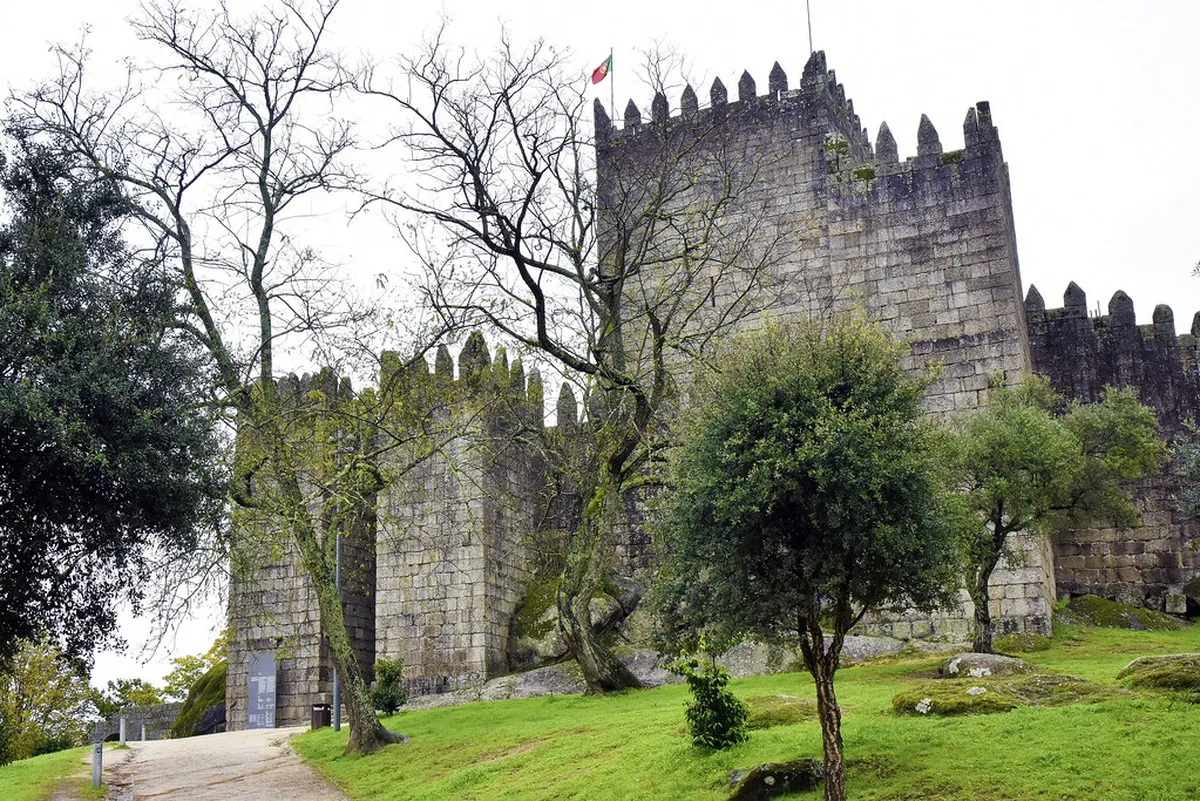
Portugal's birthplace — the city where the first king of Portugal was born in 1143 — sits 50 km north of Porto and is reachable in under an hour by direct train from Campanhã (€3.70 single, 2026 fare). The medieval center is UNESCO-listed and walkable in half a day: the 10th-century castle, the Ducal Palace, and the cobbled Largo da Oliveira square are the three pillars of any visit. A day return from Porto by train is entirely manageable, leaving the afternoon free for the excellent restaurants around Rua de Santa Maria.
Braga
Portugal's religious capital and a city with more churches per square kilometer than anywhere else in the country. The Bom Jesus do Monte sanctuary — a baroque staircase climbing a wooded hillside outside the city, served by one of Europe's oldest funiculars — is the visual anchor. From Porto's Campanhã station, direct trains run frequently (35–45 min; from €3.30 single, 2026). Combine with Guimarães in a single day if you're efficient; the two cities are connected by a direct train (40 min).
Viana do Castelo
A smaller, quieter choice for visitors who've already done the standard circuit. Viana sits on the Lima estuary 75 km north of Porto (1 hr 10 min by regional train), with a handsome Manueline town square, a beach across the river, and the Santa Luzia Basilica perched above the city on a hilltop reached by funicular. Least crowded of the northern day-trip options. See our northern Portugal day trips guide for the full rundown including transport logistics.
Visiting Porto by Season: When to Go and What to Expect
Porto is a year-round destination, but each season has a distinct character. Here's a direct answer to the most common planning question: the best months to visit Porto in 2026 are May, June, and September — warm enough for outdoor sightseeing, long daylight hours, and smaller crowds than July–August. That said, every season has a case for it:
Spring (March–May)
Porto's parks bloom from late March, and the Douro Valley is at its most photogenic in late April when the vineyards show new growth. May is the sweet spot: daily highs of 18–22°C, reliable sunshine, and queues at Lello that haven't yet reached summer lengths. April can still bring rain — northern Portugal averages 8–10 wet days in April — so pack a compact waterproof. Hotel rates are 20–30% below peak. See our best time to visit Porto guide for a month-by-month breakdown.
Summer (June–August)
Long days (sunset past 9 pm in July) and consistently dry weather make summer the most comfortable season for outdoor sightseeing. The trade-offs: Lello tickets sell out days in advance, Ribeira fills with tour groups by 10 am, and accommodation prices hit their annual peak. Book the 9 am or 7 pm Lello slot and start each day early. The Festa de São João (June 23–24) is Porto's biggest street festival — the city shuts down in the best possible way, with fireworks over the Douro and plastic hammers sold on every corner.
Autumn (September–October)
The best-kept secret in Porto travel planning. September retains summer temperatures (22–25°C) with noticeably shorter queues. October is grape harvest season in the Douro Valley — wineries are pressing, the terraces turn gold and red, and guided harvest tours are bookable from Porto. Hotel rates drop 15–25% from August. A light jacket is useful from mid-October.
Winter (November–February)
Porto's wet season — December averages 15 rainy days and daily highs around 13°C. But winter delivers the lowest prices of the year (hotels often 40–50% off peak rates), essentially zero queues at every attraction, and a genuinely local atmosphere. The Christmas market on Avenida dos Aliados runs through December. If rain is your main concern, note that Porto's showers are typically short; a morning downpour often clears to afternoon sunshine. For the full seasonal breakdown with monthly temperatures and rainfall, see our Porto weather by month guide.
Practical Information for 2026 Visitors
A handful of logistics trips up even well-prepared visitors. Here's the current 2026 situation on the details that matter most:
Porto.CARD
Porto's official visitor pass — the Porto.CARD — underwent a major change in early 2026: the version bundling unlimited public transport was discontinued from March 2026. The current option is the Porto.CARD Walker, which includes discounts and free entry at over 130 museums and attractions but no transport. Pricing in 2026: 1-day €13, 2-day €20, 3-day €25. Buy online at portocard.city or at the tourist office at the airport and at Sé do Porto (open daily 9 am–7 pm). Whether it pays off depends on your sightseeing density — if you're visiting Clérigos Tower (€8), Igreja de São Francisco (€7.50), Palácio da Bolsa tour (€12), and Sé cloister (€3), the 1-day Walker already saves money.
The Porto.CARD Walker transport bundle was discontinued in March 2026 — the current card covers attraction entry and discounts only, not public transit. Pick up an Andante card at any Metro station (€0.60 card fee) for bus and Metro travel.
Getting around the center
The historic core is compact enough that most visitors on a 2–3 day trip walk everywhere between the 13 attractions listed above. The main exception is Vila Nova de Gaia (cross via Dom Luís I Bridge on foot — 10 minutes) and Foz do Douro (tram 1 from Infante, €3.50 single, or Uber for about €8). Porto Metro connects the airport to central Porto (Linha E, 30 min, about €2.10 with Andante card) and reaches Campanhã station, Trindade interchange, and Casa da Música. Pick up an Andante card at any Metro station (€0.60 card fee + load credit). Our Porto metro and tram guide covers all routes, fares, and the historic trams in detail.
Airport transfers
Francisco Sá Carneiro Airport is 11 km north of central Porto. In 2026, the best-value option is Metro Linha E (Purple line) direct to Trindade or Campanhã, taking 30–35 minutes for approximately €2.10 with an Andante card loaded with a Z4 ticket. Taxis run €25–€35 to the city center; Uber typically €18–€28. See our Porto airport to city transport guide for a full comparison including times to Ribeira and Vila Nova de Gaia.
2026 entry prices at a glance
| Attraction | 2026 Price | Booking Required? |
|---|---|---|
| Livraria Lello | €8 standard / €10 priority | Yes — book online in advance |
| Clérigos Tower + church | €8 | No — walk-up fine outside summer |
| Igreja de São Francisco | €7.50 | No |
| Palácio da Bolsa (guided tour) | €12 | Recommended in summer |
| Sé do Porto cloister | €3 | No |
| Teleférico de Gaia (cable car) | €7 single / €10 return | No |
| 6-bridges Douro cruise | €18–€25 | No (peak summer: yes) |
| Casa da Música guided tour | ~€9 | Check casadamusica.com for slots |
| Ribeira, São Bento, Dom Luís Bridge, azulejo facades, Bolhão, Miradouros | Free | No |
Explore More of Porto
This guide covers the essential Porto attractions, but the city rewards deeper exploration. Here are all the resources we've built to help you plan every part of a Porto trip:
Itineraries
- Porto 2-day itinerary — the classic first-timer route with walking times
- Porto 3-day itinerary — adds Gaia, Foz do Douro, and a Douro Valley half-day
- Porto first-timer guide — everything a first visit needs in one place
Neighborhoods & Viewpoints
- Porto neighborhoods guide — which district suits your travel style
- Porto Ribeira riverfront walking guide — every alley and stairway in the UNESCO core
- Porto miradouros & best viewpoints — all 10+ lookouts ranked and mapped
Food & Drink
- Porto port wine cellars guide — which lodges in Gaia offer the best tours
- Best restaurants in Porto — from bacalhau tascas to Michelin tables
- Porto food tour: francesinha & petiscos — the local dishes worth ordering
- Lello Bookshop Porto: tickets & how to visit — the complete guide to booking and timing your visit
Day Trips
- Douro Valley day trip from Porto — self-drive vs guided tour
- Porto to Douro Valley wine tasting day trip — best tour operators & what's included
- Best time to visit Douro Valley — harvest season, spring bloom, and off-peak tips
- Porto day trips: best excursions — Guimarães, Braga, Viana, and beyond
- Northern Portugal day trips from Porto — full logistics guide
Practical Planning
- Where to stay in Porto — neighborhoods and hotels by budget
- Best time to visit Porto — month-by-month weather & crowd guide
- Porto weather by month — temperatures, rainfall, and packing tips
- Porto airport to city transport guide — Metro vs taxi vs Uber compared
- Porto metro & tram public transport guide — routes, fares, and the historic trams
- Porto on a budget: cheap things to do — free and low-cost Porto
Experiences
- Things to do in Porto — the master guide to all Porto activities
- Porto Douro river cruise guide — which cruise to book and when
- Porto: Livraria Lello to Clérigos Tower walking route — the classic 10-minute stroll mapped
- Things to do in Porto with kids — family-friendly attractions and activities
- Porto rainy day things to do — indoor options for wet days
- Porto rooftop bars & night views — evening viewpoints and drinks
Comparing Destinations
- Porto vs Lisbon — which city suits your trip
- Lisbon, Porto & Sintra first-timer guide — how to combine Portugal's three big destinations
Frequently Asked Questions
How many days do you need to see Porto's top attractions?
Two full days is the sweet spot. One day covers Ribeira, the Dom Luís I Bridge, São Bento, Clérigos Tower, and Lello; the second day handles port wine lodges, the azulejo churches, and viewpoints. See our Porto 2-day itinerary for a step-by-step plan with walking times between each stop.
Are Porto's main attractions walkable?
Yes — the entire UNESCO-listed old town fits inside a square kilometer, and nearly every site on this list is within 15 minutes' walk of the next. The only real climbs are the steps from Ribeira up to the upper deck of the Dom Luís I Bridge and the ramp up to Clérigos. Wear grippy shoes; Porto's granite cobbles get slick in rain.
Do I need to book Livraria Lello tickets in advance?
In peak season (April–October) and any weekend, yes. Same-day tickets often sell out by noon. Book the first or last slot of the day directly on the official Lello site for the quietest experience, and remember the ticket fee is refunded if you buy any book.
Which Porto attractions are free?
Ribeira, the Dom Luís I Bridge, São Bento Railway Station, the azulejo facades of Carmo and Capela das Almas, Mercado do Bolhão, and the Miradouro da Vitória viewpoint. Only Lello, Clérigos Tower, Igreja de São Francisco, and Palácio da Bolsa charge an entry fee — none more than €12.
What else should I do beyond this top-10 list?
Port wine tasting in Vila Nova de Gaia is the obvious next step — read our guide to the best Porto port wine cellars guide for which lodges offer the best tours and tastings. For neighborhoods, food, and day trips (including the Douro Valley), see the full things to do in Porto guide.
What is the best viewpoint in Porto?
The Serra do Pilar terrace in Vila Nova de Gaia delivers the widest panorama — the full sweep of Ribeira, all six bridges, and the old town in one frame. It's free, reached by walking across the upper deck of Dom Luís I Bridge, and best at sunset. Within Porto proper, Miradouro da Vitória is the most atmospheric free viewpoint and Clérigos Tower (€8 in 2026) is the highest at 75 meters.
Is Porto better than Lisbon for a first visit to Portugal?
Porto and Lisbon attract different visitors. Porto is more compact, hillier, and easier to cover in 2–3 days; the food (francesinha, bacalhau, port wine) is more distinctive; and the city feels less mass-tourism in most neighborhoods. Lisbon is larger, warmer in summer, and has Sintra, Cascais, and Setúbal within easy reach. For first-timers who want one Portuguese city done well, Porto is often the more memorable choice. Our Porto vs Lisbon comparison breaks down both cities across cost, weather, food, and sightseeing depth.
How do I get from Porto airport to the city center?
The Porto Metro's Purple Line (Linha E) connects Francisco Sá Carneiro Airport to central Porto (Trindade and Campanhã stations) in 30–35 minutes for approximately €2.10 with an Andante card loaded with a Z4 ticket (buy the €0.60 card at any Metro station). Taxis cost €25–€35; Uber typically €18–€28 depending on demand. See our full Porto airport to city transport guide for step-by-step instructions.
What is the Porto.CARD and is it worth it in 2026?
The Porto.CARD Walker (the current version after the transport bundle was discontinued in March 2026) gives discounts and free entry at 130+ museums and attractions. In 2026 it costs €13 for 1 day, €20 for 2 days, €25 for 3 days. It's worth buying if you plan to visit Clérigos Tower (€8), Igreja de São Francisco (€7.50), Palácio da Bolsa (€12), and the Sé cloister (€3) — those four alone cost more than the 1-day card. Buy online at portocard.city or at the Sé tourist office (open daily 9 am–7 pm).
 Porto To Aveiro By Train Travel GuideJune 8, 2026