10 Essential Tips for Booking Madeira Wine Tours (2026)
Plan your 2026 trip with our guide to Madeira wine tours. Compare Blandy's, Quinta do Barbusano, and costs for the ultimate tasting experience in Portugal.
On this page
10 Essential Tips for Booking Madeira Wine Tours
Madeira wine is more than a drink — it is a product of volcanic soil, Atlantic wind, and centuries of trade routes. The steep terraced vineyards carved into the island's hillsides produce a fortified wine so shelf-stable that bottles from the 1800s still taste remarkable. Exploring the island's cellars and north coast vineyards is one of the most rewarding ways to understand what makes Madeira distinct from every other wine region in Portugal.
This guide has been refreshed in May 2026 to reflect current pricing and scheduling. Whether you are deciding between a full-day tour with lunch or a quick lodge visit in Funchal, the planning decisions matter more than most visitors expect. You can find more detailed planning resources on our travel blog for your upcoming Portuguese adventure.
Key Takeaways
- Quick pick: Blandy's Wine Lodge is the best overall experience for first-time visitors in Funchal.
- Best for nature: Quinta do Barbusano offers the most stunning vineyard views on the north coast.
- Safety tip: Book a guided tour rather than driving yourself to safely enjoy the high-alcohol fortified wines.
- Best free activity: The Miradouro das Quebradas provides a great look at coastal vines without an entry fee.
The Unique History of Madeira Fortified Wine
The story of Madeira wine began by accident when sailors noticed that heat improved the flavor of wine during long Atlantic voyages. Barrels that crossed the equator and returned to Europe had transformed through temperature extremes into something richer and more complex. This discovery led to the unique heating processes that define the wine today: the Estufagem method uses controlled stainless steel tanks, while the superior Canteiro method relies on sun-warmed lofts where barrels rest for years undisturbed. Canteiro-aged wines are reserved for the highest quality expressions, often resting in oak for a decade or more before release.
The Blandy family has maintained their wine business for over 211 years, making them the only founding family still running their original Madeira wine company. Their lodge in central Funchal contains massive Brazilian satinwood vats that have been used for storage across seven generations. Walking through the cooperage and barrel rooms gives visitors an immediate sense of scale and longevity that no amount of reading can replicate. Understanding these methods helps visitors appreciate why a single vintage bottle can command several hundred euros at auction.
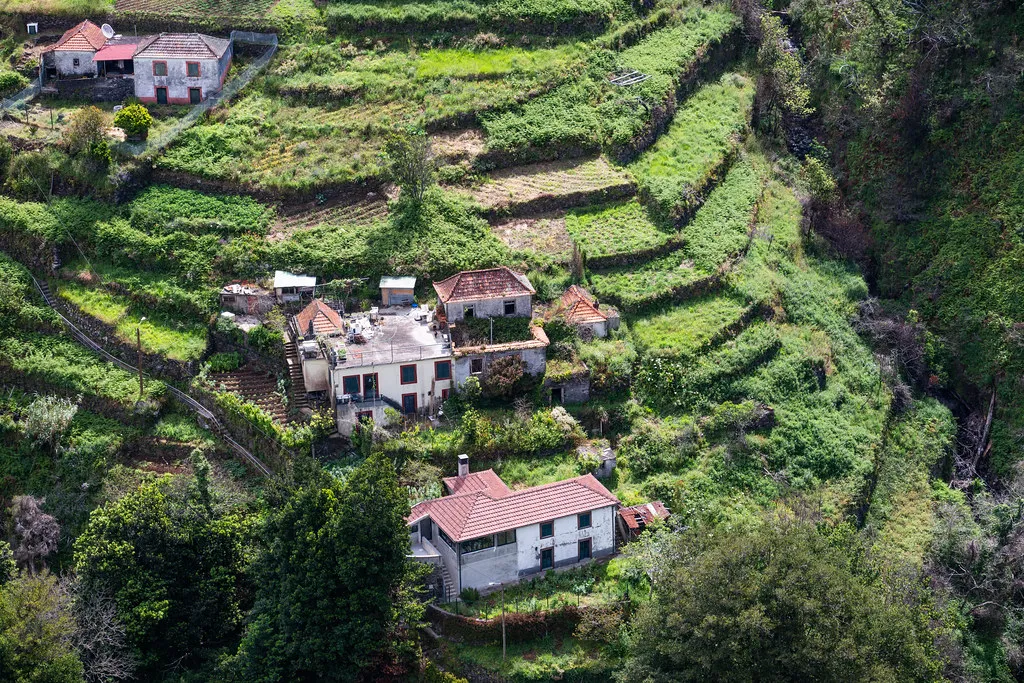
The island's volcanic soil and distinct microclimates support four noble grape varieties: Sercial, Verdelho, Bual, and Malmsey. Each corresponds to a sweetness level — Sercial is the driest and most citrusy, while Malmsey delivers rich honey and fig notes. Most vineyards are small family plots carved into steep hillsides using traditional stone terraces called poios. Because of this terrain, almost all harvesting remains manual, which adds to both the cost and the artisanal character of the final wine.
Blandy's Wine Lodge: A Must-Visit Funchal Landmark
Blandy's Wine Lodge on Avenida Arriaga is the most logical first stop for any visitor to Madeira. It sits in the heart of Funchal within walking distance of the main hotels, the municipal gardens, and the cable car station. Standard guided tours run daily from 10:00 to 18:30 and cost between €11 and €35 per adult depending on the tasting tier you choose. The entry-level tour covers the production areas and includes two pours; the premium tasting adds older vintage wines from the private family collection stored in the back rooms.
The lodge operates within a 16th-century convent building, and the architecture alone justifies the visit. The tour guides here are consistently praised for explaining Madeira's unique production history in a way that makes sense to non-specialists. If you book the premium tasting, ask specifically to see the satinwood vats — these enormous containers made from Brazilian timber are a visual highlight that photographs cannot fully convey. Plan for around 90 minutes from entry to exit, which leaves ample time to continue to a second producer the same afternoon.
One practical note: Blandy's gets crowded between 11:00 and 14:00, especially on Sundays when cruise ships dock. If you are visiting independently rather than on a guided tour, arriving at opening time (10:00) or after 15:00 gives you a far more relaxed experience with shorter queues at the tasting bar. Booking online in advance is free and guarantees your time slot during peak season from June through September.
Blandy's Wine Lodge gets crowded between 11:00 and 14:00, especially on Sundays when cruise ships dock. Arrive at opening (10:00) or after 15:00 for a more relaxed visit with shorter queues — and book your time slot online in advance during peak season (June–September).
Exploring the North Coast: Quinta do Barbusano and São Vicente
The drive north from Funchal takes roughly 45 minutes through the UNESCO World Heritage Laurissilva forest before descending into the São Vicente valley. This crossing alone justifies a full-day itinerary — the landscapes shift dramatically from the urban southern coast to the lush, fog-draped north. São Vicente is the second-largest grape-growing municipality on the island, and its cooler microclimate produces some of Madeira's most interesting still wines alongside the fortified classics.
Quinta do Barbusano sits above the São Vicente valley with 360-degree views that include both the Atlantic and the surrounding mountain ridges. Owner António Oliveira has deliberately focused on still wines at a time when 90 percent of island production remains fortified. His Verdelho and Arnsburger whites are crisp and mineral, very different from what you encounter at the Funchal lodges. The tasting room has floor-to-ceiling windows overlooking the vineyards, and lunch served here — espatadas (laurel-skewered beef), bolo do caco, local cheeses, and a passionfruit mousse — is frequently cited as the meal highlight of the entire tour.
The Miradouro das Quebradas viewpoint, located near São Jorge, is a free stop that most guides include on the return south. The coastal vines here cling to near-vertical cliffs above the Atlantic, and the view illustrates better than any explanation why manual harvesting is the only option. It is accessible by car only — public transport does not reach this stretch of the northern circuit. The detour adds around 15 minutes to the drive but is consistently worth it for the photographs and the perspective it provides on the island's viticulture.
Fortified vs. Still Wines: What Most Visitors Miss
Nearly all pre-trip reading focuses on fortified Madeira — the Sercial, Verdelho, Bual, and Malmsey expressions that made the island famous. But the island's still wine production has undergone a genuine quality transformation over the past decade. Producers like Quinta do Barbusano, Fajã dos Padres, and some growers in Seixal are now releasing dry whites and structured reds that compete with quality mainland Portuguese wines. If your tour itinerary only includes the Funchal lodges, you will leave with an incomplete picture of the island's current wine culture.
The practical difference matters for how you plan your tastings. Fortified wines are high in alcohol (typically 18–20% ABV) and come in small pours. Still wines are served in standard table wine portions and pair well with food, which is why the best vineyard lunches on the north coast are built around them rather than the fortified expressions. A well-structured full-day tour will include both styles, sequenced so the still wines come during lunch and the complex fortified expressions are tasted at the beginning and end of the day when your palate is freshest.
For visitors who want to take bottles home, still wines are generally more affordable and easier to drink immediately. A bottle of Barbusano white typically costs €12–€18 at the vineyard. By contrast, a quality bottled Madeira fortified wine from a reliable producer like Blandy's or Barbeito starts at around €25 for a five-year expression and climbs steeply with age. The airport duty-free carries a limited selection; the vineyard shop or Funchal's specialist wine shops offer better range and fairer prices.
Full-Day vs. Half-Day: Finding the Right Itinerary
Half-day tours (typically 09:30–13:30 or 14:00–18:00) concentrate on Funchal itself and sometimes the neighboring village of Câmara de Lobos. You will visit one or two lodges, taste four to six wines, and return to your hotel in time for an independent lunch or dinner. This format suits travelers with limited time, those combining the wine tour with a cable car or market visit, or anyone who prefers a lighter introduction before exploring independently.
Full-day tours (08:30 or 09:00 departure, return around 17:30–18:00) cross to the north coast and typically include three to four producer visits, 10–12 individual wine tastings, and a traditional Madeiran lunch served at one of the vineyard properties. The north coast crossing alone makes the full-day format significantly richer in experience. Lunch is usually included in the tour price and features local dishes harmonized with the wines you have just tasted. Most guides report that first-time visitors who choose the half-day consistently wish they had booked the full day — the upgrade in scenery, food, and variety is substantial.
A useful rule: if you have only one day allocated for wine, book the full-day tour. If you have two or more days on the island, a half-day tour on day one followed by independent lodge visits on day two is an efficient combination. The Enriching Pursuits itinerary format (pick-up at 09:20, Blandy's by 09:30, Quinta do Barbusano with lunch by 11:45, Miradouro das Quebradas at 15:00, Barbeito at 16:00, back by 17:30) is a reliable benchmark for what a well-paced full-day tour covers.
Madeira Wine Tour Costs: What to Expect in 2026
Self-guided lodge visits in Funchal are the most affordable entry point. Blandy's standard tour costs €11–€35 depending on tasting tier. H.M. Borges on Rua 31 de Janeiro offers tastings from €8–€20. Pereira d'Oliveira provides free pours of their standard range with rare vintages sold by the glass. Budget around €30–€50 per person for a self-guided half-day covering two or three Funchal producers, excluding transport.
Organized group tours are priced at two broad levels. Half-day group excursions start at around €45–€60 per person. Full-day tours with lunch typically run €100–€150 per person for a group of 8–12 people. The Wine Tours Madeira full-day tour (the operator featured in most 2025–2026 reviews) is priced at approximately €200 per person, which includes transport, expert guiding, all tastings, and a full vineyard lunch. At that price point, the value calculation depends on whether you value the guided narrative and logistics as much as the wine itself — most visitors who have done both formats say yes.
Private tours cost more but offer flexibility for visiting specific producers like Barbeito or Fajã dos Padres that standard group routes skip. Private half-days start around €150 for two people; full-day private tours run €250–€350 depending on group size. Booking directly with the operator is generally cheaper than booking through hotel concierge desks, which add a commission. Most operators require 48-hour advance cancellation for a full refund — confirm this before booking, especially around the September harvest festival period when availability is tightest.
Small Group vs. Private Tour: How to Decide
Small group tours cap at 8–12 participants and hit the right balance for most visitors. The shared experience creates a social atmosphere — comparing impressions with other wine travelers at a vineyard tasting is part of the enjoyment. The guide can manage a consistent narrative without constantly adapting to individual knowledge levels. For solo travelers or couples joining a group, this format also avoids the per-person premium of a private booking.
Private tours are worth the extra cost in specific situations: you are traveling with three or more people (which reduces the per-head price gap considerably), someone in your group has mobility limitations that require a slower pace, you have a specific focus like Frasqueira vintage wines or organic production that a standard route does not cover, or you simply dislike the unpredictability of sharing a minibus with strangers for eight hours. Most private operators will build a bespoke itinerary if you contact them at least one week in advance.
One underrated option: book a standard group full-day tour for the north coast experience, then spend the following morning doing a self-guided walk between the Funchal tasting rooms. This combination captures the best of both formats. You get the logistics and expertise of a guided north coast crossing (which genuinely requires a driver who knows the roads), then follow it with the freedom to linger at Pereira d'Oliveira's century-old vintage stocks on your own schedule.
Why Self-Driving After Tastings Is a Bad Idea in Madeira
Madeira's road network is genuinely challenging even when sober. The ER101 coastal road and the mountain routes connecting Funchal to the north coast feature tight switchbacks, sheer drops, and tunnels where two lanes barely fit two vehicles. Rental car drivers unfamiliar with the island routinely report white-knuckle moments on their first north coast crossing. Add 12 individual wine tastings spread across a full day and the combination becomes genuinely dangerous — not just for you, but for the cyclists and pedestrians who share these roads.
The practical cost analysis also favors a guided tour. A rental car for one day costs roughly €40–€60. Add €15–€20 for fuel on the north coast route, €10–€15 for parking in Funchal, and the real risk: if you drive after tastings and are stopped, a DUI in Portugal carries an immediate driving ban, a fine starting at €500, and potential vehicle impoundment. The full-day guided tour at €150–€200 per person starts looking like genuine value when weighed against these numbers. Your travel insurance and rental car excess waiver also become irrelevant if an accident is attributed to alcohol consumption — nearly all policies have a standard exclusion clause for this.
The practical conclusion is simple: for any tour that includes more than two or three tastings, book a guided experience with pick-up and drop-off. If you want to explore independently, save the rental car for a non-tasting day — the island's coastal drives and levada walks are spectacular without wine in the equation. Most Funchal hotels are within a 10-minute walk of the main lodges, so a cab or the local bus covers the short in-city moves easily.
If you drive after tastings and are stopped, a DUI in Portugal carries an immediate driving ban, a fine starting at €500, and potential vehicle impoundment. Nearly all travel insurance and rental car policies also exclude accidents attributed to alcohol consumption — book a guided tour with pick-up and drop-off whenever your itinerary includes more than two or three tastings.
Essential Logistics: Meeting Points and Pick-up Tips
Most group tour operators offer hotel pick-up within the Funchal area at no extra charge. Pick-ups outside Funchal (Caniço, Machico, Porto Moniz) typically carry a supplement of €5–€15 or require you to reach a central Funchal meeting point independently. Confirm your exact pick-up location and time when booking — pick-up windows of 20–30 minutes are common as the minibus works through a hotel list, and being ready 10 minutes early avoids being left behind.
Standard meeting points for operators who do not offer hotel pick-up are the Funchal tourist office on Avenida Arriaga, the cable car station on Rua do Teleférico, or the marina area. All three are within a five-minute taxi ride from the main hotel zones. Taxis from the airport to central Funchal cost approximately €20–€25. Uber operates on the island and is generally cheaper than metered taxis for short hops between tasting rooms.
For full-day tours departing in the morning, eat breakfast before the pick-up. Fortified wine on an empty stomach at 09:30 is unpleasant and clouds the palate for subsequent tastings. Most operators allow bottle purchases at each producer visit — bring a padded wine carrier or ask the guide whether the vehicle has secure storage for bottles. The return journey on mountain roads with unsecured glass bottles ends predictably badly.
Pairing Your Tasting with Traditional Madeiran Lunch
The food pairing component of a full-day north coast tour is not an afterthought — it is often the meal guests remember most clearly from their entire Madeira trip. A typical vineyard lunch features bolo do caco (garlic flatbread baked on a basalt stone), a spread of local cheeses and cured meats, espatadas (beef skewered on fresh laurel branches and grilled over open flame), roasted potatoes with herbs, and a light dessert, often a passionfruit mousse or banana bread pudding. The wines served are usually the still whites and reds produced on site, which show a different side of Madeiran wine culture entirely.
For visitors doing self-guided Funchal tastings without a tour lunch, the pairing logic still applies. Dry Sercial or a crisp Verdelho still white is excellent alongside salt cod (bacalhau) dishes or seafood. Medium-dry Bual pairs beautifully with the island's traditional honey cake (Bolo de Mel), available at the central market for a few euros. Rich Malmsey is best treated as a dessert wine alongside ripe banana, walnuts, or aged local cheese. Avoid pairing any style of fortified Madeira with highly spiced food — the heat competes with the wine's complexity rather than complementing it.
One practical point on the gastronomy side: the Funchal farmers market (Mercado dos Lavradores) on Rua Latino Coelho is open Monday through Saturday until 16:00 and stocks most of the pairings above at market prices. Picking up a selection of local produce for an informal tasting picnic in the botanical garden is a genuinely good option for travelers who prefer a quieter, self-directed afternoon. Check our our Madeira food guide for a full breakdown of what to eat and where across the island.
Where to Stay: Wine-Centric Hotels in Madeira
The Three House Hotel in central Funchal is consistently recommended by wine-focused travelers. Its rooftop bar serves a well-curated selection of local labels with views over the harbor, and it sits within a five-minute walk of Blandy's and Pereira d'Oliveira. The design is modern boutique rather than grand resort, which tends to suit travelers who want to be in the city rather than retreating to a coastal complex after tastings. Hotel pick-up from Three House is included as standard by most Funchal tour operators, which removes any morning logistics uncertainty.
For a more immersive north coast stay, Terrabona Nature & Vineyards in the São Vicente valley allows guests to sleep directly among working vines. This boutique property is best suited to travelers ending their trip with a quiet wind-down after the tasting circuit — it is not a practical base for daily Funchal excursions due to the 45-minute drive. The setting, however, is exceptional, and mornings in the vineyard before the day-trippers arrive have a quality that no urban hotel can replicate.
Budget-conscious travelers staying in the Lido hotel zone (west of Funchal center) should note that many larger resort hotels offer weekly wine evening events with a local sommelier. These are worth attending as an introduction before you book your tour — they provide a useful baseline tasting experience and sometimes include producers you will not see on the standard tour routes. Always verify whether your hotel offers a free shuttle to the city center, as the walk from Lido to Blandy's is around 30 minutes along the seafront.
Practical Advice for Booking and Cancellations
Book organized tours at least one week ahead in July, August, and during the Madeira Wine Festival in late August or early September. This annual festival transforms Funchal's city center with harvest stalls, workshops, and a traditional grape-treading parade — it is spectacular but it fills tour slots weeks in advance. The festival's main public areas are free to enter; individual wine pours and food items require payment on the day. Check the Madeira Wine Festival guide for 2026 dates and the schedule of official events.
Outside of peak season (October through May), same-week booking is generally possible and some operators offer small discounts for shoulder season tours. Weather on the north coast can be overcast even in summer — pack a light rain layer regardless of the season, as the Laurissilva forest crossing often involves low cloud and mist. Vineyard temperatures on the north coast run 3–5°C cooler than Funchal, so a jacket is useful even in August.
Cancellation policies vary by operator. The Winerist-listed full-day tour requires 48 hours notice for a full refund — this is standard across most operators. Private tour bookings may require longer notice (72 hours to one week) and carry a higher cancellation penalty. If you are booking during the harvest period, consider travel insurance that covers activity cancellations, as sudden weather changes can occasionally close mountain road access to the north coast producers.
Frequently Asked Questions
Is a Madeira wine tour worth it?
Yes, a wine tour is highly recommended for understanding the island's unique history and production methods. You get to taste rare vintages that are otherwise difficult to find in shops. The scenery during the drives to northern vineyards is also spectacular.
How much does a Madeira wine tour cost?
Basic lodge tours in Funchal cost between $12 and $35 per person. Full-day guided excursions with transportation and lunch typically range from $100 to $150. Private tours for small groups are more expensive but offer customized itineraries.
Can you visit Madeira wineries without a tour?
You can visit most tasting rooms in Funchal as a walk-in guest for individual glasses. However, guided tours are necessary to see the aging lofts and production areas. For rural vineyards, booking ahead is essential to ensure a staff member is available.
Madeira wine tours offer a combination of history, geology, and gastronomy that few other wine destinations can match. From the 211-year-old lofts of Blandy's in Funchal to the pergola vineyards of Quinta do Barbusano above the São Vicente valley, every stop tells a different chapter of the same story. By planning around the full-day format, booking ahead for peak season, and leaving the car keys at the hotel, you set yourself up for the most rewarding version of this experience.
Whether you are visiting for the 2026 Wine Festival or a quiet winter break, the island's producers welcome visitors year-round. Leave room in your luggage for a bottle or two — a Barbeito Boal or a Barbusano still red travels particularly well and makes for a far better souvenir than anything available at the airport. Safe travels and cheers to your upcoming adventure on the island of Madeira.
Pair this with our broader things to do in Madeira guide for the full island overview.
 15 Magical Things To Do In Óbidos, Portugal (2026)June 11, 2026