
Cascais From Lisbon: The Ultimate 1-Day Itinerary
Plan your trip to Cascais from Lisbon with our 1-day itinerary. Includes train logistics, top beaches, and coastal walks for first-time visitors.
On this page
Cascais From Lisbon: A Perfect 1-Day Itinerary
Cascais is the easiest and most rewarding day trip from Lisbon: a 40-minute coastal train ride drops you in a town that mixes 19th-century mansions, four walkable beaches, and a fishing-port old quarter. This 2026 guide is built for first-time visitors who want logistics, attractions, food, and lodging in one place — without padding.
Everything below is grounded in repeated visits to the Portuguese Riviera, refreshed for current 2026 fares, train timetables, and seasonal opening windows. A trip to Cascais works because the train is cheap, the town is compact, and the Atlantic coastline keeps surprising you between the marina and the cliffs.
Use the sections below to plan a tight day or stretch the visit to two. Skip to logistics if you only need the train brief, or jump to beaches and food if your day is already booked.
1-Day Cascais At a Glance
This summary helps you visualize your day before diving into the details. An early start (train out by 09:00) lets you finish the cliff walk before midday heat in summer. Most travelers spend eight to ten hours including transit.
The town center is compact and almost entirely walkable. You will move between sandy coves, the Cidadela citadel, and the Museum Quarter on flat ground. The contrast with hilly Lisbon is the entire point.
- Day 1: Coastal charm and cliffs
- Morning: Train ride from Cais do Sodré, Praia da Rainha, old town wander.
- Afternoon: Boca do Inferno cliff walk, Santa Marta Lighthouse, Museum Quarter.
- Evening: Old Town seafood dinner, marina stroll, late train back.
Logistics for Taking a Day Trip to Cascais
The Linha de Cascais urban train runs from Cais do Sodré in Lisbon to Cascais every 20 minutes during the day, with extra services in rush hour. The ride takes 33 to 45 minutes depending on stops. The last trains in either direction leave around 00:30, 01:00 and 01:30, but the very last service is sometimes replaced by a bus between Cascais and Oeiras — check before drinking too much wine at dinner.
A single fare in 2026 is €2.55 for adults and €1.30 for children, charged onto a reusable Navegante card (€0.50 the first time you buy one). Tickets cannot be pre-booked or seat-reserved. Belém is on the same line, so you can combine a half-day in Belém with an afternoon in Cascais on a single card.
If you prefer ride-hail, Bolt and Uber both operate. Expect €25–€35 each way at base demand and 50% surge in late afternoon when everyone leaves the beach. Self-driving is not advised: Cascais parking in summer is brutal and the A5 motorway gets sticky at peak hours. Check the transport guide for general Lisbon-area card and ticket advice.
- Train fare: €2.55 single (adult), €1.30 (child), no seat reservation possible.
- Frequency: every 20 minutes daytime, every 30–60 minutes after 22:00.
- Journey time: 33 minutes express, 45 minutes all-stops.
- Ride-share: €25–€35 base, expect surge 16:00–19:00.
- From Lisbon Airport: take red metro to Alameda, change to green line for Cais do Sodré, then the Cascais train (~90 minutes total, ~€4.50).
The Zapping Hack and Return-Train Timing
Two details collapse the difference between a smooth day and a tense one, and almost no first-timer hears about them in advance. First, load your Navegante card with "Zapping" credit at any Lisbon metro ticket machine instead of buying a paper-zone train ticket. Zapping drops the Lisbon–Cascais fare to about €2 each way and lets you tap through the gates at Cais do Sodré without queuing for the ticket window — which can run 20–30 minutes deep on summer mornings. Add €15 of Zapping credit on day one and it covers your trains, metros, trams, and most buses for the trip.
Loading €15 of Zapping credit onto a Navegante card at any metro machine (€0.50 first-time card fee) reduces the Lisbon–Cascais fare to roughly €2 each way and covers all onward metro, tram, and bus rides — no queuing at the ticket window on busy summer mornings.
Second, plan your return train. The Cascais–Lisbon line is shared by beach returnees and rush-hour commuters, and the stretch from Carcavelos to Cais do Sodré goes standing-room only between 17:00 and 19:00. Cascais is the start of the line, so boarding there gives you the best chance of a seat — but you still want to either depart by 16:45 or wait it out and leave after 19:30. If your dinner plan slides into that window, lean into it: stay for sunset and a late table rather than fighting a packed carriage with sunburn.
Petty theft on the line is rare during the day but has been reported on late-night services to lone travelers. After 23:00, sit in the most populated carriage and avoid empty ones. The station itself is well-lit and staffed.
Best Things to Do in Cascais, Portugal
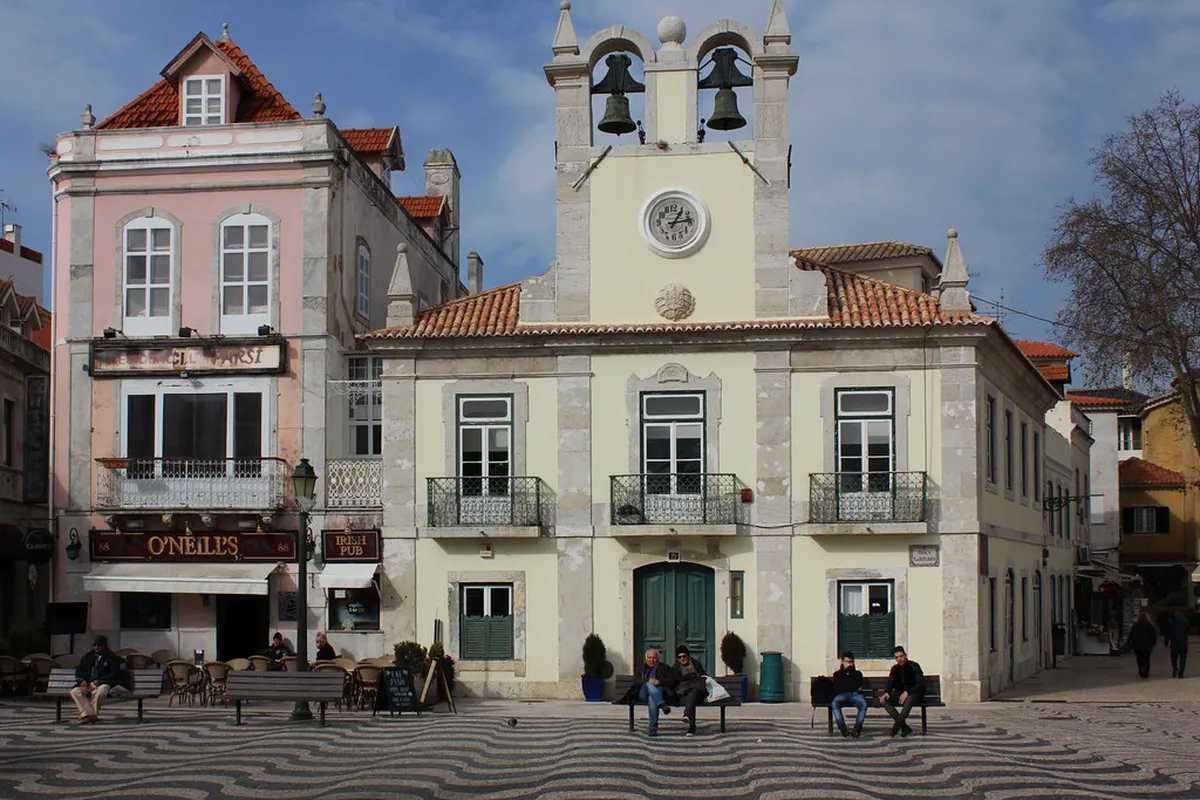
Cascais rewards an unhurried morning. Start at the train station, which is two minutes from the seafront, and walk south through the old town toward the harbor. The streets are paved with the slick black-and-white Portuguese calçada — pretty in photos, treacherous when wet, so skip the smooth-soled shoes.
The single most photographed sight is Boca do Inferno, "Hell's Mouth," a sea-cave blowhole roughly 1.5 km west of the marina along a flat clifftop path. It is free, open 24/7, and most dramatic at high tide with a westerly swell. Build in 25 minutes to walk there and another 20 to wander the cliffs above.
The Cidadela de Cascais is a 16th-century fort that now houses a boutique hotel, contemporary art galleries, and seasonal exhibitions in restored officer quarters; entry to the public plaza and ramparts is free. Santa Marta Lighthouse Museum, perched on a rocky outcrop with striped tilework, is one of the few inhabited lighthouses in Portugal you can climb. Tickets are €3 and the museum closes Mondays.
- Walk the seaside promenade from Cascais marina to Estoril (3 km, ~45 minutes, flat).
- Rent a free BiCas municipal bike from Largo da Estação and ride 8 km along the coastal cycleway to Praia do Guincho.
- Visit the Casa das Histórias Paula Rego (Eduardo Souto de Moura building) for major Portuguese contemporary art; €5 entry, closed Tuesdays.
- Browse the Mercado da Vila on Wednesday and Saturday mornings for produce and small-plate stalls.
The Best Beaches in Cascais
Four small beaches sit within a 10-minute walk of the train station and one larger surf beach is a quick bike or bus ride away. Choose by what you want from the day, not by proximity alone.
Praia da Rainha ("Queen's Beach") is the postcard cove tucked between cliffs, five minutes from the station. It is tiny — claim a towel spot before 11:00 in summer or rent the umbrella-and-two-loungers set for €25–€30. The water is calm and clear, ideal for a quick dip rather than a long swim. Praia da Ribeira (Town Beach) wraps around the harbor next to the main square, with fishing boats parked offshore; convenient and family-friendly, though the harbor view is more working town than postcard.
For the actual best swim, bike or bus to Praia do Guincho, 8 km west. Guincho is wide, dune-backed, exposed, and Atlantic-cold; surfers and kitesurfers thrive here, and the wind picks up after lunch. If you want calmer water and white sand, exit the train one stop earlier at Carcavelos: it is the longest beach on the line and the safest swim for kids. Pick the beach to match the station, not the other way around.
- Praia da Rainha — small, scenic, sheltered, near old town.
- Praia da Ribeira — central, family-friendly, harbor view.
- Praia da Conceição / Duquesa — long sandy run east of town, walking distance.
- Praia do Guincho — wild, windy, surf and kitesurf, 8 km west.
- Praia de Carcavelos — exit the train one stop earlier, longest beach, calmest swim.
| Beach | Distance from station | Best for | Notes |
|---|---|---|---|
| Praia da Rainha | 5 min walk | Quick dip, photos | Tiny — arrive before 11:00 in summer; lounger set €25–€30 |
| Praia da Ribeira | 5 min walk | Families, convenience | Harbour view with fishing boats; more working-town than postcard |
| Praia da Conceição / Duquesa | 10 min walk | Long sandy stroll | Step-free promenade continues to Boca do Inferno |
| Praia do Guincho | 8 km west (bike or bus) | Surfing, kitesurfing, dunes | Wild and windy; wind picks up after lunch |
| Praia de Carcavelos | 1 train stop earlier | Families, calm swimming | Longest beach on the line; safest for children |
Where to Eat in Cascais
Cascais eats well at every price point. The harbor and Praceta dos Pescadores host the upmarket seafood scene, while the streets behind the train station hide cheaper, mostly-local lunch spots. Reservations matter on Friday and Saturday nights and during summer; book one or two days ahead through TheFork or directly by phone.
For grilled fish and a sunset view, Mar do Inferno sits next to Boca do Inferno and is the obvious pick if you are walking the cliffs at golden hour; expect €25–€40 per person without wine. Furnas do Guincho, five minutes by car or Bolt outside town, faces the Atlantic and is the splurge address for special-occasion seafood. For lunch in the center, Don Manolo on Avenida Valbom built its reputation on Piri-Piri chicken (€10–€14 a half) — it is touristy, brisk, and worth one stop. Travesso (modern Portuguese, smaller plates) and Casa da Guia (a former villa now packed with terrace restaurants overlooking the sea) round out the choices.
For something cheaper, the Mercado da Vila houses small kitchens serving prego sandwiches, bifana, fresh juice, and pastel de nata under €10. Santini, opposite the train station, is the Lisbon-area gelato chain that started in Cascais in 1949 — worth the queue.
Where to Stay in Cascais
Most visitors do Cascais as a day trip, but staying one night transforms the day: you swim before the morning trains arrive, walk the empty cliffs at dawn, and skip the rush-hour return entirely. If you have an early flight from Lisbon Airport (38 minutes by Uber), a final night in Cascais also makes practical sense.
The Albatroz Hotel sits in a 19th-century clifftop villa just east of Praia da Rainha, with the best in-town sea views and a price tag to match (€280–€450 in summer). Grande Real Villa Itália is a five-star with a long pool right on the rocky coast, walkable to old town and friendly to families. Pestana Cidadela Cascais occupies the old fort itself and trades on location; book a harbor-view room or skip it. Farol Design Hotel is the boutique choice on a rocky promontory near the lighthouse — small rooms, great sea-edge pool, books out months ahead in summer.
For budget travelers, Hotel Baia overlooks Praia da Ribeira at mid-range prices (€110–€180), and a clutch of guesthouses behind Rua Direita run €70–€110 in shoulder season. Estoril, the next train stop east, is sometimes 20% cheaper for equivalent quality — useful if Cascais is full.
Sintra — The Best Day Trip From Cascais
If you stay overnight in Cascais, the highest-value second-day trip is Sintra rather than a return to Lisbon. Sintra is 18 km north into the Serra hills and reachable by the 1624 ScottUrb bus from Cascais terminal in roughly 40 minutes (€4.60 single, every 30–60 minutes; download the latest schedule before you go because off-peak gaps can stretch to 90 minutes). The same bus continues to Cabo da Roca, the westernmost point of continental Europe, which makes a clean three-stop loop.
The headline sights are Pena Palace (the candy-colored romanticist palace at the top of the hill, €14, timed-entry tickets sell out — book online at least two days ahead in summer), the Moorish Castle ramparts next door (€8), and Quinta da Regaleira's Initiation Well (€11). Avoid the carbon-monoxide queue at the village entrance by riding the 434 tourist bus loop from Sintra train station up to the palaces.
If you only have one day total and choose between Sintra and Cascais, pick by mood: Sintra is for fairy-tale architecture and queues; Cascais is for beaches, seafood, and quiet. Many tours combine Sintra + Cascais + Cabo da Roca, but condensing all three into one day means you see the highlights through a coach window. Better to pick one.
Practical Tips and Decision Rules
A few small choices shape how the day actually feels. The cobblestone calçada becomes properly slippery in light rain, especially the polished black tiles around Praceta 5 de Outubro — wear grippy soles, not leather. If anyone in your group uses a wheelchair or stroller, the seafront promenade from Praia da Conceição to Boca do Inferno is fully step-free; the old-town interior streets are not.
Cascais is hot and exposed in July and August (24°C–29°C with strong sun); the Atlantic breeze masks how fast you burn. Carry water and reapply sunscreen every two hours. The water itself is bracing: even in August it rarely tops 19°C, so bath-warm beach days do not exist on this coast.
The Portuguese calçada cobblestones around Praceta 5 de Outubro become genuinely slippery in light rain — leather soles and smooth trainers are a hazard. In summer, the Atlantic breeze masks UV intensity; even experienced beach-goers burn faster here than on Mediterranean coasts, so reapply sunscreen every two hours.
English is widely spoken in restaurants and at hotels; learning obrigado/obrigada ("thank you") and bom dia ("good morning") goes a long way. Tipping is appreciated but optional — round up at cafés, leave 5–10% at sit-down restaurants. Cards work everywhere; cash is rarely needed except at very small kiosks.
Extending the Trip: Estoril, Cabo da Roca, Guincho
If your day stretches longer than expected, the easiest extension is Estoril. Walk the 3 km seaside boardwalk west from Cascais marina; you pass Praia da Conceição and Tamariz, with the Estoril casino — the largest in Europe and Ian Fleming's stated inspiration for Casino Royale — at the end. Catch the train back from Estoril station on the same Navegante card.

Cabo da Roca, the westernmost point of mainland Europe, makes a quick afternoon side trip on the 1624 bus from Cascais (about 30 minutes). It is a cliff with a lighthouse and a stamped certificate kiosk — go for the symbolism and the wind, not the village amenities. Guincho is closer (8 km west) and more rewarding for surfers, kite-surfers, and dune walkers; rent the free BiCas e-bike from Largo da Estação and follow the dedicated cycleway. Many travelers compare Cascais or Sintra for an overnight base — Cascais wins on beaches, Sintra wins on monuments.
Frequently Asked Questions
How much time should you plan for Cascais from Lisbon?
You should plan for a full day of about eight to ten hours. This allows time for the train ride, a long lunch, and coastal walks. Most visitors arrive by 10:00 AM and leave after dinner.
Which Cascais from Lisbon options fit first-time visitors?
The train from Cais do Sodré is the best option for first-timers. It is cheap, scenic, and drops you in the center. Walking to Boca do Inferno is the top recommended activity.
Is Cascais worth including on a short itinerary?
Yes, it is definitely worth it if you have at least three days in Lisbon. It offers a refreshing break from the city's busy atmosphere. The beaches and fresh seafood are world-class.
Cascais delivers a near-perfect coastal counterweight to Lisbon: short train, compact town, four beaches, world-class seafood, and a cliff walk that holds up to repeat visits. The two details that separate a smooth day from a stressful one are loading Zapping credit before you board and timing your return train around the 17:00–19:00 commuter rush.
Build an itinerary around what you actually want — quiet swimming at Carcavelos, dramatic cliffs at Boca do Inferno, gelato at Santini, dinner at Mar do Inferno — rather than ticking every box. Safe travels on the Portuguese Riviera in 2026. Pair this guide with our Lisbon River Cruise Options and Lisbon Shopping Guide for a fuller Lisbon picture.
 Algarve Day Trips From Lisbon Travel GuideMay 17, 2026