
Douro Valley Day Trip from Porto: Complete 2026 Guide
The Douro Valley is the world's oldest demarcated wine region (1756). This 2026 guide covers 4 ways to day-trip from Porto — organized tour, self-drive, train, or cruise.
On this page
The Douro Valley is the world's oldest demarcated wine region, formally protected since 1756, and it sits roughly 100 kilometres east of Porto along a slow river that has carved deep schist gorges into the mountains. Terraced vineyards climb the slopes in stone-walled steps, many of them unchanged for two centuries. It is the single most-booked excursion from Porto for a reason: in one day you can move from a busy port city to one of the most striking cultivated landscapes in Europe, taste wine where it has been made since the 1600s, and be back in time for dinner.
This 2026 guide covers the four main ways to do the day trip, what to expect at the quintas, the famous N222 driving route, the scenic train ride, and when in the year to go. For more on what to do back in the city, see our Porto attractions guide, and for a full comparison of every excursion from the city, our Porto day trips guide.
A brief history of the Douro Valley
The Douro is older than almost any wine region you can name. In 1756, the Marquis of Pombal, then chief minister to the Portuguese king, drew a boundary around the upper Douro hills and declared it the protected source of port wine. That act made the Douro the world's first formally demarcated wine region, predating Bordeaux's classification by a full century and Chianti's by even longer. The original boundary stones, called marcos pombalinos, still stand in the hills and a few are signposted as roadside curiosities.
UNESCO added the Alto Douro Wine Region to its World Heritage list in 2001, recognising not only the wine itself but the human landscape: roughly 250,000 dry-stone terraces hand-built into schist slopes too steep for any machine. Some of these terraces have been worked continuously for more than 200 years. When the phylloxera louse devastated European vineyards in the late 1800s, a few isolated Douro plots escaped the blight because the schist was too rocky for the parasite to thrive. Pre-phylloxera vines — grown on their own roots, not American grafts — still survive in pockets of the upper valley, and a handful of quintas vinify them separately as a kind of living museum.
4 ways to do a Douro day trip
There is no single right way to see the Douro from Porto. Each option trades off effort, cost, and how much time you actually spend in the vineyards. Here are the four standard routes most travellers choose between in 2026.
1. Organised full-day tour from Porto. The most popular option by a wide margin. A small bus collects you in the morning, drives east through the hills, stops at one or two quintas for tours and tastings, includes a Douro-region lunch, and almost always adds a one-hour boat ride on the river before driving back. Expect €80 to €150 per person depending on group size, lunch quality, and how upmarket the quintas are. This is the lowest-effort option and the only one that lets both adults drink freely.
2. Self-drive. Rent a car in Porto and drive yourself. It is about 1 hour 30 minutes each way to Pinhão on the motorway, longer if you take the scenic route. You get total flexibility, can stop at miradouros and small villages no tour visits, and can pick whichever quintas suit you. Budget around €60 for fuel, tolls, and parking. The catch: whoever drives cannot drink, which defeats half the point for many people.
3. Train plus boat. A romantic and slow option. The Douro line train from Porto's São Bento station runs along the river from Régua all the way to Pocinho, and the section from Régua onward is genuinely one of the world's great rail journeys. Many travellers take the train to Pinhão, do a one-hour Rabelo boat ride from the village dock, walk to a nearby quinta for a tasting, then train back. No driving stress, but a long day.
4. Full-day river cruise. Cruise boats leave Porto's Ribeira at sunrise, climb upriver through two locks (the Crestuma-Lever and Carrapatelo dams), and reach Régua by lunchtime. You return by bus or train in the late afternoon, or by boat if you have a longer trip. It is the slowest of the four options and the most expensive, but the in-river view of the terraces is something the road and rail routes cannot match.
Pinhão — the Douro Valley capital
If you only have time for one stop, make it Pinhão. This small village of fewer than 700 residents sits on a sharp bend in the river, 100 kilometres east of Porto, and functions as the unofficial capital of the upper Douro. It is small enough to walk across in ten minutes but it punches well above its size for travellers, with a riverside dock, a clutch of restaurants, and more than a dozen working quintas within a few kilometres.
The train station alone is worth a look. Built in 1937 and decorated inside and out with 24 large azulejo tile panels showing the wine harvest, the river, and traditional Rabelo boats, it is one of the prettiest small stations in Portugal and a popular photo stop even for travellers who arrive by car. The station is still in active use on the Douro line.
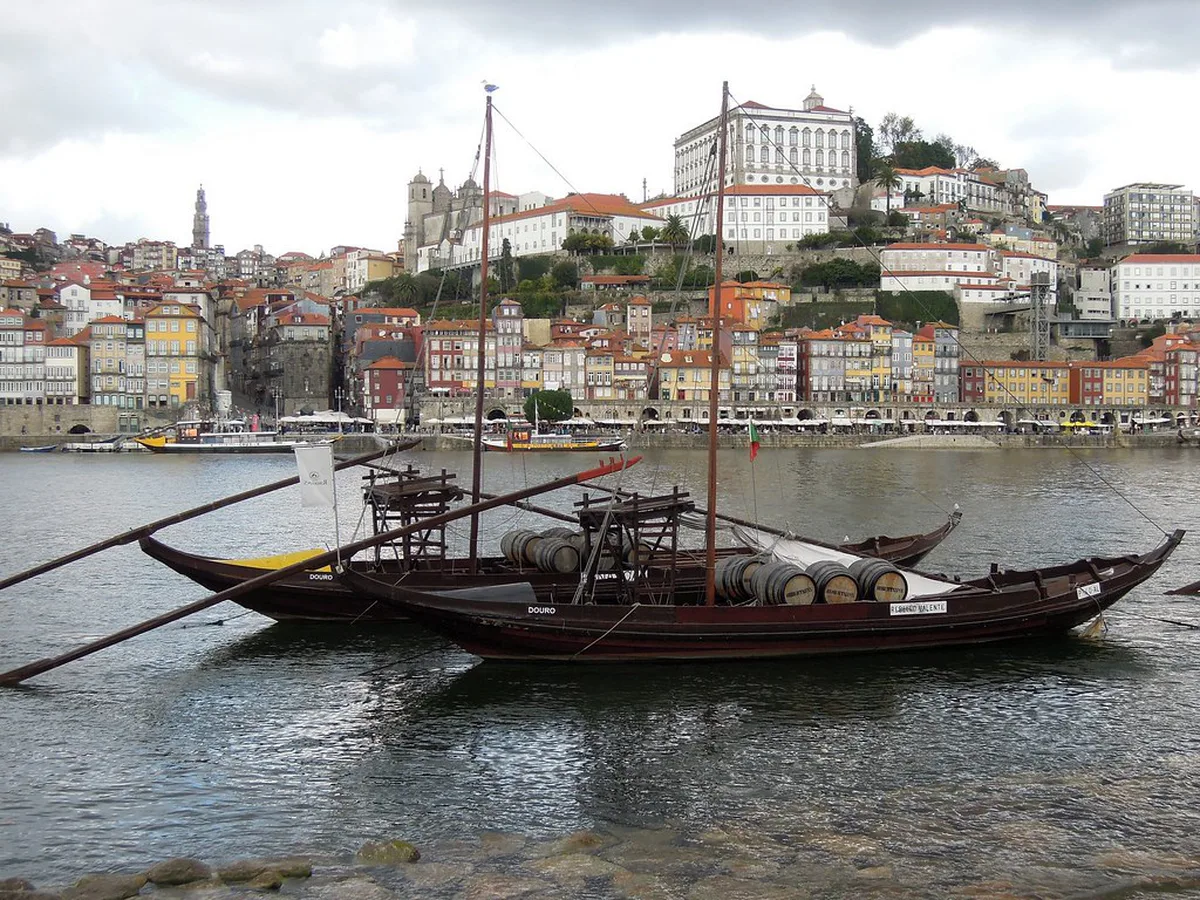
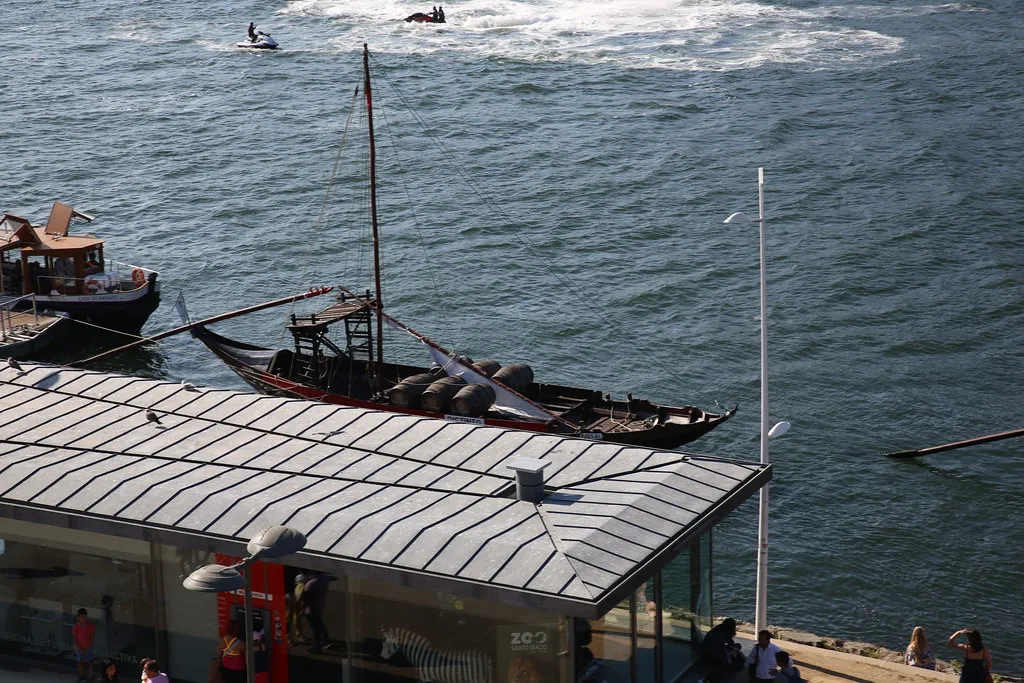
From the dock at the village centre, traditional Rabelo boats — the flat-bottomed craft that once carried port barrels downriver to Vila Nova de Gaia — run scenic loops of 1 to 2 hours. Several quintas sit literally on the village edge, so you can walk from the train to a tasting room without ever needing transport. If you want to slow down and properly explore the upper valley, Pinhão is also where most visitors choose to stay overnight, in either small village hotels or quinta guesthouses.
Which quintas to visit
The Douro has hundreds of working quintas, ranging from small family operations to enormous commercial estates owned by international port houses. Rather than naming a specific shortlist (which changes every year as quintas open and close to visitors), it is more useful to understand the three categories you are choosing between.
Traditional family-run quintas are the smallest and most personal. Group sizes are typically 6 to 12 people, the host is often a member of the family that owns the land, and you walk through the actual working vineyard rather than a visitor centre. Tastings are smaller — usually three or four wines — but the conversation is direct and unhurried. These quintas tend to be tucked further off the main roads and often need to be booked at least a few days in advance because they only run one or two tours per day.
Larger commercial quintas, often owned by well-known port houses, run a more polished operation: paved car parks, scheduled tours every hour, multilingual guides, generous tasting flights of five to seven wines, and on-site restaurants. They handle big tour-bus groups smoothly, which is exactly why most organised day tours from Porto stop at them. If you want a clean, predictable experience and a wide tasting, pick one of these.
Boutique luxury quintas sit at the top of the price range and usually require an overnight stay to make the visit worthwhile. They combine high-end accommodation with private cellar tours, vineyard hikes, and food pairings designed by named chefs. Day visits are sometimes possible but tend to be reserved for restaurant guests.
Realistically, you can visit one quinta well or two quintas in a hurry on a single day from Porto. Trying to fit three is a mistake. If you have already been to the urban side of the port wine experience — the cellars across the river in Vila Nova de Gaia, covered in our Porto port wine cellars guide — the Douro quintas are the rural counterpart: same families, same wine, but at the source.
The Douro train ride from Porto
The Linha do Douro is regularly described as one of the world's most scenic train rides, and for once the marketing is fair. Trains depart from Porto's São Bento station — itself one of the most photographed stations in Europe thanks to its tiled entrance hall — and run east along the Douro river. The first hour, between Porto and Régua, is pleasant but mostly woodland. The real reason to ride this train begins at Régua, where the line drops to within a few metres of the water and clings to the riverbank for the next 50 kilometres, threading past terraced vineyards and crossing several iron bridges.
In 2026, a one-way ticket from Porto to Pinhão costs €13.30 and the journey takes about 2 hours and 10 minutes. A return is naturally €26.60. Trains run roughly every 2 to 3 hours through the day, but the schedule thins out significantly on weekends and public holidays — always check the CP timetable the night before.
A practical note: ride the train for the journey, not for the destination. If your only goal is to reach the Douro and tour wineries, a self-drive or organised tour gets you there faster and with more flexibility. Take the train if the ride itself is the point, and try to sit on the right-hand side travelling east — that is the river side.
A one-way train ticket from Porto's São Bento station to Pinhão costs €13.30 in 2026 and takes about 2 hours 10 minutes. The most scenic stretch — where the line clings to the riverbank — begins at Régua, roughly an hour into the journey.
Self-drive route along the N222
If you do decide to drive, swap the toll motorway for the N222 once you reach the river. The 28-kilometre stretch of the N222 from Peso da Régua to Pinhão has been named the world's best driving road by several travel publications, and the rare time the marketing label stuck is because the road genuinely deserves it. It is twisty, slow, narrow in places, and lined almost the entire way by terraced vineyards dropping into the river on your right.
The full 28 kilometres looks like a 25-minute drive on paper. In practice, allow 2 to 3 hours. You will want to stop constantly. There are at least four official miradouros (viewpoints) along the section, several unmarked pull-offs, and a handful of small villages worth wandering for ten minutes. The road climbs and drops between river level and the high terraces, and the angle changes the view every few corners.
A few practical notes for 2026: the road is single-lane in both directions, the surface is good but the hairpins are tight, and on autumn weekends you will share it with motorcyclists who treat it as a racetrack. Drive defensively, do not stop on blind corners, and fill the tank in Régua because petrol stations are scarce east of there. Park in Pinhão village rather than at the quintas themselves — most quinta access roads are even narrower than the N222.
The N222 is single-lane in both directions with tight hairpins, and on autumn weekends heavy motorbike traffic shares the road. Fill your tank in Régua — petrol stations are scarce east of there, and most quinta access roads are narrower than the N222 itself.
Douro Valley tour operators compared (2026)
Most visitors book through one of five well-established operators or the two major booking platforms. Prices below are per-person rack rates for 2026 in a standard small group (typically 8–16 seats). Private upgrades add roughly €40–70 per person.
For more ways to fill your Porto base, see our full Porto day trips guide, which ranks all main excursions by travel time and effort.
| Operator | Pickup | Vineyards visited | Lunch | River cruise | 2026 price (pp) | Best for |
|---|---|---|---|---|---|---|
| Living Tours | Central Porto meeting point | 2 family quintas + Amarante stop | Included (vegetarian/GF on request) | 50-min Rabelo from Pinhão | €85–95 | Best all-round value, multilingual (EN/ES/FR/PT) |
| Cooking & Wine Tours | Hotel pickup, central Porto | 2 quintas, focus on port wine production | Included, regional Portuguese menu | 1-hr river cruise | €90–105 | Food-focused travellers, hands-on cellar tours |
| Magnificent Tours | Hotel pickup | 2 premium quintas, vineyard walk | Included, upmarket quinta restaurant | 1-hr cruise | €110–130 | Couples, anniversary trips, small groups (max 8) |
| Viator partner tours | Central meeting point or hotel (varies) | 2 quintas, tasting flight of 4–6 wines | Included on most tours | 1-hr Rabelo cruise | €80–125 | Last-minute booking, free cancellation to 24h |
| GetYourGuide partners | Central Porto pickup | 2 quintas, sommelier-guided tasting | Included on premium options | Included on most listings | €75–120 | Budget flexibility, range of group sizes |
| Private day tour | Your hotel door | Your choice of quintas (3 possible) | Included or restaurant of choice | Optional add-on | €130–180 | Families, couples wanting custom itinerary |
What's included on a standard tour in 2026: hotel or central-point pickup, transport in an air-conditioned minivan or bus, guided visit to two quintas with wine tasting (usually 4–6 wines per quinta), a set lunch at a quinta restaurant or local tasca, a 50-minute to 1-hour Rabelo boat cruise on the Douro near Pinhão, and drop-off in Porto typically between 6pm and 7pm. Almost all operators now offer English-language guiding as standard; Spanish and French are common; German and Italian vary by operator.
What's not included: extra wines purchased at the quinta shop, tips (€5–10 per guide is appreciated), and travel insurance. Some tours list the river cruise as "optional" — confirm before booking.
Tour tier vs DIY: how to choose
The right option depends on four variables: whether anyone in your group wants to drink, your budget, how much flexibility matters, and whether this is your first Douro visit. Here is a practical decision framework.
Choose an organised tour if: everyone in your group wants to drink, you have never driven narrow Portuguese mountain roads, you want door-to-door logistics with no planning, or you are only in Porto for two or three days and cannot afford a wasted half-day figuring out trains. Tours also access quintas that are not signposted or easy to find independently.
Choose self-drive if: at least one person is happy not drinking, you want to drive the N222 properly (tours skip large sections of it), you want to arrive at quintas outside scheduled tour windows when it is quieter, or you are visiting in winter and tour frequency drops sharply. Budget €55–75 for fuel, tolls, and parking for two people — cheaper than two tour tickets.
Choose train + independent if: the train ride itself is a goal (it genuinely is one of Europe's great rail journeys), you are travelling solo on a tight budget, or you are comfortable booking a quinta tasting directly and walking 10–15 minutes from Pinhão station. The train costs €13.30 one way in 2026; add €20–35 for a quinta tasting and €25–40 for lunch and you are at €70–90 total — comparable to a budget group tour but without the group.
Choose a river cruise if: you want the in-river perspective of the terraces that no road or rail can match, or you are combining the Douro with an overnight stay at a riverside quinta. Full-day upstream cruises from Porto's Ribeira start at €120–150 per person in 2026 and return by train or bus. See our dedicated Porto Douro river cruise guide for operator details and how the lock crossings work.
Transport comparison: train vs car vs cruise vs tour bus
The table below uses Porto city centre to Pinhão as the reference point — the most common endpoint for a day trip.
| Transport mode | Door-to-door time | Cost (one person, one way) | Flexibility | Scenic value | Can you drink? |
|---|---|---|---|---|---|
| Organised tour bus | 1h 45min–2h (motorway) | Included in tour price (€80–130 total) | Low — fixed itinerary | Medium — mostly motorway | Yes |
| Self-drive (motorway) | 1h 30min | ~€15–20 (fuel + tolls) | Very high | Low — A4 motorway | No (driver) |
| Self-drive (N222 scenic) | 2h 30min–3h | ~€20–25 (fuel + tolls) | Very high | Exceptional | No (driver) |
| Train (São Bento → Pinhão) | 2h 10min | €13.30 | Medium — timetable bound | High (Régua → Pinhão) | Yes |
| River cruise (upstream) | 5–6h on water | €120–150 (all-day cruise) | Very low — fixed boat schedule | Exceptional (river-level) | Yes |
The honest summary for 2026: once you add a quinta tasting (€15–25) and lunch (€20–35) to a train ticket, an independent day trip costs €55–75 per person — only marginally cheaper than the least expensive group tours. The tour wins on convenience and drinking rights; the train wins on romance and solo-travel flexibility; the car wins on freedom and the N222 experience. The cruise wins for pure spectacle at the highest price. Most first-time visitors who want to drink and not think choose a tour. Most returning visitors who loved the N222 on a map rent a car.
Whichever way you go, booking your Douro Valley wine tasting day trip in advance pays off — small-group slots at the best quintas fill two to three weeks ahead during harvest season and popular spring weekends.
Douro Valley day trip with kids
The Douro Valley works well with children, with a few adjustments. The key issue is that most organised tours are structured around wine — long tasting sessions in dark cellars are tedious for under-10s. Here is what actually works in 2026.
Best option for families: private or small-group tour with a family-aware operator. Ask specifically whether the guide is comfortable with children and whether the itinerary includes outdoor time. Private tours (€130–180 per person) let you request a shorter cellar stop and more time by the river. Several operators list family-friendly variants explicitly — confirm when booking.
Quinta do Tedo near Pinhão is consistently cited as the most family-friendly quinta in the upper Douro: picnics under old olive trees facing the Tedo river confluence, outdoor space for children to move, and a relaxed atmosphere. A self-drive visit here, combined with a short Rabelo boat ride from Pinhão dock (€12.50 for 1 hour, €25 for 2 hours), is a strong family itinerary that costs far less than a formal wine tour.
The train option is genuinely great for kids who have never ridden a scenic railway. The 50-kilometre stretch from Régua to Pinhão hugs the river and has enough curves and bridges to hold attention. Buy snacks in Porto, sit on the right side travelling east, and the journey itself becomes part of the experience.
Timing matters with children: depart Porto before 9am to reach Pinhão before the day-trippers clog the dock area. The river walk and station azulejos take about 20 minutes to cover and work at any age. Lunch at a riverside café in Pinhão village (not a quinta restaurant, which runs long) keeps the pace manageable. You can be back in Porto by 6pm comfortably if you catch the 3:20pm train.
What to skip with young children: long cellar tours (over 45 minutes), boutique quinta wine pairing lunches (slow service, wine-forward), and the N222 self-drive in tourist season (heavy motorbike traffic, tight hairpins).
2026 practical prices at a glance
Prices shift every season — the figures below are 2026 verified.
- Train Porto (São Bento) → Pinhão: €13.30 one way / €26.60 return
- Pinhão Rabelo boat ride: €12.50 (1 hour) / €25.00 (2 hours) from the village dock
- Quinta tasting, standard (3–4 wines): €12–18 per person at most walk-in estates
- Quinta tasting, premium (6+ wines with port): €25–45 per person
- Quinta lunch (set menu at estate restaurant): €28–45 per person
- Small-group guided tour (transport + 2 quintas + lunch + cruise): €80–130 per person
- Private full-day tour for 2–4 people: €130–180 per person
- Self-drive fuel + tolls (Porto return): ~€50–60 total for a standard car
- River cruise Porto → Régua (full day, upstream): €120–150 per person
- Harvest season premium (September–October): add 15–20% to tour prices vs spring
| Item | Low end (2026) | High end (2026) | Notes |
|---|---|---|---|
| Train (São Bento → Pinhão, one way) | €13.30 | €13.30 | Return €26.60; check CP timetable |
| Rabelo boat ride, Pinhão dock | €12.50 | €25.00 | 1-hour / 2-hour options |
| Quinta tasting (3–4 wines) | €12 | €18 | Walk-in estates; book ahead in harvest |
| Quinta tasting, premium (6+ wines) | €25 | €45 | Includes port wines |
| Quinta lunch (set menu) | €28 | €45 | Per person at estate restaurant |
| Small-group guided tour | €80 | €130 | Transport + 2 quintas + lunch + cruise |
| Private full-day tour | €130 | €180 | 2–4 people; custom itinerary |
| River cruise Porto → Régua | €120 | €150 | Full day; return by train or bus |
Best time of year for the Douro
September and October are the peak experience. The harvest (vindima) runs from early September into mid-October depending on the variety and the year's weather, and several quintas let visitors join in foot-treading sessions in stone lagares. The terraces glow red and gold by mid-October. The downside: it is also peak crowd season and quintas need to be booked weeks in advance.
May and June are the quieter sweet spot — the vines are in bright green leaf, the temperature is comfortable in the high 20s, and tour availability is easy. Winter (November to March) is genuinely empty: bare vines, occasional fog, sometimes snow on the higher slopes, and most quintas still open but on reduced schedules. July and August are the months to avoid if you can — the upper valley regularly hits 35°C or more, the terraces offer almost no shade, and the river smells of warm algae.
Frequently Asked Questions
Is a Douro Valley day trip worth it from Porto?
Yes, for almost every visitor. The Douro is the single most distinctive landscape within easy reach of Porto, and even a fast day trip gives you the river, the terraces, a tasting, and a meal. If you have three or more days in Porto, dedicating one to the Douro is the standard recommendation. For more on how to spend the rest of your time, see our Porto attractions guide.
How long is the train from Porto to Douro?
The journey from Porto's São Bento station to Pinhão takes about 2 hours and 10 minutes one-way and costs €13.30 in 2026. Trains continue further east to Pocinho but that section is a longer day. Check the CP timetable in advance — services thin out on weekends and public holidays.
Can you do Douro Valley independently?
Absolutely. Self-drive is straightforward (1 hour 30 minutes each way on the motorway) and the train plus a Pinhão-based walking tasting works well too. The only thing you lose by going independently is having someone else drive while you taste. Book quintas at least a few days ahead in shoulder season, and several weeks ahead in September and October.
When is the best time to visit Douro Valley?
Mid-September to mid-October for the harvest experience, or May to June for green vines and lighter crowds. Avoid July and August because of the heat. Winter is quiet and atmospheric but expect reduced quinta hours. For a full month-by-month breakdown including weather, crowd levels, and quinta opening schedules, see our dedicated best time to visit Douro Valley guide.
Should you stay overnight in the Douro?
If you have the time, yes. A day trip lets you see the valley but the experience changes completely once the day-trippers leave at 5pm and you can have dinner on a quinta terrace as the light fades. One night in Pinhão or at a small quinta guesthouse is the minimum to do this properly. If you only have one day, that is still genuinely worthwhile — most visitors find it the highlight of their Porto trip either way.
How much does a Douro Valley day trip from Porto cost in 2026?
A guided small-group tour including transport, two quinta visits with tastings, lunch, and a river cruise costs €80–130 per person in 2026. Going independently by train costs €13.30 one way from São Bento to Pinhão; add €15–25 for a quinta tasting and €28–40 for lunch and your total is €55–75 per person. Self-drive adds fuel and tolls (€50–60 total for the car) but subtracts one driver from the drinking equation. Private tours for couples or families run €130–180 per person.
Which is better — guided tour or DIY for the Douro Valley?
Guided tours win on convenience and drinking rights: everyone can taste freely and logistics are handled end to end for €80–130 per person. DIY wins on flexibility, cost (especially if you have a car), and access to the N222 scenic road that most tours skip. The train plus independent is a strong third option for solo travellers or romantics who want the rail journey; it costs slightly less than budget tours once tastings and lunch are included but requires more planning.
Is a Douro Valley river cruise worth it from Porto?
Yes, if you want a perspective no road or rail can match. Full-day upstream cruises leave Porto's Ribeira at sunrise, pass through two river locks, and reach Régua by lunchtime — a five to six hour river journey that shows the terraces from water level. It is the slowest and most expensive option (€120–150 per person) but a genuinely different experience from a tour bus. See our Porto Douro river cruise guide for how to book and what the lock crossings are like.
 Porto To Aveiro By Train Travel GuideJune 8, 2026