Douro Azul 1 Day Cruise: 6 Best Itineraries and Planning Tips
Plan your Douro Azul 1-day cruise with our guide to the best routes from Porto to Régua and Pinhão. Includes dam lock details, booking tips, and luxury yacht options.
On this page
Douro Azul 1-Day Cruise: 6 Best Itineraries and Planning Tips
A Douro Azul 1-day cruise is the single most efficient way to see the UNESCO-listed Douro Valley without renting a car. You board in Porto in the morning, glide past terraced vineyards, and return from Régua or Pinhão by evening. The experience combines river engineering, wine country scenery, and traditional Portuguese food in one long day. This guide covers every route option, what's actually included, real 2026 prices in EUR, and the practical details that most booking pages skip.
What Is Douro Azul and Who Operates the Cruises
Douro Azul is Portugal's largest river cruise operator, headquartered in Vila Nova de Gaia. The company runs both daily excursion boats and multi-day hotel ships on the Douro River. For day-trippers, the relevant fleet is the shared excursion vessels — large, purpose-built river boats that carry 100–200 passengers. These are not the small wooden rabelo boats you see moored near the Gaia waterfront; those are decorative heritage pieces. The actual cruise boats are modern, with indoor dining saloons, open upper decks, and onboard bars.
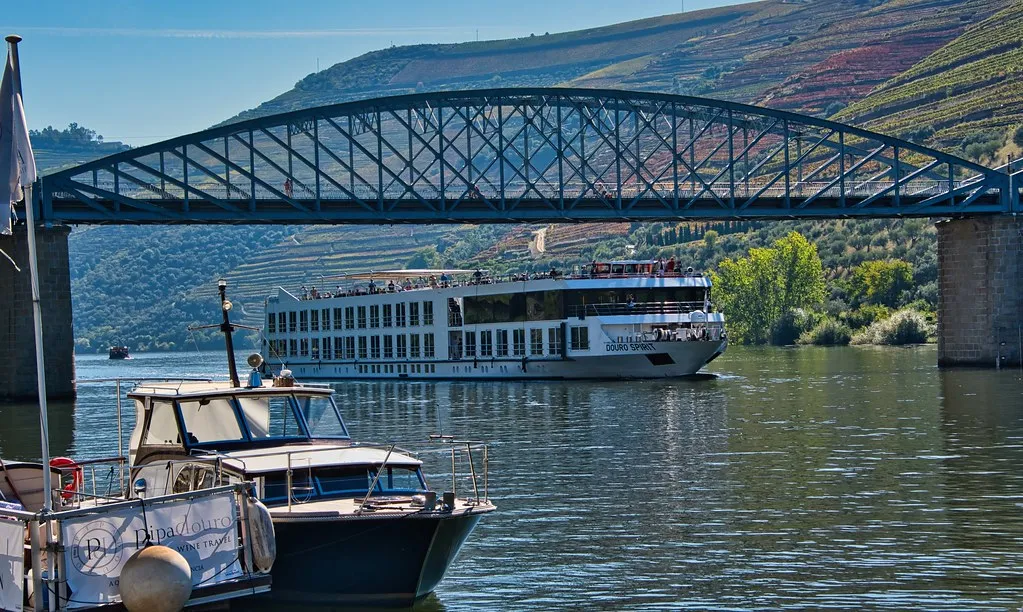
Douro Azul sells tickets directly at their Gaia pier office and online at douroazul.com. Third-party booking platforms (Viator, GetYourGuide) also list the same tours, sometimes with small markup. Booking direct or through an aggregator makes little practical difference, but direct booking gives you more flexibility to call and change dates if the weather turns.
The company also operates Scenic and other luxury brand river ships for multi-night itineraries, but those are a separate product. This guide focuses exclusively on the 1-day excursion cruises departing from Porto or Vila Nova de Gaia.
What Is Included in a Douro Azul 1-Day Cruise
Standard 1-day packages include breakfast served on board shortly after departure, a three-course Portuguese lunch with wine, and on some routes, a guided stop at a Quinta (wine estate) with a tasting. Bus or train transfer back to Porto is included in most packages — confirm this at booking because a handful of budget options are cruise-only and require you to arrange your own return.
What is not automatically included: gratuities for crew, drinks beyond the lunch wine, entrance to the Douro Museum in Régua, and private transfers to the departure pier. If your hotel is in central Porto rather than on the Gaia waterfront, budget 10–15 minutes by metro or taxi to reach the pier. The pier address is Avenida Ramos Pinto, Vila Nova de Gaia — Line D metro to João de Deus station puts you a short walk away.
Higher-tier packages add an afternoon Quinta visit with a seated tasting of three to four wines, often at estates like Quinta de la Rosa or Quinta do Crasto near Pinhão. These cost roughly €25–€40 more per person but are worth it if wine tourism is your main goal rather than the scenery alone.
The Dam Locks: What Actually Happens on Board
The Douro River has five dams between Porto and Pinhão. A standard Porto-to-Régua cruise passes through two of them: the Crestuma-Lever Dam (a modest 10-metre lift near the coast) and the Carrapatelo Dam, which at 35 metres is one of the tallest navigable locks in Europe. Passing through the Carrapatelo lock takes about 30 minutes. The boat glides into a concrete chamber, the gates close behind you, and the water level rises slowly until you're level with the upper reservoir.
Most passengers crowd the bow or upper deck for the lock passage. The crew usually announces the approach over the intercom. The noise of rushing water and the scale of the chamber walls rising above the deck make this a genuinely dramatic moment — not just a logistics pause. A Porto-to-Pinhão cruise adds a third lock, the Bagaúste Dam, adding another 20–25 minutes of lock time.
One practical note: lock passage times are not fixed. River traffic and seasonal water levels affect scheduling. Your departure time might be listed as 08:00 but the Carrapatelo passage often happens between 11:00 and 13:00. Plan your photography window accordingly rather than expecting a precise schedule.
The Carrapatelo Dam lock — at 35 metres, one of the tallest navigable locks in Europe — takes about 30 minutes to pass through. Head to the bow or upper deck when the crew announces the approach over the intercom for the best views of the chamber walls rising above the deck.
Porto to Régua: The Classic Route
The Porto-to-Régua cruise is the right choice for most first-time visitors. It is the most popular Douro cruise option for good reason: the distance is manageable, the scenery peaks at the Carrapatelo Dam and the terraced schist slopes beyond, and you arrive in Régua with enough time to walk the riverside promenade and visit the Douro Museum before heading home. Typical upriver journey time is five to six hours.
Departure is from Ribeira quay in Porto or from the Gaia pier, around 08:00–09:00. Breakfast is served as the boat clears Porto's bridges. Lunch arrives around 13:00, typically just as the boat approaches or clears the Carrapatelo lock — so you are eating while watching the walls descend, which is a good situation to be in. Arrival in Régua is between 14:30 and 15:30 depending on river conditions.
Return to Porto is by the historic Douro Line train from Régua station, departing around 17:00 or 18:30 and arriving at Porto Campanhã in approximately two hours. 2026 prices for the cruise sit at roughly €80–€110 per adult for the cruise-plus-train package. Children under 4 travel free; children aged 4–12 pay around 50% of the adult fare.
- Departure: 08:00–09:00 from Gaia pier or Ribeira quay, Porto
- Upriver journey: approx. 5–6 hours, passing Carrapatelo lock
- Arrival Régua: 14:30–15:30
- Return train: 17:00 or 18:30 from Régua, arriving Porto Campanhã ~19:30–20:30
- Total day: 11–12 hours door to door
Porto to Pinhão: Deeper Into the Valley
Traveling to Pinhão takes you past Régua into the narrower upper valley where the port wine estates are most concentrated. The landscape becomes more dramatic — the terraces steeper, the schist darker, and the quintas closer to the water. You will pass through three dam locks in total. This is the route to choose if wine estate visits and photography are priorities over convenience. You can discover many attractions in this stretch of the valley that the shorter route misses entirely.
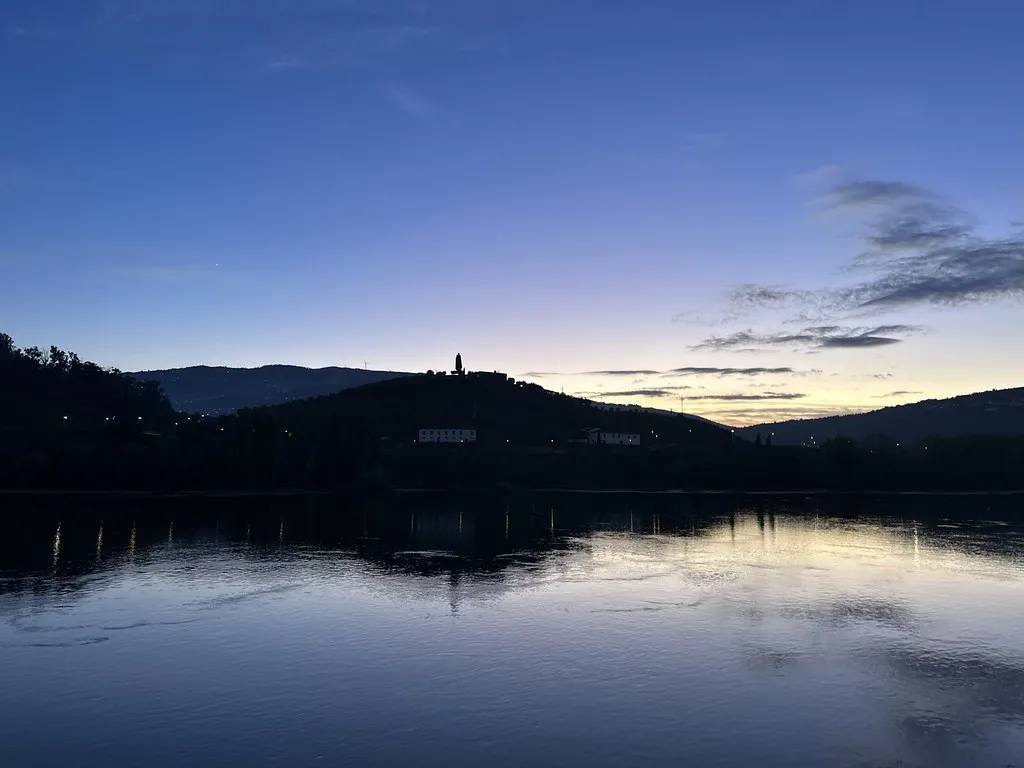
Pinhão is famous for its small train station decorated with 24 azulejo tile panels depicting scenes from Douro life — grape harvests, oxen ploughing, rabelo boats on the river. The station is a five-minute walk from the cruise dock. Many operators include a brief stop here before turning the boat around or sending passengers to a Quinta visit. The tile panels are free to view from the platform.
This cruise operates April through October. The day runs longer — 12 to 13 hours total. Return to Porto is usually by coach from Pinhão rather than train, as the rail connections from Pinhão are infrequent. 2026 prices run €110–€145 per adult for the full-day package with lunch and bus return. Book at least three to four weeks ahead in July and August when this route sells out first.
- Departure: 07:30–08:00 (early start needed to clear three locks)
- Upriver journey: approx. 7–8 hours to Pinhão
- Arrival Pinhão: 15:00–16:00
- Return: coach from Pinhão, approx. 2.5 hours to Porto
- Total day: 12–13 hours
| Route | Departure | Journey Time | 2026 Price (adult) | Return Method |
|---|---|---|---|---|
| Porto → Régua | 08:00–09:00 | 5–6 hours | €80–€110 | Douro Line train (~2 hrs) |
| Porto → Pinhão | 07:30–08:00 | 7–8 hours | €110–€145 | Coach (~2.5 hrs) |
| Quinta visit add-on | Varies | Included in day | +€25–€40 | As per route |
| Private charter (Skyfall yacht) | Flexible | Half-day or full day | From €1,200–€1,800 | Flexible |
Why the Return Train to Porto Is Not an Afterthought
Most cruise guides treat the Régua-to-Porto train as a logistical necessity and nothing more. It is actually one of the great rail journeys in Western Europe. The Douro Line (Linha do Douro) hugs the river gorge from Régua all the way to Porto Campanhã, running through tunnels blasted into schist cliffs and along ledges with vertiginous drops to the river below. The late-afternoon light on the gorge walls between 17:00 and 19:00 in summer is exceptional.
The key seat-selection detail that no booking confirmation mentions: sit on the left side of the train facing the direction of travel (i.e., the river side). This puts you directly facing the Douro gorge for the entire two-hour journey. If you sat on the left side of the boat going upriver (for vineyard views), switch sides for the train. The CP (Comboios de Portugal) regional train runs a single car or two on this route — seats are not assigned, so board early at Régua for the best position. The train costs approximately €11–€14 per person if your cruise package requires you to buy a separate ticket, or it is pre-included in most full packages.
The Pinhão route returns by coach, which does not offer the same experience. If the gorge train ride appeals to you, the Régua route is the better pick even though Pinhão is technically more scenic upriver.
Private Charters and Luxury Alternatives
For a more intimate experience, Douro Azul offers private charter options on smaller vessels. The Skyfall yacht is a sleek modern motor yacht suited to groups of up to 12. You set the departure time, choose the stopping points, and get a private crew rather than sharing the boat with 150 strangers. Private charters on the Skyfall start around €1,200–€1,800 for a half-day and are worth considering for anniversaries, small corporate groups, or families with young children who need flexibility.
Private charters often stop at points inaccessible to the large cruise boats — quieter riverbanks, private quinta docks, or the small beaches that appear on the river in summer. I found the flexibility of choosing our own departure time one of the biggest advantages. Prices vary based on group size and itinerary length, so contact Douro Azul directly for a quote rather than booking through third-party platforms.
A middle-ground option worth knowing: some operators run smaller semi-private boats carrying 20–40 passengers, which offer a quieter experience than the main cruise fleet without the full private charter cost. Search for "Douro small group cruise" on GetYourGuide to compare these options alongside the standard Douro Azul departures.
Best Time to Take a Douro Azul Cruise in 2026
The river runs cruises year-round but the full schedule — including Pinhão routes and Quinta visits — operates April through October. May and June are the sweet spot: the valley is intensely green from spring rains, temperatures sit at 20–27°C on the boat deck, and crowds are lighter than July–August. September is excellent for the grape harvest (vindima), typically running the third and fourth weeks of the month. Many quintas allow cruise visitors to watch or briefly participate in the harvest, which is a genuinely memorable addition to the day. Check Visit Portugal for event calendars and regional festivals during your intended travel window.
July and August are the most popular months and the most logistically demanding. Boats are full, Quinta tasting slots book out weeks in advance, and the deck temperature can exceed 35°C by early afternoon. Bring high-factor sunscreen and sit under the awning at midday if you go in peak summer. November through March sees reduced frequency — typically the Régua route only, with shorter daylight hours and cooler temperatures. The valley in winter fog is dramatic but you lose some of the vineyard colour.
Weekdays are consistently quieter than weekends across all seasons. A Tuesday or Wednesday departure in May gives you the best combination of scenery, comfort, and availability.
Booking Tips and What to Know Before You Go
Book the Régua route at least two weeks ahead in spring and four weeks ahead in July–August. The Pinhão route sells out faster — book six weeks ahead for a summer weekend. Use these Portugal travel tips to align your booking with the right season. The official Douro Azul website (douroazul.com) accepts online payment and issues mobile vouchers. Physical tickets are not required; show your booking confirmation at the pier gate.
A few things to sort before the day: check whether your package includes the return transfer or lists it as optional, confirm the precise departure pier (Gaia pier and Ribeira quay in Porto are different locations separated by a 15-minute walk), and if you are booking a Quinta visit separately, do so at the same time as your cruise ticket. Wine estates near Pinhão have limited daily visitor capacity and mid-week tastings fill up faster than you'd expect.
Cancellation policies vary by operator. Most allow free cancellation up to 48 hours before departure; some premium packages require 72 hours. Buy travel insurance that covers river cruise cancellations if you are visiting in shoulder season when occasional high-water events can temporarily halt navigation on the upper river.
High-water events during the shoulder season (November–March) can temporarily halt navigation on the upper river. Most operators require cancellation notice 48–72 hours before departure, so check your policy and consider travel insurance that explicitly covers river cruise disruptions.
Add an Extra Day: Lamego and the Vineyards
If you have more time, consider staying overnight in Régua or making a side trip to Lamego. The town is 13 km south of Régua and famous for its Sanctuary of Nossa Senhora dos Remédios, approached by a baroque staircase of 686 steps set into a wooded hillside. The climb takes about 20 minutes at a steady pace and the views over Lamego's rooftops from the top justify the effort. Lamego is also the production centre for Raposeira, Portugal's best-known sparkling wine — winery visits are available by appointment.
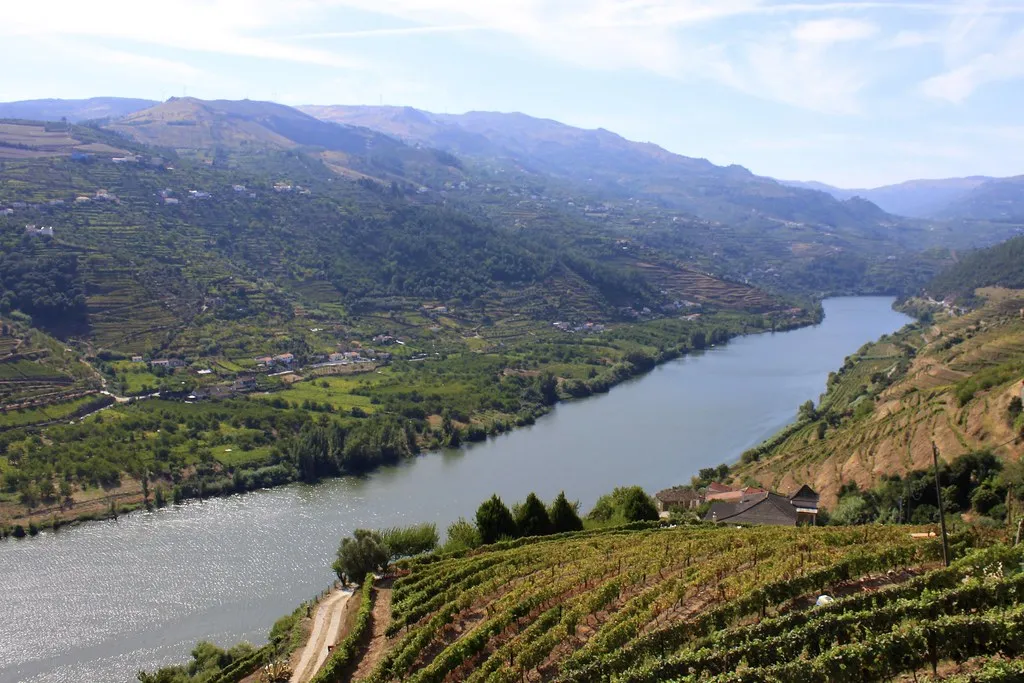
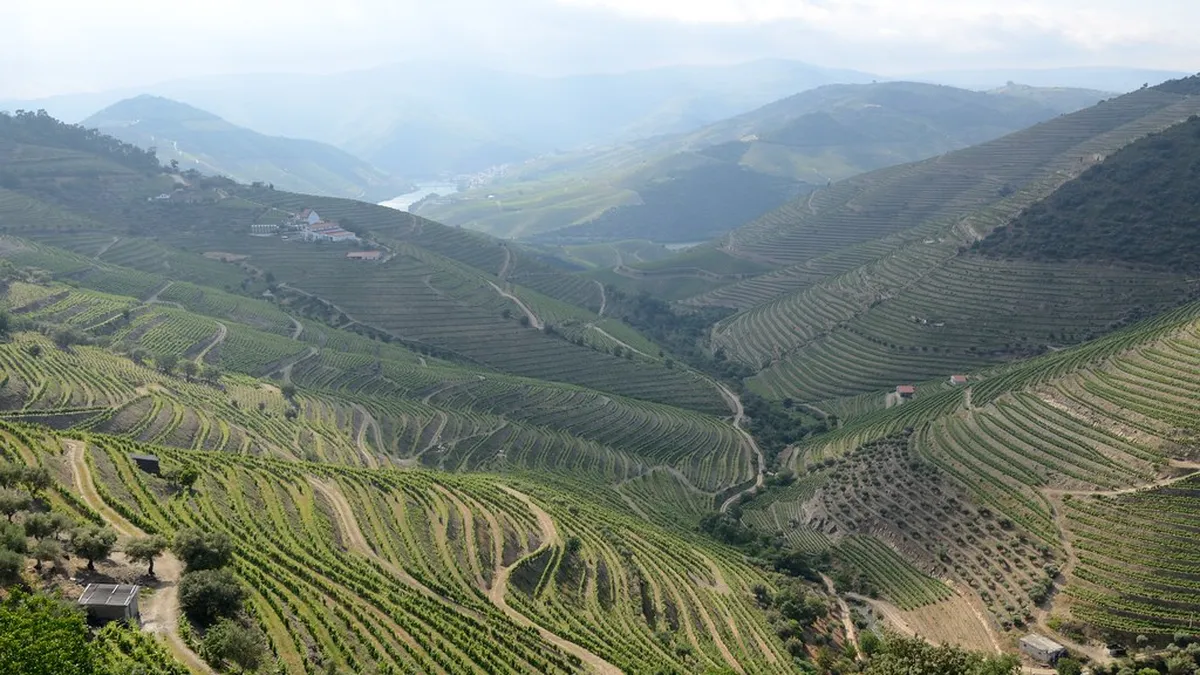
An overnight stay in the valley also opens up vineyard hiking. The terraced slopes around Pinhão have a network of marked trails ranging from easy riverside walks to steep schist paths through working vineyards. The Trilho dos Socalcos loop near Casal de Loivos offers the most photographed viewpoint in the valley and takes about two hours at a comfortable pace. Morning light before 09:00 is best for the view — which means staying locally rather than commuting from Porto.
Frequently Asked Questions
Which Douro Azul 1-day cruise is best for first-time visitors?
The Porto to Régua cruise is the best choice for first-timers. It offers a great mix of scenery and history. You will see the bridges of Porto, and the massive Carrapatelo Dam.
How long does the Porto to Pinhão cruise take?
A full-day cruise to Pinhão typically takes about 12 hours. This includes the boat journey and the return trip. Expect to depart early in the morning around 8:00 AM.
Are meals and wine tastings included in the 1-day cruise?
Yes, most 1-day cruises include breakfast and lunch on board. Some higher-tier packages also include a wine tasting at a Quinta. Always check your specific booking details for confirmation.
A Douro Azul 1-day cruise works best when you go in with clear expectations: it is a long day, the return leg is part of the experience, and booking the right package for your priorities — scenery vs. wine vs. comfort — makes a real difference. The Régua route with the train return is the most complete single-day option. Pinhão rewards those who want to go deeper into wine country and do not mind a coach ride home. Either way, the Douro Valley will stay with you long after the day ends.
For the wider regional context, see our complete Douro Valley tourism attractions guide.
For related Douro Valley guides, see our Douro Cruises: The Ultimate 3-Day River Itinerary and Douro Boat-then-train Round Trip articles.
 Douro Boat-then-train Round Trip: 1-Day GuideMay 17, 2026