
Cascais Beaches: The Ultimate Guide to the Portuguese Riviera
Plan your trip to the best Cascais beaches with our guide to calm urban coves, wild Atlantic surf spots, train logistics from Lisbon, and local dining tips.
On this page
Cascais Beaches: The Ultimate Guide to the Portuguese Riviera
Two coastlines meet at Cascais, and they could not be more different. To the east, the sheltered Portuguese Riviera curves toward Lisbon with golden sand, calm water, and excellent facilities. To the north and west, the Serra de Sintra coast faces the open Atlantic with powerful swells, dune systems, and winds strong enough to ruin a sunbathing day. Choosing the right beach depends almost entirely on which coast you pick. This guide to the best Cascais beaches walks you through every option by vibe, transport link, and practical detail so you can make that call before you leave the house.
The Best Urban Beaches in Cascais (Family-Friendly)
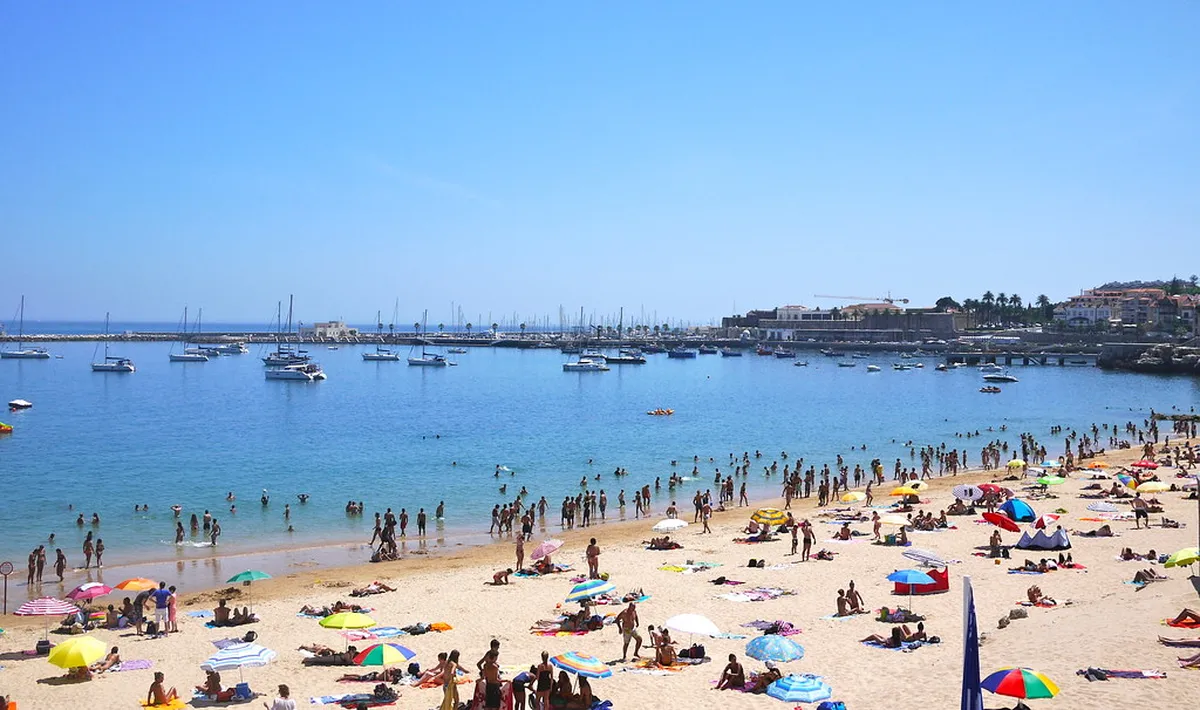
Five beaches sit within walking distance of Cascais town centre, connected by the Paredão beachfront promenade. All of them hold or have recently held Blue Flag certification for water quality and safety, which is worth checking each season at the Blue Flag Global listings. The water is always calm here — sheltered from the Atlantic swell by the headland — but it is still cool, hovering between 16°C and 19°C in summer.

Praia da Conceição and Praia da Duquesa form the largest stretch of sand in town, divided by a small rocky outcrop. Duquesa is closer to Cascais and tends to have loungers and umbrellas for rent from June through September. Conceição gets noisier, with boat rides and inflatable toys. Both have lifeguards, showers, toilets, and at least one beach bar. These are the right beaches for a full family day — shallow water, lots of shade options, and restaurants within a five-minute walk.
Praia da Rainha is the prettiest of the five, a small cove tucked between villa walls that was once the private beach of Queen Amélia in the 1880s. It fills up fast in July and August because of its fame, so arrive before 10:00 or walk past and judge for yourself. It has toilets, showers, and a bar. Praia da Ribeira sits at the heart of town overlooking the fishing harbour and is best for a quick swim rather than a long session — the steady stream of day-trippers walking past makes it feel exposed.
Praia das Moitas lies between Estoril and Cascais on the promenade, quieter than its neighbours and good for a relaxed afternoon. The Piscina Oceânica Alberto Romano, a free seawater pool beside the promenade, is worth knowing about — fish sometimes get trapped inside at low tide, which makes it an unexpected highlight for children.
The Piscina Oceânica Alberto Romano beside the Cascais promenade is free to use and tide-independent. Fish sometimes get trapped inside at low tide, making it an unexpected highlight for children.
Carcavelos and the Portuguese Riviera Beaches
Praia de Carcavelos is the largest beach on the entire Lisbon coast and the one most locals head to on a hot summer weekend. It is 20 minutes east of Cascais by train — one stop — and the scale of the place means you can always find space even in August. The beach runs for over a kilometre, with consistent medium-sized waves suitable for beginner surfing, a long row of beach bars and restaurants, and full facilities. If the urban beaches of Cascais are too packed in peak season, Carcavelos is the practical escape.
Praia do Tamariz, the main beach of Estoril, is a 17-minute walk east from central Cascais or one stop by train. It is calmer than Carcavelos, with fewer activities, and has a slightly more local feel. Adjacent to the sand is the Piscina Oceânica do Tamariz, a seawater swimming pool built into the rocks beside the Forte da Cruz. The pool stays calmer than the open sea and the water runs a degree or two warmer, making it one of the best options in the area for young children or anyone who finds the Atlantic too rough.
Further east along the Riviera, Praia de São Pedro do Estoril is consistently the quietest of the main Riviera beaches — no boat rides, no inflatable activities, and a noticeably more relaxed crowd. If peace is the priority, this is the underrated pick. Praia de Santo Amaro in Oeiras is the closest beach to Lisbon with reliably clean water; beaches east of Oeiras fall within the Tejo estuary mixing zone where quality is less certain.
Wild Atlantic Beaches: Guincho and the Serra de Sintra Coast
The Atlantic coast north of Cascais sits inside the Serra de Sintra nature park and operates by entirely different rules. Public transport is almost non-existent beyond Guincho — you need a car or are willing to pay Uber surge prices at the end of the day. The reward is dramatic natural scenery, vast empty beaches, and world-class surf conditions.
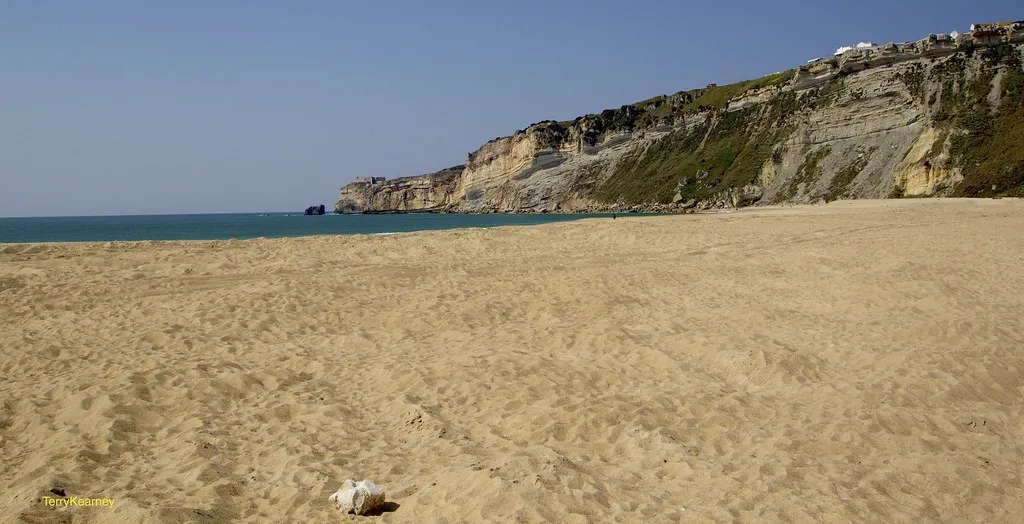
Guincho beach is the headline act: a kilometre-wide expanse of wild sand at the foot of the Sintra hills, one of the top kitesurfing and windsurfing venues in Europe. The Nortada — the north wind that dominates the Portuguese coast in summer — funnels through the hills here and can hit 40 km/h by midday. That wind is the reason Guincho produces perfect conditions for water sports and difficult conditions for sunbathing. If you are going to surf or watch surf, go. If you want to lie on the sand, the Riviera is a better choice. Guincho has toilets, showers, and two restaurants at either end. Bus 405 and 415 run from Cascais bus station, and there is a dedicated 14 km cycle path from town.
Praia da Cresmina sits just south of Guincho and gets overlooked because of its famous neighbour. It is large enough to absorb crowds, has a beach bar and lifeguards in season, and is slightly more sheltered. Praia da Ursa is the most spectacular remote beach — reached via a rough 1.7 km coastal path from Cabo da Roca — with two dramatic rock stacks rising from the sand. There are no facilities at Ursa, so go prepared. Praia da Adraga, further north, is the best-kept secret of the Serra de Sintra coast: accessible by car, with a very good restaurant (Restaurante da Adraga), toilets, showers, and golden sand flanked by sea stacks. It is a favourite with Portuguese visitors but barely known among foreign tourists.
| Beach | Type | Access from Cascais | Facilities | Best For |
|---|---|---|---|---|
| Praia da Conceição / Duquesa | Calm, sheltered | 5 min walk | Lifeguards, showers, toilets, beach bar, loungers | Families, full beach day |
| Praia da Rainha | Calm, sheltered cove | 10 min walk | Toilets, showers, bar | Scenic swim, couples |
| Praia de Carcavelos | Medium waves | Train (1 stop, ~20 min) | Full facilities, beach bars, restaurants | Beginner surfing, busy days |
| Praia do Tamariz (Estoril) | Calm | 17 min walk or 1 train stop | Full facilities, seawater pool adjacent | Families, young children |
| Guincho Beach | Wild Atlantic, strong winds | Car or Bus 405/415; 14 km cycle path | Toilets, showers, 2 restaurants | Kitesurfing, windsurfing, scenery |
| Praia da Ursa | Remote, wild | Car to Cabo da Roca + 1.7 km coastal path | None | Dramatic scenery, experienced hikers |
| Praia da Adraga | Wild Atlantic | Car only | Toilets, showers, restaurant | Locals' secret, golden sand |
Tides, Pools, and a Planning Detail Most Guides Skip
Several smaller Cascais beaches shrink significantly or disappear entirely at high tide. Praia da Azarujinha, a sheltered cove east of the marina, is a good example — at high tide the sand is fully covered and swimming is not practical. Praia das Moitas and the smaller sections of Praia da Ribeira also tighten considerably. Checking the tide schedule before heading to a smaller beach is a simple step that will save you from arriving to find no sand. The Portuguese tide service (previsaomareas.pt) gives free daily forecasts.
The seawater pools solve this problem entirely. The Piscina Oceânica do Tamariz in Estoril and the Piscina Oceânica Alberto Romano on the Cascais promenade are both free to use and tide-independent. They stay calm when the sea is choppy, run slightly warmer than the open Atlantic, and are ideal for young children or nervous swimmers. The Alberto Romano pool sometimes traps fish at low tide, which is genuinely entertaining for kids. Neither pool appears prominently in standard beach listicles, but locals treat them as first-choice options on rough days.
Sea temperature is the other reality check worth flagging honestly. The Atlantic here is cold by Mediterranean standards. Water temperature ranges from around 14°C in February to roughly 18–19°C in August. Most people find it refreshing for short swims but too cold for long sessions without a wetsuit. Surfers at Guincho wear 3/2 mm wetsuits year-round. If warm water is the priority, the seawater pools or the Algarve are the honest answers.
How to Get to Cascais from Lisbon (Train vs. Car)
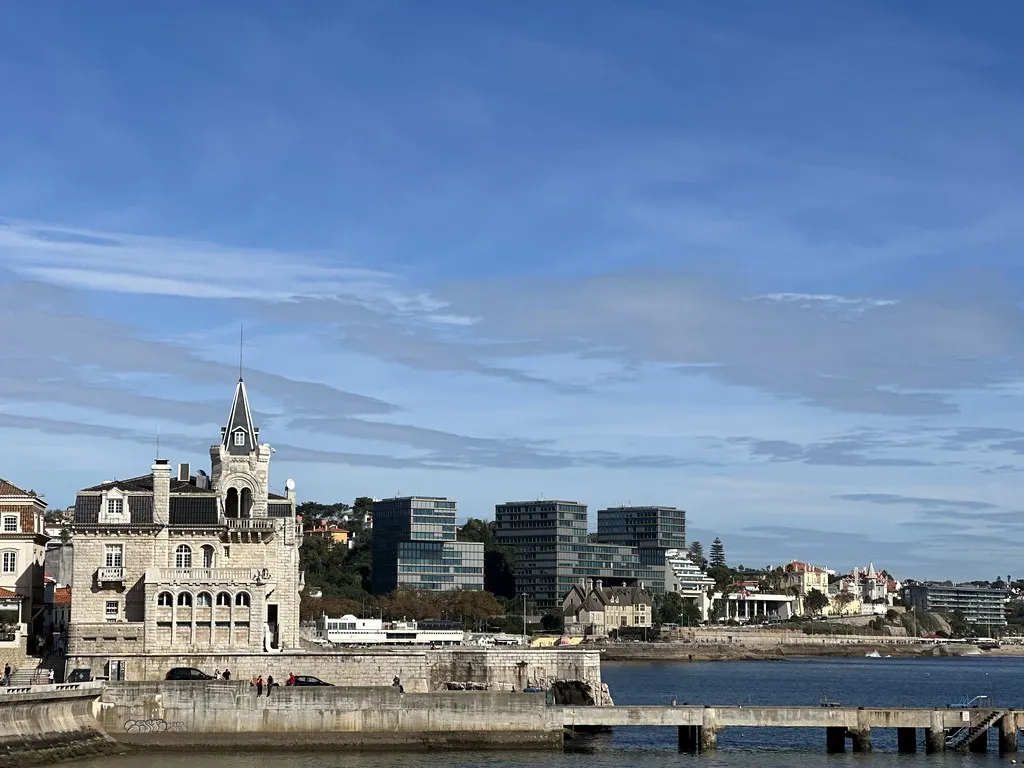
The train from Cais do Sodré station in Lisbon to Cascais takes approximately 40 minutes and follows the coastline for most of the journey. Services run every 20–30 minutes from around 05:30 to 01:30. The one-way fare is €2.30 and you can check live departure times at Comboios de Portugal (CP). The train stops at Estoril (Praia do Tamariz), Cascais (urban beaches), and several Riviera stops including Carcavelos along the way.
A practical warning about the ticket machines at Cais do Sodré: international credit and debit cards frequently fail, even contactless. If you plan to use the machine, carry Euro coins. The alternative is the manned ticket counter, which works reliably but can have a queue in the morning. Several travellers report buying a return ticket at a machine in Cascais on the way back (where machines tend to work better), having paid by card in Lisbon.
Driving offers flexibility for reaching Guincho and the Serra de Sintra beaches, but parking in central Cascais is very limited in July and August. The underground car park near the Marina is the most reliable option for the town centre. For Guincho, there is a dedicated car park at the beach, though it fills by midday on summer weekends. An Uber or Bolt from Cascais to Guincho costs roughly €8–12 one way, but be aware that getting a ride back late on a summer Sunday can take 30–40 minutes as drivers decline the distance.
Where to Eat: Best Seafood and Beachfront Dining
Cascais has one of the best concentrations of seafood restaurants per square kilometre on the Portuguese coast. The most reliable cluster sits along the Marina waterfront and in the streets of the Old Town. Local dishes to order: grilled robalo (sea bass), polvo à lagareiro (octopus with olive oil and potatoes), arroz de marisco (seafood rice in a copper pot), and barnacles if they appear on the specials board.
Beachfront eating on the urban beaches is handled by the terrace bars at Praia da Duquesa and Praia do Tamariz, where the focus is drinks and light snacks rather than full meals. For a proper sit-down lunch with sea views, the restaurant at Guincho beach or the Restaurante da Adraga further up the coast both serve fresh fish at fair prices — though you should confirm hours before making the trip, as both can close off-season or fill by 13:00 in summer. You can find an overview of the best things to do in Cascais including dining options across the town.
Reservations for weekend dinners in 2026 are advisable at any restaurant near the Marina or Old Town from June through September. Locals eat late — dinner service typically runs 19:30 to 23:00 — so booking for 20:00 or 20:30 is the norm. Ask for the peixe do dia (fish of the day) rather than choosing off a printed menu for the freshest option at the best price.
Must-See Cascais Attractions Beyond the Sand
Boca do Inferno — Hell's Mouth — is a dramatic rock formation 2 km west of town where the Atlantic has carved a collapsed sea cave into the clifftop. Waves funnel into the opening and detonate upward in a spray that can reach several metres at high tide. It is an easy 25-minute walk along the coast from the Marina and requires no entry fee. The Santa Marta Lighthouse Museum, just past the Marina, charges €5 for entry and the viewing platform alone is worth it for the panorama over Cascais bay.
The Boca do Inferno coastal walk is the most accessible stretch of the western cliffs and combines well with a beach visit to Praia da Rainha on the way back. Marechal Carmona Park, a short walk inland from the town centre, is a shaded garden with peacocks roaming freely — a useful midday retreat when the beach is too hot. The Cidadela Art District, inside the walls of a 16th-century fortress, has rotating contemporary art exhibitions and is free to enter.
The Modern Marina area anchors the southern edge of town with luxury yachts, outdoor restaurants, and an evening promenade crowd. Dolphin watching tours depart from the Marina year-round, typically lasting two hours and costing €35–50 per person. Common sightings include bottlenose and common dolphins; orca passes, while rare, do occur seasonally in the Cascais channel.
Sintra: The Best Day Trip from Cascais
Sintra is 30 minutes from Cascais by bus and the logical extension of any beach stay on the Riviera. Bus 1623 and 1624 run direct from Cascais bus station and stop en route at Cabo da Roca — the westernmost point of continental Europe and a worthwhile stop in its own right for the clifftop views. A combined visit to Cabo da Roca and Sintra in one day is achievable if you start by 09:00.
Sintra's two headline monuments are the Palácio Nacional da Pena (a technicolour Romantic-era palace perched above the town) and the Quinta da Regaleira (a 19th-century estate with mysterious wells and tunnel networks). Both require timed entry tickets booked online — walk-up availability is unreliable in summer 2026. Tickets for Pena cost €14 per adult. The historic centre is freely walkable but very crowded by 11:00 in peak season.
Returning to Cascais in the evening for dinner is the standard pattern and works well — the beach town is noticeably quieter than Sintra by late afternoon. A detailed breakdown of the route options is covered in the Cascais 1-day itinerary, including timings for combining Sintra with a beach stop.
Where to Stay: Best Neighborhoods for Beach Access
The historic centre of Cascais is the best base for beach access on foot. From here you can reach all five urban beaches within 15 minutes and the Marina in five. Boutique guesthouses in the Old Town lanes offer the most authentic feel; the area is walkable, lively in the evenings, and noticeably quieter than Lisbon. Prices range from around €80 per night for a guesthouse room to €200+ for a hotel with sea views in peak season.
Estoril, a 17-minute walk east, has a more glamorous atmosphere anchored by the Casino Estoril (the real-life inspiration for Ian Fleming's Casino Royale) and a row of larger international hotels along the seafront. If Praia do Tamariz is your target beach and you prefer a bigger hotel with amenities, Estoril is the practical choice. It is one train stop from Cascais for exploring further west.
Quinta da Marinha, on the western edge of the municipality toward Guincho, suits visitors who want a quieter stay with access to golf courses and Guincho beach by car. It is not walkable to the town centre. For a full guide to the different districts, the Estoril Coast Travel Guide: Best Things to Do & Planning Tips maps out the geography between Estoril, Cascais, and the western beaches in a way that helps with accommodation decisions.
Essential Travel Tips: When to Go and What to Expect
The reliable beach season runs from late May through late September. June is the sweet spot: school holidays have not started, the weather is consistently warm (24–27°C), and the beaches are a fraction of their August capacity. September offers the same conditions on the way back down. July is good but noticeably busier. August is peak — the urban beaches are very crowded by 11:00, Portuguese school holidays run unusually long, and Lisbon families flood the Riviera on weekends.
Strong sun combined with constant Atlantic wind creates a deceptive burning risk. The wind cools you down enough that the sun does not feel intense, but UV exposure is high from May through August. Apply SPF 50 before leaving and reapply every two hours. The Nortada wind at Guincho also blows sand — a rash vest and goggles are worth carrying if you plan to spend time there in summer. The urban beaches are far more sheltered by comparison.
Cascais is very safe by any European standard and genuinely family-friendly. The one practical caution is traffic on the coast road between Cascais and Guincho on summer afternoons — it backs up significantly. If driving to Guincho, aim to leave by 15:30 or wait until after 18:00. The cycle path is a genuinely pleasant alternative for the fit traveller and avoids the traffic entirely.
The Atlantic wind at Cascais and Guincho makes sunburn deceptive — the breeze cools you down while UV exposure remains high from May through August. Apply SPF 50 before leaving and reapply every two hours.
Frequently Asked Questions
How do I get from Lisbon to Cascais beaches?
The easiest way is taking the train from Cais do Sodré station in Lisbon. The journey takes about 40 minutes and costs roughly €2.30 each way. You can find more details on the Visit Cascais Official Tourism website.
Is the water warm enough for swimming in Cascais?
The Atlantic Ocean remains quite cool throughout the entire year in this region. Water temperatures usually hover around 15 to 18 degrees Celsius. Most casual swimmers find it refreshing but quite chilly for long periods.
Which Cascais beach is best for small children?
Praia da Rainha and Praia da Ribeira are the best options for families with young children. These beaches offer very calm waters and are sheltered from the strong Atlantic winds. They are also located very close to shops and cafes.
Are there any good surfing spots in Cascais?
Guincho Beach is the premier location for surfing and wind sports in the Cascais area. It offers consistent swells and strong winds that attract enthusiasts from all over the world. Carcavelos is another popular choice located further east toward Lisbon.
Cascais remains one of the most beautiful and accessible coastal destinations in all of Southern Europe. Whether you seek the calm of urban coves or the thrill of Atlantic waves, this region has a beach for you. Plan your visit today to experience the unique charm and natural beauty of the stunning Portuguese Riviera. Pair this with our broader Cascais tourism attractions guide for the full city overview. For related Cascais deep-dives, see our Guincho Beach and Estoril beach vs Cascais guides.

 Cascais Old Town Travel GuideMay 17, 2026