10 Best Beaches and Tips for Algarve with Kids (2026)
Discover the top family beaches in the Algarve for 2026. Our guide covers stroller access, calm waters, and expert tips for a stress-free trip with kids.
On this page
10 Best Beaches and Tips for Algarve with Kids (2026)
After exploring the Portuguese coast with my own family multiple times, I have learned that not all sand is created equal. The Algarve offers a stunning mix of sheltered coves and wide expanses that cater to different age groups. Choosing the right spot involves balancing stroller access, wave intensity, and the proximity of a clean bathroom. This guide highlights the most reliable spots for a stress-free day by the Atlantic in 2026.
Planning a trip to the Algarve with kids requires more than just picking a pretty picture on social media. You should also consider the best time to visit the Algarve to avoid the most intense summer heat. Early June and September offer the perfect balance of warm water and manageable crowds for little ones. The official Visit Portugal beach guide is useful for confirming which beaches hold active Blue Flag status each season before you travel.
What Makes a Beach Family-Friendly in the Algarve
Not every beautiful Algarve beach is a good choice for small children. The key criteria are wave energy, entry gradient, lifeguard coverage, and access logistics. A beach with dramatic cliff scenery might require descending 200 steps with a stroller and a toddler — a combination that ends many beach days before they begin. Prioritise beaches with paved ramps or flat footpaths from the car park.
Water safety is non-negotiable. Look for the Blue Flag certification, which requires beaches to meet strict water quality standards, maintain trained lifeguards during the bathing season (mid-May to late September), and provide accessible first-aid stations. The Algarve has one of the highest concentrations of Blue Flag beaches in Europe, with over 30 certified sites along its coastline in 2026.
The flag colour system in use at every patrolled beach is the fastest safety check: green means the sea is calm and swimming is safe, yellow signals caution and asks swimmers to stay in shallow water, and red means no swimming. Always look for the current flag before letting children near the water, regardless of how calm it looks from the shore.
Finally, consider the east-west divide. The western Algarve (Barlavento) delivers dramatic cliffs, cooler Atlantic water, and more swell — better for older children. The eastern Algarve (Sotavento) is flatter, warmer, and shallower — ideal for toddlers and non-swimmers. Many of the best family picks lie in between, sheltered by headlands that cut both wind and waves.
The Algarve has over 30 Blue Flag-certified beaches in 2026 — one of the highest concentrations in Europe. Blue Flag status guarantees trained lifeguards on duty from mid-May to late September and meets strict water quality standards.
Top Family Beaches in the Algarve for 2026
The following beaches consistently rank at the top for families based on calm water, good facilities, and practical access. Many of the best beaches in the Algarve appear on this list because they hold Blue Flag status and run full lifeguard rosters throughout the summer season. Parking fills quickly at popular spots, so arriving before 10 am is essential if you are travelling with gear.
- Meia Praia (Lagos) — Best for Space and Easy Train Access
- This five-kilometre stretch near Lagos ensures your family will never feel crowded, even in August.
- The local train from Lagos station drops you right at the beach, removing the parking problem entirely.
- The eastern end near the Alvor estuary has the calmest, shallowest water and the most consistent lifeguard presence.
- Sunbed rentals range from €15 to €25 depending on which beach club you choose along the strip.
- Walk toward the middle of the beach to find quieter sections away from the busy marina entrance.
- Praia da Galé (Albufeira) — Best for Toddlers and Tide Pools
- Galé is divided into East and West sections; the eastern cove has the shallowest entry and is the better family choice.
- Rock pools between the two sections reveal crabs and small fish at low tide, keeping school-age children busy for hours.
- Lifeguards are on duty from June to September, with first-aid stations at both ends of the beach.
- The Blue Flag flies here every summer for water quality and safety, and facilities include toilets, showers, and sunbed rental.
- It stays noticeably quieter than the beaches in Albufeira town itself, even at the height of the season.
- Praia da Luz (Lagos) — Best for Stroller Access and Sheltered Water
- A wide, flat promenade runs directly to the sand, making this the easiest beach in the western Algarve for pushchairs.
- The bay is protected by the Rocha Negra cliff to the east, which cuts the prevailing northerly wind and keeps the water unusually calm.
- Public showers and toilets are available near the main entrance ramp for a small fee of around €0.50.
- Several supermarkets sit within a five-minute walk for affordable snacks and bottled water throughout the day.
- Wind picks up in the late afternoon, so plan your beach time for the morning hours to get the best conditions.
- Praia da Falésia (Vilamoura) — Best Long Walk and Flat Sand
- This six-kilometre beach near Vilamoura is famous for towering red-orange cliffs and fine, firm golden sand.
- The Vilamoura-end access is flat and easy for families; the Olhos de Água end involves more steps.
- Lifeguards patrol the full length during the bathing season and facilities include snack kiosks and paddleboard hire.
- The firm sand near the water's edge makes long walks easy with a jogging stroller.
- A day trip to Praia da Falésia is essential for seeing the Algarve's striking geology up close.
- Ilha de Faro (Ria Formosa) — Best Natural Paddling Pool for Small Children
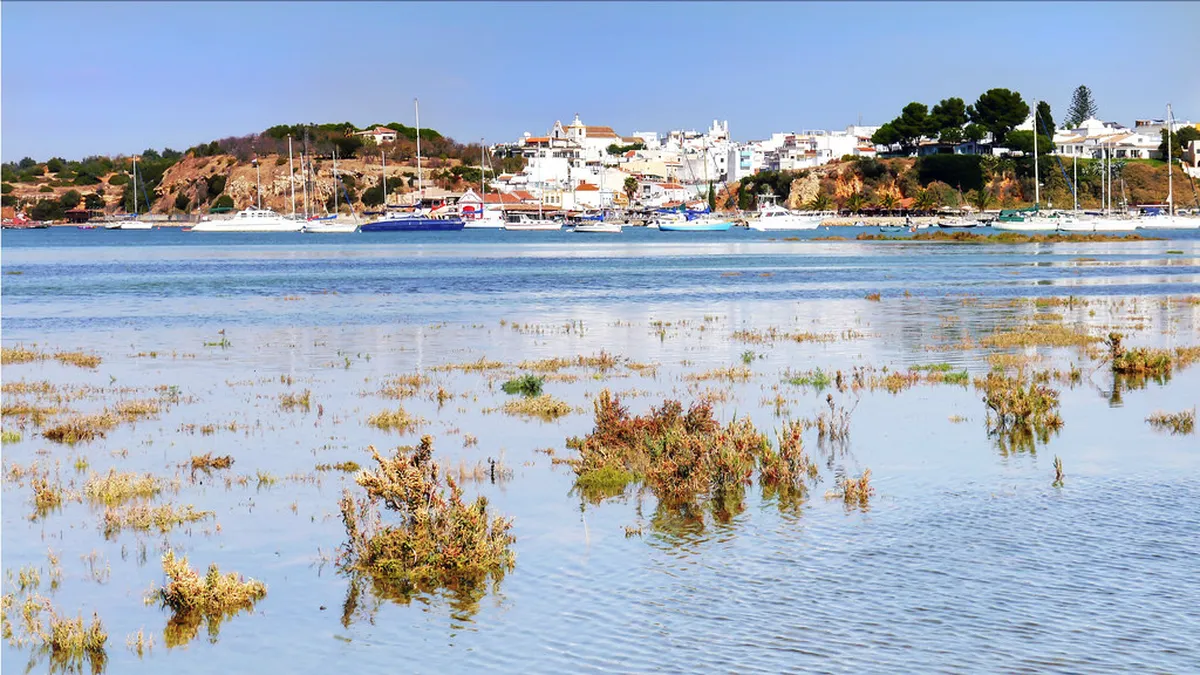
- This barrier island at the edge of the Ria Formosa Natural Park offers two completely different water experiences on the same strip of sand.
- The ocean side has Atlantic waves; the lagoon side is warm, still, and knee-deep for 50 metres — the closest thing to a natural paddling pool in the Algarve.
- Switch to the lagoon side for toddlers who cannot yet swim: no waves, no currents, water that heats up faster than the open sea.
- Ilha de Faro is connected to the mainland by a bridge, making it the only Ria Formosa island accessible by car.
- The area fills quickly on summer weekends; arrive before 9:30 am or take the bus from Faro city centre.
- Praia da Rocha (Portimão) — Best for Facilities and Wide Flat Sand
- One of the Algarve's original resort beaches, Praia da Rocha offers a wide flat expanse that is excellent for young children to run freely.
- The water is calm and shallow at the shoreline, with dramatic rock stacks to explore at low tide on the eastern end.
- The promenade behind the beach is lined with restaurants, pharmacies, and ice cream shops within short walking distance.
- Lifeguards are stationed along the beach throughout summer, and Blue Flag status is maintained annually.
- The surrounding Portimão area is busier and more commercial than village spots, but the beach itself is spacious enough to absorb the crowds.
- Praia do Burgau — Best for a Quiet Village Atmosphere
- This charming beach sits at the end of a traditional fishing village and offers very calm, shallow waters in a natural bay.
- It is free to access and features a small ramp that makes it moderately stroller-friendly for determined parents.
- Lifeguards are on duty daily from 9 am to 7 pm during the summer months to ensure swimmer safety.
- The beachside cafe is a good spot to watch children play while you enjoy coffee in the morning light.
- The parking area is small, so aim to arrive early or park in the village and walk down.
- Praia da Salema — Best for Rock Pools and Dinosaur Tracks
- Wide golden sands and prehistoric footprints on the rocks make this a hit for school-aged children interested in science.
- The beach is located in the village of Salema and is free to access throughout the year.
- Sunbed and umbrella rentals are available for around €18 per day during the peak season.
- Low tide reveals good rock pools on the western edge where toddlers can safely hunt for small crabs.
- Waves are generally gentle here, and the bay orientation provides some natural protection from swell.
- Porto de Mós (Lagos) — Best for Flat Sand with Cliff Protection
- This Lagos local favourite is framed by high cliffs that block the prevailing north wind and keep the beach noticeably warmer than nearby open stretches.
- The beach itself is entirely flat once you reach the sand, making it a great choice for active toddlers building sandcastles.
- Two large restaurants sit directly on the beach and offer clean restrooms and high chairs for younger diners.
- Free public parking is available, but the lot fills by noon during August, so arrive early.
- At low tide, look for the clay-like mud near the base of the cliffs that some locals apply as a natural skin treatment.
- Praia da Marinha — Best for Older Kids Who Snorkel
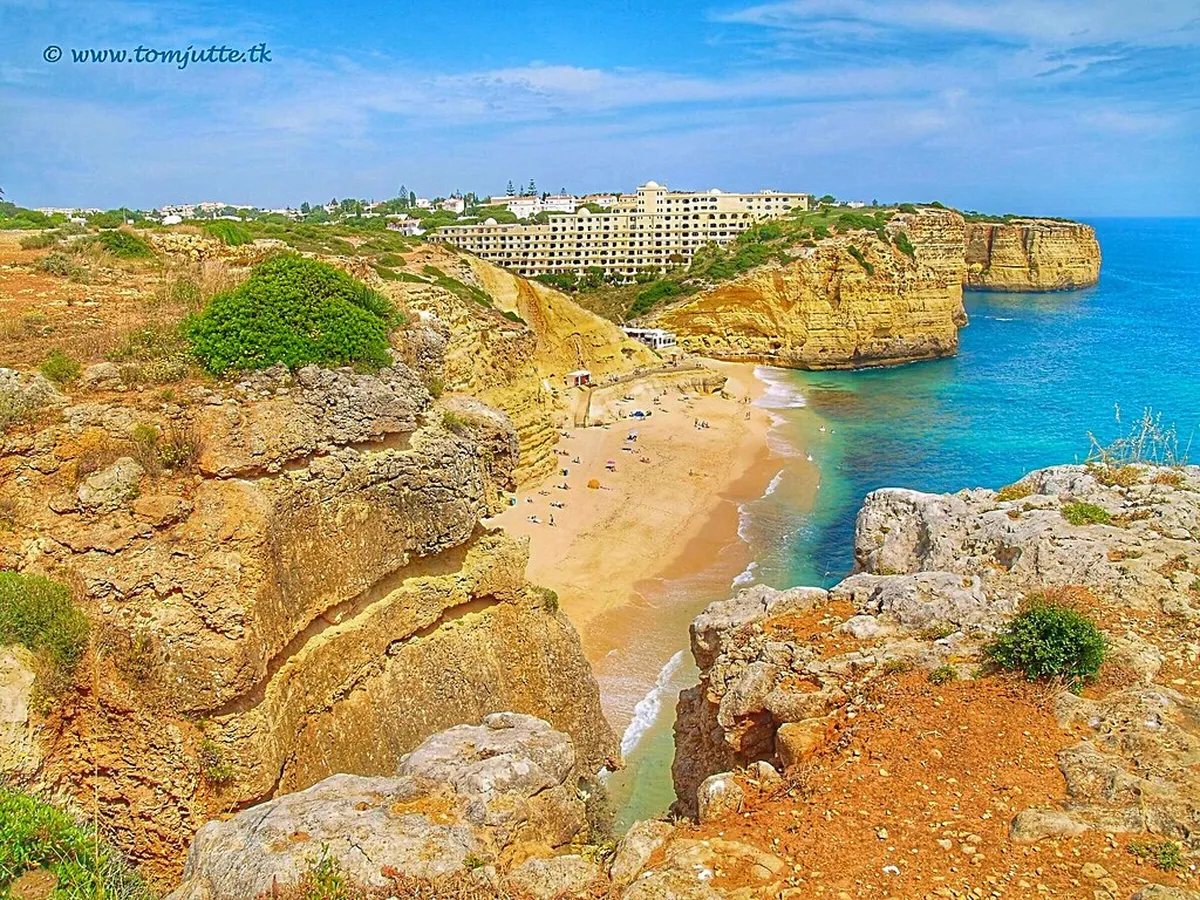
- Often called one of the most beautiful beaches in Europe, Praia da Marinha is a paradise for older children who can navigate the long staircase down.
- The clear water around the iconic rock formations is perfect for spotting fish and small octopus with a mask and snorkel.
- Access involves a long flight of stairs, so this is not a recommended spot for families using strollers or with very young toddlers.
- The beach is free to visit; a small snack bar operates at the top of the cliffs during the summer season.
- Wear sturdy water shoes to protect your feet from sharp rocks when exploring the hidden coves at low tide.
| Beach | Best For | Stroller Access | Blue Flag | Sunbed Hire |
|---|---|---|---|---|
| Meia Praia (Lagos) | Space & train access | Yes (flat) | Yes | €15–€25/day |
| Praia da Galé (Albufeira) | Toddlers & tide pools | Yes | Yes | Available |
| Praia da Luz (Lagos) | Stroller access & shelter | Yes (paved ramp) | Yes | Available |
| Praia da Falésia (Vilamoura) | Long flat walk | Yes (Vilamoura end) | Yes | Available |
| Ilha de Faro (Ria Formosa) | Lagoon paddling for babies | Yes (bridge access) | Yes | Limited |
| Praia da Rocha (Portimão) | Facilities & wide sand | Yes | Yes | Available |
| Praia do Burgau | Quiet village feel | Moderate (small ramp) | No | Limited |
| Praia da Salema | Rock pools & dino tracks | Yes (flat village) | No | €18/day |
| Porto de Mós (Lagos) | Cliff protection & flat sand | Yes | No | Limited |
| Praia da Marinha | Snorkelling (older kids) | No (long stairs) | No | None |
Best Months to Visit Algarve Beaches with Kids
June and September are the best months for families. Water temperatures reach 20–22°C, crowds are noticeably thinner than in July and August, and accommodation rates drop significantly. The beach clubs, restaurants, and lifeguard services are fully operational, so you lose nothing except the worst of the holiday congestion.
In July and August, car parks at the most popular Algarve beaches fill before 10 am. Arriving by 9:30 am or taking the local 'A Onda' bus are the two most reliable ways to guarantee a good spot without the parking stress.
July and August deliver the warmest air temperatures (30–35°C inland, slightly cooler at the coast) but also the most intense Nortada wind and the highest prices. Car parks at the most popular beaches fill before 10 am. If you are travelling in peak season, choose beaches with lagoon or estuary access — Ilha de Faro is the clearest example — where the water is calmer regardless of wind conditions on the open Atlantic.
The IPMA sea state and current forecast is the most reliable tool for checking swell height and water temperature before your beach day. Check it the night before rather than the morning of — conditions on the Atlantic coast can change within a few hours, and a beach that looked calm at 8 am can have significant chop by noon.
Is the Algarve Coast Worth Visiting with Toddlers?
Traveling with toddlers can be daunting, but the Algarve is one of the most welcoming regions in Europe. The local culture is deeply family-oriented, and you will find that children are welcome in almost every restaurant. Many establishments provide high chairs and simplified menus, though 'frango assado' is usually a hit with everyone. The infrastructure for getting around the Algarve is reliable and safe.
Safety is a primary concern for parents, and the Algarve excels with its high density of supervised beaches. The Atlantic water is cooler than the Mediterranean, which often helps keep toddlers from staying in too long. Tide pools are abundant at many western beaches, providing a natural and safe alternative to open water for splashing. Always check the flag system: green means safe, yellow means caution, and red means stay out.
Logistics are also simplified by the abundance of self-catering apartments and family-friendly resorts in the area. Having a kitchen allows you to manage nap times and meal preferences without the stress of dining out constantly. Most towns have large supermarkets like Continente or Pingo Doce that stock all major international diaper brands. This convenience makes the Algarve a top choice for a first international trip with a young child.
Practical Tips for Visiting Algarve Beaches with Kids
Managing the wind is the most important part of a successful beach day on the southern coast. The 'Nortada' is a persistent northerly wind that can make open beaches like Meia Praia feel very sandy and cold by early afternoon. On windy days, head to sheltered spots like Praia da Galé or Porto de Mós where cliffs or headlands block the gusts. A beach tent is also worth packing: it functions as both a windbreak and a shade canopy, and it costs less than a full day of sunbed hire.
Packing correctly will save you from expensive tourist-trap shops near the shoreline. Always bring reef-safe sunscreen — the reflection off white limestone cliffs amplifies UV and children burn faster than parents expect. Water shoes are highly recommended for any rocky cove to prevent slips and protect against sea urchins. Pack a small insulated bag for snacks, as beach cafes can be expensive for large families buying rounds of food and drinks.
Timing your arrival is the secret to a stress-free experience at the most popular beaches near Lagos. Parking lots at top spots fill before 10:30 am in July and August, forcing latecomers to park far away on steep hills. If you cannot arrive early, the local 'A Onda' bus network serves most major coastal stops. Leaving by 4 pm also avoids the worst of the afternoon traffic and the hottest part of the Nortada wind cycle.
What to Skip: Overrated Algarve Spots for Families
While the Benagil Cave is iconic, visiting with small children can be overwhelming. The cave is often packed with kayaks and motorboats, creating a chaotic and noisy environment. Unless you book a private tour early in the morning, the experience is not well-suited to toddlers. Consider viewing the coastline from the cliff-top paths above Benagil for a much calmer family experience at no cost.

Be wary of any beach that requires descending hundreds of steps if you are travelling with a stroller. Praia do Camilo near Lagos is breathtakingly beautiful but involves carrying a toddler and a full bag up nearly 200 steep steps on the return. Always check access conditions before committing to a remote cove. Sticking to the flatter Sotavento beaches in the east or to beaches with paved ramp access can save significant effort and frustration.
Finally, Albufeira's Old Town beach (Praia dos Pescadores) is convenient but very small and extremely crowded in summer. The noise from the surrounding nightlife strip carries down to the sand even during daylight hours, which makes it a poor fit for families with young children who nap or need a calm environment. The nearby Praia da Galé, a short taxi or Uber ride away, is a far better option with meaningfully calmer water and more space.
Frequently Asked Questions
Which Algarve beaches have the calmest water for toddlers?
Praia da Luz and Praia do Burgau are excellent choices for toddlers due to their sheltered bays. These spots typically have very small waves and shallow entries. Always check the green flag for the safest swimming conditions.
Are Algarve beaches stroller accessible?
Many beaches like Meia Praia and Praia da Luz offer paved boardwalks or ramps for easy stroller access. However, smaller coves often require navigating long sets of wooden stairs. It is best to use a baby carrier for the more rugged cliffside locations.
Do I need to book Benagil Cave tours in advance for children?
Yes, you should book boat or kayak tours at least 48 hours in advance during the summer. Most tour operators have age restrictions for infants, so verify their policy before paying. Early morning slots are best to avoid the heaviest crowds and heat.
See our best beaches in the Algarve guide for the broader coast overview. The Algarve remains a premier destination for families because it balances natural beauty with excellent modern infrastructure. Whether you choose the dinosaur tracks of Salema or the wide sands of Meia Praia, your kids will find plenty of adventure. Remember to respect the ocean flags and arrive early to secure the best spot on the sand.
Taking the time to plan your beach days around the wind and tide will ensure a much smoother vacation. Portugal is a place where family comes first, and you will see that reflected in the kindness of the locals. Enjoy the sun, the fresh seafood, and the lasting memories of your 2026 trip to this beautiful coast.
For related Algarve beach deep-dives, see our Meia Praia Lagos Beach Guide and Praia da Falésia Guide guides.