10 Best Beaches In Faro Algarve (2026)
Discover the 10 best beaches in Faro Algarve for 2026. Get expert tips on island ferries, hidden coves, and local secrets for your Portugal trip.
On this page
10 Best Beaches In Faro Algarve
Faro is the entry point most travelers fly into and the first city most rush through. That is a mistake. The beaches here — spread across five barrier islands inside the Ria Formosa Natural Park — are among the most distinctive in Portugal. You reach almost all of them by ferry, not by car, which is what keeps the crowds thin even in August.
Finding the best time to visit Algarve matters here more than elsewhere, because ferry schedules tighten outside the summer season. This guide covers every island and mainland option worth your time, including the ones the mainstream listicles group in with the wider Faro district rather than the city itself. Faro is the natural gateway to the best beaches in Algarve through its protected lagoon system.
All ferry prices and schedules below reflect 2026 summer season rates. The Ria Formosa park authority classifies the barrier island chain as a protected natural habitat — meaning no large hotels, no jet-ski rentals, and very little commercial development on the islands themselves.
Praia de Faro (Ilha de Faro) — The Only Island You Can Drive To
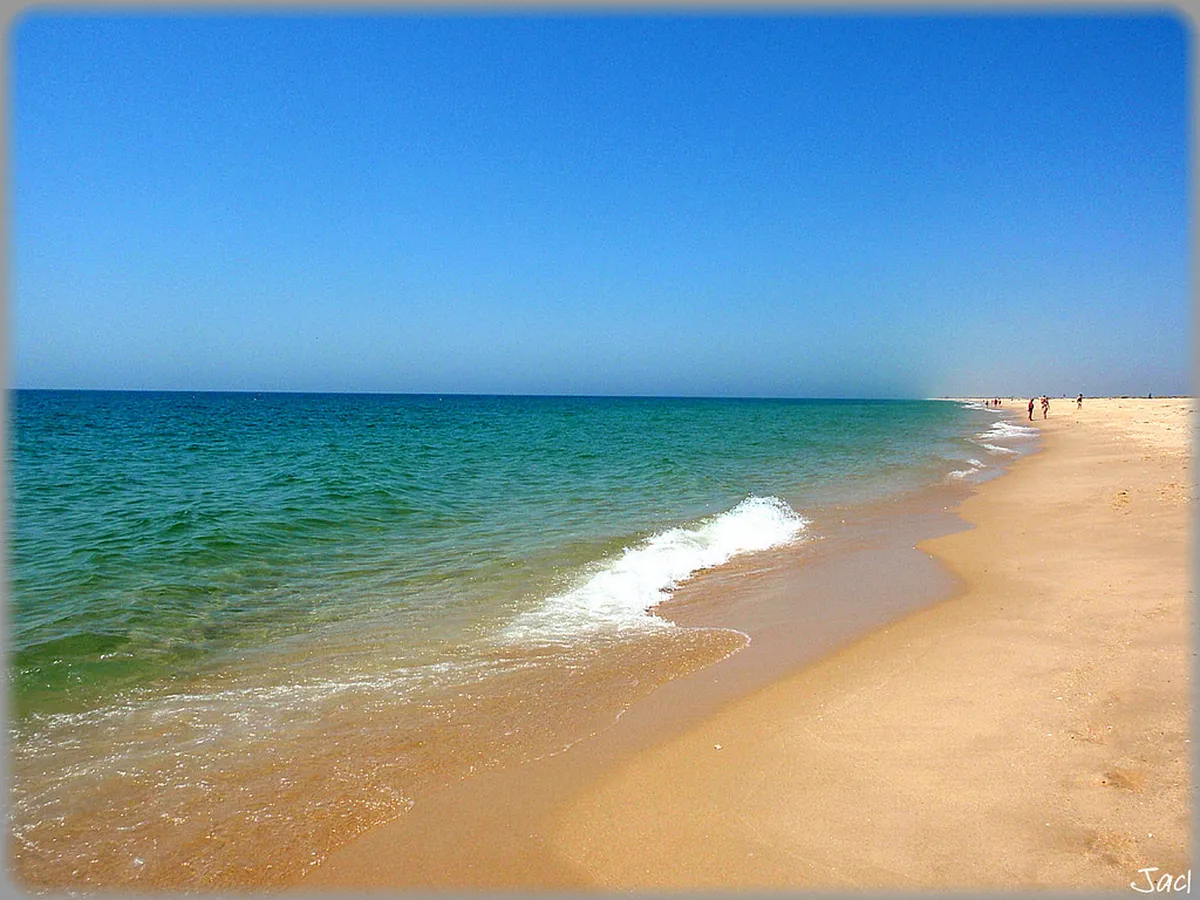
Praia de Faro sits on a long barrier island but is the only one connected to the mainland by a road bridge and a causeway. You can take bus 16 from the Faro city center for around €2, or drive and pay for parking — which fills completely by 10:00 on summer weekends. The beach itself stretches for roughly 10 km; most visitors cluster near the bridge, so a 15-minute walk east or west puts you on near-empty sand.
The northern shore of the island faces the calm lagoon, where the water is shallower and noticeably warmer than the Atlantic side. Families with young children often prefer this sheltered side for paddling. The ocean-facing southern shore has stronger surf and is the spot most adults prefer for open swimming.
Restaurants and cafes line the bridge approach — nothing fancy, but decent grilled fish at reasonable prices. The beach is free and accessible around the clock. Parking is the main variable: arrive before 9:30 in July or August or take the bus.
Ilha Deserta (Ilha da Barreta) — Uninhabited and Truly Wild
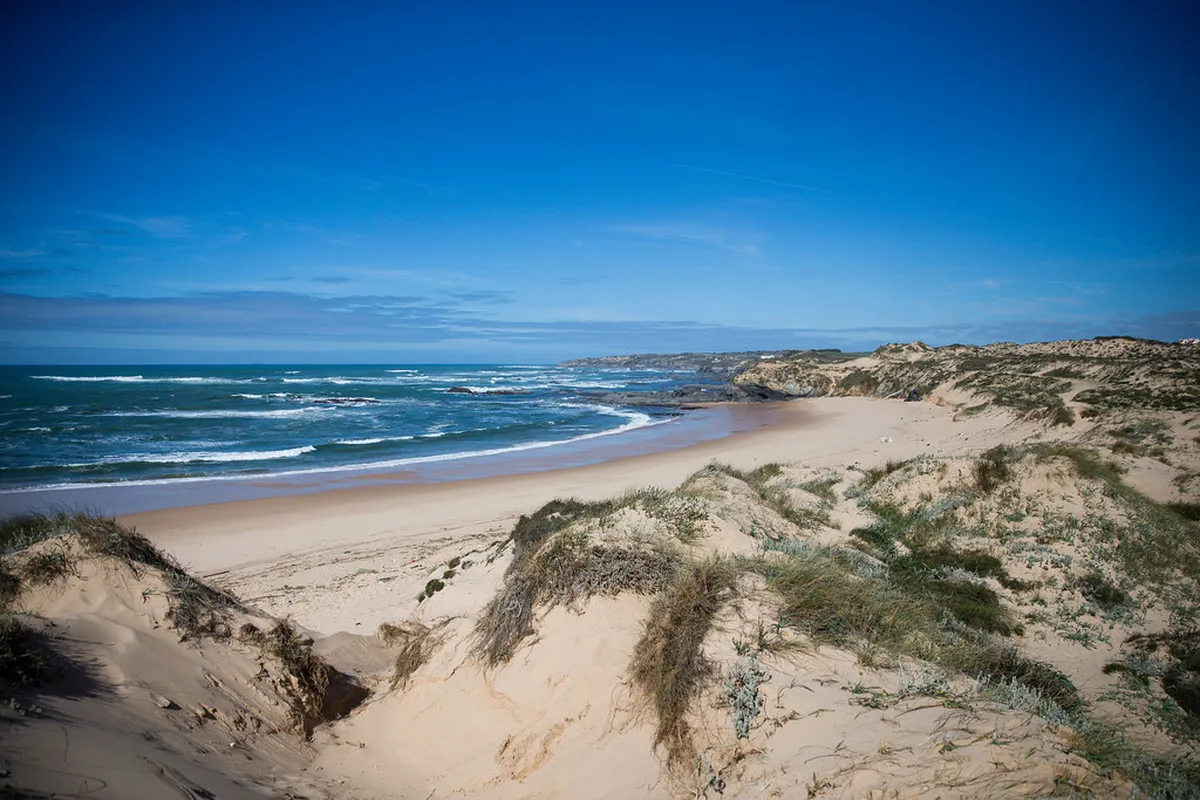
Ilha Deserta is the southernmost point of Portugal and is, as the name states, uninhabited. No cars, no village, no shade structures. Just 7 km of white sand backed by dunes, completely within the protected Ria Formosa zone. This is the beach that earns Faro its reputation among travelers who have already done the circuit elsewhere in the Algarve.
The only operator running scheduled ferries is Animaris, departing from Faro's Portas do Mar (near the old town walls). Boats run roughly every two hours in summer, with the first departure around 10:00 and the last return from the island by 18:00. Return tickets cost approximately €10–12 per adult in 2026. The crossing takes about 30–40 minutes through the lagoon channels.
There is one restaurant on the island — a wooden structure near the pier run by the same operator — and a composting toilet block. Bring everything else: sunscreen, shade, drinking water, and food. The silence on Ilha Deserta, once the ferry boat leaves, is complete. Do not miss the last boat back; water taxis to the mainland cost €25–30 and are not guaranteed late in the day.
The last ferry back from Ilha Deserta departs around 18:00 in summer — and it will leave without you. The only fallback is a water taxi at €25–30, which is not guaranteed to be available. Check the posted timetable at the pier as soon as you arrive on the island.
Ilha da Culatra — Fishing Village and Beach Combined
Culatra has around 1,000 permanent residents — working fishermen and their families — which gives it a character no other barrier island can match. There are no cars on the island; the narrow sand paths between colorful houses lead to several small seafood restaurants and, on the ocean side, a long beach that empties out quickly once you walk 10 minutes past the ferry pier.
The cheapest and most practical way to reach Culatra is the regular public ferry from Olhão (not Faro). Fares from Olhão are approximately €2.10 one-way per adult, with ferries running roughly every two hours. The crossing from Olhão takes about 45 minutes. There are also less frequent ferries from Faro's Portas do Mar pier if you prefer to depart from the city center.
Dolphins are occasionally spotted in the lagoon channel between the island and the mainland — worth watching for during the crossing. The water on the beach side of Culatra is calm and clear, suitable for swimming with young children. Walk east past the first populated zone to find the quietest sand on the island.
Ilha do Farol — Lighthouse Beach with a Village Atmosphere
Farol occupies the western end of the same barrier island as Culatra but functions as a completely separate settlement with its own ferry stop. The 19th-century lighthouse — still operational — serves as a visual anchor and a good landmark for orienting yourself on arrival. Behind it, a grid of narrow sandy lanes holds colorful fishermen's cottages and a handful of restaurants serving the catch of the day.
Ferries to Farol run from Olhão at a return fare of approximately €4.80 per adult. From Faro, boats also operate directly to Farol and Culatra in summer. The beach on the ocean side of Farol is well-maintained and draws a loyal repeat crowd of Portuguese families. It is livelier than Culatra's beach but far quieter than Praia de Faro.
The ferry back to Olhão departs on a fixed schedule and will leave without you. Check the timetable on the board at the pier before settling into a beach chair. Last boats in summer are typically around 19:00–19:30 from Farol to Olhão.
Praia do Ancão — Western Gateway to Ria Formosa
Praia do Ancão marks the western boundary of the Ria Formosa Natural Park. It is a long, dune-backed stretch of sand positioned between the Quinta do Lago resort area and the Ria Formosa lagoon. The beach has Blue Flag status and consistent lifeguard coverage in summer. Unlike the island beaches, Ancão is reachable by car — about 20 minutes from Faro city center — with large parking areas by the boardwalk access points.
The water at Ancão is open Atlantic, cooler and with more surf than the sheltered lagoon beaches. Watersports rentals are available including paddleboarding and kayaking. The restaurant Dois Passos, just behind the beach, has a solid local reputation for fresh fish. Sunbed and umbrella rentals are available from the beach concession stands.
Ancão appeals to a different traveler than the ferry islands — those who want reliable facilities, car access, and the option of watersports. It sits within the same protected park boundary, so the dune ecosystem behind the beach remains intact and worth exploring during low-activity hours.
Praia da Quinta do Lago — Birdwatching Route to the Sand
Quinta do Lago beach is reached via a 300-metre wooden boardwalk that crosses the salt marsh edges of the Ria Formosa. The walk itself is a legitimate birdwatching opportunity — flamingos feed in the shallower lagoon sections, and various migratory waders pass through in spring and autumn. The beach is free and public, though the resort context means parking fees can be steep.
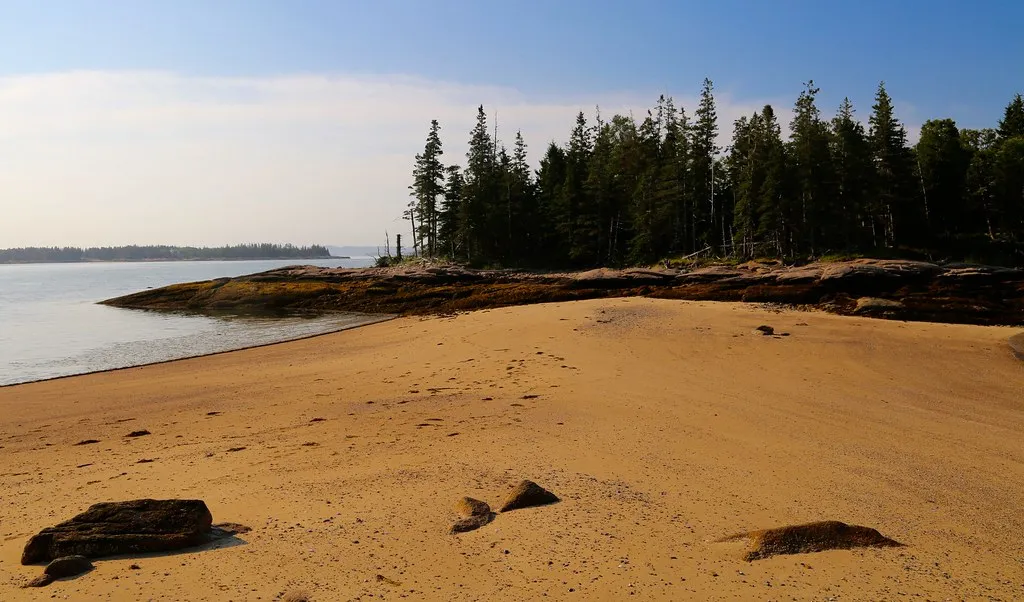
This is an upscale resort area with golf courses and villas immediately behind the dunes, which keeps the beach itself well-maintained and relatively uncrowded outside August. The sand is wide and clean, the ocean is open Atlantic, and the approach boardwalk gives the arrival a sense of occasion. Visit in the early morning to catch the birds and beat the resort guests.
Praia de Vale do Lobo — Red Cliffs and Open Ocean
Vale do Lobo breaks the Faro area's barrier-island pattern with its red sandstone cliffs — the same dramatic geological formation that defines beaches further west near Albufeira. The cliffs glow orange-red against the blue Atlantic and are the most photographed feature in this part of the coast. Access from the beach is free; the resort area above charges for parking.
The beach here is more exposed than the lagoon islands, with a stronger swell and cooler water. It attracts a cosmopolitan crowd connected to the surrounding luxury golf villas. Arrive before noon for cliff-front positions. The descent to the sand involves a staircase, so beach wheelchairs and prams are not practical here.
Praia da Falésia — Six Kilometres of Iconic Cliffs
Praia da Falésia is technically in the Albufeira municipality, northeast of Vilamoura, but it is the closest "classic Algarve cliff beach" to Faro and a logical addition to any Faro-based beach itinerary. The 6 km cliff face alternates between deep orange, white, and terracotta bands — the result of different iron oxide concentrations in the sandstone. Walking the full cliff line and back makes for a full morning.
Access is free. Several parking lots sit at the clifftop, with staircase descents to the sand. Praia da Falésia rewards early arrivals — by 11:00 in July, the steps are busy and the cliff base fills. The beach faces southwest and gets direct sun until late afternoon. No watersports concessions operate directly on the beach, keeping the atmosphere calm.
Praia do Vale Centeanes — Trailhead for the Seven Valleys Walk
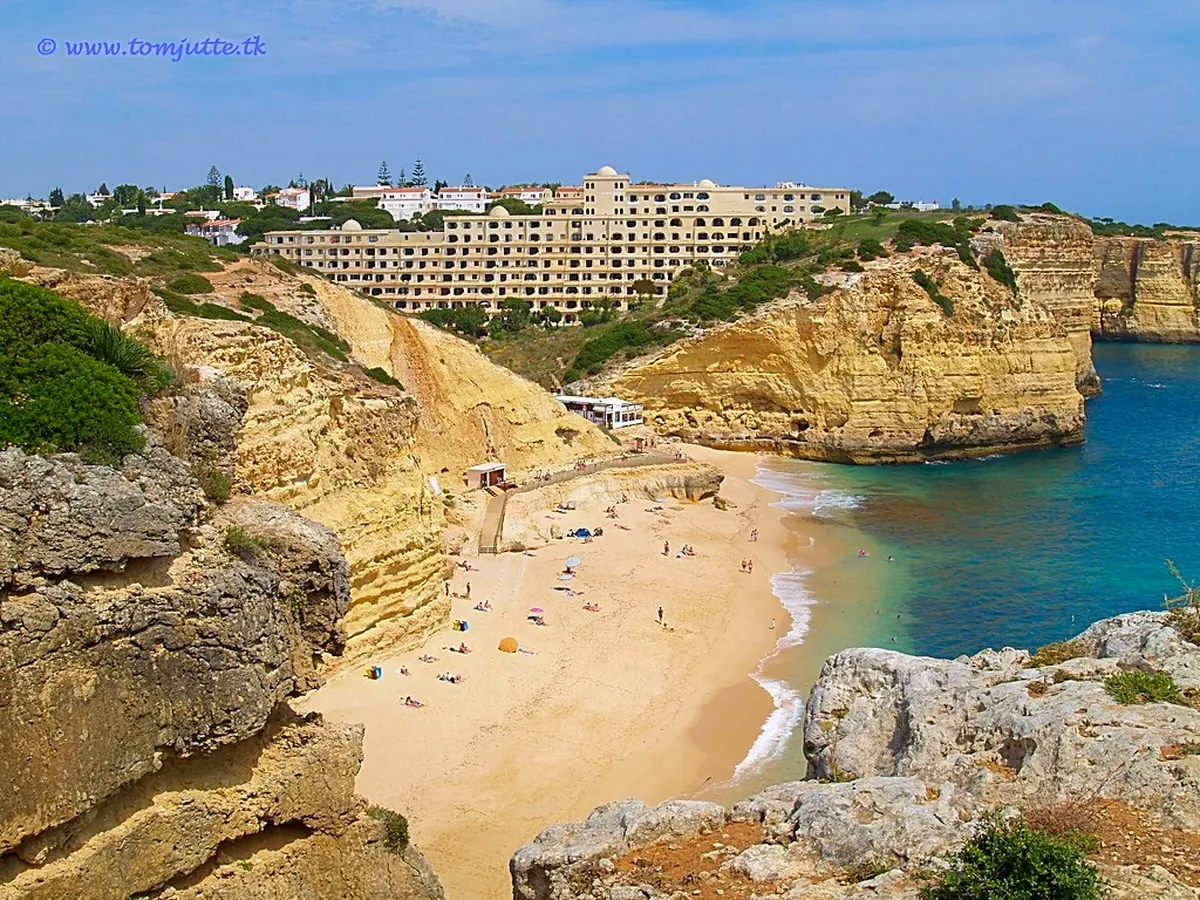
Vale Centeanes is a small cove enclosed by golden cliffs near Carvoeiro, positioned at the eastern trailhead of the Sete Vales Suspensos (Seven Hanging Valleys) coastal path. The trail itself is one of the most acclaimed short hikes in Portugal — roughly 6 km of clifftop walking with views into hidden sea caves and natural arches. Starting at Vale Centeanes and finishing at Praia de Benagil takes two to three hours at a relaxed pace.
The beach itself is free to visit and stays open year-round. Tidal range is significant here — at low tide the beach widens considerably; at high tide the sand narrows to a strip. Check tide tables before planning an afternoon visit. The cliff context means no shade outside the cove edges, so sun protection is essential.
Praia da Marinha — Portugal's Most Photographed Beach
Praia da Marinha appears on almost every "most beautiful beaches in Europe" list, and the double sea arches at low tide justify the reputation. The beach is free and open daily; summer visiting hours are effectively 9:00 to 19:00 before the light fades. The parking lot at the clifftop fills by 10:00 in July and August — arrive early or accept a walk from roadside parking further up the lane.
Praia da Marinha requires a descent of around 200 steps. The access is not suitable for anyone with mobility limitations. Snorkeling is popular around the rock formations at the base of the arches during calm sea conditions. The beach is tucked enough from wind that it retains heat even after the sun shifts — afternoons here feel warmer than the more exposed beaches further west.
What Makes Faro Beaches Different from the Rest of the Algarve
The distinction that most travel content glosses over: Faro's core beaches are lagoon-side, not open-ocean. The Ria Formosa barrier island system means the water on the lagoon side of each island is calmer, warmer, and shallower than the Atlantic-facing ocean side. Both sides of every island are accessible — the lagoon side where the ferry drops you, and the ocean side a 5–15 minute walk across the island dunes.
This dual-side dynamic is something first-timers miss. Many visitors step off the ferry at Culatra or Farol, find the lagoon water and walk no further. The ocean beach — just a dune crossing away — is an entirely different environment: open Atlantic, deeper water, more wave action, better for bodysurfing. Knowing this in advance lets you choose your side based on what you actually want from a beach day.
The Ria Formosa park protection also explains what is absent: no jet ski operators, no banana boat vendors, no beachfront hotels or high-rise development on the islands. The Algarve Tourism portal lists the park's conservation status as one of Portugal's 13 national protected areas. That status is the reason the islands still look the way they do.
How to Get to Faro Beaches: Ferry and Transport Guide
Most ferries depart from two piers: Faro's Portas do Mar (near the old town walls, Cais da Porta Nova) and Olhão ferry terminal, 8 km east of Faro by train. The Olhão route is almost always cheaper for Culatra and Farol. Faro's Portas do Mar handles ferries to Ilha Deserta and the Ilha de Faro bus route. Getting around Algarve by train and bus covers the Faro-Olhão train, which runs frequently and costs under €2.
Summer 2026 ferry approximate prices from Olhão: Culatra €2.10 one-way / €4.20 return per adult; Farol €2.40 one-way / €4.80 return per adult. Ilha Deserta from Faro via Animaris: approximately €10–12 return. All public ferries are operated by Transporte Fluvial do Guadiana or local operators — no advance booking needed for the Olhão routes, just show up. Ilha Deserta ferries can sell out on peak summer days; arrive at the pier by 9:30.
Water taxis exist as a backup but cost €20–30 per person for a private trip — useful if you miss the last scheduled ferry. Hop-on hop-off island cruise tours (approximately €30 per person for 4 hours) offer a practical alternative for visitors who want to see multiple islands without managing ferry logistics.
| Beach / Island | Departure Point | One-Way Fare (Adult) | Return Fare (Adult) | Crossing Time |
|---|---|---|---|---|
| Praia de Faro (Ilha de Faro) | Faro city center (bus 16) | ~€2.00 | ~€4.00 | Bus ride ~20 min |
| Ilha Deserta (Barreta) | Faro – Portas do Mar | ~€5–6 | ~€10–12 | ~30–40 min by boat |
| Ilha da Culatra | Olhão ferry terminal | ~€2.10 | ~€4.20 | ~45 min by boat |
| Ilha do Farol | Olhão ferry terminal | ~€2.40 | ~€4.80 | ~50 min by boat |
| Water taxi (any island) | Faro or Olhão | ~€20–30 | N/A | Varies |
Ilha Deserta ferries sell out on peak summer days — arrive at Faro's Portas do Mar pier by 9:30 to secure a seat. No advance booking is available for the public Olhão–Culatra and Olhão–Farol routes; just show up, but note last boats from both islands typically depart around 19:00–19:30.
Frequently Asked Questions
Which best beaches in faro algarve options fit first-time visitors?
Praia de Faro is the best choice for first-time visitors because it is easily accessible by bus or car. It offers plenty of restaurants and facilities, making it a convenient introduction to the region's coastline.
How much time should you plan for best beaches in faro algarve?
You should plan at least a full day for any island beach excursion to account for ferry travel times. Most visitors find that four to six hours is the perfect amount of time to enjoy the sun and local seafood.
For the wider Algarve context, see our complete best Algarve beaches guide. Faro offers a unique coastal experience that rewards those willing to venture beyond the mainland. Whether you choose the silence of Ilha Deserta or the vibrant life of Farol, the memories will last a lifetime. I hope this guide helps you discover the hidden gems of the Ria Formosa.
Remember to respect the natural environment by taking all your trash back to the mainland. Enjoy the sun, the sand, and the incredible seafood that makes the Algarve so special. Safe travels on your Portuguese adventure!
For related Algarve beach deep-dives, see our 12 Best Beaches and Coastal Tips in Albufeira and Best Beaches in Lagos Portugal guides.