
Pena Palace Sintra: 2026 Visitor Guide with Tickets, Times & Tips
Pena Palace gets 3+ million visitors a year. This 2026 guide covers tickets, the best arrival time, bus 434 details, walking routes from the village, photography tips, accessibility, and what to see inside Portugal's iconic Romantic castle.
On this page
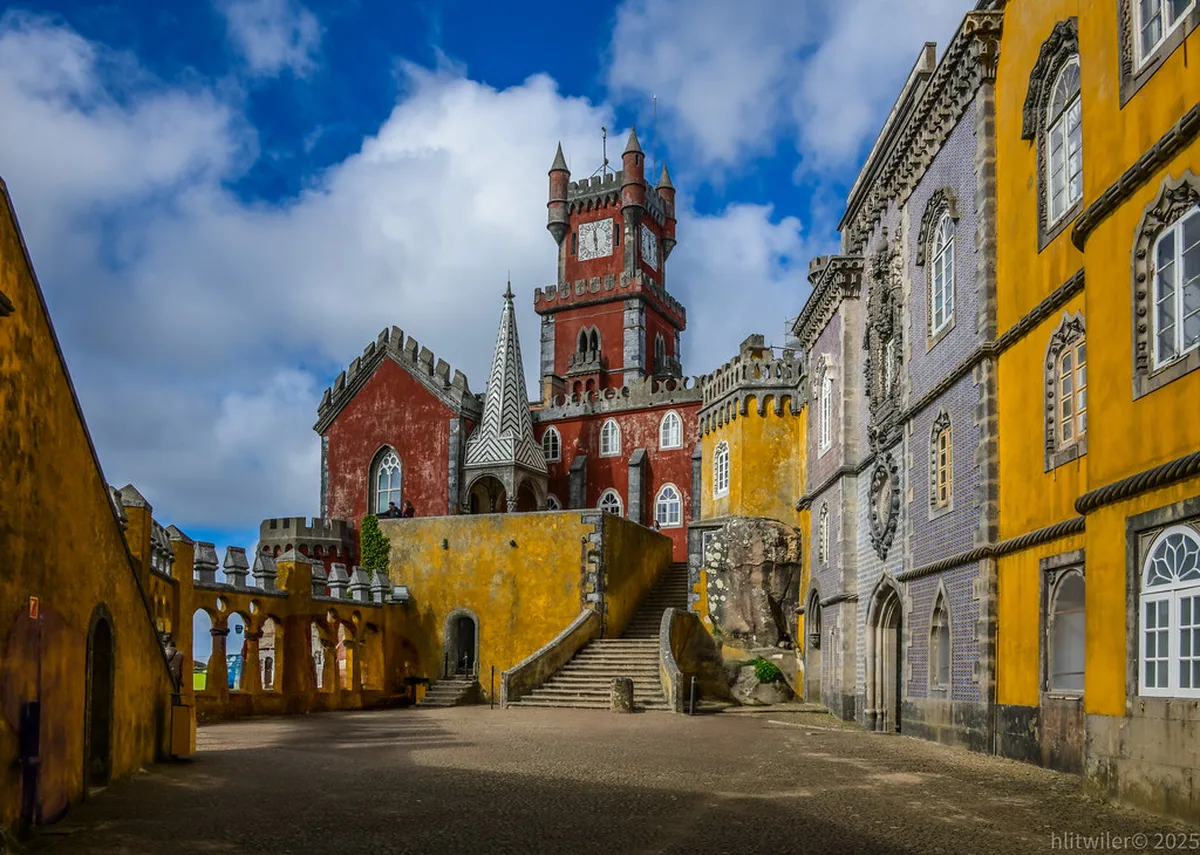
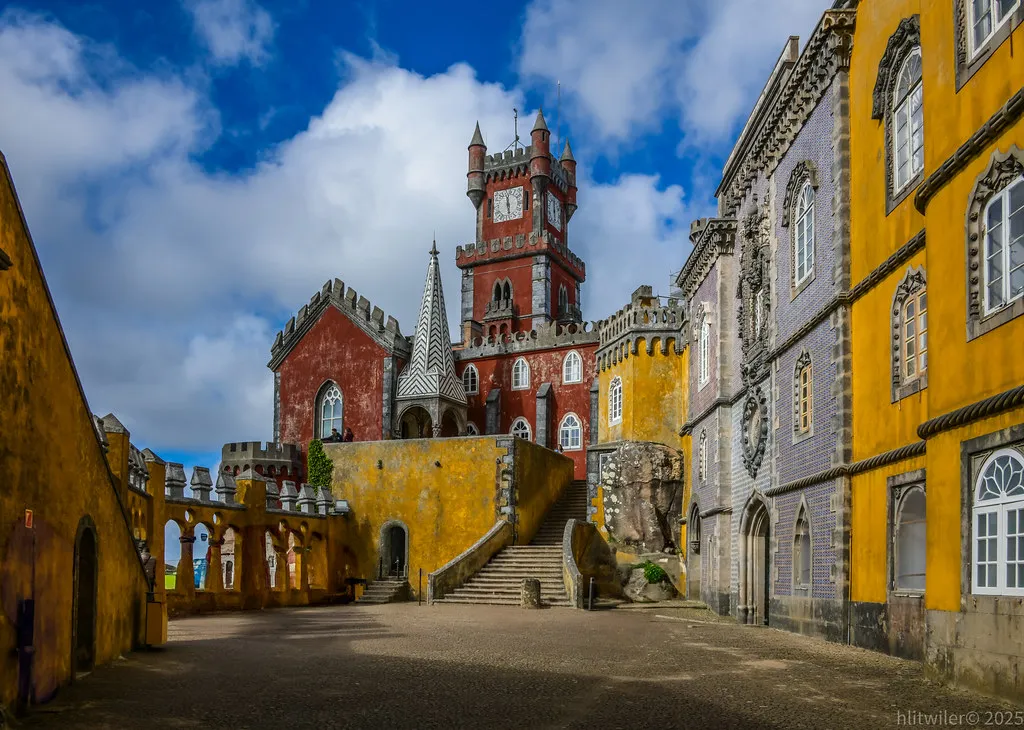
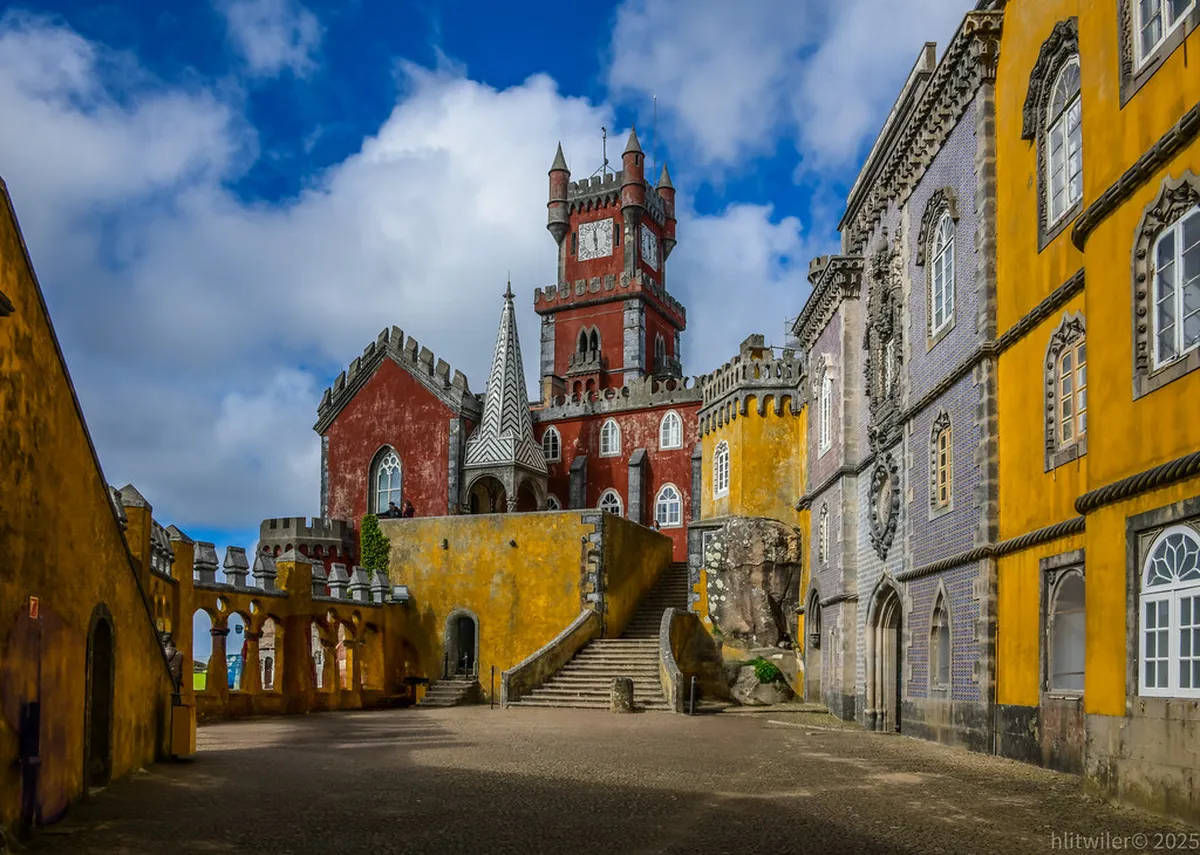
Pena Palace is Sintra's most-visited monument and one of the New Seven Wonders of Portugal — a Romantic-era hilltop castle painted in canary yellow, vermilion red, and patterned tile that looks more like a fairy-tale illustration than a real building. It sits at 480 metres on the highest peak of the Serra de Sintra, visible from kilometres away on a clear day, and pulls in more than 3 million visitors a year. Built between 1842 and 1854 as a summer residence for King Ferdinand II, it is the masterpiece of 19th-century Portuguese Romanticism and the single most photographed building in the country. This 2026 guide covers tickets, opening hours by season, bus 434 details, the walking path from the village, photography tips, accessibility, and what is actually worth your time inside the palace and the surrounding park. For the wider region, see our complete Sintra guide.
Pena Palace history: from ruined monastery to Romantic icon
The hilltop where Pena Palace now stands has been a sacred site since the Middle Ages. In 1503 King Manuel I founded a small Hieronymite monastery here, dedicated to Our Lady of Pena. For more than 250 years it housed up to 18 monks, until the 1755 Lisbon earthquake reduced almost the entire complex to rubble. Only the chapel survived intact.
The ruins sat abandoned for nearly 90 years. In 1838 King Ferdinand II of Saxe-Coburg and Gotha — the German-born consort of Queen Maria II of Portugal — bought the site at auction along with the surrounding hillsides. Ferdinand was an artist, a botanist, and an obsessive admirer of the Romantic movement sweeping Central Europe, and he wanted a summer palace that mirrored the fantasy castles being built along the Rhine.
Construction of the new palace began in 1842 under the German amateur architect Wilhelm Ludwig von Eschwege, a mining engineer who had worked in Brazil. Ferdinand was deeply involved in every design decision, sketching details himself. The result, completed in 1854, is a deliberately eclectic mash-up of Manueline, Neo-Gothic, Neo-Moorish, and Neo-Renaissance elements, all painted in vivid colours so the palace would be visible from Lisbon on a clear day. Ferdinand also planted the surrounding 200 hectares with exotic trees from every continent, creating the Romantic park that still survives today. After the Portuguese monarchy fell in 1910 the palace became a national monument, and in 1995 the entire Cultural Landscape of Sintra was inscribed as a UNESCO World Heritage Site.
Pena Palace tickets and 2026 prices
Pena Palace is managed by Parques de Sintra and uses a tiered ticket system. Tickets are sold with a specific timed entry slot (a 15-minute window). Arriving outside your slot during peak season can mean being turned away even with a valid ticket — check the time printed on your confirmation before leaving Lisbon.
2026 ticket prices
- Park + Palace combined (adult): €14 — the ticket you want. Covers the palace interior, exterior terraces, and all 200 hectares of Pena Park. This is the standard ticket for most visitors.
- Park only (adult): €7.50 — access to the gardens, Cruz Alta viewpoint, exterior terraces, and the grounds around the palace, but not the royal apartments inside.
- Palace only (adult): Not sold separately — you must pass through the park to reach the palace, so the combined ticket is the only interior option.
- Youth (6–17) and Seniors (65+): discounted rate on both tiers — roughly 10–15% off the adult price. Children under 6 enter free.
- Visitors with disabilities: free entry for the visitor plus one companion; arrange in advance by contacting Parques de Sintra at +351 21 923 7300.
Buy tickets online in advance through the official Parques de Sintra website. Online buyers get a small discount and — more importantly — skip the ticket-window queue at the gate, which can run 30–60 minutes in peak season. For the full breakdown of Sintra site prices and combination deals, see our Sintra ticket prices 2026 guide.
Tickets are sold with a timed 15-minute entry slot. In peak season (July–August) the slots you want can sell out 3–5 days in advance, so book online as early as possible — online buyers also avoid the 30–60 minute gate queue.
Advance vs. gate pricing
Online booking is always cheaper and almost always essential between April and October. The gate sells the same tiers but at a slightly higher price and without the time-slot guarantee. In peak season (July–August) the specific time-slot windows you want can sell out 3–5 days in advance — book early.
Opening hours by season
Pena Palace is open daily, 365 days a year, with one exception: it closes on 25 December. Hours vary by season:
- Summer (April–October): 9:30am to 7:00pm — last entry 6:30pm, last palace entry 6:00pm.
- Winter (November–March): 9:30am to 6:00pm — last entry 5:30pm, last palace entry 5:00pm.
The surrounding Pena Park shares the same hours as the palace. The Chalet of the Countess of Edla within the park has its own separate schedule and may close earlier — check the Parques de Sintra website before planning a specific visit to the chalet.
How to get to Pena Palace: bus 434, walking, and other options
Pena Palace sits roughly 30 km west of Lisbon, but the trip is genuinely easy if you take the train. From Lisbon's Rossio station, frequent CP suburban trains run to Sintra in 40 minutes for €2.45 each way (or covered by the daily Lisboa Viva travel pass). Trains leave every 20 minutes from early morning until late evening.
Bus 434 — the Pena Circular
Bus 434 is the standard tourist option for getting from Sintra station up to the palaces. It is operated by Scotturb and runs the Circuito da Pena route: Sintra Station → São Pedro de Sintra → Sintra Vila (National Palace) → Moorish Castle → Pena Palace Park gate. Journey time from the station to the Pena park gate is around 15–20 minutes.
- One-way ticket: approximately €4.10–5.10 per person (buy on the bus or at the station kiosk).
- Return ticket (up + back): approximately €7.60–8.60 — valid for the whole day so you can hop on and off at the Moorish Castle stop.
- 24-hour hop-on hop-off pass: €13.50 (with an 8% discount when purchased online) — best value if you plan to visit Moorish Castle and Pena Palace on the same day.
- Frequency: every 15 minutes, from 8:50am to 7:50pm in summer, 8:50am to 7:00pm in winter.
- Where to board: outside Sintra train station main exit, at the dedicated bus stop. Queues form quickly in the morning — arrive 15 minutes before departure to guarantee a seat.
Important: the bus drops you at the Pena park entrance gate, not at the palace itself. From the gate you then walk uphill for about 15 minutes through the park — or pay €3 for the small shuttle bus that runs the final stretch from the gate to the palace terrace. The shuttle runs on demand and is not always available at the busiest times. For a full guide to the bus 434 route with stop-by-stop detail, see our dedicated bus 434 Sintra route guide.
Walking from Sintra village
Walking from Sintra's town centre to Pena Palace is a serious uphill commitment, but a rewarding one. The recommended route is the Caminho de Santa Maria, a well-maintained trail that passes the Church of Santa Maria and winds up through the Sintra forest:
- Distance: approximately 2.6 km from the town centre.
- Time: 45–60 minutes at a steady pace, longer in summer heat.
- Difficulty: moderate to hard — the average gradient is 15% and it peaks at 23% near the top. The steepest section runs through the Moorish Castle approach before the final push to Pena.
- No facilities en route: there are no cafes or shops on the path; carry 1–2 litres of water, especially between May and September.
If you plan to walk up, do it first thing in the morning before the heat builds. It is genuinely pleasant in cool weather — the forest path through the Serra is beautiful — but miserable in August midday sun. Walking down after your visit is a much easier option: combine the 434 bus up and the walk down if you want to experience both without destroying your legs on the ascent.
Other transport options
- Tuk-tuk: €15–20 one way, faster and door-to-door from the town centre. Negotiate before you get in — rates are not fixed.
- Taxi or rideshare: €10–12 one way from the station, but taxis cannot drop any closer than the park gate.
- Driving: not recommended. Sintra's narrow lanes are routinely gridlocked by 11am and parking near the palace is nearly impossible in high season.
For a complete plan covering trains, timing, and the full Sintra day itinerary, see our Sintra day trip from Lisbon guide.
Best time to visit: crowd management and peak hours
Pena Palace receives more than 8,000 visitors a day in peak season, and the experience between 11:00am and 3:00pm is genuinely unpleasant — palace queues run 2 to 3 hours and the interior corridors get bottlenecked. There are two strategies that work:
Strategy 1 — Arrive at opening. Be in line at the park gate by 9:00am for the 9:30am opening. Walk straight to the palace and join the entry queue. You will be inside by 10:00am with manageable crowds. By 11:00am the day-trip buses from Lisbon have dumped their passengers and the calm window has closed. This is the best strategy for photography too — morning light hits the yellow and red facades before it turns harsh.
Strategy 2 — Arrive after 4:00pm. Crowds drop sharply after 4pm as the day-trip groups leave to catch their return trains. Last entry to the palace is 6:00pm in summer, giving you a quieter 90-minute window with warmer afternoon light. The downside is that the park pathways to Cruz Alta and the Chalet will be closing soon after.
Peak hours to avoid: 11:00am–3:00pm any day, and 10:30am–4:00pm on weekends and Portuguese public holidays. The worst single day of the week is Saturday — Lisbon residents make their own day trips, adding to the tourist load.
The best months overall are April, May, late September, and October — mild weather, fewer crowds, and the rhododendrons in the park bloom in spring. Avoid August: it is the single worst combination of heat, crowds, and school-holiday day-trippers. Mornings in Sintra are often misty even in summer, which actually works in your favour photographically — the palace emerging from cloud is the iconic shot.
The worst single day of the week is Saturday, when Lisbon residents add their own day trips to the tourist load. Palace entry queues between 11:00am and 3:00pm can reach 2–3 hours — arrive at opening (9:00am) or after 4:00pm to avoid them.
Inside vs. outside: is the palace interior worth it?
The €14 combined ticket versus the €7.50 park-only ticket is a genuine decision point, not a foregone conclusion. Here is how to think about it:
Buy the combined ticket if: this is your first visit to Portugal, you have never seen a 19th-century Romantic royal palace interior, you want to see the Royal Kitchen (a genuine highlight), or you have 3+ hours to spend on site.
The park-only ticket is reasonable if: you have already visited comparable palace interiors (Versailles, Sintra's own National Palace), you are visiting primarily for the exterior photos and the park, you are travelling with very young children who will not engage with the rooms, or you are pressed for time and want to move on to Quinta da Regaleira or other Sintra sites.
The honest assessment: the exterior, terraces, and park are what most people photograph and remember. The interior is compact — a 30–45 minute one-way circuit — and while the Royal Kitchen and Manueline Cloister are genuinely impressive, the main rooms can feel underwhelming if you are coming from larger palace collections. If budget is a concern, the park-only ticket still gives you the view and the photographs that define Pena Palace.
What to see inside Pena Palace
Most first-time visitors are surprised by how compact the interior is. The royal apartments take 30–45 minutes to walk through at a steady pace, and the rooms are arranged on a one-way circuit so you cannot easily backtrack. The named rooms to look out for are:
- Manueline Cloister: The 16th-century monastic cloister preserved from King Manuel I's original Hieronymite monastery, decorated with blue-and-white azulejo tilework. This is the oldest surviving part of the complex and the one piece Ferdinand II deliberately kept intact when he built around it.
- Dining Room and Pantry: Set under a Manueline-revival vaulted ceiling and preserved with the original 19th-century royal china and table settings laid as if for a banquet. The adjoining pantry still holds the copper serving ware.
- Chambers of King Carlos: King Carlos I's private apartments, used as a quiet refuge in the months before his assassination in Lisbon in February 1908. His painting easel and personal effects are still in place.
- Bedroom of Ferdinand II: The founder's private bedroom, preserved almost exactly as he left it, with his Romantic-era furnishings, botanical sketches, and personal library.
- Dressing Room of Queen Amélia: Belonging to the last queen of Portugal, with original period furniture, her mirror, and perfume bottles arranged on the dressing table.
- Queen's Office: A small but elegant study used by Queen Amélia, with wide picture windows framing views across the surrounding hills toward the Atlantic.
- The Great Hall (Noble Room): Decorated in heavy 19th-century Romantic style with stained glass and stucco — the palace's main ceremonial space.
- The Queen's Terrace: An open-air loggia where Queen Amélia took her morning coffee. The view stretches across the Serra de Sintra to the Atlantic on clear days.
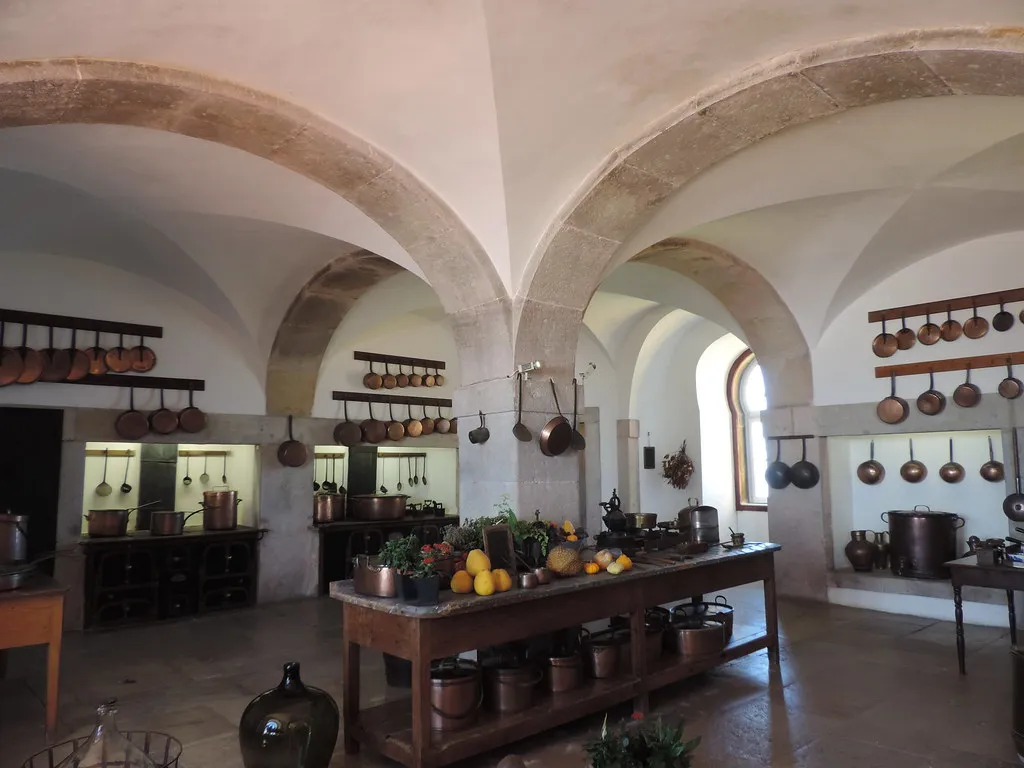
- The Royal Kitchen: Genuinely the surprise highlight — the original copper pots are still hung on the walls, each engraved with the royal monogram, and the wood-fired ranges look ready to use.
The exterior is the real draw, though. Walk the circular terrace around the palace before or after the interior tour for 360-degree views — on a clear day you can see Cabo da Roca (the westernmost point of mainland Europe) and the Tagus estuary in opposite directions.
Photography tips: best angles, light, and rules
Pena Palace is one of the most photogenic buildings in Europe, but getting the iconic shot requires a bit of planning. Here is what actually works:
Best angles and viewpoints
- The south-facing terraces: the primary facade with the full colour display of yellow, red, and tile. This is the classic shot. Wide-angle lens (16–35mm) gives you the whole sweep; a standard zoom (24–70mm) pulls out architectural details.
- The Queen's Terrace: for the view outward — forest, Atlantic horizon, and the roofline of the palace in the foreground. Best in morning before haze builds.
- Cruz Alta viewpoint: 528 metres — the highest point in the Sintra hills, 25 minutes on foot from the palace. Gives you the palace against the forest canopy from above. This is the shot that sets Pena apart from other palace photos.
- Inside the park looking up: stand at the park gate level and shoot up through the trees toward the yellow towers. Morning mist creates the dreamlike effect that made Sintra famous.
Best time of day for photos
Early morning (9:30am–10:30am) is the clear winner for two reasons: soft directional light on the facades, and near-empty terraces for composition. Morning mist is common in Sintra even in summer and creates the palace-in-clouds effect that defines the most striking images. Arrive for opening if photography is a priority.
Late afternoon after 4pm offers warmer golden light on the terraces and dramatically fewer people in shot — but the palace interior closes at 6pm so you lose interior access.
Photography rules inside the palace
- No tripods anywhere on the site (palace or park) without prior written authorisation from Parques de Sintra. Contact them at least a week in advance for professional shoots.
- No flash inside the palace rooms.
- Handheld photography without flash is freely permitted throughout the interior circuit.
- Drone flights require a separate permit and are rarely granted in season due to air traffic density over the Serra de Sintra.
Combining Pena Palace with the Moorish Castle
The Moorish Castle sits on the ridge just below Pena Palace — the two are connected by a signposted footpath inside the park. This is the most natural two-site combination in all of Sintra and can easily be done in one morning.
- Walking time between the two: 10–15 minutes on the marked path from Pena park to the Moorish Castle battlements.
- Best order: Moorish Castle first (quieter at opening), then walk up to Pena Palace. Both sites open at 9:30am, and the Moorish Castle crowds are thinner in the first hour.
- Time required for both: a self-guided combined visit covers roughly 3.5 km and takes 3–4 hours total — 1 hour at the castle, 2 hours at Pena Palace, 30 minutes walking and transitioning.
- Bus 434 connection: the 434 bus stops at both the Moorish Castle and the Pena Park gate on the same loop, so you can ride up, walk between the two, and ride back without retracing your steps.
For a full guide to the Moorish Castle with opening hours and tickets, see our Moorish Castle Sintra guide. To compare all the major Sintra palaces side by side, see our Sintra castles guide.
Pena Park: the often-skipped gardens
Most day-trippers rush in, photograph the palace, and leave — completely missing the 200-hectare park that surrounds it. This is a mistake. Ferdinand II personally designed the park as a Romantic forest, importing rare species from every continent of the Portuguese empire and beyond: redwoods from California, tree ferns from Australia, magnolias from China, cedars from Lebanon. The result is a botanical collection unlike anything else in Iberia. For a dedicated guide to the gardens, lakes, and hidden follies, see our article on Parque da Pena.
Don't-miss spots inside the park include the Cruz Alta, a stone cross marking the highest point of the Sintra hills at 528 metres (a 25-minute walk from the palace, with the best panoramic view in the region); the small Lakes of the Valley with their black swans and Romantic follies; the Chalet of the Countess of Edla, a wooden alpine-style cottage Ferdinand built for his second wife on the far side of the park; and the Temple of the Columns, a hidden neoclassical folly tucked into the woods. Allow at least 1 to 2 hours for the park if you want to do it justice — wear proper walking shoes, as the paths are steep and uneven.
How long to spend at Pena Palace
Time requirements depend on your interests and whether you include the park:
- Minimum visit (palace exterior + quick interior circuit): 90 minutes. This is rushed and skips the park entirely — only realistic if you are combining multiple Sintra sites on a tight schedule.
- Standard visit (palace interior + exterior terraces + short park walk): 2.5 to 3 hours. This is the realistic half-day and covers everything most visitors want to see.
- Full visit (palace + full park including Cruz Alta + Chalet of the Countess): 4 to 5 hours. Bring lunch — the park cafe is small and queues at peak times.
If you are combining Pena with the Moorish Castle on the same visit, add 60–90 minutes. A full Sintra day covering Pena, Moorish Castle, and Quinta da Regaleira requires 7–8 hours and an early start.
Accessibility at Pena Palace
Pena Palace presents genuine accessibility challenges, but more access exists than most visitors realise.

- Palace interior: many stairs throughout the one-way circuit. The interior is not fully wheelchair accessible. Ground-floor rooms have some access but the upper apartments require stairs.
- Getting to the palace from the park gate: a paid electric shuttle service runs from the park entrance to the palace terrace every 15 minutes; it is wheelchair accessible. A traction-assist system (swiss track) is available for manual wheelchairs on the main pathway — reserve in advance via Parques de Sintra.
- The Hop-On Hop-Off electric transport: this service within the park can carry passengers without requiring them to exit wheelchairs — enabling autonomous exploration of multiple park areas.
- Facilities: accessible WC and an elevator linking the different floors up to the cafeteria terraces.
- Free entry for visitors with disabilities: one companion also enters free. Contact Parques de Sintra at +351 21 923 7300 to arrange in advance.
- Strollers: the steep park paths and palace access ramp (18% gradient over 90 metres) make strollers very difficult. A child carrier is strongly recommended for children under 4.
Frequently Asked Questions
Is Pena Palace worth the price?
Yes, for first-time visitors to Portugal. The €14 combined ticket buys you the most visually distinctive palace in the country plus 200 hectares of historic gardens. The interior is shorter than you expect, but the exterior, the terraces, and the park together justify a half-day visit. If you have already seen palaces in Spain or France and only have one day in Sintra, you could skip the interior and buy the €7.50 park-only ticket — the exterior shots are what most people come for anyway.
How long does Pena Palace take?
Plan for 2.5 to 3 hours for a standard visit: 30–45 minutes inside the palace, 30 minutes on the exterior terraces, and 1–2 hours in the park. A rushed 90-minute visit is possible if you skip the park entirely, but you will miss the best of what Ferdinand II built. Adding the Moorish Castle on the same day needs a full 4–5 hours minimum.
Should you visit Pena Palace in the morning or afternoon?
Morning is better for both crowds and photography. Aim to be in line at 9:00am for the 9:30am opening — you will be inside before the Lisbon day-trip buses arrive around 11:00am. The second-best option is to arrive after 4:00pm, when the buses leave and the afternoon light turns golden. The middle of the day, 11:00am to 3:00pm, is when palace entry queues hit 2 to 3 hours.
How much does the bus 434 to Pena Palace cost?
A one-way ticket on bus 434 from Sintra station to the Pena Palace park gate costs approximately €4.10–5.10 in 2026. A return ticket costs €7.60–8.60. The 24-hour hop-on hop-off pass is €13.50 (8% cheaper online) and lets you ride between the Moorish Castle and Pena Palace stops all day. The bus runs every 15 minutes from 8:50am.
Can you walk from Sintra village to Pena Palace?
Yes, via the Caminho de Santa Maria — a 2.6 km trail that takes 45–60 minutes one way. The path is well maintained but steep: average 15% gradient, peaking at 23% near the top. Carry 1–2 litres of water as there are no facilities along the route. It is pleasant in cool weather and brutal in summer heat. Most visitors prefer to take bus 434 up and walk down, which is far more manageable.
Can you combine Pena Palace and Moorish Castle in one day?
Yes — the two sites are 10–15 minutes apart on a signposted footpath inside the park. Do the Moorish Castle first (quieter at opening), walk up to Pena Palace, then take bus 434 back down. Allow 4–5 hours total. Bus 434 stops at both sites on the same loop, so no retracing required.
Is Pena Palace good for kids?
Yes, surprisingly so. The bright colours, turrets, and tunnels read like a real-life Disney castle to young children, and the park has plenty of room to run around. The palace interior is short enough to hold kids' attention, and the kitchen is a hit. Note that the walk uphill from the gate is steep — bring a child carrier for under-4s and skip strollers on the path.
Are tripods allowed at Pena Palace?
No — tripods are banned throughout the palace and park without prior written authorisation from Parques de Sintra. Handheld photography without flash is freely permitted everywhere inside the palace. Contact Parques de Sintra at least a week ahead for professional or commercial shoot permits.
Can you visit Pena Park without buying a palace ticket?
Yes — the €7.50 park-only ticket gives you access to the entire 200-hectare grounds, the Cruz Alta viewpoint, the Chalet of the Countess of Edla, and the exterior terraces of the palace. You will be able to photograph the palace from outside but not enter the royal apartments. This is a reasonable option if you have already seen comparable palace interiors elsewhere or if you are travelling with very young children. For planning your Sintra visit around multiple sites, see our complete Sintra guide.
How does Pena Palace compare to other Sintra palaces?
Pena is the most dramatic visually and the most visited. Quinta da Regaleira has the famous Initiation Well and mystical grounds — see our Quinta da Regaleira guide. Monserrate Palace is far less crowded and has extraordinary botanical gardens. The Moorish Castle offers the best views and a genuine medieval experience. For a side-by-side comparison, see our Sintra castles guide.

 Sintra and Cascais in One Day: The Perfect GuideMay 17, 2026