10 Essential Tips for Renting a Car in Portugal (2026 Guide)
Master renting a car in Portugal with our 2026 guide. Covers toll road payments, insurance secrets, scenic routes like the N2, and how to avoid hidden fees.
On this page
10 Essential Tips for Renting a Car in Portugal
Renting a car in Portugal opens up landscapes that trains and buses simply cannot reach — remote Alentejo cork forests, clifftop roads in the Algarve, medieval villages in the Serra da Estrela. Public transport works well between Lisbon and Porto. But once you want to go deeper, you need your own wheels. This guide covers everything from booking strategy and insurance traps to toll roads and scenic routes for a smooth 2026 rental experience.
Portugal has a few quirks that catch first-timers off guard: electronic toll roads with no cash booths, steep young-driver surcharges, and credit card holds that can freeze your account mid-trip. We have worked through all of them so you can arrive at the rental counter prepared.
Do you actually need to rent a car in Portugal?
The honest answer depends entirely on your itinerary. Lisbon and Porto are genuinely best explored on foot, by metro, or by tram — parking in the historic centers is expensive (€2–4/hour), street layouts are confusing, and local drivers have little patience at rush hour. If your whole trip is Lisbon plus Porto, consider a 10-Day Portugal Without A Car Itinerary (by Train & Bus) instead and skip the rental desk entirely.
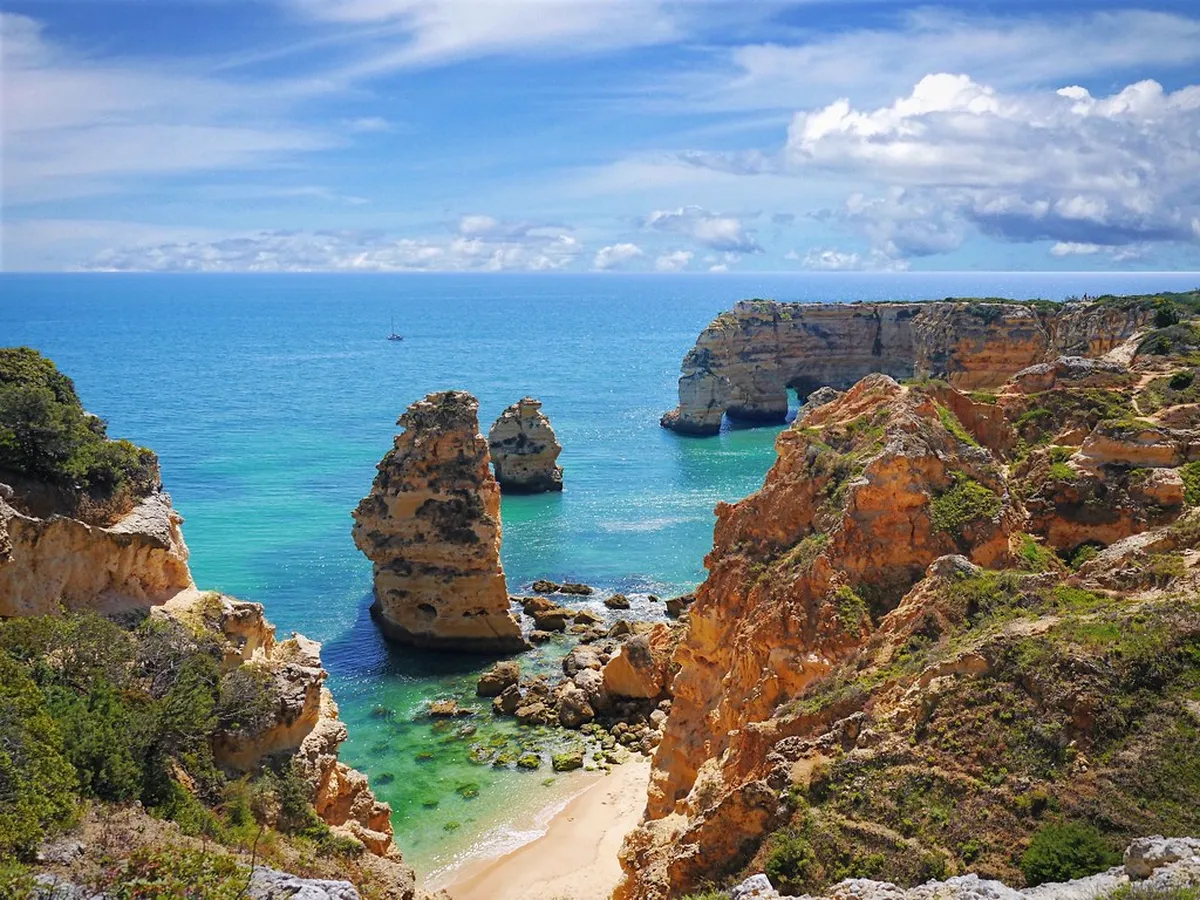
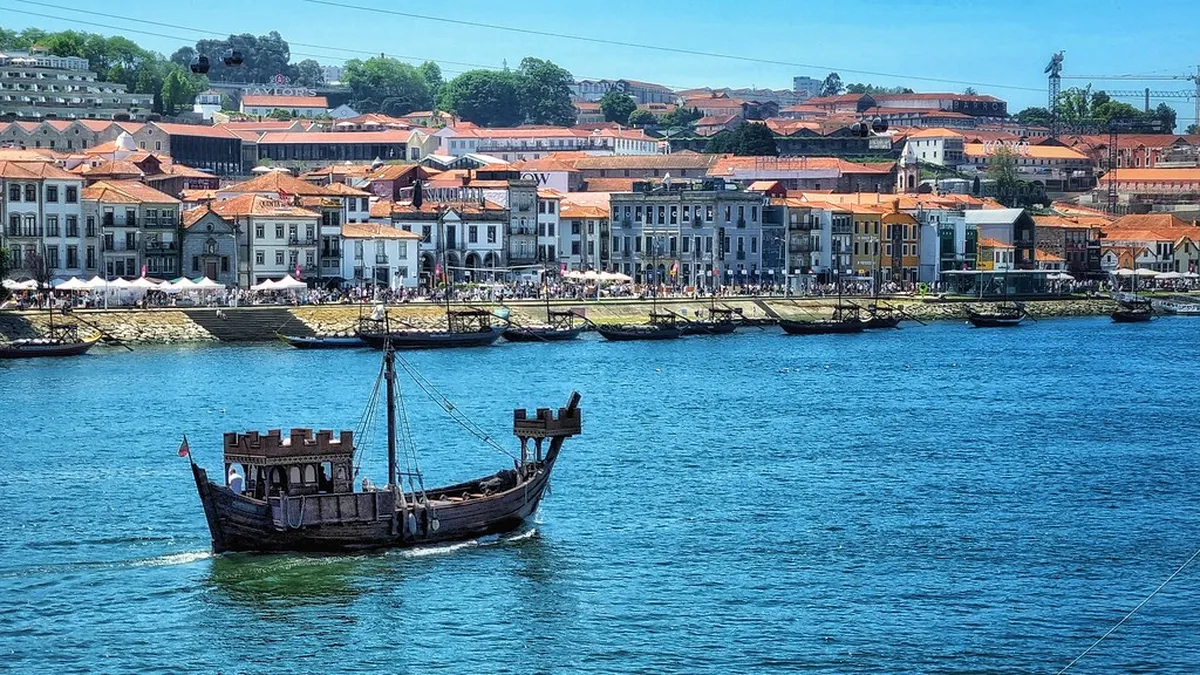
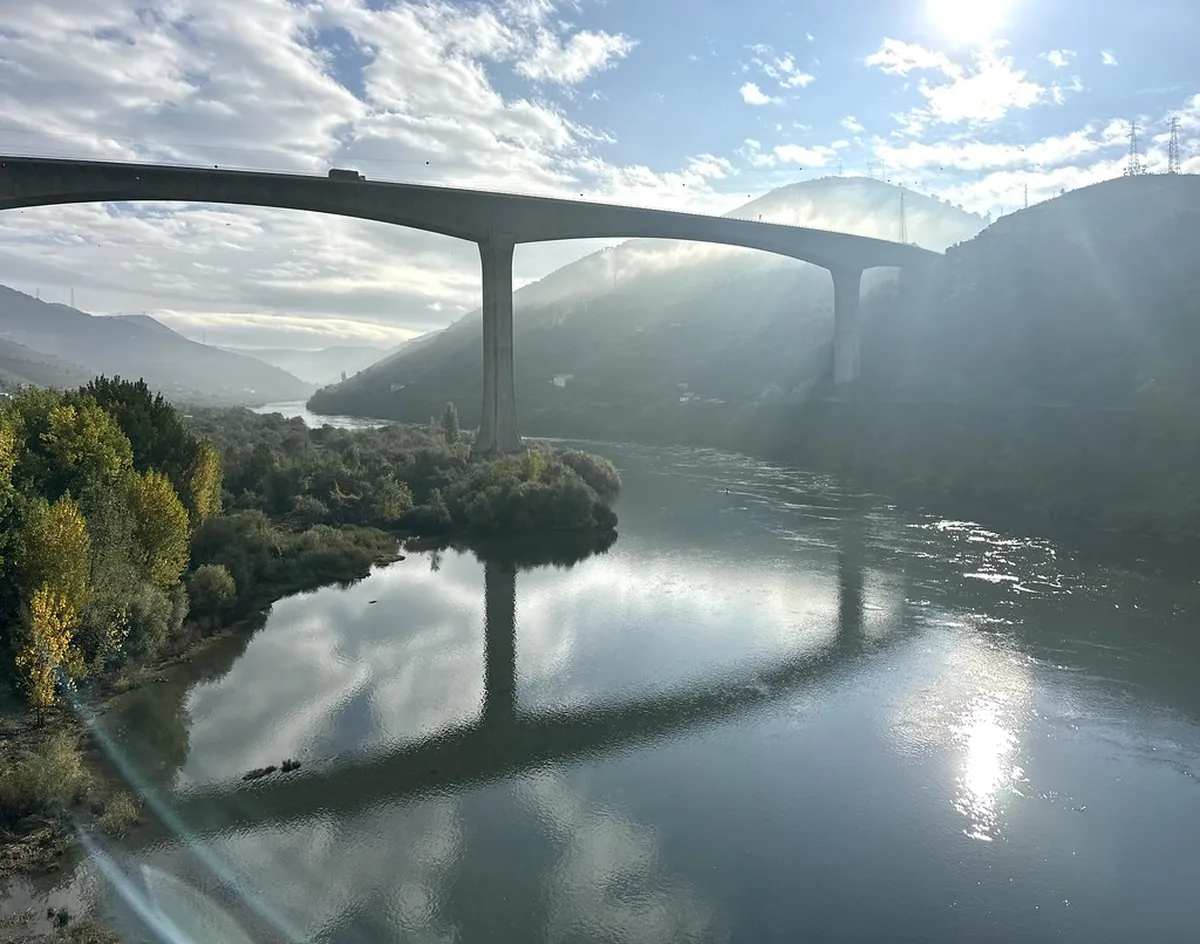
The calculation flips completely once you head south or inland. The Algarve coast has beaches accessible only by car. The Douro Valley vineyards sit high above the river on roads no bus serves. Peneda-Gerês National Park has a single access road and almost no public transport. For these regions, a car is not a luxury — it is the only realistic option.
A popular hybrid strategy for 2026: fly into Lisbon, spend two or three days car-free in the city, then pick up a rental at Lisbon Airport before heading south or east. Return the car in Faro and fly home from there. This avoids city driving entirely while giving you full freedom for the scenic middle section of your trip.
How to find the best car hire rates and deals
Comparison sites are the fastest way to see the real market. Compare Portugal car rental prices on DiscoverCars to see live inventory across both international brands (Hertz, Avis, Europcar) and local firms (Centauro, Orbita) that often undercut the big names by 20–30%. Local firms rarely show up on airline booking flows, so a dedicated aggregator is the only way to find them.
Book as early as possible. Prices for summer 2026 rentals at Faro Airport can jump from €25/day in April to €70/day by mid-June as inventory tightens. If you find a good rate, lock it in — most DiscoverCars bookings include free cancellation up to 48 hours before pickup, so you lose nothing by reserving early and adjusting later.
Rental periods run on strict 24-hour cycles. Returning a car two hours late triggers a full extra day charge. Counter-intuitively, booking for seven days can sometimes cost less than five or six because weekly rates kick in. When comparing quotes, try searching both five-day and seven-day windows for your dates — the difference can be €40 or more in your favor.
High season (July–August) is the most expensive time to rent in Portugal. Prices in May, September, or October are typically 40–60% lower, the roads are quieter, and weather remains excellent. January is the cheapest month, though shorter daylight hours limit exploring time.
Essential rental requirements and age restrictions
You must be at least 21 to rent a car in Portugal, though some companies set the minimum at 23 or even 25 for certain vehicle categories. Drivers under 25 face a young driver surcharge typically ranging from €6 to €10 per day. That adds €60–€100 to a 10-day rental, so it is worth shopping around — surcharge amounts vary by company and some local firms charge less. Check if Americans can drive in Portugal with just a US license or whether an International Driving Permit is needed; the requirement depends on your state's license format.
A credit card in the lead driver's name is mandatory at almost every rental company. Debit cards are rarely accepted unless you buy the highest insurance tier and even then, only at specific companies. Crucially, the rental company will place a hold (pre-authorization) on your card equal to the excess amount — often €1,000–€2,000 — for the entire rental duration. Make sure your available credit comfortably covers this before you travel.
Bring your original physical driver's license and your passport. Digital copies displayed on a phone are not accepted at the counter. If you hold a non-EU license, check whether the company requires an International Driving Permit — rules vary by issuing country. Keep documents accessible but not in the car, as theft from rental vehicles is opportunistic in some tourist areas.
Choosing the right car size for Portugal's roads
Car choice matters more in Portugal than in most European countries. Lisbon's Alfama and Mouraria districts have streets barely wider than a compact car, with steep gradients that punish drivers not confident in manual hill starts. The Algarve's busy summer roads are mostly wide and well-maintained. But Peneda-Gerês National Park has ancient stone bridges with weight limits and lanes that a large SUV simply cannot navigate safely.
An economy or mini car (Fiat 500, Kia Picanto, Volkswagen Up) is the right choice for most solo travelers or couples traveling light. They are cheapest to rent, easiest to park on cobblestones, and perfectly adequate for motorway cruising. If you are four people with luggage for two weeks, move up to a compact (Toyota Corolla, Peugeot 308) rather than an SUV — fuel costs and parking ease both favor the smaller option in Portugal.
Automatic transmission is available but significantly more expensive, sometimes double the manual rate, and inventory is limited in summer. If you are uncomfortable with hill starts on a manual, book an automatic well in advance (ideally 6–8 weeks out) and confirm the booking a week before pickup. Showing up and hoping to find one at the desk in August is not a reliable plan. See our 9 Essential Tips for Driving in Portugal for detailed advice on handling steep urban streets.
Understanding insurance and excess waiver coverage
Every rental includes compulsory third-party liability insurance. What it does not cover is damage to the car itself — and this is where the confusion starts. Basic Collision Damage Waiver (CDW) is usually included in the base price, but it comes with a high deductible (excess) of €1,000–€2,000. That means a minor scrape in a tight Lisbon alley costs you €1,000 out of pocket even with CDW.
Excess Waiver (also called Full Coverage) reduces your liability to zero. Buying it at the rental desk costs €15–€30/day and can exceed the base car hire cost on cheap deals. A smarter alternative: purchase a standalone excess waiver policy from a third-party insurer before you travel (search "car hire excess insurance Portugal" — annual policies covering multiple rentals cost around €50–€70/year). Alternatively, booking Full Coverage through DiscoverCars at the time of reservation is cheaper than buying at the desk.
Credit card rental insurance is less useful in Portugal than many travelers assume. Most card policies exclude tires, glass, roof, undercarriage, and interior damage — exactly the items most likely to occur on narrow cobbled streets. Always get the specific exclusion list in writing from your card provider before relying on it. The card also needs to be used to pay for the rental in full to activate coverage.
One practical step everyone should take: document the car before driving away. Walk around it and photograph every panel, including the roof and wheel arches, in daylight if possible. Arrange to return the car during office hours so a staff member can sign off on its condition. This single habit prevents the most common dispute at the end of a rental.
| Insurance Type | What It Covers | What It Excludes | Typical Cost |
|---|---|---|---|
| Compulsory Liability | Third-party damage only | Damage to rental vehicle | Included |
| Basic CDW | Collision damage with high deductible | Deductible of €1,000–€2,000 | Included |
| Excess Waiver (Full Coverage) | Reduces liability to zero | Some exclusions apply (check policy) | €15–€30/day |
| Credit Card Insurance | Varies by card issuer | Often excludes tires, glass, undercarriage, interior | Free (if card used for payment) |
| Third-Party Excess Policy | Annual multi-rental coverage | Subject to policy terms | €50–€70/year |
An insurance excess of €1,000–€2,000 means you pay that amount out of pocket if you damage the car — even with basic CDW included. A tight Lisbon alley scrape or curb strike is all it takes. If you cannot afford a €1,500+ surprise charge, buy Excess Waiver or a standalone excess policy before arrival.
How to navigate and pay for Portuguese toll roads
Portugal has two types of toll roads and they require completely different payment methods. Traditional toll plazas (like the A1 between Lisbon and Porto) have staffed booths where you can pay by card or cash. Electronic-only tolls (the former SCUT roads, including parts of the A22 Algarve motorway and A17 near Aveiro) have no booths at all — cameras read your license plate as you drive through. There is nowhere to stop and pay on the spot. Consult our 9 Essential Things to Know About Portugal Toll Roads (Via Verde) for a full map of which roads are electronic-only. For official toll rates and Portuguese toll system details, check the national infrastructure portal.
The table below summarizes your three practical payment options:
- Via Verde transponder (recommended): A small device clipped to your windshield that registers all tolls automatically. Rental companies charge approximately €1.50–€2.00/day for the device, often with a cap of €20 for the rental period. You can use the dedicated green "V" lanes at traditional plazas, which bypass queues. At electronic toll gantries, the system reads the transponder instead of your plate. This is the lowest-friction option and worth every cent.
- Rental company "toll management" service: Some companies offer to collect your plate-registered tolls and charge them to your credit card after the trip. Convenient but check for administration fees — some companies add a €5–€10 handling charge on top of the actual toll costs.
- Manual payment at a CTT post office: You can pay tolls at any CTT (Correios de Portugal) branch, but the system takes 48 hours to register your passage. If you drive through a toll on Friday and leave Portugal on Saturday, you cannot pay at a CTT in time and will receive a fine by post. This method is high-effort and high-risk for most itineraries. Avoid it.
Fines for unpaid electronic tolls are typically €25–€100 per missed toll, issued to the rental company and billed to your credit card weeks or months after your trip. The Via Verde transponder eliminates this risk entirely. Request it explicitly when booking — not all companies include it by default.
The Via Verde transponder (€1.50–€2.00/day, capped at ~€20) is the safest choice for Portugal's electronic toll system. It automatically registers your passage at all toll gantries, gives you express access to staffed plazas, and completely eliminates the risk of post-trip fines from unpaid tolls. Always request it explicitly at booking.
Driving tips: local rules you need to know
Portugal drives on the right. Speed limits are 50 km/h in urban areas, 90 km/h on national roads, and 120 km/h on motorways. Fixed and mobile radar cameras are common — look for "Velocidade Controlada" signs near villages and residential zones. Fines are charged directly to your rental company and forwarded to your credit card, sometimes months after you return home. The ACP (Automóvel Clube de Portugal) publishes up-to-date driving rules and roadside assistance guidelines for visitors.

The "priority to the right" rule applies at unmarked intersections. Any vehicle entering from your right has the right of way unless signs indicate otherwise. Roundabouts are common in Portugal and work on the same principle as the UK: vehicles already on the roundabout have priority over those entering. Always signal when exiting.
Portugal's drink-drive limit is 0.05% BAC — lower than the UK's 0.08% and similar to France. For new drivers in their first two years, the limit is 0.02%. The police enforce this seriously, with roadside checks common on summer weekend nights, especially in the Algarve. Plan designated drivers or use taxis if you are dining with wine.
Download offline Google Maps or Waze before you leave your accommodation each morning. Rural areas, particularly in the Alentejo interior and Trás-os-Montes region, have mobile signal gaps that make live navigation unreliable. Waze is particularly useful in Lisbon and Porto for navigating one-way systems and alerting you to speed cameras in real time.
One-way rentals and different drop-off locations
A classic Portugal itinerary runs from Lisbon in the north to Faro in the south — and a one-way rental makes obvious sense. Most major international companies allow this but charge a one-way fee that typically ranges from €50 to €150 between major airports. The key variable is demand balance: if Faro has a surplus of cars (common in autumn when tourists leave), some companies reduce or waive the fee entirely. Check both directions when you search — Lisbon pickup to Faro drop-off sometimes prices differently than the reverse.
For a Lisbon to Porto Road Trip: 10 Best Stops and Driving Route in the opposite direction, one-way fees are also standard. Some aggregators let you filter for "no one-way fee" deals, though availability is limited. Another approach: book two separate rentals (Lisbon pickup and return, then a fresh pickup in Porto) if the total cost undercuts the one-way fee. This only works if your itinerary allows a day or two in Porto without a car.
Dropping a Portuguese rental car in Spain is significantly more expensive, with relocation fees typically running €200–€400. Border crossings are simpler than they appear — all major companies allow Spain crossing with advance notice and a cross-border fee of roughly €60–€150 — but taking the car to France or beyond is usually prohibited or prohibitively expensive. If your trip ends in Spain, it is usually cheaper to return the car in Portugal and continue by train or bus.
Avoiding extra charges: fuel, cleaning, additional drivers, and child seats
Always choose a full-to-full fuel policy. This means you receive the car with a full tank and return it full. The alternative ("full-empty") sounds convenient but you are essentially pre-paying for a full tank at the company's inflated fuel price — often 20–30% above pump prices. Keep your final petrol receipt as proof; some companies dispute refueling even when the gauge reads full.
Additional drivers cost €7–€10 per day at most companies. A few firms — primarily through specific DiscoverCars partner deals — include a spouse or partner for free. If two people will share driving, this is worth checking before committing to a company. If you only need a second driver for a couple of days of a longer trip, some companies charge only for those specific days rather than the full rental period.
Child seat rental runs €10–€15 per day. Portuguese law requires a child restraint for anyone under 12 or shorter than 135 cm. For a 10-day trip, bringing your own approved seat from home can save €100–€150 even after airline baggage fees. A booster seat purchased at a Portuguese supermarket (€20–€30) is a budget alternative if you are not arriving by air, though check that it meets current EU safety standards (look for the "ECE R44/04" or "UN R129" certification on the label).
Excessive dirt or sand triggers a cleaning fee, typically €50–€80. A five-minute tidy-up before returning the car — shaking out floor mats after Algarve beach days, removing food wrappers — avoids this charge. Similarly, smoking in the car risks a €150–€200 penalty regardless of whether you air it out.

Best pickup locations: airports, off-site depots, and regional hubs
Lisbon, Porto, Faro, and Funchal airports all have on-site rental desks in or adjacent to the arrivals hall. The cars themselves are parked in a lot a short walk away. Airport pickups offer the widest selection and longest operating hours, but queues at peak arrival times (evening long-haul flights in summer) can run 45–60 minutes. Compare Faro Airport car hire options for Algarve arrivals to see which companies have the best on-site setup.
Lisbon has an open secret among frequent visitors: several well-rated rental companies operate from an off-site depot near the Sacavém/Prior Velho area, just one train stop from the airport on the Oriente line. Companies like Guerin and some DiscoverCars partners run free shuttle buses from the airport arrivals exit to these depots every 10–15 minutes. The queues are dramatically shorter than the in-terminal desks and prices from off-site operators are often 15–25% lower. If you can wait an extra 15 minutes for a shuttle, it frequently saves both time and money.
Regional pickups in cities like Coimbra, Évora, or Portimão are worth considering if you are spending your first days in that area by train. Opening hours at smaller offices are restricted — many close by 18:00 on weekdays and do not open on Sunday afternoons — so confirm hours before booking and plan your arrival accordingly. Some offices in smaller towns close entirely for a 13:00–14:30 lunch break, which can catch arriving travelers off guard.
Scenic road trip routes: From the N2 to Gerês
The N2 is Portugal's most celebrated driving route, running 738 km from Chaves in the north to Faro in the south through wine country, cork forests, and whitewashed Alentejo villages. It has been compared to Route 66 in the US for its heritage status and the way it connects distinct Portuguese identities along one ribbon of tarmac. Use a 10 Essential Sections for a Portugal Road Trip Itinerary to plan which sections suit your timeframe — the Alentejo stretch between Alter do Chão and Mértola is the most photogenic and least traveled.
Peneda-Gerês National Park in the northwest requires specific preparation. Roads inside the park are narrow — sometimes single-track between dry-stone walls — and stone bridges in villages like Soajo and Lindoso have weight limits that exclude most SUVs. The park has only two fuel stations near the main access points at Braga and Monção; fill up before entering. A compact manual car is far easier to navigate than anything larger. This is also one of the areas where mobile signal is genuinely unreliable, so download offline maps the night before.
The Alentejo coast south of Setúbal — particularly the Rota Vicentina coastal path between Porto Covo and Sagres — runs through some of the wildest Atlantic cliffs in Europe. The roads are quiet, well-maintained two-lane nationals. Stop at Zambujeira do Mar for fresh grilled fish at one of the beachside restaurants and continue to Carrapateira before the crowds arrive in the morning. This area is perfect for a 10-day Portugal road trip itinerary focused on natural scenery rather than historic towns. For official regional itineraries and attractions, the Visit Portugal tourism board offers curated driving routes and accommodations across all Portuguese regions.
Quick checklist for the rental counter
Having a checklist ready before you reach the desk saves time and prevents upsells you do not need.
- Documents: Physical driver's license, passport, credit card in lead driver's name. IDP if required for your license type.
- Insurance: Confirm whether your credit card or standalone policy covers CDW. Know your coverage before the agent offers upgrades.
- Toll device: Request the Via Verde transponder. Confirm the daily fee and whether there is a cap.
- Fuel policy: Confirm full-to-full. Decline prepaid fuel options.
- Additional driver: Add names at the desk if needed — driving without being listed on the contract voids insurance.
- Vehicle inspection: Photograph every panel, the roof, wheel arches, and interior before driving away. Do it in daylight.
- Credit card hold: Note the hold amount being placed. Ensure you have enough available credit to cover it for the full rental period.
- Return time: Confirm the exact return time to avoid a full extra day charge for being even slightly late.
Frequently Asked Questions
Is it easy to rent a car in Portugal for foreigners?
Yes, renting a car in Portugal is straightforward for most international visitors. You simply need a valid license, a credit card, and a passport. Most rental staff speak excellent English, making the paperwork process very smooth for travelers.
What is the best car rental company in Portugal?
There is no single 'best' company, as service levels vary by location. Major brands like Hertz and Avis offer reliability, while local firms like Centauro often provide better value. It is best to compare recent customer reviews for specific airport branches.
How do I pay for electronic tolls in a rental car?
The most efficient way is to rent a Via Verde transponder from your car provider. This device automatically tracks your toll usage and charges the total to your credit card. This avoids the hassle of visiting a post office to pay manually.
Can I drive a rental car from Portugal to Spain?
Most rental companies allow you to cross the border into Spain, but you must inform them in advance. A small 'cross-border fee' is usually charged to cover international insurance. Always check your rental agreement for specific geographical restrictions before driving across.
Renting a car in Portugal is the best way to see the country's diverse landscapes. By booking early, understanding the toll system, and choosing the right car size for your route, you can save significant money and avoid the most common tourist frustrations. Inspect your vehicle thoroughly before leaving the rental lot and keep your Via Verde transponder active for the full trip.
Portugal's roads reward curious drivers. From the vineyard switchbacks of the Douro to the empty Atlantic cliffs of the Alentejo coast, the best experiences in 2026 are the ones you reach by car. Safe travels.