Faro Old Town Walking Guide (2026)
Plan faro old town walking guide with top picks, neighborhood context, timing tips, and practical booking advice for a smoother trip.
On this page
Faro Old Town Walking Guide
Faro's Old Town, known locally as Vila Adentro, stands as a testament to the region's diverse and complex history.
This faro old town walking guide provides everything you need to explore the cobblestone streets and ancient city walls on foot, at your own pace.
Most visitors pass through Faro only to catch a flight or a bus onward, which means the historic center is rarely crowded and genuinely easy to enjoy — even on a half-day visit in 2026.
Must-See Faro Attractions
Arco da Vila is the most photographed structure in Faro and serves as the main gateway into Vila Adentro. This 19th-century neoclassical archway was built directly over a much older Moorish gate, and the remains of that earlier stonework are still visible on the interior face of the arch. Before walking through, look up at the top of the twin towers — white storks build enormous nests there every spring, and they are remarkably unbothered by foot traffic below.
Faro Cathedral, the Sé de Faro, dominates the central square called Largo da Sé. The original church dates to the 13th century, built on the foundations of a mosque that itself replaced an early Christian basilica — three layers of religious history in one building. Entry to the cathedral costs a small fee, but climbing the bell tower for panoramic views across the lagoon and the airport runway is worth every cent.
The ancient city walls wrap around the southern edge of Vila Adentro and date back to Roman times, with significant Moorish reinforcement. Walking the perimeter takes roughly twenty minutes and reveals the best views of the Ria Formosa from above. The walls are free to walk and can be combined with the cathedral and the Municipal Museum in a single morning loop.
Climbing Faro Cathedral's bell tower is included in the entry fee and gives panoramic views over the Ria Formosa lagoon. The Municipal Museum has free entry on Sundays until 14:30.
The Walking Route
A practical starting point is the Jardim Manuel Bivar, the public garden directly adjacent to the marina. The Faro Tourist Office sits right beside Arco da Vila and hands out free paper maps — worth picking up before you enter the walls, as several of the lanes inside have no signage. From the garden it is a short two-minute walk to the arch.
Once through Arco da Vila, walk straight ahead and then bear right to reach Largo da Sé in about 250 metres. Spend time at the cathedral, then take the road north-east toward Arco do Repouso, a second medieval gateway reinforced with two flanking towers. This arch was named after King Afonso III, who used Faro as a base during the reconquest of the Algarve from the Moors in the 13th century.
From Arco do Repouso, walk roughly 100 metres back into the walls to reach the Municipal Museum, identifiable by the statue of King Afonso III in front. Exit the walls again, follow the coastline road south toward the marina, and pass the Fishermen's Memorial — a striking metal sculpture that, when viewed from an angle, reveals a full painted scene. Continue along the railway-side road (Rua Comandante Francisco Manuel) back toward the marina to complete the loop. The entire route covers about 2.5 kilometres and takes two to three hours with stops.
- Jardim Manuel Bivar — start here, pick up a free map at the nearby tourist office
- Arco da Vila — check for stork nests before entering; free access
- Largo da Sé — cathedral entry fee applies; bell tower views included
- Arco do Repouso — second gate, free to walk through
- Municipal Museum — free entry on Sundays until 14:30; small fee on other days
- Fishermen's Memorial — best viewed at an angle; stunning during golden hour
- Marina promenade — final stretch with cafes, restaurants, and boat-tour kiosks
Museums, Art, and Culture in Faro
The Municipal Museum of Faro (Museu Municipal) occupies a 16th-century former convent and opened as a museum in 1973. Its strongest collections cover the Roman and Moorish periods — intricate floor mosaics, carved stone fragments, and ceramics that trace the city's layered past. The cloister garden is calm and shaded, a good place to pause between galleries.
Igreja do Carmo is a Baroque church a short walk north of the Old Town walls. Its interior features an elaborate gilded altarpiece. The draw that most visitors miss is the bone chapel — the Capela dos Ossos — located in the garden behind the church. Entry to the chapel costs around €2 separately from the main church. The chapel walls are lined with the skulls and femur bones of over 1,200 Carmelite monks, arranged in geometric patterns with a dark mortar line between rows. It is compact and quiet, and far less visited than the more famous bone chapels in Évora or Portugal.
Antiga Fábrica da Cerveja, a former beer factory converted into a cultural centre on Rua de Berlim, hosts rotating art exhibitions, concerts, and workshops. The roof terrace occasionally opens to visitors and gives one of the best elevated views of the Old Town rooftops — check the venue's social pages before your visit to see if the roof is accessible on your dates.
Beyond the Walls: Island Walks and Ria Formosa
No other walking guide to Faro properly explains that the marina is the launch point for three very different half-day walks, each reachable by cheap local ferry. Most visitors skip these entirely because the boat kiosks look like tourist-trap setups — they are not.
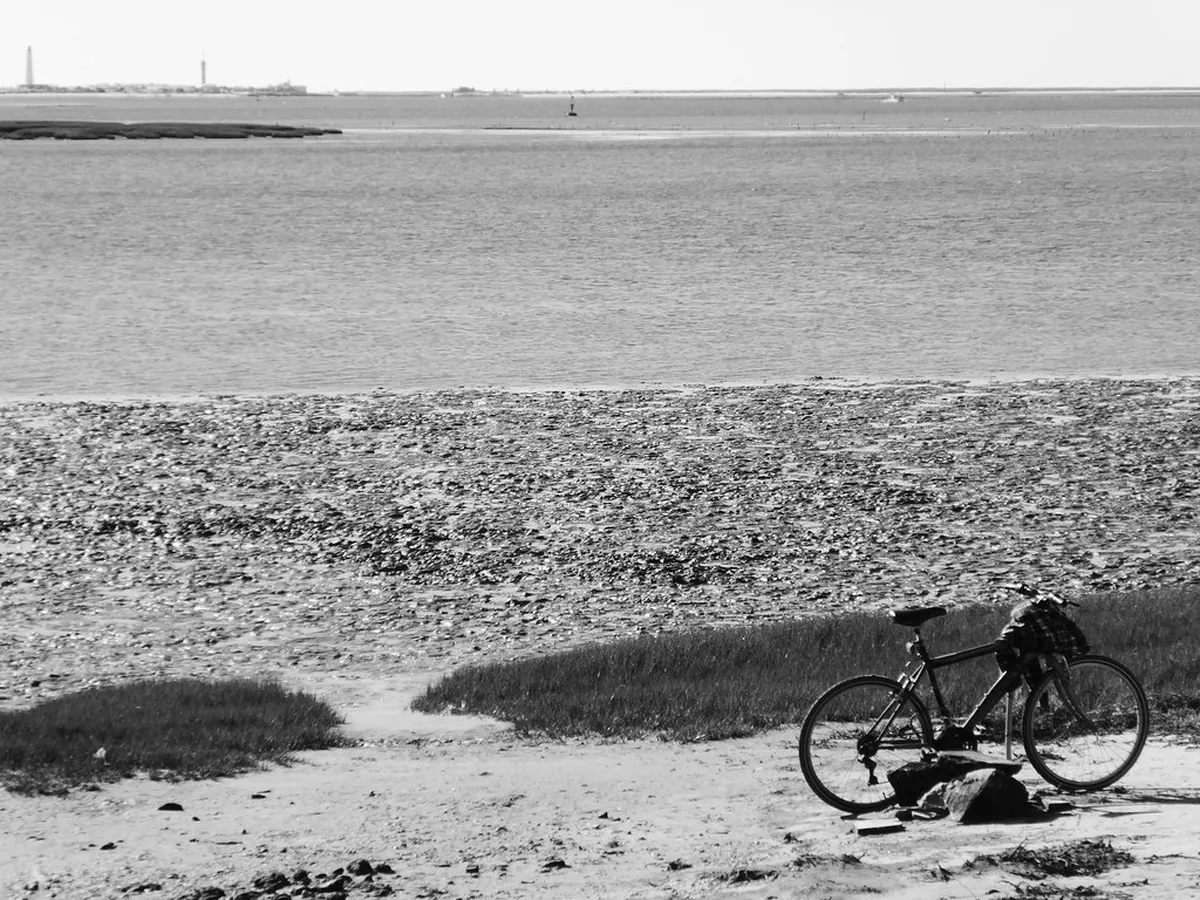
The ferry to Ilha Deserta (also called Barreta Island) costs around €5 return and takes about 20 minutes. The island is genuinely uninhabited except for one resident and a single seafood restaurant at the far end of a 7-kilometre boardwalk. Walking the full length of the boardwalk and back takes roughly two hours; the beach is wide, clean Atlantic sand with almost no crowds outside August. The ferry to Faro Beach costs €3.50 return and lands you on a narrow spit where you can walk either the ocean side or the quieter lagoon side past weathered fisherman shacks. A third option, Culatra Island, has two ferry stops; disembarking at Farol and walking the 3 kilometres to Culatra village for lunch at one of the seafood restaurants there is a full half-day. The Ria Formosa lagoon system is home to unique wetland ecosystems; checking the Ria Formosa natural park guide will help you decide which island suits your pace.
These ferry walks work best as an afternoon add-on after completing the Old Town route in the morning. Combine them only on a full day in Faro — not as a rushed hour between buses.
Where to Eat in Faro?
The lanes around Largo da Sé have several small restaurants with outdoor seating and reliably fresh seafood. Old Tavern (Tasca Antiga) is one of the better-known spots in this cluster and fills up quickly at lunch during peak season. If you arrive after 13:00 without a reservation in July or August, expect a wait.
For a less touristy meal, Pastelaria Coelho is a local bakery and cafe about 800 metres north of the old walls. It is a plain, no-frills place with good pastries and affordable set lunches — the kind of spot where you are unlikely to hear English spoken at the next table. A coffee and pastel de nata there costs under €2.
Rua Conselheiro Bivar, just outside the walls on the shopping side of town, is lined with outdoor restaurant terraces that come alive after 19:00. This is a reliable fallback for dinner if everything around the cathedral is full. The sardine shop Comur on the same side of town — a Murtosa-brand canned fish specialist established in 1942 — is worth a five-minute detour even if you never buy a tin; the retro interior doubles as a small gift shop and sells tins printed with the year of your birth.
Where to Watch the Sunset in Faro?
Faro has several distinct sunset vantage points and the choice matters depending on how much effort you want to invest. The road along the railway line — Rua Comandante Francisco Manuel — is the most underrated. It runs parallel to the tracks between the marina and the ferry point, and the combination of passing trains, distant boats on the lagoon, and low-flying aircraft approaching the airport creates an unexpectedly cinematic golden-hour scene.
The Fishermen's Memorial is a close second. The metal cutouts in the sculpture fill with orange light as the sun drops, and the view toward the lagoon is unobstructed. Faro Marina itself is the busiest sunset spot, with cafes and wine bars that face west — comfortable, but more crowded than the alternatives. Porta Nova, one of the smaller gates in the city wall, frames a view of the sea through its arch that is particularly striking at dusk. Finally, if the Antiga Fábrica da Cerveja roof happens to be open on your visit date, the elevation gives a full panorama over the terracotta rooftops of Vila Adentro catching the last light.
Family-Friendly and Budget-Friendly Options in Faro
Walking through Vila Adentro costs nothing. The pedestrian-only lanes inside the walls are safe for children, stroller-accessible on the smoother sections, and short enough that a toddler can complete the main loop without a meltdown. The one cobblestone hazard is the traditional calcada paving — thin-soled shoes slip on it, especially after rain. Flat-soled trainers or hiking sandals are the right call.
You can find many things to do in Faro without spending much. The Municipal Museum is free on Sunday mornings until 14:30. The island ferries cost between €3.50 and €5 return per person. A full day in Faro — Old Town, lunch at a local cafe, afternoon ferry to Faro Beach — can come in under €20 per adult, excluding accommodation.
How to Plan a Smooth Faro Walking Day
Start before 10:00 if you are visiting between June and September. The Old Town heats up fast, and the narrow walls provide little shade by midday. Most sites open around 10:00 and close by 18:00 in high season. The cathedral bell tower is the one stop most worth prioritising early — views are clearest before the afternoon haze builds over the lagoon.
Consulting a Faro in one day itinerary can help you sequence morning sightseeing against an afternoon ferry. A faro old town walking guide that bundles the historic circuit with a ferry walk works best as a full-day plan — arrive at the marina by 09:30, finish the Old Town route by 12:30, eat lunch, and take the 14:00 ferry to your chosen island.
If you prefer a guided option, this free, highly-rated guided walking tour runs most days and covers the same Old Town circuit with added historical context. Book a spot in advance during July and August when groups fill quickly. The guide works on a tip basis, so budget around €5–€10 per person.
Start your walk before 10:00 in summer — the narrow Old Town lanes offer little shade by midday. Most sites open at 10:00 and close by 18:00 in high season, so an early start lets you fit both the cathedral and a ferry walk into a single day.
Where to Stay in Faro?
Staying inside the Old Town walls gives you the most atmospheric base, with quiet mornings and the sound of cathedral bells at dusk. The trade-off is that some streets are narrow enough to make luggage-wheeling awkward, and noise from the evening bells can be a surprise. Most properties inside the walls are small guesthouses and boutique apartments rather than large hotels.
The marina district is the most practical choice for most visitors. It sits within a five-minute walk of the train station and the bus terminal, and the main cluster of restaurants and shops is immediately accessible. Our where to stay in Faro guide covers the best hotels for every budget across both neighborhoods.
If you are only stopping in Faro for one night before or after a flight, properties near the train station make the most logistical sense. The airport is 7 kilometres from the city centre; a taxi costs roughly €15–€20. Bus line 16 connects the airport to the city centre and costs under €3.
Frequently Asked Questions
Why go on a self-guided walking tour in Faro?
A self-guided tour allows you to explore at your own pace without following a strict group schedule. You can spend more time at the cathedral or stop for a long lunch in a quiet plaza. Check our travel blog for more Algarve tips.
How much time should you plan for a Faro Old Town walking tour?
You should set aside at least two to three hours to see the main highlights of the Old Town. This time allows for a visit to the cathedral and a quick walk along the ancient walls. Add more time if you plan to visit museums.
Is Faro Old Town worth visiting for a short itinerary?
Yes, the Old Town is the most historic part of the city and is very compact. You can see the major landmarks in just a few hours, making it ideal for short trips. It provides a great contrast to the beach resorts nearby.
What should travelers avoid when planning a walk in Faro?
Avoid visiting during the hottest part of the day in summer when temperatures can be very high. Do not wear thin-soled shoes, as the cobblestones can be hard on your feet. Always carry water and wear sunscreen while walking outdoors.
Exploring the historic center with this faro old town walking guide ensures you see the best of the city — from the grand archways and baroque churches to the ferry walks across the lagoon and the best spots to watch the sun go down.
Faro rewards visitors who stay a full day rather than rushing through, and the compact size of Vila Adentro means there is very little wasted time between landmarks. Plan your visit today to experience the timeless charm of this underrated Portuguese destination.
 Faro Weather By Month: 8 Key Climate InsightsJune 4, 2026