10 Best Day Trips From Lagos Portugal: 2026 Travel Guide
Plan the 10 best day trips from Lagos Portugal in 2026. Sagres, Silves, Benagil, Tavira, Sevilla and more — verified 2026 bus fares, drive times and budgets.
On this page
10 Best Day Trips From Lagos Portugal to Take in 2026
Lagos sits at the western edge of the Algarve and works as the most strategic base in southern Portugal for day-tripping. The A22 motorway runs east along the entire coast, the Linha do Algarve regional train links eight day-trip-worthy towns, and the EVA Transportes bus network reaches the windswept cliffs of the western tip. From central Lagos you can stand on the southwestern-most point of mainland Europe in 60 minutes, walk through a 1,000-year-old Moorish castle in 35 minutes, or reach Sevilla in Spain in under three hours by car.
This 2026 guide covers ten tested day trips, each with verified transport options (bus, train, car, organized tour), 2026 fares, drive times, and a recommended visit duration. We focus on what actually fits in a day from a Lagos base — not a Lisbon or Faro base — and flag which destinations need a car versus which work car-free. Use our Lagos Portugal travel guide to plan the rest of your stay.
Quick answer: The 10 best day trips from Lagos in 2026 are Sagres & Cabo de São Vicente, Silves, Benagil & Marinha sea caves, Monchique mountains, Albufeira, Faro old town & Ria Formosa, Tavira, Sevilla (Spain), Praia da Luz & Burgau, and Portimão & Ferragudo. Sagres, Benagil, Silves and Sevilla are the four trips most travelers prioritize.
1. Sagres & Cabo de São Vicente — Europe's Wild Western Edge
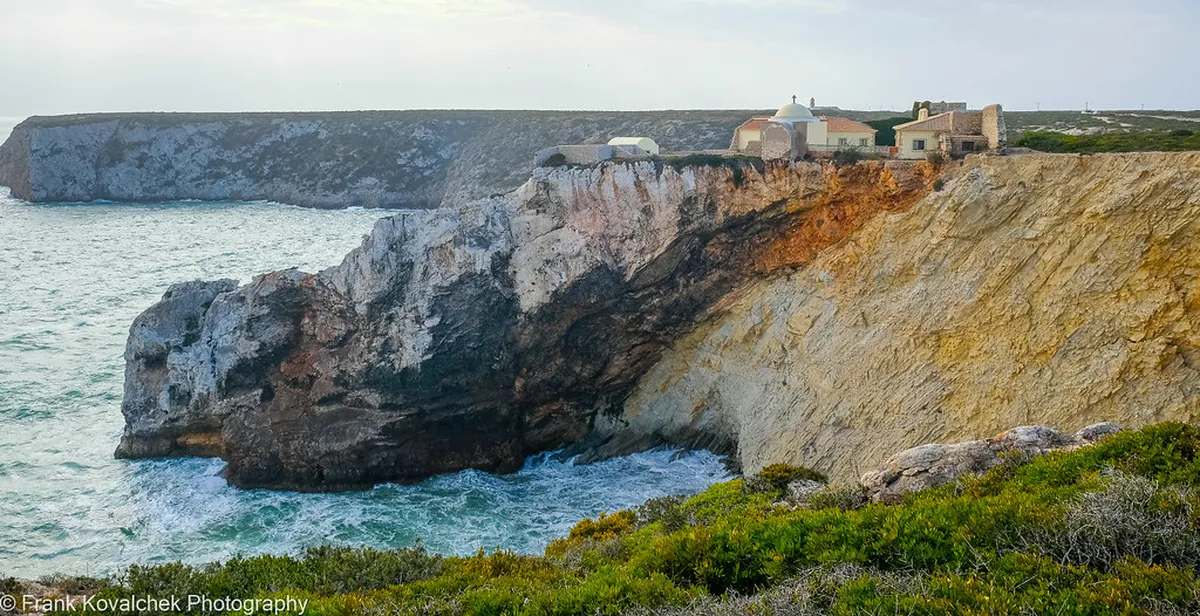
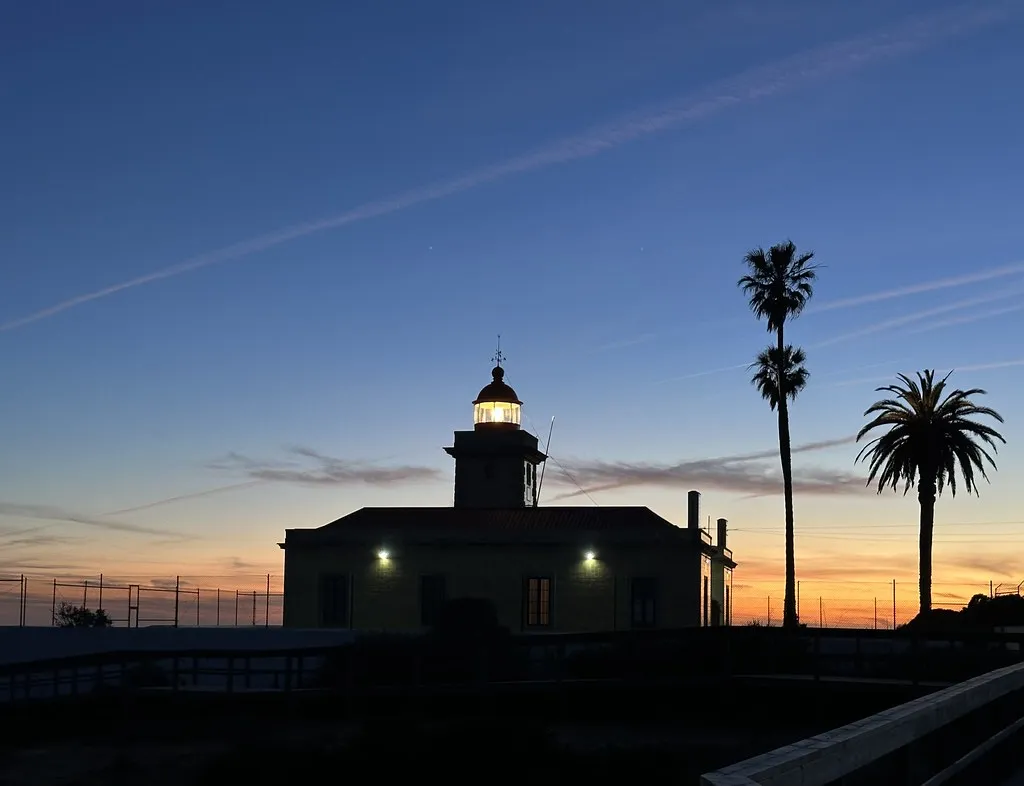
Sagres sits 33 kilometers west of Lagos and ends at Cabo de São Vicente, the southwestern-most point of mainland Europe. The 75-meter cliffs drop straight into the Atlantic, and the lighthouse here is one of the most powerful in Portugal. Sagres Fortress (Fortaleza de Sagres) entry is €3 in 2026, with sweeping 270-degree ocean views and the mysterious 43-meter Rosa dos Ventos wind compass etched into the plateau.
How to get there: EVA Transportes bus from Lagos terminal, ~60 minutes, €4.35 one-way (2026 fare). Buses run roughly hourly in summer, six per day in winter. By car: 35 minutes via the N125, free parking near the fortress (fills by 5 PM in summer). Organized half-day tours from Lagos run €30–€45 per person.
Top sights: Sagres Fortress, Cabo de São Vicente lighthouse, Praia do Tonel (surfing), Praia do Beliche (sheltered swimming), the 6-km coastal trail linking the fortress to the cape.
Budget: €15–€25 per person without a tour (bus + fortress + lunch). Recommended duration: Half-day minimum; full day if you surf or hike. For a deeper dive see our Sagres day trip guide.
Free parking near Sagres Fortress fills by 5 PM in summer — arrive before noon or take the EVA bus (€4.35 one-way from Lagos terminal) to skip the scramble entirely.
2. Silves — The Best-Preserved Moorish Castle in Southern Portugal
Silves was the capital of the Algarve under Moorish rule from the 8th to 13th centuries and still holds the best-preserved red sandstone castle (Castelo de Silves) in the south. The castle entry is €2.80 in 2026 and includes the underground cisterns, ramparts, and archaeological exhibits. Below the castle, the 13th-century Sé de Silves cathedral and the Arade riverside park make for a relaxed afternoon.
How to get there: Linha do Algarve regional train from Lagos to Silves, 35 minutes, €2.90 one-way. The station sits 2 km downhill — taxi to the old town is €5, or walk 20 minutes uphill. By car: 25 minutes via the N120, free parking near the market. Combine with Carvoeiro (15-min drive south) for a packed day.
Top sights: Castelo de Silves, Sé Cathedral, Cruz de Portugal, Saturday market, Fábrica do Inglês museum quarter. The August Medieval Fair turns the entire old town into a period recreation.
Budget: €20–€35 per person (train + castle + a cataplana lunch under €15). Recommended duration: Half-day. For a dedicated guide see our Silves day trip from Lagos.
3. Benagil & Marinha Sea Caves — The Algarve's Most Photographed Coastline
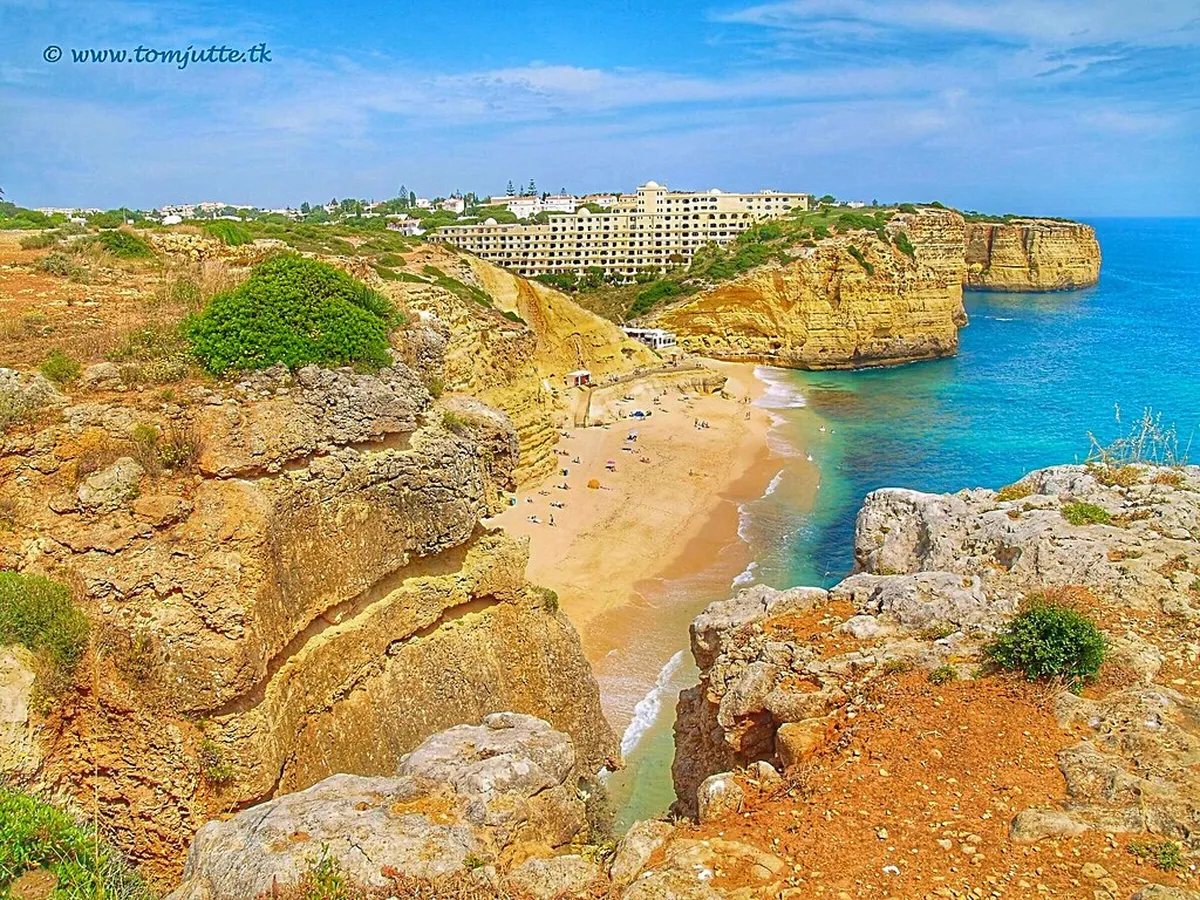
The Benagil sea cave is a domed grotto with a circular skylight that floods the interior with golden light, making it the single most photographed natural landmark in Portugal. Booking a Benagil cave boat tour from Lagos avoids the 45-minute drive east to Carvoeiro and includes a scenic two-hour coastal cruise past Ponta da Piedade and dozens of hidden grottoes.
How to get there: Boat tours depart Lagos Marina hourly from 9 AM, €30–€45 per person, 2–3 hours. Kayak/SUP rentals from Benagil Beach (drive required, 45 min from Lagos): €35–€50 for a 2-hour tandem. Private charter: €200+ per boat. Swimming into the cave is banned in 2026 due to boat traffic and currents.
Top sights: Benagil dome cave, Marinha Beach (consistently ranked among Europe's most beautiful), Algar de Benagil viewpoint, the 7-Hanging-Valleys trail (best clifftop walk in the Algarve).
Budget: €30–€50 per person (boat tour). Recommended duration: Half-day from Lagos by boat; full day if you also hike the 7-Valleys trail.
Swimming into Benagil cave is banned in 2026 due to boat traffic and currents — book a group boat tour from Lagos Marina (€30–€45) or a kayak rental from Benagil Beach, and always check the marine forecast before departure as high swell cancels tours year-round.
4. Monchique Mountains — Spa Village & the Algarve's Highest Peak
Heading 30 km inland takes you into the Serra de Monchique, a green mountain range that contrasts sharply with the coast. Foia, the Algarve's highest peak at 902 meters, offers panoramic views from Cabo de São Vicente in the west to the Spanish border in the east on clear days. Caldas de Monchique is a wooded spa village famous for thermal waters used since Roman times — taste the local medronho (wild-strawberry-tree brandy, ~€8/bottle).
How to get there: EVA Transportes bus from Lagos, 50 minutes, €4.45 one-way. By car: 40 minutes via the N266 — best option as the bus does not reach the Foia summit (10 km uphill from Monchique town). Taxi from Monchique to Foia: €15 each way.
Top sights: Foia summit (902 m), Caldas de Monchique spa village, Mountain Bike trails, Sunday market, the Foia summit circular hike (7 km, ~3 hours).
Budget: €25–€40 per person (bus + lunch + medronho tasting). Recommended duration: Full day to combine the spa village, Foia summit and a long lunch.
5. Albufeira — Family Beaches, Old Town & the Strip
Albufeira sits 50 km east of Lagos and splits into two halves: the whitewashed Old Town with its Moorish-arched alleys and Praia dos Pescadores, and the modern Strip nightlife district stretching toward Praia da Oura. Families come for the wide sandy beaches and the two big water parks (Aquashow and Slide & Splash, both €30–€35 entry in 2026); couples come for the Old Town's clifftop sunset bars.
How to get there: Linha do Algarve train from Lagos to Albufeira-Ferreiras, 50 minutes, €5.20 one-way (the station is 6 km from town — local bus €2 or taxi €10). By car: 45 minutes via the A22 (€3.20 toll). Direct EVA bus: 1h 15min, €5.50.
Top sights: Old Town, Praia dos Pescadores, Praia da Falésia (rust-red cliffs), Aquashow water park, the Marina, Strip nightlife.
Budget: €25–€60 per person depending on whether you do a water park. Recommended duration: Full day, especially with kids.
6. Faro Old Town & the Ria Formosa
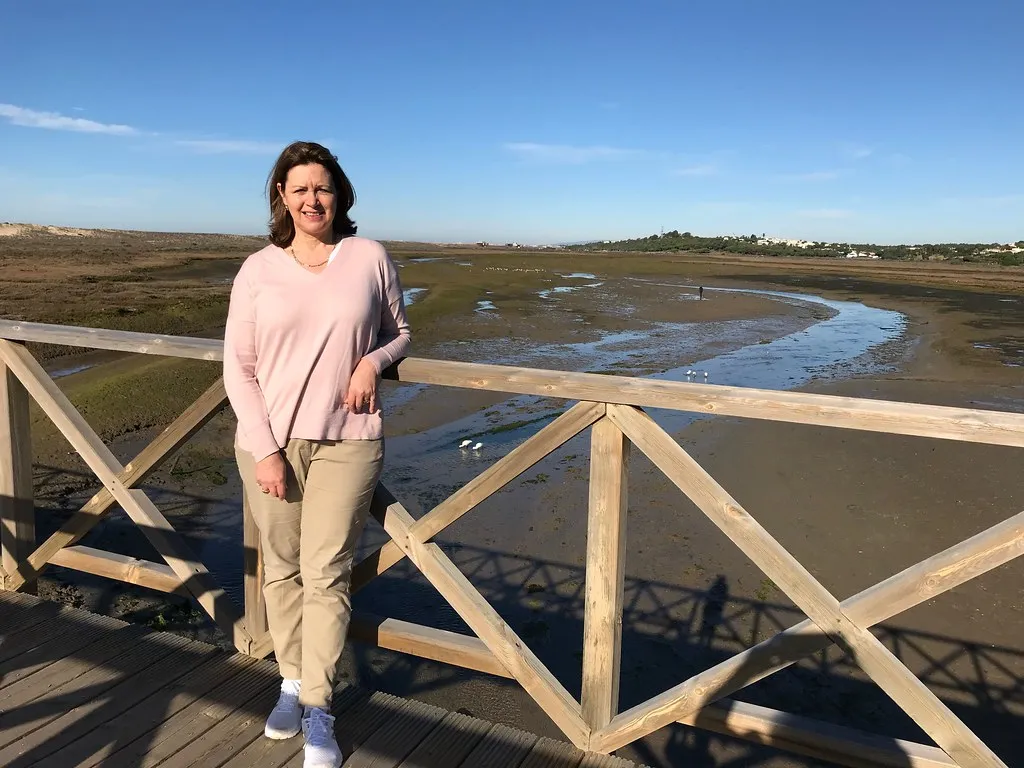
Faro is the Algarve's regional capital and most travelers fly through its airport without realizing it hides a walled 9th-century old town. Enter through the Arco da Vila gate to reach cobblestone plazas surrounded by the 13th-century Sé de Faro cathedral, the Bishop's Palace and the Municipal Museum. Climbing the cathedral bell tower costs €4 in 2026 and gives you a panorama across the Ria Formosa lagoon — a UNESCO-protected wetland with flamingos, seahorses and 200+ bird species.
How to get there: Linha do Algarve train Lagos to Faro, 1h 45min, €7.40 one-way (most scenic option). By car: 1 hour via the A22 (€4.10 toll). EVA bus: 2 hours, €7.60.
Top sights: Cidade Velha (old town), Sé de Faro cathedral, Capela dos Ossos (bone chapel), Ria Formosa boat tour to Ilha Deserta (€25–€40, 2 hours), the Sunday market in Olhão (15 min east).
Budget: €25–€55 per person (train + cathedral + lagoon boat). Recommended duration: Full day; combine with Olhão for the freshest fish market in the Algarve.
7. Tavira — The Prettiest Town in the Algarve
Tavira sits 110 km east of Lagos and is widely considered the most beautiful town in the Algarve, with 30+ churches, a hilltop castle, and tiled houses straddling the Gilão River. The medieval Castelo de Tavira is free to enter in 2026 and gives panoramic views over the rooftops. From the town center, a short ferry (€2 each way, June–September) reaches Tavira Island in the Ria Formosa Natural Park, where a near-deserted sandbar beach stretches for kilometers.
How to get there: Linha do Algarve train Lagos to Tavira, 2h 15min with one change at Faro, €9.10 one-way. By car: 1h 15min via the A22 (€5.20 toll) — the more practical option.
Top sights: Castelo de Tavira, Igreja de Santa Maria do Castelo, Roman bridge, Tavira Island ferry & Barril Beach anchor cemetery, Camera Obscura (€4).
Budget: €30–€50 per person (transport + ferry + lunch ~€12). Recommended duration: Full day given the distance.
8. Sevilla, Spain — The Long Day Trip Worth Doing
Sevilla sits across the Spanish border and is the only international day trip from Lagos that fits in a day. The straight-line distance is 270 km; by car you can be there in 2h 45min via the A22/A49. The cathedral, Real Alcázar, Plaza de España and the Santa Cruz quarter all sit within a compact center walkable in 4–5 hours, which makes Sevilla feasible — but tight — as a day trip.
How to get there: By car: 2h 45min via A22 → A49 (~€20 in tolls + fuel each way). Bus: Rede Expressos and ALSA run direct from Lagos terminal — 4h 45min one-way, €14–€60 (2026 fare), three departures daily. Best option: An organized small-group day tour from Lagos (€75–€110) handles the driving and includes guided cathedral entry. We strongly recommend a tour over the bus — 9.5 hours of travel for 4 hours in Sevilla is brutal.
Top sights: Catedral de Sevilla & Giralda tower, Real Alcázar, Plaza de España, Barrio Santa Cruz, Metropol Parasol. Budget: €80–€130 per person (tour) or €100+ per person (car + tolls + entries). Recommended duration: Full day, leave Lagos by 7 AM. For the full breakdown see our Lagos to Sevilla day trip guide.
9. Praia da Luz & Burgau — Quiet Beach Villages Near Lagos
Praia da Luz and Burgau sit 7 km and 13 km west of Lagos respectively, and together they make the easiest car-free escape from town. Praia da Luz has a long beachfront promenade and the basalt-rock Rocha Negra at its eastern end. Burgau is smaller, with whitewashed fishermen's cottages tumbling down a hill toward a sheltered cove. Both feel a generation slower than central Lagos.
How to get there: EVA Transportes bus 33 from Lagos terminal, 15 minutes to Praia da Luz (€2.45) and 25 minutes to Burgau (€3.10), runs hourly in summer. By car: 12 minutes to Luz, 18 minutes to Burgau, free parking in both villages outside July–August.
Top sights: Praia da Luz beach, Rocha Negra clifftop walk, Burgau old village & cove beach, the 8-km coastal trail between Lagos and Burgau (one of the best easy walks in the western Algarve).
Budget: €15–€30 per person (bus + lunch). Recommended duration: Half-day each, or combine both into a full day with the coastal trail.
10. Portimão & Ferragudo — Riverside Twins on the Arade
Ferragudo sits across the Arade River from Portimão and remains one of the last unspoiled fishing villages in the central Algarve, with whitewashed houses climbing toward a hilltop castle. Portimão itself is bigger and busier — Praia da Rocha is its famous beach, with a 3-km wooden boardwalk over rust-red cliffs. The Portimão Museum (housed in a former sardine cannery) costs €3 and gives excellent context on the region's fishing heritage.
How to get there: Linha do Algarve train Lagos to Portimão, 18 minutes, €2.90 one-way. From Portimão the local water taxi to Ferragudo runs every 30 minutes in summer (~€2). By car: 20 minutes via the EN125 or A22.
Top sights: Praia da Rocha boardwalk, Portimão Museum, Ferragudo old village & Castelo de São João do Arade, the Arade riverfront restaurants. The August sardine festival in Portimão is one of the biggest food events in the Algarve.
Budget: €18–€30 per person (train + ferry + grilled-sardine lunch ~€10). Recommended duration: Half-day.
Transport & Planning Tips for 2026
Car rental from Lagos: €30–€55 per day in summer 2026, €20–€32 in shoulder season. Major operators (Europcar, Sixt, Goldcar, Centauro) cluster around Lagos train station and the marina. The A22 motorway uses an electronic toll system (Via Verde) — most rental cars include the transponder, but confirm at pickup. Typical 2026 toll cost from Lagos: €1.85 to Portimão, €3.20 to Albufeira, €4.10 to Faro, €5.20 to Tavira.
Linha do Algarve regional train: Operated by CP (Comboios de Portugal). Connects Lagos west-to-east through Portimão, Silves, Albufeira, Faro and Tavira. 2026 fares are typically €2.90–€9.10 per journey. Buy at the station or via the CP app — no advance booking needed.
EVA Transportes bus network: The only practical way to reach Sagres, Monchique, Praia da Luz and Burgau without a car. 2026 fares are €2.45–€5.50 per journey. The Lagos terminal sits next to the marina.
Common mistakes to avoid: Trying to combine Sagres (west) with Tavira or Faro (east) in a single day — they are 140+ km apart. Driving to Sevilla without leaving by 7 AM. Booking a Benagil tour without checking the marine forecast (high swell cancels boats year-round). For where to base yourself across the Algarve, our Lagos vs Albufeira vs Faro guide compares all three hubs.
Frequently Asked Questions
What is the best day trip from Lagos Portugal?
Sagres & Cabo de São Vicente is the single best day trip from Lagos in 2026 — 35 minutes by car or 60 minutes by bus, with the most dramatic clifftop scenery in southern Portugal and the southwestern-most point of mainland Europe. Benagil sea cave by boat from Lagos Marina is a close second, especially for first-time visitors.
Can you do Sevilla as a day trip from Lagos?
Yes, but only by car (2h 45min each way) or organized tour (€75–€110 per person). The direct ALSA/Rede Expressos bus takes 4h 45min one-way at €14–€60, which leaves under 5 hours in Sevilla — too tight for most travelers. We recommend an organized small-group tour over the public bus.
Do I need a car for day trips from Lagos?
No. The regional train reaches Portimão, Silves, Albufeira, Faro and Tavira directly from Lagos for €2.90–€9.10. EVA buses cover Sagres, Monchique, Praia da Luz and Burgau. A car only becomes essential for Monchique's Foia summit, Marinha Beach kayaking, and a Sevilla day trip — for those, rent a car for 1–2 days only (€30–€55/day in 2026).
How much does a Benagil cave tour from Lagos cost in 2026?
Group boat tours from Lagos Marina to Benagil cave cost €30–€45 per person in 2026 and run 2–3 hours. Kayak and SUP rentals from Benagil Beach (drive required) are €35–€50 for a tandem 2-hour session. Private charters from Lagos start at €200 per boat.
How long is the bus from Lagos to Sagres?
The EVA Transportes bus from Lagos terminal to Sagres takes about 60 minutes and costs €4.35 one-way in 2026. Buses run roughly hourly in summer (June–September) and six times per day in winter. The terminal is a 5-minute walk from Lagos train station.
Which day trips from Lagos can be combined in one day?
Silves + Carvoeiro pair well (15 minutes apart). Portimão + Ferragudo + Alvor combine into a full central-Algarve day. Praia da Luz + Burgau work as a single coastal-walk day west of Lagos. Sagres + Cabo de São Vicente are essentially the same trip. Avoid combining western destinations (Sagres, Monchique) with eastern ones (Tavira, Faro) — they sit 140+ km apart.
What is the best day trip from Lagos for families with kids?
Albufeira wins for families thanks to wide flat beaches and two big water parks (Aquashow, Slide & Splash, ~€30–€35 entry). Silves Castle is a strong runner-up for slightly older kids who like exploring battlements. A Benagil boat tour from Lagos Marina also works well — kids stay entertained the whole 2–3 hours and there's no driving involved.
Lagos is the best base in southern Portugal for day-tripping in 2026 — three of the Algarve's most-visited destinations (Sagres, Benagil, Silves) sit within 45 minutes, and even Sevilla in Spain becomes feasible by tour or car. The variety means you can spend a full week here without repeating a single excursion, and most trips cost under €40 per person all-in.
For the rest of your trip, see our Lagos Portugal travel guide, our roundup of the best beaches in Lagos, and the dedicated Benagil cave from Lagos and Lagos to Sevilla day trip guides for deeper logistics on those two excursions. If you are visiting in the cooler months, our Lagos in winter guide covers what's open off-season.