
Alfama Lisbon: Complete 2026 Guide to Portugal's Oldest Neighborhood
Alfama is Lisbon's oldest neighborhood, the only district to survive the 1755 earthquake. This guide covers what to see, where to eat, how to walk it, and how to find authentic fado.
On this page
Alfama Lisbon: Complete 2026 Guide to Portugal's Oldest Neighborhood
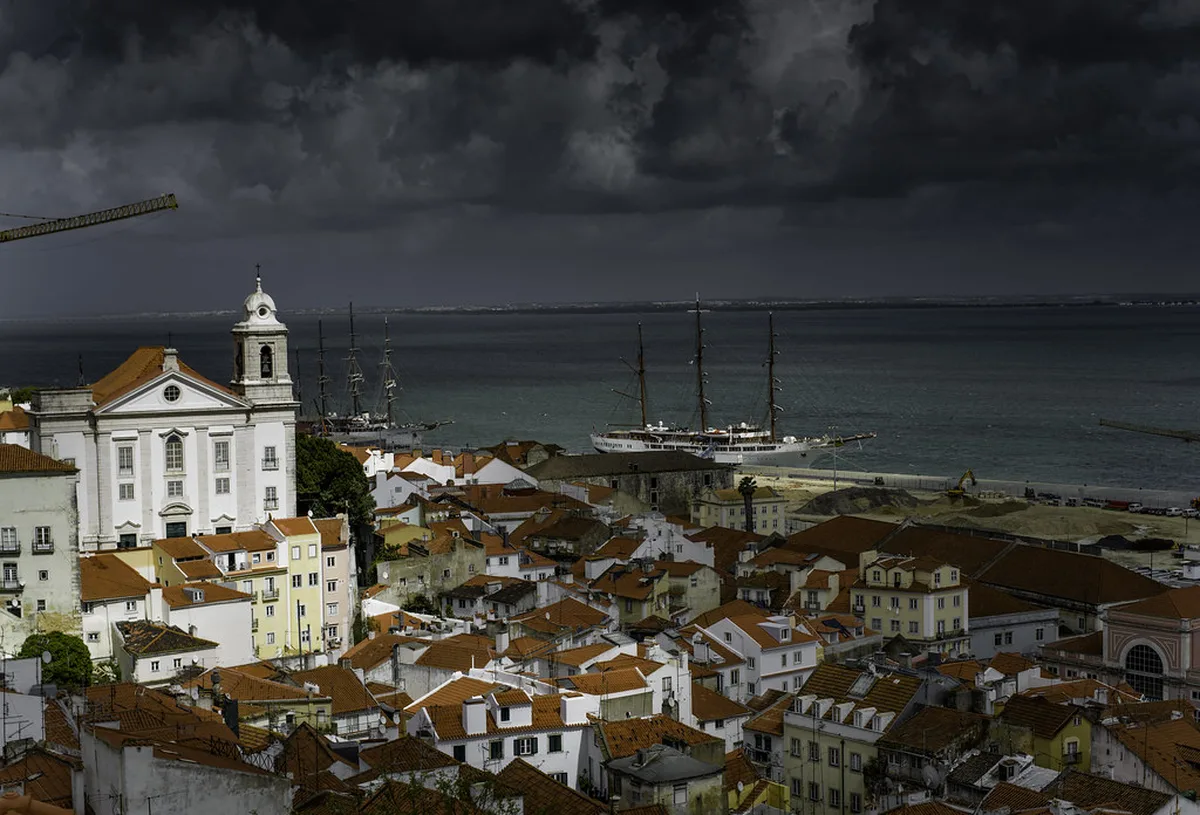
Alfama is the oldest neighborhood in Lisbon and the only district to survive the catastrophic 1755 earthquake intact. While the rest of the city was rebuilt on the orderly grid of the Marques de Pombal, Alfama kept its tangled Moorish street plan, its whitewashed houses stacked on the hillside, and its working-class soul. This is where fado was born in the 19th century, where the famous Tram 28 grinds its way uphill past tiled facades, and where Lisbon still feels like a village inside a capital. Sardines grill on doorways. Laundry hangs from iron balconies. An old woman pours ginjinha from a dusty bottle. This guide covers Alfama's history, the must-see sights, where to eat, where to find authentic fado, and a tested 2-3 hour walking route. If you want the broader picture, see our pillar guide on the things to do in Lisbon.
A brief history of Alfama
The name Alfama comes from the Arabic al-hamma, meaning hot springs or baths, a clue to the neighborhood's deep Moorish roots. Alfama dates to the 8th century, when North African Moors ruled the Iberian Peninsula and built the original walled quarter on the slopes between the Tagus River and the hilltop fortress that would later become the Castle of São Jorge. After the Christian reconquest of Lisbon in 1147, Alfama remained the city's beating heart for centuries — home to nobles, then merchants, then, eventually, the working class. For a wider perspective, see our our Lisbon travel guide.
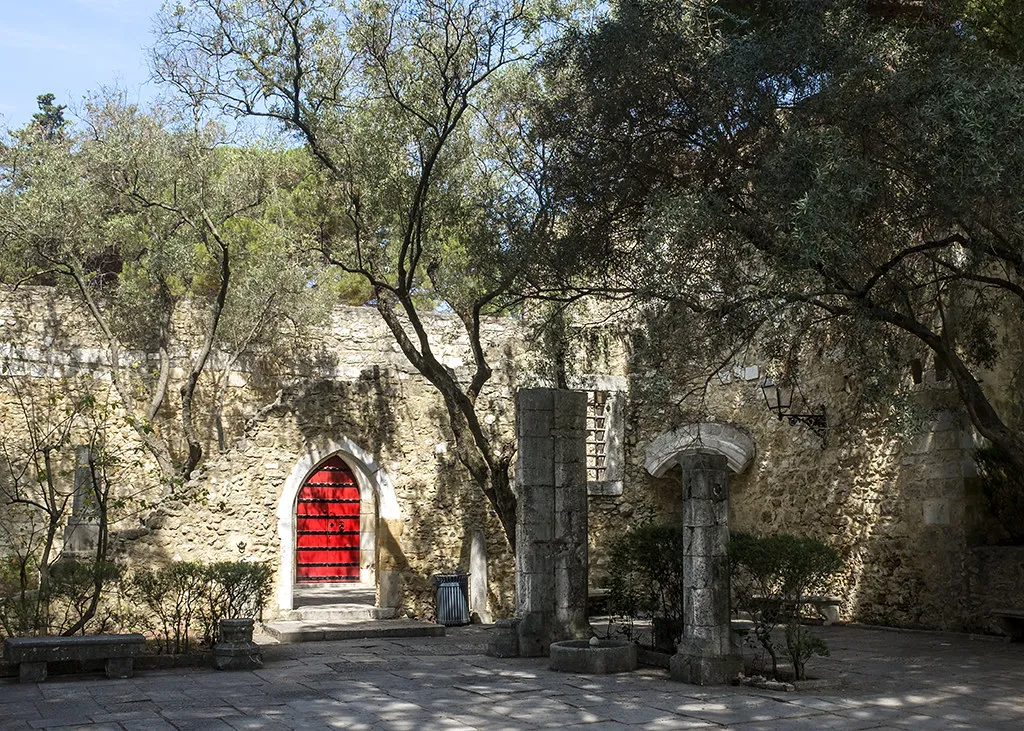
On November 1, 1755, the All Saints' Day earthquake — one of the deadliest in European history — leveled most of Lisbon. The quake, the fires that followed, and a tsunami destroyed roughly 85% of the city. Alfama, perched on solid bedrock above the river, was the only neighborhood to survive largely intact. That accident of geology is why, when you wander Alfama today, you are walking through the only "real" old Lisbon that remains.
By the 19th century, Alfama had become a quarter of fishermen, dock workers, and sailors. It was here, in smoke-filled taverns, that fado — Portugal's mournful national music of longing and saudade — first took shape. Fado is now UNESCO-listed Intangible Cultural Heritage, but its home is still Alfama.
How to get to Alfama
Alfama sits east of the Baixa downtown and is easy to reach by every form of Lisbon transport.
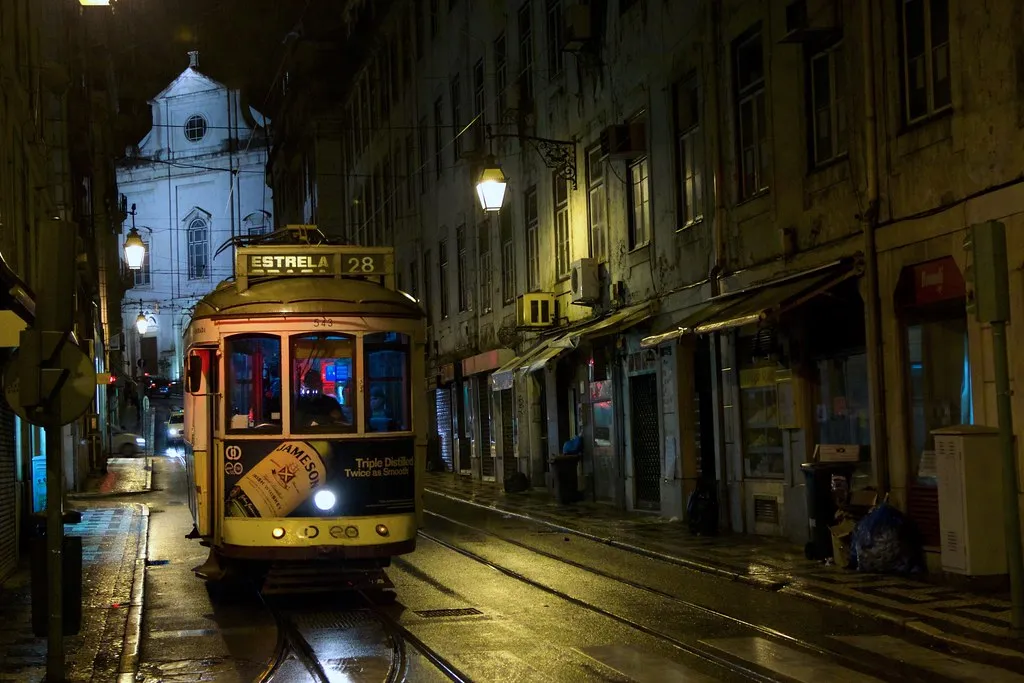
Tram 28. The most famous way to arrive is on the yellow Remodelado tram that climbs from Martim Moniz through Graça, Alfama, and into Estrela. A single ride costs €3 in 2026 if you pay the driver, but a Carris/Metro day pass at €6.45 is far better value if you plan to ride more than once. Tram 28 is also the most pickpocketed line in Lisbon, so keep your bag in front of you. We have a complete guide to riding it without losing your wallet — see Tram 28 complete guide.
A Carris/Metro day pass (€6.45 in 2026) covers unlimited tram and metro rides. If you plan to take Tram 28 more than once and use the metro from the airport, the day pass pays for itself on the second ride.
On foot from Baixa. The walk from Praça do Comércio or Rossio takes about 10-15 minutes. Head east along Rua da Alfândega, past the Casa dos Bicos, and start climbing. This is the most rewarding approach because you arrive on foot the way Lisboetas have for a thousand years.
Metro. The blue line stops at Santa Apolónia at the foot of Alfama, a five-minute walk to the lower edges of the neighborhood. From the airport, the red line connects to Santa Apolónia in about 25 minutes.
One warning: Alfama is steep and the streets are cobblestone (calçada portuguesa) polished smooth by centuries of feet. Wear shoes with grip — not flat-soled sneakers, and definitely not sandals.
Top things to do in Alfama
Alfama is small enough to wander but dense enough to fill an entire day. These are the sights worth your time.
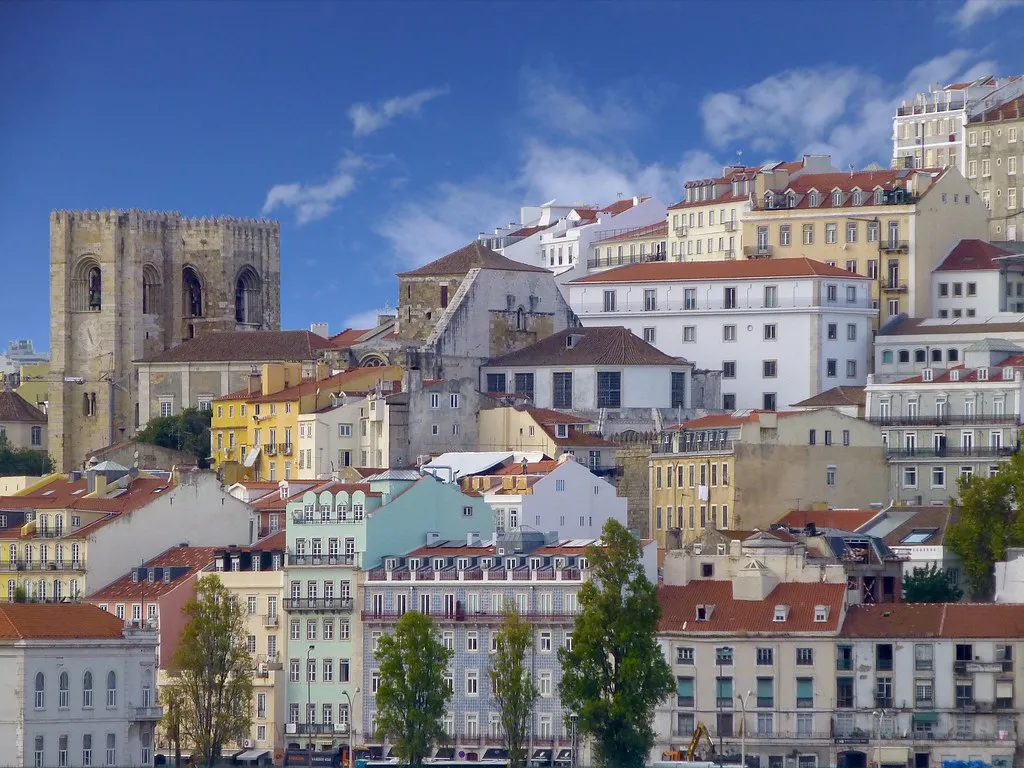
1. Castelo de São Jorge. The Moorish hilltop fortress that dominates Lisbon's skyline. The ramparts give the best 360° views in the city, and peacocks roam the gardens. Tickets are around €15 in 2026 and the castle opens daily from 9am, with last entry one hour before sunset. Buy timed tickets online in summer to skip the worst of the queue.
2. Sé de Lisboa (Lisbon Cathedral). Built in 1147 immediately after the Christian reconquest, the Sé is part Romanesque fortress, part medieval church. Entry to the cathedral is free; the cloister and treasury cost about €5 combined. The two crenellated bell towers are unmistakable from the bottom of the hill.
3. Miradouro de Santa Luzia. A small terrace covered in blue azulejo tiles that depict pre-earthquake Lisbon. The view sweeps across Alfama's red-tile roofs to the Tagus. Free, open 24 hours, and stunning at golden hour.
4. Miradouro das Portas do Sol. Thirty seconds further uphill from Santa Luzia, this larger terrace is the most photographed viewpoint in Lisbon. There is a kiosk café here for an overpriced but well-located coffee.
5. Museu do Fado. A surprisingly good museum (around €5 admission) that traces the history of fado from its 19th-century origins through Amália Rodrigues to today. Audio guide included. Allow 45-60 minutes.
6. Walking the labyrinth. Honestly, the best thing to do in Alfama is to get lost in it. The streets — Rua de São Pedro, Beco do Carneiro, Travessa de Santo Estêvão — twist into dead ends and tile-clad staircases. Cats sleep in window boxes. Old men play cards on plastic chairs. You will not find this anywhere else in Lisbon.
Other worthwhile stops include the Panteão Nacional (the white-domed pantheon visible from everywhere), the Feira da Ladra flea market on Tuesdays and Saturdays, and the small Igreja de Santo Estêvão on its quiet square. The neighboring hilltop district of Graça is a natural extension of any Alfama day, offering the city's highest viewpoints and a quieter local character just fifteen minutes on foot. For a complete overview of every Lisbon district, our guide to Lisbon's essential neighborhoods maps out where each area sits in relation to the others.
Where to eat in Alfama
Alfama's restaurants fall into two camps: traditional tascas (small family-run taverns serving working-class Portuguese cooking) and fado houses where dinner comes with live music and a steeper bill. Both are worth doing, just not on the same night.
For lunch or an early dinner, look for tascas with handwritten menus, paper tablecloths, and locals filling the room — these are the ones to trust. Order grilled sardines (sardinhas assadas) in summer when they are at their best, bacalhau à brás (salt cod with eggs and shoestring potatoes), or carne de porco à alentejana (pork with clams). Expect to pay €12-18 per person with house wine. A good house wine in a tasca rarely costs more than €1.50 a glass.
For an after-dinner stop, walk down to Largo de São Domingos near Rossio for a shot of ginjinha at A Ginjinha, Lisbon's oldest cherry-liqueur bar, founded in 1840. €1.80 a shot, served standing at the doorway. It is technically just outside Alfama but it is the right way to end the night. Consider pairing your evening with one of the best cocktail bars for a nightcap.
Avoid restaurants with photo menus, restaurants with hawkers outside, and any place near the Miradouro das Portas do Sol with English-only menus — these are tourist traps charging double for half the quality.
Where to hear authentic fado
Fado in Alfama splits sharply into two worlds. Commercial fado-with-dinner shows charge €60-90 per person, run on a fixed schedule for tour groups, and feature decent but predictable performers. Authentic casas de fado are smaller, dimmer rooms — sometimes only 10 tables — where unannounced singers from the neighborhood take turns through the night and the audience is mostly Portuguese.
To find the real thing, look for fado houses that do not advertise on Booking.com or hostel flyers, that open after 9pm, and that ask you to reserve by phone in Portuguese. Your hotel concierge will usually know which ones. Expect a minimum spend of €25-40 (food and drink), not a per-person ticket.
Go late. Authentic fado does not really start until 10pm and often runs until 1 or 2am. The first set is for warm-up. The second set, after midnight, is when the great singers appear.
The etiquette is simple but firm: silence during the songs. No talking, no clinking glasses, no phone screens. When the lights dim and someone calls "silêncio, faz-se fado" — silence, fado is happening — you stop everything. Applause comes only when the singer finishes. Break this rule and the whole room will glare at you.
Authentic fado houses rarely start before 10pm and the best performances happen after midnight. Book ahead by phone where possible — the most genuine casas fill up fast and many do not take online reservations.
Walking route through Alfama
Here is a 2-3 hour walking route I have done many times — and the one I send friends on when they have one afternoon in Lisbon. It covers the major sights without doubling back, ends near a tram stop, and gains elevation gradually so the climb is manageable.
Start: Sé de Lisboa. Begin at the cathedral, easily reached on foot from Praça do Comércio (10 minutes) or by Tram 28. Spend 20 minutes inside. Exit and turn left, following Rua Augusto Rosa uphill.
Stop 1: Miradouro de Santa Luzia. Five minutes up the hill. Look at the azulejo panels showing pre-earthquake Lisbon and the Tagus view. 10 minutes.
Stop 2: Miradouro das Portas do Sol. Thirty seconds further. The classic Alfama photo. 15 minutes, including a coffee at the kiosk if you want one.
Stop 3: Castelo de São Jorge. Walk up Rua de Santa Cruz do Castelo — 10 minutes, mostly stairs. The castle is the highest point of the route. Allow 60-75 minutes for the ramparts, gardens, and viewpoints.
Stop 4: Descend through the labyrinth. Leave the castle by the main gate and instead of taking the obvious tourist route back, head down through Rua do Chão da Feira, then take any small street going east and downhill. Wander. Get a little lost. This is the best 30 minutes of the day.
Stop 5: Museu do Fado. You will eventually emerge near Largo do Chafariz de Dentro, where the fado museum sits. 45 minutes.
End: Praça do Comércio or Tram 28. From the museum it is a 10-minute downhill walk to Praça do Comércio for sunset on the river, or you can pick up Tram 28 going west to head back into the city.
When I walked Alfama at sunset on a clear November evening, the entire hillside turned the color of terracotta and a single fado singer started up in a doorway as I passed. It is the kind of moment Lisbon hands out for free if you let it.
Frequently Asked Questions
Is Alfama safe at night?
Yes. Alfama is one of the safer neighborhoods in central Lisbon at night, with more residents than tourists and active streets until late. The main risk is pickpocketing on Tram 28 and around the busiest miradouros during the day, not violent crime. Use normal city sense, keep your phone in a front pocket, and you will be fine. The narrow streets are well-lit on the main routes.
How long should you spend in Alfama?
A focused half-day (3-4 hours) is enough to see the major sights — castle, cathedral, miradouros, and a wander. A full day lets you add the Fado Museum, a long lunch, and an evening fado dinner. If you only have one neighborhood to see in Lisbon, make it Alfama. For more ideas on filling the rest of your trip, see things to do in Lisbon.
Can you walk to Alfama from Baixa?
Yes, easily. The walk from Praça do Comércio or Rossio takes 10-15 minutes on flat ground until you reach the cathedral, after which you start climbing. Walking is the most pleasant way to arrive — you avoid the Tram 28 crowds and you get to see the transition from the rebuilt Pombaline grid into the medieval tangle of Alfama.
Is Alfama touristy?
The main viewpoints and Tram 28 are very touristy, especially between 10am and 4pm in summer. But Alfama is also a real residential neighborhood — about 5,000 people still live in its narrow streets — and once you step two blocks off the tram route, you are mostly among locals. Visiting early morning (before 9am) or after 7pm is the best way to see it without the crowds. To time your trip well, see our guide on the best time to visit Lisbon.
Where is the best miradouro in Alfama?
Miradouro das Portas do Sol is the most famous and photogenic, with the broadest sweep over Alfama's red rooftops. Miradouro de Santa Luzia, just below it, is smaller and quieter with beautiful azulejo panels — and arguably the better sunset spot. For the highest view in the city, the ramparts of Castelo de São Jorge beat both.
 10 Best Family-Friendly Hotels in Lisbon (2026)May 29, 2026