
Cascais Old Town Travel Guide
Discover the best of Cascais Old Town with our expert guide. Explore historic architecture, hidden museums, local markets, and the best beaches within walking distance.
On this page
Cascais Old Town Travel Guide
Cascais old town is a charming coastal escape located just a short train ride from Lisbon. This historic center features winding alleys and beautiful traditional tilework on every corner. Visitors often fall in love with the relaxed atmosphere and the stunning views of the Atlantic Ocean. Exploring the area reveals a perfect blend of royal history and modern seaside luxury.
How the Old Town Is Laid Out
The historic center is small enough to cover on foot in a single afternoon, and knowing the key streets saves time. Start at Rua Frederico Arouca, the main pedestrian spine, which begins beside Praia da Rainha and runs east past the boutiques and cafes. The distinctive black-and-white wave-patterned cobblestones underfoot are a signature of Portuguese urban design and a favorite subject for travel photography. Follow the street to its end and you reach Alameda dos Combatentes da Grande Guerra, a palm-lined boulevard with several restaurant terraces.
Turn off Alameda and you reach Largo Luís de Camões, a small atmospheric square packed with tables spilling out from bars and bistros on all sides. From there it is a short walk to Praça 5 de Outubro, the main square where the Town Hall and tourist office face the fishing harbor. The square opens directly onto Praia da Ribeira, also called Fishermen's Beach, where you can watch traditional wooden boats bob alongside modern yachts. This sequence — Rua Frederico Arouca, Largo Luís de Camões, Praça 5 de Outubro — is the backbone of any walking tour and takes under twenty minutes end to end.
Behind the main square the streets fan out into a quieter residential quarter of whitewashed fishermen's houses and aristocratic mansions. There are no tall buildings to disorient you and the geography is flat, unlike Lisbon. Most sights are within a ten-minute walk of each other, which makes the town very forgiving if you prefer to wander without a fixed plan.
Must-See Cascais Attractions
The Citadel of Cascais dominates the harbor with thick stone walls built between the 15th and 17th centuries. It began as a military fortification and later served as a royal summer residence before being converted into the Pestana Cidadela Cascais hotel and art center. The public can walk through the grounds and visit several galleries without paying admission. Check the Citadel of Cascais: The Ultimate Visitor Guide for current opening hours and which exhibitions are free.
The main church, Igreja de Nossa Senhora da Assunção, stands near the citadel and is one of the oldest buildings in town. Its restrained Manueline facade conceals an interior decorated with 18th-century azulejo panels worth seeing. The church is free to enter and is rarely crowded even during the peak summer months. From the church steps you have a direct line of sight to both the harbor and the museum district, making it a useful midpoint for orienting yourself. Cascais's layered history is visible in these architectural details from centuries of royal patronage.
Praça 5 de Outubro at the heart of the old town is the best place for a coffee break and people-watching. The Town Hall arcade provides shade in the afternoon when the sun is at its strongest. Several outdoor cafes ring the square and prices are competitive by Lisbon standards. It serves as the natural meeting point if you are exploring with a group splitting off to different attractions.
The Museum Quarter
The Museum Quarter sits a short walk west of the citadel and groups several cultural institutions close enough to visit in a single afternoon. The standout building is the Casa das Histórias Paula Rego, designed by architect Eduardo Souto de Moura and instantly recognizable by its two dark-red concrete towers. Inside, the permanent collection spans fifty years of paintings, drawings, and etchings by Portuguese artist Paula Rego (1935–2022). Rotating themed exhibitions complement the permanent rooms throughout the year.
The Museu Condes de Castro Guimarães occupies a 19th-century Gothic and Manueline mansion set within a landscaped park. Its collection includes rare illuminated manuscripts, Indo-Portuguese lacquered furniture, and decorative paintings that document the lifestyle of Cascais's aristocratic families. Arriving a few minutes before the 10:00 opening allows you to walk the gardens without competition from tour groups. Admission is around €3 for adults; check the official Cascais municipality site for the first Sunday free-entry policy.
The Santa Marta Lighthouse Museum closes the western end of the Museum Quarter. Built in 1868 on the grounds of the old Santa Marta Fort, the museum is run by the Portuguese Navy and focuses on lighthouse technology, keepers' daily life, and maritime safety history. The working light tower and the tiled exterior panels of the adjacent Casa de Santa Maria make this one of the most photographed corners in town. Detailed information on the lighthouse is also in the Santa Marta Lighthouse Cascais: The Complete Visitor Guide guide.
Admission to the Museu Condes de Castro Guimarães is around €3 for adults, and the first Sunday of each month is free. Arriving just before the 10:00 opening lets you enjoy the landscaped gardens before tour groups arrive.
Cascais Beaches Near the Old Town
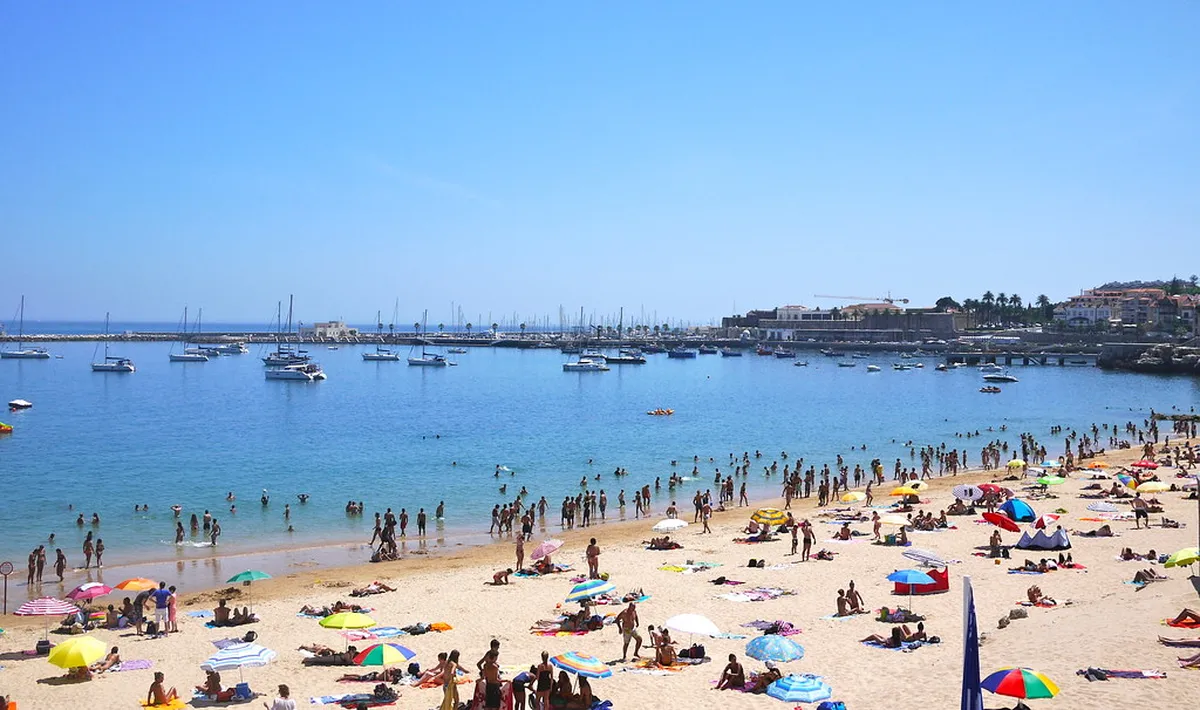
Several beaches are within walking distance of the historic center, which sets Cascais apart from most cultural day-trip destinations. Praia da Rainha is the closest — a small cove tucked directly below the main pedestrian street that served as Queen Amélia's private beach during the royal era. The water is calm, the sand is clean, and the surrounding walls give it a sheltered feel that larger Atlantic-facing beaches lack. It is ideal for a quick swim between sightseeing stops.
Praia da Ribeira (Fishermen's Beach) opens directly off Praça 5 de Outubro and is the most central of all the town beaches. Heading east along the oceanfront promenade brings you to Praia da Conceição, a longer stretch of sand popular with families and suitable for paddleboarding when conditions are calm. The promenade walk itself is flat and well maintained, with benches and low sea walls where you can sit and watch the horizon. All three central beaches are free and have public toilets nearby.
For a longer beach day, the 3 km boardwalk west toward Estoril passes a string of smaller coves backed by cliffs before reaching the Casino Estoril. The walk takes about forty minutes at a relaxed pace and several cafes and snack bars are spaced along the route. The 10 Best Cascais Tourism Attractions: A Complete Travel Guide guide covers the full stretch of coastline if you want to plan a longer route beyond the town center.
Parks, Gardens, and Outdoor Spots in Cascais
Marechal Carmona Park provides a peaceful green space for those needing a break from the sun. You will often see peacocks roaming freely near the duck ponds and shaded picnic areas. This park sits right next to the Museum Quarter, making it a convenient stop during your sightseeing day. Entry is free and it stays open until sunset every day of the week.
The park features several playgrounds, tall shade trees, and maintained flower gardens that attract local families on weekends. Many visitors time their museum visits around a picnic lunch in the park, which saves money compared to the cafes along the seafront. Walking paths from the park's southern edge connect directly to the coastline for a longer outdoor adventure.
Following the coastal paths west of the Museum Quarter leads to dramatic Atlantic clifftop scenery within a fifteen-minute walk. Birdwatchers visit this stretch to spot shearwaters and other seabirds that nest along the rocky shoreline. The contrast between the manicured park and the wild cliff edge captures the dual character of Cascais — groomed resort town and raw Atlantic headland — within a very small geographic footprint.
Cascais Restaurants and Local Food
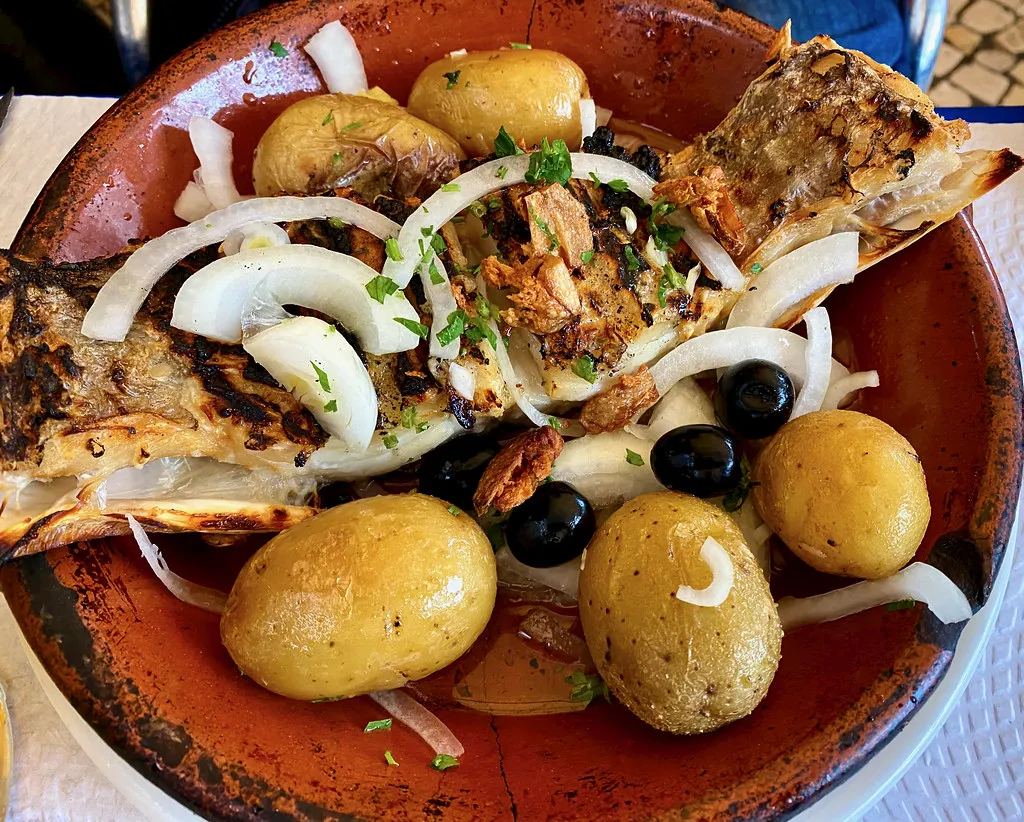
Eating out in Cascais is noticeably cheaper than central Lisbon, particularly at the smaller family-run spots away from the main tourist strip. The local staple is grilled fish — typically bream or sea bass — served simply with olive oil, roast potatoes, and vegetables. Every restaurant within walking distance of the harbor turns over fresh catch daily, and this simplicity is the point. Ordering the dish of the day (prato do dia) is almost always the best-value option at lunch.
A Leitaria on Rua Manuel D'Araújo Viana 77 is a tiny family café with outdoor tables in a quiet square in the old part of town. It serves only the dish of the day alongside pastries and excellent coffee. A glass of local white wine with water has historically come to around €5 for two — proof that off-the-beaten-path spots still offer genuine value. The atmosphere is relaxed and the pace is slow, which suits the old town's rhythm.
One local food worth seeking out is Pão de Alfarroba (carob bread), a dark brown slightly sweet loaf made with a mix of wheat and carob flour. Several bakeries in the market area sell it fresh in the morning. It tastes nothing like the pumpernickel bread it superficially resembles, and it pairs well with local cheese. The organic farmers market at Mercado da Vila (Rua Padre Moisés da Silva 1, Saturday 09:00–14:00) stocks carob bread alongside local herbs, olives, and Madeiran bananas that are smaller, sweeter, and cheaper than supermarket imports. For upscale dining, the 14 Best Restaurants and Local Dining Tips in Cascais guide covers the full spectrum from seafood terraces to contemporary Portuguese tasting menus.
Search Cascais and Lisbon
The regional train from Cais do Sodré station in central Lisbon is the standard way to reach Cascais. Trains run frequently throughout the day and the journey takes 30–40 minutes. Sitting on the left side of the train if you are coming from Lisbon gives you continuous ocean views as the line hugs the coastline past Belém, Estoril, and several smaller towns. Keep your ticket after you board — the barriers at Cascais station require it to exit.
Tickets are priced at around €2.35 each way using a Viva Viagem card, which you can load at any station kiosk. The same card works on Lisbon metro and buses, so it is worth getting one on arrival at the airport or Cais do Sodré. James Bond fans may want to stop one station early at Estoril to see Casino Estoril, which inspired the setting for Ian Fleming's first Bond novel. The casino is still operating and free to enter the public areas.
Driving from Lisbon along the A5 or the coastal N6 takes about the same time as the train on a clear run, but parking in the old town is limited and expensive in summer. The train drops you at the eastern edge of the historic center, exactly where the sightseeing begins, so it is the better option for a day trip. For comparing Cascais with other nearby escapes, the 10 Best Cascais Tourism Attractions: A Complete Travel Guide page covers how the town fits within a broader Lisbon region itinerary.
Cascais, Portugal
Cascais transformed from a quiet fishing village into Portugal's most prestigious coastal resort during the 19th century. King Luís I established his summer court here and the decision triggered a cascade of noble construction — the grand mansions lining the streets today are mostly from that period of intense investment. The roster of European royals who subsequently spent time in Cascais is remarkable: King Edward VIII after his abdication, King Umberto II of Italy, and King Juan Carlos I of Spain all called it home at various points. This concentration of royal patronage left a physical legacy in the carefully preserved architecture that still defines the old town.
The town maintained its prestige into the 20th century partly because of its neutrality during World War II, which made it a refuge for exiled European aristocracy and international intelligence operatives. This layered history is visible in the mix of architectural styles — Manueline stonework alongside Art Nouveau facades and early 20th-century resort hotels. Many of the old palaces have since been converted into museums or boutique hotels, which keeps the buildings active without erasing their original character.
Modern Cascais has grown significantly but has managed the expansion with more care than most comparable coastal towns. New development sits outside the historic perimeter, leaving the old center largely intact. The result is a town that feels authentically lived-in rather than museumified, with local residents shopping and socializing alongside the tourists throughout the year.
a few of my CASCAIS FAVORITES
The organic farmers market at Mercado da Vila runs every Saturday from 09:00 to 14:00. The outdoor section just inside the main entrance is where the organic stalls concentrate — local herbs, blueberries that are noticeably sweeter than anything in a supermarket, Madeiran bananas, and seasonal vegetables fill the tables. A bakery inside the main tent sells sourdough and carob bread. Getting there before 10:00 gives you first pick before the tourist crowd arrives from Lisbon on the late-morning trains.
Santini gelateria near the old town has been serving ice cream to locals and summer visitors for decades — it predates the tourist boom and still operates with the same recipes. The fresh fruit flavors are the reason to visit, particularly fig and passion fruit in season. Expect a short queue in July and August. For a quiet coffee, A Leitaria's outdoor tables in the backstreet square are a reliable spot to sit for an hour without feeling rushed.
The boardwalk between Cascais and Estoril is 3 km of flat oceanfront walking. Starting early in the morning means you have the path mostly to yourself and the light is best for photography. The sea air along this stretch is notably iodine-rich — a characteristic of the exposed Atlantic coast that locals credit with various health benefits. Returning by the same route in the late afternoon, when the sun hits the white facades from the west, gives you an entirely different view of the same walk.
ART PRINTS from portugal
The visual appeal of Cascais goes beyond its beaches and museums. The black-and-white wave-patterned cobblestones on Rua Frederico Arouca, bright bougainvillea draped over whitewashed walls, and the geometric azulejo panels on building facades create a backdrop that consistently draws photographers. The combination of strong Atlantic light and compact historic streets makes almost every corner usable at any hour of the day. Many visitors find that their best photographs come from the residential backstreets rather than the main tourist spots.
The art galleries in the old town frequently stage exhibitions by local Portuguese photographers who work the coastline year-round. These shows provide a useful counterpoint to travel photography — the same waves and cliffs seen over decades rather than in a single afternoon visit. Browsing them is free in most cases and offers a quiet break from the midday sun. For those who want a printed memento, THE PORTUGAL ART PRINT COLLECTION captures the wave pavements and aristocratic architecture of the region in fine-art prints.
Visiting Cascais | Quick Tips
The historic center is significantly flatter than Lisbon or Sintra, which makes it a good choice for visitors who find steep hills difficult. Most major sights sit within a half-kilometer radius of Praça 5 de Outubro. Comfortable walking shoes are still essential because the traditional cobblestones are uneven underfoot, but you will not face the long uphill climbs that characterize Lisbon's historic districts. Always keep your train ticket: you need it to pass through the exit barriers at Cascais station.
Arriving before 10:00 puts you ahead of the day-trip crowd that arrives from Lisbon on mid-morning trains. Most museums open at 10:00, the market stalls are at their fullest, and the main pedestrian streets are quiet enough to photograph without people in every frame. Coastal winds can be brisk even on sunny days in 2026, so a light layer is useful even in summer. Sunscreen is non-negotiable — shade is scarce along the seafront and the cobblestones reflect heat upward.
Off-season travel between October and March brings meaningfully lower accommodation prices. The Farol Hotel, which sits directly on the water with Atlantic-facing rooms, drops rates considerably outside peak summer. The weather stays mild enough for sightseeing and the museums are never crowded. Look for Cascais 2026 deals on dining and accommodation if your travel dates are flexible. Learning a few words of Portuguese — obrigado (thank you), por favor (please), faz favor (excuse me) — makes a genuine difference in how locals respond to you in the smaller family-run spots.
Arrive before 10:00 to beat the day-trip crowd from Lisbon — the main pedestrian streets are quiet enough to photograph without people in every frame and the Saturday farmers market stalls are at their fullest. Coastal winds can be brisk even on sunny days, so bring a light layer.
Frequently Asked Questions
How do I get to Cascais old town from Lisbon?
You can take a direct train from Cais do Sodré station in central Lisbon. The scenic journey takes about 40 minutes and follows the coastline. It is a very affordable and convenient way to visit the cascais old town for a day.
Is Cascais old town walkable for seniors?
Yes, the historic center is much flatter than the steep hills of Lisbon. Most major attractions are located within a short walking distance of each other. The smooth pedestrian streets make it easy to navigate at a comfortable and relaxed pace.
Are the beaches near the old town center free?
All the main beaches in the center are free and open to the public. You can easily walk to Praia da Rainha or Praia da Conceição from the main square. These spots offer clean sand and calm waters for a quick swim during your visit.
What is the best day to visit the old town?
Saturday is an excellent choice if you want to experience the local organic farmers market. However, weekdays are often less crowded and offer a more peaceful atmosphere for sightseeing. Arriving early in the morning helps you beat the midday tourist rush.
The cascais old town offers a unique blend of historical charm and coastal beauty. Whether you enjoy exploring museums or relaxing on the beach, there is something for everyone. Take the time to wander through the narrow streets and discover your own favorite spots. Start planning your visit today to experience this royal retreat on the Portuguese coast. For related Cascais deep-dives, see our Santa Marta Lighthouse and Citadel of Cascais guides.
 Óbidos Castle: Complete Visitor's Guide (2026)June 11, 2026