Santa Marta Lighthouse Cascais: The Complete Visitor Guide
Plan your visit to the Santa Marta Lighthouse in Cascais. Discover museum hours, tower climbing schedules, ticket prices, and the best nearby attractions.
On this page
Santa Marta Lighthouse Cascais
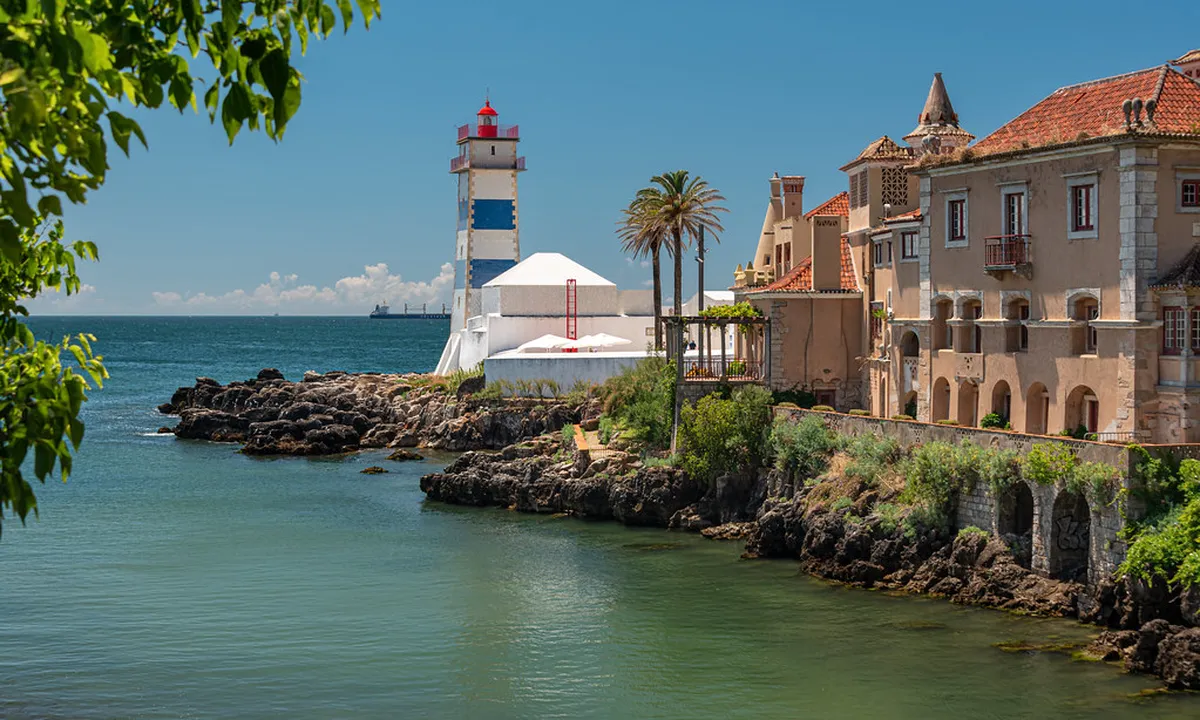
The Santa Marta Lighthouse stands as a striking symbol of the maritime heritage found in the charming town of Cascais. Visitors recognize its distinct blue and white horizontal stripes immediately — the pattern is one of the most photographed facades in Portugal. This historic site offers far more than a photogenic exterior.
The lighthouse sits inside the Bairro dos Museus, Cascais's compact Museum Quarter, where five cultural institutions cluster within a few hundred meters of each other. Climbing the 36-meter tower, studying Fresnel lenses the size of a small car, and walking through the whitewashed rooms where keeper families once lived — all of that fits into a single morning. It is a cornerstone of any Cascais museums and art cultural guide and a natural anchor point for exploring the coast on foot.
The History and Heritage of Santa Marta Lighthouse
The origins of this site date back to the 17th century when it served as a defensive military fort. Construction of the Fort of Santa Marta began around 1640, positioned at the mouth of the Tagus River to protect Cascais and the approaches to Lisbon. Its low-slung cannon batteries can still be walked today and look out directly over the bay.
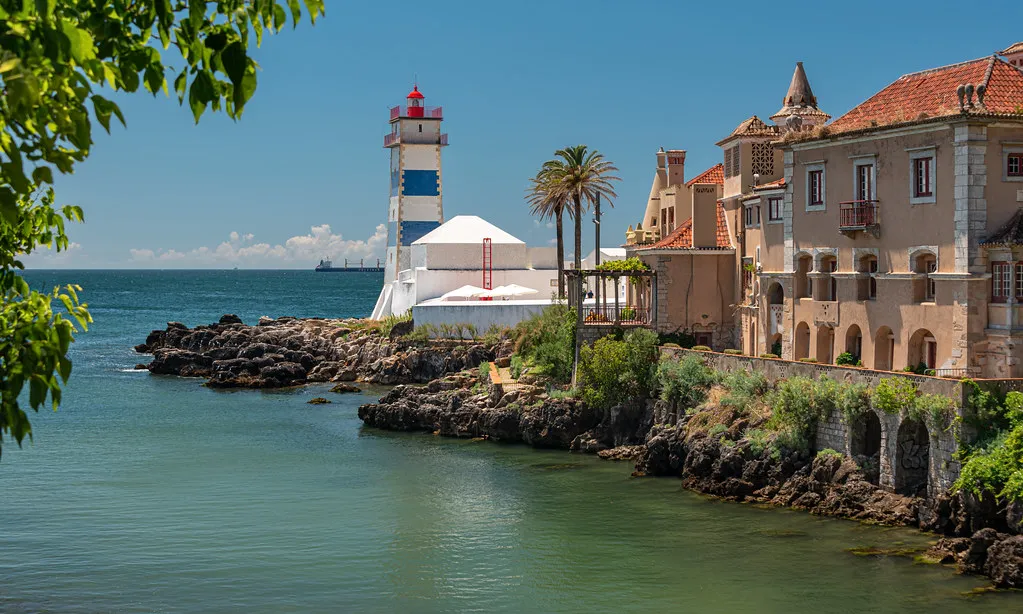
The lighthouse tower was added in 1868 during a period of significant maritime expansion across the Portuguese coast. The tower was later extended in 1938, reaching its current height of 36 meters. Architects chose the blue and white horizontal stripe pattern to make it visible to sailors through Atlantic fog — a practical choice that became an icon.
In 2007, the site underwent a major transformation led by architects Francisco and Manuel Aires de Mateus. They converted the deactivated fort and lighthouse into a modern museum that honors its maritime heritage. The renovation received international praise for its minimalist white additions that sit inside the old stone walls without competing with them.
Today, the Santa Marta Lighthouse remains a property of the Portuguese Navy's Lighthouse Directorate but is managed by the Cascais municipality. The entire collection — every lens, lamp, and instrument — was deposited by the Navy and restored specifically for this museum. That provenance makes the collection authoritative in a way that few regional maritime museums can match.
Inside the Santa Marta Lighthouse Museum
The Farol-Museu de Santa Marta divides its exhibition across two former keeper residences and the fort's battery platforms. Section 1, titled "Portuguese Lighthouses: Technology and History," is where the most impressive hardware lives. Section 2 documents the social history of keeper life along the Portuguese coast through photographs, personal objects, and written accounts.
The standout exhibit is the optical apparatus from the Berlengas Lighthouse — a Fresnel lens assembly that reaches 3.70 meters in height, the tallest on display in Portugal. Most visitors stop in front of it and cannot immediately place its scale; it is roughly the height of a standard room ceiling. Seeing it explains immediately how 19th-century engineers could project a beam across 30 kilometers of open Atlantic with nothing but refined glass and an oil flame.
An auditorium inside the museum screens "Faróis de Portugal: Five Centuries of History," a 15-minute documentary built from lighthouse keeper testimonies. It covers everything from hand-wound clockwork mechanisms that rotated lens carriages to the shift to electric automation. The film is subtitled and accessible for non-Portuguese speakers. It is a highlights of the 10 Best Cascais Tourism Attractions: A Complete Travel Guide for those interested in naval engineering.
After the indoor sections, visitors can walk onto the cannon battery platforms of the old Fort. The platforms face directly over Cascais Bay and provide an unobstructed low-angle view of the water — different in character from the tower panorama but worth the few extra minutes.
Climbing the Tower: Views and Schedule
Reaching the top of the 36-meter tower is the highlight most visitors plan around. The view takes in Cascais Bay, the marina, the Casa de Santa Maria next door, and on clear days the coastline stretching toward the Serra de Sintra. The tower schedule is more restricted than the main museum — and this is where many first-timers are caught out.
Tower access is available Thursday through Saturday only, during the same session windows as the main museum: 10:00 to 13:00 (last admission 12:40) and 14:00 to 18:00 (last admission 17:40). The museum is open Tuesday through Sunday, so visitors arriving on Tuesday, Wednesday, or Sunday will see the exhibitions but not climb. Check the official municipal site before arriving, as high winds or Atlantic storms can close the tower without notice even on qualifying days.
The staircase is narrow and steep. There is no lift. Comfortable shoes with rubber soles are the practical choice; sandals and slick-soled shoes make the iron stairs uncomfortable. The climb is not long — the tower is not vast — but it requires full foot contact on each step.
Tower access is restricted to Thursday, Friday, and Saturday only — visitors arriving on Tuesday, Wednesday, or Sunday can explore the museum exhibitions but will not be able to climb. Check the official municipal site before your trip, as Atlantic storms can close the tower without notice even on qualifying days.
Know Before You Go
A few practical rules are buried in official text and catch visitors off guard. Children under 6 years old are not admitted to the museum at all. The last entry for each session is 15 minutes before the session closes, not the standard closing time — so arriving at 12:45 will find the morning session door already shut. The museum closes fully on Mondays, Easter Sunday, 1 May, Christmas Day, and New Year's Day.
Group visits and school trips require a prior appointment. Call 214 815 328 or email fmsm@cm-cascais.pt to book a slot. Individual visitors do not need a reservation — turn up, buy a ticket at the door, and go in.
The museum ground floor and battery platforms are accessible for visitors with limited mobility. The tower itself has no accessibility accommodation; the internal staircase is narrow and has no lift. If climbing is the specific goal, confirm tower access before booking travel.
Children under 6 years old are not admitted to the museum. The last admission for each session is 15 minutes before it closes — arriving at 12:45 means the morning session door is already shut. The museum is also closed on Mondays, Easter Sunday, 1 May, Christmas Day, and New Year's Day.
Visitor Information: Tickets, Hours, and Location
Planning your logistics in advance helps you make the most of your time in the Museum Quarter. The lighthouse is a 15-minute walk from Cascais train station along the waterfront esplanade. It is easily accessible following the 9 Essential Tips for Traveling from Lisbon to Cascais. Parking is available near the marina if you are arriving by car.
- Standard adult entry: €5.00 — includes the museum, fort platforms, and tower access on qualifying days. Casa de Santa Maria next door is included in this ticket at no extra charge.
- Cascais Museum Quarter 24-hour pass: €13.00 — covers the lighthouse plus the Condes de Castro Guimarães Museum, the Paula Rego Museum, the Biblioteca e Museu Condes de Castro Guimarães, and several other Bairro dos Museus sites. Worth it if you plan to visit more than two museums in a single day.
- Under-18 entry: free.
- Museum hours: Tuesday to Sunday, 10:00–13:00 and 14:00–18:00. Closed Monday and public holidays listed above.
- Tower hours: Thursday to Saturday only, same session times.
- Address: Rua do Farol, Cascais.
The €5 ticket representing two museum visits (lighthouse + Casa de Santa Maria) in a single admission is the clearest value in Cascais. The €13 Museum Quarter pass makes sense only if you have a full afternoon to dedicate to the Bairro dos Museus circuit. For most visitors on a Cascais From Lisbon: The Ultimate 1-Day Itinerary, the standard ticket covers everything they want.
Walking the Museum Quarter from the Lighthouse
The lighthouse is the logical start point for a self-guided walk through the Bairro dos Museus. From Rua do Farol you can cover the main cultural sites in roughly two hours without backtracking.
Begin at the Santa Marta Lighthouse, allow 45–60 minutes including the tower. Immediately adjacent is the Casa de Santa Maria, included in your ticket — a 19th-century aristocratic residence built to embody the ideal Portuguese domestic style, lined with azulejo tile panels and painted wooden ceilings. Continue 200 meters south into Marechal Carmona Park to reach the Condes de Castro Guimarães Museum, housed in a turreted castle overlooking the park's ornamental lake. Its library alone contains rare illuminated manuscripts. For a full exploration of these stops, the Cascais Old Town Travel Guide maps the route in detail.
From the park, a ten-minute walk along the seafront brings you to the Cascais Citadel, now a luxury hotel but open for cultural events and temporary exhibitions. The route passes the marina and offers the best distanced photograph of the lighthouse from the water side. Budget 3–4 hours for the complete circuit at a relaxed pace.
Top Attractions Near Santa Marta Lighthouse
The lighthouse is situated in the densest cluster of cultural sites in Cascais. Right next door stands the Casa de Santa Maria, a romantic aristocratic residence built for the Count of Castro Guimarães in a style intended to represent the perfect Portuguese house. The azulejo tile panels inside are exceptional and many visitors spend longer here than at the lighthouse itself.
Just a few steps south lies the Condes de Castro Guimarães Museum inside Marechal Carmona Park. The turreted castle houses a vast library, rare paintings, and archaeological finds from the fort excavation that produced the cannonball now displayed in the lighthouse museum. It is a vital stop for anyone following a Cascais 1-day itinerary through the historic district.
Directly below the lighthouse, the small Praia de Santa Marta sits in a sheltered cove. The beach is compact and calmer than the open beaches to the west. Its crystal-clear water and proximity to the museum make it a natural stop for a post-visit swim. You can find more swimming options nearby in the Cascais Beaches: The Ultimate Guide to the Portuguese Riviera.
Photography Tips for the Blue and White Tower
The blue and white horizontal stripes photograph best from a distance rather than directly below. Walk to the footbridge connecting the marina promenade to the museum entrance — from there, the tower appears framed between the stone fort wall and the Atlantic. This is the angle used in most postcard images and it works because you catch all 36 meters of tower height without distortion.
Golden hour arrives late in Cascais, typically after 19:30 in summer. The low Atlantic sun hits the white tiles and turns them a warm ochre that contrasts sharply with the blue stripes. Late afternoon is also when the crowds thin and the waterfront esplanade becomes quieter. Morning light from the east is flatter but better for photographing the fort's stone texture without harsh shadow.
From the tower platform itself, the composition challenge is the opposite — you are looking down onto the bay and marina. A wide field of view captures the curve of the bay and the lighthouse itself reflected in the water below the platform railing. On the descent, pause at the halfway landing, where a narrow arched window frames a vertical slice of the Atlantic.
Is the Santa Marta Lighthouse Museum Worth Visiting?
At €5 for two museums, the price is not the question. The question is whether maritime technology and military history are interests you want to spend 60–90 minutes on. If they are, this is one of the best-curated small museums on the Portuguese coast. The Berlengas Fresnel lens alone is worth the entry if you have any interest in pre-electric engineering.
If you are staying in the area, the 10 Best Areas: Where to Stay in Cascais covers accommodation close to the Museum Quarter. Being within walking distance allows you to visit at opening time on a Thursday or Friday, which is the only way to guarantee both the museum and the tower in a single morning visit without competing with afternoon tour groups.
Families with children aged 6 and above will find the documentary and the Fresnel lens exhibits genuinely engaging. The tower climb adds physical excitement for older children. The museum overall is compact enough to hold attention without fatigue — a single hour covers it thoroughly. It remains a top recommendation for anyone wanting to understand the authentic maritime culture that shaped this stretch of the Portuguese coast.
Frequently Asked Questions
Is the Santa Marta Lighthouse tower open every day?
No, the tower has a very restricted schedule. You can currently only climb to the top from Thursday through Saturday during specific afternoon time slots. Always check the official municipal site for weather-related closures before your visit.
How much does it cost to enter the Santa Marta Lighthouse Museum?
A standard adult ticket costs €5.00 for the museum and tower access. You can also buy a combo ticket for €6.00 that includes the Casa de Santa Maria next door. Children under 18 can enter the museum for free.
Can you climb to the top of the lighthouse in Cascais?
Yes, visitors can climb the tower during designated hours on Thursdays, Fridays, and Saturdays. The climb involves steep, narrow stairs and provides panoramic views of the Atlantic. It is often a top pick in a 10 Best Cascais Tourism Attractions: A Complete Travel Guide list.
What is the best time of day to photograph the lighthouse?
The best time for photography is during the golden hour in the late afternoon. The low sun highlights the blue and white stripes against the water. Morning light is also excellent for capturing the lighthouse from the marina side.
Is the Santa Marta Lighthouse included in the Cascais Museum pass?
Yes, the lighthouse is a key part of the Bairro dos Museus network. You can use the 24-hour Museum Quarter pass, which costs €13.00, to enter this and several other local museums. This is a great way to save money if you plan to see multiple sites.
The Santa Marta Lighthouse Cascais offers a perfect blend of history, science, and breathtaking coastal scenery. Whether you are climbing the tower or studying the Berlengas Fresnel lens, the experience is genuinely memorable and anchors a full day in the Museum Quarter. It stands as a testament to the enduring maritime spirit of this beautiful Portuguese town.
Plan your visit for a Thursday or Friday morning to guarantee both museum access and the tower climb in the same session. Pair it with the Casa de Santa Maria next door, a walk through Marechal Carmona Park, and a swim at Praia de Santa Marta below — and you have a half-day that covers everything this corner of Cascais has to offer. Use our Cascais tourism attractions hub to plan the rest of your trip. For related Cascais deep-dives, see our Cascais Old Town walking route and Citadel of Cascais guides.
 Óbidos Castle: Complete Visitor's Guide (2026)June 11, 2026