10 Best Sao Miguel Azores Things to Do (2025 Guide)
Plan your trip with the 10 best sao miguel azores things to do. Includes expert tips on hot springs, volcanic lakes, and local transport for 2025.
On this page
10 Best Things to Do in Sao Miguel Azores
Sao Miguel is the largest island in the Azores and also the most varied. You get volcanic crater lakes, steaming thermal valleys, a working tea plantation, black-sand beaches, and one of Portugal's most charming small capitals — all within a two-hour drive of each other. The 10 Essential Tips for the Best Time to Visit the Azores is between June and September for the clearest skies, though late May and October offer fewer crowds and still-comfortable temperatures.
This guide covers the top things to do in Sao Miguel for 2026, organized by attraction with practical details on cost, timing, and access. Whether you have four days or seven, the structure below groups well into day trips from a single base in Ponta Delgada.
One essential note before you go: Azorean weather changes fast. A summit that is clear at 09:00 can be buried in fog by 10:30. Check the SpotAzores webcam network before driving to any high-altitude viewpoint, and keep your itinerary flexible enough to swap days around a clear forecast.
Explore Ponta Delgada
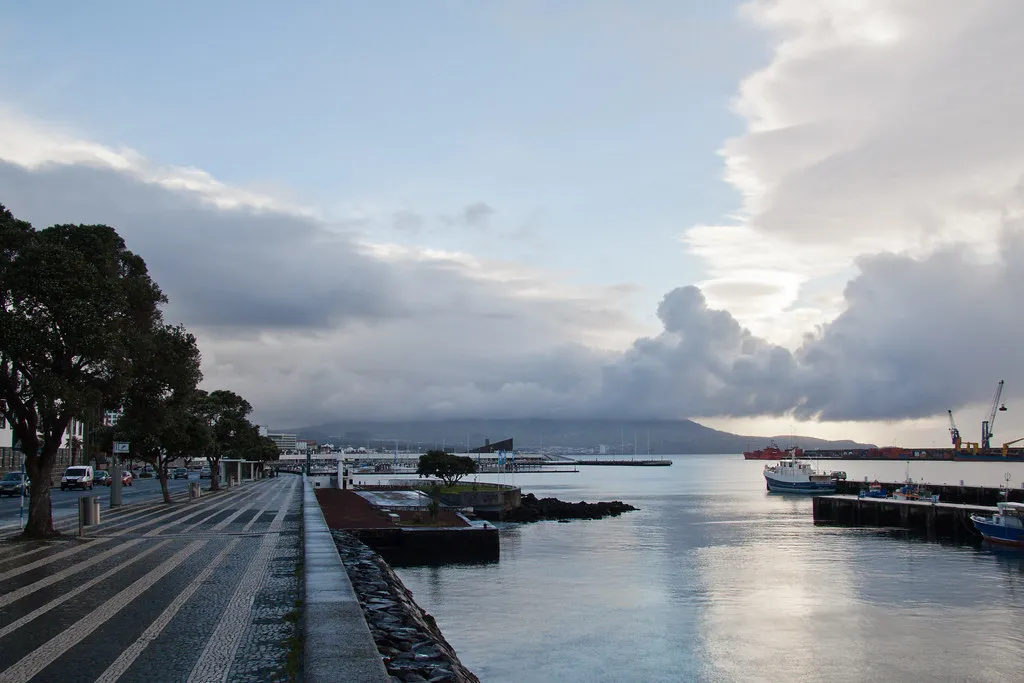
Most flights arrive at Ponta Delgada airport, and the capital repays a half-day of genuine attention rather than a quick pass-through. The old city is built on a grid of black basalt and white limestone paving — the same material that covers the famous Portas da Cidade (City Gates) on the seafront promenade. Walking from the gates to the Igreja Matriz de São Sebastião and then inland to the Mercado da Graça takes about two hours at a relaxed pace.
The Mercado da Graça is the best single stop for local food: queijadas da Vila (soft curd pastries), Azorean cheese, local honey, and the small dense pineapples grown in greenhouses around the island. The market opens at 07:00 and winds down by 13:00 on weekdays. Arrive before 10:00 for the best selection and to beat the tour-group coaches.
The waterfront promenade — locals call it "a Avenida" — stretches east from the city gates along the marina. It is a good evening walk with several cafes and a clear view over the harbour towards the open Atlantic. Ponta Delgada also holds the island's widest range of hotels, which makes it the most practical base for exploring the entire island. Most key attractions are within a 40–55 minute drive.
Drive or Hike Around the Sete Cidades Lakes
Sete Cidades is the image most people associate with the Azores: twin volcanic lakes — one reflecting deep blue, one vivid green — sitting inside a caldera formed roughly 22,000 years ago. The Visit Azores tourism board maintains updated parking and access information. The Vista do Rei viewpoint gives the most famous angle. Parking is free and open 24 hours, but the small car park fills by 09:30 in summer; a larger overflow lot sits about 1 km past the viewpoint.
The Miradouro da Boca do Inferno delivers a more dramatic panorama than Vista do Rei. You cannot drive all the way to it: park at the Lagoa do Canário lot and walk 10–12 minutes along a dirt path, then climb a short flight of steps. The gate closes to cars at 19:00 in summer; after that you must walk about 15 minutes from the main road. The path is muddy after rain, so wear shoes with grip. Entrance is free. Plan at least 90 minutes here — the light changes quickly and the 360-degree view over the caldera, Lagoa Rasa, and Lagoa Santiago is worth lingering.
If you have a full day, descend to the lakeshore village of Sete Cidades, which feels largely unchanged since the 1950s. Kayak and SUP rentals are available at the water's edge. The Cumeeiras dirt track around the rim offers several additional angles and is the same road used in the World Rally Championship. Check the SpotAzores webcam before driving up — cloud cover can completely erase the view, and this is the one day in your itinerary most worth rescheduling if the forecast is poor.
Catch the Sunset at Miradouro da Boca do Inferno
The Boca do Inferno viewpoint is worth a second mention on its own because the timing of your visit matters as much as getting there at all. Sunrise and sunset are when the lakes below shift colour most dramatically, and golden hour fills the caldera with warm amber light that midday photography cannot replicate. Arrive 45 minutes before sunset and stay 20 minutes after to catch the full transition. The walk from the Lagoa do Canário car park takes 12 minutes, so allow 30 minutes of buffer in case the lot is full.
In peak season (July–August) the viewpoint gets crowded by late afternoon. Coming at first light is the best way to have it largely to yourself. The walk is the same either way, and the early morning fog that clings to the crater actually adds atmosphere rather than ruining the view — the lakes appear and disappear through the mist as conditions shift. Entrance remains free year-round.
Lagoa do Fogo and Caldeira Velha Hot Springs
Lagoa do Fogo (Fire Lake) sits high on the volcanic ridge between the north and south coasts and is a protected nature reserve. Because of its elevation, clear days here are genuinely rare — do not skip it if you get one. From June through September, private cars are barred between 09:00 and 19:00; you must park below and take a shuttle bus for €5 each way. Outside those hours, or in the shoulder season, you can drive to the rim viewpoint. Swimming in the lake is forbidden, but a steep 30-minute trail descends to the beach if you want to get close to the water.
On the way back toward Ribeira Grande, stop at Caldeira Velha Environmental Interpretation Centre. This is one of the most atmospheric stops on the island: a jungle-like setting on the slopes of the Fogo volcano where two geothermal pools sit surrounded by dense ferns and dripping foliage. The upper pool has a small waterfall and runs cool; the two lower pools opposite the interpretation centre run between 35°C and 40°C and act like a natural jacuzzi. Entry to just walk the grounds costs €3; swimming access costs €10 per adult and requires booking a timed slot online in advance. Plan at least 90 minutes. Open daily from 09:30 to 18:00.
Practical warning: the mineral-rich water at Caldeira Velha will permanently stain light-coloured swimwear orange. Wear an old dark suit, and if you have recently dyed your hair, skip the pools entirely — the iron content reacts with hair dye.
Caldeira Velha's iron-rich thermal water will permanently stain light-coloured swimwear orange. Wear an old dark suit, and book your timed swimming slot online in advance — walk-up entry for the pools is not guaranteed in peak season.
Furnas Valley: Cozido, Caldeiras, and Thermal Baths
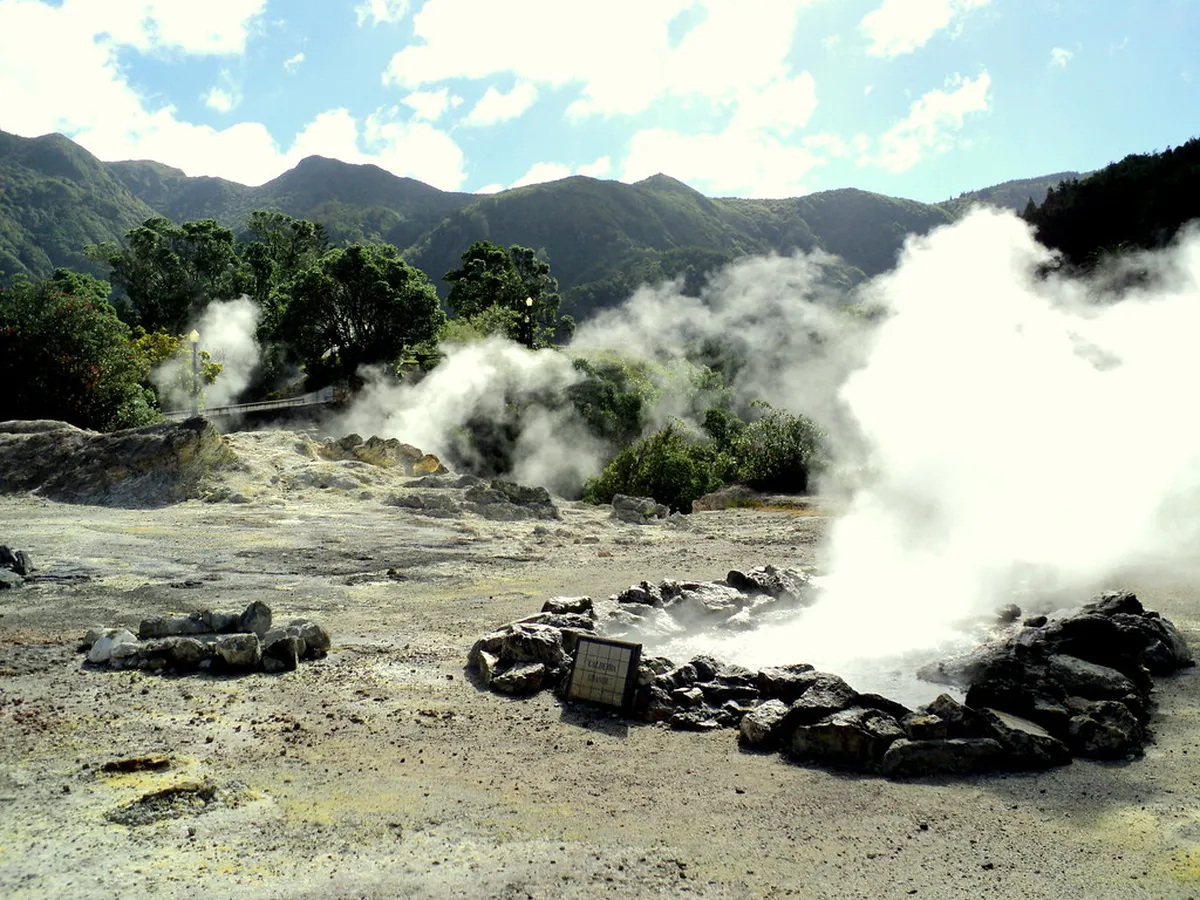
Furnas is the most volcanically alive town in the Azores. The Caldeiras — a field of mud pots, steam vents, and boiling springs on the eastern shore of Lagoa das Furnas — is where local restaurants bury their cooking pots each morning. Cozido das Furnas is the dish: a slow-cooked stew of beef, pork, chicken, blood sausage, and local vegetables like taro, cabbage, and sweet potato, left to steam underground for six to seven hours via geothermal heat. The result is soft, smoky, and heavy. Tony's and Caldeiras & Vulcões in the village are the most reliable spots; the Terra Nostra Garden Hotel restaurant does a more refined version. Lunch service typically runs from 12:00 to 15:00 — arrive early because the pots contain only what was buried that morning, and once they're gone, they're gone.
Terra Nostra Botanical Park is the other anchor of a Furnas day. The park holds thousands of rare plant species collected over two centuries, and its central feature is a large iron-rich geothermal pool tinted deep amber-orange. Entry to the park and pool costs €10 for adults, open daily from 10:00 to 18:00. The pool is open to the public during the day; hotel guests at Terra Nostra Garden Hotel have 24-hour access.
Poça da Dona Beija, a set of smaller natural thermal pools on the edge of the village, is the best evening option. Entry costs €8 and the pools stay open until 23:00 in summer (21:00 off-season) — later than any other thermal facility on the island. It is significantly less polished than Terra Nostra but more social, with locals mixing alongside tourists under a canopy of trees. The late closing time makes it the ideal way to end a Furnas day after dinner. In high season, queues form at the ticket booth after 20:00; buying tickets online in advance saves time.
Miradouro do Pico do Ferro: Seeing the Furnas Valley from Above
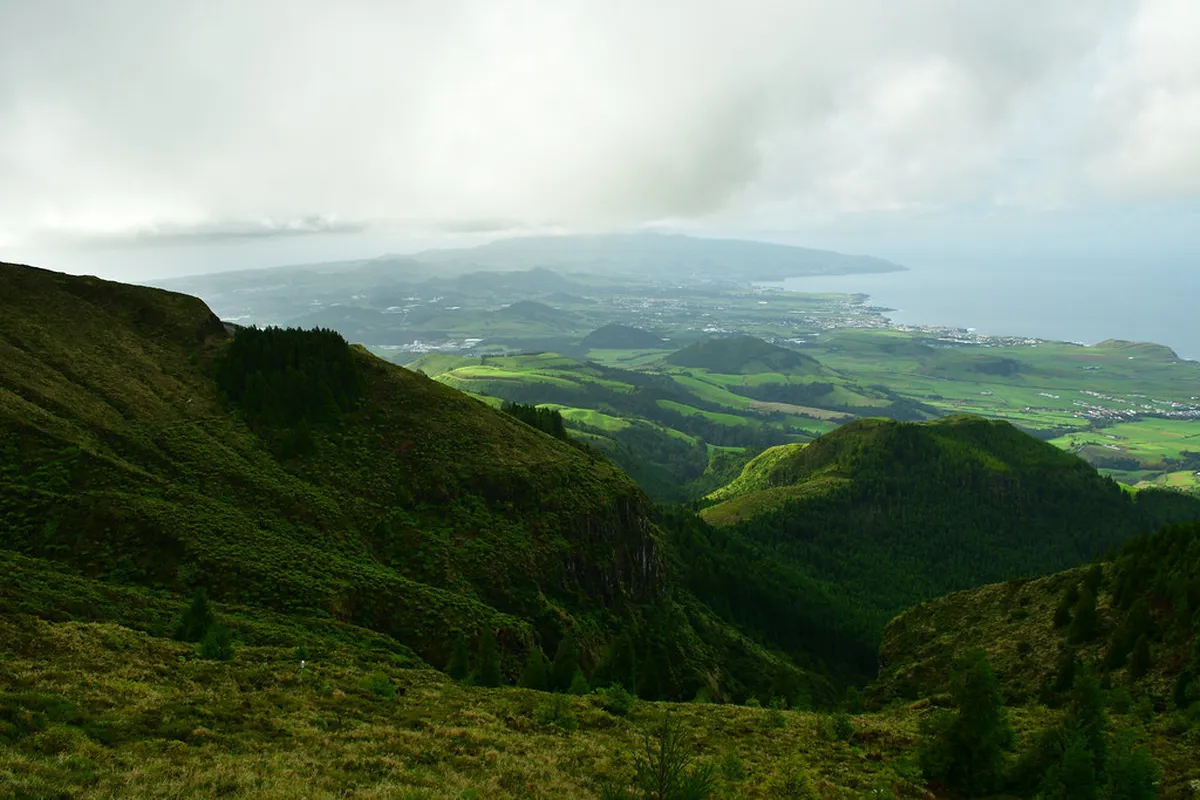
Most visitors spend their entire Furnas day at ground level among the caldeiras and spa pools. Driving up to Miradouro do Pico do Ferro first — it takes 15 minutes from the village — gives you the context to appreciate the scale of what you are looking at. From the viewpoint at roughly 600 m above sea level, Lagoa das Furnas spreads across the caldera floor below you, the steam columns from the fumaroles visible as thin white threads rising from the eastern shoreline.
The viewpoint itself is free, with a small parking area, and is rarely crowded. Allow 20 minutes here before descending into the valley. Early morning is best for clean visibility before Atlantic mist settles over the ridge. It pairs naturally with a Furnas itinerary: drive up first, take in the overview, then spend the rest of the day at the lake shore, botanical park, caldeiras, and thermal baths below.
Head Up the Ermida de Nossa Senhora da Paz
This whitewashed hilltop chapel above Vila Franca do Campo is one of the most visually striking spots on the southern coast. The approach climbs 100 azulejo-tiled steps — each panel depicting scenes from the life of Christ — to a small terrace with sweeping views over the village, the volcanic Ilhéu de Vila Franca sitting offshore, and the Atlantic beyond. Entry is free; the chapel is open daily from 08:00 to 19:00.
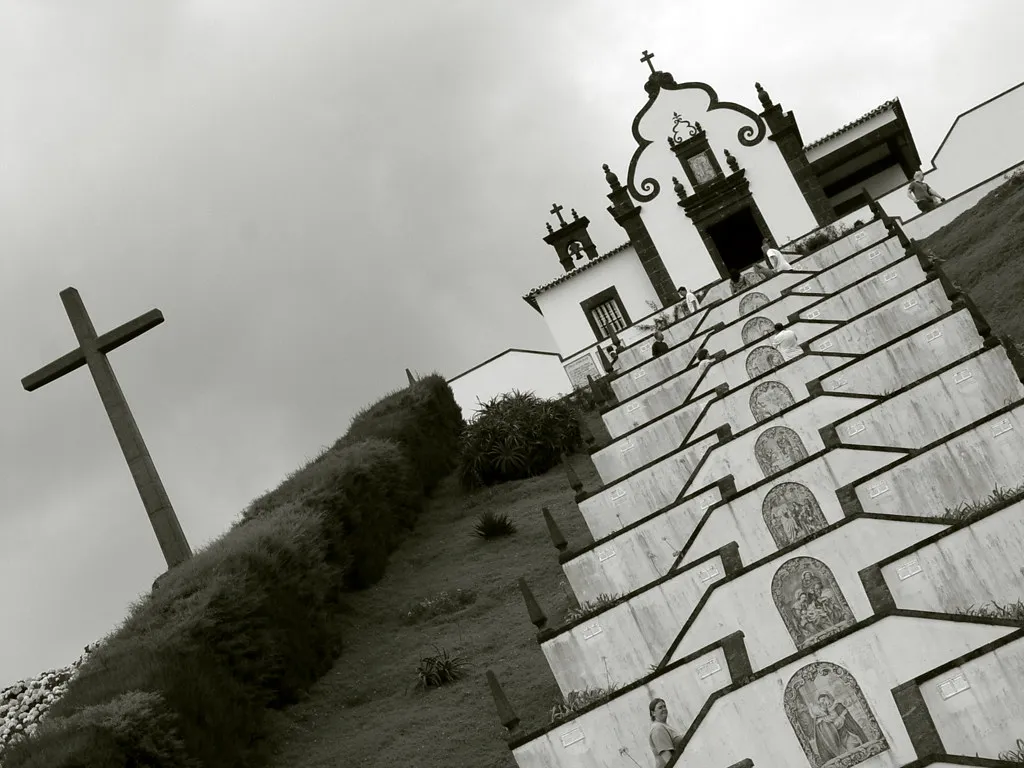
The view from the terrace is the main reason to come. The circular volcanic islet visible offshore is the Vila Franca do Campo Islet, a protected nature reserve where visitor numbers are capped at 400 per day. From June through September, small ferries run from the marina every hour from 10:00 to 18:00 (about €10 each way). The interior lagoon of the islet is one of the clearest swimming spots on the island — the volcanic crater walls block the Atlantic swell completely, leaving flat turquoise water. Book ferry tickets online at least two days in advance in July and August.
The Ermida and the Ilhéu pair naturally into a half-day on the south coast. Drive up to the chapel first for the elevated perspective, then descend to the marina for the boat.
Nip Some Tea at the Only Tea Plantation in Europe
Gorreana, on the north coast near Ribeira Grande, is the oldest and now only operating tea plantation in Europe. The estate has been producing tea continuously since 1883, and walking through the terraced emerald fields above the sea coastline is one of the more quietly beautiful experiences on the island. Entry is free; the factory operates Monday through Friday from 08:00 to 18:00, with shorter weekend hours. You can taste the black and green teas for free in the small visitor room, and the gift shop stocks blends that are not exported anywhere.
The north coast also holds a lesser-visited pineapple greenhouse at Ananas Arruda, about 10 minutes east of Ponta Delgada. Azorean pineapples are grown in glass greenhouses using a slow 18–22 month cycle — nearly three times longer than standard commercial pineapples. The result is a fruit with dramatically more sweetness and no acidic aftertaste. They are not exported, so the only way to taste them is here. The greenhouse is open daily, entry is free, and the on-site shop sells whole fruits and preserves. Visit in the morning before coach tours arrive.
Whale Watching from Ponta Delgada
The Azores sits on one of the deepest ocean trenches in the Atlantic, directly below major cetacean migration routes. Sao Miguel is one of the best year-round whale-watching locations in Europe, with sperm whales resident in the deep water just offshore. The peak season for multiple species — including blue, fin, and sei whales in addition to sperm whales — runs from April through June. Tours depart from the Ponta Delgada marina, last around three hours, and cost approximately €65 per person. Most operators maintain high sea-sighting rates (above 90%) and will issue a free second trip if cetaceans are not spotted.
Book at least three days ahead in high season; departures sell out quickly in July and August. Choose an operator that uses a vigia (land-based whale spotter) to track pods before departure — this significantly increases sighting quality. Dolphin interaction tours where swimmers enter the water with dolphins are not recommended; several leading operators have stopped offering them due to growing evidence of animal stress. Stick to observation-only tours.
Sao Miguel's whale-watching operators typically guarantee sightings — if no cetaceans appear, most offer a free second trip. Look for operators that use a land-based vigia (spotter) to locate pods before the boat even leaves the marina, which significantly improves sighting quality.
Cascata do Salto do Cabrito: Chasing Waterfalls in the Azores
Salto do Cabrito is a waterfall in the central mountains near a small hydroelectric plant, reached by a short walking trail through lush forest. The site is free to access and uncrowded even in peak season, which makes it a genuine alternative to the busier thermal sites. The walk follows metal catwalks above the river gorge before opening up to the falls and a cold plunge pool. The surrounding canyon is also one of the island's most popular canyoning corridors — guided full-day canyoning trips that pass through this area cost around €65–€80 per person and are bookable from Ponta Delgada.
Combine this with Ribeira dos Caldeirões Natural Park on the northeast coast: a series of small waterfalls and old water mills in a park setting that works as a quiet lunch stop. Both sites suit visitors who want to experience Sao Miguel's interior without committing to a full volcanic hike.
Mosteiros Beach at Sunset
Mosteiros on the northwest coast is the best spot on the island for a classic Azores sunset. Dramatic basalt sea stacks rise directly from the water, and in clear conditions the sun drops into the Atlantic between the rocks. The black-lava beach is free, open all day, and has a small cluster of cafes serving cold drinks, grilled fish, and lapas (limpets with lemon butter). Arrive 60 minutes before sunset to secure parking in the village — the small car park fills fast in summer. The beach itself stays light until 21:00 in July.
Mosteiros also marks the end of the Ponta da Ferraria natural geothermal pool, about 10 minutes further south. At Ferraria, geothermal springs heat the ocean water in a cove surrounded by lava cliffs. The experience depends entirely on tide timing: at low tide the water burns uncomfortably hot, at high tide you lose the warmth entirely. Mid-tide — check a local tide table before driving — is the window. The access is over rough rocks; bring water shoes. Entry to the ocean cove is free.
Suggested 4-Day Itinerary for Sao Miguel
The most practical way to structure four days in Sao Miguel is to split the island by geography. This minimises backtracking on the winding mountain roads and groups the best webcam-dependent sites on their most flexible days.
- Day 1 — West (Sete Cidades): Plan this day around the clearest forecast of your trip. Vista do Rei viewpoint, Boca do Inferno hike, descent to the Sete Cidades lakeshore, Ferraria geothermal cove at mid-tide, Mosteiros sunset. Drive total: about 80 km.
- Day 2 — Center and Capital (Ponta Delgada + Lagoa do Fogo): Morning in Ponta Delgada (city gates, Mercado da Graça, waterfront walk), afternoon whale-watching tour from the marina, late afternoon shuttle to Lagoa do Fogo and stop at Caldeira Velha on the way back. Drive total: about 60 km.
- Day 3 — East (Furnas + Nordeste): Pico do Ferro viewpoint, Furnas caldeiras and Cozido das Furnas lunch, Terra Nostra Botanical Park, drive to Nordeste viewpoints (Ponta do Sossego), Poça da Dona Beija in the evening. Drive total: about 100 km.
- Day 4 — South and North Coasts (Vila Franca + Gorreana): Ermida de Nossa Senhora da Paz, Vila Franca do Campo Islet boat trip, Ananas Arruda pineapple plantation, Gorreana tea plantation, Ribeira Grande town for dinner. Drive total: about 90 km.
Four days is the minimum. If you have a fifth day, use it to revisit the viewpoints that were fogged out, do a canyoning or diving excursion, or take a day trip by ferry to the island of Flores or São Jorge. The island never fully exhausts itself on a single visit.
How to Get Around Sao Miguel
Renting a car is not optional if you want to see the main attractions. Public buses exist but are timed around commuter routes to Ponta Delgada, not tourist sites. No bus reaches the Sete Cidades viewpoints, Lagoa do Fogo, Caldeira Velha, or Mosteiros Beach on a practical schedule. Micauto and Wayzor are well-regarded local rental agencies. Prices in 2026 run from about €35–€50 per day for a small manual car. Book months ahead for July and August — the island genuinely runs out of available vehicles at peak season, and last-minute airport desks have almost nothing left.
The roads to the volcanic viewpoints are narrow and often steep. The descent to Ponta da Ferraria in particular is extremely sinuous; drive slowly in manual gear and avoid it if you are not comfortable with steep gradients. International driving licences are accepted; speed limits are clearly posted, typically 50 km/h in villages and 90 km/h on the main EN1 coastal road.
Between islands, SATA Air Açores operates turboprop flights connecting Sao Miguel to the other eight islands. Flights to São Jorge or Faial take about 30–40 minutes and cost approximately €60–€100 each way. Inter-island ferries via Atlanticoline are possible in summer but most routes take six to twelve hours; they work for cargo and for travelers with seasick-proof constitutions but are impractical as day trips. Check the how to get to Azores guide for full flight connections from mainland Europe and North America.
Where to Stay in São Miguel
Ponta Delgada is the most flexible base: widest hotel range, easiest airport access (10 minutes), and roughly central on the island for driving in any direction. Budget guesthouses start at about €60–€80 per night; mid-range options cluster around €100–€150. The city has been quietly upgrading its hospitality since 2022, and new restaurants and a revived waterfront have made it a more interesting base than it was a decade ago.
Furnas makes sense if you plan to spend two or more days in the east. Staying here puts you within walking distance of the thermal baths — including Poça da Dona Beija's late-night opening — and inside the volcanic valley itself, which has a different, quieter atmosphere than the capital. Terra Nostra Garden Hotel is the most famous option and gives 24-hour pool access to guests; smaller guesthouses in the village offer lower prices and the same proximity to the caldeiras. The Furnas hot springs guide covers the pool options in more detail.
Ribeira Grande on the north coast is the best base for surfers: it sits directly above the best surf breaks and offers quick access to Gorreana tea plantation and Caldeira Velha. Hotels here are generally cheaper than Ponta Delgada. The main drawback is the longer drive to the western attractions at Sete Cidades (about 40 minutes) and Furnas (about 50 minutes). Splitting accommodation between two bases — say, Furnas for the first two nights and Ponta Delgada for the last two — is a solid strategy if you want to feel different parts of the island properly.
Frequently Asked Questions
How many days do you need in Sao Miguel?
You should plan for at least four to five days to see the main highlights. This allows time for weather delays and relaxed soaking in the various thermal pools.
Do I need a car in Sao Miguel?
Renting a car is the most efficient way to explore the island's remote viewpoints and trailheads. Public transport exists but it is infrequent and does not reach many natural sites.
What is the best month to visit?
July and August offer the best weather but are the most crowded months. June and September provide a great balance of pleasant temperatures and fewer tourists at the main sites.
Sao Miguel is a destination that rewards those who embrace the unpredictable Atlantic weather. From the steaming caldeiras of Furnas to the blue depths of Sete Cidades, the island is unforgettable. I hope this guide to sao miguel azores things to do helps you plan a perfect trip in 2026.
Remember to pack a waterproof jacket and a sense of adventure for your island exploration. The Azores remain one of the last truly wild frontiers in Europe for nature lovers to enjoy.
Use our Azores tourist attractions hub to plan the rest of your trip.