10 Best Areas: Where to Stay in Cascais (2026)
Discover where to stay in Cascais for 2026. From the historic center to Guincho Beach, we review the best neighborhoods, luxury hotels, and boutique stays.
On this page
10 Best Areas and Stays: Where to Stay in Cascais
Cascais splits into distinct zones that feel nothing alike once you arrive. The cobbled historic center buzzes until midnight with restaurants and bars; the cliff-edge streets near Farol Hotel are almost silent by 21:00; Guincho Beach is more windswept headland than beach town. According to Visit Portugal's official Cascais guide, the neighborhoods evolved from a fishing village into a cosmopolitan destination preserving aristocratic character. Getting the neighborhood right before you book determines whether you enjoy the trip or spend it in taxis.
This guide covers the four key areas where accommodation clusters, then breaks down the best stay by type — luxury, boutique, budget guesthouse, and apartment — so you can match your style and budget to the right part of town. Prices quoted are 2026 averages for a standard double in peak summer (July–August). Expect 25–40% lower rates in May, June, and September.
| Area | Best For | Peak Rate (2026) | Car Needed? | Free Parking |
|---|---|---|---|---|
| Historic Center | First-timers, no-car travellers | €100–€280/night | No | No |
| Beachfront & Marina | Luxury couples & families | €250–€500/night | Optional | Yes (select hotels) |
| Boca do Inferno | Dramatic views, romantic stays | €200–€420/night | Optional | Yes (Pestana Cidadela) |
| Guincho Beach | Surfers, nature seekers | €400+/night | Yes | Yes |
| Estoril | Calmer base, digital nomads | €130–€200/night | No | Varies |
The Historic Center: Best for First-Timers
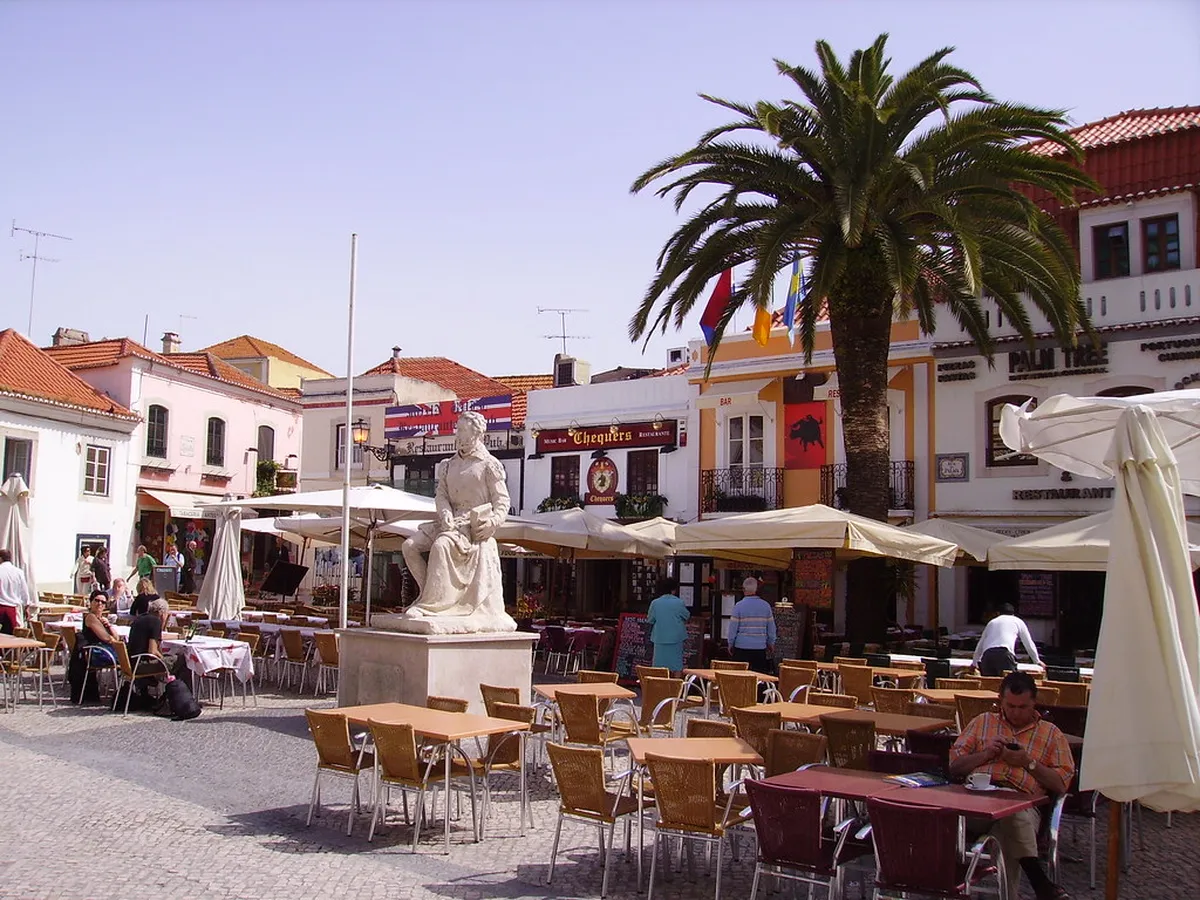
The pedestrianized core around Largo Luís de Camões and Rua Frederico Arouca puts every main attraction within a fifteen-minute walk. Praia da Ribeira is a three-minute stroll; the old town walking route starts at your doorstep; and the train station — your link to Lisbon and Sintra — is ten minutes on foot. This is the right choice if it is your first visit to Cascais or if you are traveling without a car.

Two hotels define this zone. Da Pergola (Av. Valbom 13) occupies a restored Portuguese manor house with a garden courtyard and rates averaging €220–€280 per night including breakfast. The garden terrace is one of the quieter spots in town despite its central address. Hotel Baia (Passeio D. Luís 1) sits directly across from Praia da Ribeira and offers a rooftop pool with bay views at a much softer price — roughly €100–€140 per night — making it one of the few mid-range options with a genuine waterfront position. Both have limited or no private parking, so arrive by train if possible.
Noise is a real consideration in summer. Streets directly off Largo Luís de Camões carry nightlife sound until 02:00 on weekends. Ask for a rear-facing room or install earplugs as a precaution. The depth of the old town streets means that moving one block back from the main square drops ambient noise significantly.
If you are staying in the historic center, always request a rear-facing room when booking — streets off Largo Luís de Camões see nightlife noise until 02:00 on weekend nights, but moving just one block back drops ambient sound significantly.
Beachfront and Marina: Best for Luxury Stays
The seafront strip running from the marina east toward Praia da Rainha holds Cascais's highest-concentration of five-star properties. The Albatroz Hotel (Rua Frederico Arouca 100) is the most established name here: a cliff-edge manor with a sea-facing pool, two wings blending historic and contemporary rooms, and a panoramic restaurant that sometimes hosts wine tastings. Rates run €350–€500 per night. The hotel provides free parking — an important detail for road-trippers, since street parking near the waterfront is almost impossible in July and August.
Villa Cascais (Rua Fernandes Thomás 1) occupies a 19th-century aristocratic residence right on the bay. The ground-floor restaurant, Reserva da Villa, has bay views and a loyal local following. Room 360 — the hotel's signature suite — has three balconies over the water. Free parking is included, which again matters if you are driving the Lisbon coast circuit. Rates sit at €250–€320 per night. Both hotels are walking distance from the marina and the main day-trip routes.
The marina itself lines the eastern edge of the center. Properties here cater to yachting visitors and offer modern amenities over historic character. If you want a resort-style pool setup and a polished reception experience without the age of the manor hotels, this strip delivers — but it can feel anonymous compared to the old town charm a few streets inland.
Boca do Inferno: Best for Dramatic Ocean Views
Walking fifteen minutes west from the center along the coastal path brings you to the cliff zone that hosts Farol Hotel and the Pestana Cidadela Cascais. The coast here is rockier and quieter — no sandy beach directly below, but the cliff-top views over the Atlantic are exceptional, particularly at sunset. This area suits couples who want atmosphere over convenience and families who want space to spread out.
Farol Hotel (Avenida Rei Humberto II de Itália 7) is a design-forward boutique five-star built into a 19th-century lighthouse keeper's mansion. The saltwater pool sits at cliff edge, the Sushi Design restaurant is genuinely good, and the eclectic room interiors feel more like art installations than standard hotel spaces. Rates average €300–€420 per night. Cycles are available at reception for guests who want to explore the coastal path without a car.
Pestana Cidadela Cascais (Av. Manuel Júlio Carvalho e Costa 115) operates inside the 16th-century Cascais citadel by the marina, just before the cliff zone begins. Two outdoor pools face the sea, rooms include small kitchenettes, and children under 13 stay free — making it the most practical luxury option for families. It has ample free parking on site, which no other five-star property in central Cascais can match. Rates run €200–€380 per night depending on room category and season.
Guincho Beach: Best for Surfers and Nature
Guincho sits five kilometers northwest of the town center, inside the Sintra-Cascais Natural Park. The landscape is raw Atlantic coastline: wide sand, marram grass dunes, and almost nothing built. A Michelin-starred restaurant, the Fortaleza do Guincho, occupies a former 17th-century fortress on the headland. This is the most scenic part of the coast but also the most logistically demanding — you need either a rental car or a budget for regular Ubers to reach the town center, the train station, or any supermarket.
The Guincho wind factor is not an afterthought. This corner of the Sintra coast consistently ranks among the windiest spots in continental Europe during summer. Kite-surfers and windsurfers choose Guincho precisely for the thermal afternoon wind that can reach 40–50 km/h on any given day between June and September. For sunbathers it is a different calculation: the same wind that keeps surfers busy also blows fine sand horizontally across the beach by early afternoon. If you plan to lie on a towel and read, Cascais town beaches are better suited to your needs.
Accommodation near Guincho is limited to a handful of nature retreats and the Fortaleza itself, where rates exceed €400 per night. The tradeoff is complete quiet, dramatic light, and the feeling of being on a wild Atlantic edge rather than a resort coast. If you are here for surfing, check that your rental car is covered for the gravel access road to the beach car park — not all standard hire policies include it.
Cascais vs. Estoril: Which Base Suits You
Estoril begins where the Cascais municipal boundary ends, connected by the flat coastal promenade known as the Paredão — a twenty-minute walk between the two town centers. As Wikipedia documents, Estoril became part of this coastal identity when King Luís I established the Portuguese royal summer residence here, attracting nobility throughout the 19th century. Estoril is quieter, more residential, and anchored by its famous casino and the wide sands of Tamariz Beach. It is not a backup option for travelers who could not find a room in Cascais; it is a genuinely different atmosphere that suits some trip styles better.
Choose Cascais if your priority is walkable nightlife, historic center access, and a dense concentration of restaurants. Choose Estoril if you want a calmer base, slightly lower nightly rates, and a direct train stop that connects Lisbon's Cais do Sodré in under 40 minutes — the same line serves both towns. Mid-range hotels in Estoril typically run €130–€200 per night in peak season, a meaningful saving over comparable Cascais properties. The Tamariz seawater pool, cut directly into the ocean rocks adjacent to the beach, is free to access and one of the most distinctive swimming spots on the Lisbon coast.
Digital nomads and medium-term visitors often prefer Estoril for its residential calm and easier apartment availability. Cascais apartments in the old town book up months in advance through summer; Estoril sees less competition for monthly rentals. Note that long-term rentals in both towns are significantly scarcer between June and September, when landlords revert to short-stay pricing. If you are planning a working stay of 28+ nights, AirBnB discount policies sometimes apply — but negotiate directly where possible.
Luxury Hotels in Cascais: Five-Star Picks
Four properties reliably lead every five-star conversation in Cascais. The Albatroz Hotel is the classic choice: beachfront, historic, with free parking and a sea-view pool that works across all age groups. Pestana Cidadela delivers a more distinctive experience — staying inside a 16th-century citadel is something few five-star hotels anywhere can offer, and the family-friendly policy (free for under-13s) and parking make it unusually practical for its tier. Just across the border in Estoril, Palácio Estoril Hotel represents the historic luxury tier with over 95 years of service to royalty and discerning guests. Farol Hotel suits design-forward travelers who want art and atmosphere over traditional polish. The Fortaleza do Guincho, out at the cape, is the pick for romantic seclusion with a Michelin-starred dining room included in the address.

Booking windows matter significantly at the luxury tier. The Albatroz and Pestana Cidadela both sell out their best sea-view rooms by early March for July and August arrivals. If you are set on a specific room category, six months ahead is not excessive for peak season. Shoulder season (May, June, early September) sees availability open up considerably and rates drop into the €180–€300 range for the same rooms.
Boutique Hotels with Local Character
Cascais has a strong mid-tier boutique layer that offers more personality than the chain-adjacent marina properties at lower prices than the five-stars. Da Pergola leads this category with its walled garden, azulejo-tiled rooms, and restored manor-house scale — it feels genuinely Portuguese in a way that the resort properties do not. The Westlight Cascais Chalet (Rua Tenente Valadim 76) is adults-only, beach-adjacent, and retains the scale of a private residence. Not all rooms have ocean views, so specify this at booking. Rates average €300–€360 per night in peak season.
Artsy Cascais is a newer entry in this category, leaning hard into contemporary Portuguese art across its interiors. Villa Cascais Boutique Hotel (the aristocratic bay-facing residence, not to be confused with the larger resort properties) occupies a quieter middle ground between luxury and guesthouse — spacious rooms, a good restaurant, free parking, and rates that feel underpriced relative to its position. These boutique properties book via Booking.com and typically do not offer the same early-bird discounting as larger hotels, so checking direct availability is worthwhile.
Budget Guesthouses and Hostel Options
Budget accommodation in Cascais is genuinely limited in summer — this is not a backpacker-route town. The Cascais Bay Hostel (Rua da Palma, Largo Luís de Camões) is the most cited option for solo travelers on a tight budget, at around €25–€30 per bed per night in a shared dorm. Its rooftop bar is a legitimate social hub and the location is genuinely central — two minutes from Praia da Ribeira. The trade-off is noise from nearby clubs on Thursday–Saturday nights. Family rooms at this hostel price out similarly to budget hotels, so this is primarily a solo-travel value play.
Guesthouses in the residential streets south of the A5 highway offer the next price tier up: small, family-run properties at €80–€130 per night. These lack the sea views and prime addresses of the center, but they are real neighborhood accommodation in a town that increasingly skews expensive. Villa Cascais Guesthouse (not to be confused with the boutique hotel of the same root name) is frequently cited for its garden pool and free bike rental — a genuinely useful amenity given the coastal cycle path.
Avoid booking apartments advertised as being in Cascais that are actually in Alcabideche or the uphill inland suburbs. These areas sit above the A5 and require a car or consistent taxi spend to reach the beach. The savings on the nightly rate rarely compensate once transport costs are factored across a week-long stay.
Apartments for Families and Longer Stays
Self-catering apartments make financial sense for stays of four nights or more, particularly for families. The ability to buy produce at Mercado da Vila and cook at least one meal per day makes a significant difference to overall trip costs when restaurant prices in the historic center average €25–€40 per head for dinner. Casa da Fonte is consistently recommended for its terrace options and reliable facilities. Bela Vista Palace Apartments offers centrally located units with balconies and a self-catering setup that suits both short and monthly stays.
Two practical points specific to apartment rentals in Cascais. First, parking — if you are driving, confirm before booking that the apartment includes a dedicated parking space. Public parking near the historic center costs €1.50–€2.00 per hour with no all-day options in the summer months, which adds up quickly. Second, air conditioning — older apartment buildings in the historic core sometimes lack it, and summer nights in Cascais can be warm. The sea breeze usually helps, but a room on the upper floors of a south-facing building can be uncomfortable without climate control from late July into August.
Longer stays of 28+ nights unlock discount pricing on some AirBnB listings, but July and August availability for monthly rentals is nearly zero — owners switch to short-stay rates as soon as summer demand arrives. If you want a medium-term apartment, May, June, September, and October are significantly more viable months and come with weather that most visitors prefer to the intense heat of July.
Public parking near Cascais historic center costs €1.50–€2.00 per hour with no all-day option in summer — a €12/day marina car park is your only consistent option. Factor this into your hotel comparison: the rate difference between a no-parking boutique and Hotel Baia (which includes free parking at ~€100–€140/night) can disappear across a five-night stay.
Practical Planning: Getting Here and Getting Around
The Lisbon to Cascais train departs Cais do Sodré station every 20 minutes from approximately 05:30 to 01:30. The journey takes 33–40 minutes depending on whether it is a direct or stopping service, and a single ticket costs €2.35 in 2026. This is the default transport choice for most visitors staying in the historic center, beachfront, or Estoril — the train stops at both Estoril and Cascais stations, each in the heart of its respective town center. From Lisbon Airport, take the Metro red line to Oriente, change to the suburban Cascais line at Entrecampos or Campolide, or simply take a direct transfer via Uber for around €30–€40.
Transport requirements vary significantly by accommodation zone. Staying in the historic center: no car needed, everything is walkable and the train covers Lisbon and Sintra. Staying near Boca do Inferno or Farol Hotel: the center is a twenty-minute walk or short Uber; a car is useful but not essential. Staying at Guincho: a car is effectively mandatory. Uber operates reliably in Cascais but surge pricing applies on summer weekends after 22:00. Bicycle rental stations near the marina offer an excellent option for the coastal path between Cascais and Guincho, though the final 2 km to the beach car park is against prevailing wind — manageable westbound, harder on the return.
On accommodation logistics: check-in before 14:00 is rarely accommodated except at larger hotels with concierge luggage storage. Most boutique and guesthouse properties are strict on the 15:00 check-in time. If your train arrives before noon, drop bags at the station luggage lockers (€3–€5 per day) and head straight to the beach. The lockers are at Cascais station, two minutes from Praia da Ribeira.
Parking: The Detail That Changes Your Hotel Shortlist
Travelers driving the Lisbon–Sintra–Cascais road circuit face a choice that never appears prominently in hotel listings: paid street parking in Cascais's center effectively does not exist in July and August. Metered bays fill by 09:30 and hourly rates run €1.50–€2.00 with no all-day option. The public Parque de Estacionamento da Marina charges around €12 per day. Four specific hotels solve this problem with free private parking included in the rate.
The Albatroz Hotel and Villa Cascais (both beachfront boutique properties) include free parking. Pestana Cidadela Cascais includes free parking and is the only five-star option where the rate and parking together still undercut a center hotel plus paid parking. Hotel Baia includes free parking for a mid-range price — at around €100–€140 per night it is the most cost-effective combination of beachfront location and car storage in the town. Da Pergola and most historic-center boutique properties have no parking at all.
If you are renting a car specifically to reach Sintra and Guincho on day trips from a Cascais base, factor parking into your hotel comparison. A €50 per night difference between Da Pergola and Hotel Baia looks smaller once you add €12 per day in parking fees across a five-night stay. This is the single most overlooked logistics point in most accommodation guides for this town.
Frequently Asked Questions
Is it better to stay in Lisbon or Cascais?
Cascais is better for a relaxing beach holiday, while Lisbon suits those seeking intense sightseeing and nightlife. Staying in Cascais allows you to enjoy the ocean breeze and a slower pace. You can still reach the capital in 33 minutes by train for day trips.
Is Cascais walkable if you stay in the center?
Yes, the historic center of Cascais is highly walkable and mostly pedestrianized. Most major beaches, restaurants, and museums are within a 15-minute walk. You only need a car if you plan to explore remote areas like Guincho or Sintra.
How many days should you stay in Cascais?
Three days is perfect for seeing the main sights and enjoying the beaches. However, a five to seven-day stay is ideal if you want to include day trips to Sintra and Lisbon. This longer duration allows for a more relaxed, local experience.
Choosing where to stay in Cascais comes down to three decisions: how central you want to be, whether you have a car, and what you are willing to spend per night. The historic center suits first-timers without a car; the beachfront manor hotels suit couples and families driving the coast; Guincho is for surfers and those who want wild Atlantic solitude. Match the neighborhood to your actual travel style and the rest of the booking process becomes straightforward. Use our Cascais tourism attractions hub to plan the rest of your trip. For related Cascais deep-dives, see our Cascais 1-day itinerary and Sintra and Cascais in one day guides.
 11 Best Lisbon Hotels With Rooftop Pool (2026)May 29, 2026