
9 Essential Tips for Visiting Guimarães Castle
Discover the history and legends of Guimarães Castle. Plan your visit with tips on tickets, the best photography spots, and day trip logistics from Porto.
On this page
9 Essential Tips for Visiting Guimarães Castle
Guimarães Castle stands as the most powerful symbol of Portugal's birth. Rising from the granite outcrop of Monte Latito, this ten-century-old fortress is where the nation's first king grew up and where the words Aqui Nasceu Portugal — "Here Portugal Was Born" — are inscribed at its entrance. No other monument in the country carries that weight.
Visiting the castle in 2026 is straightforward and affordable, but a little preparation unlocks far more than a walk around stone walls. This guide covers the history that explains why the castle matters, the architecture you'll actually see, current ticket prices, and the practical decisions that will shape your day — from which monuments to combine to how to get here from Porto without a tour.
Understand the History: Where Portugal Was Born
The castle's origins are rooted in the 10th century and in one decisive woman. Countess Mumadona Dias of Portucale had founded a monastery at Guimarães, and by 968 she declared in a formal parchment that she had a fortress built to protect it against "Gentile" attacks — most likely Norman raiders arriving from the sea. The site chosen was a granite outcrop outside the monastery walls, a natural defensive position. A 950 document dividing her estate among her children makes no mention of the castle, which tells historians it was built in the decade that followed.
That primitive structure was almost certainly wood, embedded among the rock outcrops. Very little of it survives. What Mumadona established was the location and the intention — a stronghold in service of a religious community, not a royal seat. Its political meaning would come later, and it would come through one man.
Afonso Henriques was born within these walls in 1109, son of Count Henry of Burgundy and Teresa of León. He grew up here, fought his own mother for control of the county at the Battle of São Mamede in 1128 — a field just outside Guimarães — and used that victory to claim his independence from the Kingdom of León. He declared himself first King of Portugal and made Guimarães the cradle of a new nation. The phrase inscribed at the gate today is the direct legacy of that moment.
Trace the Architectural Evolution: From Wood to Granite
The castle you visit today is not the one Mumadona built, nor the one Afonso Henriques knew in his boyhood. It is the result of at least four distinct construction phases spread across four centuries. Reading those phases in the stonework turns a visit from sightseeing into archaeology.
The first major restructuring came in the late 11th century under Counts Henrique and Teresa, Afonso's parents. The northern façade facing the São Mamede plain shows large stones at the base that archaeologists identify as a different construction phase from the rest — evidence of this generation's work. The original plan appears to have been round or irregular. It was this version of the castle that faced Alfonso VII of León and Castile when he besieged the young Afonso Henriques.
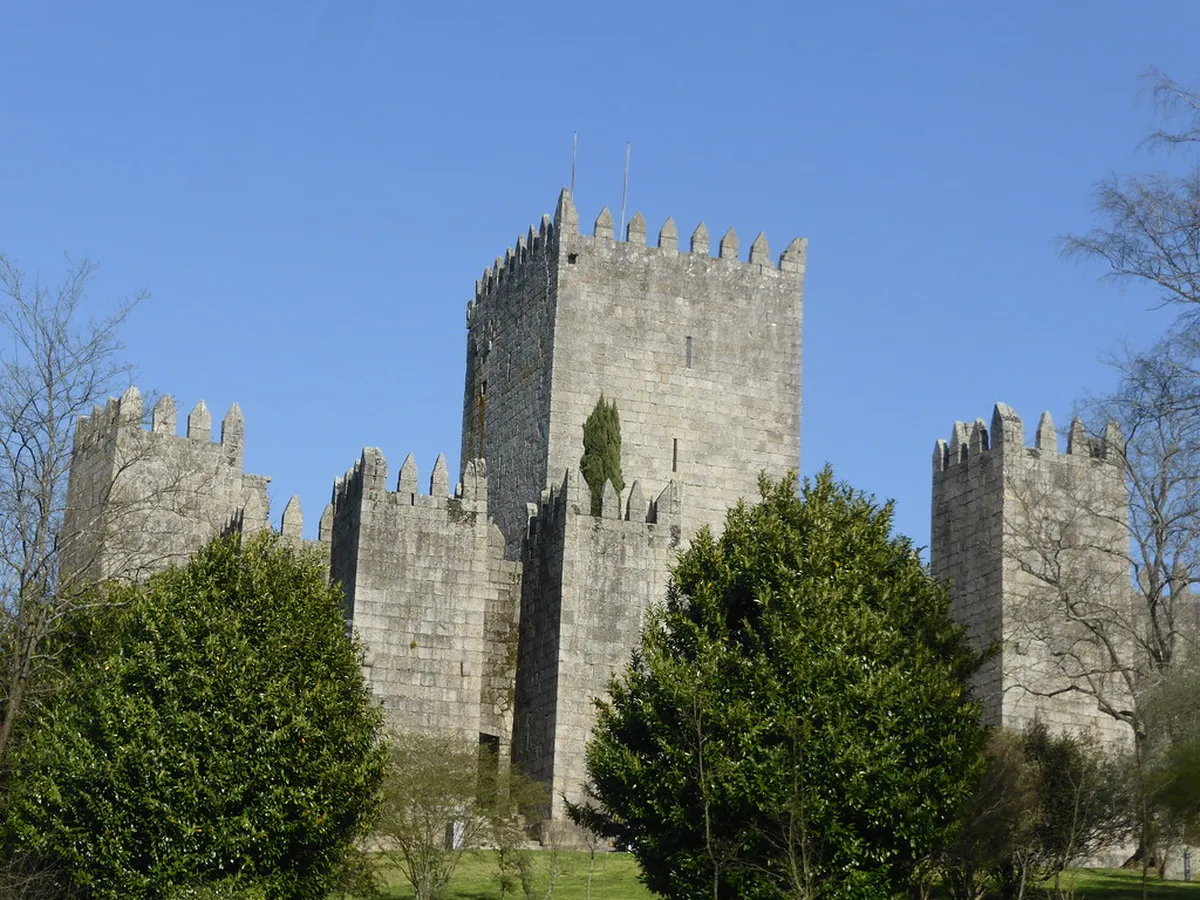
Under Afonso Henriques himself in the 12th century, the castle was expanded to roughly its current perimeter, though without its towers. The eight rectangular towers and the central Torre de Menagem (Keep Tower) arrived during the Gothic reforms of the reigns of Afonso III and Dinis, between the late 13th and early 14th centuries. King Dinis also restructured the town walls around Guimarães during this same period, and the castle's final crenelated silhouette — the one you photograph today — dates from this era. The castle reached its definitive form by the second half of the 13th century.
It is worth noting that the castle was classified a National Monument in 1881, as part of Portugal's first-ever monument classification list. A major restoration campaign between 1936 and 1940 consolidated the structure and brought it close to its medieval appearance. That restoration is why the walls look so intact: it was a deliberate act of national symbolism, not passive survival.
Check Essential Visitor Info: Tickets, Hours, and Access
Entrance to Guimarães Castle in 2026 costs €2 per adult. A combined ticket covering both the castle and the adjacent Palace of the Dukes of Braganza costs around €6. Under-12s and visitors with an EU disability card enter free. The castle is managed by the DGPC (Direção-Geral do Património Cultural) and hours follow seasonal patterns: roughly 10:00–18:00 in winter and 10:00–19:00 in summer, closed on certain public holidays. Always confirm current hours on the Official Monument Site before your visit, as they change across the calendar year.
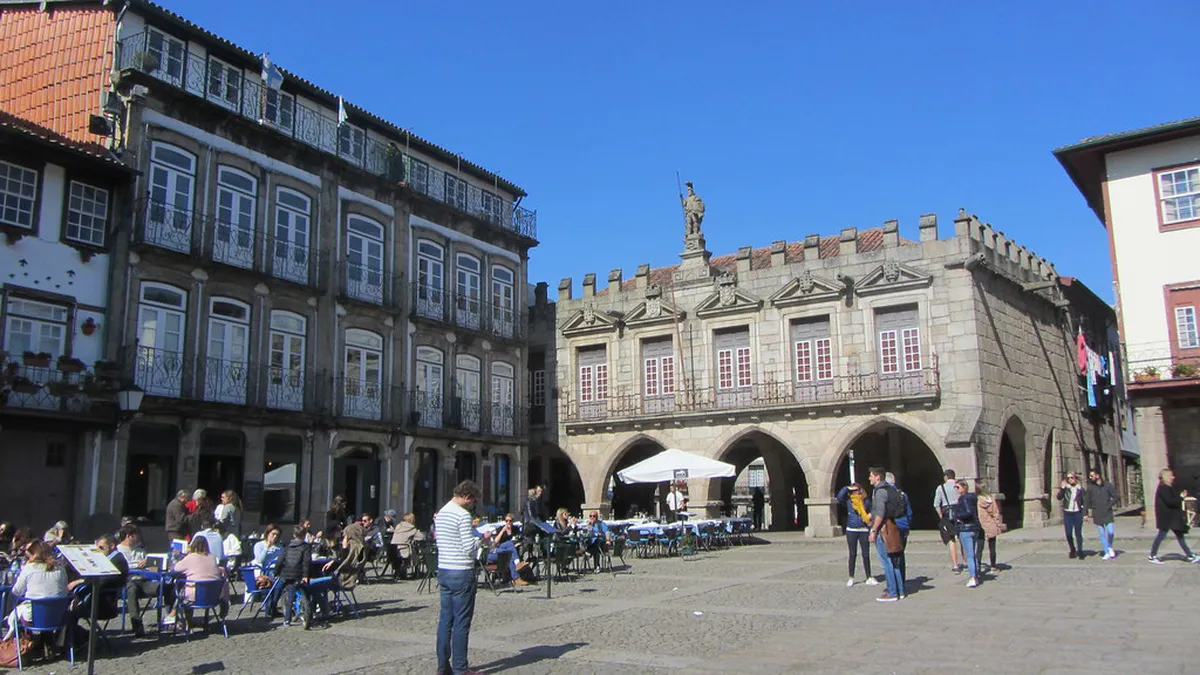
The castle sits at the top of Monte Latito, a short uphill walk from the historic center. From Largo da Oliveira — the main square — allow about 10 minutes on foot, mostly on stone-paved paths through the park. There is no parking directly at the castle; leave your car in the town center or use the paid municipal car parks near the train station. Its exact position is easy to locate on Google Maps.
The interior of the castle is largely open space — the keep, the courtyard, and the wall walkways. Wear flat, grip-soled shoes: the stone stairs to the top of the Torre de Menagem are steep and uneven. There is no café or water point inside the castle grounds. Buy water before you climb. The adjacent Monte Latito park has benches and shade if you want to rest after your visit.
Entry to Guimarães Castle costs €2 per adult, with free admission for children under 12. A combined ticket that includes the adjacent Palace of the Dukes of Braganza is approximately €6, offering excellent value if you plan to visit both monuments. The castle is closed on certain public holidays, so check ahead before traveling.
Explore the Key Features: The Keep and the Walls
The Torre de Menagem is the dominant structure inside the castle, a square stone keep rising from the center of the courtyard. Climbing it is the reason most people buy a ticket. The staircase is narrow and the steps worn smooth by centuries of use — go slowly. At the top, the view stretches over Guimarães' terracotta rooflines and out toward the green hills of the Minho. On a clear day you can see as far as the Penha mountain and its sanctuary to the southeast.
Eight rectangular towers are connected by the crenelated curtain walls that ring the perimeter. Four of these towers flank the two original gates. Visitors can walk a portion of the wall circuit, which gives a different reading of the castle's scale compared to looking up at it from outside. The wall-walk is narrow, about a metre across in places, so take care with children. Each tower served as a separate defensive position — the design assumes the walls might be breached and each tower would hold independently.
Look for the machicolations — the overhanging stone brackets with floor openings — above the gates. These allowed defenders to drop stones or boiling water on anyone trying to force the entry. They are architectural evidence of a fort built to be actually defended, not merely to impress. The arrow slits cut into the tower walls remain intact and give a sense of the cramped conditions in which medieval archers worked.
The staircase inside the Torre de Menagem is extremely steep with narrow, worn stone steps. The climb is not accessible for people with mobility issues or young children. The wall walkways are exposed with minimal railings and drop roughly 15 meters to the interior courtyard—exercise caution, especially in windy conditions or if you have a fear of heights.
Learn the Legend of Afonso Henriques
Afonso Henriques is omnipresent in Guimarães. His equestrian statue stands just outside the castle gate, cast in bronze, sword raised. Locals call it simply the statue of "o Conquistador." It is the natural first photograph visitors take on arrival, and it frames the entire visit in the story of Portuguese independence before you pass through the gate.
The Battle of São Mamede in 1128 is the key event. Afonso fought his mother Teresa and her Galician allies at a field just north of the city. His victory broke the county's ties to the Kingdom of Galicia and set him on the path to declaring himself King of Portugal in 1139. The castle was his base and his birthplace, which is why Guimarães claims to be where Portugal was born rather than merely where its first king grew up.
The castle's role in Portuguese independence is as much symbolic as military. By the time independence was consolidated, Guimarães had already lost its strategic importance — Lisbon became the capital and the center of power shifted south. But the symbolic weight of the birthplace narrative grew stronger over centuries, not weaker. It reached its peak during the Estado Novo period, when the 1936–1940 restoration turned the ruins into a national monument that looked the way a birthplace should look. Understanding this layer — that the castle is a constructed symbol as much as a medieval ruin — makes the site richer, not less meaningful.
The Castle as Prison: A Forgotten Chapter
Most visitors focus on the castle's founding century and its royal associations, but there is a longer and less celebrated chapter that is easy to miss. By the early 16th century, the castle had lost all military relevance. The kingdom's borders were now far to the south and east, firearms had made medieval walls obsolete, and the royal court had moved to Lisbon centuries earlier. The castle was abandoned as a fortress.
For roughly three centuries — from the 1500s until the 19th century — the castle served as a prison. It held criminals and political detainees in the same towers that had once sheltered the founders of the Portuguese nation. The same Keep Tower where you stand today for panoramic photographs was, for most of its post-medieval life, a place of confinement rather than defence.
This history was largely erased by the 1936–1940 restoration, which stripped the castle back to its medieval appearance and removed all traces of its prison era. No competitor guide mentions this period, and the official site glosses over it in a sentence. But it explains why virtually nothing medieval survives inside the walls — the interior was thoroughly cleared and rebuilt during restoration. What you see is authentic in its outer shell and consciously reconstructed in its inner form. That is not a criticism; it is context that makes the visit more honest.
How to Choose Between the Three Monuments on Monte Latito
The castle does not stand alone. Three major historical monuments occupy the Monte Latito hilltop in close proximity, and each covers different ground. If your time is limited, knowing the difference helps you spend it well.
- Guimarães Castle — Entry ~€2. Allow 45–60 minutes. Military history: curtain walls, towers, keep, defensive architecture. Best for those interested in medieval fortification and the founding-of-Portugal narrative. Limited interior space; most of the visit is outdoors on the walls and in the courtyard.
- Palace of the Dukes of Braganza (Paço dos Duques) — Entry ~€5, combined ticket with castle ~€6. Allow 60–90 minutes. Residential history of the 15th-century Portuguese aristocracy. Grand tapestried halls, period furniture, painted ceilings, and a courtyard that feels borrowed from French Gothic architecture. Has a café. More comfortable in bad weather. Also houses a small armoury collection.
- Church of São Miguel do Castelo — Free entry. Allow 15–20 minutes. Romanesque church believed to be where Afonso Henriques was baptized. Small interior, flagstone floor with medieval grave inscriptions. Sits between the castle and the palace. Worth entering if only for the baptismal font and the quiet contrast to the two larger monuments.
All three are within five minutes' walk of each other. A visitor with two hours can see all three comfortably. If you only have one hour, choose the Palace for interior richness or the Castle for the view from the keep — but not both at full pace. Find more ideas for filling a day on our Things to Do in Guimarães guide.
| Monument | Entry Fee | Time Required | Primary Focus |
|---|---|---|---|
| Guimarães Castle | €2 | 45–60 min | Medieval fortifications, keeps, defensive architecture |
| Palace of the Dukes | €5 (€6 combined) | 60–90 min | 15th-century aristocratic residence, tapestries, period furnishings |
| Church of São Miguel | Free | 15–20 min | Romanesque baptistery, medieval inscriptions |
Use Photography Tips to Capture the Medieval Silhouette
The castle's exterior silhouette is its most photogenic feature — eight crenelated towers against an open sky. The best exterior views are from the Monte Latito park paths on the east and south sides of the hill, where you get the full curtain wall and the keep in a single frame. The Afonso Henriques statue in the foreground adds historical scale. Shoot in the hour after sunrise (around 07:00–08:00 in summer) or the hour before sunset for directional light that deepens the shadow on the stonework.
For interior shots, the courtyard at midday is harshly lit. Better results come from the late afternoon when the sun is lower and the keep casts a long shadow across the gravel. From the top of the Torre de Menagem, shoot toward the Palace of the Dukes to get two of Portugal's most important medieval buildings in one composition. The red-tiled rooflines of Guimarães spread out below.
It is worth knowing that the first photographic record of the castle dates from the 19th century, made by Frederick William Flower, a British photographer based in Portugal who documented monuments across the country. The Eixo Atlántico Resource holds reproductions of some of these images. Comparing Flower's photographs — which show the castle in partial ruin before the 1936–1940 restoration — to the current structure gives a striking sense of how much the restoration transformed the site.
Plan Your Logistics: Day Trips from Porto and Braga
The most affordable and practical way to reach Guimarães from Porto is the Comboio Urbano — the urban commuter train — departing from Porto São Bento or Porto Campanhã stations. The journey takes around 75 minutes and costs under €4 each way. The Guimarães train station sits about a 15-minute walk from the historic center and Monte Latito. This is the route independent travelers use: no booking required, trains run frequently, and there is no traffic to contend with. Consider spending more than one day in Guimarães if you want to explore beyond the castle hill.
If you prefer a guided option, private driver-guide tours from Porto typically combine Guimarães with Braga in a single full day. The trade-off is clear: the train gives you freedom to linger at the castle and palace at your own pace, while the guided tour adds expert historical commentary and reaches the Sanctuary of Bom Jesus do Monte in Braga — a UNESCO site that is difficult to visit without a car. Budget travelers do better on the train. Visitors who want the Braga–Guimarães double in a single day with narrative context do better with a guide.
Guimarães is also a node on the Eixo Atlántico cultural route, the cross-border Euroregion connecting Northern Portugal and Galicia. For travelers moving between Porto and Santiago de Compostela, Guimarães is a natural stop — roughly 55 km northeast of Porto and 160 km south of Santiago. The UNESCO designation of its historic center (awarded in 2001) means it sits on the radar of heritage travelers doing the broader northwest Iberian circuit, not just day-trippers from Porto. Check current train timetables and plan your arrival for the late morning to leave the hottest midday hours for the shaded interior of the Palace rather than the open castle courtyard.
Frequently Asked Questions
Is Guimarães Castle worth visiting on a day trip from Porto?
Yes, Guimarães Castle is absolutely worth visiting on a day trip from Porto. Its historical significance as the birthplace of Portugal makes it unique. The castle, along with the Palace of the Dukes and the charming historic center, offers a rich cultural experience. Many visitors combine this trip with Braga for a full day of exploration.
How much does it cost to enter Guimarães Castle?
The entrance fee for Guimarães Castle is typically a few euros. Prices can vary, so it's best to check the Official Monument Site for the most up-to-date information. A combined ticket with the nearby Palace of the Dukes of Braganza is often available and offers good value for money.
What is the historical significance of Guimarães Castle?
Guimarães Castle is historically significant as the 'Birthplace of Portugal.' It was originally built in the 10th century by Countess Mumadona Dias for defense. More importantly, it is the birthplace of Afonso Henriques, who became Portugal's first king. This makes the castle a symbol of the nation's independence and formation.
Can you walk on the walls of Guimarães Castle?
Yes, visitors can walk along the crenelated walls of Guimarães Castle. This provides excellent views of the surrounding Monte Latito park and the city. Exploring the walls and climbing the Keep Tower offers a fantastic perspective of the fortress's defensive architecture and its strategic location.
Guimarães Castle offers a profound journey into Portugal's past. Its ancient walls carry the story of a nation's birth — from Countess Mumadona's wooden palisade to Afonso Henriques' royal court, from a medieval prison to a restored national symbol. Few monuments in Europe carry that many overlapping histories in such a compact space.
Arrive prepared: wear grip-soled shoes for the steep keep stairs, buy your combined ticket with the Palace, give yourself two hours minimum for the full Monte Latito complex. The train from Porto makes it easy and cheap. The Church of São Miguel takes twenty minutes and costs nothing. The view from the top of the Torre de Menagem costs €2 and lasts a lifetime.
 Óbidos Castle: Complete Visitor's Guide (2026)June 11, 2026
 10 Best Tips for Timing Your Visit to GuimarãesJune 8, 2026
 How Many Days In Guimaraes Travel GuideJune 8, 2026