

Free Things To Do In Guimaraes Travel Guide
Plan free things to do in guimaraes with top picks, neighborhood context, timing tips, and practical booking advice for a smoother trip.
On this page
Free Things To Do In Guimaraes
Guimarães is widely known as the cradle of the Portuguese nation. Walking through the medieval streets offers a journey back in time without spending a single Euro. Visitors can discover historic landmarks, ancient churches, and lush mountain parks while keeping their travel budget entirely intact. This guide covers the best free things to do in guimaraes for every type of traveler visiting in 2026. The city's UNESCO World Heritage historic centre protects this medieval settlement as an exceptionally preserved example of European cultural heritage.
The city combines ancient stone walls with vibrant public squares and green hillside trails. You do not need a large budget to experience the authentic charm of this UNESCO World Heritage site. Most of the genuinely unmissable sights cost nothing at all — or charge only a small voluntary donation. Explore Visit Portugal's official guide to plan your visit and enjoy these cost-free gems in the heart of northern Portugal.
Explore the Guimarães Castle
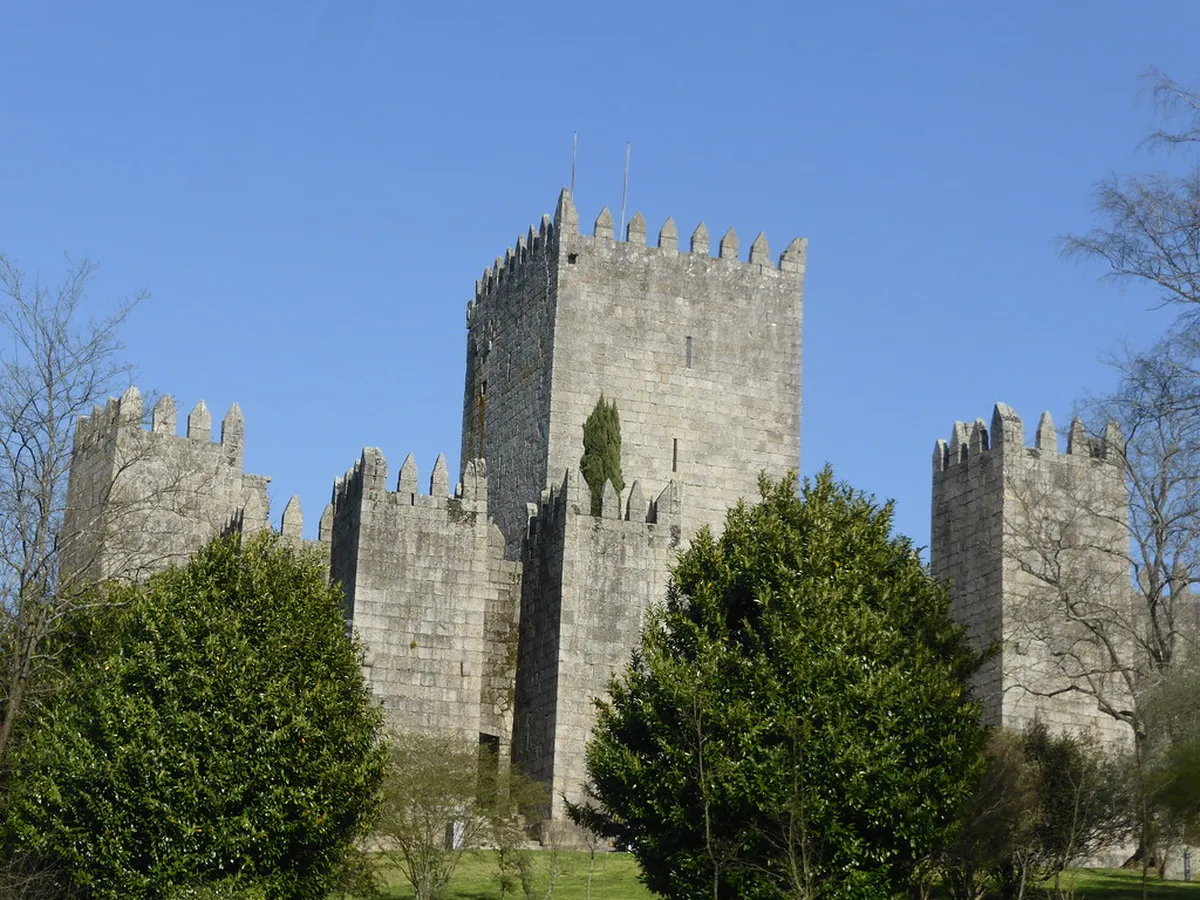
The medieval Guimarães Castle stands as the most powerful symbol of the birth of the Portuguese kingdom. It sits on a small green hill overlooking the historic center and the Palace of the Dukes. You can walk around the exterior walls and admire the imposing stone towers for free. The surrounding park offers plenty of space for a scenic stroll or a quiet picnic.
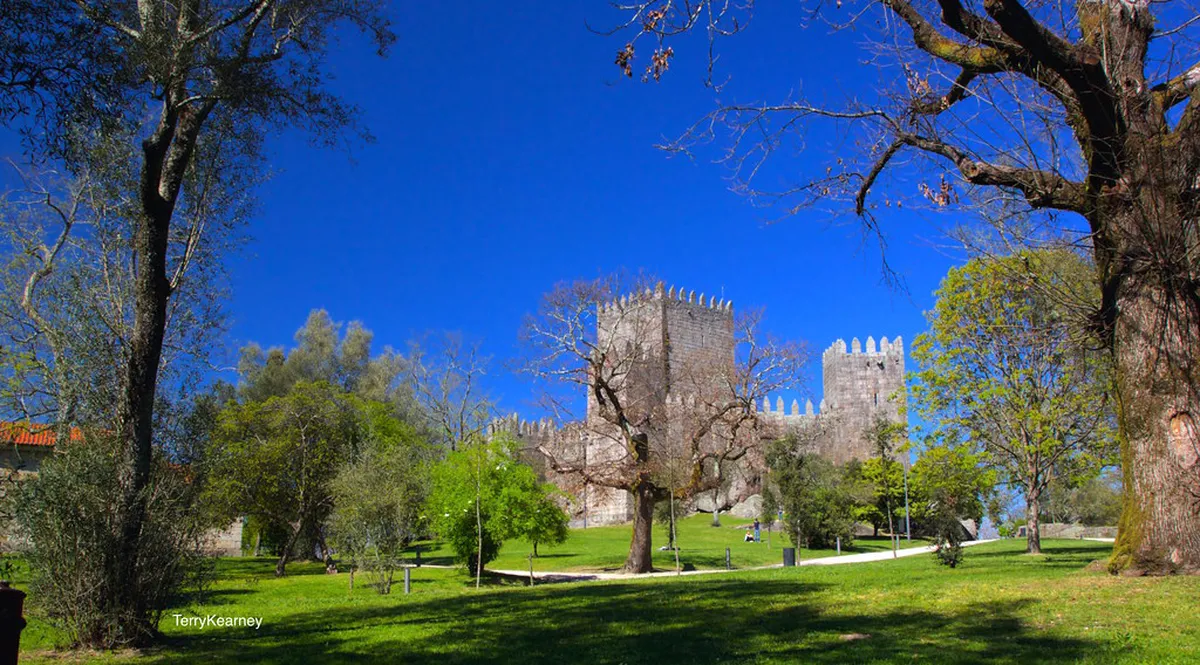
The castle was built in the 10th century to protect the local monastery from northern invaders. It later became the residence of Count Henrique of Burgundy and is traditionally linked to the birthplace of King Afonso Henriques, Portugal's first king. While entering the keep costs €5, the grounds and outer views are entirely free. Check out our guide on the Guimarães Castle for more historical context and ticket-buying tips.
Photographers will find the best angles from the grassy slopes surrounding the fortress, especially looking back from the south side. The golden hour provides a warm glow that highlights the ancient granite blocks beautifully. Most visitors spend about 30 to 45 minutes exploring the exterior, the nearby chapel, and the viewpoint over the old town. It is the single most iconic landmark in Guimarães and defines the entire skyline.
Rua de Santa Maria and the baptism chapel
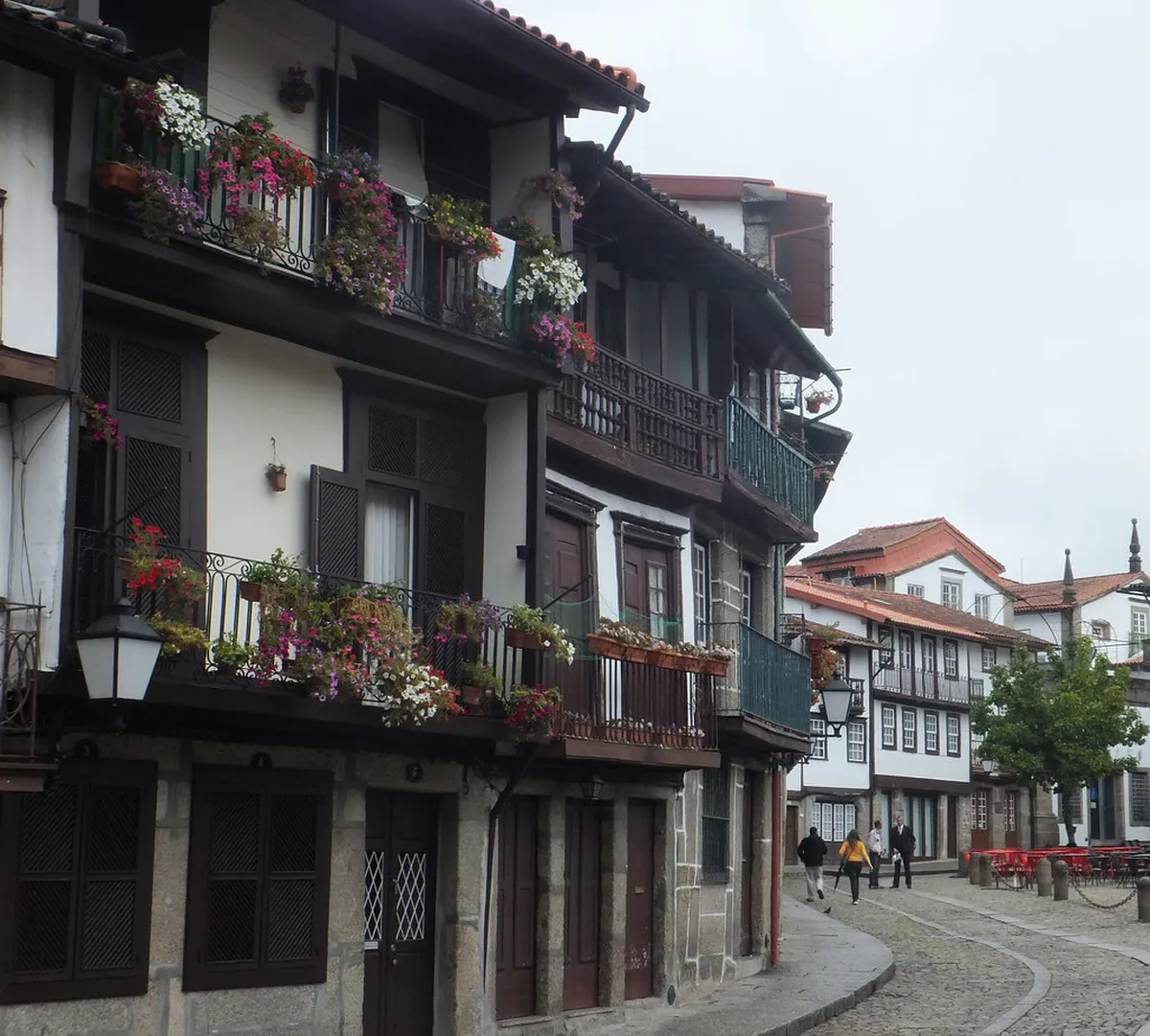
The most historically charged walk in Guimarães is along Rua de Santa Maria, a narrow cobblestone street that dates back to the 12th century. It was purpose-built to connect the medieval old town with the castle and palace on the hill above. Walking it today, you pass original stone facades, arched doorways, and traditional wooden balconies that have barely changed in 800 years. The walk takes about ten minutes at a leisurely pace and is entirely free.
Halfway up the street, just before you reach the Palace of the Dukes, look for the tiny Igreja de São Miguel do Castelo on your left. This modest granite chapel is where Afonso Henriques, Portugal's first king, is said to have been baptised in the 13th century. The floor is paved with ancient stone slabs bearing inscriptions, and a simple baptismal basin sits at the front of the nave. Entrance is free and the chapel is usually open during daylight hours — budget five minutes inside to take in the remarkable quiet of the place.
Together, Rua de Santa Maria and the baptism chapel form a walking sequence that no competitor itinerary should skip. You are literally tracing the footsteps of the people who founded Portugal. The street also connects logically to the palace and castle above, so it works as the spine of any free half-day walking tour of Guimarães.
The "Aqui Nasceu Portugal" wall and Largo do Toural
One of the most photographed sights in the city is a simple stone wall inscription. The words Aqui Nasceu Portugal — "Portugal was born here" — are painted on a tower along the ancient defensive walls near Largo do Toural. It marks the city's central role in the 1128 Battle of São Mamede and the founding of the Portuguese kingdom. The wall is lit at night, making it a great stop on an evening walk through the historic centre.
Largo do Toural sits just outside the medieval walls and serves as the formal entry point into the old town from the modern city. The square is lined with handsome 19th-century buildings and anchored by a stone fountain. It is free to walk through at any hour and gives a useful sense of the city's geographic layout before you dive into the narrow medieval lanes. From Largo do Toural, the castle hill, the tanneries district, and the gardens of Largo da República do Brasil are all within a ten-minute walk.
Finding the inscription wall is an essential ritual for any visit to Guimarães. It connects the physical place to the abstract pride that the Portuguese feel about this city. The tower is completely accessible twenty-four hours a day and requires no ticket or booking. Pair it with a loop through Largo do Toural and you have a solid thirty-minute free orientation walk that grounds the rest of your day.
Largo da Oliveira and Praça de São Tiago
Largo da Oliveira is the true beating heart of medieval Guimarães. The square is named for an olive tree that, according to legend, miraculously came back to life after being blessed with holy oil. A new olive tree stands in the same spot today, in front of the Gothic church Igreja de Nossa Senhora da Oliveira. The church entrance is free, and if you visit around midday you may catch an organist playing in the nave — a genuinely moving and completely cost-free experience.
The church of Nossa Senhora da Oliveira dates to the 14th century, when King João I ordered it rebuilt after winning the Battle of Aljubarrota. He had promised to dedicate it to the Virgin Mary if Portugal secured independence from Castile. The stone archway monument in the square — the Padrão do Salado — commemorates an earlier victory in 1340 and is one of the finest pieces of Gothic street furniture in the whole of northern Portugal. Both the monument and the square itself are free to enjoy.
Just around the corner is Praça de São Tiago, smaller and quieter than Largo da Oliveira but equally medieval in atmosphere. The square has been a social gathering point for centuries and once marked a stop on the Camino de Santiago pilgrimage — you can still find scallop shells embedded in some of the surrounding buildings. Sitting at one of the outdoor café tables here costs only what you order. A glass of local Vinho Verde runs around €2–3, and the surrounding medieval architecture is the free backdrop.
Walk the medieval city walls
The Muralhas de Guimarães are one of the most underused free attractions in the city. These stone walls were built between the 10th and 12th centuries to protect the original settlement, and a walkable section of about 250 to 300 metres survives in good condition. Most tourists walk past them on the ground without realising they can climb on top. There are two free access points: Porta do Burgo near the castle hill end, and a second staircase beside the Santos Passos chapel at the garden end.
Walking the walls is best done as part of the castle-to-gardens route, which means it naturally connects two of the city's biggest free sights. You walk down from the castle, pick up the wall at Porta do Burgo, follow the parapet toward the garden end, and descend into the gardens of Largo da República do Brasil. At that far end you get a panoramic view down the long floral avenue toward the Santos Passos church — it is widely regarded as one of the best vantage points in Guimarães and most visitors never find it. The walk is completely free and takes about twenty minutes including pauses for photos.
No competitors fully explain this loop as a free route. Most guides describe the castle and the gardens as separate stops without noting that the walls physically connect them with a near-thousand-year-old walkway. Bring good shoes, as some of the wall surface is uneven. The walls are generally accessible during daylight hours with no staffed entry gate.
The castle-to-gardens wall loop connects two major free sights and takes only 20 minutes. Access points are at Porta do Burgo (near castle) and beside the Santos Passos chapel (gardens end). The walking surface is uneven stone, so wear sturdy shoes. Early morning or late afternoon offers the best light for photography and fewer crowds.
Take a photo of Largo da República do Brasil
Largo da República do Brasil is one of the most photogenic spaces in Guimarães. Long, manicured gardens lead the eye toward the Church of Santos Passos at the far end, its twin baroque towers framing the sky. The colorful flower beds are maintained throughout the year and are at their fullest in spring and early summer. It is a perfect place to sit on a bench and watch the world go by at no cost.
The church at the end — officially Igreja e Oratórios de Nossa Senhora da Consolação e Santos Passos — dates to the 18th century and features ornate baroque stonework. The ground-floor interior is free to enter for quiet reflection and prayer. For a €1 voluntary donation, you can climb to the upper floor and see the entire garden avenue from above, a view that is frequently described as the most beautiful in Guimarães. Mornings are the best time for photos when the light hits the facade directly from the east.
This square connects the modern city with the medieval core and serves as the natural endpoint of the city walls walk described above. Walking the full length of the gardens takes only five minutes but the visual payoff is significant. The experience is free, the upper-floor viewpoint costs one Euro, and both are worth your time.
Explore the old leather tanneries
The Zona de Couros — the leather tanneries district — is a unique neighbourhood that showcases the city's industrial past alongside its medieval heritage. You can see the ancient stone pits, known as tanques de couros, that were used for tanning hides centuries ago. These tanks are located in a quiet district just south of the main squares, roughly a five-minute walk from the Church of Saint Francis. The entire area is part of the UNESCO World Heritage zone and is free to visit.
The leather industry was once central to the local economy in Guimarães, and the tannery district feels very different from the tourist-heavy castle area. Walking the narrow streets here gives you a ground-level sense of what working life looked like in medieval Portugal. Information boards along the route explain the tanning process, which relied on water channels drawn from the nearby Rio de Couros. The area has been renovated for pedestrian access, but the stone pits remain in situ and visible.
Plan about twenty minutes for a thorough explore of the tanneries and the surrounding streets. Combine it with the nearby Church of Saint Francis and the Alberto Sampaio Museum entrance courtyard — both are within a two-minute walk — to build a worthwhile free afternoon circuit through the south side of the old town.
Admire the Church of Saint Francis
The Church of Saint Francis (Igreja de São Francisco) is a hidden treasure located near the old city walls and the tanneries. Its exterior is relatively restrained, but the interior is filled with remarkable 18th-century azulejo tile panels depicting scenes from the life of Saint Anthony of Padua. The gilded woodwork and ornate altars represent some of the finest examples of baroque Portuguese craftsmanship in the north of the country.
Entrance to the main nave is typically free for visitors and worshippers. The cloisters and sacristy involve a small additional fee, but the nave alone justifies the detour. It is a quieter church than the better-known Nossa Senhora da Oliveira, so you can linger in front of the tile panels without crowds. Pay close attention to the blue and white azulejo work — the storytelling detail in each panel is exceptional by any standard.
The church sits close to the Alberto Sampaio Museum and the leather tanneries, so it works naturally into the same southern circuit of the old town. Budget fifteen to twenty minutes for the nave. It is one of those places that many first-time visitors miss entirely because it lacks a prominent position on the main tourist maps.
Explore the Palace of the Dukes of Bragança exterior
The Palace of the Dukes of Bragança (Paço dos Duques de Bragança) is an imposing 15th-century manor house commissioned by the first Duke of Bragança. Its distinctive architecture — heavy granite walls and a forest of tall cylindrical chimneys — was influenced by the manor houses of Burgundy and is unlike anything else in Portugal. While the museum interior charges an entry fee of around €5, the exterior, courtyard, and surrounding park grounds are free to admire. The towering chimneys are best counted from the castle walls above, where you get the full comic effect of just how many there are.
You can enter the central courtyard to see the stone arcade that surrounds it and to get a close-up perspective on the scale of the building. The courtyard is a popular photography spot and is generally accessible during the palace's opening hours without paying. The surrounding wooded park offers shaded benches and walking paths in the afternoon sun.
The palace stood in ruin for several centuries before being substantially restored in the mid-20th century. It is now one of the most visited monuments in Portugal and sits immediately adjacent to the castle, making a combined free exterior tour of both sites an easy and rewarding ninety-minute walk. Our Guimarães old town walking guide maps the most efficient route between the palace, the castle, the baptism chapel, and the medieval walls.
Explore Parque da Penha and the Penha Sanctuary
For nature lovers, Penha mountain is the ultimate free half-day destination. The park is famous for its massive granite boulders, hidden grottoes, and forested trails that wind above the city. You can hike up from the urban fringe — the walk takes roughly an hour depending on fitness — or drive to the top if you have a car. The trails are marked and the park is free to enter.
The boulder park features narrow passages and stairs carved directly into the rock. It is genuinely fun for adults and children alike, and the geological formations are unlike anything in the city below. Several viewpoints along the trails provide panoramic vistas over the Minho valley and across to Braga on clear days. The air is several degrees cooler than the city streets, which makes Penha a particularly good choice on a hot summer afternoon.
At the summit stands the Sanctuary of Penha, a modernist church built in the 1930s that sits dramatically atop huge exposed boulders. The sanctuary is free to enter and offers a spiritual counterpoint to the medieval religious sites in the town below. While a cable car runs from the foot of the hill for a fee, the hiking trail is free and frankly more satisfying. Pack water and a snack for the ascent and allow two to three hours for the full experience.
Penha mountain trails involve steep granite climbs and narrow rock passages. The hike takes 1–1.5 hours uphill from the city, so start early and bring water, sturdy hiking boots, and sun protection. The summit sanctuary has limited facilities. In summer, afternoon temperatures spike—visit Penha in early morning or late afternoon to avoid heat exhaustion on the exposed rock.
Getting to Guimarães and getting around
The historic centre of Guimarães is compact enough to explore entirely on foot. Most free attractions cluster within a fifteen-minute walk of each other, and the castle, palace, main squares, tanneries, and garden church form a natural loop of under three kilometres. Wear comfortable shoes — the traditional Portuguese cobblestones (calçada portuguesa) are beautiful but uneven, and some of the castle hill approaches involve a noticeable incline.
If you are arriving from Porto, the most convenient option is the train. Direct services from Porto Campanhã take around one hour and run frequently throughout the day. The Guimarães train station is approximately a twenty-minute walk from the castle, or a ten-minute walk from the main squares. See our full guide on getting to Guimarães for train times, bus options, and car-park locations near the historic centre.
The best strategy for a budget visit is to arrive in the morning, walk the castle-walls-gardens loop before lunch, spend the early afternoon in the tanneries and church circuit, and take the cable car or hike up to Penha in the late afternoon when it cools down. You can cover all the major free sites in a full day without spending anything beyond food and a voluntary €1 donation at the garden church viewpoint.
Frequently Asked Questions
Which free things to do in guimaraes options fit first-time visitors?
First-time visitors should prioritize the Guimarães Castle grounds and the 'Aqui Nasceu Portugal' wall. These sites are iconic and easy to find within the historic center. Exploring the medieval squares like Praça de São Tiago is also essential for soaking in the local atmosphere without spending money.
How much time should you plan for free things to do in guimaraes?
You should plan at least one full day to see the main free attractions. A four to six-hour walking tour covers the historic center, the castle exterior, and the gardens. If you plan to hike up to Penha mountain, you will need an additional three hours. Is Guimarães worth visiting? Yes, especially for a full day.
What should travelers avoid when planning free things to do in guimaraes?
Travelers should avoid visiting the main squares during the peak heat of the afternoon in summer. It is better to explore the shaded trails of Penha or the interior of free churches during those hours. Also, avoid wearing uncomfortable shoes, as the cobblestone streets can be very taxing on your feet.
Guimarães offers a wealth of historic and natural beauty that is accessible to everyone. From medieval castles and ancient city walls to lush mountain trails and baroque church gardens, the city provides endless opportunities for budget travel. You can experience the heart of Portuguese identity without spending a fortune on tickets. Use these Guimarães travel tips to make the most of your free adventures.
The city's status as a UNESCO World Heritage site ensures that its beauty is well-preserved and genuinely free to absorb at street level. Walking through these ancient streets is a reward in itself for any curious traveler in 2026. Plan your trip during the best time to visit Guimarães for ideal weather. Enjoy the unique charm and history of the place where Portugal was born.
Pair this with our main Guimarães things-to-do guide to plan the rest of your visit.
For more on your trip, see our guides to 9 Essential Tips for Visiting Guimarães Castle and 10 Hidden Gems in Guimarães to Discover.
 9 Essential Tips for Visiting Guimarães CastleJune 8, 2026
 Guimaraes With Kids Travel GuideJune 8, 2026
 How Many Days In Guimaraes Travel GuideJune 8, 2026