
10 Hidden Gems in Guimarães to Discover (2024)
Uncover the best hidden gems in Guimarães with our top picks, local insights, and practical tips for an unforgettable trip. Plan your adventure today!
On this page
10 Hidden Gems in Guimarães: Uncover Portugal's Birthplace (2024)
Guimarães rewards visitors who push past the famous castle gates and wander into its quieter lanes. Portugal's first capital is compact enough to cover in a day, yet layered enough to fill two. This guide covers the spots worth your time in 2026 — from a 10th-century church where a king was supposedly baptized, to a tannery district that most visitors walk past without realising it's open, to a medieval wall walk with the best view in town that almost nobody takes.
Use this as a checklist rather than a rigid itinerary. The historic centre is walkable end-to-end in under 20 minutes, so you can combine most of these spots in a single morning. Serra da Penha, up on the hill outside town, takes a separate half-day.
Explore the Guimarães Castle
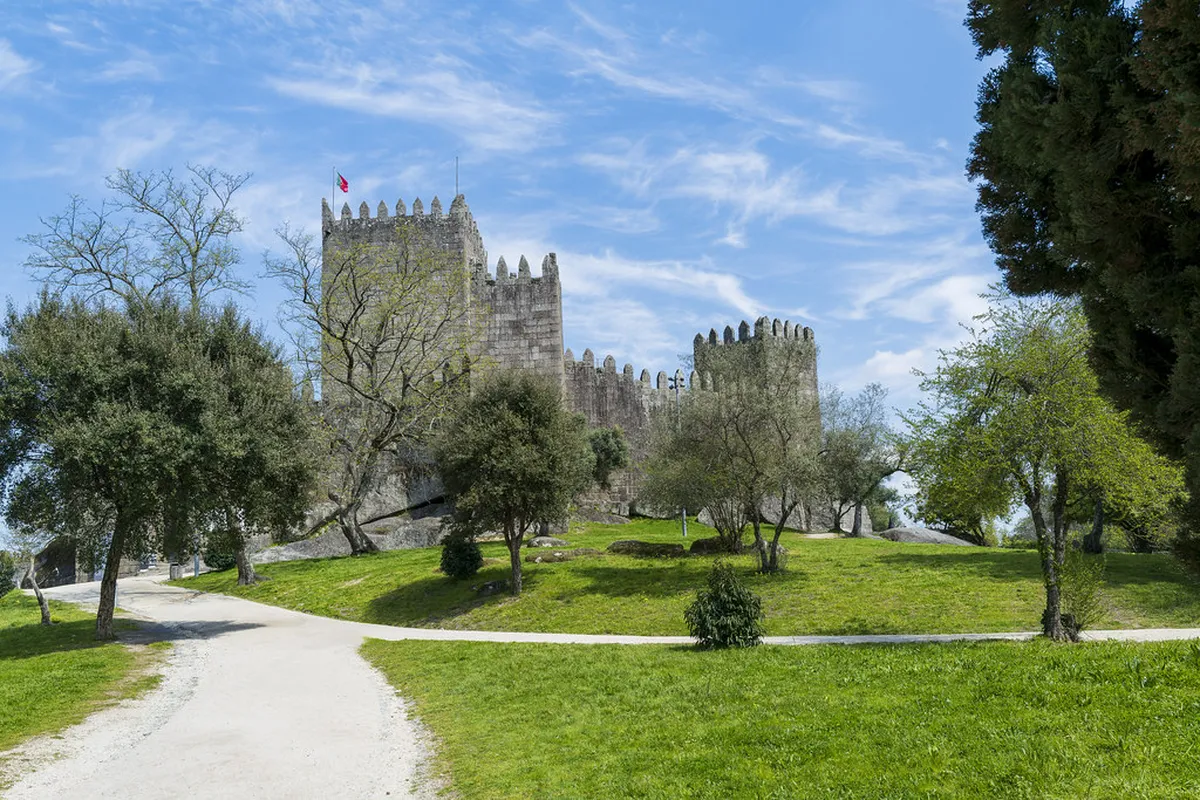
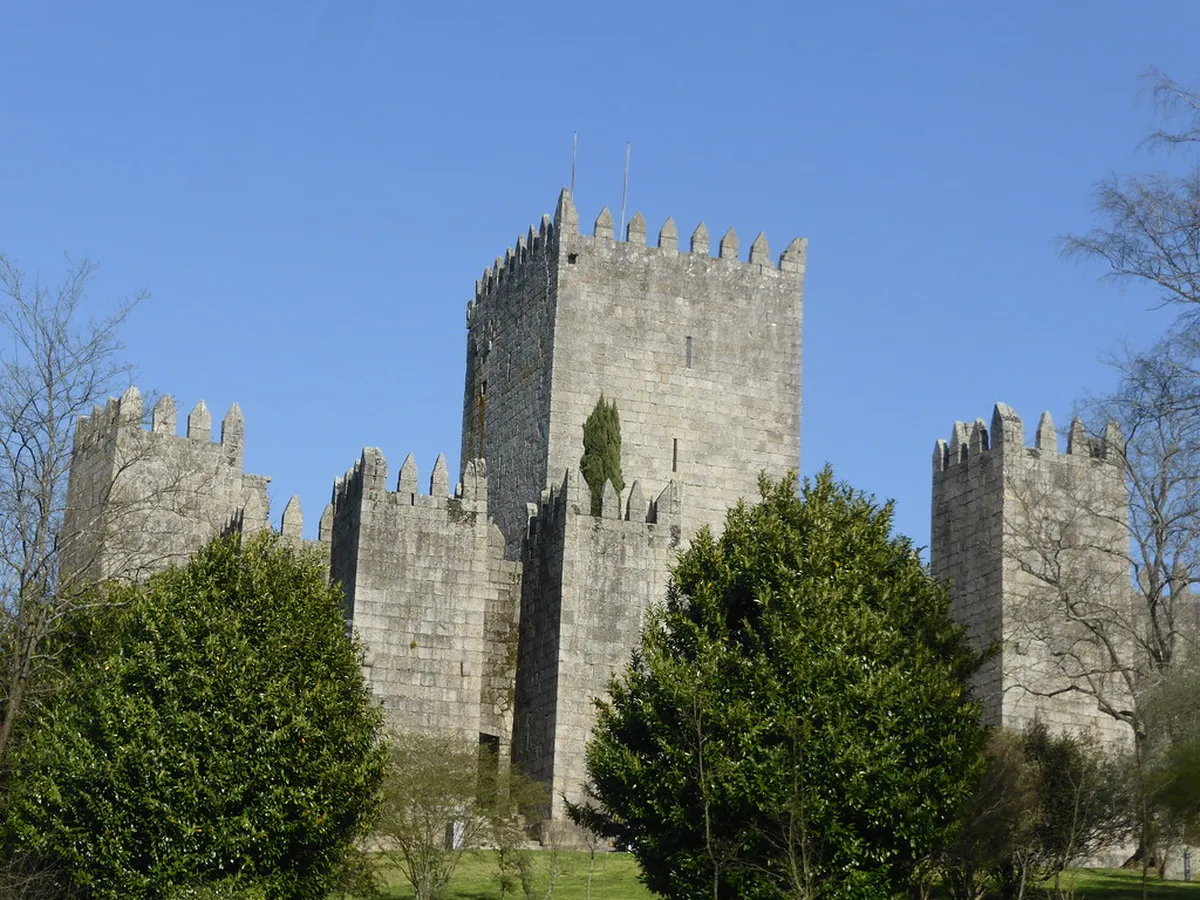
Castelo de Guimarães sits on a grassy hill at the top of the historic centre and is the single image most associated with the city. Dating to the 10th century, the fortification is where Count Henry of Burgundy and his wife Teresa raised their son Afonso Henriques — later Portugal's first king. There is not a great deal inside the walls: a keep, eight towers, a small inner courtyard, and the inscription "Portugal was born here" on a nearby facing. But the stonework itself, worn by a thousand years of wind, is worth the climb.
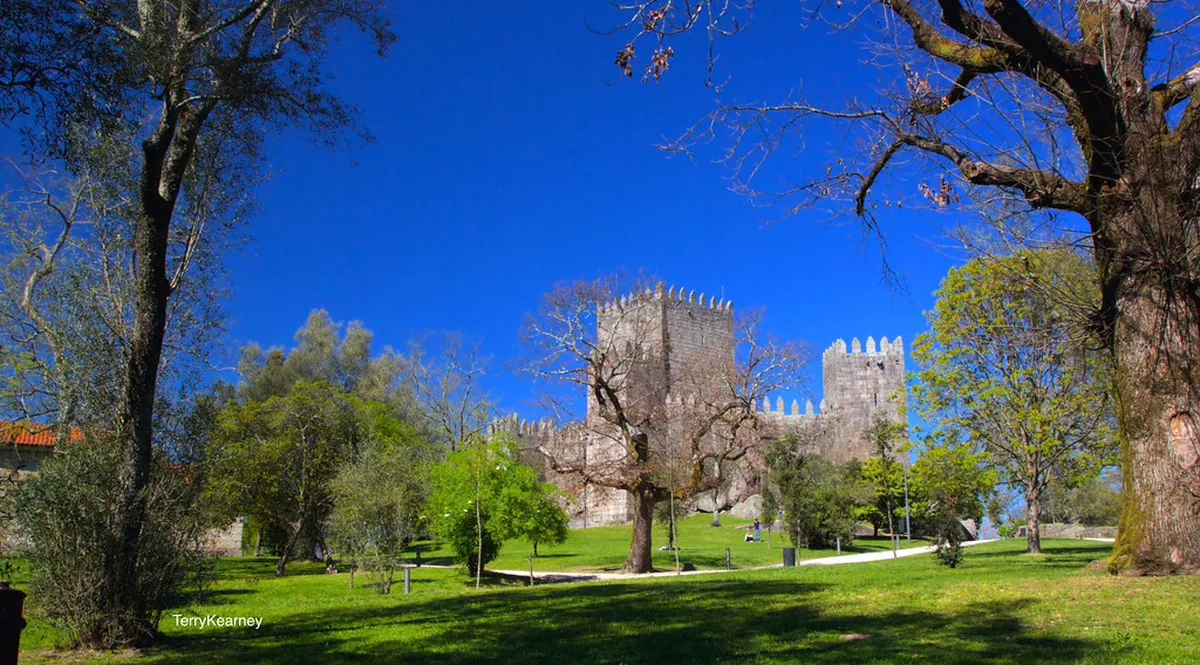
Admission is €2 per adult (2026). You can buy a combined ticket at the Palace of the Dukes ticket office that covers both monuments — worth doing to save a small queue. Climb the keep staircase for a panoramic view over the terracotta rooflines and across to Serra da Penha. The castle is open Tuesday to Sunday from 10:00 to 18:00, closed Mondays. Allow 30–45 minutes.
Before leaving, walk around the castle's exterior rather than retracing your steps. A short path on the north side gives you the best wide-angle view of the castle sitting against its green hill — a better photograph than anything you'll get from inside the walls. Most visitors miss it.
Explore the Majestic Palace of the Dukes of Bragança
Paço dos Duques de Bragança stands a short walk downhill from the castle, and where the castle is austere, the palace is theatrical. Built in the first half of the 15th century for Afonso, 1st Duke of Bragança (an illegitimate son of King João I), it is unmistakable: dozens of distinctive conical chimneys jut up from the roofline like a row of stone pencils. The building served as Portugal's presidential second residence into the 20th century and was significantly restored in the 1930s.
The interior is worth the entrance fee. Ground-floor halls hold tapestries depicting Portuguese battles in Ceuta and North Africa, original polychrome azulejos, and a weapons collection that explains the scale of 15th-century Iberian warfare. The second-floor chapel has stained-glass windows that catch morning light. Entry costs around €5 (adults); the ticket office also sells the combined castle ticket. Open daily 10:00–18:00. Plan for an hour to see it properly.
A practical note: if you arrive on a busy weekend morning, the entrance queue can build quickly. Buy tickets at the online portal or via the QR code on the exterior sign to skip it. Arrive before 10:30 if you want the courtyard arcade largely to yourself for photographs.
Stroll Along Rua de Santa Maria
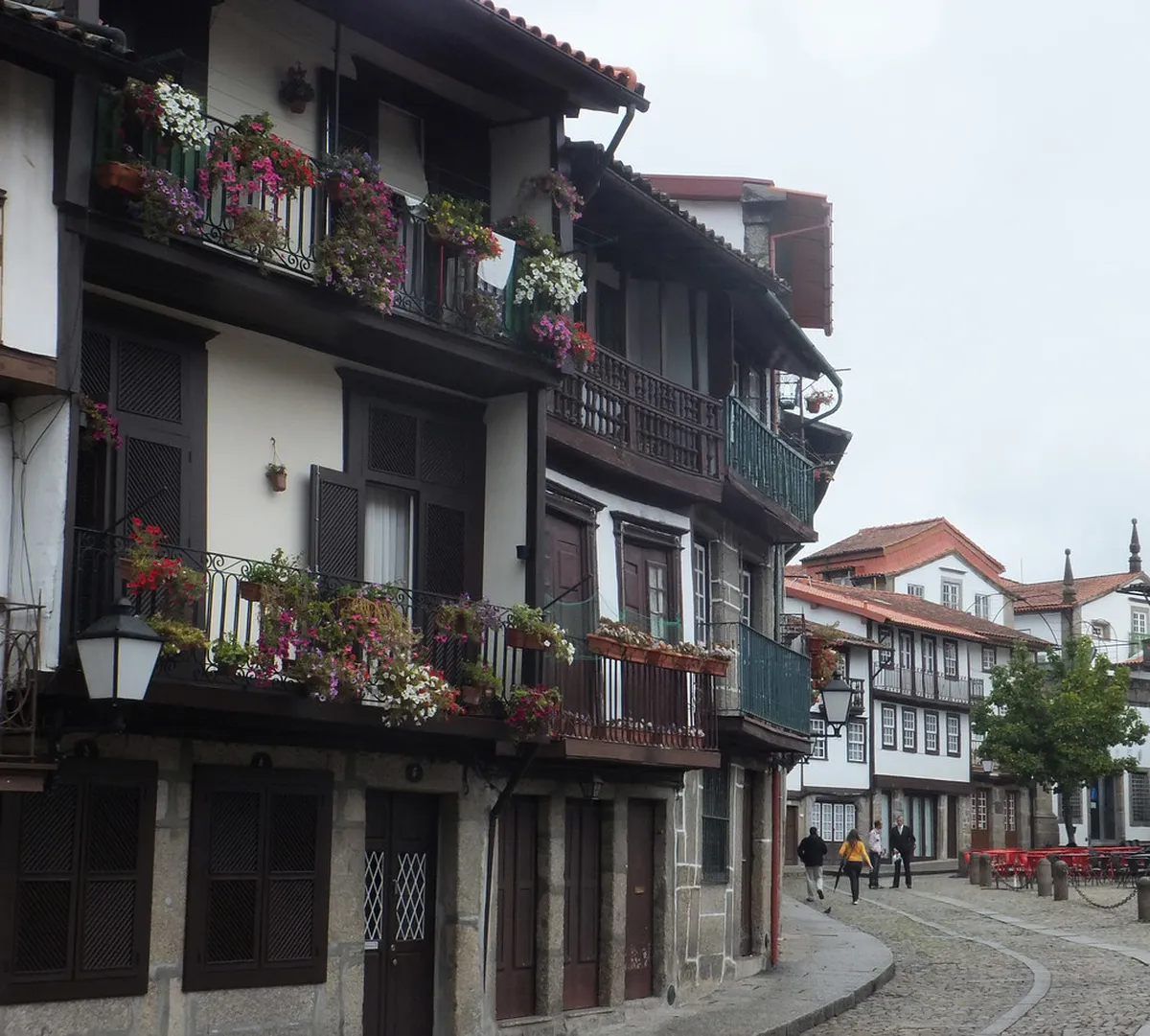
Rua de Santa Maria is the oldest street in Guimarães, built in the 12th century to connect the medieval town with the castle and the palace above it. The stone facades along the street retain their original arched doorways and carved lintels. Noble families built chapels and small convents directly onto the street over the following centuries, so you are essentially walking through 800 years of building layers compressed into 200 metres.
Look up as you walk. The archway spanning the street about halfway along — part of a former convent wall — is one of the most photographed details in Guimarães and easy to miss if you're looking at your phone. The street connects Largo da Oliveira at the bottom to the Palace of the Dukes at the top, so you'll walk it anyway; the point is to slow down and read the buildings rather than treat it as a shortcut.
Peek into the Tiny Igreja de São Miguel do Castelo
Between the Palace of the Dukes and the castle gate stands a Romanesque chapel so small it is easy to walk past. Igreja de São Miguel do Castelo carries the persistent legend that Afonso Henriques — Portugal's first king — was baptized here. Portuguese historians dispute this, noting that the chapel was probably built under Afonso II (the third king), but the symbolism is embedded deep enough that the chapel is treated as a founding-myth site regardless of the historical truth.
Entry is free. The interior is a single granite nave: plain, cool, and remarkably quiet even on busy days. The stone floor is paved with medieval funerary slabs, their inscriptions worn nearly flat. At the far end is a baptismal basin. Nothing is labelled as the definitive baptismal font of the first king — and that ambiguity is somehow more honest than if it were. Spend 10–15 minutes here, ideally right after visiting the palace so you are already in the upper part of the historic centre.
Breakfast at Largo da Oliveira and Local Monastery Sweets
Largo da Oliveira is the heartbeat of the old town — a medieval square named for the olive tree (a new specimen now stands where the legendary original once grew) in front of the Igreja de Nossa Senhora da Oliveira. The arcaded stone galleries on two sides of the square hold cafés that fill from early morning; starting your day here with a coffee and pastel de nata is the most pleasurable way to acclimatise to the city's pace before tackling the monuments uphill.
The square also contains the Padrão do Salado, a slender Gothic column built in the 14th century to mark Portugal's victory at the Battle of Salado in 1340. It is easy to walk past without registering what it is. Take a moment before your coffee order arrives.
Before leaving the centre, track down Guimarães's traditional doces conventuais — monastery-style pastries made with egg yolks, almonds, and sugar. These originated in local convents where egg whites were used for starching cloth, leaving surpluses of yolks for baking. Pastelaria Clarinha and Casa Costinhas, both a short walk from Largo da Oliveira, carry the full local range: Tortas de Guimarães, Douradinhas, Rochas da Penha, and Pastéis de Noz. They also travel well in a small box if you want to bring some home.
Listen to the Organ at Guimarães's Main Church
Igreja de Nossa Senhora da Oliveira fronts directly onto Largo da Oliveira and is free to enter. The Gothic structure dates to the 10th century but was substantially rebuilt in the 14th century after King João I vowed to dedicate it to the Virgin Mary if Portugal won the Battle of Aljubarrota in 1385 — which it did, securing independence from Castile. The result is a church whose fabric is wound into the founding narrative of the nation.
The practical reason to visit around midday is the organ. Multiple visitor accounts note that a musician performs on the pipe organ during the late-morning and lunchtime period on most days. It is not a formal concert — it is simply the organist practising or maintaining the instrument — but the sound in the stone nave is striking. You can climb to the upper gallery for a closer look at the organ pipes. Entry is free; a donation box is near the door. Allow 20 minutes.
Drink a Glass of Vinho Verde at Praça de São Tiago
One square south of Largo da Oliveira sits Praça de São Tiago, smaller and more intimate than its neighbour. The square was historically a gathering point for pilgrims on the Camino de Santiago route — São Tiago is Portuguese for Saint James — and scallop-shell motifs appear on several of the surrounding buildings. Today it is lined with café tables and tapas bars, and if you want to sit outside with a glass of local wine without feeling swept up in a tourist current, this is the better choice over the main square.
Vinho Verde from the Minho region is the obvious order. It is produced just north and west of here, released young (three to six months after harvest), and tastes of green apple and citrus with a faint spritz. A glass costs €2–€4 at most of the square's restaurants. The word verde means young, not green — the wine is almost always white or rosé. Order it cold. If you want a quieter alternative to São Tiago itself, the narrow Largo de Donães — a few minutes' walk west — sees almost no tourist foot traffic and fills with locals in the evenings.
Explore the Old Leather Tanneries: Tanques de Couros
The Couros district sits just east of the historic centre, a five-minute walk from Praça de São Tiago. Its name — couros means hides — tells you what happened here for centuries. Leather tanning was one of Guimarães's primary industries from the medieval period onwards, relying on the Ave River's tributary streams to fill the stone soaking tanks. The tannery complex has been preserved as an open-air industrial heritage site, with the long rows of rectangular stone tanks still intact.
Access is free and the site is always open to walk through. The tanks are about knee-deep and lined with stone; a few interpretive panels explain the multi-stage tanning process — bark soaking, liming, and finishing. It takes 30–45 minutes to walk the length of the district and read the panels. Visit in the morning for the best light; the stone tanks photograph well when the sky is clear and shadows are long. Most visitors skip this area entirely and head straight between the castle and Penha, which means you will almost certainly have it to yourself.
The Couros district also marks the boundary between the historic centre and the university quarter. Guimarães has a significant student population, and the streets immediately around the tanneries have a different texture from the tourist core — cheaper restaurants, neighbourhood grocery shops, laundry strung between windows. It is the kind of detail that makes a city feel lived-in rather than preserved.
The Tanques de Couros tanneries are almost always empty of tourists — visit in the morning for the best light on the stone tanks and bring a camera for photography without crowds. The site's open-air layout means it's best explored in clear weather rather than after rain when the stone paths become slippery.
See the Best View in Town from Santos Passos Church
Igreja de Nossa Senhora da Consolação e Santos Passos — known locally as Santos Passos — stands at the head of Largo da República do Brasil, the long tree-lined boulevard that stretches south from the historic centre. The church's twin bell towers and Baroque facade make it one of the most visually striking buildings in Guimarães, but the real payoff comes from the garden terrace in front of it. Standing here and looking back down the boulevard — with the manicured lawns, plane trees, and period buildings receding in perspective — is the best urban view Guimarães offers, and far fewer people take the five-minute walk to get there than you'd expect.
The interior holds bright azulejo panels depicting scenes from the Passion, painted in cobalt blue and white. Entry is free; the church is typically open daily from around 09:30 to 12:30 and again from 14:30 to 18:00. If you walk south down the boulevard from the church, the gardens of Largo da República do Brasil make a quiet place to sit for 20 minutes before looping back to the centre — far less crowded than Largo do Toural, the more famous square north of here.
Walk the Medieval City Walls
Between the castle and Santos Passos church runs a 250-to-300-metre stretch of the original Muralhas de Guimarães — the medieval city walls built between the 10th and 12th centuries to protect the settlement from raids. A surviving section is walkable on top, accessed via stairs at Porta do Burgo at one end and at a point near the Senhor dos Passos chapel at the other. Access is free; it is open most mornings, typically from around 10:00.
Almost no competitor guide gives this walk a dedicated mention, which makes it one of the most reliably uncrowded things you can do in the historic centre. The wall walk takes about 15 minutes end-to-end and deposits you at an elevated viewpoint looking directly down Largo da República do Brasil, with Santos Passos church framing the bottom of the boulevard. It is the most satisfying aerial perspective of the city that doesn't require a cable car.
This section is a logical connector between the castle-and-palace upper cluster and the Santos Passos church at the boulevard's head. Walk the walls on your way back down from the castle rather than taking the street-level path, and you see the city from a new angle at no extra cost or time. The footing on top is uneven; sturdy shoes and reasonable care are enough.
The medieval city walls can be wet and slippery after rain, so wear grip-soled shoes and take care on the stone surface. Access times listed as "around 10:00" can vary seasonally — if the stairs are locked when you arrive, return later or contact the visitor centre. The walk is not suitable for young children or those with mobility issues due to uneven footing and height exposure.
Admire the Grandeur of the Church of Saint Francis
Igreja de São Francisco — the Church of Saint Francis — occupies a spot in the west of the historic centre, away from the main tourist spine between the castle and Largo da Oliveira. The exterior is Baroque, heavily ornamented, but restrained compared to the interior: the side chapel in particular features floor-to-ceiling gilded carved woodwork (talha dourada) and a vaulted ceiling covered in detailed paintings. The azulejo panels running along the nave walls, in cobalt and white, depict scenes from the life of Saint Francis and are among the finest tile work in northern Portugal.
Entry is free, though a donation box sits near the entrance. Opening hours vary — the church is generally accessible in the mornings and late afternoons when not occupied by services. Allow 20–30 minutes. Because it sits off the main tourist axis, visitor numbers are noticeably lower than at the Oliveira church on the main square. This is the place in Guimarães to spend quiet time with genuinely exceptional decorative art.
Serra da Penha: Cable Car, Sanctuary, and Boulder Park
Serra da Penha is the forested hill that rises above the eastern edge of the city. The Funicular da Penha (cable car) runs from the lower station near the city centre to the top in about 10 minutes; the round-trip fare is €7.50 for adults and €3.50 for children (2026). Cable car hours vary seasonally — check the official site before you go. Driving to the top is also possible if you have a car. The hike up on foot takes under an hour.
The Sanctuary of Penha at the summit is a modernist church from the 1930s set among enormous rounded granite boulders. The views from the terrace over Guimarães and the Minho valley are the widest available from any accessible point near the city. But the better reason to linger is the boulder park on the slopes below the sanctuary. The granite formations here — some as large as houses, balanced at unlikely angles — are the result of differential erosion over millions of years. Paths wind between them through pine forest. There are small grottoes, rock crevices large enough to walk through, and, depending on the season, carpets of heather. Plan at least an hour for the boulder park separately from the sanctuary visit.
Serra da Penha deserves a half-day on its own. Pair it with a packed lunch or a stop at one of the small cafés near the summit. If you are visiting in spring, the hillside wildflowers are in full colour by late April. Coming down by cable car at dusk gives you the best light over the city below.
Soak Up History at the Museu de Alberto Sampaio
The Museu de Alberto Sampaio occupies the former Collegiate Church of Nossa Senhora da Oliveira and its 12th-century monastery cloister, tucked directly behind the main Oliveira church on the square. The museum opened in 1928 and holds the most important collection of religious art in northern Portugal outside Porto: sacred silverwork, medieval sculpture, Flemish and Portuguese paintings, embroidered vestments, and ceramics spanning the 12th to 18th centuries.
The centrepiece is a silver triptych altarpiece said to have been captured from the Castilian king at the Battle of Aljubarrota in 1385 and given to the church by King João I as thanks for the victory. Whether the attribution is entirely accurate is debated, but the object itself is extraordinary. The Gothic cloister surrounding the courtyard is the quietest space in the city centre on a busy afternoon — cool, shaded, and nearly always peaceful.
Entry costs approximately €3–€5 per adult (closed Mondays, open Tuesday–Sunday 10:00–18:00). Allow 45–60 minutes. This museum suits visitors who want something beyond the castle-and-palace circuit and have at least half a day in the city. It will not suit everyone — if medieval religious art leaves you cold, the cloister alone may be the reason to pay the fee.
Practical Tips for Visiting Guimarães in 2026
Guimarães is 60 km northeast of Porto. By train from Porto's São Bento station, the journey takes under an hour and costs around €4 one-way. Trains run approximately hourly from 06:00 to midnight. One important warning: some Porto-departing trains split en route, with some carriages diverting to Braga and others continuing to Guimarães. Board the carriage labelled for Guimarães. It is an easy mistake to make and a disruptive one — ending up in Braga adds an hour to your day.
The historic centre is completely walkable. Cobblestones cover most of it; comfortable shoes are not optional. The upper cluster (castle, palace, São Miguel church) sits about 15 minutes uphill from the lower centre (Oliveira square, São Tiago, tanneries). The medieval city walls connect the two areas and double as a scenic shortcut. For visitors with mobility constraints, electric tuk-tuks operate in the centre and typically charge around €20 per person for a complete circuit.
Shoulder season — April to June and September to October — gives you the most pleasant weather and lighter crowds. July and August bring heat and significantly more visitors; even spots that are normally quiet see more foot traffic. Most museums close on Mondays; build your itinerary around that constraint if arriving mid-week. A single full day covers the historic centre and one of either Penha or Citânia de Briteiros. Two days lets you pace both without rushing.
For more on how to get here and where to base yourself, see our guides on how to get to Guimarães and where to stay in Guimarães. For a broader picture of what the city offers, the things to do in Guimarães guide covers the full scope including day trips.
Frequently Asked Questions
Where is Guimarães?
Guimarães is located in northern Portugal, about an hour's drive northeast of Porto. It is easily accessible by train or bus, making it a popular day trip or weekend destination from larger cities.
Which hidden gems in Guimarães options fit first-time visitors?
First-time visitors should prioritize the Igreja de São Miguel do Castelo for its historical significance and the Tanques de Couros for a unique cultural insight. Praça de São Tiago also offers a charming, less crowded square experience.
How much time should you plan for hidden gems in Guimarães?
To adequately explore a good selection of Guimarães's hidden gems, plan for at least a full day, ideally two. This allows you to visit several sites at a relaxed pace and soak in the local atmosphere without rushing.
What should travelers avoid when planning hidden gems in Guimarães?
Avoid visiting during peak midday hours, especially in summer, as even hidden gems can see more foot traffic. Also, don't rely solely on online maps for smaller sites; local signage or asking residents can be very helpful.
Is hidden gems in Guimarães worth including on a short itinerary?
Absolutely. Even with limited time, incorporating one or two hidden gems can significantly enrich your visit beyond the main sights. It provides a more authentic and memorable experience of the city's character.
Guimarães is compact enough that you can cover its greatest hits in a day, but the city rewards slower visitors. The combination of medieval fortress, palace, church organs, tannery district, monastery sweets, and a hilltop boulder park is unusually varied for a city this size. Start early at Largo da Oliveira, work your way uphill through the castle cluster, cut back down via the medieval walls to Santos Passos and the Couros district, then save Penha for the afternoon. Two days means you don't have to choose between any of it.
For context on how Guimarães fits into a wider northern Portugal trip, see our best time to visit Guimarães guide or the full Guimarães Castle deep-dive.
 9 Essential Tips for Visiting Guimarães CastleJune 8, 2026
 10 Essential Guimarães Restaurants to Try (2026)June 8, 2026