
Roman Temple of Évora (Temple of Diana) Guide
Discover the Roman Temple of Évora (Temple of Diana). Our guide covers its 2,000-year history, architectural highlights, and practical tips for your visit.
On this page
Roman Temple of Évora (Temple of Diana) Guide
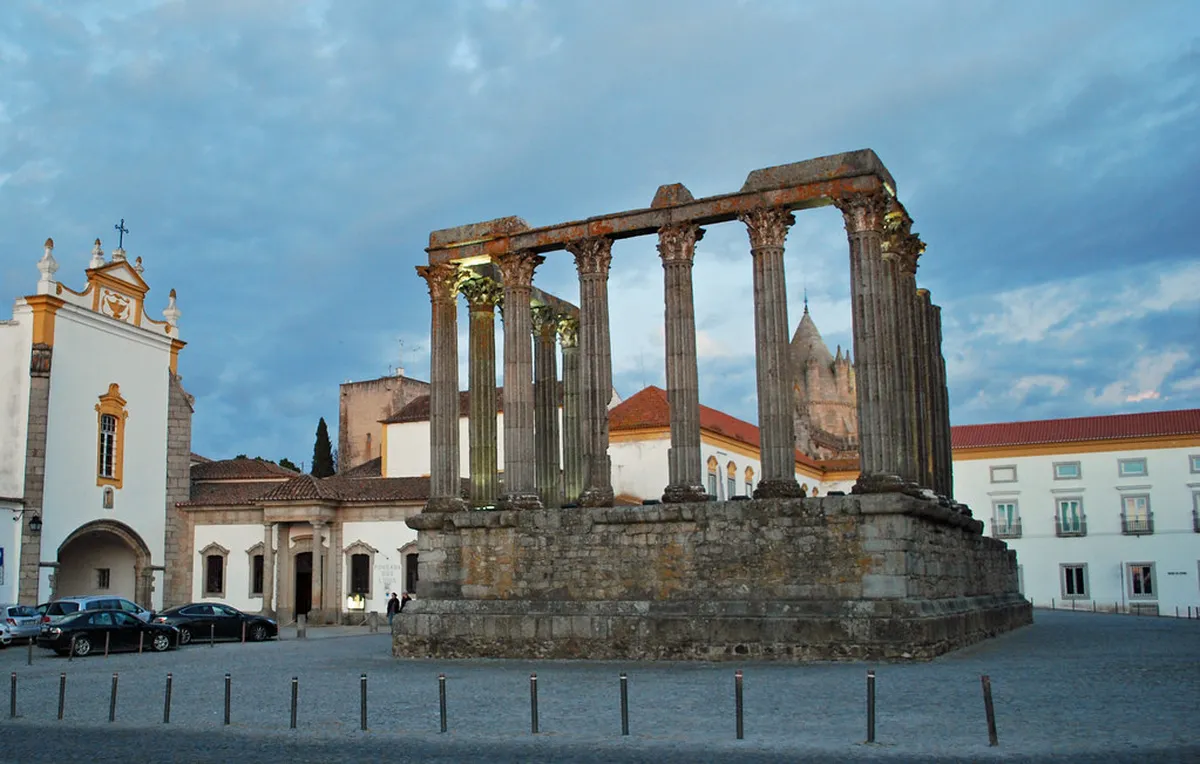
The Roman Temple of Évora stands as a majestic and enduring symbol of Portugal's deep ancient history. This UNESCO World Heritage site attracts thousands of visitors to the heart of the sun-drenched Alentejo region. Travelers will find this impressive monument standing tall in the very center of the city's historic district.
The name comes from a 17th-century legend that falsely linked the site to the Roman goddess of the hunt. Modern research shows it was actually dedicated to Emperor Augustus. You can learn more about this in our things to do in Évora guide.
Often called the Temple of Diana, this structure represents one of the best-preserved Roman ruins in the Iberian Peninsula. Its towering columns provide a window into the Roman Empire's influence on the western edge of Europe. You can easily spend an afternoon admiring the intricate stonework while exploring the surrounding cobblestone streets.
The Significance of the Roman Temple of Évora
This ancient structure serves as the primary centerpiece of the city's extensive Roman heritage and archaeological wealth. Most travelers include this site on their things to do in Évora list because of its striking preservation. Its location on the highest point of the city suggests it was once the focal point of a grand forum.
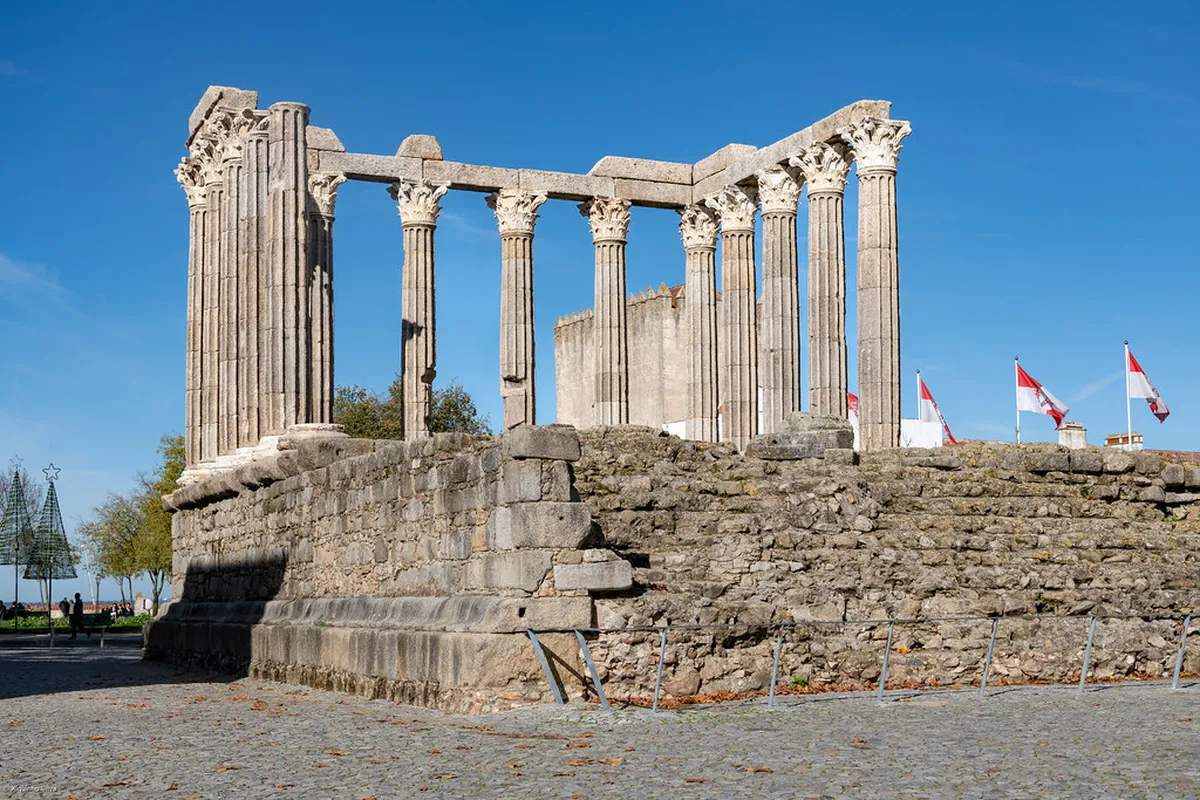
The temple highlights the historical importance of Évora, which was known as Liberalitas Julia during the Roman era. Architects and historians study this site to understand how Roman building techniques were adapted to local Portuguese materials. Walking around the base of the podium allows you to appreciate the sheer scale of ancient engineering.
The monument acts as a silent witness to the various civilizations that have called this hilltop home over two millennia. Its recognition by UNESCO ensures that future generations can continue to learn from this remarkable piece of heritage. Photography enthusiasts often find the contrast between the ancient stone and the blue Alentejo sky truly captivating.
A Short History: From Augustus to Slaughterhouse
Built in the 1st century, the temple was originally dedicated to Emperor Augustus and the imperial cult. The structure underwent significant changes when the Visigoths and later the Moors occupied the city of Évora. During the Middle Ages, local authorities incorporated the temple into a defensive fortress to protect the city center.
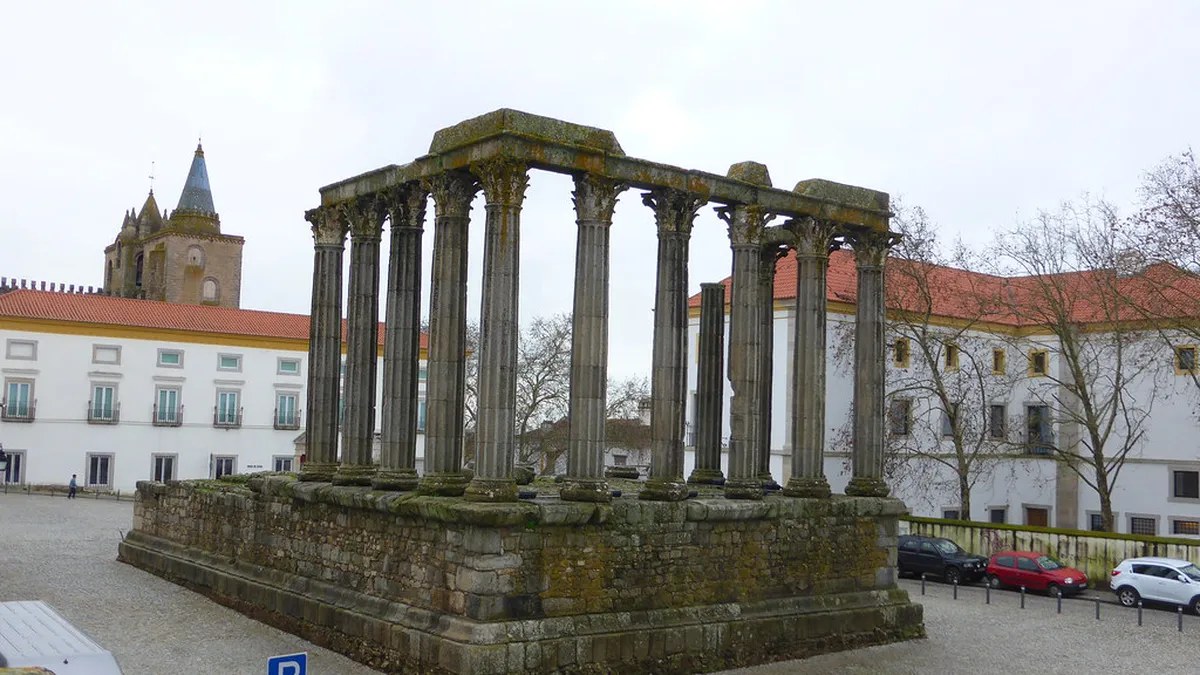
One of the most surprising facts is that the temple served as a municipal slaughterhouse until the year 1836. This unusual use as a butcher shop actually protected the columns from being dismantled for other building projects. The walls built between the columns during this period kept the core structure intact for hundreds of years.
Restoration efforts finally began in the 1870s after the city recognized the monument's immense historical value. Workers carefully removed the medieval additions to reveal the original Roman design that we see today. This transition from a site of daily commerce to a protected monument is a unique chapter in European history.
- The Historical Timeline of the Roman Temple
- 1st Century: Temple for Emperor Augustus
- 5th Century: Fortress during Visigoth rule
- 14th Century: Used as a slaughterhouse
- 1871: Major archaeological restoration begins
The table below summarises how the function of the monument shifted across each major era. This sequence of reuse explains the great paradox of the site: the more "ordinary" its medieval and early-modern jobs became, the better its Roman bones were protected. While many Roman temples across the Iberian Peninsula were quarried for stone, Évora's was simply absorbed into the everyday life of the town.
| Era | Approximate Date | Use of the Building | Effect on Preservation |
|---|---|---|---|
| Roman | ~1st century AD | Temple of the imperial cult, dedicated to Emperor Augustus | Original podium and Corinthian colonnade constructed |
| Visigothic / Early Medieval | 5th–8th century | Abandoned and partly ruined after the fall of Rome | Structure exposed but its core columns left standing |
| Medieval | 14th century onward | Walled up and converted into a defensive tower and fortress | Columns encased in stone walls, hiding and shielding them |
| Early Modern | Until 1836 | Municipal slaughterhouse and butcher's market | Mundane use kept the stone from being scavenged for other buildings |
| Modern | 1871 onward | Restored archaeological monument and UNESCO World Heritage landmark | Medieval additions removed to reveal the Roman design |
It is worth noting that during the centuries when the Inquisition shaped life in Évora, this hilltop sat at the symbolic heart of the city, beside the seat of religious and civic power. The temple's survival through the Visigoths, the Moors, the medieval fortress builders and the early-modern butchers is exactly why it now ranks among the most complete Roman monuments anywhere on the Iberian Peninsula.
Architectural Highlights: The Corinthian Columns
The temple features fourteen original Corinthian columns that have survived centuries of weather and urban development. These elegant pillars rest on a massive podium constructed from large blocks of local granite and stone. Roman builders carefully selected these materials to ensure the structure would withstand the test of time and heat.
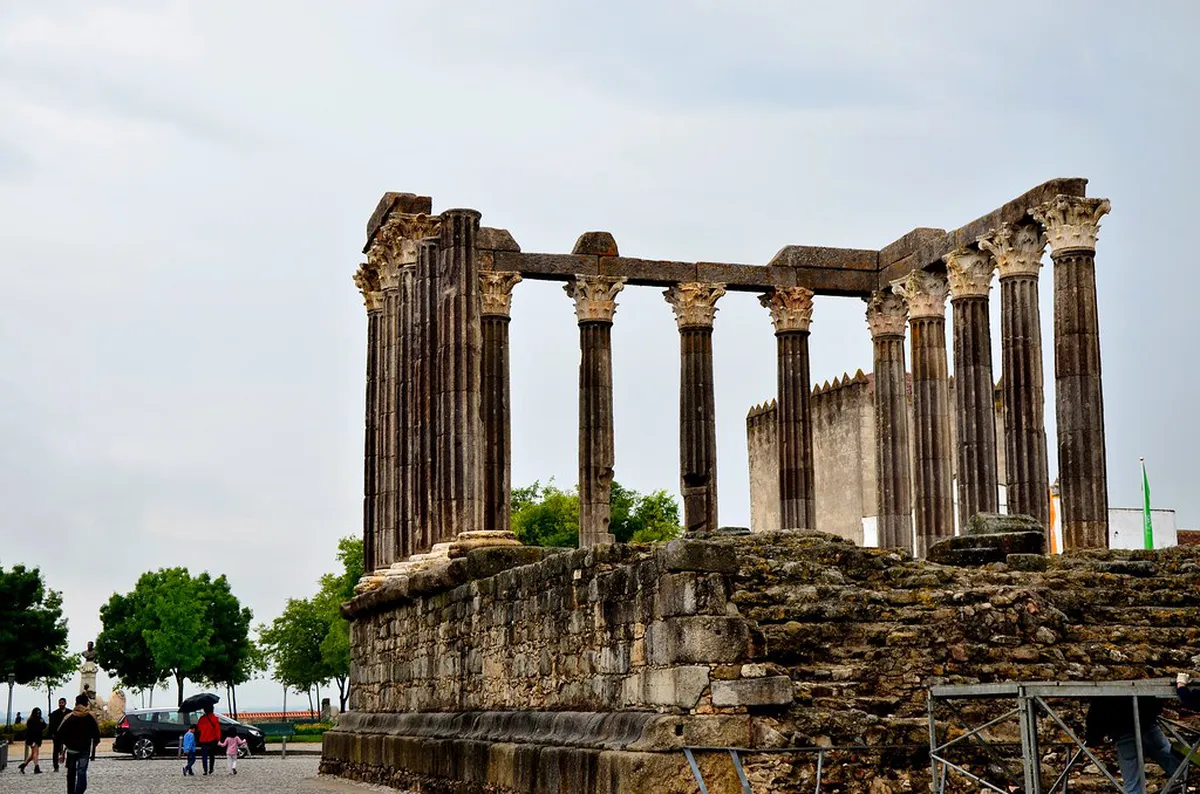
You can see the intricate details of the leaf-shaped capitals made from famous Estremoz marble nearby. This white marble provides a beautiful contrast to the grey granite used for the base and the architrave. The precision of the carvings demonstrates the high level of craftsmanship available in the Roman provinces.
This pairing of materials is a lesson in how Roman builders adapted to the geology of the Alentejo. The region sits on a belt of hard granite, so the shafts of the columns and the heavy podium were cut from local stone that could be quarried close to the site. For the decorative elements that demanded fine detail, the builders turned to the celebrated marble quarries around Estremoz, only a short distance to the north, whose white stone is still prized today. The result is a structure that is firmly rooted in the resources of the surrounding plains rather than imported wholesale from Italy.
Only the northern part of the temple remains largely intact, giving us a clear view of its original layout. The podium stands over three meters high, which originally elevated the temple above the surrounding public square. Visitors can still see the holes in the stone where bronze decorations were likely attached in ancient times.
The "Temple of Diana" Myth Explained
Many people still call this landmark the Temple of Diana despite modern archaeological findings proving otherwise. This popular name emerged in the 17th century based on a legend created by a local Portuguese priest. There is no historical or physical evidence linking the site to the Roman goddess of the hunt.
Most experts now agree the temple actually honored the imperial cult and the power of Rome. The misnomer likely stuck because it sounded more romantic and mysterious to early travelers and historians. Even today, many local signs and maps continue to use the traditional name for the benefit of tourists.
Understanding the difference between the legend and reality adds another layer of interest to your visit. It serves as a reminder of how historical narratives can change over time through folklore and storytelling. The monument remains impressive regardless of which ancient figure it was originally built to celebrate.
Practical Visitor Information: Location and Timing
The temple is located in the Conde de Vila Flor square, right next to the city's main cathedral. Visitors can view the monument for free at any time because it sits in an open public space. Planning a visit during the best time to visit Évora ensures pleasant weather for walking.
The Roman Temple is free, open-air and accessible 24 hours a day. There is no ticket office, gate or set opening hours, so you can visit on your own schedule. You cannot walk inside the colonnade itself, as a low barrier protects the ancient stones, but you can circle the entire podium at close range from the surrounding square.
- Cost: Free to visit, no ticket or reservation needed
- Hours: Open-air and viewable 24/7, illuminated at night
- Access: View from all sides of the public square; interior closed to protect the ruins
- Location: Largo Conde de Vila Flor, on the highest point of the old town beside the Sé Cathedral and the Pousada dos Lóios
Night photography is highly recommended because the temple is beautifully illuminated after the sun sets. The warm yellow lights highlight the texture of the granite and the details of the marble capitals. You should arrive just before dusk to capture the transition from natural light to the evening glow.
Getting to Évora from Lisbon is easy via a direct train or a comfortable bus ride. The train journey offers scenic views of the Alentejo countryside and takes about ninety minutes to complete. Once you arrive at the station, a short uphill walk leads you directly into the heart of the historic center.
- Travel Options for Visiting the Roman Temple
- Train: From Lisbon Sete Rios
- Bus: Rede Expressos from Lisbon
- Car: A6 highway from Lisbon
- Walking: Central Évora historic district
Getting There from Lisbon: Train vs Bus
Most visitors reach the temple as a day trip or short break from the capital, and the two practical choices are the train and the intercity bus. Both drop you in the lower part of Évora, leaving a short uphill walk through the walled old town to reach the monument. The summary below helps you decide which suits your plans.
- By train (Comboios de Portugal): Direct services depart from Lisbon's Oriente and Sete Rios stations and take roughly 1 hour 30 minutes. The route crosses the open Alentejo plains, so it is the more scenic option, and Évora's station sits about a 15-minute walk south of the historic centre.
- By bus (Rede Expressos): Coaches leave from Lisbon's Sete Rios terminal and also take around 1 hour 30 minutes, often with more frequent daily departures than the train. The bus station is a similar short walk from the old town and is usually the cheaper choice.
- By car: The A6 motorway links Lisbon and Évora in about 1 hour 20 minutes, which is useful if you also plan to explore the surrounding Alentejo wineries and megalithic sites.
Best Photo Spots and Night Photography Guide
Because the temple sits in an open square and is floodlit after dark, it rewards photographers far more than a typical fenced ruin. The structure is at its most dramatic during the "blue hour" just after sunset, when the warm artificial lights glow against a deep blue sky and the Corinthian capitals throw long shadows. Use these specific vantage points to capture it well.
- Jardim de Diana (Diana Garden): The small garden terrace immediately north of the temple is the single best viewpoint. Shoot from the low wall at its edge to frame the full colonnade with the cathedral and rooftops of Évora falling away behind it.
- The southern podium corner: Standing low near the granite base and angling upward exaggerates the height of the columns against the sky, ideal at sunrise when the stone turns golden and tour groups have not yet arrived.
- Beside the Pousada dos Lóios: The square in front of the former Lóios Convent gives a clean, head-on view of the temple's best-preserved northern face, perfect for the floodlit night shot.
- Timing: Arrive about 30 minutes before sunset to capture the transition from daylight to the evening glow, and stay after dark, as the temple remains lit and is freely accessible at all hours.
Nearby Attractions in Évora’s Historic Center
Just steps away, the Sé Cathedral offers a stunning view of the temple from its high roof. You should also consider visiting the nearby Évora Museum to see Roman artifacts found during local excavations. A short walk through the narrow streets leads you to the famous Chapel of Bones.
The Jardim de Diana is a small park located right next to the temple ruins. This garden provides a perfect spot to sit and enjoy a coffee while admiring the ancient columns. It also offers one of the best viewpoints for taking photos of the temple with the city in the background.
The Cadaval Palace and the Loios Convent are also located within the same central square as the temple. These buildings showcase the architectural styles that followed the Roman era, including Gothic and Manueline designs. Exploring this small area allows you to see centuries of Portuguese history in just a few hours.
How to Plan Your Visit to the Alentejo Region
Travelers often combine a trip to the temple with a visit to the Cartuxa Winery. The surrounding landscape is also home to the Evora Megalithic Circuit, featuring ancient stone circles. If you are staying in the capital, an Évora day trip from Lisbon is a very popular option.
The Alentejo region is famous for its slow pace of life and incredible traditional food. You can find many excellent restaurants near the temple that serve local specialties like black pork and gazpacho. Consider staying overnight to experience the quiet atmosphere of the city after the day-trippers have left.
If you are heading south, a Faro Travel Guide can help you plan the next leg of your journey. The drive from Évora to the Algarve takes about two hours through beautiful cork oak forests. This route allows you to see the diversity of Portugal's landscapes from the plains to the coast.
Évora 2026: Planning for the European Capital of Culture
The city is currently preparing to serve as the European Capital of Culture in 2026. This prestigious title will bring many new exhibitions and cultural events to the historic center. Visiting now allows you to see the temple before the crowds increase for the major celebrations.
Local authorities are investing in new infrastructure to make the city more accessible for international visitors. You can expect to see improved signage and more guided tour options throughout the historic district. Adding this destination to your Évora itinerary ensures you see the best of the region.
The Roman Temple will likely be a focal point for many of the cultural performances planned for 2026. Its timeless beauty provides a perfect backdrop for concerts and outdoor theater productions. Planning your trip early will help you secure the best accommodation options in the city center.
Frequently Asked Questions
Why is it called the Temple of Diana?
The name comes from a 17th-century legend that falsely linked the site to the Roman goddess of the hunt. Modern research shows it was actually dedicated to Emperor Augustus. You can learn more about this in our things to do in Évora guide.
Can you go inside the Roman Temple of Évora?
Visitors cannot walk inside the temple structure to protect the ancient stones from damage. However, you can get very close to the podium and view it from all angles in the public square. The site is open and free to view 24 hours a day.
What is the best time of day to visit the Temple of Diana?
Sunset and late evening are the best times to visit for photography and atmosphere. The temple is beautifully lit at night, creating a dramatic effect against the dark sky. Early morning is also good for avoiding the heat and larger tour groups.
Is the Roman Temple of Évora free to visit?
Yes, the Roman Temple is completely free to visit as it is located in a public square. You do not need a ticket or a reservation to admire the monument. This makes it one of the most accessible historical sites in the city.
How old is the Roman Temple in Évora?
The temple was built in the 1st century AD during the reign of Emperor Augustus. It is approximately 2,000 years old and has survived through many different eras of history. Its preservation is largely due to its various uses over the centuries.
The Roman Temple of Évora remains a must-see destination for anyone interested in European history and architecture. Its survival through the centuries as a fortress and a slaughterhouse is a testament to its enduring strength. Visiting this site provides a deep connection to the ancient world in a modern, vibrant city.
As the city prepares for its role as the European Capital of Culture in 2026, the temple continues to shine. Whether you visit for the history or the photography, this monument will surely leave a lasting impression. Make sure to include this iconic landmark on your next trip through the beautiful Alentejo region.
 Óbidos Castle: Complete Visitor's Guide (2026)June 11, 2026
 Best Time to Visit Évora Travel GuideJune 8, 2026