Évora Cathedral (Sé de Évora): Visitor Guide Travel Guide
Visit Évora Cathedral (Sé de Évora), a Gothic landmark in the Alentejo. Tickets, hours, rooftop views, and what to see, updated for 2026.
On this page
Évora Cathedral (Sé de Évora): Visitor Guide
Évora Cathedral, known locally as Sé de Évora, stands as a majestic symbol in the heart of Portugal. This impressive structure is one of the country's most significant Gothic monuments. Visitors come to explore its rich history and stunning architecture. It offers a glimpse into centuries of Portuguese heritage.
First-time visitors should prioritize a guided tour or a self-guided visit with an audio guide. Focus on the main nave, cloisters, and the rooftop for panoramic views. These options provide essential historical context and highlight key features. Allow at least 1.5 to 2 hours for a comprehensive experience.
The cathedral’s construction began in 1186, showcasing a blend of Romanesque and Gothic styles. It evolved over time, reflecting various architectural periods. This makes it a fascinating site for history buffs and art lovers alike. Discover its unique features and hidden gems.
Planning a visit to Évora Cathedral means stepping back in time. This guide provides essential information for a smooth and enriching experience. You will find tips on attractions, cultural insights, and practical advice. Make the most of your time at this iconic landmark in Évora.
Évora itself is a UNESCO World Heritage site, offering many attractions beyond the cathedral. Consider combining your visit with other historical spots. Explore the things to do in Évora for a complete cultural immersion. This city promises a memorable journey through Portugal's past.
Rooftop & Terrace Views Over the Old Town
The single best reason to buy the full ticket at Sé de Évora is the rooftop terrace. A tight spiral staircase climbs from the cloister level out onto the roof, where you walk between the cathedral's crenellated stone and the base of its lantern tower. Few cathedrals in Portugal let you up onto the roof itself, which is what makes this stop different from a standard church visit.
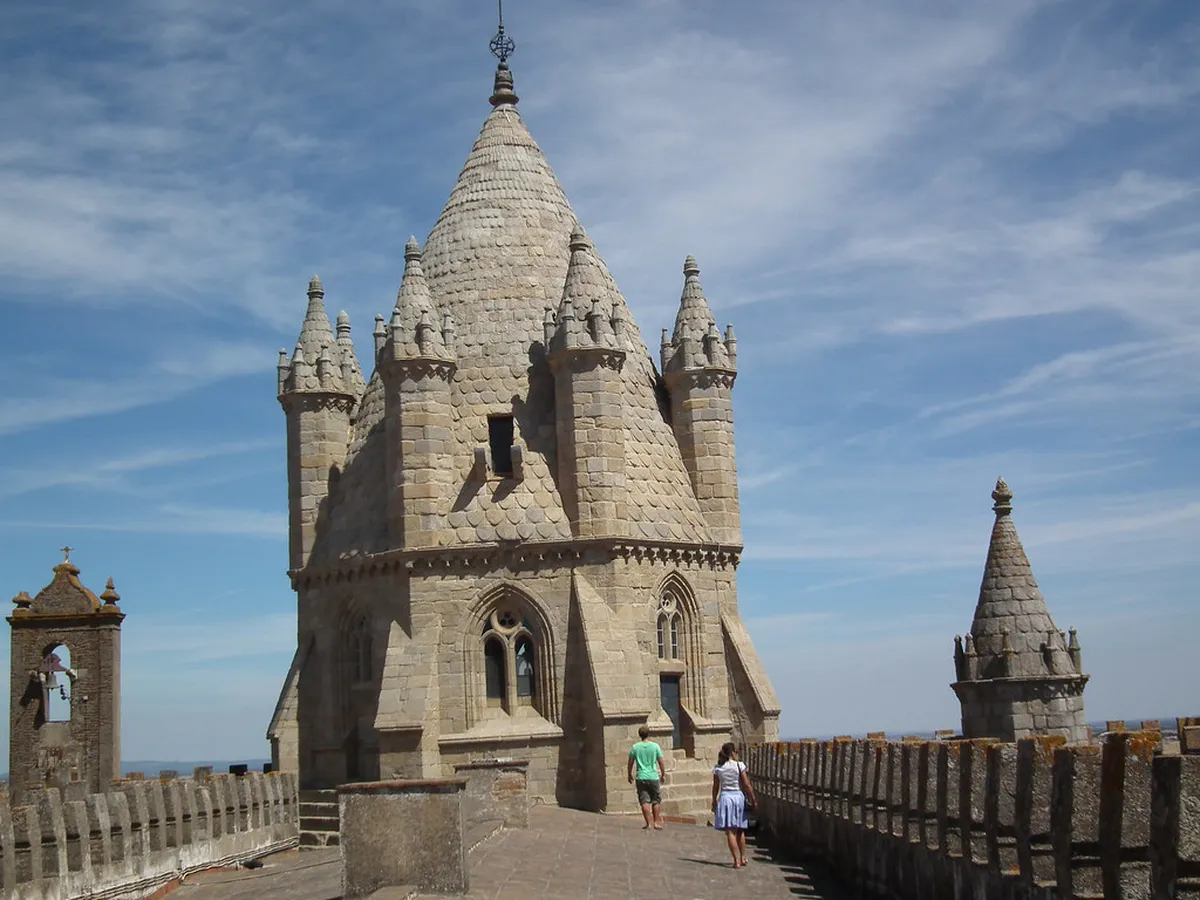
From the terrace you look straight down over Évora's whitewashed rooftops, the ring of the medieval walls, and the open Alentejo plain beyond. The conical cimborium (lantern tower) rises right beside you, and on a clear day you can pick out the Roman Temple of Évora standing just metres away in the same square. It is the highest publicly accessible viewpoint in the historic centre.
Plan the climb for the soft light of late afternoon or early morning, when the granite glows and the heat is bearable. The stairs are steep, narrow, and uneven medieval stone, so they are not suitable for travellers with mobility issues or anyone uneasy with heights. Allow 15 to 20 minutes up top to take it in and shoot photos.
Back at ground level, do not skip the main altar before you leave. Its gilded Baroque carving and the marble work added in the 18th century contrast sharply with the austere Gothic nave, and the side chapels each hold their own altarpieces and tombs. Together the nave, cloister, museum, and roof make a layered visit that rewards the full ticket.
The Cloister & Sacred Art Museum
The granite Gothic cloister is the quiet heart of Sé de Évora. Built in the 14th century under Bishop Pedro, it wraps a square garden in pointed arches carved from local stone, with statues of the four Evangelists set in the corner pillars. A narrow staircase in one corner is the route up to the rooftop, so most visitors pass through here twice.
Off the cloister, the Museu de Arte Sacra (Museum of Sacred Art) occupies rooms above the entrance and is included with the full cathedral ticket. Its prize piece is a 13th-century carved-ivory Virgin whose body opens into three panels of painted scenes from the life of Mary, a rare French Gothic reliquary. The collection also holds jewelled chalices, vestments, illuminated manuscripts, and liturgical silver gathered over centuries.
Allow 20 to 30 minutes for the museum on top of your cloister time. Because everything sits inside the same complex, you can move between the nave, cloister, museum, and roof on one ticket without leaving the building. Check the official Évora Cathedral page for current opening hours before you go.
The cathedral anchors a city that will be a European Capital of Culture for 2027, and its sacred-art holdings are a big part of why. For a wider view of religious art in the city, the nearby Évora Museum in the old archbishop's palace complements what you see in the cathedral.
History of Évora Cathedral (Sé de Évora)
Construction of Sé de Évora began around 1186, soon after the city was retaken from Moorish rule, and the main body was largely finished by the mid-13th century. That timing makes it one of the oldest and, at roughly 70 metres long, the largest medieval cathedral in Portugal. It was raised on the highest point of the walled town, the same hilltop the Romans had used for their temple centuries earlier.
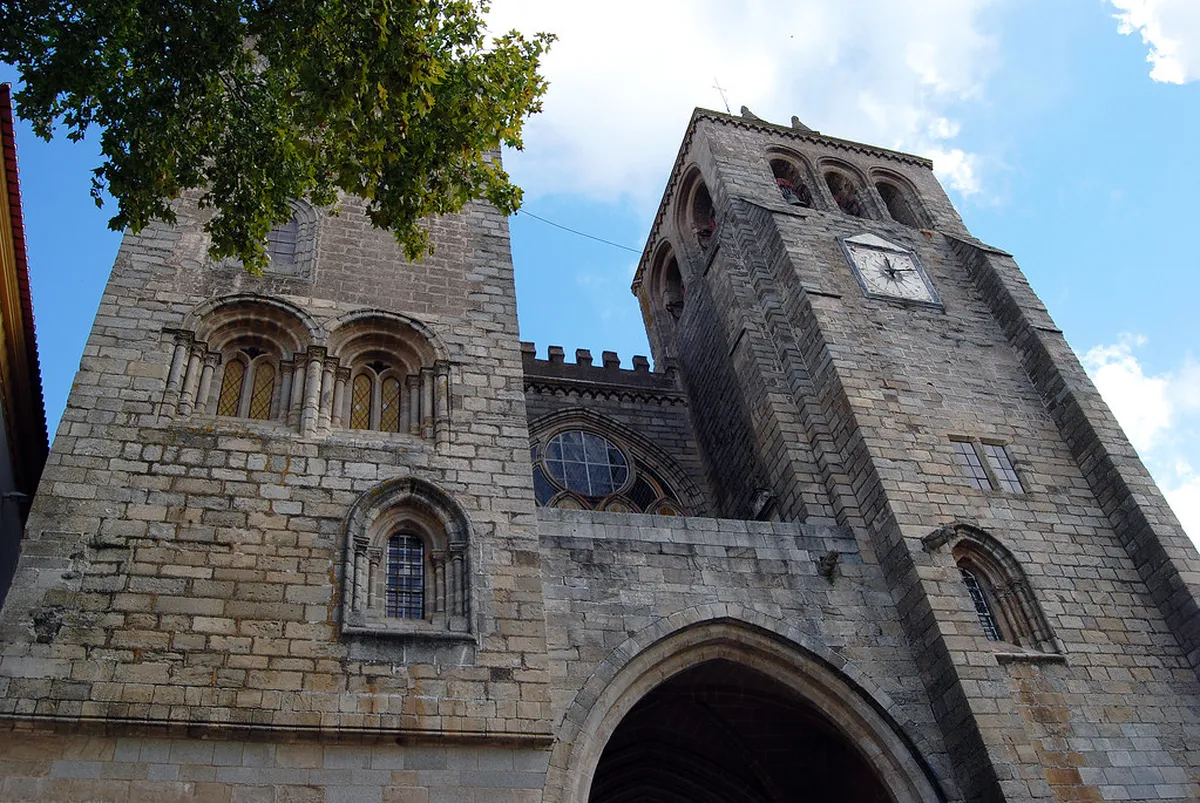
The cathedral grew over more than 500 years. The Romanesque-Gothic core came first; the cloister was added in the early 14th century; and Baroque and Manueline touches, including a remodelled main chapel in coloured marble, arrived later. In 1184, before the present church, the cathedral is said to have been linked to the city's reconquest, and over the centuries it served as both a place of worship and a fortified refuge, which is why its towers look so castle-like.
It was here, by tradition, that the banners of Vasco da Gama's fleet were blessed before the voyage to India in 1497, tying the building directly to Portugal's Age of Discovery. The cathedral was classified a national monument and, with the rest of Évora's historic centre, inscribed on the UNESCO World Heritage list in 1986.
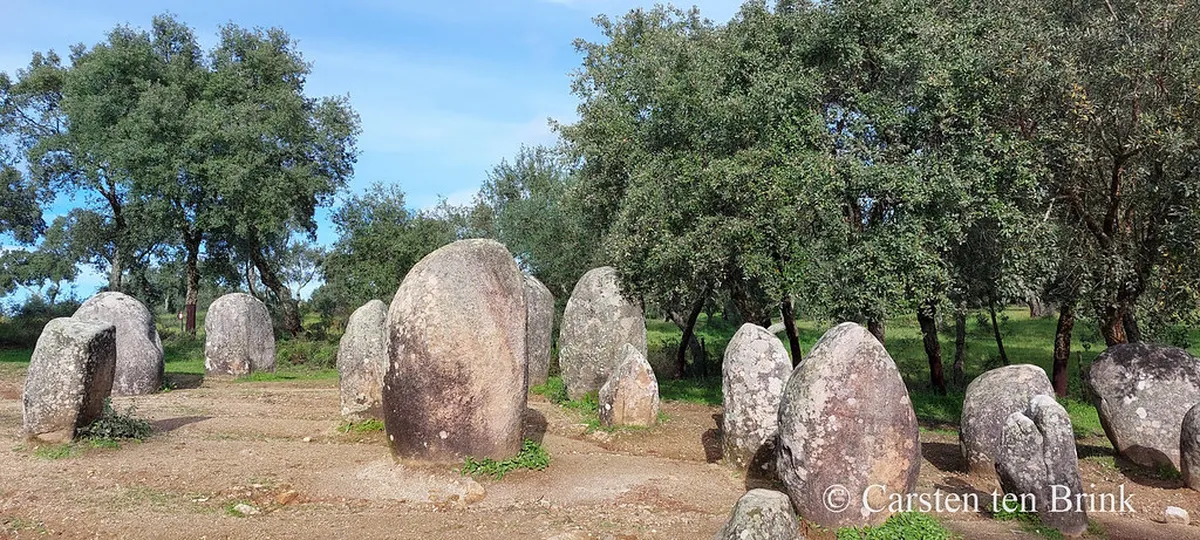
To put the cathedral's age in perspective, the surrounding Alentejo holds monuments far older still: the Almendres Cromlech, a megalithic stone circle just outside the city, predates the cathedral by some 6,000 years. Seeing both on one trip lays out an extraordinary span of human history on a single Évora hilltop and its plain.
Tickets, Hours & What's Included
Sé de Évora sells its admission in tiers, so it pays to know what each one covers before you reach the desk. Entry to the nave alone is the cheapest option, but most visitors choose the full ticket because the best features sit behind the upper tiers.
- Nave only — access to the main church interior. The lowest-priced tier, suitable if you are short on time.
- Cathedral + cloister — adds the 14th-century granite Gothic cloister and its corner statues.
- Full ticket (cathedral + cloister + Sacred Art Museum + rooftop) — the best value, since it bundles the Museu de Arte Sacra and the rooftop terrace, the two things that set this visit apart.
The cathedral generally opens around 9:00–9:30 AM and closes in the late afternoon (roughly 5:00 PM, later in summer), with a possible midday break; the ticket desk stops selling about 30 minutes before closing. Reduced rates usually apply for children, students, and seniors, and very young children often enter free. Card payment is accepted at the desk, so you need not carry cash. Always confirm the current prices and hours on the official Évora Cathedral page, as the cathedral updates them seasonally.
Because the rooftop and museum are only reachable on the higher tiers, budget travellers should still consider the full ticket here rather than the nave-only option, then keep costs down elsewhere. The wider city offers plenty of free sightseeing: the open-air Roman Temple right next door, the medieval walls, and the lanes of the historic centre all cost nothing to walk. For a deeper rundown of what to pair with the cathedral, see our guide to the things to do in Évora.
How to Visit & Getting There
Sé de Évora sits at the top of the walled old town on Largo do Marquês de Marialva, right beside the Roman Temple (Templo de Diana) and the Évora Museum. The historic centre is compact and pedestrian-friendly, so wherever you arrive in Évora the cathedral is a short, mostly uphill walk through the lanes.
If you are coming from Lisbon, Évora is an easy day trip about 130 km east. Direct trains from Lisbon's Oriente station take roughly 1.5 hours to Évora's station, from which it is a 15-minute walk up to the cathedral; intercity buses run a similar route. Drivers should park outside the walls, as the centre is tight and partly restricted; the public car parks near the walls are an easy stroll from the Sé.
Aim to arrive when the cathedral opens, around 9:00–9:30 AM, to walk the nave and cloister before tour groups build up, and save the rooftop for the clearer light. Budget at least 1.5 to 2 hours to cover the church, cloister, Sacred Art Museum, and roof without rushing. If you are working from a tighter Évora itinerary, prioritise the cloister and rooftop. Wear shoes with grip for the steep, uneven terrace stairs, and check the best time to visit Évora — spring and autumn bring comfortable temperatures, while summer midday heat on the exposed roof can be punishing.
Everything else worth seeing is within a few minutes' walk. The Roman Temple is across the square, and the Chapel of Bones is a 10-minute stroll south. Build in a stop at one of the best restaurants in Évora nearby to round out a half-day in the upper town.
The Famous Pregnant Virgin Mary Statue: A Rare Religious Artifact
Évora Cathedral houses a truly unique and significant artifact: the Pregnant Virgin Mary statue. This striking Gothic sculpture dates back to the 15th century. It depicts the Virgin Mary visibly pregnant, a rare portrayal in religious art. This makes it a compelling piece for visitors.
The statue's rarity stems from the theological context of the time. Most depictions of Mary focused on her as a mother or saint. This specific imagery offers a powerful visual representation of anticipation and new life. It adds a distinctive spiritual layer to the cathedral's collection.
You can find this poignant statue within one of the cathedral's side chapels. It is often a focal point for visitors interested in art history and religious symbolism. Take a moment to appreciate its intricate details and profound message. This artwork holds deep cultural and historical value.
The Pregnant Virgin Mary statue reflects the artistic and religious sensibilities of medieval Portugal. Its presence underscores the cathedral's role as a repository of unique heritage. It stands as a testament to the diverse expressions of faith. This piece offers a quiet, contemplative experience.
Architecture: A Romanesque-Gothic Landmark
Évora Cathedral boasts a fascinating blend of architectural styles, making it truly unique. Its foundation began in Romanesque style, evident in the sturdy lower sections. Over time, Gothic elements were incorporated, particularly in the upper levels and vaulting. This fusion creates a distinctive visual appeal.
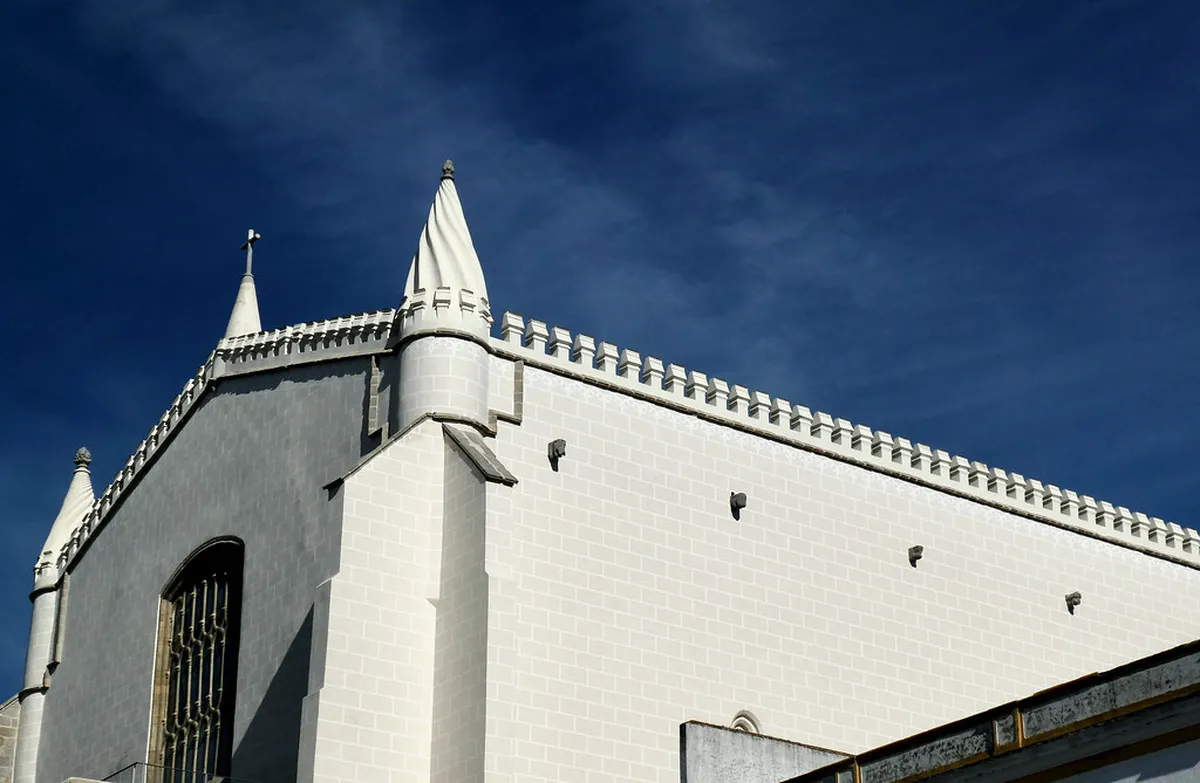
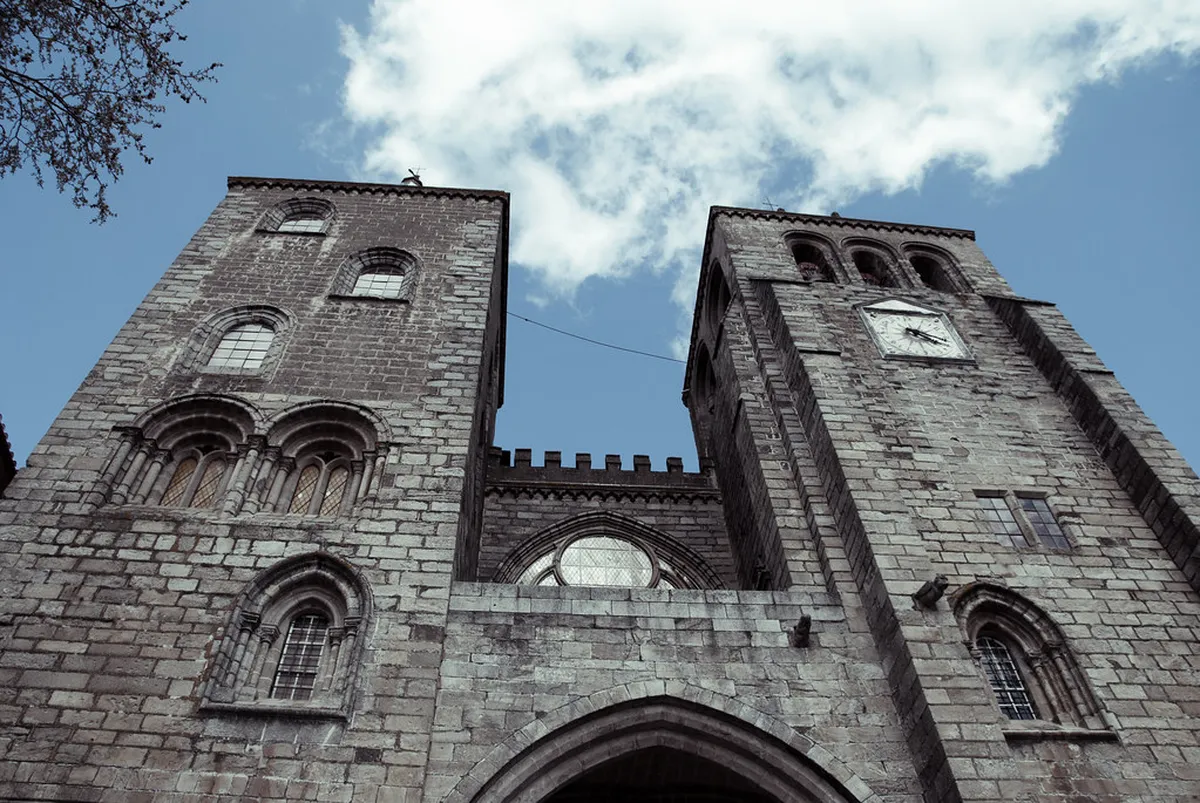
One of its most striking features is the fortified appearance, resembling a castle. This reflects its defensive role during certain historical periods. The two asymmetrical bell towers also add to its unique silhouette. They contribute to the cathedral's imposing presence on the Évora skyline.
The lantern tower, or cimborium, is another architectural marvel. It features a conical spire flanked by smaller turrets. This design is highly unusual for Portuguese cathedrals. It allows natural light to flood the central crossing. This creates a bright and airy interior space.
Inside, the magnificent Gothic cloister offers intricate tracery and serene beauty. The capitals of its columns display diverse carvings, from religious scenes to natural motifs. These details showcase the craftsmanship of medieval artisans. Explore these elements to appreciate the cathedral's full grandeur.
Frequently Asked Questions
Which Évora Cathedral (Sé de Évora) visitor guide options fit first-time visitors?
First-time visitors should prioritize a guided tour or a self-guided visit with an audio guide. Focus on the main nave, cloisters, and the rooftop for panoramic views. These options provide essential historical context and highlight key features. Allow at least 1.5 to 2 hours for a comprehensive experience.
How much time should you plan for Évora Cathedral (Sé de Évora) attractions?
Plan approximately 1.5 to 2 hours to fully explore Évora Cathedral, including the Sacred Art Museum and the rooftop. If you are on a tight schedule, you can see the main church and cloisters in about an hour. However, extra time allows for a more relaxed and detailed visit.
What should travelers avoid when planning Évora Cathedral (Sé de Évora) visitor guide?
Avoid visiting during peak midday hours in summer to escape the heat and largest crowds. Do not forget to wear comfortable shoes, especially for climbing the rooftop stairs. Also, avoid relying solely on cash for tickets, as card payments are often preferred. Check opening times before you go to prevent disappointment.
Is Évora Cathedral (Sé de Évora) worth including on a short itinerary?
Yes, Évora Cathedral is absolutely worth including on a short itinerary due to its historical and architectural significance. It is a central landmark in Évora and offers stunning views from its rooftop. Even a quick visit to the main areas provides a memorable cultural experience. Combine it with the Roman Temple of Évora nearby.
Which Museums, Art, and Culture in Évora Cathedral options fit first-time visitors?
First-time visitors should definitely explore the Sacred Art Museum located within the cathedral complex. It houses a rich collection of religious artifacts, vestments, and sculptures. This museum offers a deep dive into the cathedral's artistic and spiritual heritage. It provides valuable context to the main church.
Évora Cathedral stands as a timeless monument, offering a profound journey through Portugal's history and artistry. Its blend of Romanesque and Gothic architecture captivates every visitor. From the serene cloisters to the panoramic rooftop views, each section reveals a new facet of its grandeur.
Planning your visit with this guide ensures you experience the cathedral's most compelling features. Discover the Sacred Art Museum's treasures and the unique Pregnant Virgin Mary statue. Take time to appreciate the architectural details that make it truly special.
Beyond the cathedral, Évora invites further exploration of its charming streets and historical sites. This city, a UNESCO World Heritage site, promises a rich cultural experience. Make your trip to Évora unforgettable by delving into its deep heritage. It is a destination that truly resonates with history.
Whether you are a history enthusiast or an art lover, Évora Cathedral leaves a lasting impression. Its spiritual and architectural significance makes it a must-see in Portugal. We hope this guide helps you plan a memorable and enriching visit to Sé de Évora.
 Best Time to Visit Évora Travel GuideJune 8, 2026