
12 Best Things To Do In Guimaraes: A Local's Travel Guide (2026)
Discover the best things to do in Guimarães, Portugal. From the medieval castle to the Monte da Penha cable car, plan your perfect trip with local tips and transport advice.
On this page
12 Best Things To Do In Guimaraes
I still remember the first time I walked through the granite archways of Guimarães during a misty autumn morning. The city feels remarkably different from the coastal bustle of Porto, offering a preserved medieval atmosphere that earns its title as the cradle of Portugal. As the birthplace of the nation's first king, Afonso Henriques, every stone here tells a story of independence and royal heritage.
This guide explores the most authentic 12 Best Things To Do In Guimaraes: A Local's Travel Guide to help you plan an efficient itinerary. Whether you are visiting for the history or the hillside views, the city rewards those who slow down and explore the side streets. Updated June 2026 to reflect current ticket prices, train schedules, and opening hours.
Most visitors arrive wondering Is Guimarães Worth Visiting? My Honest Portugal Review for just a few hours. While a day trip is common, staying overnight allows you to see the medieval squares illuminated without the afternoon tour groups. Our editors have vetted these locations to ensure they provide a mix of iconic landmarks and quiet local haunts.
Key Takeaways
- Best Overall: Guimarães Castle and the Ducal Palace (the Royal Cluster).
- Best for Families: The Monte da Penha Cable Car and the hilltop boulders.
- Best Free Activity: Walking the UNESCO medieval squares and the Zona de Couros.
- Insider Tip: Buy a combo ticket for the Castle and Palace to save money and skip the second line.
- Food Pick: Try the Tortas de Guimarães at a bakery in Largo do Toural.
Why Guimarães: The Birthplace of Portugal
Guimarães holds a unique position in Portuguese national identity that no other city can claim. In 1128, Afonso Henriques defeated the forces of his own mother, Countess Teresa of León, at the Battle of São Mamede fought just outside the castle walls. That unlikely family conflict established him as the ruler of an independent County of Portucale, and the Kingdom of Portugal was formally recognised by the Pope in 1143. The city has never let anyone forget it: a giant inscription on the medieval walls reads "Aqui Nasceu Portugal" — Portugal was born here.
The historical significance runs deeper than a single battle. The castle itself was founded in 959 by Countess Mumadona Dias to defend a nearby monastery from Viking and Moorish raids. The same hillside where she built her fortress is where Afonso Henriques grew up, trained, and launched his campaign for independence. Walking between the castle, the Igreja de São Miguel do Castelo, and the Ducal Palace today is essentially walking the founding sequence of an entire nation compressed into a few hundred metres.
Guimarães was also named a European Capital of Culture in 2012, which triggered significant investment in restoring building facades and public spaces. The result is a medieval center that feels genuinely lived-in rather than museum-like. Locals sit at café tables in the same squares where medieval guilds once met, and students from the University of Minho fill the bars each evening. According to the UNESCO World Heritage Centre - Guimarães, the city is an exceptionally well-preserved example of a medieval settlement whose evolution illustrates an important stage in the development of Portuguese architectural styles.
Explore the Birthplace of Portugal at Guimarães Castle
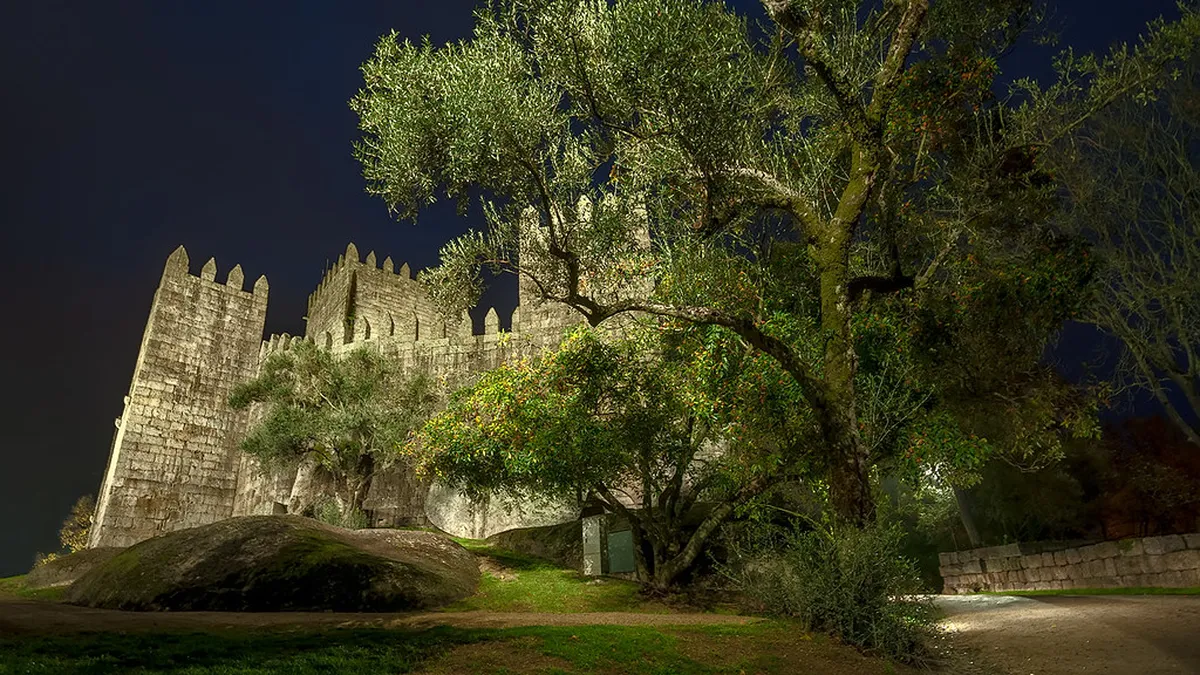
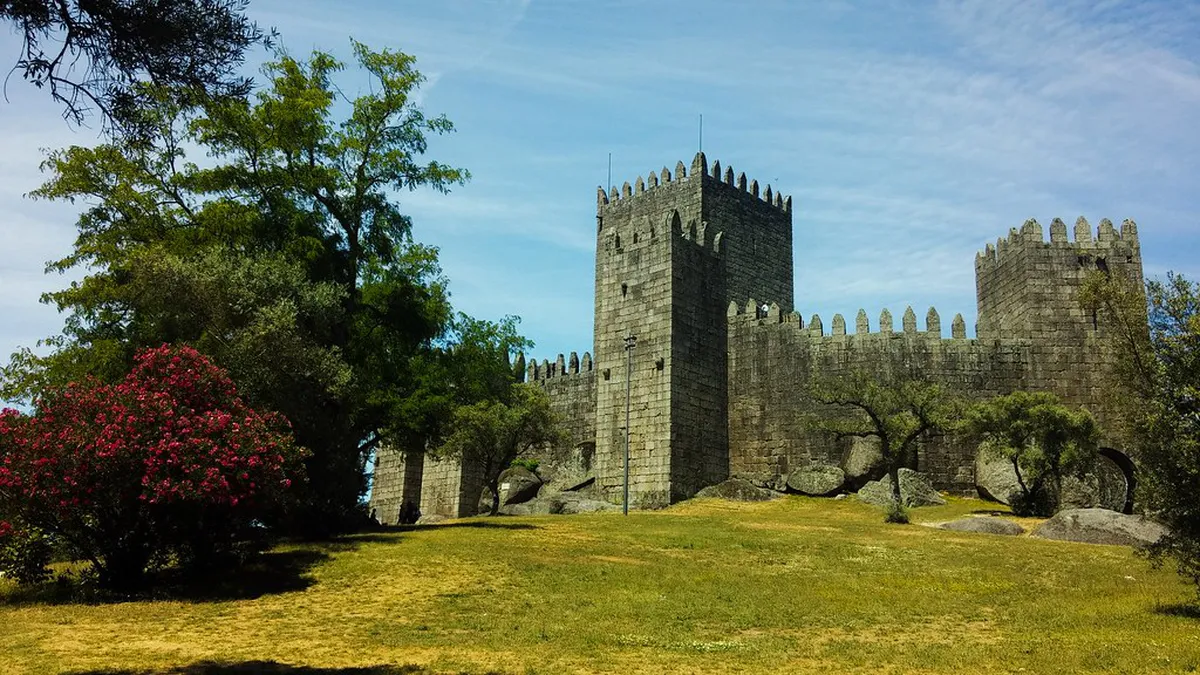
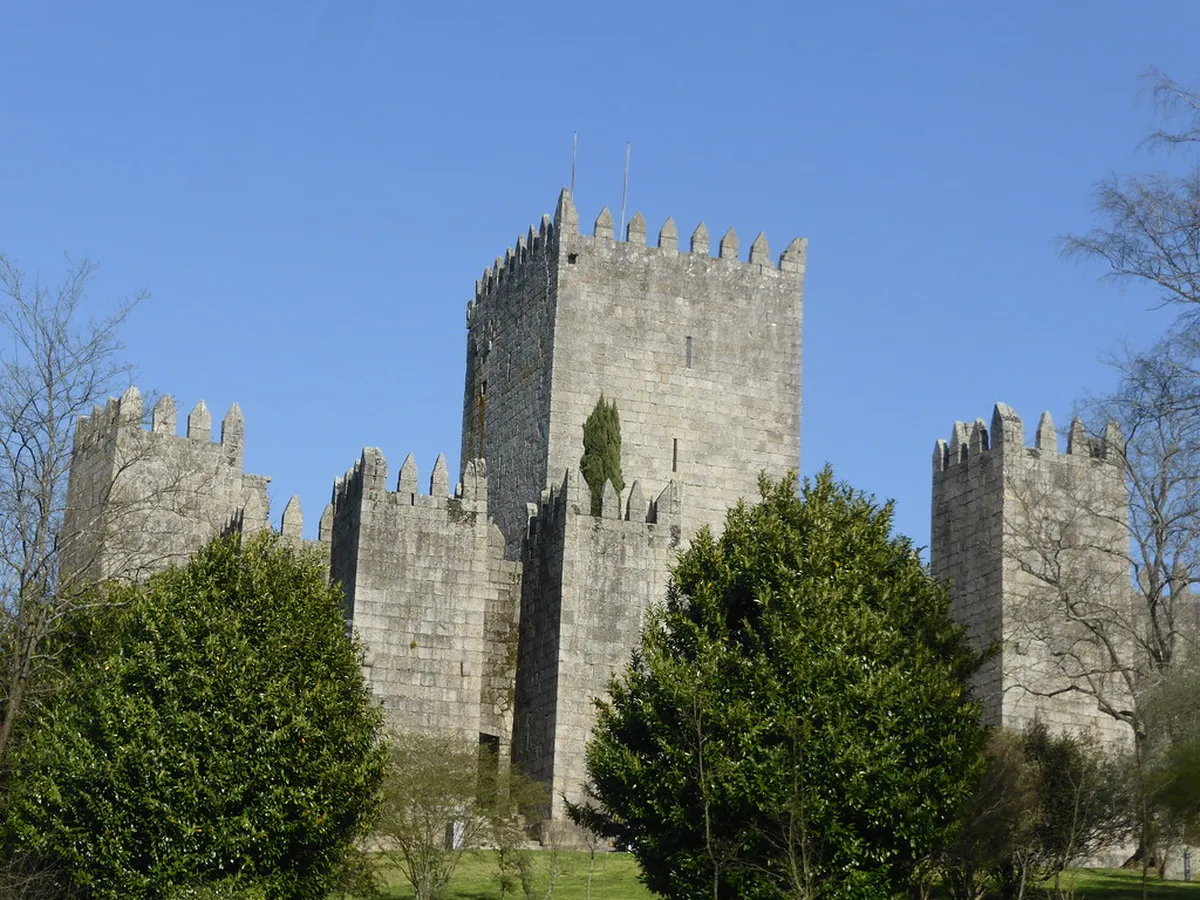
The Castelo de Guimarães sits on a granite outcrop at the northern edge of the historic center and is the single most important symbol in the country. The original structure was built directly onto the exposed rock, and you can still see the natural granite forming part of the foundations. What stands today — eight towers connected by solid stone walls and a square 28-metre keep added in the 13th century — represents centuries of reinforcement driven by the knowledge that losing this hilltop meant losing the nation's founding story.
Entry costs around €5 for adults in 2026. Climb the keep for panoramic views across the terracotta rooftops and the rolling green hills of the Minho. Look closely at the keep's original entrance: it sits several metres above ground level and was once only accessible by a removable wooden ladder, a last line of defence against siege. The interior rooms are sparse, so do not expect furnished chambers. The real value is in the rampart walk and the atmosphere of standing where Portuguese independence was decided.
The castle sits within a few minutes' walk of the Igreja de São Miguel do Castelo, a tiny Romanesque chapel where the original baptismal font used to christen Afonso Henriques is still inside. Its floor is paved with the tombstones of warrior-nobles who fought at the Battle of São Mamede. Visit both together — the castle for the view, the chapel for the detail.
The castle's keep was originally only accessible by a removable wooden ladder, which served as a last line of defense during medieval sieges. The 28-metre tower dates to the 13th century and offers panoramic views across the Minho region.
Tour the Stately Palace of the Dukes of Braganza
The Paço dos Duques de Bragança is immediately recognisable for its 39 cylindrical chimneys, a design influenced by the Burgundian manor houses the first Duke had admired during his time at the French court. The palace was built between 1420 and 1433 and later served as an official presidential residence before becoming the museum it is today. The exterior looks almost military — battlements, stone walls, Gothic cloister — yet the interior is more palace than fortress.
The great halls are the highlight. The wooden ceilings were built using naval carpentry techniques, the beams shaped like the inverted hulls of ships. Flemish tapestries depicting the Portuguese conquest of North Africa hang in the main rooms, essentially 15th-century war journalism told in thread. A weapons collection traces the evolution from broadswords and chainmail to early firearms. One room worth noting is the Sala dos Passos Perdidos, the Hall of Lost Steps, named for the visitors who would pace here waiting for an audience with the Duke.
A combined ticket covering both the castle and the palace costs around €8 and saves a small amount over individual entry. The palace offers a far richer interior experience than the castle, so if you must choose one, choose the palace. Plan for about 90 minutes here to read the exhibition panels and absorb the scale of the tapestries.
Wander the UNESCO-Listed Medieval Streets
The heart of the UNESCO-protected historic center is a cluster of interconnected squares and narrow lanes between the castle hill and the Largo do Toural to the south. Largo da Oliveira is the emotional center of the old town, framed by the Igreja de Nossa Senhora da Oliveira, the 14th-century Gothic Padrão do Salado canopy, and an ancient olive tree that gave the square its name. The tree standing there today is a replacement planted in 1985 to keep the medieval legend alive — the original reportedly burst back into leaf from a dead trunk in 1342, which the city took as a miracle.
Rua de Santa Maria connects the castle hill to the lower squares and is one of the oldest streets in the city. The lane is lined with restored wooden balconies, hanging flower baskets, artisan shops, and small wine bars. It costs nothing to walk and is the most direct way to feel the texture of medieval Guimarães. Continue south to Praça de São Tiago, a quieter square with café tables that fills with locals after 18:00.
The Zona de Couros, or Leather Tanning District, sits just south of the medieval center and is one of the most skipped sections of any Guimarães visit. The sunken granite pits where leather was processed using water from the Ave River are still visible, and the adjacent Leather Museum documents how this industry dominated the local economy for centuries before the modern textile boom. It is a free outdoor space and takes about 30 minutes to explore. Few tour groups bother, which makes it unusually peaceful.
Ride the Cable Car to Monte da Penha
The Teleférico da Penha was Portugal's first cable car when it opened in 1995. The 1.7-kilometre ride climbs 400 vertical metres in seven to ten minutes, lifting you from the granite streets of the city to a forested summit at 586 metres. A single journey costs €5.00 and a return ticket €10.00. The cable car operates during daylight hours and the last descent is earlier than you might expect — check the timetable at the bottom station before you go up, or you will face a long walk downhill through the forest.
The summit is not just a viewpoint. Ancient chestnut and oak trees cover the slopes, and walking trails wind between massive granite boulders worn into smooth, rounded forms by thousands of years of erosion. Locals have carved steps into some of the rocks and turned small caves into shrines and picnic shelters over the centuries. The hilltop sanctuary, completed in 1947 and built from the same grey granite as the surrounding boulders, is architecturally striking — Art Deco geometry from a distance, almost invisible from the city below.
Near the summit, a statue of Pope Pius IX marks the best viewpoint, with an unobstructed line of sight back down to Guimarães Castle far below. Allow at least 90 minutes at the top to walk the boulder trails and visit the sanctuary. The cable car is popular on weekends, so aim for a weekday morning to avoid queues at the lower station.
Check the cable car timetable before ascending to Monte da Penha, as the last descent is significantly earlier than typical tourist hours. The Art Deco sanctuary on the hilltop is a striking 1947 addition that blends seamlessly with the natural granite landscape.
Discover Sacred Treasures: Alberto Sampaio Museum and Igreja da Oliveira
The Igreja de Nossa Senhora da Oliveira is one of the most important churches in northern Portugal and the spiritual anchor of Largo da Oliveira. Countess Mumadona founded a monastery here in the 10th century, and the current Gothic structure was commissioned by King João I in 1385 to celebrate his victory at the Battle of Aljubarrota. The painted wooden ceiling in blues and golds and the gilded chapel woodwork are worth pausing for. Entry to the church is free, though a small donation is appreciated during active prayer times.
The adjacent Museu de Alberto Sampaio occupies the monastery's Romanesque cloister and holds two exceptional pieces. The first is the portable silver-gilt altarpiece that João I reportedly carried with him to Aljubarrota. The second is the padded linen gambeson he wore in battle that day — one of the best-preserved examples of medieval military clothing in Europe. The cloister is trapezoidal rather than the usual perfect square, squeezed into the medieval street plan, and each column capital is carved with different animals, biblical scenes, and foliage. No two are identical, the individual signatures of 13th-century stonemasons. Adult entry costs around €4, and the museum is closed on Mondays.
Further west, the Igreja de Nossa Senhora da Consolação is a Baroque church known for its twin slender spires and its position at the end of the long flower-lined Largo da República do Brasil gardens. Access is free. The best photograph is taken from the far end of the gardens at sunset, when the spires frame a sky that shifts from orange to deep blue above the city.
Day Trip to the Citânia de Briteiros Ruins
The Citânia de Briteiros sits 15 kilometres north of Guimarães and is one of the most interesting archaeological sites in Portugal. The hilltop settlement dates to the Iron Age and was home to a Celtic Castro culture community of perhaps a thousand people before the Romans arrived. Over 150 circular stone houses survive, arranged not randomly but in walled family compounds connected by paved stone streets — a layout that reveals a society considerably more organised than most visitors expect from pre-Roman Iberia.
The site's most famous object is the Pedra Formosa, an elaborately carved granite slab that formed the entrance to a ritual bathhouse. The opening is so small that anyone entering had to crawl through on hands and knees, likely as a deliberate act of passage or purification. The original stone is now in the Museu Martins Sarmento in Guimarães, named after the 19th-century archaeologist whose careful excavation of the site set a standard for the field in Portugal. What remains on the hilltop is a full-scale replica.
The stone drainage channels cut into the streets over two thousand years ago still carry rainwater downhill during a storm. Look for carved solar symbols on doorframes — protective markings that connect this quiet hilltop in northern Portugal to Celtic traditions found across pre-Roman Europe. Entry costs around €4. The site is best reached by car or taxi from Guimarães; the drive takes about 20 minutes on well-maintained roads.
Where to Eat in Guimarães
Guimarães has a strong local food identity rooted in the Minho tradition of bacalhau (salt cod), caldo verde soup, and the regional Vinho Verde. Two pastries are specific to this city. The Torta de Guimarães is a crunchy half-moon pastry with buttery layers and a rich egg and almond centre — the savoury note many people taste is pork fat, not butter, so vegetarians should be aware. Toucinho do Céu is a dense almond and egg-yolk cake with origins in the convent kitchens of the Convent of Santa Clara. The best place to buy both is Casa Costinhas, a bakery with a direct lineage back to the three women who started making convent sweets there after the Republic dissolved religious orders.
For a full meal, Adega dos Caquinhos is a traditional family restaurant near the historic center that serves reliable homemade Portuguese cooking at straightforward prices. Cervejaria Martins is one of the busiest spots in the old town and is known for its Francesinha sandwich — the chunky Porto invention filled with meat and drenched in beer-tomato sauce travels well to Guimarães. SALA 141 is a more modern alternative with Mediterranean dishes and vegan options, and suits a lighter lunch after a morning of walking. Tasquinha do Tio Júlio runs late and attracts a local mix of students and office workers, making it the best choice for dinner after the tourist rush clears at around 20:00.
The Mercado Municipal is worth a morning visit even if you are not buying food. The permanent vendors sell bacalhau at dedicated counters — the first time many visitors encounter a stall selling nothing but salt cod. The temporary pop-up section operates on a reduced-stall basis from Monday to Saturday and features seasonal produce from small farms in the surrounding Minho valley.
Is Guimarães Worth Visiting on a Day Trip?
If you appreciate medieval architecture and national history, this is arguably the most important stop outside of Porto. The compact nature of the historic center makes it possible to see the primary sights in a single afternoon. A One Day in Guimarães Itinerary Travel Guide covers the castle, palace, Largo da Oliveira, and the cable car with minimal backtracking.
Comparing it to nearby Braga, Guimarães feels more secular and medieval while Braga is defined by its Baroque religious monuments. Both cities are worth visiting, but Guimarães is the better choice for those who love castles, narrow alleys, and a strong sense of national origin. The two cities are only 25 kilometres apart, so a combined trip is practical for anyone staying in the region for more than one night.
The atmosphere changes significantly after the day-trippers leave around 17:00. The granite walls absorb the heat of the day and create a cozy, intimate atmosphere in the squares at night. If you have time, staying for dinner allows you to experience the local Vinho Verde in its authentic home region — the wines here are younger and crisper than what travels to export markets, and restaurant prices per bottle are substantially lower than in Porto.
How to Get to Guimarães from Porto
The train from Porto São Bento Station is the most popular and affordable method. Trains depart roughly every hour from approximately 06:00 to midnight, and the journey takes about 60 to 75 minutes through the green valleys of the Minho. A one-way ticket costs around €4 making it the best-value option for solo travelers and couples. One critical detail: some São Bento trains split during the journey, with certain carriages branching off to Braga while others continue to Guimarães. If you board the wrong section you will arrive in the wrong city. Check the carriage designation at the station and ask a CP staff member if unsure — this mistake is common enough that even locals have made it.
Buses are a second option. From Porto's Campanhã station, routes operated by Rede Expressos and Flixbus serve Guimarães multiple times per hour. One-way tickets cost under €10. The bus journey is roughly comparable in duration to the train and useful if your timing does not align with a train departure.
If you prefer a faster journey, a rideshare with Bolt or Uber takes about 40 to 45 minutes and drops you directly near the historic center. A one-way trip typically costs between €30 and €50 depending on time of day and demand. This option makes practical sense for groups of three or four where the cost splits favourably. Driving yourself is also straightforward — the A3 and A7 motorways are well-maintained. Parking within the medieval core is difficult, so use the underground lots near Largo do Toural. Check our guide on How To Get To Guimaraes Travel Guide for detailed maps and updated timetables.
Where to Stay: Best Hotels and Pousadas
Staying within the UNESCO-listed historic center puts you steps away from the best restaurants and evening walks. Many traditional granite houses have been converted into boutique guesthouses that retain their original stone walls and wooden beam ceilings. The Hotel da Oliveira sits directly on Largo da Oliveira with rooms facing onto the square — a strong choice for those who want to wake up in the medieval center. Casa do Juncal is a guesthouse in an elegantly restored mansion with a private interior garden, at a lower price point than the larger hotels.
For a luxury experience, the Pousada Mosteiro de Guimarães is one of the most iconic hotels in Portugal. This former Augustinian monastery sits on a hill southeast of the city, accessible by a short drive or a 20-minute uphill walk. The building layers centuries of history: Mudéjar brickwork in the oldest archways, 18th-century azulejo corridor panels depicting the life of St. Augustine, and baroque water gardens. The conversion to a pousada was handled by architect Fernando Távora, who kept visible the scars of the 1951 fire that gutted parts of the building. Non-guests can visit the cloisters, gardens, and church during the day. You can find more specific recommendations in our guide on Where to Stay in Guimarães: Best Areas & Hotels.
Budget travelers should look near the train station in the newer part of town. These hotels are more modern, offer better accessibility for those with luggage, and sit about a 10-minute flat walk from the historic center. The Torel Royal Court, set in a restored 1827 building inside the old town, bridges the gap between boutique atmosphere and competitive pricing at around €150 per night.
What the Maps Don't Show: Largo do Toural's Encoded History
Largo do Toural looks like a straightforward 18th-century square with symmetrical facades, a central fountain, and café terraces. Most visitors walk through quickly on the way to the medieval core. But the square has a hidden layer that almost no guide bothers to explain. The "Toural" name comes from touro, the Portuguese word for bull — this was once a cattle fair and bullfighting ground at the edge of the medieval walls. The 18th-century facades replaced the walls that came down to allow traffic, and the stone blocks of those demolished walls became the very streets you walk on today.
The 2012 redesign embedded an additional secret into the pavement. The basalt and quartz paving pattern is a topographic map of the historic center, and white marble lines set into the ground trace the exact footprint of the demolished medieval walls. Standing in the square and looking down, you are literally standing on the outline of a city that no longer physically exists. The 16th-century fountain at the center of the square was removed in 1873 and only returned during the 2012 renovation, nearly 140 years later. If you are looking for one detail that rewards slowing down, this is it.
The square is also the best place to find the "Aqui Nasceu Portugal" inscription on the Torre da Alfândega, the preserved section of medieval wall that became the unofficial logo of the city. This is the spot most visitors photograph. For food, the surrounding streets hold the best traditional bakeries for Tortas de Guimarães, and the local tableware and textile shops around the perimeter carry high-quality Bordado de Guimarães embroidery — traditional needlework that makes a far more distinctive souvenir than ceramic roosters.
Essential Guimarães Planning Cheatsheet
The best time to visit is in spring (April to June) or early autumn (September to October) when temperatures are mild and crowds are manageable. The first week of August brings the Gualterianas Festival, one of the oldest celebrations in Portugal, featuring costumed parades, folk music, and floral displays throughout the medieval streets. It is atmospheric but accommodation books out weeks in advance and prices rise sharply. Consult our 10 Best Tips for Timing Your Visit to Guimarães guide for festival dates and weather data by month.
Wear comfortable shoes. The cobblestones in the historic center are uneven and become slippery when wet — a common problem in the Minho's frequently rainy winters. The terrain between the castle and the Largo do Toural involves a gentle downhill slope and is accessible without steps on most routes, though electric tuk-tuk tours are available for visitors with mobility limitations at around €20 per person for a full center circuit.
One thing worth skipping: the interior of Guimarães Castle is sparse and may disappoint anyone expecting furnished rooms. Focus your energy on the rampart walk and use the combination ticket savings to spend more time in the Ducal Palace, which offers a far richer interior experience for the same price bracket. If you only have three hours, the sequence that covers the most ground is: castle exterior and chapel (30 minutes), Ducal Palace interior (90 minutes), Largo da Oliveira and Alberto Sampaio Museum (60 minutes), then walk south through Rua de Santa Maria to Largo do Toural for pastries and coffee.
Frequently Asked Questions
How many days do you need in Guimarães?
One full day is perfect for seeing the main historical sites and the UNESCO center. If you want to hike Monte da Penha or visit the nearby ruins, consider staying for two days. This allows for a more relaxed pace and evening dining.
Is the Guimarães Castle free to visit?
No, there is a small entry fee of approximately $6 for adults. However, you can view the impressive exterior and the surrounding park for free. Discounts are available for seniors, students, and children under 12.
What is the best way to get from Porto to Guimarães?
The train from Porto São Bento is the most scenic and affordable method. It takes about 75 minutes and costs under $10 for a return trip. For speed, a 45-minute rideshare is a great alternative for groups.
Guimarães remains one of the most rewarding corners of Portugal because it feels deeply authentic and anchored in history. From the towering stone keep of the castle to the quiet leather tanneries and the encoded pavement of Largo do Toural, the city offers a remarkable range of experiences within a compact area. It is a place where the medieval past is not just a museum exhibit but a lived-in reality for the local residents.
As you plan your trip, remember to leave room for spontaneity and a few extra pastries. The real character of Guimarães is often found in the quiet moments between the major landmarks — the student playing piano in a courtyard, the old man at a market stall, the stone drainage channels of a 2,000-year-old settlement still doing their job in the rain. I hope this guide helps you discover why this city is so vital to the Portuguese soul.
Explore More Guimarães Guides
Plan every part of your Guimarães trip — from the castle and the historic centre to where to stay, what to eat, day trips, and the best time to visit.
Attractions & Landmarks
- 9 Essential Tips for Visiting Guimarães Castle
- Palace Of The Dukes Of Braganza Guimaraes Travel Guide
- Penha Mountain Guimaraes Travel Guide
- How to Visit Citânia de Briteiros from Guimarães
- Guimaraes Old Town Walking Guide: A Perfect 1-Day Itinerary
- 10 Hidden Gems in Guimarães to Discover
- Free Things To Do In Guimaraes Travel Guide
Food & Restaurants
Where to Stay
Getting There & Day Trips
- How To Get To Guimaraes Travel Guide
- Porto To Guimaraes Day Trip Travel Guide
- Day Trips From Guimaraes: 3-Day Minho Itinerary
Itineraries & Planning
- How Many Days In Guimaraes Travel Guide
- One Day in Guimarães Itinerary Travel Guide
- Is Guimarães Worth Visiting? My Honest Portugal Review (Updated 2024)
- Guimaraes Travel Tips Travel Guide
- Guimaraes With Kids Travel Guide
Seasonal & Events
 15 Magical Things To Do In Óbidos, Portugal (2026)June 11, 2026
 9 Essential Tips for Visiting Guimarães CastleJune 8, 2026
 Porto To Guimaraes Day Trip Travel GuideJune 8, 2026