Biblioteca Joanina Coimbra Library Guide Travel Guide
Plan biblioteca joanina coimbra library guide with top picks, neighborhood context, timing tips, and practical booking advice for a smoother trip.
On this page
Biblioteca Joanina Coimbra Library Guide
Stepping into the University of Coimbra feels like traveling back to the 18th century.
The crown jewel of this historic campus is undoubtedly the stunning Baroque library built by King John V between 1717 and 1728.
This biblioteca joanina coimbra library guide covers the interior highlights, ticket logistics, nearby attractions, and the practical details that make the difference between a rushed visit and a genuinely memorable one.
Must-See Biblioteca Attractions
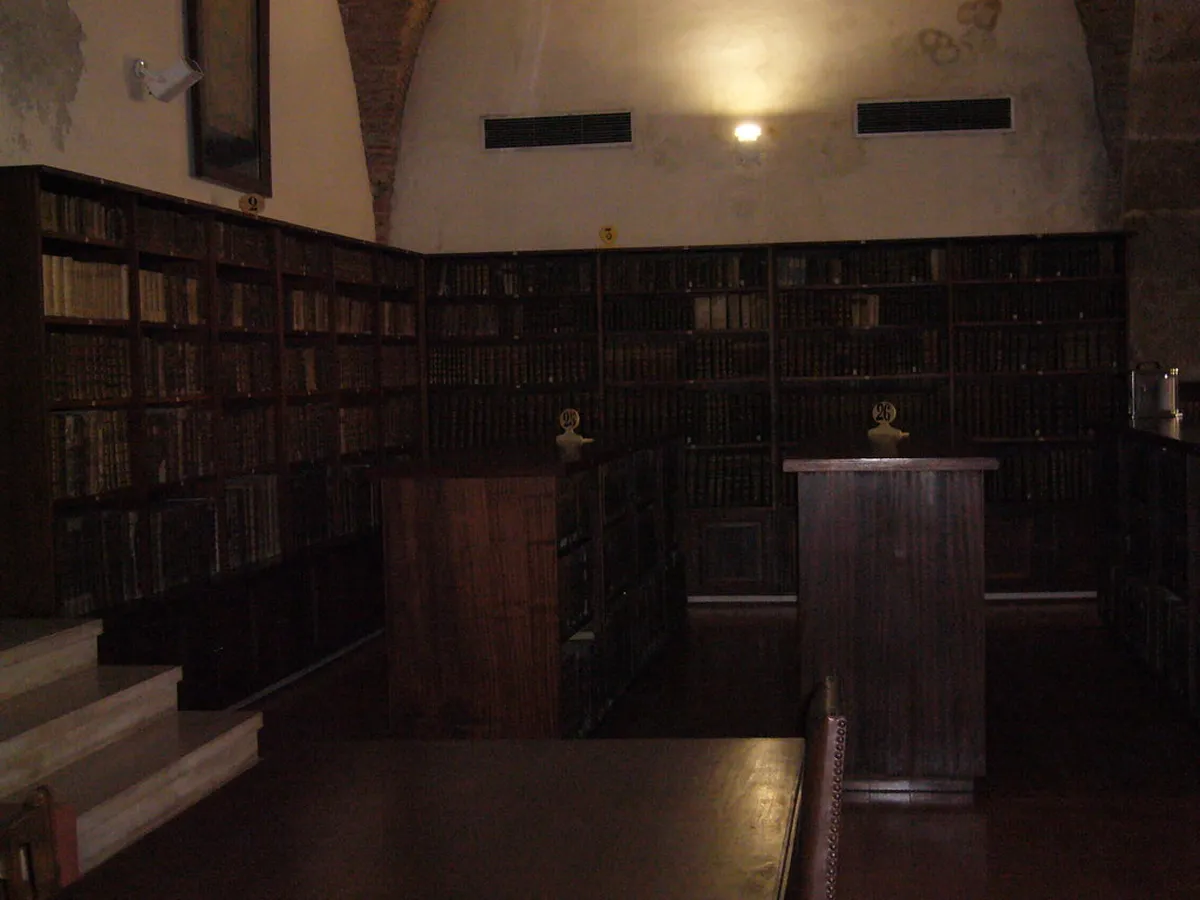
The Noble Floor is the centrepiece of the visit. Three interconnected rooms unfold from a grand entrance arch, each lined floor-to-balcony with shelves of dark exotic wood — teak and rosewood chosen as much for their density as for their beauty. Roughly 60,000 leather-bound volumes dating from the 12th to 19th centuries fill these shelves, and the collection is still considered a living archive, not merely a museum display.
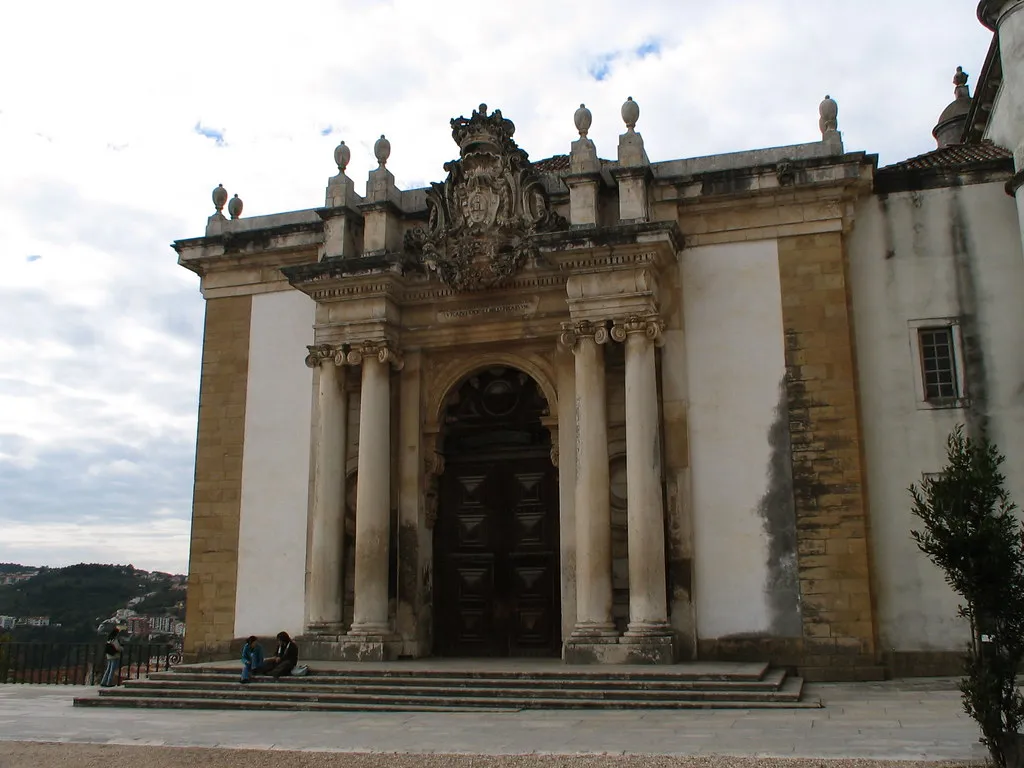
Look up as soon as you enter. The ceilings were painted in trompe-l'oeil by António Simões Ribeiro and Vicente Nunes to create an illusion of far greater height than the actual structure allows. The effect is disorienting in the best possible way: flat painted arches appear to soar several metres above where they actually end. Chinese decorative motifs — an exotic touch that reflects Portugal's 18th-century maritime connections — appear alongside the gold and dark-green lacquered shelving panels painted by Manuel da Silva.
A portrait of King John V dated 1730 hangs at the junction of the three rooms, positioned as a deliberate vanishing point so the monarch's gaze guides every visitor through the space. His coat of arms appears again on the entrance portico, leaving no ambiguity about who funded this extraordinary project. The Academic Prison in the basement, where errant students were once confined, is included in most ticket combinations and adds a sharp historical contrast to the gilded rooms above.
- The Noble Floor spans three rooms, each separated by arches bearing the insignia of the university's former faculties.
- The trompe-l'oeil ceilings are among the finest examples of the technique in Portugal.
- The Academic Prison beneath the library is open to visitors and rarely crowded — arrive at opening time if you want it to yourself.
- The library's bat colony is real and active; tables are covered with leather mats each night to protect the manuscripts from droppings.
Photography inside the Noble Floor is strictly restricted. Staff will ask you to put cameras and phones away immediately upon entry — plan to experience the interior with your eyes rather than your lens.
Museums, Art, and Culture in Biblioteca
The library is part of a larger cultural circuit within the Royal Palace of Coimbra, known as the Paço das Escolas. A comprehensive ticket purchased at the entrance covers the Joanina Library, the Great Hall of Acts, St. Michael's Chapel, and the Science Museum. In 2026 the full circuit ticket costs around €12 for adults, with reductions for students and EU seniors. The library-only ticket runs approximately €5.
The Great Hall of Acts — the Sala dos Capelos — is where the university still holds its most formal ceremonies. Its walls carry portraits of Portuguese kings in chronological order, making it a fast visual primer on the monarchy's relationship with Coimbra. The chapel contains an extraordinary Baroque organ and a tiled azulejo interior that rivals any in the country. Most visitors underestimate how long the chapel takes to absorb properly; budget at least 20 minutes there alone.
For a fuller picture of what the university complex offers, the University Of Coimbra Visitor Guide Travel Guide covers each section of the palace in detail, including the current opening hours for the Science Museum, which keeps a slightly different schedule from the main library.
The Collection and Its Rare Manuscripts
The Biblioteca Joanina holds over 300,000 volumes predating 1800, but one item stands apart from every other book on the shelves. The Coimbra Bible — commonly known as the Abravanel Bible — is an illuminated Old Testament manuscript produced in the late 15th century, most likely by the Lisbon School of Jewish scribes. Its decorative programme blends Islamic geometric ornament with Christian iconographic conventions, a visual record of the cultural crosscurrents that defined pre-Inquisition Iberia.
No competitor guide to the Joanina mentions this manuscript by name, but it is the single most historically significant object in the collection. The Abravanel Bible and other rare holdings are not always on public display — check the university website before your visit to confirm whether it is accessible in the reading-room exhibition area or held in conservation storage.
Beyond the Abravanel Bible, the collection is particularly strong in 16th and 17th-century Portuguese legal texts, theological manuscripts from Coimbra's own scholars, and a substantial nucleus of works by New Christians who taught at the university. The library also holds extensive cartographic material from Portugal's Age of Discovery, though most maps are accessible only to accredited researchers rather than general visitors.
Parks, Gardens, and Outdoor Spots Near the Library
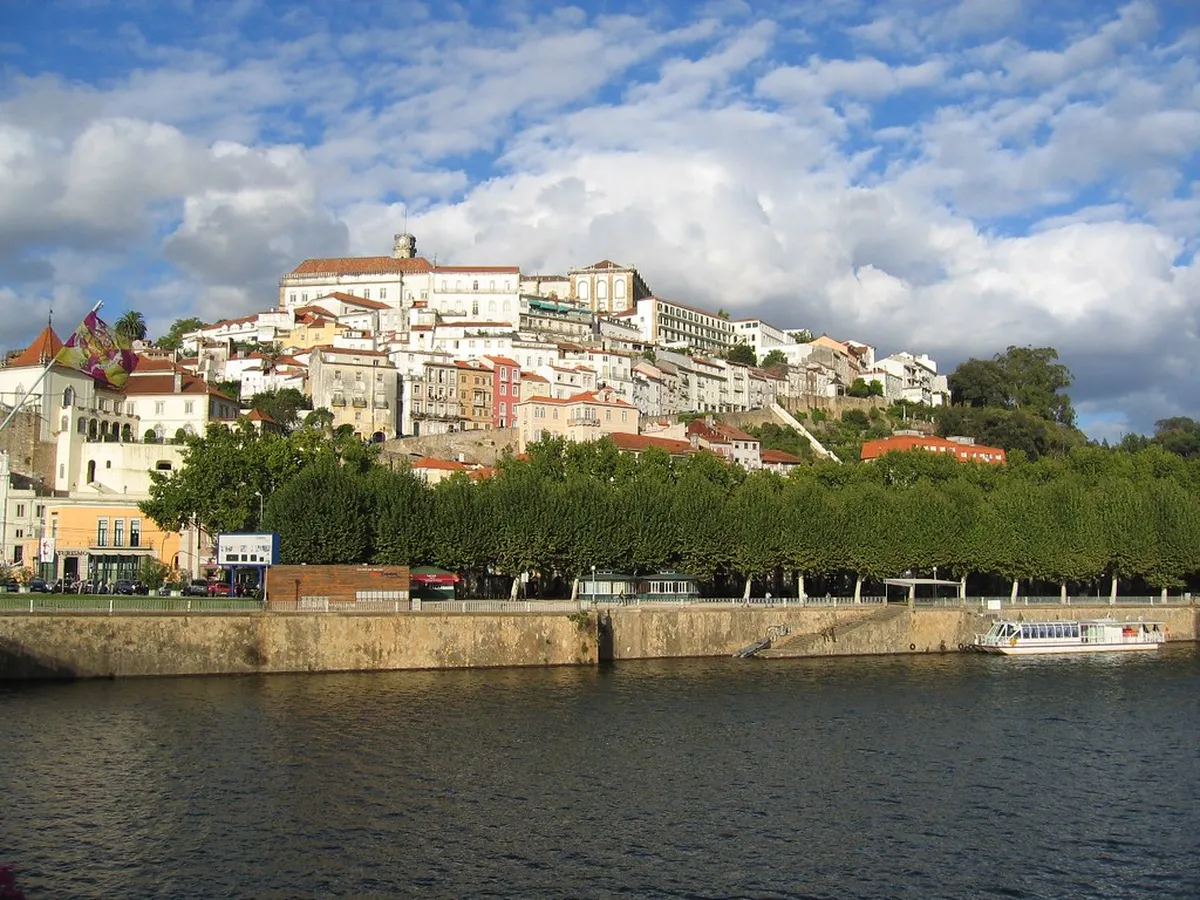
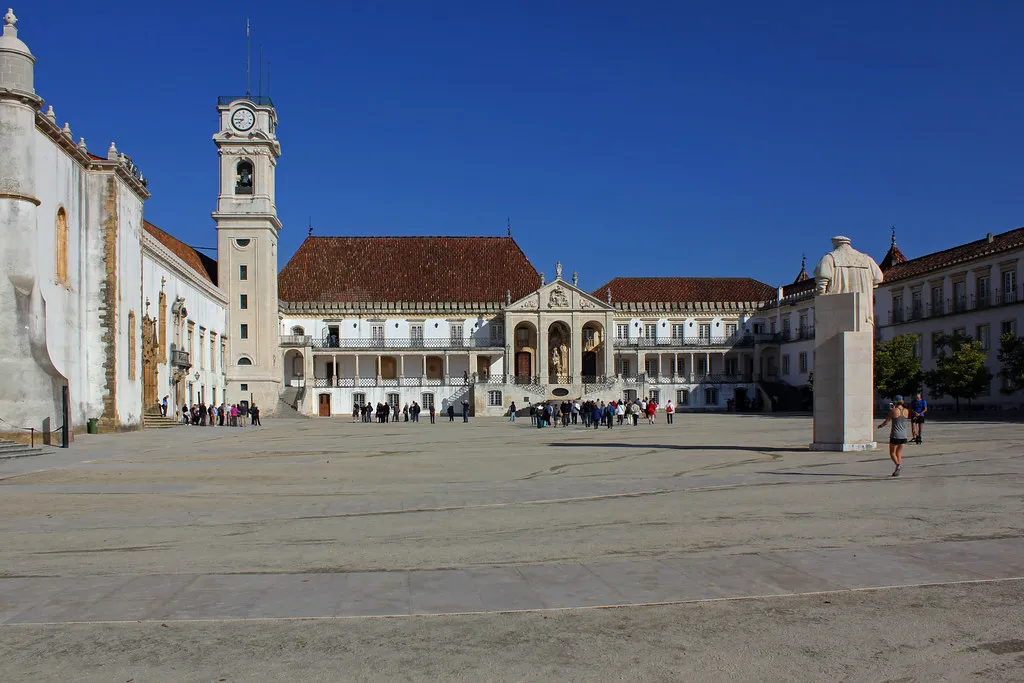
The Paço das Escolas is the grand ceremonial courtyard that forms the heart of the Alta district. It stretches between the library entrance and the edge of the hill, offering an open-air terrace with unobstructed views down to the Mondego River and across to the newer districts of Coimbra on the far bank. The statue of King John III at the centre of the courtyard is the traditional photography spot; the angle looking back toward the clock tower and the library facade is particularly strong in the late afternoon.
Immediately below the Alta, the Jardim Botânico da Universidade de Coimbra is one of the oldest botanical gardens in Portugal, founded in 1772. It covers roughly 13 hectares and is free to enter. Most visitors to the library walk past the entrance without realising it; the garden is signposted off the Rua Larga, a five-minute walk from the Paço das Escolas. It makes a quieter and cooler stop after the intensity of the interiors.
The Choupal forest, a large public park along the river, is a longer walk — around 20 minutes from the Alta — but worth noting for travellers spending a full day in the city rather than just a few hours.
Family-Friendly and Budget-Friendly Options
Traveling with children requires strategic ticket selection. The university's combined ticket covers the most dramatic spaces — the library, the chapel, the Great Hall — without requiring families to pay separately at each door. Children under 12 enter the library circuit free of charge when accompanied by a paying adult. Teenagers aged 12–17 qualify for the reduced student rate with any valid school ID.
The bat story is the detail that children respond to most reliably. The library's colony of common pipistrelle bats — small, dark, and rarely visible during daytime opening hours — feeds at night on the paper-eating insects that would otherwise damage the manuscripts. Staff cover the antique tables with leather mats before closing time each evening. The bats are not a quirk but a deliberate conservation strategy that has been in place for centuries. Most children find this genuinely compelling once it is explained clearly.
For broader budget planning across the city, the Things To Do In Coimbra Travel Guide overview lists free and low-cost sites including the old cathedral and the Machado de Castro museum, which charges a modest entry fee but rivals the library circuit in depth.
How to Plan a Smooth Biblioteca Attractions Day
Booking tickets online in advance is not optional during summer. The library uses a strict timed-entry system — groups enter in defined slots of around 20 minutes — and peak-season slots sell out several days ahead. The official booking portal is at www.uc.pt. Tickets for the full university circuit can also be purchased at the gate outside peak season, but you may still wait an hour for the next available library slot even if the chapel and hall are immediately accessible.
Plan your slot for 10:00 or 14:00 if you have a choice. Early morning slots benefit from lower visitor numbers in the courtyard before tour groups arrive. The 14:00 slot catches the best natural light through the south-facing windows of the Noble Floor, which animates the gold-leaf surfaces in a way the morning light does not.
Allow two to three hours for the full circuit. The library slot itself lasts roughly 20 minutes, but the palace, chapel, and prison add significant time. If you are also visiting the Botanical Garden, add another 45 minutes. Sturdy closed-toe shoes matter: the uphill approach from the lower city is steep, and the courtyard cobblestones are uneven enough to cause problems in flip-flops or heels.
Arrive 15 minutes before your timed slot. Latecomers are not admitted, and there is no flexibility on this policy regardless of the reason for delay.
The 14:00 entry slot catches the best natural light through the south-facing windows of the Noble Floor, animating the gold-leaf surfaces in a way the morning light does not. Book online at www.uc.pt well in advance during summer — slots sell out several days ahead.
Biblioteca Joanina on the Map
The library sits inside the Alta district — the high university quarter — at Largo da Porta Férrea, 3000-100 Coimbra. On most mapping apps, search for "Paço das Escolas" to navigate directly to the main university courtyard entrance. The ticket office is just inside the gate on the left.
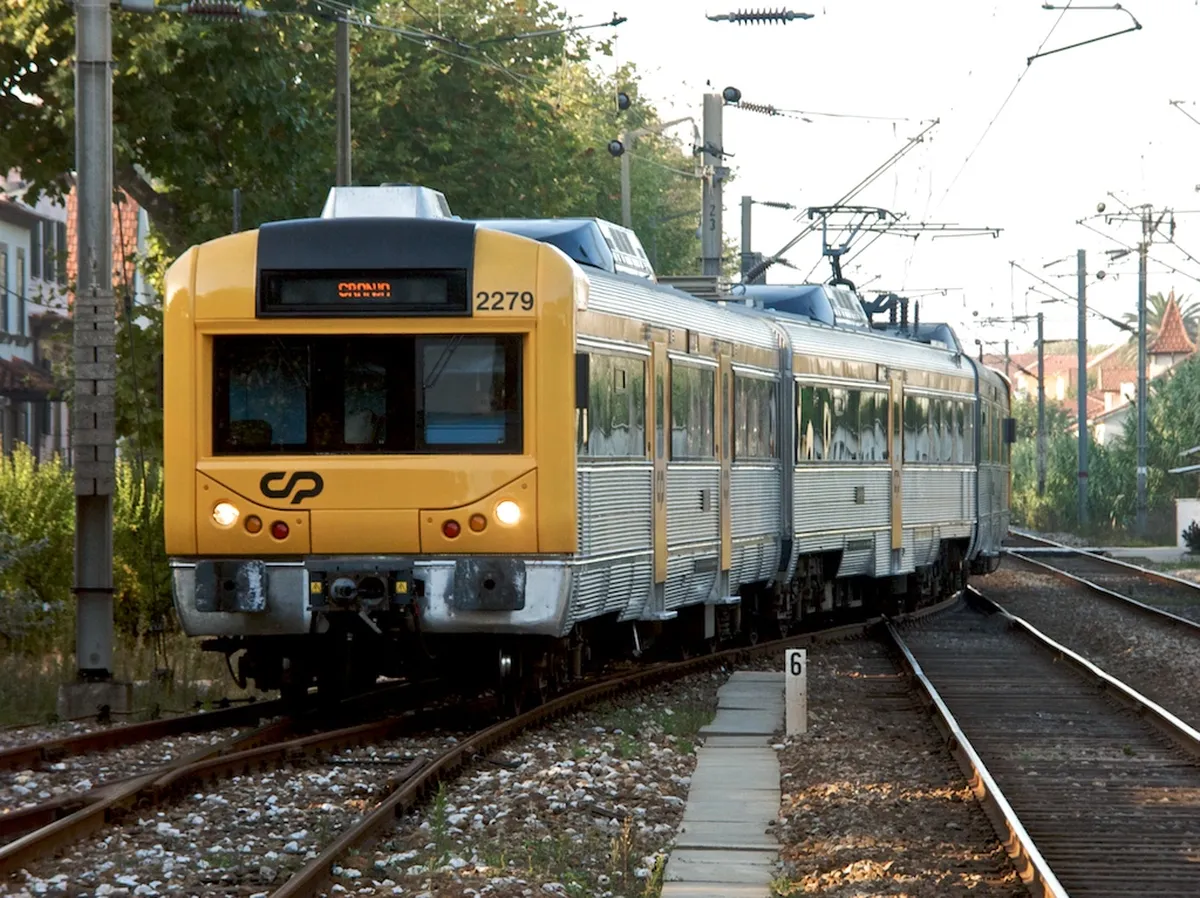
From the main train station (Coimbra-B), take the short connecting service one stop to Coimbra-A in the city centre, then walk uphill for roughly 15 minutes through the Baixa shopping district. The climb is gradual at first and steepens noticeably for the final five minutes. An alternative is the university's funicular-style elevator, the Elevador do Mercado, which cuts the climb from the Mercado Municipal to near the Alta — check current operating status locally as it has had intermittent closures.
Understanding where Coimbra sits in Portugal matters for trip planning: the city is roughly equidistant between Lisbon (2 hours by Alfa Pendular express train) and Porto (1 hour 15 minutes). It functions well as either a standalone day trip from either city or an overnight stop on a north-south journey.
Walking Tours in Coimbra, Portugal
The most rewarding walking route in Coimbra climbs from Largo da Portagem near the river, passes through the Baixa to the old Almedina Gate, then ascends through the medieval lanes of the Alta to the university. The route covers approximately 1.8 km with around 60 metres of elevation gain. Allow 30 minutes for the walk itself, or 90 minutes if you stop at the Sé Velha — the Old Cathedral — which dates to the 12th century and is one of the finest Romanesque buildings in Portugal.
Organised walking tours depart regularly from Largo da Portagem and typically run 1 to 2 hours covering the old city from river to university. Most include the exterior of the Joanina Library, though the timed-entry interior visit requires a separate ticket booked independently. The tour operators at the square can usually advise on same-day library slot availability.
The Coimbra Old Town Walking Guide: 2-Day Travel Itinerary maps out a self-guided version of this route with timed stops, neighbourhood context, and practical notes on which cafes along the way are worth a break. The route passes directly beneath the library and can be adapted to start or end at the university entrance depending on your energy level and schedule.
For visitors arriving by train from Lisbon, the Lisbon To Coimbra By Train Travel Guide journey takes under two hours on the Alfa Pendular service and drops you five minutes from the start of the walking route — making a day trip entirely viable without needing a car or a hotel.
Frequently Asked Questions
Which biblioteca joanina coimbra library guide options fit first-time visitors?
First-time visitors should choose the comprehensive University of Coimbra ticket. This includes the Noble Floor, the Academic Prison, and St. Michael's Chapel. It provides a complete overview of the site's history. Check the University Of Coimbra Visitor Guide Travel Guide for current pricing details.
How much time should you plan for biblioteca joanina coimbra library guide?
You should set aside at least two to three hours for the full circuit. The library visit itself is timed and lasts about 20 minutes. However, exploring the palace and chapel takes additional time. Factor in the walk up the hill when planning your schedule.
What should travelers avoid when planning biblioteca joanina coimbra library guide?
Avoid arriving without a pre-booked ticket during the peak summer season. Slots sell out quickly, and you may face a long wait. Do not attempt to take photos in the restricted areas to avoid being asked to leave. Wear sturdy shoes instead of flip-flops for the steep hills.
Is biblioteca joanina coimbra library guide worth including on a short itinerary?
Yes, it is one of the most significant cultural landmarks in all of Portugal. Even a short visit to the Noble Floor is a memorable experience. The library's unique architecture and history make it a high-priority stop. It is easily accessible via the main train line.
The Biblioteca Joanina remains a breathtaking testament to Portugal's Golden Age.
From the gilded shelves to the mysterious bats, the Abravanel Bible to the trompe-l'oeil ceilings, every corner tells a unique story.
Use this biblioteca joanina coimbra library guide to ensure your visit is smooth, well-timed, and genuinely rewarding.