Best Time to Visit Portugal 2026: Complete Seasonal Guide
Discover the best time to visit Portugal in 2026. Our guide covers monthly weather, 2026 festival dates, budget tips, and the best months to avoid the crowds.
On this page
Best Time to Visit Portugal 2026: Complete Seasonal Guide
Late spring (May to early June) and early fall (September to October) are the sweet spots for Portugal. Temperatures sit between 18°C and 24°C, crowds are manageable, and flights cost roughly 30–40% less than August peaks. For most travelers making their first or second trip, these shoulder windows deliver the most balanced experience across Lisbon, Porto, and the Algarve coast.
That said, Portugal is a genuinely year-round destination — and the right month depends on where you are going and what you want to do. The Algarve can be sunny and 20°C in November while Porto sits under grey Atlantic rain on the same day. The Douro Valley harvest runs from mid-September to mid-October and is worth planning around. Madeira is arguably at its best in April and May. The Azores suits whale-watchers from April through June. This guide walks through every month and every major region so you can lock in the ideal window for your 2026 trip.
For a deep-dive on how temperatures shift week by week across the country, see our Portugal weather by month breakdown. This article focuses on the big picture — seasons, regions, traveler types, crowds, costs, and the 2026 festival calendar.
Portugal at a Glance: Four Seasons Compared
Portugal has a Mediterranean climate on the mainland, modified by Atlantic moisture in the north and west. Summers are hot and dry; winters are mild and damp in the north, sunnier in the south. The seasonal split is sharper than most Western European countries, which makes timing genuinely matter for your experience. According to Portugal's official tourism board, the country enjoys an average of 3,000 hours of sunshine per year, one of the highest figures in Europe.
The table below summarises typical conditions across the four main seasons. Temperatures shown are approximate daytime highs for central Portugal (Lisbon / Alentejo). The Algarve runs 2–4°C warmer in all seasons; Porto runs 3–5°C cooler in summer and wetter in winter.
| Season | Months | Temp (Lisbon) | Temp (Algarve) | Rainfall | Crowds | Prices |
|---|---|---|---|---|---|---|
| Spring | Mar–May | 15–23°C / 59–73°F | 18–25°C / 64–77°F | Low–Moderate | Moderate | Medium |
| Summer | Jun–Aug | 27–32°C / 81–90°F | 28–35°C / 82–95°F | Very Low | Very High | High–Peak |
| Autumn | Sep–Nov | 18–26°C / 64–79°F | 20–28°C / 68–82°F | Low–Moderate | Moderate | Medium |
| Winter | Dec–Feb | 10–15°C / 50–59°F | 15–18°C / 59–64°F | Moderate–High | Low | Low |
One rule of thumb worth knowing: Portugal's school summer holidays run mid-June through mid-September, aligning with the German, British, and French school calendars. This is why hotel rates spike sharply after 15 June and only ease after early September — it is not just Portuguese domestic demand driving prices up.
Why North and South Portugal Feel Like Different Countries in the Same Month
Most seasonal guides treat Portugal as a single climate zone. In reality, the country has three distinct weather patterns running simultaneously, and understanding this changes how you plan a multi-city trip.
The north (Porto, Minho, Douro Valley) is heavily influenced by Atlantic fronts that push in from the Bay of Biscay. Porto receives around 1,200mm of rain per year — comparable to London — concentrated between October and March. IPMA climatological normals (Portugal's national meteorological institute) confirm that most of the mainland follows a temperate Cs climate type, with the north-south divergence becoming most pronounced from October onward. November to February brings overcast skies, cool temperatures (8–14°C), and frequent light rain. The same months that are "off-season dull" in Porto are entirely different in the south.
The Algarve and lower Alentejo sit below the main Atlantic rain track. In November, Faro averages 18°C and 7 hours of sunshine per day — numbers that rival Madrid in spring. This divergence is the key insight for shoulder-season travel: a November trip that positions you in the south first, then Porto in February when it starts to dry out, can be spectacular. You are essentially chasing a moving sun line down the country.
Madeira operates on a third pattern entirely. Its volcanic topography splits the island into a wetter north coast and a sheltered, year-round-sunny south coast. Even in January, Funchal's waterfront records 19°C and low rainfall — which is why the island draws significant British and German winter-sun visitors.
The Azores experience the most unpredictable weather of all, with rapid changes year-round. The best window for the Azores is June through August, when sea temperatures reach 22°C and blue hydrangea lines the roads of Flores and São Miguel. Whale watching peaks from April through June as sperm whales follow food migrations north.
Month-by-Month Overview: Activities, Crowds, and Events in 2026
The following monthly breakdown gives you a practical sense of what each month offers across Portugal. Events listed are recurring annual fixtures; 2026 dates for movable feasts (Easter, Carnaval) are confirmed below.
January
January is the quietest and cheapest month. Flight prices drop by 35–50% compared to August. Lisbon and Porto streets are peaceful, museums have no queues, and restaurants are not fully booked. The main drawback is shorter days (sunset around 17:30 in Lisbon) and wet weather in the north. The Algarve is the obvious compensation: coastal towns like Lagos and Albufeira enjoy 16–18°C and dry afternoons.
February
Carnaval falls on 28 February–3 March 2026. Madeira's Carnaval in Funchal is the most elaborate in Portugal — a full week of parades, costumes, and street parties modelled on the Rio tradition. Mainland Portugal celebrates more quietly, though Ovar on the north coast stages notable street processions. The almond trees bloom across the Algarve interior (Tavira, São Brás de Alportel) from late January through February, turning the hillsides white. This spectacle rarely makes international travel guides despite being one of Portugal's most distinctive natural events.
March
March marks the beginning of hiking season for Peneda-Gerês National Park in the north. Wildflowers start appearing and temperatures recover to 12–18°C. Surf season is still active along the west coast (Nazaré, Ericeira, Peniche), with swells regularly exceeding 3m. The Festa das Tochas Floridas in São Brás de Alportel (mid-March) is an unusual local Easter tradition worth combining with a Douro Valley or Alentejo loop.
April
Easter 2026 falls on 5 April, making Holy Week (Semana Santa) run 29 March–5 April. Braga is the place to be: the processions here are among the most visually intense in Iberia, with penitents carrying torches through narrow granite streets after midnight. Book Braga accommodation by January — rooms sell out quickly. The Madeira Flower Festival (Festa da Flor) takes place in late April and fills Funchal's streets with floral carpets and parade floats. April is also when the Lisbon half-marathon typically runs, attracting around 40,000 participants; check road closures if driving in the city.
May
May is arguably the single best month for first-time visitors to Portugal. Temperatures in Lisbon hover at 20–24°C, the Douro Valley is green before the summer heat browns the hillsides, and the Queima das Fitas academic festival runs in Coimbra during the second week. The Lisbon Fish and Flavors Festival (Peixe em Lisboa) showcases the country's extraordinary seafood culture. Hotel prices are still 20–30% below peak. Days are long (sunset around 20:45) and reliable. If you have to pick a single month, pick May.
May hotel prices in Portugal run 20–30% below August peak rates, yet temperatures in Lisbon reach 20–24°C and days are long with sunset around 20:45. It is the best value-to-experience window for first-time visitors.
June
Early June remains excellent. The Festas de Lisboa (the month-long Popular Saints festival) peaks on the night of 12–13 June for Santo António, when Alfama becomes a continuous street party with grilled sardines, paper decorations, and live marching bands. After 20 June, prices climb steeply and accommodation in the Algarve gets difficult to find. If you want summer beach weather without peak prices, the first three weeks of June are the window.
July
High season. Temperatures in the Algarve regularly reach 32–35°C; inland Alentejo can hit 40°C during heat waves. The NOS Alive music festival near Lisbon (typically early July) draws 80,000+ visitors over three days and significantly tightens accommodation within 30km of the venue. The Festas de São João in Porto (23–24 June, spilling into early July) is one of Europe's most atmospheric street celebrations. Beach-bound travelers are in their element; sightseeing in cities is less comfortable due to heat and queues. Book everything by March for July travel.
August
Peak of peak season. This is Portugal at its busiest, most expensive, and hottest. The upside: the sea temperature in the Algarve reaches 24–26°C, and the beaches are genuinely world-class. The Madeira Wine Festival in Funchal (late August) blends wine culture with folk music. If you travel in August, book accommodation six months out, budget 40–60% above shoulder-season rates, and plan city sightseeing before 10:00 or after 18:00 to avoid the worst of the heat and crowds.
September
September is the best month for wine travelers. The Douro Valley harvest (vindima) typically starts in the second week of September and runs through mid-October. The terraced vineyards are in full color, quinta estate tours are running at capacity, and the village of Pinhão hosts communal treading sessions. Sea temperatures remain warm (22–23°C in the Algarve), crowds thin noticeably after 15 September, and prices drop by 20–25%. The Festival de Sintra and the Óbidos Chocolate Festival both fall in September. For those who can only afford one shoulder-season trip, September edges out October for coastal beach access combined with cultural activity.
October
October is ideal for hiking, cycling, and slower travel. The Algarve interior (Monchique, the Serra de Caldeirão) is at its most photogenic, with autumn color appearing. The National Gastronomy Festival in Santarém (late October) is one of Portugal's largest food events. Porto is drying out after the September rains and starts feeling very liveable again. Whale watching in the Azores remains possible through October. Prices continue to slide — you can often find four-star hotels in Lisbon for €100–130 per night that were €200+ in August.
November
The Magusto (São Martinho chestnut roasting festival) runs on 11 November across the country, particularly in small villages in the Minho and Trás-os-Montes regions. This is one of Portugal's oldest rural traditions and virtually unknown to foreign visitors. Meanwhile, the Algarve enters its quiet winter mode — genuinely uncrowded, mild (17–19°C), and cheap. The coastal town of Tavira is particularly pleasant in November, with empty streets, good restaurant availability, and the possibility of hiring a bicycle and riding the Ecovia do Litoral coastal path with almost no other tourists. Digital nomads and remote workers have discovered this window — monthly rental rates in Tavira and Lagos drop to €700–1,000 for furnished apartments in November.
December
The Christmas market in Óbidos is one of the best-executed in Iberia — a medieval walled town filled with decorations, mulled wine (Ginjinha), and craft stalls running from late November through 7 January. Porto and Lisbon both have central markets and light displays. New Year's Eve in Funchal (Madeira) is famous for its fireworks display — reportedly one of the most spectacular in Europe, drawing cruise ships into the harbor for the event. Flights and hotels around New Year spike sharply; mid-December to 22 December is the sweet spot for Christmas market access without New Year premiums.
The Spring Advantage: Portugal's Most Rounded Season (March–May)
Spring is when Portugal looks its best and costs the least relative to what you get. The countryside is green — really green, in a way that the sun-bleached summer months obscure. Wildflowers cover the Alentejo plains from March through April: poppies, lupins, and rockrose create the kind of landscape that ends up on magazine covers. The famous cork oak forests in the Alentejo turn a vivid copper in April when the trees are harvested and the new bark is exposed.
For city travelers, spring resolves the worst of Lisbon's tourist pressure without sacrificing warm weather. Walking the hills of Alfama in 20°C with a light jacket is far more pleasant than doing the same route in 35°C August heat. Tram 28 still has queues but they move in under 20 minutes rather than the 45-minute waits of summer. Sintra's palace queues are manageable on weekday mornings before 10:00.
The 2026 Easter holiday (5 April) is the one spring variable to plan around. Braga, Óbidos, and Alcochete all see higher-than-usual visitor numbers during Holy Week. If you want a quieter spring visit, mid-April after Easter through the whole of May avoids the Easter spike while still catching ideal weather.
One practical spring detail most guides skip: the Nortada coastal wind begins around late May and strengthens through June. This northerly wind blows consistently along the Atlantic coast from Cascais up to Ericeira. It cools the coast by 3–5°C and can feel cold in the late afternoon even when the air temperature is 22°C. Pack a wind-resistant layer if your April or May itinerary includes time on the west coast.
For more detail on spring conditions in Lisbon specifically, see our Lisbon weather by month guide.
Summer in Portugal: Who Should Go and Who Should Wait (June–August)
Summer is the right choice for beach-focused travelers who have flexibility on timing only in June or September, families whose school calendar forces July or August travel, and music festival attendees targeting NOS Alive or Super Bock Super Rock. For these groups, the trade-offs (heat, crowds, cost) are unavoidable and worth accepting.
If you are going to the Algarve in August specifically for the beaches, the conditions are objectively excellent: sea temperature 24–26°C, 11–12 hours of sunshine daily, no rain. The western Algarve beaches (Sagres, Praia do Amado) catch the Atlantic swell and are popular with surfers even in high summer. The eastern Algarve around Tavira and Ilha da Tavira has calmer, warmer water suited to families with young children.
The two cities to approach with planning in summer are Lisbon and Porto. Both are manageable but require strategy. In Lisbon, visiting Belém (Jerónimos Monastery, Torre de Belém) before 09:30 or after 18:00 cuts queue times significantly. The LX Factory Sunday market runs year-round and is far less crowded in the morning hours. In Porto, the riverfront Ribeira fills up completely from 19:00 onward; the same streets are walkable at 08:00. Book dinner reservations 48 hours in advance at any restaurant with a TripAdvisor ranking in the top 50 for Porto during July and August.
Summer 2026 has two specific dates worth noting for accommodation scarcity. Portugal's national public holiday falls on 10 June (Portugal Day / Dia de Camões). The Azores regional holiday falls on 1 July. Both dates create mini domestic travel peaks that push Lisbon and Azores hotel rates up for adjacent weekends.
Top Reasons to Visit Portugal in Fall (September–November)
Fall is the season that rewards travelers who plan a month ahead rather than six months ahead. The summer crowds have dispersed but the infrastructure (restaurants, boat tours, beach services) is still fully operational through September and most of October. The sea temperature holds above 20°C in the Algarve until mid-October, so late-season beach days are genuinely possible.
The Douro Valley harvest is the defining fall event. The vindima typically starts in the second or third week of September and runs through mid-October. Several quintas (wine estates) around Pinhão offer harvest experiences — grape picking, treading, and lunch in the vineyards — priced at €50–120 per person depending on the estate. Quinta do Crasto, Quinta da Romaneira, and Quinta do Vallado all run visitor programs. The valley's terraced vineyards turn amber and red as October progresses, creating landscape photographs that are difficult to replicate at any other time of year.
For a detailed guide to timing this visit, see our best time to visit the Algarve which also covers the shoulder-season sweet spot for combining coast and interior.
October is the best month for cycling in Portugal. The Rota Vicentina coastal trail (from Porto Covo down to Sagres along the southwest coast) is most comfortable walked or cycled in October, with temperatures of 18–22°C, low humidity, and long daylight hours. This 450km trail takes 20–25 days to walk end-to-end; most visitors do a 3–5 day section. The town of Zambujeira do Mar on the Costa Vicentina is a useful base for the central section.
November gets overlooked because it feels like a transition month. But for the specific experience of the Algarve in uncrowded, inexpensive conditions, November is unmatched. Faro airport still has direct flights from most northern European cities in November, though frequency drops. The coastal walks around Sagres and Cape St. Vincent — Portugal's southwesternmost point — are spectacular in November's clear post-rain light, with crashing Atlantic swells and almost no other visitors.
Portugal Outside the Peak: The Case for Winter Travel (December–February)
Winter in Portugal is not the grey, cold shutdown that northern Europeans experience at home. The key numbers: Lisbon averages 15°C in January, with 6 hours of daily sunshine. Faro in the Algarve averages 17°C and 7 hours of sunshine in January. For context, Barcelona in January averages 14°C. Portugal's winter is mild by Atlantic European standards — it just doesn't get the credit.
The cultural case for winter is strong. Fado in Lisbon's Alfama is more intimate and less touristy in winter. Small casas de fado in Mouraria and Alfama book out for weekends but are accessible on weeknights without reservations. Museums — the Museu Nacional do Azulejo, the Museu Calouste Gulbenkian, the Museu de Arte Contemporânea de Serralves in Porto — are uncrowded from November through February. You can spend 90 minutes in the Gulbenkian without navigating a group tour, which is nearly impossible in summer.
The surf season runs October through March along the west coast. Nazaré is where the biggest Atlantic swells break — waves exceeding 20m have been recorded at Praia do Norte during winter storms. Big-wave surfing competitions (including WSL Challenger Series events) are typically held here between November and February, though exact 2026 dates depend on swell forecasts. Ericeira, Peniche, and Costa da Caparica are more accessible for intermediate surfers with consistent 1.5–3m waves through winter. See our Portugal in winter guide for the complete surf season breakdown.
Digital nomads have made Cascais, Lagos, and Tavira their winter bases for reasons that are obvious once you experience them: reliable fiber internet in most guesthouses, co-working spaces available at €100–150 per month, NHR (Non-Habitual Residence) tax incentives for longer stays, and a functioning café culture even in January. The monthly cost of living in Lagos in January — rent, food, coworking — runs approximately €1,200–1,600 for a single person, which compares favorably to Amsterdam or Dublin in summer.
The one genuine winter limitation is the reduced ferry and tour boat schedule. Ferries to the Berlengas Islands (off Peniche) stop running from approximately November through March. Dolphin watching tours in Setúbal operate reduced schedules. Douro river cruises run limited timetables in January and February. Plan around these if river or island access is on your list.
Must-See Seasonal Attractions: How the Same Place Changes by Month
Portugal's major landmarks offer completely different experiences depending on the time of year. This is not just about crowds — the quality and character of the visit shifts meaningfully across seasons.
Sintra is the clearest example. In late May, morning mist sits in the forested hillsides around the Pena Palace, the surrounding quinta gardens are in full bloom, and the Portuguese Riviera coastline below is visible on clear afternoons. In August, the same hillsides are dry and the queues at Pena Palace entrance stretch to 90 minutes. Sintra is best visited before 09:30 on weekday mornings, regardless of season. From October through March, the palace grounds have an almost otherworldly quality — fog, bare trees, and dramatically fewer visitors. The Quinta da Regaleira is particularly atmospheric in winter.
The Douro Valley changes character four times a year in a visually striking way. January and February show bare brown vineyards against the terraced hillsides — stark but still photogenic. May brings bright green vine shoots and the almond blossoms are finished but the countryside is vivid. September and October are the harvest months described above. November to December: the vines turn orange and yellow before dropping their leaves, and the valley fog rolls in during early mornings.
Évora in the Alentejo has a heat problem in summer that most guides understate. July and August temperatures regularly reach 38–40°C in the Alentejo interior. Évora's medieval streets provide shade but the Roman Temple and the Cathedral square are exposed. The city is genuinely best in March, April, October, and November — temperatures of 16–22°C, pleasant for walking, and the surrounding plains are either covered in wildflowers (spring) or golden cork oak (autumn).
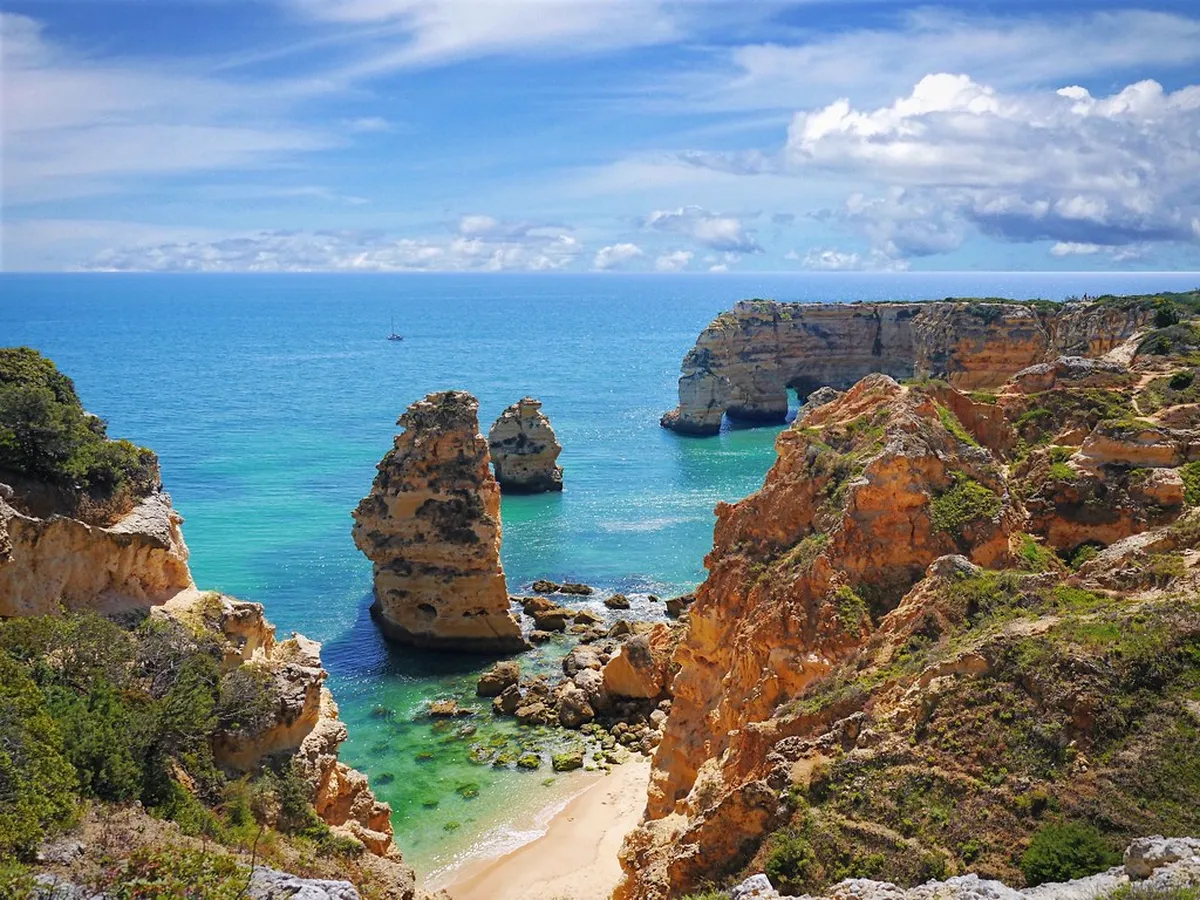
The Algarve's beaches are accessible in three distinct modes: summer (28–32°C, crowded, expensive), late-September shoulder (24–26°C, quiet, discounted), and winter/spring (18–21°C, nearly empty, prices at floor). The rock-arch beaches around Lagos and Ponta da Piedade are photogenic year-round; the coastal light in October and November is actually more interesting for photography than the harsh summer midday sun. For the full seasonal picture of the south coast, see our Portugal in summer planning guide.
Museums, Art, and Culture: Best Times for Indoor Exploration
Portugal's museum circuit is substantial and under-appreciated outside specialist travel circles. The Museu Calouste Gulbenkian in Lisbon is one of the great personal collection museums in Europe — comparable in quality and intimacy to the Frick Collection in New York. Winter gives you the best access: January and February see minimal queues, full exhibition rooms available, and the surrounding gardens peaceful rather than crowded. Opening hours: 10:00–18:00, closed Tuesday. Entrance €10, free on Sundays after 14:00.
The Museu Nacional do Azulejo (National Tile Museum) is housed in a 16th-century convent in eastern Lisbon. It is genuinely one of the most distinctive museums in Europe and works in any season — the building itself is the experience. In winter, you can spend two hours here without navigating a tour group. In summer, the tile-decorated cloisters fill with guided tour groups between 10:00 and 14:00; go early or late.
Porto's Museu de Arte Contemporânea de Serralves is set in a 18-hectare park that rewards spring visits specifically. The contemporary art collection is strong, but the park and the Art Deco Serralves House are the main draw for most visitors. In April and May, the park gardens are in full color. The museum runs late openings (until 22:00) on certain Friday evenings in summer — check the programme in advance.
Fado performances are worth planning around seasonally. The most authentic fado houses (casas de fado) in Alfama and Mouraria operate year-round, but winter evenings have a particular atmosphere — small, warm rooms, regular clientele alongside tourists, performers less focused on the tourist circuit. Budget around €25–35 per person for dinner and fado at a mid-tier casa like Tasca do Chico or Clube de Fado. Book two days ahead in summer; walk-in is usually possible in January and February.
Parks, Gardens, and Outdoor Spots: Peak Bloom and Hiking Windows
Peneda-Gerês National Park in northern Portugal is the country's only national park and one of its least-visited internationally. The best hiking season runs April through June and September through October. In April, the park is covered in flowering heather and broom, waterfalls are running strong from winter rains, and the upland villages of Castro Laboreiro and Soajo (with their ancient communal granaries called espigueiros) are accessible without summer day-tripper crowds. Summer brings more visitors but the higher trails (above 1,200m) remain quiet. January through March can see snow above 900m.
The Madeira Flower Festival (Festa da Flor) takes place across late April in Funchal. The opening parade features children laying a Wall of Hope — a mosaic made of thousands of flowers installed in central Funchal over the festival weekend. The Levada walks (irrigation channel paths that cross the island at mid-altitude) are best hiked April through June when the vegetation is lushest and temperatures manageable. The Levada do Caldeirão Verde from Queimadas is considered one of the most scenic in Europe. Book a guided walk two weeks ahead in peak months.
Hiking in the Serra da Estrela — the highest mountain range on the Portuguese mainland — follows a different calendar. Cross-country skiing is possible from December through February when snow covers the upper plateau (above 1,500m), though snowfall is inconsistent year to year. Spring and autumn are the best walking seasons; summer heat makes the exposed upper trails uncomfortable. The village of Manteigas serves as the main hiking base.
Botanical gardens in Lisbon and Coimbra are most rewarding in April. The Jardim Botânico in Coimbra (one of the oldest university botanical gardens in the world, founded 1773) peaks in mid-April with azalea and camellia displays. The Tapada de Mafra royal hunting forest north of Lisbon is a largely unknown alternative to Sintra that is accessible year-round with minimal crowds — a 1,200-hectare walled forest with walking trails and a baroque palace.
Best Time for Your Travel Style
Portugal rewards different traveler types at different points in the year. Rather than a generic recommendation, here is the honest breakdown by travel priority.
Beach travelers: Late June for warm water without peak prices. August for the full beach experience at peak cost. Late September as the most underrated beach window — sea still warm, resorts quiet, prices down 25%.
Surfers: October through March on the west coast. Nazaré for big-wave spectating. Ericeira (classified as a World Surfing Reserve) and Peniche for consistent rideable swells. The surf season overlaps entirely with low-season prices — accommodation in Ericeira in December costs €40–70 per night where it was €100+ in August.
Wine and food travelers: September for the Douro harvest. May for the Lisbon Fish and Flavors Festival (Peixe em Lisboa). October for the National Gastronomy Festival in Santarém. The wine regions — Douro, Alentejo, Vinho Verde — offer wine tourism year-round but the harvest window is the experiential peak.
Hikers and cyclists: April–May and September–October. Spring for wildflower landscapes and green countryside. Autumn for harvest color, cooler temperatures, and harvested vineyards in the Douro. The Rota Vicentina coastal trail is most walkable in October.
Families with children: June (before 20 June) for warm weather without peak prices and heat. Early September for the same reason — school has just restarted in most of Europe, so crowds drop but weather holds. Avoid August inland cities (Évora, Elvas, Marvão) with children — temperatures regularly exceed 38°C.
Budget travelers: January–February for the lowest absolute prices — roughly 40–50% below August for flights and hotels. November in the Algarve if you want mild weather with low prices. Mid-week travel in any season saves 15–25% versus weekend rates.
Cultural and history travelers: October–March for museums, fado, and city exploration without crowds. Winter rain in Porto makes the covered book market at Livraria Lello (queue-free on weekdays in January) a genuine pleasure rather than a logistical exercise.
| Travel Style | Best Months | Key Highlight |
|---|---|---|
| Beach | Late June, Aug, Late Sep | Sea 22–26°C; late Sep quietest and cheapest |
| Surfing | Oct–Mar | West coast swells; Ericeira & Nazaré; low-season prices |
| Wine & Food | Sep–Oct, May | Douro harvest Sep–Oct; Peixe em Lisboa festival in May |
| Hiking & Cycling | Apr–May, Sep–Oct | Wildflowers in spring; Rota Vicentina best in October |
| Families | Early Jun, Early Sep | Warm but pre/post peak school crowds; avoid Aug inland |
| Budget | Jan–Feb, Nov | Flights 40–50% below August; Nov Algarve mild and cheap |
| Culture & Museums | Oct–Mar | No queues; fado more intimate; Gulbenkian uncrowded |
Two November Details That Almost Nobody Mentions
The Magusto — the São Martinho chestnut festival on 11 November — is one of Portugal's most authentic rural traditions and almost completely absent from mainstream travel guides. Across the Minho, Trás-os-Montes, and the mountainous interior, villages light communal fires on the evening of São Martinho (Martin's Day) to roast chestnuts and drink the first young wine (água-pé) of the season. The festival requires no ticket, no reservation, and no prior knowledge: you show up in a village square and join in. Montalegre, Vinhais, and Chaves in the far north are particularly strong for this tradition. It is the kind of unmediated local experience that Portugal genuinely still offers in its smaller towns.
The second November detail is the Algarve's value-for-money proposition for longer stays. The region has become a genuine hub for remote workers between November and March. Monthly furnished apartment rentals in Tavira and Lagos drop to €700–1,100 (versus €1,500–2,500 in summer). Many guesthouses and small hotels offer discounted weekly rates in November. The combination of reliable broadband, mild weather, walkable town centers, and low cost has made the winter Algarve a well-kept secret among European remote workers — one that delivers genuine quality of life at a fraction of urban northern European costs.
Smaller beach-village restaurants in the eastern and western Algarve often close from mid-October through April, particularly in towns like Salema, Burgau, and Odeceixe. Stick to larger towns like Tavira, Lagos, or Faro for reliable dining and services in November.
2026 Portugal Public Holidays and Key Events
Public holidays in Portugal affect museum hours, transport frequency, and hotel pricing for adjacent weekends. Planning around these dates prevents surprises.
| Date | Holiday / Event | Impact |
|---|---|---|
| 1 January | New Year's Day | Most sites closed; Funchal post-NYE quiet |
| 3 March 2026 | Carnaval (Shrove Tuesday) | Funchal parade peak; Ovar street festivities |
| 29 Mar–5 Apr 2026 | Holy Week / Easter (Semana Santa) | Braga processions; Lisbon quiet Fri–Sun |
| 25 April | Freedom Day (Dia da Liberdade) | National holiday; Lisbon ceremonies; hotel uplift |
| 1 May | Labour Day | National holiday; most museums closed |
| Late April | Madeira Flower Festival | Funchal hotel sold out; book 3 months ahead |
| 10 June | Portugal Day (Dia de Camões) | National holiday; Lisbon parades; accommodation spike |
| Early July | NOS Alive (Lisbon) | Lisbon/Cascais hotels; 3 days, book 4 months ahead |
| Mid-Sep to mid-Oct | Douro Harvest (Vindima) | Quinta estate tours book out; Pinhão crowded weekends |
| 5 October | Republic Day | National holiday; reduced museum hours |
| 11 November | São Martinho / Magusto | National holiday; village chestnut festivals |
| 1 December | Restoration of Independence Day | National holiday; Lisbon ceremonies |
| 8 December | Immaculate Conception | National holiday; Christmas markets open in Óbidos |
| 25–26 December | Christmas | Most sites closed; Funchal NYE preparation begins |
| 31 Dec 2026 | New Year's Eve | Funchal fireworks; Lisbon waterfront events; hotel peak |
Note that Portugal has 13 national public holidays — more than most EU countries. On these dates, most shops close, public transport runs Sunday schedules, and some museums close entirely. Always check directly with attractions when planning visits around public holidays.
What Closes in Low Season
Planning a winter trip requires awareness of seasonal closures. Most major attractions in Lisbon and Porto stay open year-round. The closures are concentrated in coastal resorts and rural areas.
Algarve water parks (Slide and Splash, Aqualand, Aquashow) close from approximately November through late March. Boat tours to the Benagil Sea Cave and the coastal sea caves near Lagos operate year-round but on reduced schedules November through February — typically one departure per day rather than hourly. Ferries to the Berlengas Islands (off Peniche) suspend from November through March. The Douro river cruises between Porto and Pinhão continue year-round but with reduced frequencies in January and February.
Smaller beach-village restaurants in the eastern and western Algarve often close from mid-October through April, particularly in towns like Salema, Burgau, and Odeceixe. The tourist infrastructure in the central Algarve (Albufeira, Lagos, Portimão) stays largely operational year-round. Tavira and Faro, both year-round towns with local populations, are reliable winter bases with consistent restaurant and services availability.
In the north, some mountain accommodation in the Gerês area closes in winter. Serra da Estrela ski facilities at Torre open when snow conditions allow, typically December through February, but snow cover is inconsistent — it is not a destination to plan around with certainty. The tower road (the highest paved road in Portugal at 1,993m) is sometimes closed due to ice; check the IP5 road conditions if driving in winter.
Finding the Best Deals: When to Book 2026 Portugal Travel
The booking timeline matters as much as the travel dates themselves. Leaving flights to 4–6 weeks before departure in peak season costs significantly more than booking 5–6 months out.
| Travel Window | Book Flights By | Book Hotels By | Expected Saving vs. Last-Minute |
|---|---|---|---|
| July–August 2026 | February 2026 | January–March 2026 | 30–45% on flights; 40–60% on hotels |
| Easter Week (29 Mar–5 Apr 2026) | January 2026 | December 2025 | 25–35% on both — Braga in particular |
| May–June 2026 (shoulder) | March–April 2026 | February–March 2026 | 15–25% on flights; 20–30% on hotels |
| September–October 2026 | June–July 2026 | June–August 2026 | 15–20% on flights; 20–30% on hotels |
| November–February (low season) | 4–6 weeks out is fine | 1–2 weeks out is fine | Last-minute deals common; flexible dates pay off |
TAP Air Portugal, Ryanair, and easyJet dominate routes into Lisbon (LIS) and Porto (OPO). Faro (FAO) for the Algarve is served directly by British Airways, Wizz Air, TUI, and seasonal charters from UK and German airports. Faro flights from the UK are heavily discounted in winter — London Gatwick to Faro return for under £80 is common in January and February through budget carriers.
For accommodation, the value-to-quality sweet spot in Portugal sits in the 3–4 star boutique guesthouse (pensão or casa de hóspedes) category rather than international chain hotels. A boutique guesthouse in Lisbon's Príncipe Real or Mouraria neighborhoods will typically outperform a branded hotel in terms of breakfast quality, location, and local character at €80–130 per night in shoulder season. Use Booking.com's "genius" discount plus early check-in requests and you can often negotiate a room upgrade for the price of a standard.
How to Plan a Smart 2026 Portugal Itinerary by Season
Portugal rewards multi-region itineraries — the country is compact enough that Lisbon to Porto takes 3 hours by train, and Lisbon to the Algarve takes 2.5 hours by road. The challenge is matching regions to your travel window, since the regional climate differences described above mean the same dates can be excellent for the south and mediocre for the north.
For a two-week spring trip (May): Start in Lisbon for 4 nights, move north to Coimbra for 1 night, continue to Porto for 3 nights, end with a Douro Valley loop (Pinhão, Lamego) for 2 nights before flying home from Porto. This route catches Lisbon at its best, Coimbra's university city atmosphere, and the Douro before summer heat.
For a two-week autumn trip (September/October): Fly into Porto, do the Douro Valley harvest for 3 nights, backtrack to Porto for 2 nights, drive or train south through the Alentejo (Évora, Monsaraz) for 2 nights, finish in the Algarve for 5 nights before flying home from Faro. This route follows the harvest timing and catches the Alentejo in comfortable walking temperatures.
For a winter trip (January/February): Base in Lisbon for 4 nights, day-trip to Sintra and Setúbal Peninsula. Then drive south to Lagos in the Algarve for 4 nights of coastal walking and cycling. Return to Lisbon and consider a 3-night Madeira add-on — TAP flies Lisbon to Funchal in 1h 40min, with returns from €80–120 in January.
Consider renting a car for any itinerary that goes beyond the Lisbon–Porto corridor. The Alentejo, Douro Valley, Algarve interior, and Gerês are significantly harder to experience properly on public transport alone. Car rental in Portugal is inexpensive by Western European standards: €20–35 per day for a compact in shoulder season through local operators like Auto Jardim or Guerin.
Frequently Asked Questions
Which months are the cheapest to fly to Portugal in 2026?
January and February are usually the cheapest months for flights to Portugal. You can find great deals during this quiet winter period. Prices often drop by forty percent compared to summer.
Is Portugal too hot to visit in July and August?
Southern regions like the Algarve often reach 30°C / 86°F or higher. The coastal breeze helps, but inland areas stay very hot. Coastal cities remain comfortable due to the Atlantic air.
What are the must-attend festivals in Portugal in 2026?
The Santo António festival in Lisbon during June is a major highlight. You should also see the Semana Santa processions in Braga during early April 2026. These events offer deep cultural insights.
Explore More Portugal Seasonal Guides
Deep-dive guides for every season, destination, and month in Portugal — from weather and festivals to the best time to visit each region.
Portugal Weather & Climate
- Portugal Weather by Month
- Portugal Rainy Season: When and What to Expect
- Portugal Hottest Month: Summer Heat Guide
- Portugal Summer Packing List
- Portugal Festivals by Month 2026
Best Time to Visit — By Region
- Best Time to Visit the Algarve
- Best Time to Visit Lisbon
- Best Time to Visit Porto
- Best Time to Visit Alentejo
- Best Time to Visit Sintra
- Best Time to Visit Cascais
- Best Time to Visit Douro Valley
- Best Time to Visit the Azores
- Best Time to Visit Madeira
Regional Weather Guides
- Lisbon Weather by Month
- Porto Weather by Month
- Algarve Weather by Month
- Madeira Weather by Month
- Lagos (Algarve) Weather by Month
- Sintra Weather by Season
- Madeira Winter Temperatures
Seasonal Destination Guides
- Algarve in Winter Travel Guide
- Lisbon in Winter: Off-Season Guide
- Lagos Algarve in Winter
- Lagos Portugal in Summer
- Furnas Azores Hot Springs Guide
- Portugal in October: Shoulder Season Guide
Portugal Month by Month
Portugal is a beautiful destination that offers unique experiences throughout the entire year. Choosing the right time for your 2026 trip will ensure you have an unforgettable experience. Whether you want sun, surf, or culture, there is a perfect month for your visit.
Start planning your adventure today to take advantage of the best seasonal opportunities. Portugal's warm hospitality and stunning landscapes await you in 2026 and beyond.
 Faro Weather By Month: 8 Key Climate InsightsJune 4, 2026