Time Out Market Lisbon: 8 Best Stalls & Essential Visitor Guide
Plan your visit to Time Out Market Lisbon with our expert guide. Discover 8 must-try stalls, seating tips, what to avoid, and how to beat the crowds.
On this page
Time Out Market Lisbon: 8 Best Stalls & Essential Visitor Guide
The Time Out Market Lisbon stands as one of the most-visited food destinations in Portugal. Located inside the historic Mercado da Ribeira, this food hall puts the city's best stalls under one roof — Michelin-trained chefs alongside generations-old Portuguese producers. You can taste a remarkable range of the best restaurants in Lisbon without making a single reservation.
Every stall earns its spot through a rigorous selection by Time Out Lisboa's editors and critics. The rule guiding curation: if it's good it goes in the magazine, if it's great it goes in the market. That standard remains evident in 2026, even as the hall has grown busier than ever.
This guide covers the eight stalls worth queuing for, the exact times to avoid crowds, what a realistic meal will cost, and one practical detail most first-timers miss entirely. For current hours and any event closures, check the Time Out Market Lisboa Official website before your visit.
What is Time Out Market Lisbon? (History & Concept)
The market occupies the western wing of Mercado da Ribeira, a grand iron-and-glass market hall that has served Lisbon since the 13th century. The current building — recognizable by its clock tower and ornate ironwork — dates to 1882 and long functioned as the city's primary wholesale hub for fish, produce, and flowers. Public Spaces' historical documentation details the building's role as one of Europe's most significant fish markets. You can still see the original scales and tiling if you walk toward the traditional market side of the building.

In 2014, Time Out Magazine transformed the western half into the world's first editorially curated food hall. Unlike a standard food court where vendors bid for space, every operator here is invited by the magazine's critics. The concept is simple: bring the highest-quality version of each food category into one communal space. That means the pastel de nata stall, the octopus rice stall, and the aged ham counter all compete on merit alone.
The interior is vast, loud, and deliberately social. Long wooden communal tables fill the center, stalls line the perimeter, and the ceiling soars overhead. It is a place designed for sharing plates and sampling widely rather than for a quiet dinner. The noise level is part of the experience — expect it and plan accordingly.
The Traditional Market Next Door: A Detail Most Visitors Miss
The eastern half of the same building is still a working traditional market — Mercado da Ribeira proper — and almost no travel guide tells you to use it. Local residents shop here for fresh Atlantic fish, seasonal vegetables, Portuguese cheeses, and cut flowers at prices well below what you find in tourist areas. The fishmongers open from around 07:00 and are largely done by 13:00, so combine it with an early market visit.
If you are cooking in a self-catering apartment, this is the most practical place in central Lisbon to buy whole fish, bacalhau (salted cod), and produce. Even if you are not cooking, a walk through the traditional stalls gives useful context for what the food hall next door is actually curating — you will see the same varieties of fish on ice a few metres away from the chefs who turn them into restaurant-grade plates. It is worth ten minutes of your time regardless of your plans.
The two halves of the building share the same address on Avenida 24 de Julho, and the internal passage between them is open during traditional market hours. Note that the traditional market closes Sunday and public holidays, while the Time Out food hall stays open seven days a week until midnight.
How to Get to Time Out Market (Location & Transport)
The market sits in the Cais do Sodré district, directly across from the Tagus River. The Green Line Metro stops at Cais do Sodré station, a two-minute walk from the entrance. Trains from Cascais and Estoril on the suburban rail line also terminate here, making it one of the most accessible points in the city for day-trippers from the coast. Lisbon's official tourism board provides current transport schedules and visitor planning resources.
Trams 15E and 25E stop directly outside, and several bus routes serve the building from the northern districts. If you are staying in Baixa or Chiado, the riverside walk from Praça do Comércio takes about ten minutes and avoids the city's steep hills entirely. Uber and Bolt drop-offs work well at the main entrance on Praça Dom Luís I.
The food hall opens at 10:00 and closes at midnight every day of the year. Parking nearby is difficult during the day; the metro or tram is strongly recommended. After your visit, the Pink Street nightlife strip of Rua Nova do Carvalho is a two-minute walk east along the river.
Top 3 Chef-Led Stalls to Try
The northern end of the hall, labeled the Chef's Kitchen, is where the market's editorial concept is most evident. Portugal's most prominent chefs operate stalls here, offering simplified versions of the dishes that earned their full restaurants Michelin recognition. Access to this caliber of cooking without a formal reservation or a €80-per-head bill is the main reason serious food travelers come here. See the full Michelin-starred restaurants in Lisbon guide if you want the full tasting-menu experience afterward.
Henrique Sá Pessoa is the most decorated chef at the market. His two-Michelin-star restaurant Alma in Chiado is one of the hardest tables in Lisbon to book; his market stall lets you try the 24-hour confit suckling pig for around €16 without the wait. Allow 15–20 minutes at peak times — his stall consistently draws longer queues than the others. The suckling pig with crispy skin and soft braised meat is the dish to order.
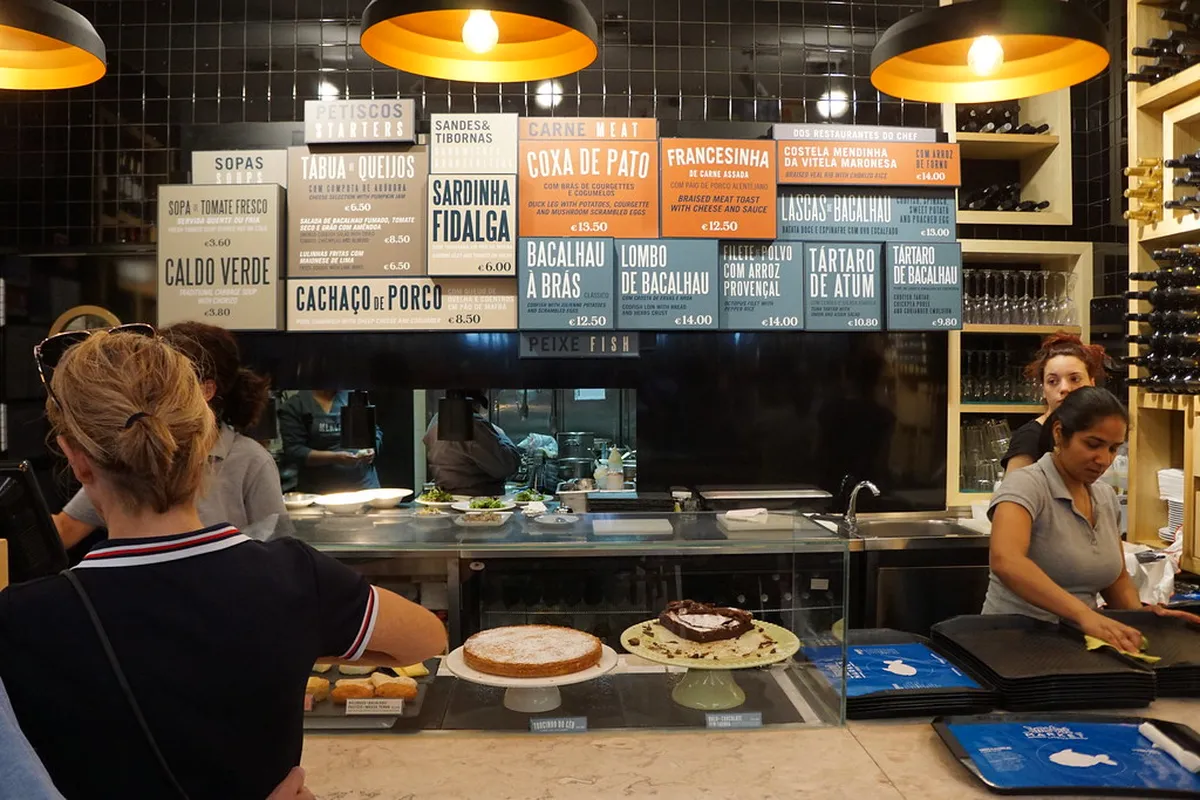
Miguel Castro e Silva brings northern Portuguese coastal cooking to the market from his Porto base. His arroz de polvo (octopus rice) is brothy, deeply seasoned, and cooked to order — the octopus tender rather than rubbery. He also does a bacalhau à brás and a francesinha sandwich that locals rate as genuinely close to Porto quality. Dishes run €13–16. If you order only one thing from the Chef's Kitchen, the octopus rice is the strongest single plate in the hall.
Marlene Vieira is the only female chef with a prominent stall here and one of the market's most consistent performers. Her focus is on petiscos (Portuguese snacks) made with seasonal ingredients — pataniscas de bacalhau (codfish fritters), camarão crocante (crispy wrapped shrimp), and stuffed mushrooms are reliable. Prices sit at €12–17. She also holds a Michelin star at her Marlene restaurant at the Lisbon Cruise Terminal if you want to follow up.
Best Traditional Portuguese Seafood & Meat Stalls
Beyond the Chef's Kitchen, several stalls specialize in individual Portuguese staples with decades of reputation behind them. These are where the market's everyday value is clearest, and where you find the traditional Portuguese dishes that have not been modernized or deconstructed. They also move faster, which matters when you are hungry and the hall is packed.
Monte Mar is the seafood benchmark of the market. The original restaurant sits on the coast road outside Cascais, recommended by Time Out as the best in that area — the market stall brings the same sourcing into central Lisbon. The garlic shrimp and grilled sea bream (served butterfly-style with garlic rice) are consistently highlighted by regulars. Hake fillets with rice run about €15–22. Check the Monte Mar Menu PDF for the current seasonal selection.
O Prego da Peixaria serves the classic garlic steak sandwich, or prego, on Madeira's bolo do caco flatbread — a version of one of Lisbon's most beloved street foods. At €9–13, it is one of the better-value meals in the hall and easy to eat standing if seats are full. If you have never had a prego, this is a fine introduction.
Croqueteria earned its spot through a Time Out competition in 2014 and remains the only croquette specialist in the market. The goat cheese with caramelised onion and the cuttlefish ink croquette are the creative options worth trying; the traditional beef version is a reliable baseline. Individual croquettes cost €2–5. One note from repeat visitors: order them fresh at the counter rather than from a warmed tray — the texture is noticeably better when they are just fried.
Olho Bacalhau, run by the Terra do Bacalhau brand, focuses entirely on cod. The pastel de bacalhau (cod cake) here uses fish cured for at least nine months from Norwegian cold waters — the flavour is concentrated and savoury in a way that supermarket bacalhau is not. They also sell whole and filleted bacalhau to take home, which is unusual for a food hall and useful if you are cooking.
Where to Find the Best Desserts and Drinks
Manteigaria is the dessert anchor of the market and the reason many visitors come here specifically. The name literally means "buttery" in Portuguese, and the pastel de nata here is made with real butter rather than the margarine found in lower-end versions. Each tart costs €1.20, served warm from the oven with cinnamon and powdered sugar on the side. The open kitchen at the back of the stall lets you watch the tarts being assembled and baked, which is part of the draw. Time Out Market's editorial team curates every vendor here to this same standard of quality. Many locals rank it above the famous Pastéis de Belém — it is more centrally located and the queue is usually shorter.
Santini has been making artisanal gelato since 1949, originally from Estoril and later Cascais. The market stall uses the same hand-made Italian-style recipes. The coconut is the most distinctive flavour — intensely rich with texture from desiccated coconut — while the hazelnut is closer to nutella for those who prefer a denser scoop. A medium cup (three scoops) runs €4–6.
For drinks, head to the central kiosks rather than ordering directly from food stalls. The dedicated wine bar O Bar da Odete serves exclusively Portuguese bottles — red, white, rosé, and sparkling — poured by the glass at fair prices. The Beer Experience Super Bock kiosk lets customers pull their own beer and offers lesser-known varieties including stout and amber IPA alongside the standard lager. The Licor Beirão kiosk is worth a stop for anyone curious about Portugal's most popular spirit — a herbaceous amaro-style liqueur best tried in a simple serve before buying a bottle to take home.
Essential Tips for Finding a Seat and Avoiding Crowds
The single most common complaint about Time Out Market Lisbon is the difficulty of finding a seat. The central communal tables fill quickly, especially in summer, and there is no reservation system for the main hall. The most effective strategy is to split the task: one person claims a table the moment a group stands to leave, while the others join the food queues. Do not queue for food first — by the time you return with plates, every visible seat will be taken.
Timing matters more than strategy. The hall opens at 10:00, and arriving then or in the first 30 minutes gives you table choice and shorter queues at every stall. Lunch peak is 12:30–14:30 and dinner peak is 19:30–22:00; both are genuinely difficult. The mid-afternoon window from 15:30 to 18:00 is consistently the quietest stretch of the day. Late visits after 22:30 also ease considerably as the dinner crowd starts to leave.
One practical detail that catches first-timers off guard: several stalls — including Henrique Sá Pessoa — use a pager buzzer system when they are busy. You order, pay, receive a small pager device, and then go find a seat or get other food while you wait. The pager vibrates when your dish is ready for collection. This means you do not need to stand at the stall for 15–20 minutes. Use the waiting time to get dessert or drinks from the kiosks, then collect your main dish when the pager fires.
The busiest chef stalls, including Henrique Sá Pessoa's, use a pager system at peak times — you order and pay, then receive a buzzer so you can grab a seat or browse other stalls while your dish is prepared. The mid-afternoon window from 15:30 to 18:00 is consistently the quietest stretch of the day if you want to skip the queues entirely.
If the main hall is truly overwhelming, the building has outdoor seating on the side facing Avenida 24 de Julho. Some perimeter restaurants also have their own dedicated seating separate from the communal tables. On a good-weather day, taking food to the Jardim Dom Luís I park a short walk toward the river is a practical option if you want to eat without the indoor noise.
Is it Worth It? Prices, Honest Verdict, and What to Skip
A realistic full meal — main dish, dessert, and one drink — runs €18–28 per person depending on which stalls you choose. That is more than a local tasca will charge for a set lunch with wine, but less than a sit-down meal at any of the chef-restaurants represented here. For a single visit to try a range of dishes quickly, the value is defensible. For a quiet dinner in a traditional atmosphere, it is not the right choice.

The food quality is genuinely high because the editorial selection standard is enforced. You are unlikely to eat a bad meal. What you sacrifice is the experience of a neighborhood restaurant — no cloth napkins, no lingering service, no calm. The hall is loud, hot in summer, and crowded for most of the day. Treat it as a culinary event rather than a sit-down dinner and the visit lands correctly.
Payment is almost entirely cashless in 2026. Contactless cards and Apple Pay or Google Pay work at every stall. A small number of vendors may still accept cash, but carrying only a card is now standard practice. Having to find an ATM mid-visit is avoidable friction that is not worth experiencing.
Time Out Market Lisbon is almost entirely cashless — contactless cards, Apple Pay, and Google Pay are accepted at every stall. A full meal (main dish, dessert, and one drink) typically runs €18–28 per person, making it more affordable than booking a table at any of the Michelin-starred restaurants represented here.
Regarding dietary needs: vegetarian and vegan options are present but require some navigation. Marlene Vieira's petiscos include vegetable-based plates; the salad-focused stalls in the center of the hall work well for plant-based eaters. Most traditional Portuguese stalls are heavy on seafood and meat. Gluten-free needs are harder to confirm in a busy open kitchen — flag any allergy directly with staff at the stall rather than relying on menu labels alone. The diversity of options means most dietary profiles can eat well here; it just takes an extra five minutes of scouting.
For the full picture of where to eat in the city, see our guide to the best restaurants in Lisbon. For more Lisbon food and drink, explore our guides to Lisbon street food and tapas and petiscos.
Frequently Asked Questions
Do you need a reservation for Time Out Market Lisbon?
No, you do not need a reservation for the main food hall. All seating is communal and available on a first-come, first-served basis. If you prefer a formal sit-down meal, some of the full-service restaurants on the perimeter may accept bookings. Check the best restaurants in Lisbon guide for more formal dining options.
What is the best time to visit Time Out Market Lisbon?
The best time to visit is during the shoulder hours to avoid the largest crowds. Aim for an early lunch around 11:30 AM or a late afternoon snack between 4:00 PM and 6:00 PM. Weekdays are generally less hectic than weekends, especially during the peak summer tourist season.
How do you pay at Time Out Market Lisbon?
The market is largely cashless, so it is best to bring a credit or debit card. Most vendors accept contactless payments, which is the fastest way to pay. While some stalls might still take cash, having a card ensures you can order from any vendor without issues or delays.
Are there vegetarian options at Time Out Market?
Yes, there are several vegetarian and vegan options available throughout the market. Stalls like Kitchenette and various salad-focused vendors offer plant-based meals. Many of the traditional Portuguese stalls also provide vegetable-based sides or egg-based dishes like Omeletes or Tortilhas.
The Time Out Market Lisbon remains a practical and genuinely high-quality entry point into Lisbon's food scene. The curation standard holds, the stall variety is unmatched in the city, and the combination of chef-driven plates and traditional Portuguese staples under one roof is hard to replicate elsewhere. The crowds are real, the prices are higher than a local tasca, and the noise is constant — but none of those things change the fundamental quality of what is being served.
Arrive before 12:00 or after 15:30, use the pager system to your advantage, and spend ten minutes exploring the traditional Mercado da Ribeira side of the building before you eat. That combination turns a standard tourist visit into something closer to how people who live in this city actually use the place.