Parque Das Nacoes Lisbon Travel Guide
Plan your trip to parque das nacoes lisbon with our expert guide. Discover top attractions, modern architecture, and practical travel tips for your 2026 visit.
On this page
Parque Das Nacoes Lisbon
Exploring the modern side of the city often leads visitors to the vibrant Parque das Nações district on Lisbon's eastern waterfront. This purpose-built neighborhood along the Tagus River offers a sharp contrast to the narrow, winding streets of the historic center. You will find futuristic architecture, expansive riverside parks, and world-class attractions within easy reach of the city center.
The district was carved out of a contaminated industrial wasteland along the Tagus and rebuilt from scratch to host the 1998 World Exposition. Today it functions as a thriving residential and commercial neighborhood that draws visitors year-round. Families, architecture fans, and anyone seeking flat, accessible walking paths all find it rewarding.
Expo 98 and the Making of a Modern District
Before 1998, this stretch of the eastern riverbank was occupied by oil refineries, slaughterhouses, and heavily polluted industrial land. Lisbon won the bid to host the last World Exposition of the 20th century, themed around the Oceans, and used the event as a catalyst for a massive urban regeneration project. Over four months, from May to September 1998, more than ten million visitors attended the Expo on this newly transformed site.
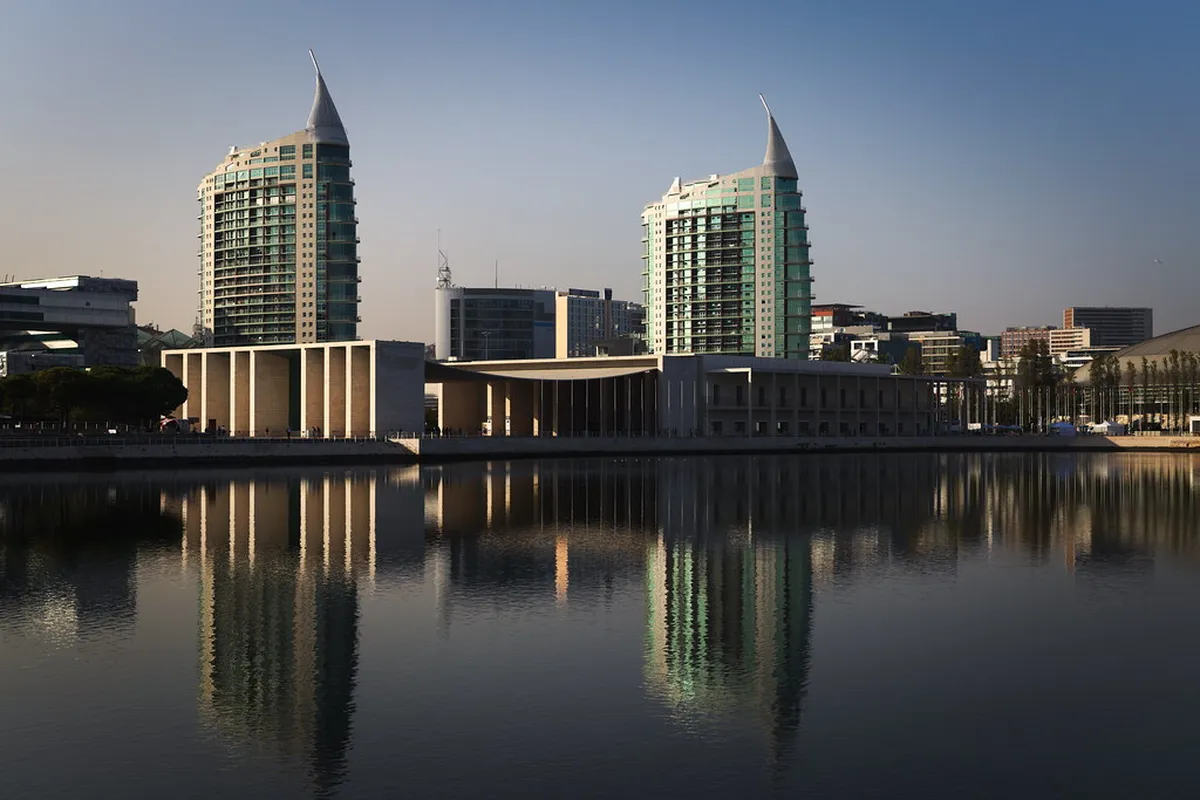
The buildings constructed for the event were designed to last. Architects including Santiago Calatrava, Álvaro Siza Vieira, and Peter Chermayeff were commissioned to create venues that would serve the city long after the Expo closed. The result is a coherent, walkable district of landmark-quality buildings unlike anywhere else in Portugal.
After the Expo ended, the land was handed to Parque Expo, a state urban development company, which managed the gradual conversion into a residential and business district. Today roughly 25,000 people live here, and the area has its own postal district (Lisbon 1990–1999) and a functioning commercial high street. The full history of the transformation is documented on Wikipedia for those who want deeper context before visiting.
Oceanário de Lisboa: The District's Unmissable Anchor
The Oceanário de Lisboa is routinely ranked among the best aquariums in Europe and was the centrepiece of the 1998 Expo. The building sits partially over the Tagus, designed by American architect Peter Chermayeff to resemble an aircraft carrier surrounded by water. Inside, a single enormous central tank — four million litres — replicates an open-ocean habitat with sharks, sunfish, rays, and large schools of tuna swimming together.
Four satellite tanks around the central ocean represent the Antarctic, Pacific, Atlantic, and Indian ecosystems, each with their own temperature and salinity carefully maintained. The sea otter tank on the upper level consistently draws the longest crowds. In 2026, adult admission is approximately €25 and children under 3 enter free; booking online at least a day ahead saves you the queue at the ticket desk, which can stretch 30 minutes on summer weekends.
The aquarium opens daily from 10:00 to 20:00 (last entry 19:00). Morning visits before 11:00 are noticeably quieter, particularly on weekdays. School groups typically arrive between 10:30 and 11:30, so arriving at opening or after 14:00 gives the best experience. Plan for 90 minutes to two hours inside to see everything comfortably.
Arrive at the Oceanário before 11:00 or after 14:00 to avoid school group peak hours. Booking tickets online at least a day ahead saves up to 30 minutes at the ticket desk on summer weekends.
Telecabine Cable Car and the Vasco da Gama Tower
The Telecabine Lisboa cable car runs for 1.25 kilometres along the riverside, connecting the southern station near the Oceanário with the northern station beside the Vasco da Gama shopping centre. Gondolas run continuously and the ride takes about 10 minutes each way. A one-way ticket costs around €7 and a return around €10.50; buying online avoids peak-hour queuing at the booth. The cable car is closed on Mondays outside school holidays.
From the gondola you look straight down onto the Tagus and across to the far bank. On clear days the view stretches to the mountains north of Setúbal. The ride is low enough that you feel genuinely aerial rather than distantly removed, making it worthwhile even for those nervous about heights. Going south to north is slightly better for photography as you face the wider river panorama.
The Vasco da Gama Tower at the northern end rises 145 metres and was originally built as a VIP observation point for the Expo. It has since been converted into a Myriad hotel and the Sky Bar on the upper floors is open to non-guests for cocktails and views. The terrace offers one of the best unobstructed sightlines across the 17-kilometre span of the Vasco da Gama Bridge, especially around sunset. Reservations for the Sky Bar are recommended on weekend evenings.
Pavilhão do Conhecimento and the Pavilhão de Portugal
The Pavilhão do Conhecimento — Science and Technology Museum — was built for the Expo and has operated as an interactive science centre ever since. Exhibits are hands-on and bilingual in Portuguese and English. Physics demonstrations, a tilted room, a zero-gravity chair, and a permanent section on mathematics make it genuinely engaging for adults as well as children. Admission runs around €10 for adults; it is free on the first Sunday of each month before 14:00.
Five minutes' walk south stands the Pavilhão de Portugal, the work of Álvaro Siza Vieira and perhaps the most architecturally significant building in the district. Its defining feature is a thin concrete canopy — 65 metres wide and only 20 centimetres thick — suspended between two porticoes like a hanging sheet of stone. The portico columns are hollow, the canopy is slightly curved, and the whole structure defies intuitive logic about what concrete can do. The building now houses the Council of Ministers when the government meets in Lisbon and is not regularly open for interior visits, but the exterior plaza and canopy are freely accessible at any time.
Just behind the pavilion, the Altice Arena is one of Europe's largest indoor venues at 20,000 capacity. It hosts major concerts, the ATP Millennium Estoril Open during its indoor phases, and international sporting events. Check listings on the official venue website before your trip — a big concert night dramatically changes the atmosphere of the whole northern end of the park.
Gare do Oriente: Worth More Than a Transit Stop
Most visitors arrive at Gare do Oriente and immediately head for the exit, which means they miss one of the most remarkable pieces of engineering in Portugal. Santiago Calatrava designed the station for the Expo, completing it in 1998. The vaulted steel-and-glass canopies above the suburban and inter-city train platforms resemble the skeletal fronds of a forest of steel palms — each column branches upward into a ribbed glass canopy 30 metres overhead.
The best vantage point is from the upper walkway level looking down the full length of the platforms. Early morning, when the low eastern sun cuts through the glass at a shallow angle, the light patterns on the platforms are genuinely spectacular. Budget 20 to 30 minutes to walk through the full structure before or after exploring the park. There is no charge and no ticket required to access the platform level between trains.
The station also serves as the main bus terminal for long-distance coaches to Porto, the Algarve, and Spain, making it a practical last stop before leaving Lisbon. The ground-floor commercial level has a post office, pharmacy, supermarket, and several cafe options for a quick breakfast before your day begins.
Gardens, Riverside Promenade, and Outdoor Space
The Jardim Garcia de Orta runs along the water south of the Oceanário and features plants grouped by the former Portuguese territories that brought them to Europe — Brazil, Macau, Goa, Cape Verde, Mozambique, and others. The labelling is in Portuguese and Latin but the garden is free and peaceful, especially on weekday mornings when most tourists are inside the aquarium. Allow 20 to 30 minutes to walk through properly.
The central water gardens between the Oceanário and the Pavilhão de Portugal are the district's social heart. Fountain jets erupt from the ground on timed cycles, and younger children reliably spend more time here than at any paid attraction. The 'volcano' water jets — circular groups of ground-level fountains that build and release simultaneously — have been drawing families since the Expo. Bring a change of clothes for small children in summer.
The promenade from the southern tip of the park to the northern Vasco da Gama Bridge stretches roughly three kilometres and is entirely flat. It is wide enough for cyclists and pedestrians to share comfortably. Electric scooter rental is available at multiple docking stations along the route, and there are also dedicated bike hire points near the southern station. The promenade is quietest before 09:00 and after 20:00, when local residents use it for running and evening walks.
Eating and Drinking in Parque das Nações
The riverside restaurants immediately adjacent to the Oceanário tend to charge Lisbon tourist-zone prices — €15 to €25 for a main course — without necessarily offering the quality to justify it. For better value, walk two or three streets inland toward the residential blocks, where working-lunch restaurants serve a prato do dia (daily plate) with soup, main, and drink for €10 to €13. The residential streets around Rua do Bojador and Avenida de Berlim have several unpretentious local options that most visitors never reach.
The food court in the Vasco da Gama mall is convenient and covers most budgets, with Portuguese tascas alongside the usual international chains. The upper floor has a row of sit-down restaurants facing the river, which are a reasonable midday option when the riverside terraces are fully booked. The mall itself is open daily from 10:00 to midnight.
For coffee and pastries before the aquarium opens, the cafe inside the Oceanário lobby opens at 09:30 and usually has shorter queues than the standalone riverside kiosks. In the evenings, the Sky Bar in the Vasco da Gama Tower draws a cocktail crowd and the outdoor terrace is worth the higher drink prices for the bridge views. Most riverside kiosk bars stock Super Bock on draught for under €3 if you simply want a cold beer with a river view.
How to Get to Parque das Nações
The Metro Red Line runs directly to the district with two useful stops: Oriente for the northern end and the train station, and Oriente (Moscavide) for the Oceanário and cable car. From Lisbon Airport the journey to Oriente is one stop — under five minutes — making the district an extremely logical first or last stop on any Lisbon itinerary. From Baixa in the historic center, take the Green Line to Alameda and change to the Red Line; the full journey runs 20 to 25 minutes.
The Lisboa Card, available from tourism offices and online, covers all Metro travel plus free entry to the Oceanário and Pavilhão do Conhecimento. If you plan to visit both and use the Metro for most of the day, the 24-hour card at around €22 often represents better value than paying attractions individually. The card also covers the suburban train network from Oriente, which is useful for day trips to Sintra or Cascais.
Cycling from the city center is possible along a dedicated riverside path that follows the Tagus eastward from Terreiro do Paço. The route is mostly flat and takes about 40 minutes at a leisurely pace. Bike hire points in Alfama and Baixa connect to this path. Driving and parking is straightforward by Lisbon standards — the district has large underground car parks beneath the mall — but public transport is genuinely faster from most parts of the city.
Practical Tips for Visiting in 2026
Book Oceanário tickets online at least the evening before your visit. The ticket desk frequently sells out on summer weekend mornings, and online booking typically guarantees entry within your chosen time window. The Telecabine car does not require advance booking but the queue at the southern station can reach 20 minutes on hot July and August afternoons — the northern station usually has a shorter wait for the same ride.
The district is highly accessible for wheelchair users and visitors with pushchairs. The entire promenade and all Expo-era public spaces are step-free, and the Metro stations on the Red Line are equipped with lifts. This makes Parque das Nações one of the most mobility-friendly areas in Lisbon, which is otherwise notoriously challenging terrain due to its hills and cobblestones.
Weather matters for planning. The cable car closes in strong winds, which occur more frequently in spring. The gardens and promenade are exposed, so sunscreen and a hat are essential in summer from June through September. For a one-day visit, start at the Oceanário (09:30 or 10:00 opening), take the cable car north, walk the promenade back south for lunch, and spend the afternoon at the Pavilhão do Conhecimento or the Jardim Garcia de Orta. This sequence follows the natural flow of the district and avoids backtracking. For more help structuring a full city itinerary, the Visit Lisboa official page for Parque das Nações lists current seasonal events and opening hours.
Parque das Nações is one of Lisbon's most accessible areas — the entire promenade and all Expo-era public spaces are step-free, and Red Line Metro stations have lifts. This makes it an ideal first stop for visitors with pushchairs or mobility concerns.
How Parque das Nações Compares to Other Lisbon Districts
If you enjoy modern design and wide-open spaces, this district will likely be your favourite part of the city. It feels organized and spacious compared to the crowded alleys of Alfama. The absence of steep hills makes it far more accessible for those with mobility concerns, young children, or heavy bags.
Travelers seeking historic monuments and traditional Fado houses may find the area too modern. While it lacks the ancient layers of central Lisbon, it offers a window into the city's ambitions for its own future. The architectural confidence on display is itself a form of cultural statement.
Crowd levels are generally more manageable than at the tourist hotspots of Belem. The Oceanário is popular but the sheer size of the park ensures you can always find an uncrowded stretch of riverfront. Our Lisbon's essential neighborhoods covers how to balance a day in Parque das Nações against time in the historic center and the riverfront monuments. The industrial-chic energy of Alcantara makes a good evening follow-up if you want to keep moving west along the Tagus after leaving the park.
This area is just one piece of the city — our Lisbon's essential neighborhoods maps out where each district sits.
Frequently Asked Questions
Which parque das nacoes lisbon options fit first-time visitors?
First-time visitors should prioritize the Oceanário de Lisboa and a ride on the Telecabine cable car. These offer the best introduction to the district's modern scale and beauty. Afterward, a stroll through the water gardens provides a relaxing way to see the architecture.
How much time should you plan for parque das nacoes lisbon?
You should plan for at least half a day to see the main highlights. If you intend to visit the aquarium and the science museum, a full day is recommended. This allows for a leisurely lunch and time to explore the riverside promenade without rushing.
What should travelers avoid when planning parque das nacoes lisbon?
Avoid visiting the aquarium during the middle of the day when school groups and crowds are at their peak. It is also wise to skip the restaurants directly adjacent to the main entrance if you want better value. Walk a few blocks inland for more authentic and affordable dining.
Is parque das nacoes lisbon worth including on a short itinerary?
Yes, it is worth a visit even on a short trip because it offers a unique perspective on modern Portugal. The district is very different from the historic center and provides great photo opportunities. It is also conveniently located near the airport for a final stop.
The Parque das Nações district remains a vital part of Lisbon's identity, blending futuristic vision with everyday public life. Whether you are watching sharks in the Oceanário, photographing the floating concrete canopy of the Pavilhão de Portugal, or simply walking the flat riverside path at sunset, the area delivers experiences unavailable anywhere else in the city.
Planning your visit with a mix of major attractions and quieter garden moments ensures a balanced day. Book the Oceanário online, arrive early, and leave the afternoon free for the cable car and riverside promenade. This neighborhood genuinely showcases the innovative confidence that has shaped modern Lisbon.
For more travel inspiration and detailed neighborhood breakdowns, check our latest blog posts. We provide updated tips and local insights to help you navigate Portugal at your own pace.
 Guimaraes With Kids Travel GuideJune 8, 2026