Cais Do Sodre Lisbon: 10 Essential Tips & Attractions
Plan your visit to Cais do Sodré, Lisbon's trendiest district. Explore Pink Street, Time Out Market, and the best riverside spots with our expert local guide.
On this page
Cais Do Sodre Lisbon: 10 Essential Tips & Attractions
Cais do Sodré stands as a vibrant testament to Lisbon's ability to reinvent itself. Once a gritty port for sailors and dockworkers, this district now pulses with modern energy and culinary innovation. You will find a unique blend of historic architecture and buzzing nightlife along the southern bank of the Tagus River.
This neighborhood serves as a vital hub for both locals and travelers exploring the city. It connects the historic center to the beaches of the Atlantic coast and the towns of the south bank. Understanding the layout of this area is key to a successful Lisbon's essential neighborhoods experience.
Travelers often visit for the famous Pink Street or the bustling Time Out Market. However, the district offers much more than just these popular tourist landmarks. From hidden bars to ferry crossings, there is something for everyone to discover here in 2026.
Pink Street: What to Expect on Rua Nova do Carvalho
Pink Street — officially Rua Nova do Carvalho — is the undisputed centrepiece of Cais do Sodré. The street was painted bubblegum pink in 2011 as part of a city initiative to rebrand the area from its red-light-district past. That single cosmetic change triggered a wave of bar openings, outdoor seating, and international press attention. Today it is one of the most photographed streets in Lisbon.
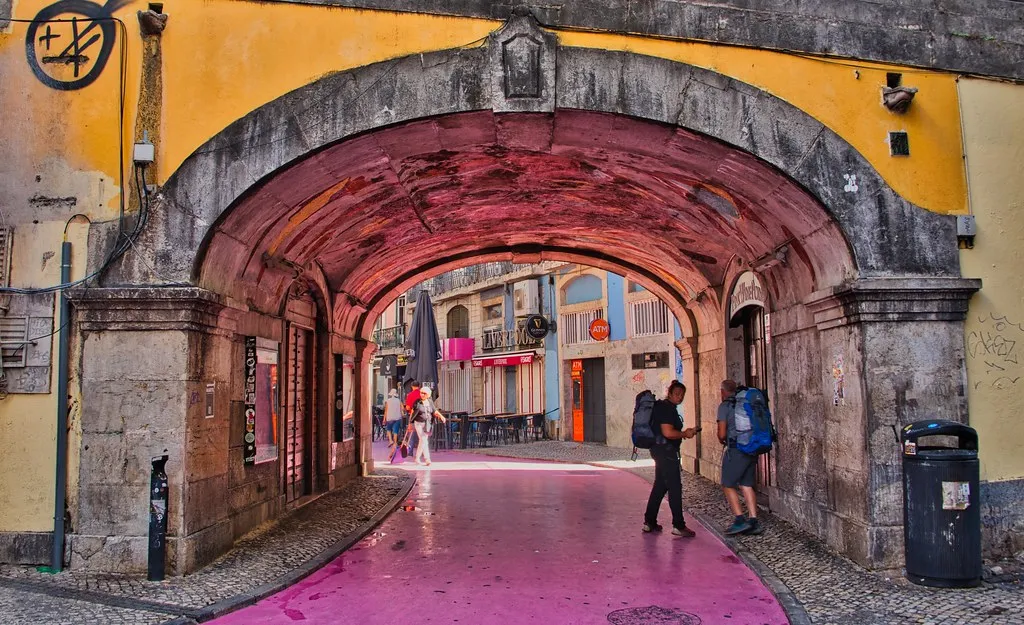
The street runs about 150 metres and is fully pedestrianised. During the day it is quiet enough to photograph without crowds — arrive before 11:00 for the best light and near-empty frames. After 22:00 it transforms completely: bar fronts open wide, DJs set up in doorways, and the crowd spills onto the cobblestones. First-timers who arrive at 19:00 or 20:00 often find it eerily empty and assume the hype is overblown — come back two hours later and the picture is entirely different.
Several specific bars have anchored the strip's reputation. Pensão Amor, a former brothel turned burlesque cocktail bar, fills three floors with vintage red velvet, erotic art, and a small stage for live performances. Entry is free but a side door on Rua do Alecrim reduces the queue significantly on busy nights. Femme Fatale and Solar dos Presuntos Bar draw a younger crowd with cheap beers and open-air seating. Most venues open by 22:00 and stay busy until 03:00 or 04:00.
Cover charges are rare on Pink Street itself — revenue comes from drinks, which run €7–€12 for a cocktail. Cash is widely accepted but tap-to-pay is now the norm. The strip gets genuinely packed on Friday and Saturday from 23:00 onwards, so keep a hand on your pockets and leave bags that are difficult to secure at the hotel.
Pink Street is nearly empty before 22:00 — arrive after that hour for the full atmosphere. Pensão Amor has a side door on Rua do Alecrim that significantly reduces queue times on busy nights.
Time Out Market Lisbon: Hours, Prices, and How It Works
The Time Out Market Lisboa occupies the ground floor of the 19th-century Mercado da Ribeira, a wrought-iron market hall that sat largely underused for decades. When it reopened as a food hall in 2014 it became a global template — Time Out has since opened versions in Miami, New York, and Dubai — but the Lisbon original remains the best. The hall now hosts around 35 restaurant counters and 26 shops curated by the magazine's food critics.
Opening hours in 2026 are 10:00–00:00 Sunday through Wednesday and 10:00–02:00 Thursday through Saturday. The market is split into two wings: the eastern half retains the original produce stalls where locals buy fruit, vegetables, and flowers on weekday mornings; the western food-hall wing is what most tourists come for. The two are connected by a central corridor but feel like different worlds.
Prices sit in the mid-range. Expect to pay €10–€16 for a main dish at counters like Henrique Sá Pessoa (Michelin-starred chef) or João Rodrigues. A bifana (pork sandwich) at the traditional stalls runs about €4. The trick is to arrive before 12:30 or after 15:00 on weekdays — lunch rush from 12:30 to 14:30 is intense and seating disappears fast. On weekends, competition for tables is fierce at any hour after 11:00.
The market does not take reservations; all seating is first-come. Ordering works like a food court: visit each counter, order and pay, then carry your tray to any available table. Drinks can be ordered from the central bar. The rooftop bar above the hall offers river views and opens from 17:00 daily — worth the extra climb for sunset.
Cais do Sodré Station: Lisbon's Most Useful Transport Hub
Cais do Sodré station is unique in Lisbon because it serves four distinct transport modes within a single interchange. No other station in the city combines metro, suburban trains, ferries, and trams under one roof. Understanding how each mode works turns this hub from a confusing landmark into one of the most powerful tools in your trip.
The Green Line metro connects directly to Baixa-Chiado (1 stop), Rossio, and then north toward the airport. A single fare costs €1.61 on a rechargeable Navegante card; buying single-trip paper tickets costs more and is not worth it if you plan more than two journeys. The Cascais Line suburban train departs from the lower level and runs every 20 minutes during the day, stopping at Belém (8 min, €2.30), Estoril (32 min), and Cascais (40 min). It is the cheapest and fastest way to reach the beach towns west of Lisbon.
The ferry terminal sits adjacent to the train hall, facing the river. Transtejo operates three routes from here: to Cacilhas (12 min, €1.45 each way), Barreiro (55 min, €3.80), and Montijo (35 min, €3.20). The Cacilhas crossing is the most popular — it runs every 10–15 minutes during the day and offers some of the best panoramic views of the Lisbon skyline, completely free if you factor in the return ticket. The 15E tram departs from the surface stop outside the main entrance and runs along the riverside to Belém and Algés.
A practical note: the Navegante monthly card (€40) covers all four modes and is worth buying if you are staying a week or more. For shorter stays, a Navegante casual card (€0.50 to issue) loaded with credit is the most flexible option. The ticket machines at the station accept contactless payment cards.
The History and Transformation of Cais do Sodré
The history of Cais do Sodré is deeply tied to the sea and global trade. For centuries this was where sailors from Africa, Brazil, and beyond would dock, giving the area a rough maritime character filled with taverns, gambling houses, and cheap lodgings. The name itself derives from the Arabic sudr (meaning "chest" or "torso"), a reference to a prominent merchant family of Moorish origin who once owned land here.
The vibe changed dramatically after a major urban renewal project in the early 2010s. The Câmara Municipal de Lisboa decided to rebrand the district: they repainted Rua Nova do Carvalho, renovated the Mercado da Ribeira, and laid new stone pavements along the riverfront promenade. The transformation attracted international restaurant groups and bar operators who saw potential in the cheap rents and the foot traffic from the adjacent transport hub.
Today it feels like a bridge between the old-world charm of Chiado and the working-class energy of the docks. You can still find remnants of the maritime past in the iron lampposts, the cargo warehouse facades, and the occasional fisherman selling the morning catch near the ferry terminal. That layering of old and new is what gives the district its particular atmosphere — it has not been completely gentrified, and that tension is part of its appeal.
Nightlife Beyond Pink Street: Where Locals Actually Go
Pink Street captures most of the tourist attention, but the surrounding streets offer a quieter, more local nightlife scene. Ministerium Club, housed in a former government building on Avenida 24 de Julho just west of the station, is one of Lisbon's best electronic music venues — international DJs headline there most weekends and tickets (€10–€20) sell out. Music Box on Rua Nova do Carvalho hosts live bands and indie acts, opening around 23:00.
For a pre-club drink, the wine bars on Rua do Alecrim — which runs uphill from Cais do Sodré toward Bairro Alto — are excellent. By the Wine near the top of the street offers 140 Portuguese labels by the glass from €4, with knowledgeable staff and no pressure to order food. This strip also connects Cais do Sodré to the Bairro Alto district, so a night can flow naturally between the two neighborhoods without needing a taxi.
The area around Avenida 24 de Julho is worth knowing about for late-night eating. Several kebab shops and late-night tascas stay open until 04:00 and are popular with club-goers heading home. If you are out until sunrise, the taxis and Ubers concentrate near the main station entrance — the queue can be 20–30 minutes at 03:00 on weekends, so the metro (last trains around 01:00 on weekdays, 02:30 on Fridays and Saturdays) is worth catching if you want to leave before that.
Ribeira das Naus and the Riverside Promenade
Ribeira das Naus is the renovated waterfront promenade that stretches east from Cais do Sodré toward Praça do Comércio in Baixa Lisbon. Wide stone steps descend to the water's edge and serve as informal bleacher seating for watching sunsets over the Tagus. On warm evenings from April through October, locals bring bottles of wine and picnic on those steps — it is one of the most authentic free experiences in the city.
The promenade runs about 600 metres end to end and is completely flat, making it easy for strollers and wheelchairs. Kiosks selling beer, wine, coffee, and snacks are spaced along the route. Note that swimming is strictly prohibited along this stretch — the water is part of the river estuary with heavy ferry traffic. For actual swimming, the Cascais Line train from the station reaches beach towns in under 40 minutes.
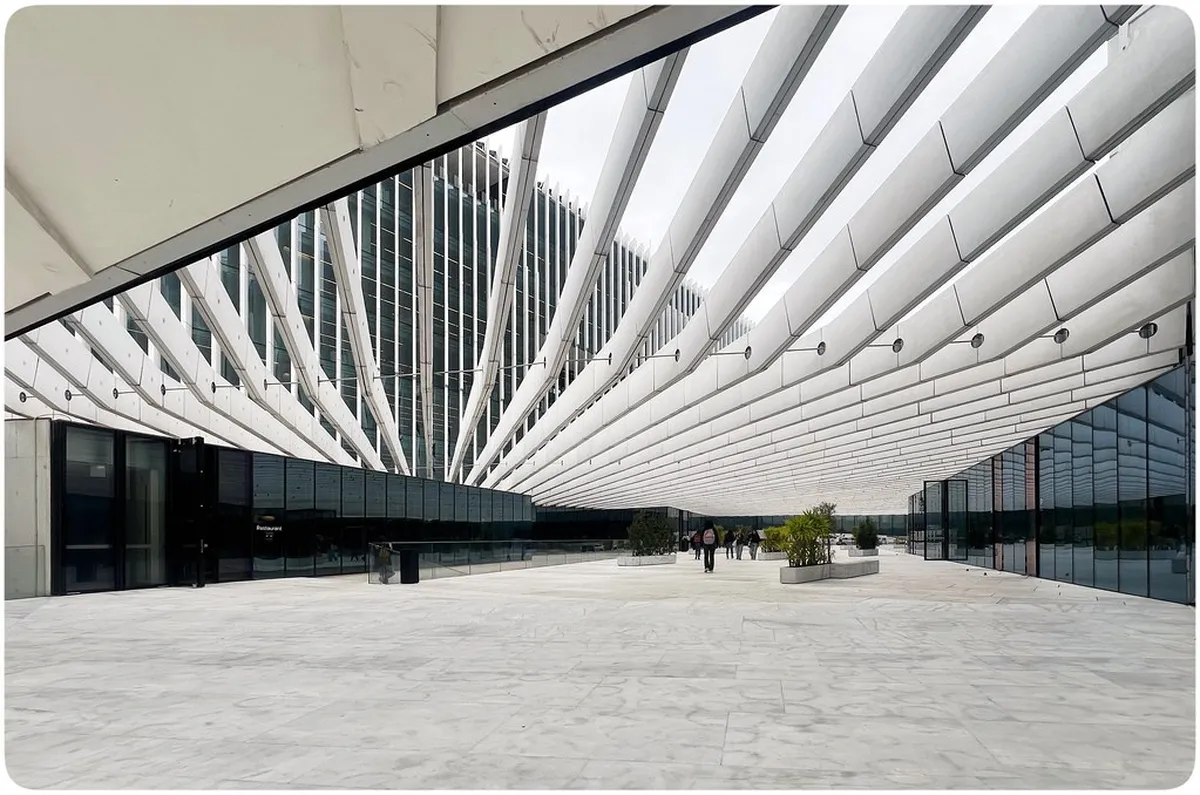
Heading west from the station, the riverside path continues toward the 25 de Abril Bridge and eventually Belém. This section is popular for morning runs and cyclists. You pass several kiosks with river views and eventually reach the Museu de Arte, Arquitetura e Tecnologia (MAAT) — the aluminium-tiled building you can see from the promenade — in about 25 minutes on foot. Check the Belém guide for details on that cluster of monuments.
The Ferry to Cacilhas: The Best €1.45 You Will Spend in Lisbon
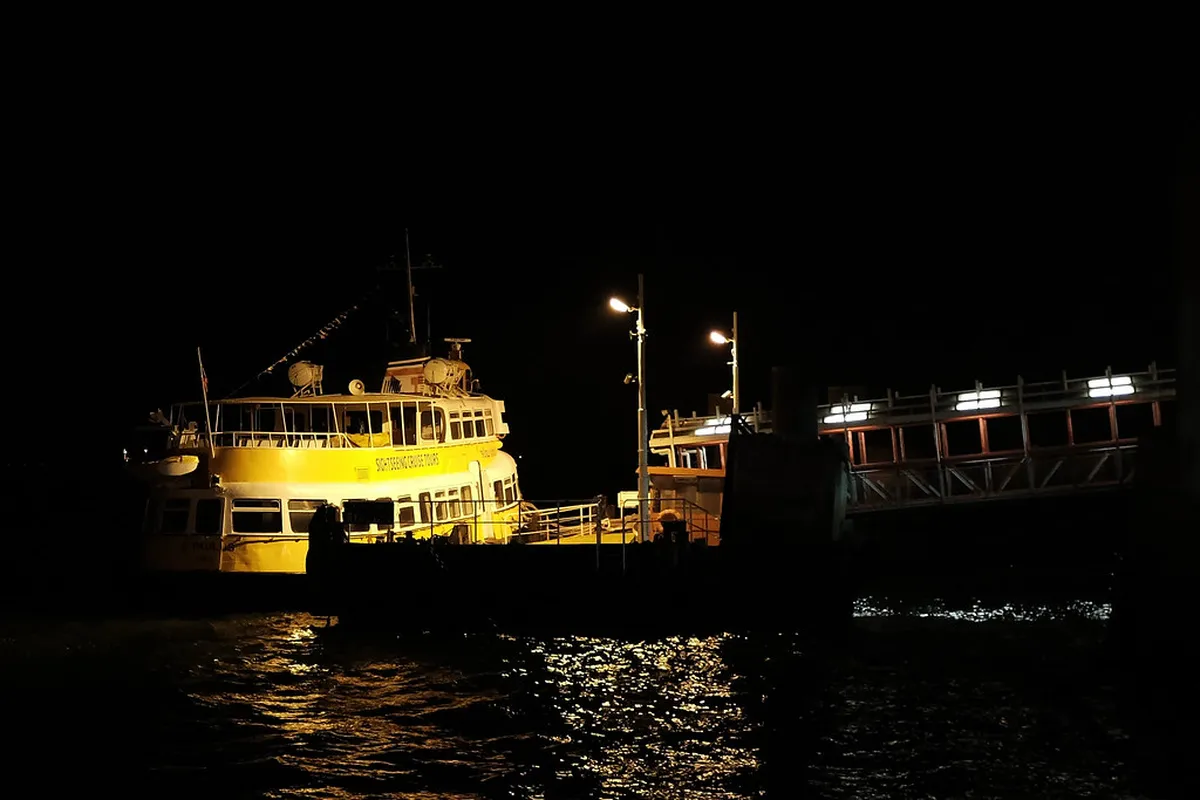
The 12-minute ferry crossing to Cacilhas from the Cais do Sodré terminal is one of those experiences that most guidebooks list but few explain properly. It is not a tourist boat — it is a commuter service used daily by residents of Almada who work in Lisbon. That means the fare stays at €1.45 each way (on the Navegante card), the boats run every 10–15 minutes from 05:30 to 01:20, and the experience is completely unpretentious.
What makes the crossing exceptional is the view looking back at Lisbon. You see the entire waterfront from Belém to Alfama in one unbroken panorama, with the Ponte 25 de Abril framing the scene to the west. It is the same view that appears in countless postcards of the city, and standing on the ferry deck at golden hour you understand why. No other vantage point gives you this angle without a boat rental or a helicopter.
On the Cacilhas side, the main draw is a cluster of seafood restaurants on the pier offering grilled fish, ameijoas (clams), and arroz de lingueirão (razor clam rice) at prices noticeably lower than comparable restaurants in central Lisbon. Restaurante Atira-te ao Rio has outdoor tables directly over the water and has been a local institution for decades. A full meal with wine runs about €20–€30 per person. Return ferries run throughout the evening, so there is no risk of getting stranded.
The Cacilhas ferry costs just €1.45 each way on a Navegante card and runs every 10–15 minutes from 05:30 to 01:20. The return crossing at golden hour offers one of the best panoramic views of the Lisbon waterfront you can get without a boat rental.
Practical Tips for Visiting Cais do Sodré in 2026
The Turismo de Lisboa official guide to Cais do Sodré keeps current hours and seasonal events. In 2026, the city has continued to invest in the riverfront with additional shading and seating along Ribeira das Naus — the stone steps are now much more comfortable in summer than they were a few years ago. Crowds peak from June through August and again during the Festas de Lisboa in June, when the whole waterfront fills with grilled sardine smoke and street music.
Getting to the district is straightforward. From the airport, take the metro Red Line to Oriente and change to the Green Line toward Cais do Sodré — total journey about 45 minutes and €1.61 with a Navegante card. From most Lisbon hotels in the historic center, walking takes 10–20 minutes. The district is at the bottom of Chiado hill, so the walk down is pleasant; the walk back up is steep enough that most people take the metro one stop.
Safety is not a major concern here in 2026. The area is busy most evenings and the police presence on Pink Street on weekend nights is visible. Standard city precautions apply: use a crossbody bag or keep your phone in a front pocket, especially in dense crowds on Pink Street after midnight. The Wikipedia entry for Cais do Sodré gives useful historical context on the district's urban development if you want to read more before visiting.
For those staying in the best areas to stay in Lisbon, Cais do Sodré and its immediate surroundings (Chiado, Santos) offer some of the most convenient bases in the city. You can walk to the market for breakfast, take a train to the beach in the afternoon, and be back on Pink Street by midnight — all without needing a single taxi.
Street Art, Galleries, and the Cultural Scene
Cais do Sodré's cultural credentials extend well beyond its nightlife reputation. The narrow alleys behind the main station contain some of Lisbon's most impressive urban murals — local artists have turned industrial walls and metal shutters into large-format pieces that range from traditional azulejo-inspired patterns to political commentary. Walking tours that focus on Lisbon street art typically start here before heading toward LX Factory in Alcântara.
Small independent galleries have moved into the converted warehouses on Rua Nova do Carvalho and the streets radiating off it. These spaces host rotating exhibitions, often with openings on the first Thursday of the month that double as informal social events. Entry is usually free and the crowd skews local rather than tourist. It is worth checking Instagram or Timeout Lisboa's events calendar for current shows.
The Jardim de Dom Luís, the small park directly in front of the market, provides a green breathing space between the market's noise and the riverside traffic. It is a popular lunch spot for workers from the nearby offices and a reliable place to watch the 28E tram pass on its way up toward Chiado. The park is small but the combination of shade, river glimpses, and the sound of the city makes it a pleasant place to sit for fifteen minutes.
This area is just one piece of the city — our Lisbon's essential neighborhoods maps out where each district sits.
Frequently Asked Questions
Is Cais do Sodré safe for tourists at night?
Cais do Sodré is generally safe for tourists at night due to the high volume of people. However, you should stay alert for pickpockets in crowded areas like Pink Street. Stick to well-lit main roads and avoid poorly lit alleys when walking alone. For more safety tips, check our latest blog posts at Portugal Wander.
What is the best time to visit the Time Out Market to avoid crowds?
The best time to visit the Time Out Market is on weekday mornings before 12:00 PM. You can also find fewer crowds during the late afternoon between 3:00 PM and 6:00 PM. Weekend lunch and dinner hours are extremely busy and finding a seat can be difficult. Arriving early ensures a more relaxed dining experience.
How do I get from Cais do Sodré to the Belem Tower?
You can easily reach the Belem Tower by taking the number 15 tram from the stop outside the station. Alternatively, take the Cascais-bound train and get off at the Belém stop. The journey takes about 15 to 20 minutes depending on traffic and transport type. Walking along the river is also an option for those who enjoy a long stroll.
Cais do Sodré is a neighborhood that perfectly captures the modern spirit of Lisbon. It offers a unique mix of high-end dining, gritty history, and essential transport links. Whether you are looking for a wild night out on Pink Street or a quiet sunset ferry crossing to Cacilhas, this district delivers.
Planning your visit around the market hours and transport schedules will help you make the most of your time. Do not be afraid to venture off the main pink path to find hidden local gems — the wine bars on Rua do Alecrim and the murals behind the station are just as rewarding as the famous landmarks. This area continues to evolve in 2026, making it a place you can visit again and again.
From the four-mode transport hub to the best ferry crossing in the city, the variety here is truly impressive. Make sure to include this district in your next trip to the Portuguese capital. You will leave with a deeper understanding of why this area is so beloved by locals and travelers alike.