
Coimbra Old Town Walking Guide: 2-Day Travel Itinerary
Plan your Coimbra old town walking guide with top picks, neighborhood context, and timing tips. Discover the best of this historic Portuguese city.
On this page
2-Day Coimbra Old Town Walking Guide
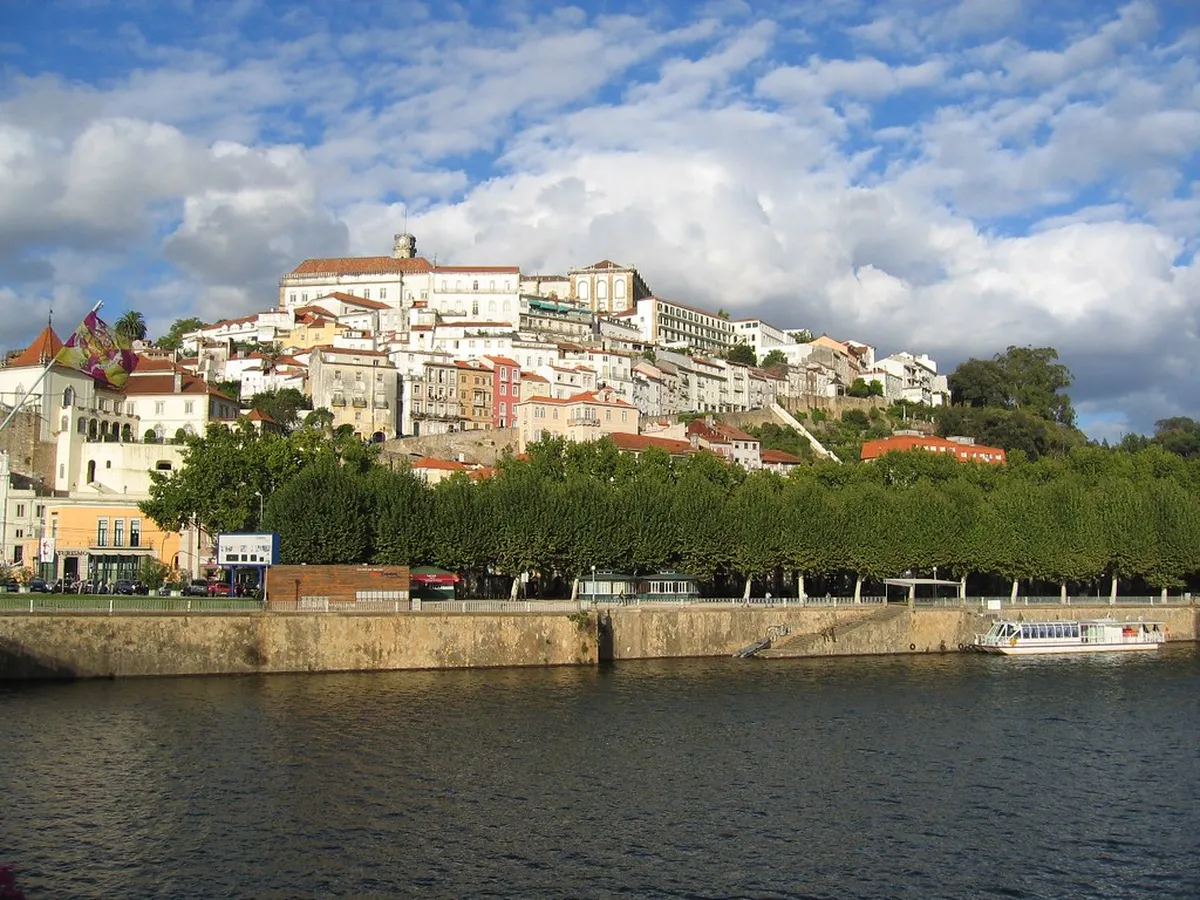
Coimbra is a city of steep hills and ancient stories. This Coimbra old town walking guide is for first-time visitors who want to see it all without burning out their knees on the first afternoon. The trick is to start at the top of the hill and walk down — gravity does half the work.
If you want to know where is Coimbra, it sits roughly halfway between Lisbon and Porto along the Mondego River. Most travelers arrive by train to Coimbra-B station and take a short local connection into the city center. This itinerary covers two full days of sightseeing and balances famous landmarks with quieter local corners.
The city is compact but the elevation changes are significant. One side of the Mondego holds the old town and university on a hill. The other side, Santa Clara, rewards you with ruins, legendary gardens, and panoramic views. Both halves deserve your time.
Quick Orientation in Coimbra
The Mondego River divides Coimbra into two distinct zones. On the north bank you have the old town: the flat Baixa (low city) along the river and the steep Alta (high city) where the university sits on a hilltop. On the south bank sits the quieter Santa Clara neighborhood, home to two monasteries and the Quinta das Lágrimas gardens.

Your logical starting point is Largo da Portagem, the main riverside square on the north bank. The pedestrianized shopping streets of the Baixa branch out from here. The Arco de Almedina gate, a surviving piece of the old Moorish walls, marks the beginning of the climb up to the Alta. From Largo da Portagem you can also cross the Ponte de Santa Clara bridge directly to the south bank in about five minutes on foot.
During the week the city buzzes with tens of thousands of students filling cafes and squares. On weekends and in summer, many students return home and the city takes on a calmer, more local character. Both versions of Coimbra are worth experiencing. Plan accordingly if you want the lively atmosphere rather than the quiet one.
Coimbra Self-Guided Walk Overview
This day-by-day plan minimizes unnecessary uphill climbing. The route starts at the Alta on day one — take a taxi or bus to the top of the hill, then walk downhill through the historic gates into the Baixa. Day two crosses the river to the Santa Clara bank. The total walking distance across both days is roughly 8 to 10 kilometers, all on cobblestone.
Day one centers on the University of Coimbra and its surrounding monuments. You will see one of the most ornate libraries in the world, a Moorish-era cathedral, and a museum built above a Roman underground gallery. The afternoon takes you through narrow medieval residential streets lined with tiled facades and small pastry shops.
Day two focuses on the lower town and the south bank. The Santa Cruz Monastery holds the tombs of Portugal's founding kings. Crossing the bridge gives you the best elevated views of the skyline. End your day with a stroll through the Quinta das Lágrimas and, if you have the energy, climb up to the newer Santa Clara monastery for panoramic views of everything you walked through on day one.
- Day 1: Alta and Baixa — Start at the university, walk downhill, finish with an evening fado show.
- Day 2: South bank — Santa Cruz Monastery, cross the bridge, visit Santa Clara ruins, Quinta das Lágrimas gardens.
University of Coimbra
Founded in 1290, the University of Coimbra is a UNESCO World Heritage Site and the oldest university in Portugal. The Iron Gate — Porta Férrea — is the grand entrance to the courtyard. Once you step through, you are standing in the Paço das Escolas, a wide terrace with views over the river that could stop you in your tracks for ten minutes without any effort.
The Baroque Joanina Library is the main draw. Its three interconnected rooms are stacked floor to ceiling with gilded bookshelves holding around 300,000 volumes, some dating to the 12th century. Timed entry is strictly enforced and daily slots sell out fast. Book online at least 48 hours in advance. The full university circuit ticket costs around €12 to €15 in 2026 and also covers the chapel of São Miguel, the Science Museum, and the Royal Palace.
Joanina Library timed slots sell out fast — book online at least 48 hours in advance. The full university circuit ticket (€12–€15) also covers the chapel of São Miguel, the Science Museum, and the Royal Palace.
The Botanical Garden of the University, founded in 1772, sits just downhill from the main campus. It is one of the largest in Portugal and contains a bamboo forest, formal terraces, and a stunning greenhouse. Admission is free. It is open daily from 09:00 to 20:00 in summer months. This is the natural place to decompress after the intensity of the Joanina Library.
Allow at least two hours for the university complex and another hour for the botanical garden. If you try to combine both with the Machado de Castro museum on the same afternoon, you will feel rushed. The better plan is to save the museum for the walk back down and give it its own time slot.
National Museum Machado de Castro
The Machado de Castro museum is the most underestimated stop on this walk. Most visitors treat it as a secondary attraction after the Joanina Library. It deserves its own hour at minimum. The building is a former bishop's palace and its collection covers medieval sculpture, azulejo panels, gold and silverwork, and Portuguese painting from the 13th to the 18th century.
What no competitor guide makes clear: beneath the palace lies a fully preserved Roman cryptoporticus — an underground gallery of vaulted corridors built around 10 BC as the base of the Roman forum of Aeminium. You can walk through it. The experience of moving through cool, dark arched passages that are over 2,000 years old, directly under a working Renaissance palace, is genuinely disorienting in the best possible way. No other city in Portugal offers access to a Roman underground structure this well-preserved and this accessible.
Museum admission in 2026 is €6 for adults; under 12 is free. The museum is closed on Mondays. It opens at 10:00 and closes at 18:00 Tuesday through Sunday. The cryptoporticus entrance is inside the museum — you cannot visit it separately. Check the official site for public holiday closures before building your itinerary around a Tuesday visit during Easter week.
The Machado de Castro museum is closed every Monday. The Roman cryptoporticus can only be accessed through the museum — there is no separate entrance, so plan your visit for Tuesday through Sunday.
Starting in the Old Town: The Baixa
After descending from the Alta, the Baixa is where the walk slows down and becomes more sensory. Begin at Praça 8 de Maio, the white-marble pedestrian square in front of the Santa Cruz Monastery. The monastery holds the tombs of Portugal's first two kings — Afonso Henriques and Sancho I — and entry to the main church is free. The cloister and sacristy cost a small fee. Behind the monastery, the Jardim da Manga is a small Renaissance garden with an octagonal fountain and a calm, slightly forgotten atmosphere that most visitors walk past.
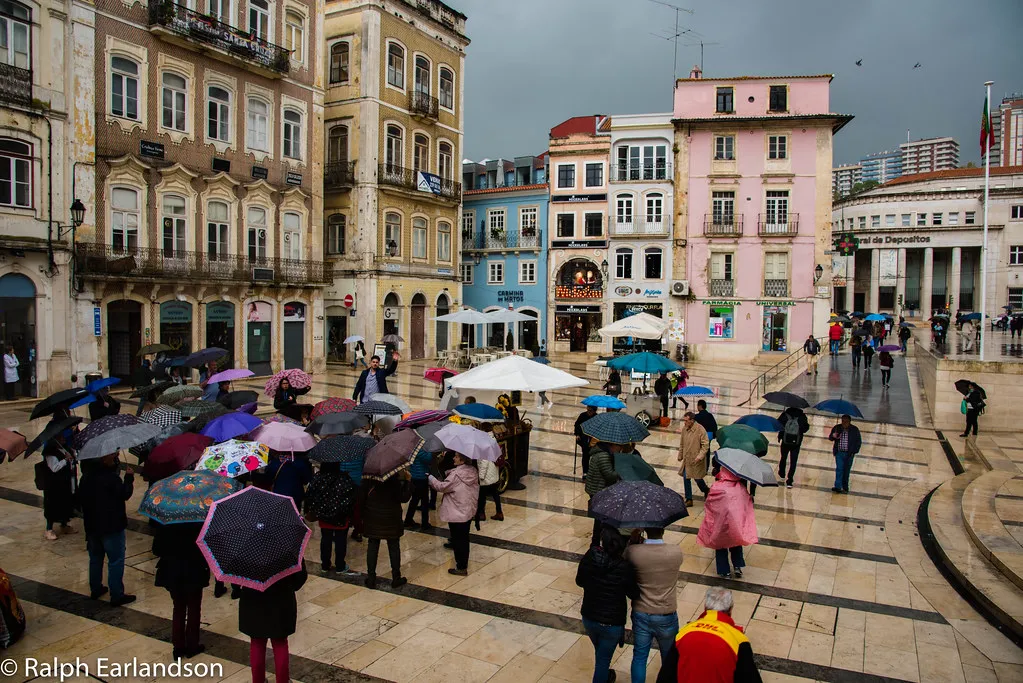
The shopping streets of Rua Visconde da Luz and Rua Ferreira Borges connect the square with Largo da Portagem. These streets are almost entirely local — no chain stores, just small ceramics shops, pastelarias, and bookshops. Stop at Café Santa Cruz for a coffee. It occupies a former Gothic chapel and is the oldest and most atmospheric cafe in the city.
Before climbing to the Alta, pass through the Arco de Almedina. The arch is the last surviving gate of the Moorish walls that once enclosed the city. Just inside the arch, you can climb the Torre de Almedina for free to see a small exhibition on medieval Coimbra. It only takes 15 minutes but sets the historical context well. From there, the Fado ao Centro venue is a short walk up the hill — worth noting for your evening plans.
Coimbra Fado: What Makes It Different
Every guide tells you to see a fado show in Coimbra. Almost none explain why Coimbra fado is a different art form from what you heard in Lisbon. Lisbon fado (fado vadio) is associated with working-class neighborhoods, performed mostly by women, and has a raw, mournful quality. Coimbra fado was developed by male university students in the 19th century. It is slower, more lyrical, more poetic. The guitarists typically perform in academic gowns. The tradition is intrinsically tied to student life and is still performed by current and former university students.
The best venue for first-timers is Fado ao Centro on Rua Quebra Costas, partway up the hill between the Baixa and the university. Shows run daily at 18:00 and cost around €15 including a glass of port. The hour-long performance includes explanations in English, which is useful for understanding the historical context of what you are hearing. Arrive 30 minutes early to get a good seat as the space is intimate. Book by phone or in person earlier in the day rather than relying on online slots.
Torre de Anto, near the Arco de Almedina, houses the Coimbra Fado Museum and displays two guitars that belonged to Carlos Paredes, widely regarded as the greatest Coimbra fado guitarist of the 20th century. Entry is inexpensive and worth the 20-minute stop if you want to understand the instrument before the evening show.
The Other Bank of the River: Santa Clara
Crossing the Mondego takes you into a different pace. The Santa Clara-a-Velha monastery ruins are the first stop after crossing the Ponte de Santa Clara bridge. Built in the 14th century and repeatedly flooded by the Mondego over the following centuries, the monastery was abandoned by its nuns in the late 1600s. Excavated from the 1990s onward, the complex is now partially visible and has a small museum explaining the excavation and the community of nuns who lived here. Entry costs approximately €5. It is closed on Mondays.
The Quinta das Lágrimas gardens are a ten-minute walk from the ruins. The name means Estate of Tears and the site is tied to the legend of Pedro and Inês — a royal love affair that ended in political assassination and one of the most celebrated stories in Portuguese history. You can see photos by Vitor Oliveira from Torres Vedras, PORTUGAL of the Fountain of Tears, where legend says Inês was killed. The gardens are free to enter during the day. The property is also a five-star hotel, but the gardens are open to non-guests.
.jpg)
Families should build in time for the Portugal dos Pequenitos park, located just across the bridge. The park features full-entry-scale miniature buildings representing Portuguese architecture and former colonies. It is aimed at children but works well for adults interested in a quick, visual overview of Portuguese vernacular architecture. Allow 90 minutes. Admission is around €10 for adults and €7 for children.
If you have energy on day two's afternoon, climb the hill to the Santa Clara-a-Nova monastery for panoramic views of the entire city. The monastery is still active and entry to the church is free. The cloisters cost a small fee. The views from the courtyard looking back at the Alta and the university are worth the climb.
How to Spend One Day in Coimbra
One full day is enough for a solid introduction if you are efficient. Most of the main sights are within 1.5 kilometers of each other. The challenge is that the elevation changes add time and energy you might not budget for. Here is a realistic single-day sequence for 2026.
- 09:00 — Take a taxi or bus to the top of the Alta. Enter the university complex as soon as it opens. See the Joanina Library on your pre-booked timed slot.
- 11:00 — Walk downhill to the Machado de Castro museum. Spend one hour including the Roman cryptoporticus.
- 12:30 — Lunch in the Baixa. Zé Manel dos Ossos on Rua das Azeiteiras offers traditional Portuguese food for around €5 to €10 per person and is a local institution.
- 14:00 — Walk through Praça 8 de Maio and the Santa Cruz Monastery. Cross the bridge to the south bank.
- 15:00 — Visit the Quinta das Lágrimas gardens and the Santa Clara-a-Velha ruins (check opening times — both close in the afternoon).
- 17:30 — Return to the Baixa and book your Fado ao Centro evening show at 18:00.
| Time | Stop | Approx. Cost (2026) | Duration |
|---|---|---|---|
| 09:00 | University of Coimbra & Joanina Library | €12–€15 (circuit ticket) | 2 hrs |
| 11:00 | Machado de Castro Museum & Roman cryptoporticus | €6 adults / free under 12 | 1 hr |
| 12:30 | Lunch in the Baixa (Zé Manel dos Ossos) | €5–€10 per person | 1 hr |
| 14:00 | Santa Cruz Monastery & cross bridge | Free (church) / small fee (cloister) | 1 hr |
| 15:00 | Quinta das Lágrimas & Santa Clara-a-Velha | Free gardens / ~€5 ruins | 1.5 hrs |
| 17:30 | Fado ao Centro evening show | ~€15 (incl. glass of port) | 1 hr |
This schedule skips the Botanical Garden and Portugal dos Pequenitos. Both are better suited to a second day. If you only have one day and are traveling with children, swap the Machado de Castro for Portugal dos Pequenitos — the Roman cryptoporticus requires patience from younger visitors.
Add an Extra Day Near Coimbra
If you have more time, the Roman ruins of Conimbriga are 20 minutes south of the city. They contain some of the best-preserved Roman mosaics in the Iberian Peninsula and are significantly undervisited compared to their quality. A local bus from Coimbra runs directly there. For those exploring more of the country, Portugal's official tourism portal covers driving routes, regional rail, and getting around between cities.
You might also consider a Coimbra to Fatima day trip. Fatima is one of the most significant pilgrimage sites in the world and buses run regularly between the two cities. It is a spiritual and historically weighty experience whether or not you are religious. The basilica and sanctuary are free to enter. The drive or bus ride takes under an hour.
The best restaurants in Coimbra are clustered in the Baixa. For a budget meal, Zé Manel dos Ossos is the reliable local choice. For something more refined, Solar do Bacalhau specializes in Bacalhau à Lagareiro — salt cod baked with olive oil, garlic, and potatoes. The local pastry is the Pastel de Santa Clara: an almond and egg yolk tart that you will find in every bakery window near the bridge.
Frequently Asked Questions
Is one day enough for Coimbra, Portugal?
One day allows you to see the main university highlights and the old cathedral. However, you will miss the Santa Clara district and the fado shows. Two days provide a much more relaxed and complete experience.
Is English widely spoken in Coimbra, Portugal?
Yes, English is widely spoken in the university and tourist areas. Most restaurant staff and museum guides are fluent. You will have no trouble navigating the city with English alone.
What is the best way to get around Coimbra?
Walking is the best way to see the old town details. For the steep hills, use the local buses or affordable taxis. The city is very compact and easy to navigate on foot.
Coimbra is a highlight of any trip through central Portugal. Its mix of academic history, Roman archaeology, and romantic legends is unlike any other Portuguese city. I hope this Coimbra old town walking guide helps your planning. Enjoy the music, the views, and the ancient stone streets.
Check out more tips on the Portugal Wander blog for your journey. Safe travels as you explore this historic university city. Do not forget to try the Pastel de Santa Clara before you leave. Coimbra will surely leave a lasting impression on you.
Pair this with our broader things to do in Coimbra guide for the full city overview.
For related Coimbra deep-dives, see our University Of Coimbra Visitor Guide Travel Guide and 10 Best Restaurants in Coimbra guides.
 Day Trips From Guimaraes: 3-Day Minho ItineraryJune 8, 2026
 One Day in Guimarães Itinerary Travel GuideJune 8, 2026