9 Essential Tips for Driving in Portugal (2026 Guide)
Master driving in Portugal with our 2026 guide to toll roads, speed limits, parking hacks, and navigating narrow village streets safely.
On this page
9 Essential Tips for Driving in Portugal
After driving from the sun-drenched Algarve to the misty hills of the Douro Valley three times, I can confidently say that a car is the best way to see the country. While many travelers fear aggressive local drivers, the reality is that Portuguese roads are generally well-maintained and easy to navigate for most visitors. Our editors have logged thousands of miles across the Iberian Peninsula to bring you this updated guide for your upcoming journey.
This guide was last refreshed in January 2026 to reflect the latest changes in toll payment technology and fuel pricing. Whether you are planning a Lisbon to Porto Road Trip: 10 Best Stops and Driving Route or exploring rural villages, understanding local nuances is key to a stress-free experience. From electronic gantry tolls to priority-to-the-right rules, the details below address every friction point tourists encounter on Portuguese roads.
Driving in Portugal is Easier Than You Think
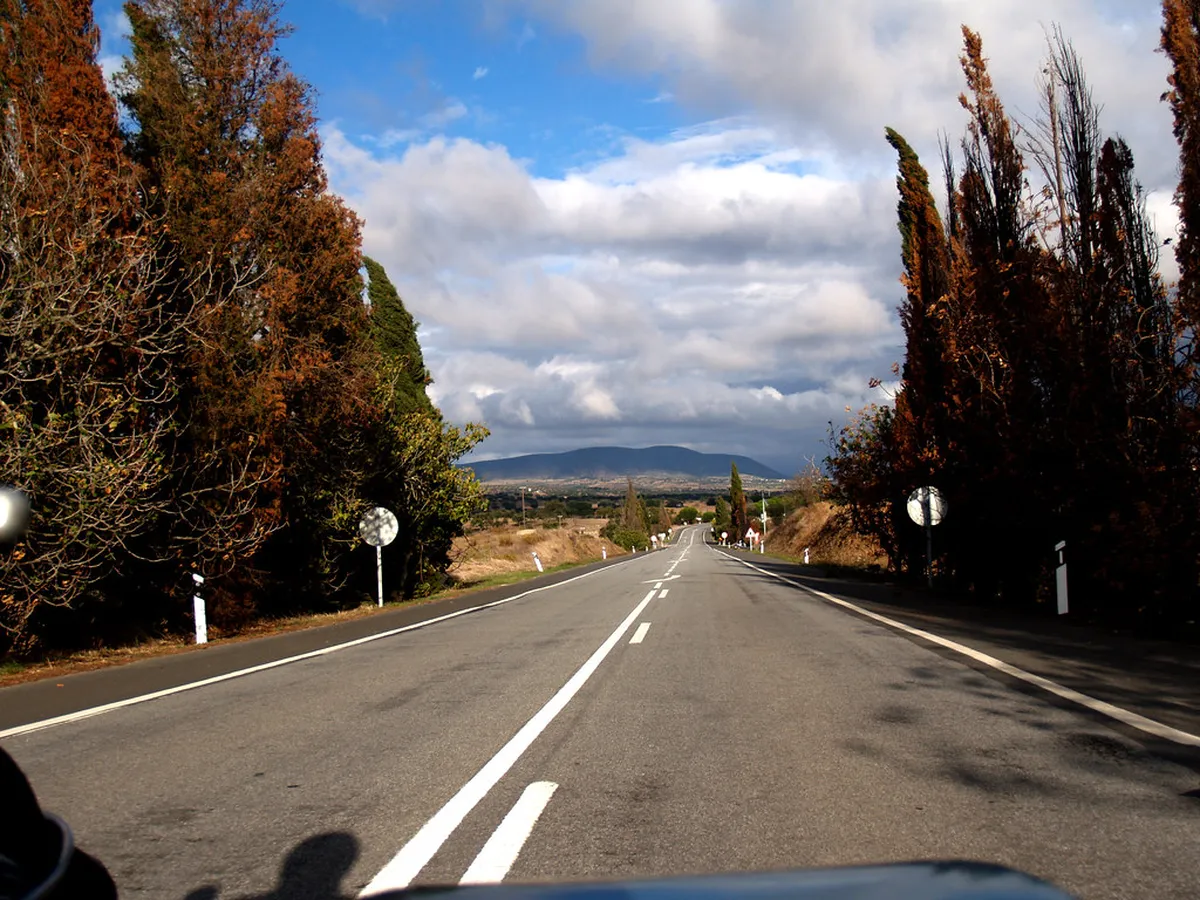
Most visitors find that driving in Portugal is remarkably similar to driving in other Western European countries. The main motorways, known as autoestradas, are modern and often much quieter than the congested highways found in the United Kingdom or France. Signage is plentiful in English and Portuguese, and outside major cities you will encounter roundabouts far more often than traffic lights. If you stay in the right-hand lane except to overtake, the experience is quite relaxed.
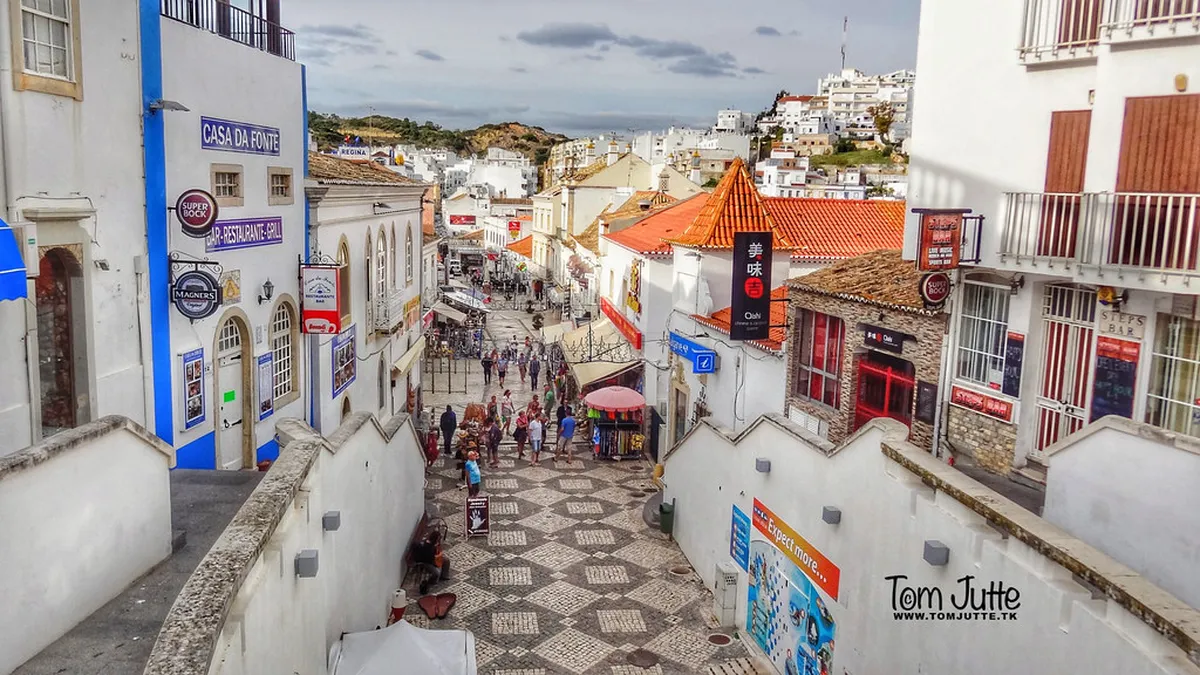
The difficulty level increases significantly once you enter the historic hearts of cities like Lisbon, Porto, or Coimbra. Narrow alleys designed for horse-drawn carriages now struggle to accommodate modern SUVs and rental cars. I strongly recommend skipping driving in the Alfama district or Porto's Ribeira, as these areas are often restricted to residents. Navigating these steep, cobbled paths usually results in scratched paint or a hefty fine from automated cameras.
Renting a car remains the most flexible option for those wondering How Many Days in Portugal: 10-Day Essential Itinerary they need to see the highlights. A vehicle allows you to reach hidden beaches in the Alentejo and remote wineries that public transit simply cannot access. Typical rental costs range from €25 to €60 per day depending on the season and the size of the vehicle. Ensure you have a valid credit card for the security deposit, which can often exceed €1,000.
Understanding Speed Limits and Enforcement
Speed limits in Portugal are strictly enforced by both fixed cameras and mobile radar units operated by the GNR. On major motorways the limit is 120 km/h, while national roads are typically restricted to 90 km/h. Urban areas have a standard limit of 50 km/h, dropping to 30 km/h in residential zones and near schools. Always watch for the white signs with a red border that indicate a change in the legal speed.
| Road Type | Speed Limit (km/h) | Typical Location |
|---|---|---|
| Motorway (Autoestrada) | 120 | Major routes between cities |
| National Road (Estrada Nacional) | 90 | Secondary routes across regions |
| Urban Areas | 50 | City streets and town centres |
| Residential Zones | 30 | Near schools and housing areas |
Many fixed speed cameras are preceded by a blue sign showing a radar symbol, but mobile units give no such warning. I have often seen police cars parked behind bridge pillars or in motorway service areas with handheld radar guns. Fines for speeding are calculated based on how much you exceed the limit and can reach several hundred euros for serious violations. If you are a non-resident, the GNR may require you to pay the fine on the spot using a mobile terminal. The Automóvel Club de Portugal provides additional resources on traffic enforcement and driver rights.
It is equally important to understand overtaking rules. Passing on the right is strictly prohibited on the motorway. The left lane is for overtaking only, and you should return to the right lane as soon as it is safe. Local drivers may flash their headlights to signal they wish to pass if you linger in the fast lane — move over promptly.
Navigating the Complex Toll Road System
The 9 Essential Things to Know About Portugal Toll Roads (Via Verde) is essential reading because the system is split into two distinct types. Traditional motorways feature physical booths where you can pay with cash or a credit card in the manual lanes. However, many newer roads — including the entire A22 across the Algarve — use electronic-only gantries that do not accept any form of physical payment on the spot.
The Via Verde transponder is the cleanest solution. Most rental agencies charge about €1.50 to €2.00 per day to lease the unit, and it automates payment on every road in the network. You drive through the dedicated green-lit lane and the fee is deducted from a pre-loaded balance. Always confirm at the rental desk that the transponder is activated on your account before leaving the lot — agents have been known to hand over inactive units.
If your rental car lacks a Via Verde device, you must visit a CTT post office to pay your balance. The system takes 48 hours to process your license plate through the central database; you then have five working days to settle the debt. According to Portugal's official toll portal, failure to pay results in the debt being forwarded to the rental company, which will add significant administrative fees. For foreign-registered vehicles crossing from Spain, the Easytoll system lets you link your credit card to your license plate at a border Welcome Point — valid for 30 days across all electronic-only roads.
Mastering Roundabouts and Local Right-of-Way
Portugal uses roundabouts far more than traffic lights, so understanding the rules matters. Vehicles already circulating inside the roundabout have priority over vehicles entering. Approach cautiously, give way to traffic already in the circle, and check for pedestrian crossings at every exit before pulling through — they are positioned closer to roundabouts than many visitors expect.
Lane discipline inside larger roundabouts is strictly enforced. Use the inner lane when you plan to pass the first exit; move to the outer lane only once you have passed the exit before the one you want. Police in cities like Faro and Lisbon regularly monitor large roundabouts and issue fines for drivers who hug the outer lane throughout the full circuit. Signal early and decisively when changing lanes inside the circle.
The priority-to-the-right rule catches many North American drivers off guard. At any unmarked urban intersection without traffic lights or stop signs, you must yield to vehicles approaching from your right. This European standard replaces the four-way-stop logic used in the United States and Canada. Always slow at village crossroads where signs may be missing or obscured by vegetation — fines for failing to yield start at approximately €60.
Parking Rules in Historic Towns and Cities
Outside Lisbon and Porto, parking in Portugal is remarkably easy and often free. Most towns have free lots just outside the old town walls or non-metered streets within a short walk of the center. In Faro, Évora, and Viseu, a few minutes of research before arrival will usually identify a free option close enough to walk. Budget roughly €0 to €2 in most smaller towns unless a local event has filled the usual lots.
In Lisbon and Porto, street parking is often limited to residents with permits. Look for the blue 'P' signs indicating public pay-and-display zones, and use coins or the Telpark mobile app to pay. Most blue-zone meters allow you to extend your session remotely via the app, which is convenient when lunch runs long. Expect to pay between €15 and €25 for 24 hours in an underground garage in the heart of Lisbon — a worthwhile cost for security and shade.
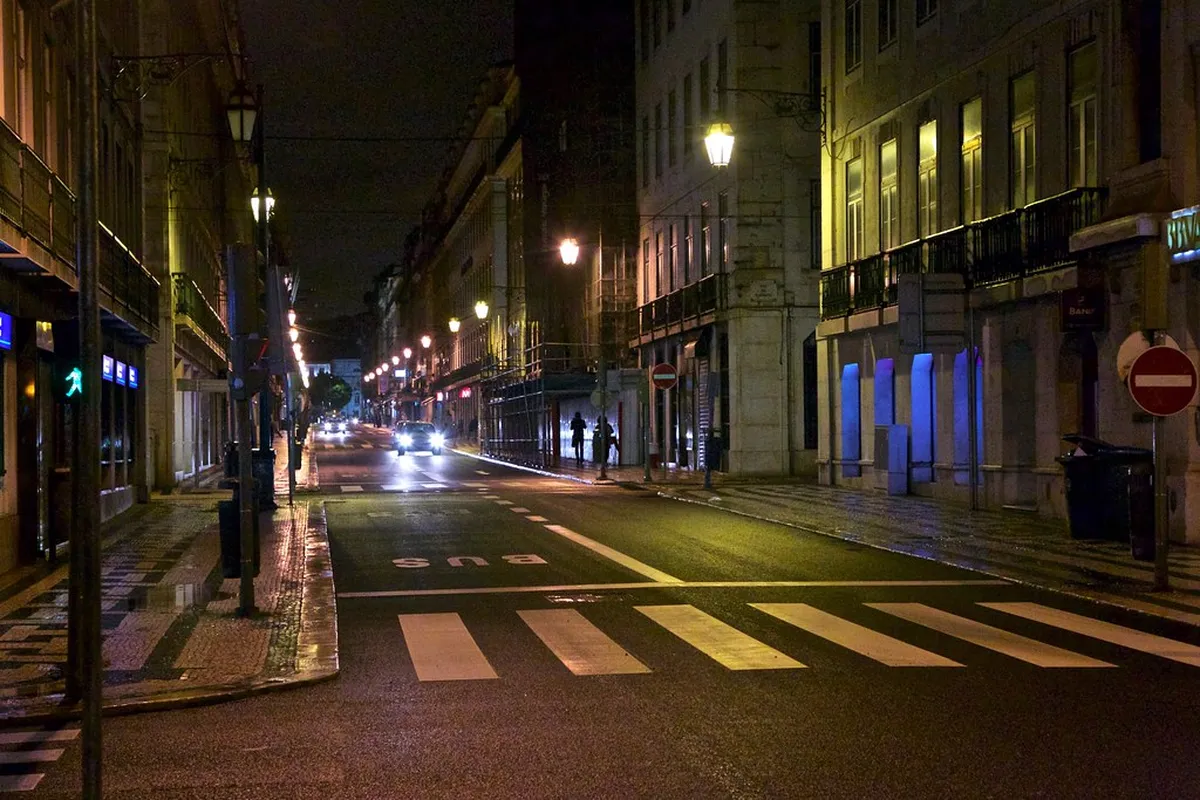
Parking prohibitions use two distinct signs. A blue circle with a red border and a red diagonal line means no parking. A red circle with a horizontal white bar means no entry entirely — common on one-way streets in historic districts. Parking in front of a driveway or within five metres of an intersection triggers an immediate tow. In walled mountain villages, you will sometimes encounter a retractable barrier at the old town gate — park outside and walk in.
In Lisbon and Porto, automated cameras monitor no-parking zones relentlessly. Overnight street parking violations in restricted zones can incur fines of €40–€80 within 72 hours, and consistent violations trigger vehicle clamping or towing. Use park-and-ride facilities or pay-and-display zones to avoid penalties entirely.
When to Ditch the Car: Navigating Lisbon and Porto
Both Lisbon and Porto are better explored without a car. Lisbon's Metro runs from 06:30 to 01:00 and covers every major tourist district — Baixa, Bairro Alto, Parque das Nações, and Belém (via a short tram connection). A 24-hour Viva Viagem card costs €6.45 and covers the Metro, buses, and trams. The iconic Tram 28 climbs the Alfama and Graça hills where no rental car should attempt to go. Park your car at a peripheral Metro station — Odivelas, Rato, or Oriente — before entering the city core.
Porto's Metro connects the airport to the city centre in about 35 minutes on Line E (Violet) for €2.00. Once downtown, the historic hillside neighbourhoods — Miragaia, Bonfim, and Vitória — are steep, cobbled, and largely pedestrianised. The Andante 24-hour card (€7.00) covers the Metro and buses across Porto and Vila Nova de Gaia. Leave the car at a park-and-ride on the outskirts or at your accommodation in Gaia, which typically offers free parking and ferry access to the Ribeira.
The practical rule: drive between cities and into the countryside, then park for good once you arrive in Lisbon or Porto. The only exceptions are day trips from the city base — to Sintra, Cascais, or the Serra da Arrábida — where a car grants access that trains cannot match. Even then, arrive at Sintra before 09:00 to avoid the parking chaos that builds from mid-morning onward in summer.
Essential Traffic Laws and Safety Requirements
Seatbelts are mandatory for every passenger. Children under 12 and under 135 cm must travel in an appropriate child safety seat; infants under 18 months must be in a rear-facing seat. Using a mobile phone without a hands-free device is illegal, and headphones are banned while driving. Pull over completely before checking a map or confirming directions.
Every vehicle must carry a high-visibility reflective vest and a warning triangle. The vest must be stored inside the cabin — not the boot — so you can put it on before exiting the car in a breakdown. Rental companies are legally obligated to provide this equipment; check the glove box before leaving the lot. Fines for missing safety equipment from a GNR patrol can exceed €120.
Portugal's blood alcohol limit is 0.5 g/l — roughly equivalent to one standard drink for most adults. The limit drops to 0.2 g/l for drivers who have held their licence for fewer than three years and for professional drivers. The GNR sets up roadside checkpoints near motorway exits, especially on weekend evenings. You must carry your passport (or national ID for EU citizens), driver's licence, and the vehicle's registration and insurance papers at all times.
Exceeding the 0.5 g/l blood alcohol limit results in immediate license suspension (minimum 1 year), fines exceeding €500, and potential jail time for second offences. Breath tests are mandatory at roadside checkpoints, and refusal to test carries the same penalties as a positive result. If you have consumed any alcohol, use a taxi or ride-share service instead.
Handling Narrow Streets and the Douro Valley
Narrow roads are the norm once you leave the motorway network. In small inland towns, two passing cars will often share a road barely wider than one. The convention on single-lane mountain roads is that the descending vehicle has right of way — pull to the widest point available and wait. Use your horn before blind corners on steep rural roads to alert oncoming traffic of your presence.
The Douro Valley deserves its own warning. The N222 between Peso da Régua and Pinhão — frequently cited as one of the world's great scenic drives — features 93 curves and average speeds rarely above 40 km/h. What the photos don't show: one-lane gravel sections used for two-way traffic, near-vertical drop-offs with no barriers, and agricultural tanker trucks that take up the entire lane. Road conditions across Portugal's secondary network are documented by Infraestruturas de Portugal, the national infrastructure authority. If you are staying at a remote quinta off the main road, check its access track on satellite view before booking — what looks like a charming rural lane can require six harrowing drives in the dark.
If your driving confidence in the Douro is low, book accommodation in Pinhão or Peso da Régua and use it as a base. Most wineries along the main IP2 corridor are accessible from paved roads. Take a guided wine tour for the inner terraced vineyards rather than attempting the access tracks solo. The wines are worth every hairpin turn — just go in with realistic expectations about the road conditions.
Fueling Up: Petrol vs. Diesel and Payment
Fuel prices in Portugal are among the highest in Western Europe, so budget accordingly. Gasolina (unleaded petrol) and gasóleo (diesel) are both widely available at motorway service stations and in towns. Prices are typically 10 to 20 cents per litre cheaper at supermarket stations — look for Pingo Doce or Auchan forecourts in larger towns on your route. Most stations are self-service; full-service attendants are rare except in remote interior villages.
The single most common and expensive mistake tourists make is misfuelling — putting petrol into a diesel engine or vice versa. Check the fuel cap label and the pump nozzle colour every single time. Diesel nozzles in Portugal are typically black or green; petrol is typically red. If you misfuel, do not start the engine — call the rental company immediately, as a full tank drain costs far less than engine repair.
Electric vehicle (EV) charging infrastructure has improved significantly in 2026. Public charging points are available in most major towns and at motorway service areas. EVs also benefit from free parking in some blue-zone areas. If you rent an EV, download the Mobi.E app before your trip — it maps all public chargers and handles payments across the national network.
Car Rental Tips and Required Documentation
To legally drive in Portugal, you need a valid driver's licence, your passport (non-EU citizens) or national ID (EU citizens), and the vehicle's registration and insurance documents. Travellers from the US, Canada, and the UK typically do not need an International Driving Permit (IDP) for short tourist stays, but carrying one is strongly recommended. Language barriers during a GNR roadside check are resolved instantly when you produce an IDP alongside your national licence.
Most rental fleets in Portugal are manual transmission. If you need an automatic, book it explicitly at least two weeks ahead — automatic inventory is limited and sells out fast in peak summer months (June to August). Compact cars navigate city streets and the Douro Valley far more comfortably than SUVs; a smaller footprint also means lower toll costs since some electronic gantry rates vary by vehicle category.
Returning a car at Faro Airport requires navigating a specific series of roundabouts near the terminal. Most rental lots are a short shuttle ride from the drop-off point, so allow at least 30 minutes for the return process. Fill the tank at the station just outside the airport perimeter — in-airport refuelling fees are significantly higher. Inspect the vehicle in bright sunlight before signing the final return documents and photograph any existing damage with a timestamp before driving off the lot at pickup.
Frequently Asked Questions
Is it easy for Americans to drive in Portugal?
Yes, Americans generally find driving in Portugal easy because they drive on the right side of the road. The main challenges are the narrower streets in historic cities and the different toll payment systems. Most rental cars are manual, so request an automatic in advance if needed.
How do I pay for electronic tolls in Portugal?
The best way to pay is by renting a Via Verde transponder from your car hire company. If you do not have one, you must visit a CTT post office forty-eight hours after passing the toll. You can also use the Easytoll system at the border for foreign-registered cars.
Do I need an International Driving Permit for Portugal?
Travelers with a valid US, Canadian, or UK license typically do not need an International Driving Permit for short stays. However, it is highly recommended to carry one to avoid language barriers during police checks. Check our guide on 10 Essential Tips for Renting a Car in Portugal for more details.
Exploring Portugal by car offers a level of freedom that trains and buses simply cannot match. By following these nine essential tips, you can navigate the toll roads and narrow streets with the confidence of a local. Remember to stay patient in the city centers and always prioritize safety over speed on the winding rural roads.
Whether you are chasing the sunset in Sagres or sipping wine in the Douro, the journey is just as important as the destination. Pack your reflective vest, grab a Via Verde transponder, and get ready for an unforgettable road trip through this beautiful country. Safe travels on the Portuguese roads!
 10 Best Towns in the Algarve (2026 Travel Guide)May 17, 2026