
Mercado Municipal de Lagos: The Complete Visitor Guide
Plan your visit to the Mercado Municipal de Lagos (Avenida) with our guide to the best fresh fish, local produce, opening hours, and accessibility tips.
On this page
Mercado Municipal de Lagos
The Mercado Municipal de Lagos serves as the beating heart of local life in this historic coastal town.
Located prominently along the waterfront on Avenida dos Descobrimentos, this bustling indoor hall offers a sensory journey through the flavors of the Algarve.
Visitors can discover everything from the morning's freshest Atlantic catch to artisanal honey, dried figs, and regional crafts.
Understanding the layout and rhythms of this market makes the difference between a quick browse and a genuinely rewarding Portuguese morning.
The History and Architecture of Mercado Municipal da Avenida
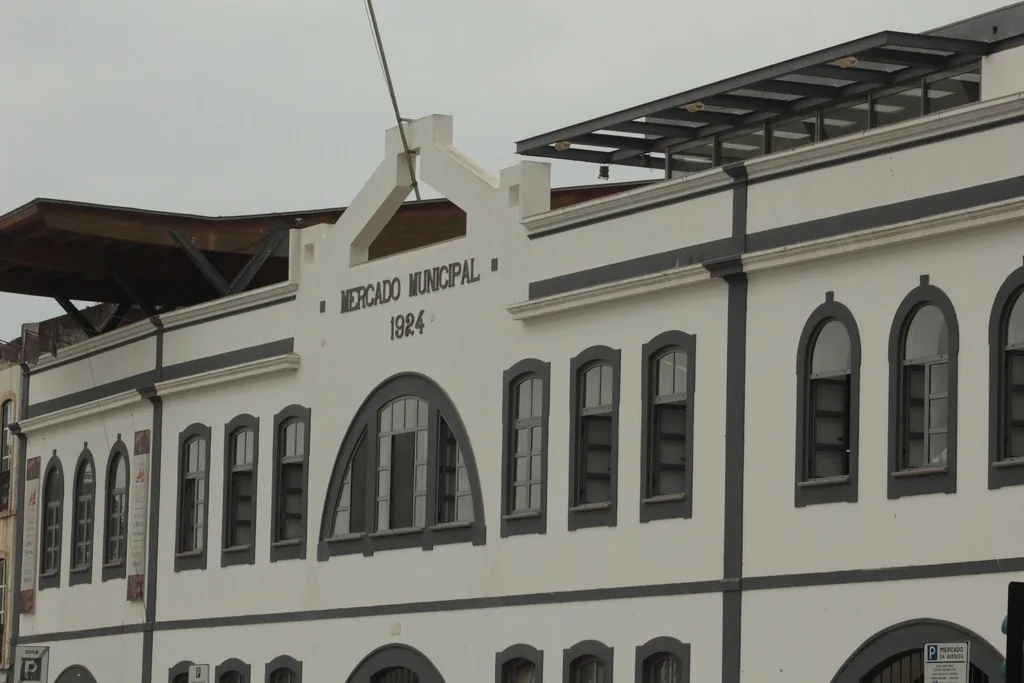
The Mercado Municipal de Lagos has stood along the Avenida dos Descobrimentos since 1924, making it one of the oldest functioning markets in the western Algarve. A major renovation completed in 2004 modernized the building's services and accessibility infrastructure while preserving its original proportions. The result is a structure that feels authentically Portuguese without being crumbling or inconvenient.
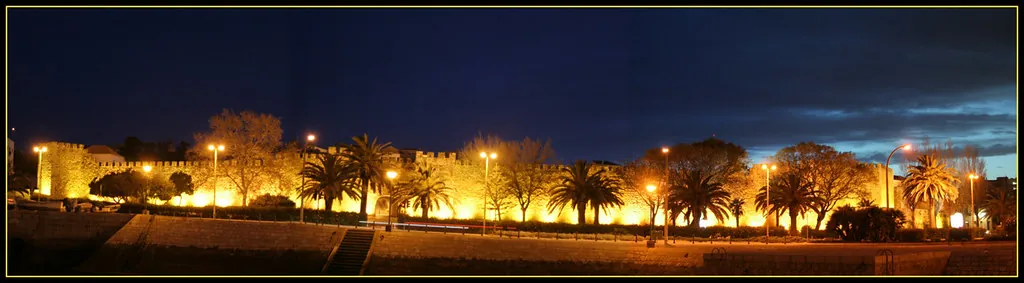
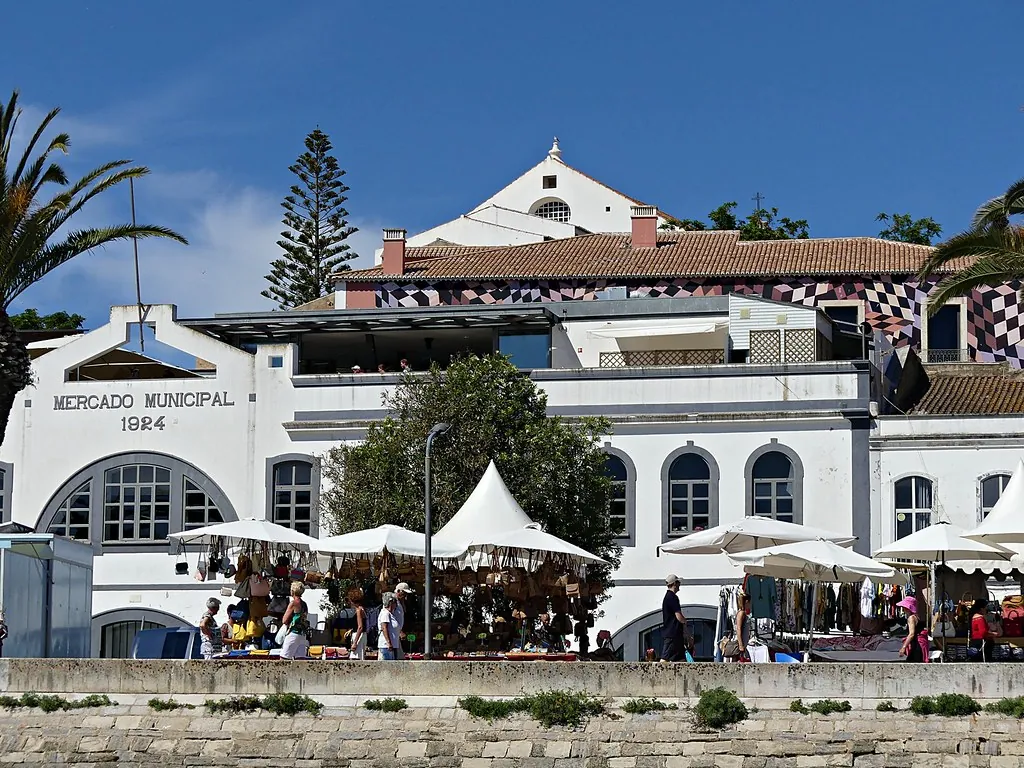
Local residents call it the Mercado da Avenida to distinguish it from the town's weekly outdoor markets. Its waterfront position — directly across from the Lagos Marina — makes it an obvious landmark for any visitor approaching from the town center or the train station. Large windows push natural light deep into the interior, which matters most on early mornings when fish vendors lay out their stock.
The building's exterior reflects early 20th-century Portuguese civic architecture: clean lines, restrained tilework, and a functional facade that never competed with the harbor view behind it. That restraint is part of what makes it photographable from almost every angle. It is one of the few working market buildings in the Algarve that still operates as a daily food hall rather than a repurposed craft or tourism venue.
Floor by Floor: How the Market Is Organized
Most visitors walk in, see the fish stalls on the ground floor, and leave. They miss two-thirds of the building. Understanding the layout in advance saves time and prevents the most common first-timer mistake: arriving after 11:00 and wondering why half the stalls are shuttered.
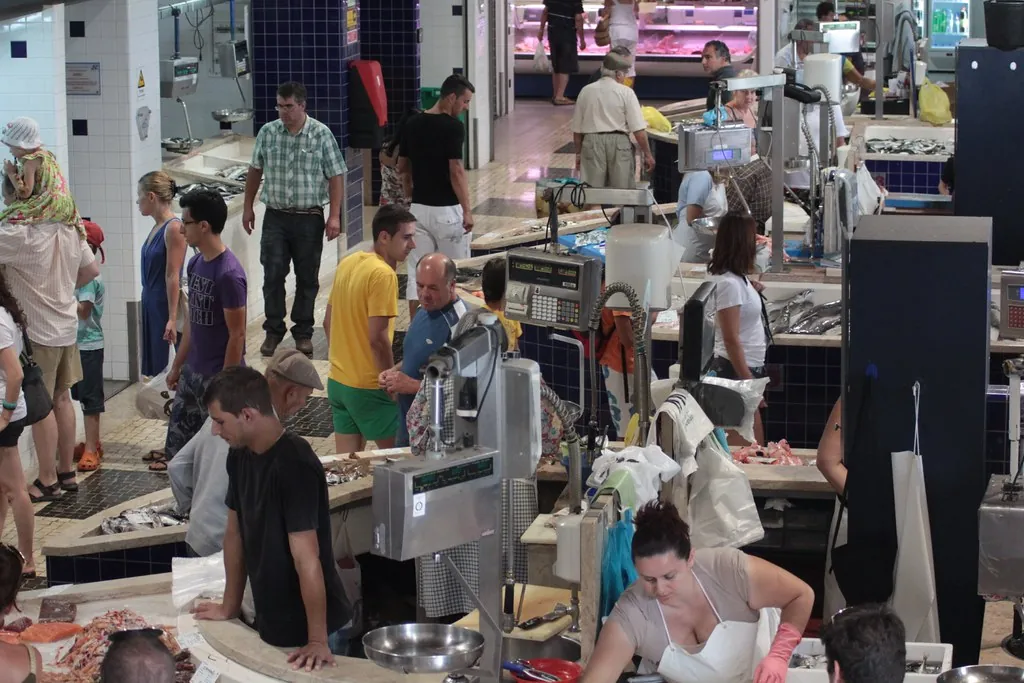
The ground floor is dedicated to seafood. Fishmongers arrive before 07:00 and have everything on ice by opening. This is where you will find Atlantic species laid out in rows — whole fish, shellfish, and occasionally large slabs of tuna or swordfish. The stalls begin packing down from around 12:30, and some of the most popular vendors sell out well before that. If fresh fish is your reason for coming, 07:30 to 09:30 is the window that matters.
The upper floor holds dry goods, regional produce, and a small café area. This level is far quieter than the ground floor and stays active longer into the morning. It is where you will find honey producers, spice vendors, cured meats, seasonal fruit, and the kind of pantry goods that make genuinely useful souvenirs. The pace up here is relaxed. Vendors have time to talk through what they sell and where it comes from.
The top level also opens onto an outdoor terrace facing the marina. This is the part of the market that almost no one mentions but nearly everyone appreciates once they find it. You can sit with a coffee from the café, look out over the boats moored below, and feel completely removed from the ground-floor bustle. It is a good spot for a ten-minute pause before continuing into the old town.
Fish stalls close progressively from 12:30 onwards, with the most popular vendors selling out well before 13:00. Aim to arrive between 07:30 and 09:30 for the best selection of fresh Atlantic catch.
| Floor | What's Sold | Best Time to Visit | Atmosphere |
|---|---|---|---|
| Ground Floor | Fresh fish, shellfish, Atlantic catch | 07:30–09:30 | Bustling, vendors closing from 12:30 |
| Upper Floor | Honey, spices, cured meats, cheeses, seasonal produce, bakery items | 07:00–13:00 | Calm, vendors have time to chat |
| Top Level | Café, outdoor terrace with marina views | 08:00 onwards | Quiet, removed from hustle |
What to Buy: Fresh Atlantic Fish and Regional Specialties
The ground floor fish selection reflects what the local boats have brought in overnight. Robalo (sea bass) and Dourada (sea bream) are the two species you will see most consistently, both farmed and wild-caught. Atum (tuna) appears in thick steaks during summer months. Linguado (sole) and Corvina (meagre) are common in autumn. If you see Percebes (barnacles) at a stall, they are worth buying — they are harvested from the rocky coastline nearby and rarely appear in supermarkets at this quality.
Many of the best seafood restaurants in Lagos source their daily ingredients from these vendors, so you are shopping from the same supply chain as the kitchens you might visit for dinner. Watching the fishmongers work — scaling, gutting, and slicing to order — is a spectacle worth pausing for even if you are not buying. Most vendors speak enough English to explain what they have and how to cook it.
On the upper floor, the regional products section rewards anyone willing to look carefully. Local honey is sold in small glass jars with paper labels — look for varieties made from orange blossom or eucalyptus, both specific to the Algarve. Dried figs and almond-based sweets called Dom Rodrigos are traditional Lagos confections that keep well for travel. Sun-dried tomatoes, piri-piri pastes, and artisanal olive oil from the hills around Monchique round out the pantry options. Seasonal produce — citrus, pomegranates, and medlars depending on the month — sits in open crates near the stairs.
Cured meats and cheeses occupy a separate section. Queijo de Évora (a firm, salty sheep's milk cheese) and smaller fresh goat cheeses from local farms both appear regularly. They pair well with the bread sold at a small bakery stall near the entrance on the ground floor, which sells traditional round loaves and alentejano-style corn bread baked that morning. If you want a quick, cheap, and genuinely local breakfast before a day of exploring, this combination works well.
The upper floor holds an unmissable outdoor terrace with marina views and a small café serving galão (milky espresso) from around 08:00. This quiet space opens onto the water and is perfect for a post-shopping coffee break away from the ground-floor bustle.
Essential Logistics: Opening Hours and Getting There
The Mercado Municipal da Avenida opens at 07:00 and runs until 14:00, Monday through Saturday. It is closed on Sundays and public holidays. The building's opening time is consistent, but individual stall activity winds down progressively from around 12:30, with the fish floor clearing first. If you arrive after 13:00 on a weekday, you will find most of the ground-floor seafood stalls closed and only the dry-goods and café section still running.
The market sits on Avenida dos Descobrimentos, the main waterfront road that runs along the Lagos Marina. From the historic center (Praça Gil Eanes), it is a flat eight-minute walk toward the water. From the Lagos train station, cross the pedestrian footbridge over the Bensafrim river estuary — the market entrance is directly in front of you on the far side, a five-minute walk in total. If you are driving, the closest paid parking is the underground car park beneath the Mercado de Levante site, approximately 300 meters north on the same avenue.
Public buses on the regional network stop along Avenida dos Descobrimentos within a one-minute walk of the entrance. If you are staying in Meia Praia or Luz and relying on buses, check the EVA Transportes schedule — services into Lagos town center run frequently on weekday mornings. For more context on how to structure a full morning here, the things to do in Lagos guide covers the marina walk and old town circuit that pair naturally with a market visit.
Accessibility and On-Site Amenities
The Mercado Municipal de Lagos holds a TUR4all accessibility certification, which means its key measurements have been independently audited and verified. For travelers with mobility needs or visual impairments, the building performs well by Portuguese market standards. The main entrance has no slopes and wide door clearance — the audited width is at least 78 cm — which accommodates most powered and manual wheelchairs without requiring secondary access routes.
A lift connects the ground floor to the upper levels. The lift cabin is rated as "large" in the TUR4all dataset, with audio announcements, visual floor indicators, and buttons that are highly embossed, braille-labeled, and positioned at a wheelchair-accessible height. These details are worth knowing before you arrive, because the stairs also exist and are prominent — if you are with someone unfamiliar with the building, it is easy to default to the stairs without realizing the lift is available.
Public toilets on the building's common areas are adapted for persons with reduced mobility. The adapted toilet features a door opening of at least 78 cm with a sliding door, a turning circle of at least 150 cm, folding grab bars on both sides of the toilet, and a seat height above 45 cm. The clear lateral transfer space is present on both sides. One caveat from the TUR4all audit: the pavement on the surrounding sidewalks uses paving stones that may not be fully uniform underfoot, so approach with caution on wet mornings. Staff are present and available to assist visitors with specific needs, though no formal sign language support is listed in the audit data.
Know Before You Go: Practical Tips
Cash is essential at the Mercado Municipal da Avenida. The vast majority of individual stall vendors — particularly on the fish floor — do not accept cards. Bring enough euros to cover what you plan to buy. Several ATMs are located on Avenida dos Descobrimentos within a two-minute walk if you need to withdraw before entering. Small denominations (€5 and €10 notes) are more practical than €50s when buying single items at small stalls.
If you are trying to decode the fish display, a few names to know: Robalo is sea bass, Dourada is sea bream, Atum is tuna, Linguado is sole, Pargo is red snapper, and Corvina is meagre. Most vendors appreciate when you make an attempt to use the Portuguese name, even imperfectly. They will typically offer to fillet or clean the fish on the spot at no extra charge — this is standard service, not something you need to request specially.
The top-floor café offers galão (milky espresso) and basic toasted sandwiches from around 08:00. It is a calm place to sit with a coffee after the ground-floor bustle. The terrace tables fill up on sunny mornings and are almost always available in overcast weather. For a full breakfast before a day of coastal exploration, the options here are simple but genuine — and the marina view costs nothing extra. For a more extensive food-focused morning, the our complete Lagos restaurants guide maps out the best kitchens near the market for a sit-down meal after your shopping.
Other Markets in Lagos: Weekly Alternatives to the Daily Hall
The Mercado Municipal da Avenida operates daily, but Lagos has three other distinct market formats worth knowing about. Each serves a different purpose, and choosing between them depends on what you are actually after.
The Lagos Farmers' Market — locally called the Mercado do Levante — runs every Saturday from 08:00 to 13:00, in the open-air market site near the bus station on Avenida dos Descobrimentos (Google Maps). This is the market for fresh produce rather than fish: local farmers arrive with crates of tomatoes, leafy greens, citrus, olives, and seasonal vegetables sold directly by the growers at prices that undercut most grocery stores. The atmosphere is louder and more festive than the indoor market, and the variety of artisan goods — handmade wicker, preserved jams, flower bunches — gives it a strong character. If you are in Lagos on a Saturday morning, this market is worth prioritizing over the indoor hall, which is also open at the same time but tends to be quieter on Saturdays as many vendors reduce their stock.
Vivo Mercado takes place in the same Mercado do Levante space on Wednesday evenings, from 17:00 to 21:00. It began as a certified-organic-only event and still separates certified organic stalls (marked overhead) from non-certified producers. Beyond produce, you will find local craft beer from Mania Brewery, small-batch kombucha from Deus Sista, fermented goods from Vale de Lama, and natural cosmetics from Carine Natural. Food trucks and occasional live music give it a community-gathering feel more than a shopping event. It is a good evening option for visitors who want to meet locals rather than shop tourists.
The Feira de Velharias flea market runs on the first Sunday of each month from 09:00 to 13:00 in the car park near Lagos em Forma, slightly outside the town center. It is the only market in Lagos operating on a Sunday, which makes it useful if you have missed the Saturday farmers' market. Expect antiques, second-hand clothing, collectibles, and general bric-a-brac rather than food. It suits collectors and browser types more than food shoppers, but it fills a gap in the weekly schedule if you are spending an extended time in the area.
Frequently Asked Questions
What are the opening hours for the Mercado Municipal de Lagos?
The market is open from 7:00 AM to 2:00 PM, Monday through Saturday. It is closed on Sundays and major public holidays. For nearby dining options after it closes, check our the full Lagos dining guide for the best local spots.
When is the best time to buy fresh fish in Lagos?
The best time to buy fresh fish is between 7:00 AM and 9:30 AM. Arriving early ensures you have the first pick of the morning catch before popular items sell out. Local chefs usually arrive right at opening to secure the highest quality seafood.
Is the Lagos municipal market wheelchair accessible?
Yes, the Mercado Municipal de Lagos is fully wheelchair accessible and TUR4all certified. It features wide entrance doors, a modern lift with braille buttons, and accessible public toilets. The 78cm wide lift doors accommodate most standard mobility devices easily.
What is the difference between the daily market and the Saturday farmers' market?
The daily market (Avenida) is an indoor facility focused primarily on fresh fish and regional dry goods. The Saturday market (Levante) is an outdoor event focused on local farmers and fresh produce. Both offer unique experiences but serve different shopping needs for visitors.
The Mercado Municipal de Lagos is more than just a place to shop; it is a cultural cornerstone of the city.
Whether you are hunting for the perfect sea bass or enjoying the marina views from the rooftop terrace, it offers something for every type of visitor.
Consider joining one of the Lagos food and wine tours to deepen your understanding of these local flavors.
Make sure to include a morning visit to this vibrant market in your next Algarve itinerary.
 8 Key Elements of a Tavira Day Trip From LagosJune 2, 2026