
Coimbra to Porto by Train: 2026 Schedule, Prices & Stations
Plan your trip from Coimbra to Porto by train. Compare Alfa Pendular vs. Intercidades, find the latest schedules, and learn how to book cheap tickets online.
On this page
Coimbra to Porto by Train: The Complete Travel Guide
Traveling from Coimbra to Porto by train is one of the most efficient ways to explore northern Portugal. The journey connects a historic university city with the vibrant riverside hub of Porto in just over an hour. The rail network is reliable, the views of the Portuguese countryside are pleasant, and frequency is high enough that you rarely need to plan far ahead. That said, understanding the difference between train types and station layouts will save you a real headache on travel day.
Many travelers first spend a morning exploring where Coimbra sits in Portugal before heading north. This guide covers everything you need: which train to pick, what to pay, which station to leave from, and how to get from Porto's main rail hub to the city center. Prices and schedules are accurate for 2026.
Train Types: Alfa Pendular vs. Intercidades
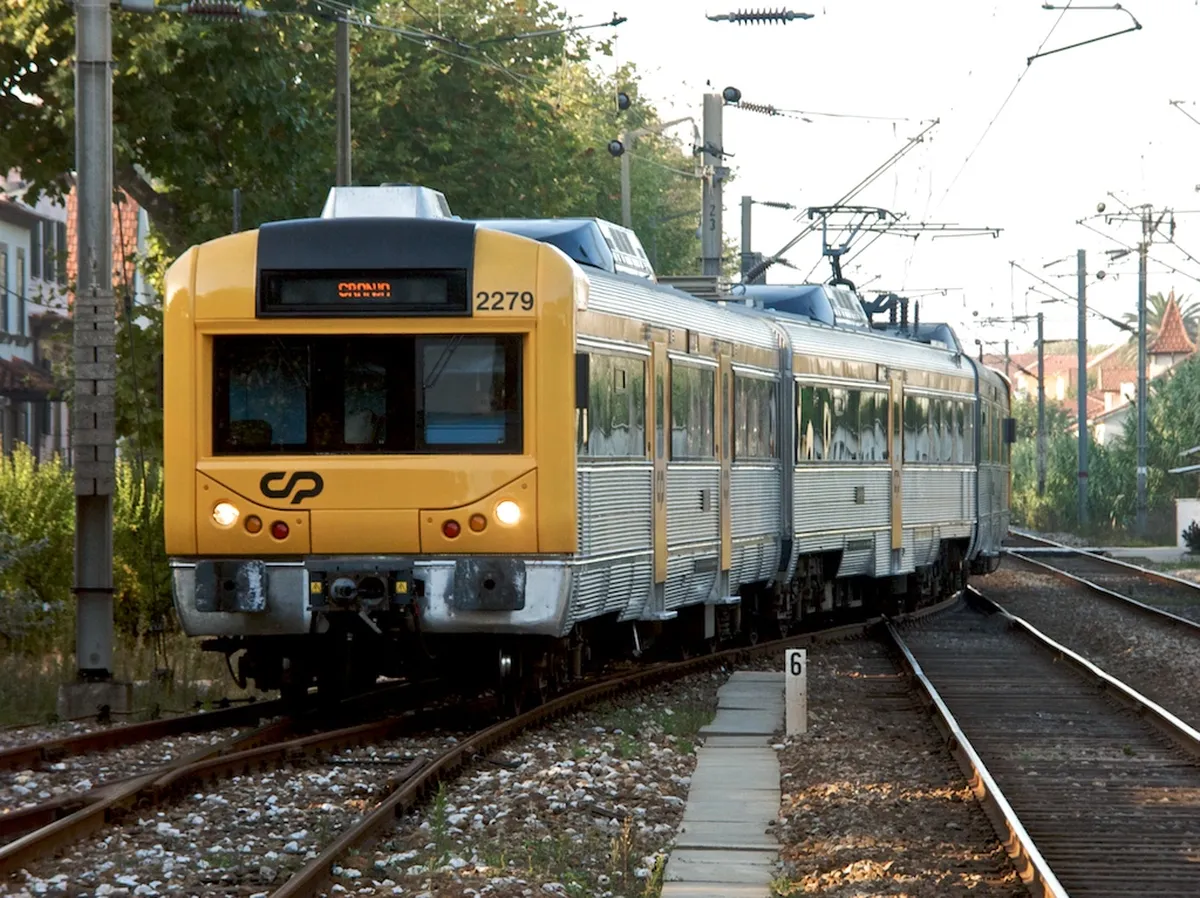
Comboios de Portugal (CP) runs two express services on this corridor: the Alfa Pendular (AP) and the Intercidades (IC). The Alfa Pendular is the faster, newer option, reaching speeds up to 220 km/h and completing the trip in roughly 1 hour 9 minutes. Seats are assigned, the ride is smooth, and each carriage has power outlets and free Wi-Fi. A buffet car is available for snacks and coffee.

The Intercidades is the standard long-distance service. It takes about 1 hour 17 minutes — only eight minutes more — but costs noticeably less. Comfort is still good: seats are spacious, luggage racks are generous, and the service is punctual. For most leisure travelers, the IC is the better value choice unless you are tight on time.
There are also slow regional (R) trains on this route that take over two hours and make many local stops. Avoid them for a Coimbra–Porto trip. They are cheaper than the IC, but if cost is your priority, take the bus instead — the regional train is genuinely slow and not a useful middle ground.
Both AP and IC services offer two ticket classes. Conforto (first class) gives wider seats and extra legroom. Turística (second class) is perfectly comfortable for a 70-minute journey and is what most travelers book. Unless you find a Conforto seat at a promotional price, second class is the practical choice.
| Service | Duration | 2nd Class (Turística) | 1st Class (Conforto) | Wi-Fi |
|---|---|---|---|---|
| Alfa Pendular (AP) | ~1h 09m | €18.70 | €24.50 | Yes |
| Intercidades (IC) | ~1h 17m | €14.60 | €19.00 | Yes |
Schedule, Frequency, and First and Last Trains
There are between 20 and 24 daily departures on this route in 2026, spread across both AP and IC services. Trains are more frequent Monday to Friday when commuter demand is highest. Weekends and public holidays still see a solid timetable, but a few peak-hour slots are removed.
The first express train from Coimbra-B to Porto leaves around 06:00. The last departure is typically around 22:00–22:15. For day-trippers, this means you can comfortably leave Coimbra in the morning, spend six to eight hours in Porto, and return in the early evening without rushing. Book both legs at the same time — return tickets also qualify for a 10 percent discount on CP's website.
The full timetable is on the official Comboios de Portugal (CP) website. Use the journey search tool rather than downloading PDF timetables — the search always shows live seat availability, which is what you actually need when booking.
Booking a return ticket on cp.pt at the same time as your outbound ticket earns a 10 percent discount on both legs. With 20–24 daily departures, you have plenty of flexibility to choose your return time without committing to a tight schedule.
Ticket Prices, Discounts, and How to Book
Standard Turística fares run €14.60 (IC) to €18.70 (AP) at full price. If you book five to eight days in advance through cp.pt, you can access Promo fares that reduce the price by 50 percent or more — sometimes as low as €6 for an IC second-class seat. These discounted seats are limited and disappear fast in summer, so early booking pays off in two ways: lower price and guaranteed seat.
CP also offers several age-based discounts that no competitor guide clearly lists in one place. Children under 4 travel free; children aged 4–12 get a 50 percent reduction. Travelers under 25 pay 25 percent less than the adult fare. Seniors aged 65 and over also receive a 50 percent discount. A return ticket purchased at the same time gets a 10 percent reduction on both legs. These discounts apply during the booking process under the "Options" step — you will need a valid ID on board to prove eligibility.
Paying on cp.pt with a foreign credit card can be unreliable. If your card is declined, try PayPal, a different browser (Chrome tends to work better than Safari), or switch to a different card. As a last resort, self-service machines at Coimbra-B accept chip-and-PIN cards and often have fewer payment issues than the website. Ticket windows are available at the station if all else fails, though promotional fares are typically only available online.
Physical tickets can be bought at station windows and automated machines at both Coimbra-B and Porto Campanhã. Seat reservations are mandatory on AP and IC trains — you cannot board without a specific seat assignment. Keep your ticket or booking confirmation accessible throughout the journey for inspection.
| Passenger Type | Discount | Condition |
|---|---|---|
| Children under 4 | Free | No ticket required |
| Children aged 4–12 | 50% | Valid ID required on board |
| Under 25 (Youth) | 25% | Valid ID required on board |
| Seniors 65+ | 50% | Valid ID required on board |
| Return ticket (same booking) | 10% | Both legs purchased together |
| Promo fares (advance booking) | 50%+ | Limited seats, online only |
Departure Station: Coimbra-B vs. Coimbra-A
This is the single most common source of confusion for first-time travelers on this route. Coimbra has two train stations with similar names, and they serve completely different purposes. Coimbra-A (also labeled simply "Coimbra" on some older signs) is the city-center station near the main hotels and shopping streets. Coimbra-B is the main junction station 2.5 km north of the center, where all express trains to Porto and Lisbon stop.

If you show up at Coimbra-A expecting to catch the Alfa Pendular, you will miss it. The city-center station handles only slow urban and regional trains. Visitors checking their booking confirmation should look for "Coimbra-B" as the departure station — if it says that, you need to go to the right place.
A free shuttle train connects the two stations for passengers holding an onward ticket. The ride takes five minutes. Check the departure board at Coimbra-A for the next shuttle to Coimbra-B, and allow at least 15 minutes buffer before your express train leaves. The shuttle runs frequently but not constantly, so cutting it close is a risk. You can also walk the area beforehand — before you leave, the University of Coimbra and the main historic sights are all walkable from Coimbra-A.
Coimbra-B station has a small cafe, seating areas, and clear platform screens that update 15 minutes before departure. Luggage storage lockers are available if you want to leave bags before your train. Taxis and Uber are readily available outside the main entrance.
Do not go to Coimbra-A if you are catching the Alfa Pendular or Intercidades to Porto — all express services depart exclusively from Coimbra-B, 2.5 km north of the city center. Allow at least 15 minutes buffer when taking the free shuttle between the two stations.
Arrival: Porto Campanhã and the São Bento Transfer
All express trains from Coimbra arrive at Porto Campanhã, the main rail hub for northern Portugal, located 2 km east of the historic center. The station connects to the city's metro network and has taxis lined up outside. If your hotel is near the waterfront or Ribeira, a taxi will cost around €10 and takes 10–15 minutes depending on traffic.
Your long-distance CP ticket includes a free transfer to São Bento, the iconic station in the heart of Porto. Look for the urban (U) trains on the lower platforms at Campanhã — these depart frequently and the ride to São Bento takes less than five minutes. São Bento is famous for its hall of azulejo tile panels depicting Portuguese history, and it sits in the middle of the old city, within walking distance of most tourist sights and many hotels.
The Porto Metro is a solid alternative if you are not heading to the center. Line C (blue) runs from Campanhã and connects to the metro network, which reaches the airport, Boavista, and other neighborhoods. A single metro ticket costs €1.40–€2.00 depending on zones. Campanhã also has luggage storage if you arrive before check-in time.
A word on late-night arrivals: the last trains from Coimbra reach Campanhã around 23:00–23:30. The metro runs until approximately 01:00 on weekdays and slightly later on weekends. Taxis and Bolt/Uber are available around the clock. If you are arriving on a late service, taxis are the more reliable option since surge pricing on ride apps can be unpredictable at that hour.
Onboard Experience and What to Expect
Both the Alfa Pendular and Intercidades are modern, air-conditioned trains. Alfa Pendular carriages are newer and feel more like a high-speed rail experience — the tilting mechanism means the ride is smoother on curves, which is noticeable given the Portuguese terrain. Intercidades trains are slightly older but well-maintained and comfortable for the journey length.
All AP trains have a buffet car serving coffee, pastries, sandwiches, and soft drinks. Prices are reasonable. You can also bring your own food and eat at your seat — there are no restrictions. Each seat on the Alfa Pendular has a power socket, which is useful if you are working. IC trains have less consistent access to outlets, so charge your devices before boarding if you are on an IC service.
Luggage goes in overhead racks or the dedicated end-of-carriage storage area for larger bags. There is no weight limit enforced in practice, but very oversized luggage (think large surf bags or ski equipment) can be an issue at busy times. Standard suitcases and backpacks travel without any issue.
Train vs. Bus: Which Is Better?
The bus is the cheapest option between Coimbra and Porto. FlixBus runs direct services from approximately €4.99 if booked well in advance, though its Coimbra stop is on Rua do Padrão near Coimbra-B — not at the bus terminal — so you will still need transport to the city center. Rede Expressos is the main national operator; its buses terminate at the Coimbra bus terminal, which is 600 m from the historic center and walkable. Rede Expressos fares are typically €8–€12 and journey time is around 1 hour 20 minutes to 2 hours depending on traffic. For more detail on this and other routes, the Porto North Portugal transport guide covers the bus operators well.

The train wins on speed, reliability, and comfort. You get more legroom, freedom to move around, a buffet car, and no risk of road congestion. The train also deposits you closer to a city-center connection — particularly with the free São Bento transfer in Porto. For a day trip where time matters, the train is almost always the right call.
Luggage is handled differently on each mode. Train carriages let you keep bags overhead or in end-of-car racks. Long-distance buses require larger suitcases to go in the hold beneath the vehicle. If you are traveling with heavy bags, the train is more convenient from start to finish.
The financial gap narrows when you factor in promotional train fares. A €7 Promo IC ticket versus a €4.99 FlixBus fare is not a meaningful difference for most travelers. If you are flexible on departure time and book a few days ahead, the train's comfort advantage is worth the small price difference. If you are on a strict backpacker budget and have no time pressure, the bus is a legitimate option — just confirm the Coimbra stop location before you book, as FlixBus and Rede Expressos drop off at different points. Also consider the best restaurants in Coimbra if you are planning a meal before or after your journey.
Frequently Asked Questions
Is there a high-speed train from Coimbra to Porto?
Yes, the Alfa Pendular is the high-speed train service on this route. It reaches speeds of 220 km/h and completes the journey in about 70 minutes. You can find more details in our Portugal rail guide for other routes.
How much is the train from Coimbra to Porto?
Standard tickets usually cost between 14 and 18 Euros for second class. If you book a 'Promo' fare in advance, you can find tickets for as low as 6 Euros. First-class seats are typically priced around 22 to 25 Euros.
Which station in Coimbra do trains to Porto leave from?
Mainline trains to Porto depart from the Coimbra-B station. You can take a free shuttle train from the central Coimbra-A station to reach the main hub. The shuttle ride only takes five minutes and runs very frequently.
Can I buy train tickets at the station in Coimbra?
Yes, you can purchase tickets at the ticket windows or automated machines. However, buying online in advance is recommended to secure promotional discounts. Tickets for high-speed services can occasionally sell out during peak summer travel months.
Is the train better than the bus from Coimbra to Porto?
The train is faster and offers more comfort than the bus. While the bus can be slightly cheaper, the rail journey provides better views and more legroom. Most travelers prefer the train for its reliability and central station locations.
Taking the train from Coimbra to Porto is a stress-free way to move between two of Portugal's most rewarding cities. With high-speed Alfa Pendular services, solid Intercidades options, and 20-plus daily departures, the route fits into almost any itinerary. Book early on cp.pt for promotional fares, sort out the Coimbra-B station situation before travel day, and use the free São Bento transfer when you arrive in Porto. Those three steps cover ninety percent of what first-time travelers get wrong on this journey.
Planning more of your visit? Start with our Coimbra attractions guide.
For related Coimbra deep-dives, see our Lisbon To Coimbra By Train Travel Guide and Where is Coimbra in Portugal? 10 Things to Know guides.
 Porto To Aveiro By Train Travel GuideJune 8, 2026
 Lisbon To Coimbra By Train Travel GuideMay 26, 2026