
12 Best Things to Do and Places to Stay in Braga (2026)
Discover the best things to do in Braga, Portugal. From the iconic Bom Jesus stairs to hidden Roman ruins and local dining tips, plan your perfect trip today.
On this page
12 Best Things to Do and Places to Stay in Braga
Braga is the most soulful city in the Minho region and one of the most underrated stops in northern Portugal. Called the 'Rome of Portugal' for its extraordinary number of churches and its Roman roots as Bracara Augusta, the city layers two thousand years of history onto a compact, walkable center. Whether you arrive for the Baroque staircases or stay for the student-driven café culture, Braga consistently delivers more than visitors expect.
Getting here is straightforward. The fastest option from Porto is the Comboios de Portugal train, which runs roughly every 30 minutes and takes just over an hour for €3.50. But a single day barely scratches the surface — consider whether Braga is worth an overnight stay before you book. If you are still working out the logistics, our guide on How to Get to Braga: 6 Best Ways to Travel covers buses, trains, and car hire from Porto and Lisbon.
This guide covers the 12 best things to do in Braga in 2026, from the hilltop sanctuaries to the Roman museum quarter, plus honest advice on where to stay. Every section includes specific costs, opening hours, and at least one practical tip that standard listicles tend to skip.
Key Takeaways
- Best overall: Sanctuary of Bom Jesus do Monte — climb the stairs before 09:00 to avoid tour buses.
- Best museum: Biscainhos Museum — the tiered Baroque garden alone is worth the €2 entry.
- Best free activity: Santa Barbara Gardens and the Saint Markus Braga letters sign.
- Best rainy-day pick: Diogo de Sousa Museum — extensive indoor Roman exhibits for €3.
- Transport hack: Bus 2 from Avenida da Liberdade reaches Bom Jesus for under €2.
- Cathedral tip: staff default to the €2 basic ticket — explicitly ask for the €5 full-visit ticket to access the locked side chapels and the Chapel of Glory.
Marvel at the Sanctuary of Bom Jesus do Monte
Bom Jesus do Monte is the defining image of Braga and the most visited religious site in northern Portugal. The centerpiece is a 577-step Baroque staircase built between the 17th and 18th centuries, each landing representing one of the Five Senses and the Three Virtues. Climbing the stairs is a pilgrimage experience: moss-covered fountains, stone chapels, and layered forest canopy accompany you all the way to the neoclassical church at the summit.
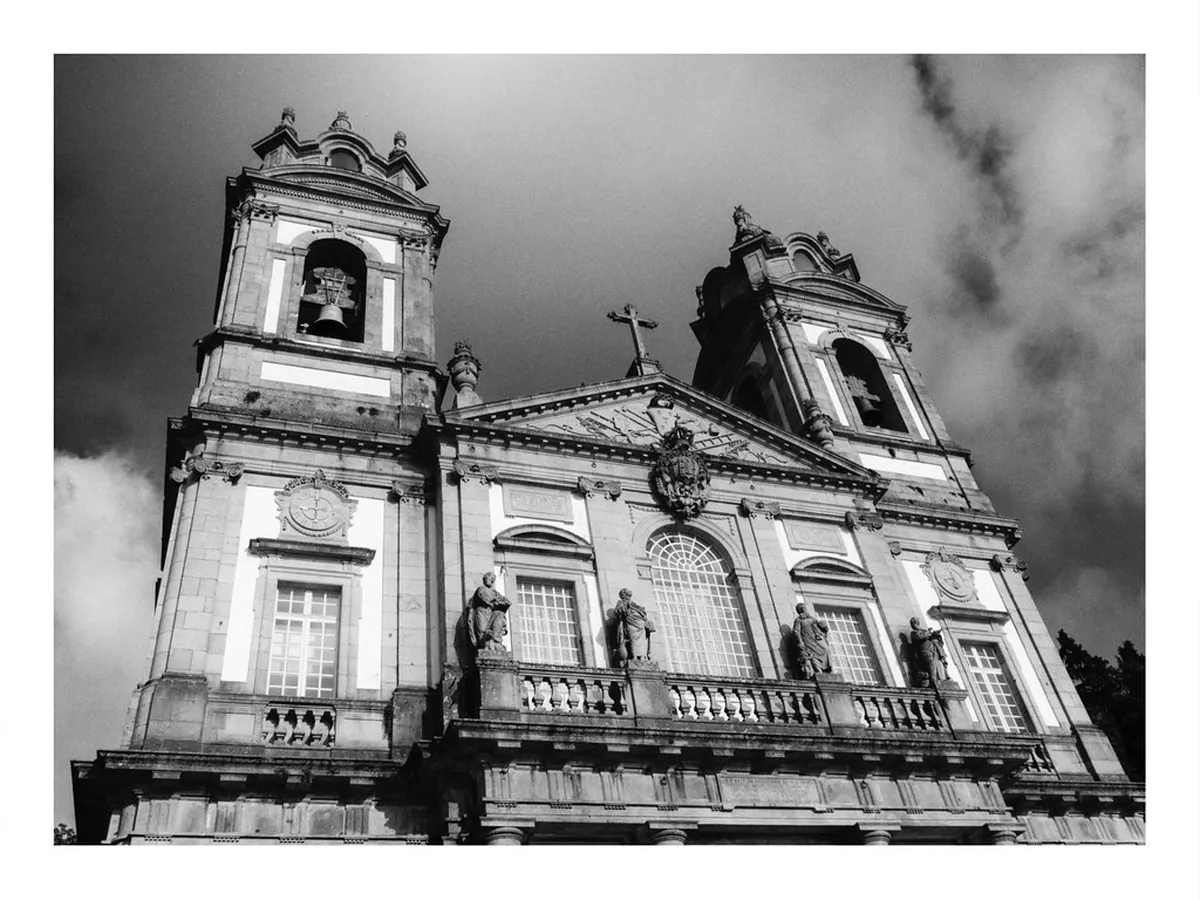
If your legs are not up for the full climb, the Funicular do Bom Jesus is the world's oldest water-powered funicular and costs approximately €2 per trip. It runs continuously during opening hours. The views from the terrace over the Minho lowlands are excellent in either direction — sunrise light hits the facade from the east, making early mornings particularly photogenic.
The grounds open at 08:00 and the funicular operates until 20:00 in summer and 19:00 in winter. Entry to the gardens and staircase is free. To get there without a car, catch Bus 2 from the city center near Avenida da Liberdade — fare is under €2 and the ride takes about 15 minutes. Buses run every 30 to 40 minutes during peak season. For a full breakdown of history and layout, see our Bom Jesus do Monte guide.
Climb the 577 Baroque stairs before 09:00 to avoid the midday tour buses. The water-powered funicular is free to ride down if your legs tire partway up.
Explore the Historic Braga Cathedral (Sé de Braga)
The Sé de Braga is the oldest cathedral in Portugal, founded in the 11th century on the site of a former mosque — which itself was built over a Roman temple to Isis. The structure blends Romanesque, Gothic, Manueline, and Baroque elements added over eight centuries of continuous renovation. The ornate twin organs hanging above the nave are among the finest examples of Baroque woodcraft in the country.
The ticket system is where most visitors go wrong. Staff at the entrance typically offer the €2 ticket for the main nave first — take it only if you are extremely short on time. The €5 full-visit ticket unlocks everything worth seeing: the locked side chapels, the Chapel of Glory with its rare 14th-century geometric Islamic tilework and the tomb of Archbishop Geraldo, and the Upper Choir with its carved stalls and close-up views of those twin organs. One chapel contains the mummified remains of Dom Lourenço Vicente, who lost his eye at the 1385 Battle of Aljubarrota. A volunteer guide with an enormous set of ancient keys accompanies the full-visit group through each locked space.
Opening hours are 09:30 to 12:30 and 14:30 to 17:30 (18:30 in summer). The cathedral closes without notice for weddings and major religious services, especially Saturday afternoons — check the morning of your visit before rearranging your schedule. Our dedicated Braga Cathedral Guide: 8 Things to Know Before You Go has tips on which chapels to prioritize if you have limited time.
The cathedral closes unexpectedly for services and weddings. Always verify hours the morning of your visit. The €5 full-visit ticket (not the €2 basic one) unlocks the locked side chapels and the Chapel of Glory with rare 14th-century Islamic tilework.
Visit the Nogueira da Silva Museum and Gardens
The Nogueira da Silva Museum occupies the former residence of António Augusto Nogueira da Silva, the man who created the Portuguese lottery (Casa da Sorte) in 1933. The interior is a rarity in Braga: a modernist private home preserved intact, with collections of ivory carvings, Renaissance paintings, Chinese ceramics, and baroque furniture spread across rooms that still feel lived-in rather than clinical. An audio guide in English is included in the ticket price.
The garden is the true highlight and routinely surprises visitors who only came for the decorative arts. Azulejo-tiled panels line the walls between rose beds, and a series of stone fountains anchor each section. A small tea garden at the far end of the grounds is sometimes open on weekday afternoons — arrive by 15:00 if you want to catch it. The entire garden visit adds only 20 to 30 minutes to your time.
The museum is located at Avenida Central 61. Opening hours are Tuesday to Friday from 09:00 to 18:00; entry costs around €3. It sits on the same walkable strip as several other attractions, making it easy to combine with Palácio do Raio and Livraria Centésima Página in a single afternoon circuit.
Admire the Azulejos of Palácio do Raio
Palácio do Raio on Rua do Raio is the most visually arresting facade in the historic center. The entire exterior is covered in deep-blue azulejo tiles arranged in dense floral and geometric patterns — a textbook example of mid-18th-century Rococo excess that looks even more dramatic under cloud cover. The ornately framed windows are equally impressive and have appeared in countless photography portfolios of northern Portugal.
The interior houses exhibitions related to the Santa Casa da Misericórdia, the religious charity that operated the hospital once housed here. Hand-painted tile panels line the staircase walls and intricately decorated ceilings crown the main rooms, though photography is not allowed inside the building. Entry is around €2. Opening hours are Tuesday to Saturday from 10:00 to 13:00 and 14:30 to 18:30. Even if you skip the interior, the exterior is free to linger in front of for as long as you need — and you will need time, because the tile work rewards slow looking.
Wander the Colourful Santa Barbara Gardens
The Santa Barbara Gardens sit directly beside the medieval Episcopal Palace and are the most photographed public space in Braga. The flower beds are maintained in strict geometric patterns that rotate with the seasons, producing bold combinations of reds, yellows, and purples against the ancient stone palace walls. At peak bloom in spring and early summer the contrast is extraordinary.
For the best composition, position yourself near the central fountain with the palace arches framing the background — this is where the foreground color and the rugged stone work best together. Evening light softens the palace stonework and the gardens are lit at night, making them a worthwhile stop after dinner. The gardens are free and open around the clock, 365 days a year. There is no better free activity in Braga.
Step Back in Time at the Biscainhos Museum
The Biscainhos Museum occupies a 16th-century palace on Rua dos Biscainhos, a street named after the Basque stonemasons (biscainhos) brought to Braga to work on the cathedral's Gothic tower. The palace was substantially expanded and decorated in the 18th century by a family enriched by Brazilian coffee and tobacco, and the rooms still bear the evidence of that wealth: the Sala Nobre ceiling features a portrait of a Jesuit uncle incorporated into the decorative oil painting, and the master bedroom contains surprisingly short beds — the guide explains that noblemen slept partially upright after heavy evening meals to aid digestion.
Visits are guided, with printed room descriptions at each entrance. The ground-floor paving stones where carriages once drove through the house remain in place, giving the palace an authenticity that more heavily restored sites lack. After touring the kitchens (deliberately separated from the main house as a fire precaution), you reach the tiered garden — one of the finest Baroque gardens in Portugal. Three distinct levels are visible from the grand gateway: formal manicured beds with fountains and sculptures, then lawns and fruit trees, and finally a vegetable garden. A circular azulejo-decorated viewing room is built into one of the walls.
Entry is €2. Opening hours are Tuesday to Sunday from 10:00 to 12:30 and 14:00 to 17:30, closed on major public holidays.
Discover Roman History at the Diogo de Sousa Museum
The Diogo de Sousa Museum is the best place in Braga to understand the scale and importance of Bracara Augusta — the Roman city founded around 20 BC that once served as the capital of the province of Gallaecia. The collection spans from Paleolithic times through to the Middle Ages, but the Roman period dominates: everyday pottery, gold jewelry, surgical instruments, mosaic fragments, and an entire hall of miliários (stone road milestones) bearing remarkably clear inscriptions.
The miliários are the most impressive items in the museum simply because of their size and number. Roman roads spread from Bracara Augusta in all directions, and many of the original stones marking distances and emperors' names were found during modern urban development in the city. Scale models throughout the museum help you visualize what the forum, the baths, and the street grid looked like during the 1st and 2nd centuries AD.
Entry costs approximately €3. The museum is open Tuesday to Sunday from 10:00 to 17:30 and is closed on Mondays. It is an ideal rainy-day option and takes about 90 minutes to explore at a comfortable pace.
Browse for Books in an 18th-Century House
Livraria Centésima Página occupies Casa Rolão, an 18th-century Baroque manor on Avenida Central. The bookshop stocks a solid selection of Portuguese-language titles alongside some English volumes and well-chosen gift items — but the real draw is the hidden garden café at the back. Through a door behind the shelves, a shaded outdoor courtyard opens up with tables under the trees, completely invisible from the street. It is one of the most peaceful places to sit in the entire city center.
The café is the same space used as a private esplanada by Braga's literary crowd, and the bookshop itself occupies a place in local cultural life that goes beyond retail. Browse without pressure, have a slow espresso, and pick up something about Portuguese history before heading back into the afternoon sun. Opening hours are generally 10:00 to 19:00, though the café terrace hours vary by season. Entry is free.
Experience the Annual Braga Romana Festival
Every May — typically during the last week — the city center transforms into a recreation of Roman Bracara Augusta. The six-day festival fills the main streets and squares with costumed professionals, market stalls selling period food and craft, theatrical productions, gladiatorial games, and free outdoor concerts. The parade down one of the main shopping streets draws thousands of spectators and is the visual centerpiece of the event.
Most outdoor events are free. Restaurants across the historic center offer special menus inspired by ancient Roman recipes during the festival period — roasted meat, mead, and grain-based dishes. The most dramatic event is the evening fire show staged at one of the Roman heritage sites in the city; it fills quickly so arrive at least 45 minutes early. The festival is also the best time to take the guided Roman heritage walking tours, which open access to excavated sites not normally available to the public.
For exact dates in 2026 and a full program of events, check our Braga festivals guide closer to the spring season.
Snap a Photo at Saint Markus Church and the Braga Letters
Largo Carlos Amarante is where every visitor eventually ends up with a phone out. The large 'BRAGA' sign sits directly in front of the facade of Saint Markus Church (Igreja de São Marcos), creating an instantly recognizable city portrait. The church itself dates from the 18th century and features a handsome Baroque facade that frames well even without the letters in the shot.
The best light hits the church facade in the late afternoon — roughly 16:00 to 18:00 in summer — when the stone takes on a warm golden tone. Early mornings are quieter if you want the shot without a crowd of other photographers. Entry to the church is free during morning and evening service times. The square is a pleasant five-minute walk from the Santa Barbara Gardens and easily combined with a broader historic center loop.
Climb the Medieval Tower at the Image Museum
The Museu da Imagem (Image Museum) is built into and around a 14th-century tower that formed part of Braga's original defensive walls. The photography exhibitions inside rotate regularly, so repeat visitors always find something new. The permanent architectural draw, though, is the tower climb: narrow stone stairs spiral to a platform with a clear view over the Arco da Porta Nova and the rooftops of the historic center.
Entry is free. Opening hours are Tuesday to Friday from 11:00 to 18:30 and Saturday to Sunday from 14:30 to 18:00. The staircase is steep and narrow — take it slowly and let people coming down pass before you ascend. It adds about 30 minutes to any historic-center walk and is one of the few places in Braga where you can look down on the main commercial street from above.
The Underrated Half-Day: Tibães Monastery
Almost no competitor guide for Braga mentions the Monastery of São Martinho de Tibães, yet it is arguably the most spectacular Baroque building within reach of the city. Located about 6 kilometers northwest of the historic center — a 15-minute drive or a bus ride from the train station — the monastery was the motherhouse of the Benedictine Order in Portugal and Spain for over two centuries. Its main chapel is one of the most ornate examples of gilded woodcarving in Europe, covering every surface from floor to vault in a continuous cascade of gold leaf and carved figures.
What makes Tibães genuinely worth the detour for multi-day visitors is the garden. Twelve hectares of terraced grounds include waterfalls, stone stairways, a lake, dense woodland, and wild squirrel populations that are accustomed enough to humans to approach tables at the outdoor café. Spring is the best season — the gardens are heavily wooded and stay cooler than the city center. Entry to the monastery and gardens costs €5; the grounds alone are €2. Opening hours are Tuesday to Sunday from 10:00 to 17:30 in winter and until 18:30 in summer. This is the one stop that genuinely separates a second-day visitor from everyone who only did the Bom Jesus loop.
Where to Stay: Best Neighborhoods and Hotels
The historic center is the right base for almost every visitor. Staying within the old city walls keeps you within walking distance of every landmark on this list except Bom Jesus and Tibães, and lets you see the monuments lit at night — a genuinely different experience from the daytime crowds. Browse current prices on Kayak before committing.
For a luxury stay, converted historic buildings outperform standard hotels. The Vila Gale Collection Braga occupies a 16th-century hospital with vaulted ceilings, a garden, and two pools — rates typically run around €175 per night. The INNSiDe by Meliá in the city center offers a more modern aesthetic at €150 to €200 per night. For a mid-range option, Hotel Bracara Augusta is well-located and straightforward at around €130 per night. Budget travelers should look at Basic Braga near the train station, which is clean and reliably priced around €55 per night.
If you prefer to stay outside the center, the area near Minho University is convenient if you are visiting Bom Jesus repeatedly and offers a slightly younger, quieter atmosphere. For the full range of guesthouses, hostels, and boutique options, our dedicated guide on Where to Stay in Braga: 10 Essential Planning Tips and Areas breaks down every neighborhood with specific recommendations. Avoid dining directly on the main tourist plazas; for restaurant picks, see our list of best restaurants in Braga.
Quick Reference: Attractions at a Glance
| Attraction | Entry Cost | Hours | Best For |
|---|---|---|---|
| Bom Jesus do Monte | Free (Funicular €2) | 08:00–20:00 (summer) / 19:00 (winter) | Baroque architecture, views |
| Braga Cathedral | €2–€5 | 09:30–12:30, 14:30–17:30 (18:30 summer) | Historic chapels, organs |
| Nogueira da Silva Museum | €3 | Tue–Fri 09:00–18:00 | Modernist interiors, gardens |
| Palácio do Raio | €2 | Tue–Sat 10:00–13:00, 14:30–18:30 | Azulejo tilework, photography |
| Biscainhos Museum | €2 | Tue–Sun 10:00–12:30, 14:00–17:30 | Baroque palace, gardens |
| Diogo de Sousa Museum | €3 | Tue–Sun 10:00–17:30 | Roman artifacts, milestones |
| Image Museum (Tower) | Free | Tue–Fri 11:00–18:30, Sat–Sun 14:30–18:00 | Medieval tower climb, city views |
| Tibães Monastery | €2–€5 | Tue–Sun 10:00–17:30 (18:30 summer) | Gilded chapel, 12-hectare gardens |
Getting Around: Practical Logistics
The historic center is compact enough to walk entirely in an hour, which means most of the attractions on this list require no transport at all. The two main exceptions are Bom Jesus and Tibães. For Bom Jesus, Bus 2 departs from near Avenida da Liberdade in the city center, costs under €2, and runs every 30 to 40 minutes during peak season. For Tibães, the most practical option is a taxi or car hire — renting through Discovercars.com gives you enough flexibility to visit both hilltop sites in a single morning.
For day trips beyond the city, Braga functions well as a base for the Peneda-Gerês National Park and the historic center of Guimarães. Check our guide to 10 Best Day Trips From Braga: The Ultimate Minho Guide for logistics on both. If you are arriving from the rest of Portugal, trains from Lisbon's Oriente station take 3.5 to 5 hours depending on service type; the fast Alfa Pendular covers the distance in 3.5 hours for as little as €14. From Porto, the train takes just over an hour for €3.50.
Frequently Asked Questions
How many days do I need in Braga?
Two days are ideal for seeing the main sights like Bom Jesus and the Cathedral at a relaxed pace. This allows time for a leisurely lunch and exploring the hidden gardens. One day is enough for the highlights if you arrive early from Porto.
Is Braga better than Guimarães?
Both cities offer distinct experiences and are worth visiting for different reasons. Braga is larger with more Baroque architecture and religious sites. Guimarães feels more medieval and compact, often cited as the birthplace of Portugal.
When is the best time to visit Braga?
Late spring and early autumn offer the most pleasant weather for walking and exploring the hills. May is particularly special due to the Braga Romana festival. Winters can be quite rainy in the Minho region.
Braga rewards visitors who look past the famous staircases. The Roman museum, the bookshop garden, the Biscainhos palace kitchens, and the Tibães monastery all sit within easy reach and almost always have breathing room even in high season. Whether you have one day or three, the city's layered history and manageable scale make it one of the most satisfying stops in northern Portugal.
For more help planning your time in the region, browse our other resources on northern Portugal. The Minho is full of surprises, and Braga makes the perfect base for exploring them.
Explore More Braga Guides
Deep-dive guides for every part of a Braga trip — from the baroque sanctuaries and the historic centre to day trips, where to stay, and the best time to visit.
Attractions & Landmarks
- Bom Jesus Do Monte Braga: The Ultimate Visitor's Guide
- Braga Cathedral Guide: 8 Things to Know Before You Go
- Braga Sanctuaries Sameiro Travel Guide
- Braga Old Town Walking Guide: 10 Essential Stops and Tips
- 10 Best Hidden Gems in Braga
- 12 Best Free Things to Do in Braga
Food & Drink
Where to Stay
Getting There & Around
Day Trips from Braga
- 10 Best Day Trips From Braga: The Ultimate Minho Guide
- 6 Essential Comparisons
- 6 Essential Tips for Visiting Peneda-Gerês National Park from Braga
Itineraries & Trip Planning
- How Many Days In Braga: 3-Day Itinerary & Planning Tips
- 10 Essential Stops for a One Day in Braga Itinerary
- Is Braga Worth Visiting? 10 Things to Know Before You Go
- Things to Do in Braga with Kids
- Best Time to Visit Braga: 8 Seasonal Planning Insights
- 10 Essential Braga Travel Tips
- 10 Best Braga Festivals and Events: A Local Guide
 15 Magical Things To Do In Óbidos, Portugal (2026)June 11, 2026
 12 Best Things to Do in Aveiro (2026)June 8, 2026
 11 Best Things to Do in Évora, Portugal (2026)June 8, 2026