
Braga Sanctuaries Sameiro Travel Guide
Discover the Sanctuary of Our Lady of Sameiro in Braga. Our guide covers the 365-step staircase, panoramic viewpoints, history, and practical travel tips.
On this page
Braga Sanctuaries Sameiro Travel Guide
The Sanctuary of Our Lady of Sameiro sits at 572 meters above sea level on Monte do Sameiro, overlooking the whole of Braga and reaching toward the Atlantic on clear days. It is Portugal's second most important Marian shrine after Fátima, drawing around one million visitors a year. Yet on most afternoons it remains genuinely quiet — a contrast that makes it one of the most rewarding 12 Best Things to Do and Places to Stay in Braga for travelers who want more than the main tourist circuit.
This guide covers everything you need for a rewarding visit in 2026: the history behind the site, the key architectural details inside the basilica, the viewpoint logistics, how to get there, and how to pair Sameiro with nearby Bom Jesus do Monte.
History and Religious Significance of Sameiro
The project began on 14 July 1863, when Father Martinho Silva — a priest from the Archdiocese of Braga — laid the foundation stone for a monument dedicated to the Immaculate Conception of Mary. Construction continued for more than thirty years, growing from a simple chapel proposal into one of the largest religious complexes in Northern Portugal. The result includes a main basilica, the Chapel of the Eucharist, a crypt, a Rector's House, and the Casa das Estampas. This expansion mirrors the architectural heritage across Braga's sanctuary network.
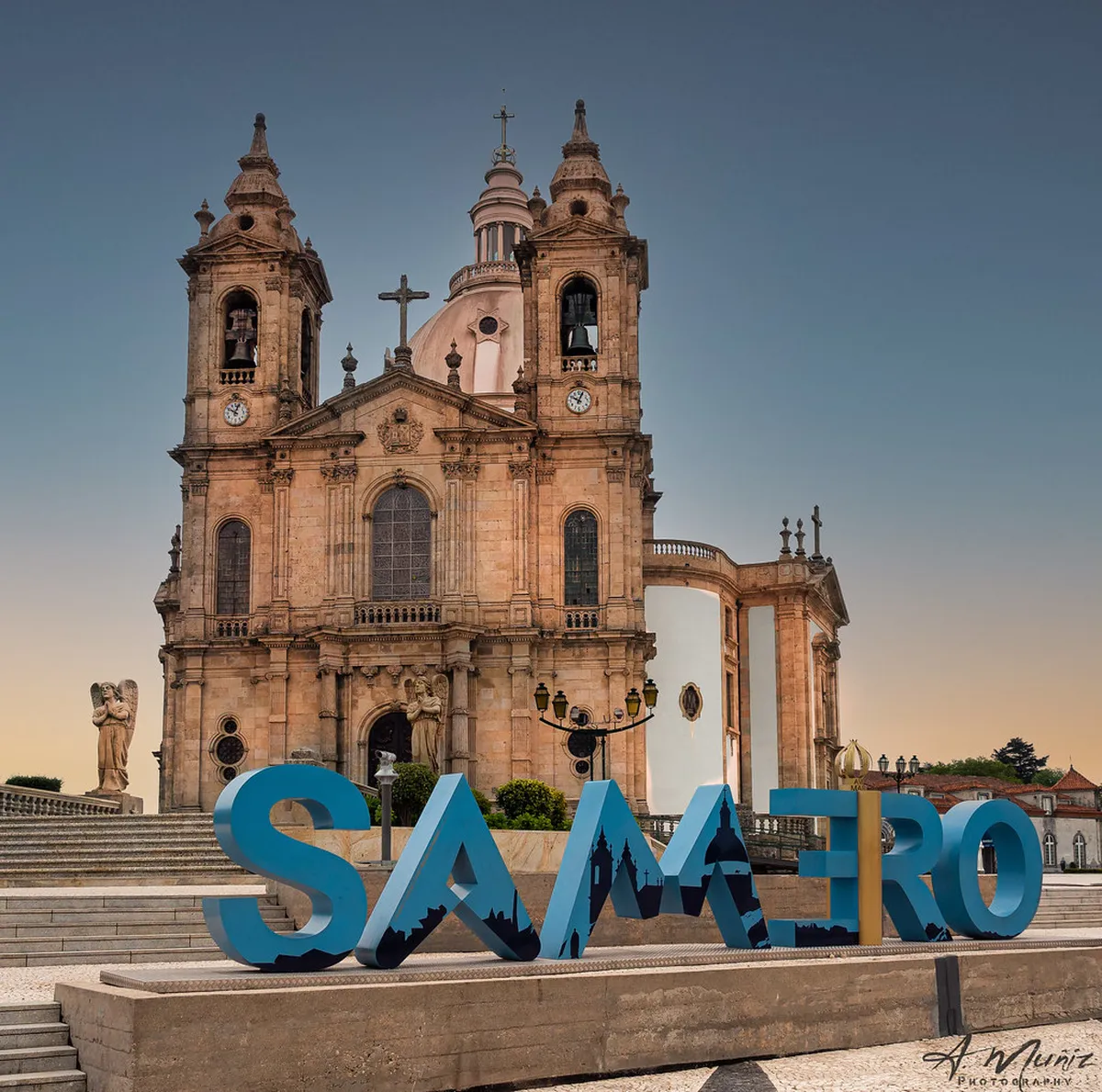
Near the entrance you'll notice four granite statues of theologians who wrote extensively about Mary: Anthony of Padua, Bernard of Clairvaux, Cyril of Alexandria, and Alphonsus Liguori. Most visitors walk past them without stopping, but each figure was chosen deliberately to frame the theological argument for the Immaculate Conception. It is a quiet piece of scholarly intent set in stone.
Two papal milestones define the shrine's modern standing. Pope John Paul II visited on 15 May 1982, the same year he survived an assassination attempt — a visit the local faithful remember as particularly charged with meaning. Then in 2004, the same pope awarded the sanctuary the Golden Rose. This honor is one of the rarest in Catholicism: fewer than a dozen shrines worldwide hold it at any given time, and it is granted only for exceptional service to the Catholic Church. The plaque marking the award is inside the basilica and worth a moment of attention.
On the Marian Shrine Route — a pilgrimage network connecting the major Marian sites across Portugal — Sameiro ranks second only to Fátima. The largest pilgrimages fall on the first Sunday of June and the last Sunday of August, when tens of thousands arrive from across the Iberian Peninsula.
Architectural Highlights: The Basilica, Crypt, and Artworks
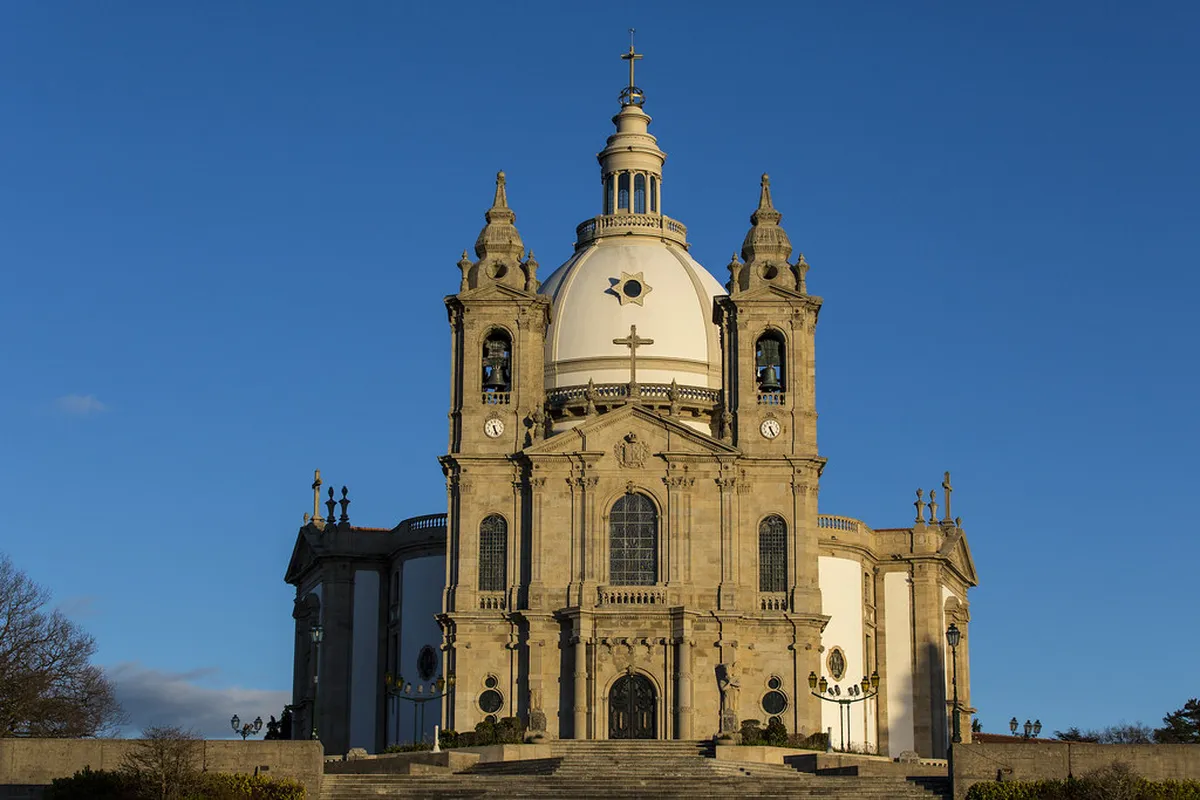
The main basilica is neoclassical in style — white granite, a symmetrical facade, and a dome that dominates the skyline from well outside the city. The dome was one of the most ambitious structural projects in 19th-century Northern Portugal and remains the defining feature of the Monte do Sameiro silhouette. Inside, the scale is larger than it looks from the approach road.
The central marble statue of Nossa Senhora do Sameiro was sculpted in Rome by Eugénio Maccagnani and installed in 1869. A separate statue of Mary received the decree of canonical coronation from Pope Pius IX on 22 December 1876. Both pieces anchor the liturgical focal points of the upper church. The silver tabernacle behind the main altar is a further highlight — the metalwork is unusually intricate for a site that charges no admission.
20th-century additions brought contemporary art into the complex. Querubim Lapa contributed a set of azulejo tiles whose vivid blues contrast with the pale stone of the walls. A large painted panel by Oscar Casares was completed between 2005 and 2006. In the crypt, sculptor Clara Menéres installed four works representing the archangels Gabriel, Raphael, and Michael alongside the Angel of Portugal. The crypt has a completely different atmosphere from the upper church — lower ceilings, warmer light, and a more meditative feel.
The Viewpoint: Panoramic Vistas of Braga and the Coast
The wide terrace in front of the basilica is the best viewpoint in the Braga region. At 572 meters, it sits roughly 172 meters above Bom Jesus and clears the surrounding forest canopy entirely. On a clear day you can trace the city's expansion from the medieval core outward, with the green hills of the Minho giving way to coastal lowlands and, on especially transparent afternoons, a thin silver line marking the Atlantic roughly 70 kilometers to the west.
Sunset from this terrace is the single most recommended photography experience in Northern Portugal by regular visitors to the area. The sun drops behind the hills to the northwest, turning the dome's granite face warm orange and casting long shadows across the staircase. Arrive at least 45 minutes before sunset to choose your position — the best angle for the dome against the sky is from the left side of the terrace looking back toward the basilica facade, not from directly in front of it.
Morning visits between 08:00 and 10:00 offer clean light for architectural photography with no crowds. On misty autumn and spring mornings, the sanctuary occasionally sits above the fog layer — a relatively rare condition where the city below disappears entirely and the dome appears to float. This is harder to plan for but worth watching the local forecast during the shoulder seasons.
The 365 Steps — and Who Should Use the Road Instead
The main staircase leading to the basilica has exactly 365 steps, one for each day of the year. The symbolism is deliberate: climbing all of them was intended as a form of prayer made physical, a daily offering compressed into a single ascent. Some pilgrims still climb on their knees during major feast days. For most visitors the climb on foot takes around 15 to 20 minutes at a moderate pace and passes through shaded sections of the garden.
The 365-step staircase is entirely optional. Avenida Nossa Senhora do Sameiro runs directly to free parking at the top, immediately beside the basilica terrace. You can drive, taxi, or take Bus 23 all the way to the terrace level without climbing a single step — ideal for visitors with limited mobility or young children in strollers.
What no general guide makes clear enough: the 365 steps are entirely optional. The road from Braga — Avenida Nossa Senhora do Sameiro — runs directly to the parking area at the top of the hill, immediately beside the basilica terrace. Visitors with limited mobility, young children in strollers, or anyone who simply wants to save energy can drive or take a taxi all the way to the terrace level without climbing a single step. Buses serving the route also drop passengers close to the upper entrance.
If you want a middle option, take the bus or drive up and walk down. The descent on the staircase takes under 10 minutes and gives you the full visual effect of the approach without the uphill exertion. This is the approach most repeat visitors use when they want the experience of the steps without planning the day around them.
How to Get to Sameiro from Braga and Porto
From Braga city center, Sameiro is about 12 km by road via Avenida Nossa Senhora do Sameiro. By car the drive takes 15 minutes. Parking at the top is free and the lot is large enough to absorb weekend pilgrimage volumes without difficulty. From Porto, allow 60 to 75 minutes by car depending on traffic on the A3 motorway.
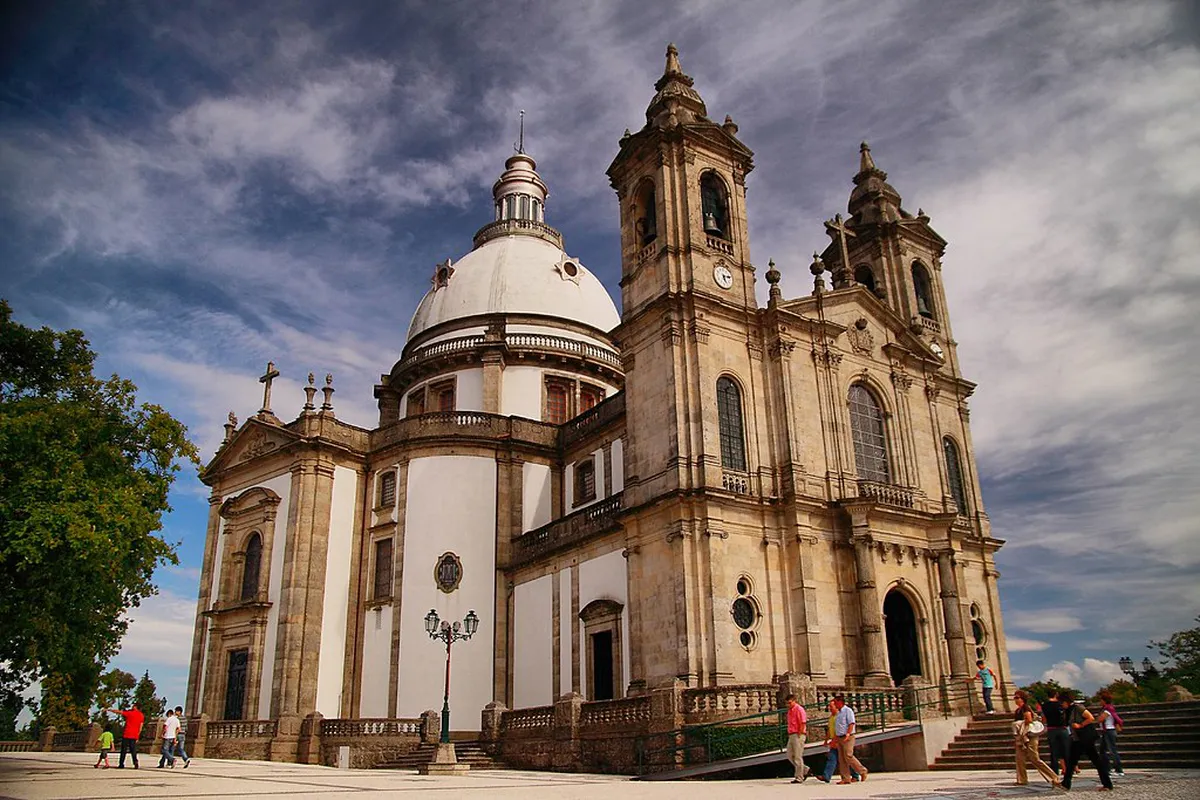
By public bus, the most reliable route is Bus 23 from central Braga. The ride takes roughly 30 minutes. Services run throughout the day but thin out in the evening — check the current schedule at the TUB (Transportes Urbanos de Braga) terminal before planning your return, particularly if you intend to stay for sunset. A taxi or rideshare from the city center costs approximately €10–15 each way and takes 15 minutes.
- Car from Braga center: 12 km, about 15 minutes, free parking at the top
- Bus 23 from Braga: approximately 30 minutes, affordable fare
- Taxi from Braga center: €10–15, 15 minutes
- Car from Porto: about 60–75 minutes via the A3
Best Time to Visit: Pilgrimages and Seasonal Tips
The sanctuary hosts two major pilgrimages in 2026: the first Sunday of June and the last Sunday of August. Both draw tens of thousands of visitors and the road fills early. If you want the religious atmosphere — processions, outdoor masses, candlelight — these are the days to target. If you prefer quieter conditions, avoid those specific Sundays and aim for weekday mornings at any other point in the year.
Spring (March to May) and early autumn (September to October) offer the most comfortable walking weather. Temperatures stay in the low-to-mid 20s Celsius, the gardens are at their best, and afternoon light is ideal for photographs. Summer mornings before 10:00 are pleasant; midday in July and August can be uncomfortably hot given the open terrace has limited shade.
Winter is often overlooked but has real appeal. Weekday winter visits see very few tourists, and the hilltop position means you are frequently above the low cloud layer that sits over the Minho valley in January and February. Visibility is unpredictable but when the sky clears, winter light is sharp and the distant views to the coast are often better defined than in the summer haze.
Planning Your Visit: Opening Hours and Practical Info
The sanctuary is open year-round and entry to the basilica, crypt, and grounds is free. Current opening hours as listed on the official sanctuary website are as follows: in summer (roughly May to October), Monday to Saturday 07:30–19:00 and Sunday 06:30–19:00; in winter, Monday to Saturday 07:30–17:30 and Sunday 06:30–17:30. Verify before you go as mass schedules can affect access to parts of the interior during services.
A small café on the grounds serves coffee, snacks, and ice cream. There is no full restaurant on-site, so if you want a proper meal plan to eat in Braga city center about 15 minutes away. Several picnic areas with benches are scattered through the gardens — bringing your own food is a reasonable option, especially for sunset visits. The site is at Avenida Nossa Senhora do Sameiro, Braga on Google Maps. Coordinates: 41.5418° N, 8.3698° W.
Allow at least two hours for a complete visit. That covers the basilica interior, the crypt, the terrace viewpoint, and a walk through the gardens. If you are staying for sunset, arrive an hour early. There are no admission fees, no timed entry slots, and no need to book in advance.
Combining Sameiro with Bom Jesus do Monte
Sameiro and Bom Jesus do Monte are the two hilltop sanctuaries that define the religious landscape above Braga. They sit on the same mountain range about 5 kilometers apart and can be visited in the same half-day without rushing. The contrast between the two is instructive: Bom Jesus is Baroque, enclosed by forest, and defined by its zigzag staircase of 577 steps; Sameiro is neoclassical, open to the sky, and defined by its panoramic terrace.
Bom Jesus sits at roughly 400 meters above sea level against Sameiro's 572 meters — a 172-meter difference that explains why Sameiro's views are significantly wider. Bom Jesus receives substantially more visitors and feels more managed; Sameiro retains a quieter, more local atmosphere on most days. If you only have time for one, choose based on whether you want UNESCO-listed Baroque architecture (Bom Jesus) or the better viewpoint and fewer crowds (Sameiro).
The most logical sequence for a 10 Essential Stops for a One Day in Braga Itinerary is to start at Bom Jesus in the morning when the shaded staircase is cool, have lunch in the historic center, then head to Sameiro for late afternoon and sunset. The drive between the two sanctuaries takes under 10 minutes via the N309 road.
Local Insights: Tips for First-Time Visitors
Dress modestly if you plan to enter the basilica during services — covered shoulders and knees are expected. Outside of mass times the atmosphere is relaxed and no dress enforcement is applied, but it is good practice. The sanctuary is an active place of worship, not a museum, so keep noise low inside the main church regardless of timing.
During mass services, covered shoulders and knees are required out of respect for the active place of worship. Outside of service times, enforcement is relaxed, but modest dress remains expected. This is a pilgrimage site, not a tourist attraction, so keep noise to a minimum throughout the basilica.
The Golden Rose plaque inside the basilica is easy to miss because it is not prominently signed. Ask a sacristan or look for it near the side chapel — understanding its rarity (globally fewer than a dozen shrines hold this distinction at any time) gives the whole complex a different weight. The 1982 visit by Pope John Paul II is also commemorated inside; this came just a year after his near-assassination, which the faithful here regard as symbolically significant.
Weekend afternoons in summer bring local families to the gardens for picnics, particularly on Sundays. The atmosphere is domestic and pleasant — children running between the benches, older residents in conversation. It is one of the more genuine glimpses of everyday Braga life available to visitors. Follow 10 Essential Braga Travel Tips: The Ultimate Guide for more on navigating the city's blend of pilgrimage culture and daily local life.
Frequently Asked Questions
How many steps are at the Sameiro Sanctuary in Braga?
The main staircase at the Sanctuary of Sameiro features exactly 365 steps. This number symbolizes one step for every day of the year. Many pilgrims climb these steps on their knees as an act of faith. You can find more details in our Braga guide.
Is the Sanctuary of Sameiro free to visit?
Yes, entry to the Sanctuary of Our Lady of Sameiro is completely free for all visitors. This includes access to the main basilica, the crypt, and the panoramic viewpoints. There are no parking fees for those arriving by car, making it a budget-friendly destination.
How do I get from Braga city center to Sameiro?
The easiest way is to take local bus number 88 or 91 from the city center. These buses run frequently and drop you off near the main entrance. Alternatively, a taxi or rideshare service takes about 15 minutes and is quite affordable for small groups.
What is the difference between Bom Jesus and Sameiro?
Bom Jesus is famous for its Baroque zigzag staircase and lush gardens. Sameiro is located higher up the mountain and features a massive neoclassical basilica with wider views. While Bom Jesus is a UNESCO site, Sameiro is known for its status as a major Marian shrine.
The Sanctuary of Our Lady of Sameiro rewards the kind of visitor who goes slightly off the main tourist path. The history is substantial, the architecture is impressive, and the viewpoint genuinely earns its reputation as the best in Northern Portugal. Entry costs nothing, the setting is peaceful outside pilgrimage days, and the combination with Bom Jesus makes for one of the more complete half-day excursions available from Braga.
Plan around the sunset if your schedule allows. Arrive two hours before to walk the basilica and crypt at your own pace, then find your terrace position before the golden hour. Check whether Braga is worth visiting for the full picture of what the city offers beyond its sanctuaries.
 Guimaraes Travel Tips Travel GuideJune 8, 2026
 How Many Days In Guimaraes Travel GuideJune 8, 2026
 Roman Temple of Évora (Temple of Diana) GuideJune 8, 2026