
10 Essential Stops for a One Day in Braga Itinerary
Maximize your one day in Braga itinerary with our local guide to Bom Jesus, the Sé Cathedral, and the best Minho restaurants. Includes Porto transport tips.
On this page
10 Essential Stops for a One Day in Braga Itinerary
Braga is one of the most rewarding day trips from Porto and one of the oldest cities in Portugal. Founded by the Romans as Bracara Augusta over two thousand years ago, it spent centuries as the religious capital of the country. That layered history is visible on every corner: ancient cathedral walls stand next to baroque palaces, and a monumental hilltop staircase draws pilgrims and photographers alike.
Many travelers wonder if Is Braga Worth Visiting? 10 Things to Know Before You Go for just a single day. The honest answer is yes — the city is compact, almost entirely flat in the center, and its main sights cluster within easy walking distance of each other. You can see the highlights without a car, without a tour guide, and without spending more than €30 for the whole day including transport, entry fees, and lunch.
This one day in Braga itinerary is structured for visitors arriving from Porto by train in 2026. It covers the UNESCO-listed sanctuary, the oldest cathedral in Portugal, the gardens, the walking route through the historic core, and the practical questions most first-timers ask — including whether to add Guimarães and what to do if it rains.
Must-See: Bom Jesus do Monte and the Funicular
The UNESCO-listed Sanctuary of Bom Jesus do Monte is the single reason most visitors come to Braga, and it more than justifies the journey. The baroque staircase zigzags 116 metres up a forested hillside through a sequence of fountains, carved figures, and small chapels. Fountains along the Stairway of the Five Senses pour water from the eyes, ears, nose, and mouth of stone figures — an elaborate allegory designed for pilgrims who could not travel to Jerusalem.
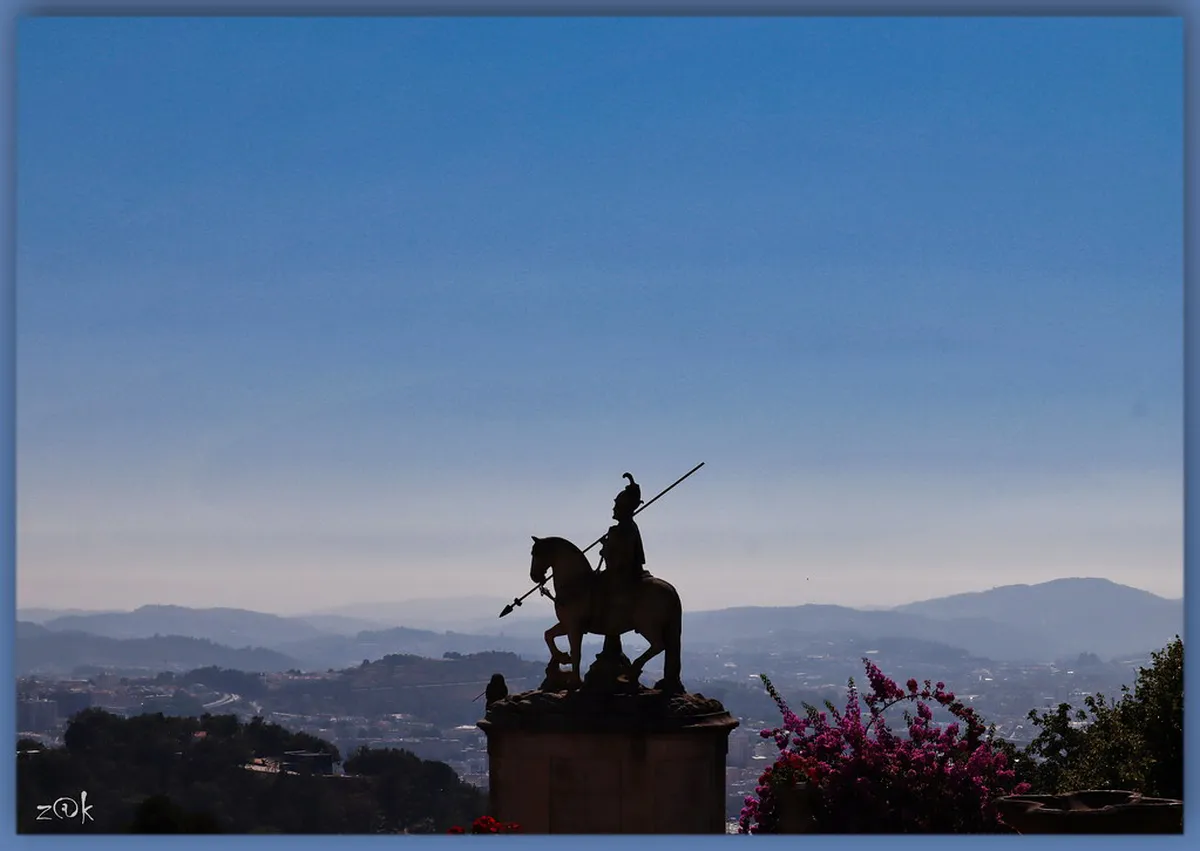
At the summit the church houses an 18th-century organ and an altar crafted from Brazilian jasper. The surrounding park of old cedar and oak contains grottoes, viewpoints, and a small rowing lake. On a clear day the views stretch across the entire Minho valley. Allow at least 90 minutes once you arrive at the base.
The funicular is the world's oldest water-powered counterbalancing system and has been carrying visitors up the hill since 1882. A single ticket costs €2.50, or €4.00 return. The best strategy is to ride up and then walk back down the baroque staircase, experiencing each symbolic section as you descend rather than arriving breathless at the top. Arrive before 10:00 to avoid the mid-morning tour groups from Porto.
Book the funicular in advance during peak summer months (June–August) when visitor queues exceed 30 minutes. Tickets purchased online at bomjesusbraga.pt receive a 10% discount and skip the cash queue entirely.
Museums and Culture: Sé de Braga, São Marcos, and Nogueira da Silva
The Braga Cathedral predates the founding of Portugal itself. Construction began in 1089 and the building has been in continuous use for over 900 years. Inside, heavy Romanesque pillars give way to Gothic columns and then chapels dripping in baroque gilding, while two enormous gilded organs with horizontal trumpets face each other across the nave. Photographer Krzysztof Golik's documentation of its Baroque detailing gives a sense of how remarkable the interior is even on overcast days. Entry to the main nave costs €2.00; the combined cathedral-and-museum ticket is €5.00.
A short walk west takes you to the Igreja de São Marcos on Largo de Santa Cruz. Its carved granite facade is one of the finest examples of Portuguese Baroque in the city, and the letters spelling "São Marcos" above the doorway are a popular photography spot. Early morning before 09:30 is the least crowded time; the low-angle light picks out the relief carving much better than midday sun.
The Nogueira da Silva Museum is the quiet alternative that most visitors miss entirely. This private collection occupies a 20th-century manor house with a lush walled garden. Entry is only €3.00 and the museum closes at 18:00. It is a genuine respite from the crowds near the cathedral and a useful stop for art lovers who want something beyond ecclesiastical interiors. If the museum is at capacity, the Santa Barbara Garden immediately to the east gives a similar moment of calm at no cost.
The Arco da Porta Nova to Largo São João do Souto walking loop is approximately 1.2 kilometres and takes 25–30 minutes at a leisurely pace without stops. The entire circuit including the gardens and minor side streets stretches closer to 2 kilometres and is walkable in 45 minutes if you skip interior museum visits.
Parks and Gardens: Santa Barbara and Avenida da Liberdade
The Jardim de Santa Barbara is set against the medieval Gothic walls of the Archbishop's Palace and is one of the most photographed spots in Braga. The contrast between the manicured flowerbeds and the weathered stone arches behind them is striking. The garden is free to enter and at its best in spring and early summer when the roses and hedgerows are in bloom.
Avenida da Liberdade is the main boulevard linking the historic center to the train station and the Bus 2 stop for Bom Jesus. It is lined with cafes and terraces ideal for a mid-morning bica (espresso) before heading to the sanctuary. The seasonal flower displays in the central strip are particularly colorful in May and June. Café A Brasileira and Café Vianna are both long-established institutions along this corridor worth a short stop.
For a quieter green space, the gardens of the Palácio dos Biscainhos hide concealed fountains designed to spray unsuspecting visitors — a Baroque joke that still works. The palace itself is a 17th-century building where carriages once drove inside through the ground floor to keep guests dry. The upstairs collection includes a room dedicated entirely to the colonial ritual of drinking hot chocolate. Entry to the palace and gardens is €5.00.
A Walking Tour of Braga's Historic Centre
The full walking circuit through the old town covers around six kilometres and takes two to three hours at a comfortable pace. Unlike Porto or Lisbon, Braga's center is almost entirely flat and largely pedestrianised, so there is none of the hill-climbing or traffic-dodging that makes other Portuguese cities tiring on foot. Begin at the Arco da Porta Nova, the 18th-century arch that marks the symbolic entrance to the historic center. The square of Largo Carlos Amarante just outside the arch is one of the best photo spots in the city — the arch frames the cathedral facade behind it.
From the arch, head east to the Sé Cathedral and then north to the Câmara Municipal on its handsome square. Swing west toward Convento do Pópulo, then loop back through Rua Dr. Justino Cruz — Braga's main pedestrianised shopping street — to reach Santa Barbara Garden. Continue east to Largo São João do Souto and the distinctive Capela dos Coimbras, then push west to Praça da República, the city's main square since the 14th century. Café Vianna under the Arcada arches has been serving coffee here since 1871.
End the walking loop on Avenida da Liberdade at Largo de Santa Cruz, where the Palácio do Raio stands out with its vivid blue azulejo tile facade — designed in 1752 by André Soares with no two window pediments exactly alike. The Igreja de São Marcos and Igreja de Santa Cruz face each other across the square. A narrow alley off the square leads to the tiny Capela de São Bentinho, where locals stop briefly to pray. It is one of those places that feels completely different from the grand monuments nearby and is worth a quiet minute.
Practical Logistics: Getting to Braga by Train and Bus
Most visitors arrive from Porto using the Comboios de Portugal urban train from São Bento station. The journey takes between 54 and 71 minutes depending on the service, and a return adult fare costs €7.20 loaded onto a reusable Siga smart card (€0.50 deposit). Trains depart at least hourly in both directions. The express trains that also serve Braga require a connection at Campanhã, cost twice as much, and do not save meaningful time — stick with the urban service. Once you arrive, Braga station is a 300-metre walk to the Arco da Porta Nova.
For Bom Jesus, the Linha 2 bus operated by TUB (Transportes Urbanos de Braga) leaves from Avenida da Liberdade and from the train station forecourt. The journey takes around 20–30 minutes and drops you at the base of the monumental staircase. A single ticket costs €1.55, payable in cash or by contactless card on the bus. Note that frequency drops significantly on Sundays and public holidays, sometimes to once per hour. Check the live timetable at tub.pt/percurso/2/ before you leave.
Uber and Bolt both operate reliably in Braga and charge around €5–6 one way to Bom Jesus. If you are travelling with young children or have limited mobility, the ride-share is a better choice — you can set your destination as the Santuário do Bom Jesus do Monte summit and skip the base entirely. Walking back to the center from the sanctuary via the historic route takes around 40 minutes if you feel like a scenic return on foot.
The Perfect One Day in Braga Itinerary (Hour-by-Hour)
| Time | Activity | Location | Cost/Notes |
|---|---|---|---|
| 09:00–10:30 | Funicular + Sanctuary exploration | Bom Jesus do Monte | €2.50 up, walk down; arrive before tour groups |
| 10:30–11:00 | Bus back to center | Linha 2 TUB bus | €1.55 single ticket |
| 11:00–13:00 | Historic center walking tour + cathedral | Arco da Porta Nova → Sé de Braga → Santa Barbara Garden → Praça da República | €2–5 cathedral entry; includes Café Vianna stop |
| 13:00–14:30 | Lunch | Largo São João do Souto area | €12–15 per person; try Bacalhau à Braga |
| 14:30–16:00 | Nogueira da Silva Museum OR Palácio dos Biscainhos | Historic center | €3–5 entry; each takes 45 min |
| 16:00–17:30 | Largo de Santa Cruz + Palácio do Raio facade + Igreja de São Marcos | Historic center west side | Free; photography time |
| 17:30–19:30 | Return to station via Avenida da Liberdade (golden hour walk) | Avenida da Liberdade | Final photo at Arco da Porta Nova around 19:30 (summer) |
Start at 09:00 at Bom Jesus do Monte. Arrive before the tour groups from Porto, which typically reach the sanctuary after 10:30. Take the funicular up (€2.50), explore the church and lake at the summit, then walk back down the baroque staircase to experience each section properly. Allow 90 minutes total and catch the Bus 2 back to the center by 11:00.
From 11:00 to 13:00, walk the historic center circuit. Begin at Arco da Porta Nova, continue to the Sé Cathedral (€2.00–€5.00 depending on the ticket), swing through Santa Barbara Garden, and loop back via Praça da República. Stop at Café Vianna under the Arcada arches for a bica before heading to lunch. The 10 Best Braga Restaurants and Local Dining Guide around Largo São João do Souto are among the best for traditional Minho food. Order the Bacalhau à Braga or Rojões à Minhota. Budget around €12–15 per person with a glass of Vinho Verde.
Spend 14:00 to 16:00 on the quieter cultural stops. The Nogueira da Silva Museum (€3.00, closes 18:00) and the Palácio dos Biscainhos (€5.00) are both within easy walking distance of the cathedral. Neither requires more than 45 minutes. End the afternoon at Largo de Santa Cruz to see the Palácio do Raio facade and the Igreja de São Marcos. Walk back along Avenida da Liberdade toward the station, stopping at the Arco da Porta Nova for a final photo at golden hour (typically around 19:30 in summer). The arch frames the street perfectly when the light drops.
Braga, Guimarães or Both? (The Day Trip Dilemma)
The most common question for anyone planning a day trip from Porto is whether to visit Braga vs. Guimarães or try to squeeze in both. They are very different cities. Braga is a living, working city with a large university population, grand Baroque churches, Roman layers, and the Bom Jesus sanctuary. Guimarães is Portugal's medieval birthplace, preserved as a compact old town of cobblestone lanes, a hilltop castle, and the Paço dos Duques palace. Neither experience replaces the other.
- Choose Braga if you want more variety in a single day — the range from Roman history to Baroque architecture to a UNESCO hilltop sanctuary covers more ground than Guimarães alone.
- Choose Guimarães if you prefer pure medieval atmosphere and a more intimate, village-like feel. The castle and palace are exceptional for history lovers.
- Choose both only if you have a very early start and are happy to spend more time on buses than in either city. Guimarães is 25 minutes from Braga by bus, but you will see both places too briefly to appreciate them.
The recommended approach: give each city its own day. If you only have one, Braga offers the stronger day-trip case because Bom Jesus alone justifies the journey. A second day from Porto covers Guimarães thoroughly without any time pressure.
Is a Guided Tour of Braga Worth It?
Braga is one of the easiest cities in Portugal to explore independently. The train from Porto is simple, the center is compact and flat, and this guide covers the route in enough detail that no tour is logistically necessary. A DIY day costs roughly €30 per person including the return train (€7.20), bus to Bom Jesus (€1.55 each way), funicular (€2.50), cathedral entry (€5.00), Nogueira da Silva Museum (€3.00), and a sit-down lunch (€12–15).
A guided group tour costs €80–100 per person and typically combines Braga with Guimarães in a full day from Porto. The main advantages are context (a good local guide explains the symbolism of Bom Jesus's stairway sections and the cathedral's architectural layers in a way no plaque does) and logistics (transport, tickets, and the bus out to Bom Jesus are all handled). The disadvantage is pace — group tours move on a fixed schedule that rarely allows the slow wandering that makes Braga's hidden chapels and esplanadas worth finding.
The best case for a guided tour is if you are visiting solo and want to share the experience, or if you want to cover both Braga and Guimarães in a single day with someone handling the connections. For a straightforward Braga-only visit, the DIY approach is better value and more flexible.
What to Do in Braga When It Rains
The Minho region earns its rain. Locals have a nickname for it: "Penico de Portugal" — Chamber Pot of Portugal — and autumn and winter showers are frequent enough that any one-day itinerary needs a wet-weather backup. The good news is that most of Braga's best sights are indoors or sheltered, and a rainy day in the city is arguably more atmospheric than a sunny one.
Skip Bom Jesus in heavy rain — the staircase is slippery and the hilltop views disappear in cloud. Swap it for the Palácio dos Biscainhos museum in the morning (€5.00, covered courtyard and painted interior rooms), then spend an extended session inside the Sé Cathedral examining the choir stalls and baroque organs. The Nogueira da Silva Museum becomes the perfect rainy-afternoon anchor. Its walled garden still looks beautiful with wet stone and dripping greenery.
For shelter and atmosphere in the city center, Centésima Página — a bookshop-café on Rua do Souto — has a covered interior garden that locals treat as Braga's best-kept secret. Order a coffee and browse for an hour. Theatro Circo on Avenida da Liberdade also runs daytime programming and its Belle Époque interior is worth seeing even without a performance ticket. A rainy Braga day that leans into the indoor cultural circuit often produces more memorable visits than a rushed fair-weather dash between monuments.
Best Base: Where to Stay in Braga
Choosing Where to Stay in Braga: 10 Essential Planning Tips and Areas depends on your travel style. The historic center is best for those who want to walk everywhere and wake up inside the old city. Boutique hotels in converted historic buildings cluster near the cathedral — expect to pay €80–120 per night for a quality room. Hotel Bracara Augusta and the Vila Gale Collection (set inside a renovated 1500s hospital with vaulted ceilings and two pools) are both strong options in this range.
For a more modern stay, the area around the University of Minho has newer hotels at lower prices and a lively student-driven nightlife. The Meliã Braga Hotel & Spa sits near Minho University and next to Bom Jesus hill — ideal if you are arriving by car since it has parking and a wellness center. Budget travelers will find Basic Braga, immediately next to the train station, to be immaculately clean and well-positioned for an early start.
Frequently Asked Questions
What to do in Braga for one day?
Focus on the Bom Jesus Sanctuary and the Sé de Braga Cathedral. Walk through the Santa Barbara Garden and finish at the Arco da Porta Nova. These spots cover the city's religious and Roman history perfectly.
Is it better to visit Braga or Guimarães?
Braga is better for Baroque architecture and grand sanctuaries. Guimarães is superior for medieval history and castle lovers. Both are excellent, but Braga offers a more diverse range of sights for a single day.
How do I get from Porto to Braga by train?
Take the urban train from Porto-São Bento or Campanhã stations. The journey takes about 75 minutes and costs under €4 each way. Trains run frequently throughout the day and evening.
Braga is a city that stays with you long after you leave. The combination of sacred hills and lively streets creates a special magic. I hope this one day in Braga itinerary helps you plan a perfect trip. Enjoy the slow pace and the incredible history of the Minho region.
Pair this with our complete guide to the best things to do in Braga to plan the rest of your visit.
 One Day in Guimarães Itinerary Travel GuideJune 8, 2026
 Porto To Guimaraes Day Trip Travel GuideJune 8, 2026