Braga Cathedral Guide: 8 Things to Know Before You Go
Plan your visit to Portugal's oldest cathedral with our Braga Cathedral guide. Includes ticket prices, history, must-see highlights, and day trip tips.
On this page
Braga Cathedral Guide: 8 Things to Know Before You Go
The Sé de Braga stands as the oldest cathedral in Portugal and a cornerstone of the nation's religious identity. Consecrated in 1089, it predates Portugal as an independent kingdom by more than half a century. Our guide to things to do in Braga covers the full city, but the cathedral deserves its own deep dive. Here is everything you need to plan a rewarding visit to this massive stone monument in 2026.
The History of the Cathedral of Braga (Sé de Braga)
The Sé de Braga was built on the site of a Roman temple in a city the Romans called Bracara Augusta — one of their most important administrative centers in the Iberian northwest. When Count Henry of Burgundy and his wife Teresa chose to be buried here in the early 12th century, the cathedral became the de facto royal pantheon of the proto-Portuguese state. Their tombs remain visible today inside the Chapel of Kings.
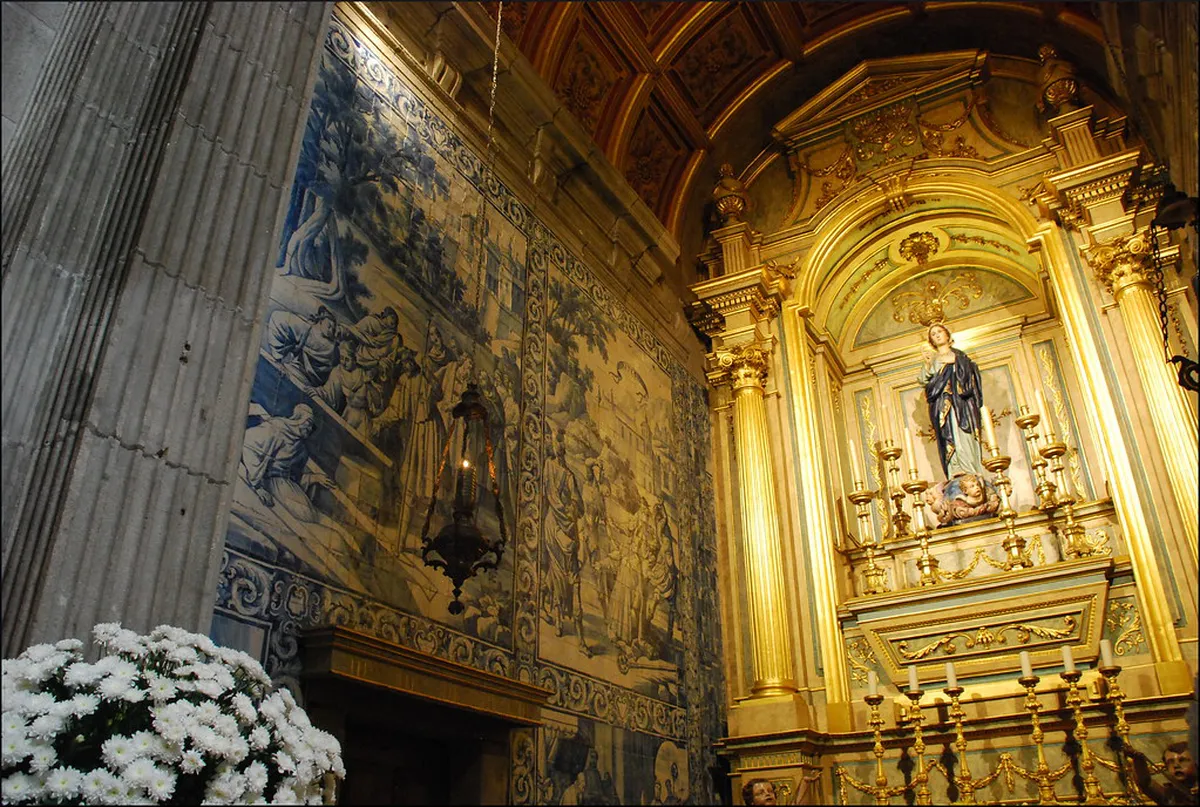
The Diocese of Braga is one of the oldest in the Western world, and for centuries the Archbishops of Braga competed with Santiago de Compostela for primacy over the Iberian Catholic Church. That rivalry funded constant expansion — new chapels, richer ornamentation, and competing architectural gestures that span Romanesque, Gothic, Manueline, and Baroque periods. The result is a building that reads like a compressed history of Christian architecture in Portugal.
The cathedral's influence peaked in the late medieval and early modern periods, when the Archbishopric of Braga held jurisdiction over much of the Iberian Peninsula and even parts of Brazil after colonization began in 1500. That Brazilian connection left one of the most remarkable artifacts in the treasury — more on that below. Today the Sé functions as an active parish church as well as a major heritage site, which means services occasionally close sections to tourists. Check times before you go if you have a fixed schedule.
Architectural Highlights: Exploring the Interior and Exterior
The exterior presents the layered result of nine centuries of rebuilding. The Romanesque portal on the south facade is the oldest surviving element, dating to the original 11th-century construction. Later additions include a Manueline canopy over the main entrance and a Gothic tower capped with 18th-century Baroque pinnacles. Standing back in the square in front gives you the clearest view of how these styles stack on top of each other without ever fully resolving into a single period.
Inside, the dual Baroque organs dominate the space immediately. Built in the 18th century, they flank the entrance wall and are covered in gilded wood carvings of grotesque figures and allegorical scenes. The best view of both instruments simultaneously requires walking toward the high altar and then turning around — from this angle you see the full symmetry of the pair against the stone nave, and the scale becomes clear in a way it simply isn't from the entrance. Most visitors miss this because they walk in and look straight ahead.
The High Choir above the entrance is equally worth attention. The carved wooden stalls date to the 15th century and contain misericord carvings beneath the seats — small scenes of everyday medieval life hidden in a space most visitors never look. The Romanesque nave itself is unusually narrow for a cathedral of this importance, a consequence of building on the tight grid of a Roman-era town. That narrowness concentrates the light and gives the interior an intensity that large Gothic cathedrals often lack.
The Chapel of Kings, off the north aisle, holds the royal tombs of Henry of Burgundy and Teresa. The chapel is often roped off but visible from the entrance. The Gothic tracery around the tomb niches is some of the finest surviving stonework in the building and worth pausing at even from a distance.
The Treasury Museum and the First Mass of Brazil Cross
The Treasury of the Cathedral occupies a series of rooms behind the main apse and requires a separate ticket. The collection spans roughly eight centuries of sacred art — gold and silver chalices, episcopal vestments embroidered with silk and gold thread, carved ivory reliquaries, and painted altarpieces. The quality is consistently high and the labeling is bilingual (Portuguese and English), which makes it navigable without a guide.
The single most historically significant object in the entire cathedral complex is the iron cross used at the first mass celebrated in Brazil on 26 April 1500, when Pedro Álvares Cabral's expedition made landfall. The cross was brought back to Braga and donated to the cathedral treasury, where it has remained for more than five centuries. This is a direct physical link between Braga's archbishopric and the founding moment of Brazilian Christianity — a connection that competitors in this SERP uniformly gloss over in a single sentence. Stand close: the surface is pitted and worn in a way that makes the age feel real.
Photography is generally restricted inside the Treasury Museum to protect the textiles and painted works. You can photograph freely in the main nave and the courtyards outside. The museum takes 30–45 minutes at a relaxed pace. If you are visiting with the full-access ticket, budget an additional 20–30 minutes for the side chapels accessible only on that tier.
No cameras or phones are permitted inside the Treasury Museum to protect the centuries-old textiles and religious artworks from light damage. Check with staff at the entrance to the treasury room — restrictions may change seasonally.
Essential Visitor Information: Tickets, Hours, and Practical Tips
The cathedral opens daily at 09:30 and closes at 18:30 for most of the year. Hours shift slightly in winter (closing around 17:30) and during major religious celebrations. In 2026, Easter week runs from 29 March to 5 April — sections of the cathedral may be reserved for liturgical use on those days, so an early morning visit works best if your trip coincides with Holy Week.
There are three ticket tiers. A basic cathedral-only ticket costs 2 EUR and covers the main nave. A cathedral-plus-treasury combo costs 5 EUR and adds access to the Sacred Art museum, including the Brazil cross. The full-access ticket at 8 EUR includes the side chapels, the High Choir balcony level, and the treasury. For most visitors the 5 EUR combo is the right choice — the chapels on the full ticket are beautiful but require extra time to appreciate. Children under 12 enter free.
| Ticket Type | Price | Includes |
|---|---|---|
| Cathedral Only | 2 EUR | Main nave |
| Cathedral + Treasury | 5 EUR | Main nave + Sacred Art Museum + Brazil Cross |
| Full Access | 8 EUR | All areas + Side Chapels + High Choir balcony |
Ticket sales are frequently cash-only at the main entrance. Bring euros. If you arrive without cash, the nearest ATM is in the square about 100 metres from the south door. This is not a rare edge case — multiple recent visitors have been turned away from the desk for card payments, particularly outside peak season.
The cathedral operates on cash-only payment at the ticket desk. ATMs are available in the adjacent square, but arriving with euros already on hand avoids any delays, especially during quieter seasons (October through March) when staffing is minimal.
The quietest window is between 13:00 and 14:00 on weekdays. Tour groups from Porto typically break for lunch during this period, leaving the cathedral noticeably emptier. Saturday mornings before 10:30 are also calm. Avoid Sunday mornings entirely — the 11:00 mass draws large local congregations and the nave is partially inaccessible to tourists for at least two hours.
Holy Week at the Cathedral: Portugal's Most Dramatic Processions
If your travel dates are flexible and fall anywhere near Easter, scheduling your visit to Braga during Semana Santa (Holy Week) transforms the cathedral experience entirely. Braga hosts the largest and most elaborate Holy Week processions in Portugal — far exceeding those in Lisbon or Porto in scale and tradition. The Sé is the organizational and liturgical center of all of them.
The processions run from Palm Sunday through Good Friday, with the most striking events on Thursday and Friday nights. The Ecce Homo procession on Thursday involves hundreds of barefoot penitents carrying torches through the cobbled streets of the historic center, beginning and ending at the cathedral. The Via Sacra on Friday morning reenacts the Stations of the Cross along a route that winds past the Arco da Porta Nova and back. These are active religious ceremonies, not tourist performances — observers are welcome but should dress modestly and remain quiet.
The crowds during Holy Week are substantial. Book accommodation at least two months in advance if you plan to be in Braga for Easter weekend. Hotels near the cathedral — particularly those within the old walls — sell out earliest. Arriving by train from Porto avoids parking problems entirely, as the historic center restricts vehicle access during the processions. The Porto to Braga Day Trip: The Ultimate 1-Day Itinerary by rail takes just over an hour and drops you a 10-minute walk from the cathedral.
Top Things to Do in Braga Near the Cathedral
The Arco da Porta Nova sits less than five minutes' walk from the cathedral's south entrance. This 18th-century triumphal arch was built by Archbishop Rodrigo de Moura Teles and marks the traditional entrance to Braga's historic center. Beyond it, the Rua do Souto pedestrian street leads through the old town with its mix of pastelarias, independent shops, and Baroque church facades. It is an easy 30-minute walk to cover the core circuit.
The Praça da República, about 400 metres from the cathedral, is the social center of the city. The cafes that line the square's arcade fill from mid-morning onward. This is also where you find the Café A Brasileira, one of Braga's oldest coffee houses, worth a stop for a bica (espresso) before or after the cathedral. The square connects directly to the main shopping street, making it a natural break point between sights.
For the Biscainhos Palace and its formal Baroque gardens — often described as the finest aristocratic garden in northern Portugal — head northwest from the cathedral about 700 metres along Rua dos Biscainhos. The palace houses the Municipal Museum and the entry fee is modest. The garden alone justifies the detour, particularly in spring when the box hedges are clipped and the fountain basins are full.
The Bom Jesus Do Monte Braga: The Ultimate Visitor's Guide sanctuary is the city's signature image and requires a separate half-day. TUB bus route 2 departs from Avenida da Liberdade, about 600 metres from the cathedral, and runs to the base of the famous 577-step Baroque staircase. The world's oldest water-powered funicular covers the same climb if the steps feel excessive. From the summit, the views over the Minho valley are among the best in northern Portugal. Budget at least two hours including transport.
How to Get to Braga: Day Trip Logistics from Porto
The train is the most practical connection. Urban railway services depart from Porto's São Bento station throughout the day; the journey takes 75–85 minutes and costs 3.60 EUR each way. Tickets are available at station kiosks or the CP website (cp.pt). There is no advance booking requirement — urban services run on open boarding. The Braga station sits about 800 metres from the cathedral, an easy flat walk through the city's shopping district.
If you are coming from Porto's Francisco Sá Carneiro Airport rather than the city center, the GetBus service connects the airport directly to Braga in around 40–50 minutes for 9 EUR per adult. This avoids the metro-to-São-Bento transfer and can be faster than the train if you are starting from the airport side of Porto.
Arriving from Lisbon, the Alfa Pendular intercity trains make the journey in about 3.5 hours from Oriente station; slower regional services take 5 hours. Tickets from Lisbon start at 14 EUR but should be booked in advance on the CP website to lock in the lower fares. Driving from Porto takes about 50 minutes on the A3 motorway, but parking near the historic center requires a paid garage — the cathedral's immediate neighborhood is mostly pedestrianized.
A single day is workable if you arrive by 10:00 and limit yourself to the cathedral, treasury, and the central square. Add Bom Jesus and you need at least 8–9 hours door to door. Staying overnight in Braga gives you the evenings, which the city handles well — the esplanadas and restaurants around the historic center stay lively until late, and the city is genuinely different after the day-trip crowds clear out.
Beyond Braga: Extending into the Minho and Northern Portugal
Guimarães is the natural companion city to Braga and sits 22 kilometres to the southeast. Known as the birthplace of Portugal, it has a remarkably intact medieval center anchored by a Romanesque castle and the Palace of the Dukes of Braganza. The two cities make a logical two-day pairing: one full day each. Combining them into a single day is technically possible but leaves both underserved — the porto-north-portugal.com guide specifically warns against this.
The Peneda-Gerês National Park is 60–90 minutes northeast of Braga by car and is the only national park in Portugal. It offers granite mountains, river beaches, and traditional stone villages that feel completely removed from the urban north. Braga works well as a base for a Gerês day trip, particularly for travelers without a car who can join organized tours that depart from the city.
Santiago de Compostela in Spanish Galicia is a two-hour drive north across the border. The historical connection between the two cathedral cities runs deep — for centuries their archbishops disputed ecclesiastical primacy over the entire peninsula. Many pilgrims now combine both on a single extended journey, and the road north from Braga through Valença do Minho (with its extraordinary fortified town walls) is one of the most scenic approaches to the Spanish border in northern Portugal. The journey is straightforward by car; public transport requires a change in Vigo.
Frequently Asked Questions
Is Braga Cathedral the oldest in Portugal?
Yes, the Sé de Braga is officially the oldest cathedral in the country. It was consecrated in 1089, which predates the founding of Portugal as an independent kingdom. You can find more details in our How to Get to Braga: 6 Best Ways to Travel guide for planning your trip.
How much does it cost to enter Braga Cathedral?
Entry fees depend on the areas you wish to visit. A basic ticket for the main cathedral costs 2 Euros, while a full combo ticket including the treasury and chapels is 8 Euros. Prices are subject to change, so verify at the entrance.
Can you take photos inside the Braga Cathedral Treasury?
Photography is generally restricted inside the Treasury Museum to protect the delicate sacred art. However, you are usually allowed to take photos inside the main cathedral nave and the outdoor courtyards. Always look for signage or ask the staff before using your camera.
How much time do you need to visit the Cathedral?
Most visitors spend between 1.5 and 2 hours exploring the entire complex. This includes time for the main nave, the various side chapels, and the Treasury Museum. If you are a history enthusiast, you might want to allow for extra time.
Is a day trip from Porto to Braga enough time?
A day trip is sufficient to see the cathedral and the city center. However, if you also want to visit Bom Jesus do Monte and enjoy a relaxed dinner, staying overnight is recommended. The city has a wonderful evening atmosphere that many day-trippers miss.
The Cathedral of Braga is a must-see destination for anyone traveling through Northern Portugal. From its ancient Romanesque roots to the stunning Baroque organs, the site offers endless visual and historical rewards. Use this guide to plan your visit and experience the spiritual heart of this historic city.
 Day Trips From Guimaraes: 3-Day Minho ItineraryJune 8, 2026
 Guimaraes Travel Tips Travel GuideJune 8, 2026