Porto to Braga Day Trip: The Ultimate 1-Day Itinerary
Plan your perfect Porto to Braga day trip with our expert itinerary. Includes train schedules, Bom Jesus tips, and a guide to the historic city center.
On this page
1-Day Porto to Braga Day Trip: The Ultimate Guide
Braga sits just over an hour north of Porto by train, yet it feels like a completely different Portugal. Where Porto hustles with tourists and hills, Braga moves at its own pace — ancient churches line pedestrianised shopping streets, and plazas fill with locals sharing coffee at outdoor tables. It is Portugal's oldest city, founded by the Romans as Bracara Augusta over two thousand years ago, and centuries of religious history have left it with a remarkable concentration of monuments packed into a compact, walkable centre.
The headline draw is Bom Jesus do Monte, a monumental baroque stairway that zigzags up a wooded hillside outside the city. Many visitors rate it the single best sight in northern Portugal. But Braga rewards those who also slow down in the historic centre — the cathedral alone spans nearly a thousand years of architectural history, and hidden gems like the Santa Bárbara Garden and the Palácio dos Biscainhos are easy to walk past and impossible to forget once you have stepped inside.
The logistics are simple, the prices are low, and you can see the best of the city comfortably in a single day. This guide covers the train journey from Porto, the full walking route through the historic centre, and a practical timeline for fitting Bom Jesus into the morning or afternoon.
Why Braga is the Perfect Day Trip from Porto
The distance is the first advantage. Braga is only 55 kilometres north of Porto and served by direct trains throughout the day. You can leave São Bento at 09:00, spend eight solid hours sightseeing, and be back in Porto by 19:00 without rushing. No early-morning alarm, no overnight bag.

The second advantage is cost. The entire day — return train fare, entrance fees, lunch, and bus to Bom Jesus — comes in comfortably under €30 per person. The cathedral charges €2 just to enter the nave, and €5 for the full museum tour. The Bom Jesus bus costs €1.55 each way. Lunch at a traditional restaurant runs €10–15 for a full three-course menu. Braga is genuinely one of the most affordable day trips in Portugal.
The third is density. The historic centre is almost entirely flat — a welcome contrast to Porto's relentless hills — and the main sights sit within a 6-kilometre walking circuit. Once you arrive at Braga station, you are at the edge of the old town in three minutes on foot. There is no need for taxis or metro lines to get between attractions.
Getting There: Porto to Braga by Train or Car
The urban train from São Bento station is the best option for almost every visitor. Services run at least once an hour throughout the day, the return fare is €7.20 for adults (loaded onto a reusable Siga smart card, which costs €0.50 extra on first use), and the journey takes between 54 and 71 minutes depending on the specific service. Seat reservations are not possible on this service, but there are always plenty of seats. Check the current timetable on the CP website before you travel.
A critical detail that generic guides miss: while São Bento is the more central and convenient departure point, some faster Alfa Pendular express trains only call at Campanhã station, not São Bento. Those express services cost around twice the urban fare and — surprisingly — do not save meaningful time once you account for getting to Campanhã first. Stick with the urban service from São Bento. The journey is pleasant, the price is right, and you arrive directly at Braga station, three minutes from the historic centre on foot.
The Siga smart card (€0.50) is reloadable across Porto and Braga transport. Buy it once at São Bento and use it for the entire trip: urban trains to Braga, TUB buses to Bom Jesus, and any return journeys. This saves fumbling for change and the card persists for future day trips.
Driving is worth considering only if you plan to continue onward to Peneda-Gerês National Park or the Minho coastline after Braga. The A3 motorway connects Porto to Braga in around 45 minutes. Parking inside the historic centre is limited, so use the underground car park near Avenida da Liberdade and walk from there. For a pure day trip, the train is faster, cheaper, and completely stress-free.
If you prefer a guided day out, combined Braga and Guimarães tours from Porto pick you up from central Porto and include transport, entrance tickets, and lunch. They are particularly useful for families or first-time visitors who want context without logistics.
Morning: Bom Jesus do Monte and the Funicular
Head to Bom Jesus first, while your energy is high and the crowds are thin. The sanctuary sits 6 kilometres east of Braga, reachable by the Linha 2 bus operated by TUB (Transportes Urbanos de Braga). Buses depart from Avenida da Liberdade and from the train station itself, with a single ticket costing €1.55 payable by cash or contactless card on board. The journey takes around 30 minutes and drops you at the base of the staircase. Note that on Sundays and public holidays the bus runs roughly once per hour, so check the timetable at tub.pt before you go. Uber and Bolt both run in Braga and charge €5–6 for the same journey — a faster option if there are two or more of you splitting the fare.
At the base of the hill you have two choices. The funicular at Bom Jesus, dating to 1882, is the world's oldest water-powered counterbalancing system: each carriage sits above a 5,850-litre water tank that acts as a counterweight, pulling the loaded car up as the empty car descends. A single ticket costs €2.50, return €4.00. The alternative is to walk the 577 steps of the baroque stairway itself. If you walk up, go slowly — the stairway splits into three symbolic sections. The lowest winds through shaded woodland past chapels with terracotta scenes of Christ's Passion. The middle section, the Stairway of the Five Senses, features fountains that pour water from carved faces representing each sense. The uppermost section, the Stairway of the Three Virtues, leads to the church courtyard, where a forced-perspective trick makes the church appear larger than it is from below.
A good compromise is to take the funicular up and walk down, so you experience both. At the summit, the 18th-century church houses an organ and an altar carved from Brazilian jasper. The surrounding cedar and oak park has grottos, a small rowing lake, and a viewpoint stretching across the Minho valley. Allow two to two-and-a-half hours here before catching the bus back to the city centre for lunch.
| Leg | Transport | Duration | Cost (per person) | Notes |
|---|---|---|---|---|
| Porto to Braga | Urban train (São Bento) | 54–71 min | €7.20 return (+ €0.50 Siga card) | Hourly service, no reservations needed |
| Braga centre to Bom Jesus | TUB Linha 2 bus | ~30 min | €1.55 each way | Departs Avenida da Liberdade; Sunday/holidays ~hourly |
| Bom Jesus summit | Water-powered funicular (1882) | ~5 min up | €2.50 single, €4.00 return | World's oldest counterbalance system; alternatively walk 577 steps |
| Historic centre walk | On foot | ~2–3 hours | Free | 6 km circuit on cobblestones; wear comfortable shoes |
| Braga to Porto (return) | Urban train (Braga station) | 54–71 min | Loaded on Siga card | Evening trains typically run until 19:00+ |
Lunch: Traditional Minho Cuisine in the Historic Centre
The Bom Jesus funicular runs 08:00–20:00 daily, but mid-morning waits are long mid-July through August. Arrive before 10:30 or after 15:00 to skip tour-group queues. The 577-step baroque stairway is always free and offers three symbolic sections — the Passion chapels (lower), Five Senses fountains (middle), and Three Virtues approach (upper) — rewarding a slower ascent.
The streets around Largo São João do Souto and the cathedral are lined with restaurants serving Minho classics at honest prices. Order Bacalhau à Braga if you see it on the menu — codfish baked with potatoes, onions, garlic, and olive oil, finished with hard-boiled egg and parsley. It is the city's signature dish and rarely disappoints. For dessert, ask for Pudim Abade de Priscos, a rich egg yolk and bacon-fat pudding from the Braga region that sounds unusual but tastes extraordinary.
Two reliable choices close to the cathedral: Dona Sé sits directly next to the cathedral and serves Portuguese classics in a comfortable setting — the position alone makes it worth choosing. Antù Braga, a short walk away, puts a confident modern spin on traditional recipes and is popular with both locals and visitors. Both offer a fixed-price lunch menu for around €10–15 including a drink. Avoid the tables directly on the tourist drag next to the Arco da Porta Nova — prices are higher and quality is lower than one block away.
While you eat, pick up a local pastry to take away: Tibias de Braga are cylindrical tubes of flaky pastry filled with egg-yolk cream, sold at bakeries along Rua do Souto and not something you will find in Porto. They make a perfect afternoon snack for the walk through the historic centre.
Afternoon: A Walking Tour of Braga's Historic Centre
Start your walk at the Arco da Porta Nova, the grand 18th-century granite archway that marks the entrance to the historic centre from the train station side. It is always open — which is why Braga's residents are affectionately teased across Portugal for "always leaving the door open." From the arch, turn right onto Rua Dom Frei Caetano Brandão to reach the Braga Cathedral, the oldest in Portugal, dating to 1089, a full century before the country itself was founded. The interior layers Romanesque pillars, Gothic vaulting, and baroque gilding, with a pair of enormous gilded organs that face each other across the nave. The full museum tour (€5) includes the Gothic cloister, the royal tombs, and a treasury of medieval vestments.
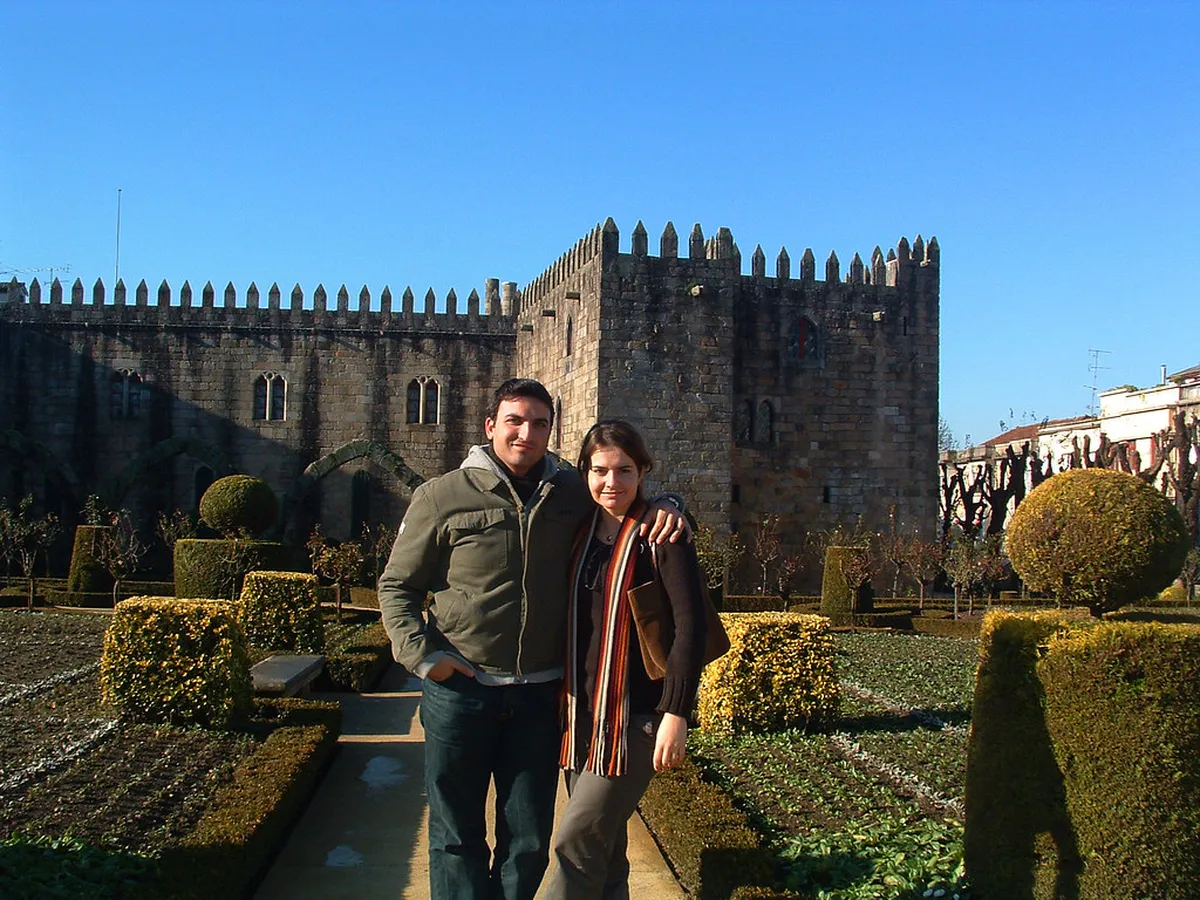
From the cathedral, walk north to the Jardim de Santa Bárbara, a small formal garden set against the Gothic eastern wing of the Archbishop's Palace. The contrast between the clipped flowerbeds and the weathered medieval stone is one of the most photographed compositions in the city, and rightly so. Continue to the Praça da República, Braga's main square since the 14th century, where Café Vianna has been serving coffee under the arches of the Arcada building since 1871.
Head west along Avenida da Liberdade — this is the main commercial street and a good place to look for local Minho crafts in the independent shops — then turn south into the Largo de Santa Cruz. Here the Palácio do Raio stops you in your tracks with its vivid blue azulejo tile facade, while the Igreja de São Marcos and Igreja de Santa Cruz face each other across the square. The Braga letters installation outside São Marcos is a popular photography spot; for the cleanest shot without glare on the white lettering, arrive in the late afternoon when the sun has moved west of the square.
The One Sight Every Braga Guide Forgets to Mention
Before you leave the historic centre, step into the Palácio dos Biscainhos on Rua dos Biscainhos. Admission is €5 and most visitors walk straight past it — which is exactly why you should go in. The ground floor of this 17th-century baroque palace is paved with granite cobblestones, not wooden floors, because horse-drawn carriages once drove directly inside to drop guests off under cover. Nowhere else in Portugal will you find an indoor carriage driveway in an aristocratic palace.
Upstairs, one room is dedicated entirely to the ritual of drinking hot chocolate, which was once so expensive in Portugal that it was effectively a luxury currency among the nobility. The painted ceilings in the main reception rooms are among the finest in the Minho region, and the formal gardens behind the palace conceal fountains designed to spray unsuspecting visitors — a popular 18th-century prank. The whole visit takes around 45 minutes and is one of the most rewarding things to do in Braga for anyone interested in how the Portuguese aristocracy actually lived.
Braga, Guimarães or Both? A Decision Guide
This is the question every Porto-based traveller asks before booking a day trip to the Minho. Both cities are excellent and genuinely different from each other. 6 Essential Comparisons: Braga vs Guimarães Travel Guide comes down to what kind of day you want.
Choose Braga if you want more variety. It has a wider range of sights — the baroque stairway at Bom Jesus, the ancient cathedral, baroque palaces, formal gardens, and a lively commercial centre. It is also a more genuinely Portuguese city; the historic centre is full of locals going about their day, not built around tourism.
Choose Guimarães if pure medieval charm is the priority. Portugal's first capital has a beautifully preserved cobblestone centre, a hilltop castle, and an atmosphere that feels more like stepping into a living postcard. Many first-time visitors to Portugal respond to it more immediately than to Braga.
Doing both in one day is possible but requires a tightly timed plan. Leave Porto on the 08:30 train, spend three hours in Braga's historic centre, take the direct bus to Guimarães (around 40 minutes), spend two hours there, and catch the return train from Guimarães to Porto by 18:30. You will skip Bom Jesus entirely if you follow this route. Unless you are very comfortable with tight connections and have no interest in Bom Jesus, it is better to give each city its own day. The 10 Essential Stops for a One Day in Braga Itinerary alone fills a full day easily once you add Bom Jesus to the historic centre walk.
Practical Tips for a Smooth Braga Day Trip
Buy your Siga smart card (€0.50) when you first purchase a train ticket at Porto's São Bento station. The card is reloadable and accepted on CP trains and on Braga's TUB buses, so you will not need to carry exact change for the Bom Jesus bus. Keep the card if you plan other day trips from Porto — it works on urban train services across the network.
The Bom Jesus funicular operates daily from 08:00 to 20:00. No reservation is needed for individual visitors or small groups, but arrive before 10:30 or after 15:00 to avoid the bulk of tour-group traffic. The funicular queue moves quickly, but in July and August mid-morning waits of 20 minutes are common.
If you visit in late May, check whether Braga Romana is running. This annual festival transforms the historic centre into a Roman-themed street fair for one weekend, with roasted meat, mead, gladiator shows, and craftwork stalls. The event is free to attend and one of the most atmospheric experiences in the Minho calendar. In 2026, it is scheduled for the last weekend of May.
Wear comfortable shoes. The Bom Jesus staircase involves 577 steps each way, the historic centre walking circuit is 6 kilometres on cobblestones, and even the flat parts of the route have uneven paving. Light trainers or walking shoes are more practical than sandals for a full day here.
Frequently Asked Questions
Is Braga worth a day trip from Porto?
Yes, Braga is absolutely worth a day trip. It offers unique Baroque architecture and the stunning Bom Jesus sanctuary. The city is only an hour away by train.
How long is the train from Porto to Braga?
The urban train takes about 75 minutes from Sao Bento. Faster trains from Campanhã take around 40 minutes. Both options are frequent and reliable for travelers.
Can you do Braga and Guimarães in one day?
It is possible but very rushed for a single day. You would only see the main highlights of each. I recommend choosing one city to enjoy the experience fully.
A porto to braga day trip is a highlight of any northern Portugal journey. The combination of sacred hills and historic streets creates a lasting impression. I hope this itinerary helps you plan a seamless and memorable visit. Enjoy the beautiful views and the rich culture of this ancient city.
Remember to wear comfortable shoes for the many stairs and cobblestones. Take your time to savor the local flavors and the peaceful atmosphere. Braga is a place that rewards those who slow down and look closely. Safe travels as you explore the heart of the Minho region.
Use our main Braga things-to-do guide to round out your itinerary.
 Day Trips From Guimaraes: 3-Day Minho ItineraryJune 8, 2026
 Porto To Guimaraes Day Trip Travel GuideJune 8, 2026