Lagos vs Albufeira: Which Algarve Town is Better for You?
Deciding between Lagos vs Albufeira? Compare beaches, nightlife, costs, and vibes with our expert guide to finding your ideal Algarve holiday spot.
On this page
Lagos vs Albufeira: Choosing Your Perfect Algarve Base
Choosing between Lagos and Albufeira is the most common dilemma for visitors to the Algarve. Lagos is a city with a genuine soul — a seafaring past, cobblestone lanes, and a creative international crowd that stays year-round. Albufeira is the Algarve's purpose-built resort machine, offering vast sandy beaches and a nightlife scene that runs on predictable holiday energy.
Neither choice is wrong. Your decision depends on the type of holiday you want: dramatic cliff scenery and authentic Portuguese culture, or wide accessible beaches and round-the-clock entertainment options. This guide breaks both towns down across every factor that matters — beaches, nightlife, family suitability, solo travel, budget, day trips, and what happens outside peak season.
| Factor | Lagos | Albufeira |
|---|---|---|
| Vibe | Authentic Portuguese city | Purpose-built resort town |
| Beaches | Dramatic cliff coves | Long flat sandy beaches |
| Nightlife | Bars & wine culture | The Strip & clubs |
| Families | Best for older kids | Best for young children |
| Solo travel | Strong hostel scene | Group-heavy crowds |
| Airport (FAO) | ~75 min drive | ~40 min drive |
| Shoulder season | Thrives year-round | Strip largely shuts down |
Vibe and Atmosphere: Authentic Lagos vs. Resort-Centric Albufeira
Lagos retains its identity as a working Portuguese city. The permanent population — almost entirely Portuguese — goes about daily life alongside tourists, surfers, and digital nomads. Cobbled streets inside the old city walls lead past traditional tascas, contemporary galleries, and fish markets that have operated for centuries. For official regional tourism information, visit the Algarve tourism board. You feel that the town would exist whether or not you arrived.
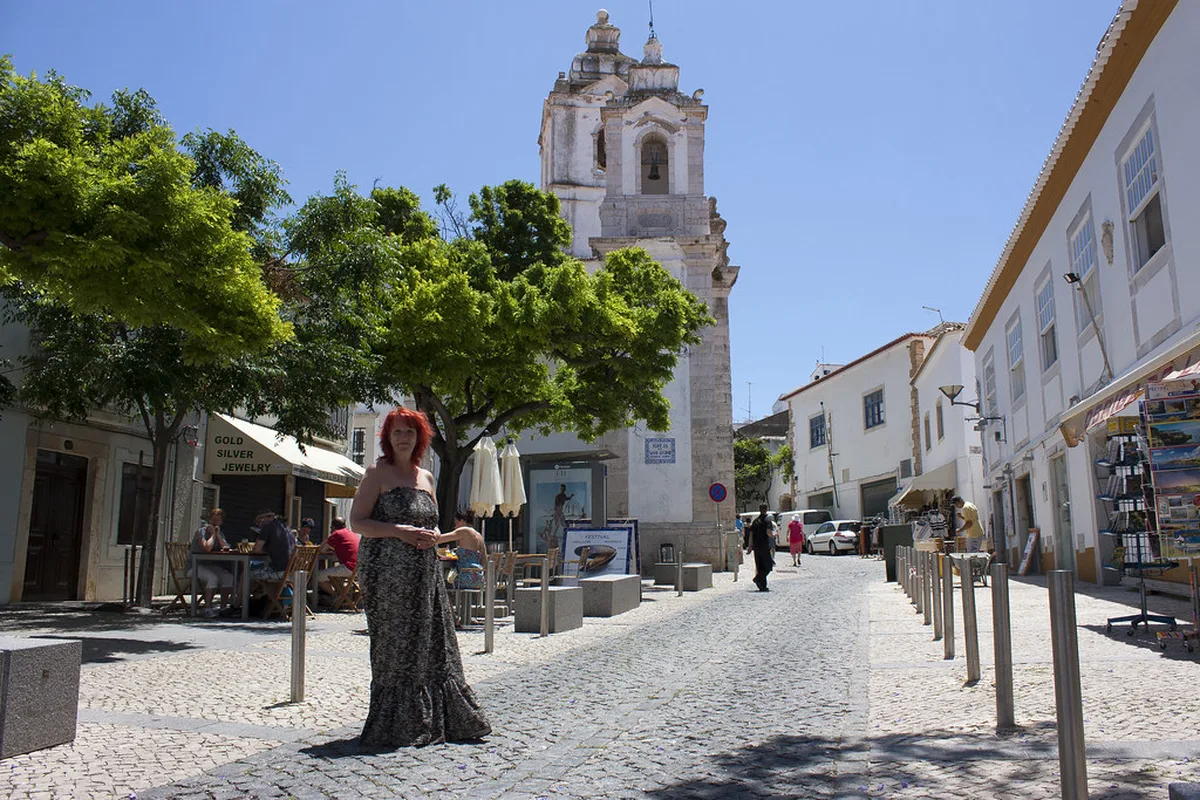
Lagos thrives year-round with a permanent local population and active hostels, making it ideal for shoulder-season travel (October to April) when the town maintains genuine Portuguese character and charm.
Albufeira is a different kind of place. Its permanent population of around 44,000 swells to nearly four times that in July and August. A large share of residents are expat Europeans, and the hospitality economy is built entirely around international tourism. Barely a word of Portuguese is heard on the main strips. It is immensely efficient as a holiday machine — but the Portuguese identity is thin.
Lagos attracts artists, surfers, couples, and independent travelers who want something real. Albufeira draws package tourists, large family groups, and hen or stag parties looking for maximum convenience and organized fun. Both are legitimate travel choices; the question is which mode fits your trip. For comprehensive Portugal travel planning resources, check the national tourism authority. For a broader comparison of where to base yourself along the southern coast, see our guide to the best Algarve towns.
Beaches and Coastline: Dramatic Cliffs vs. Golden Sands
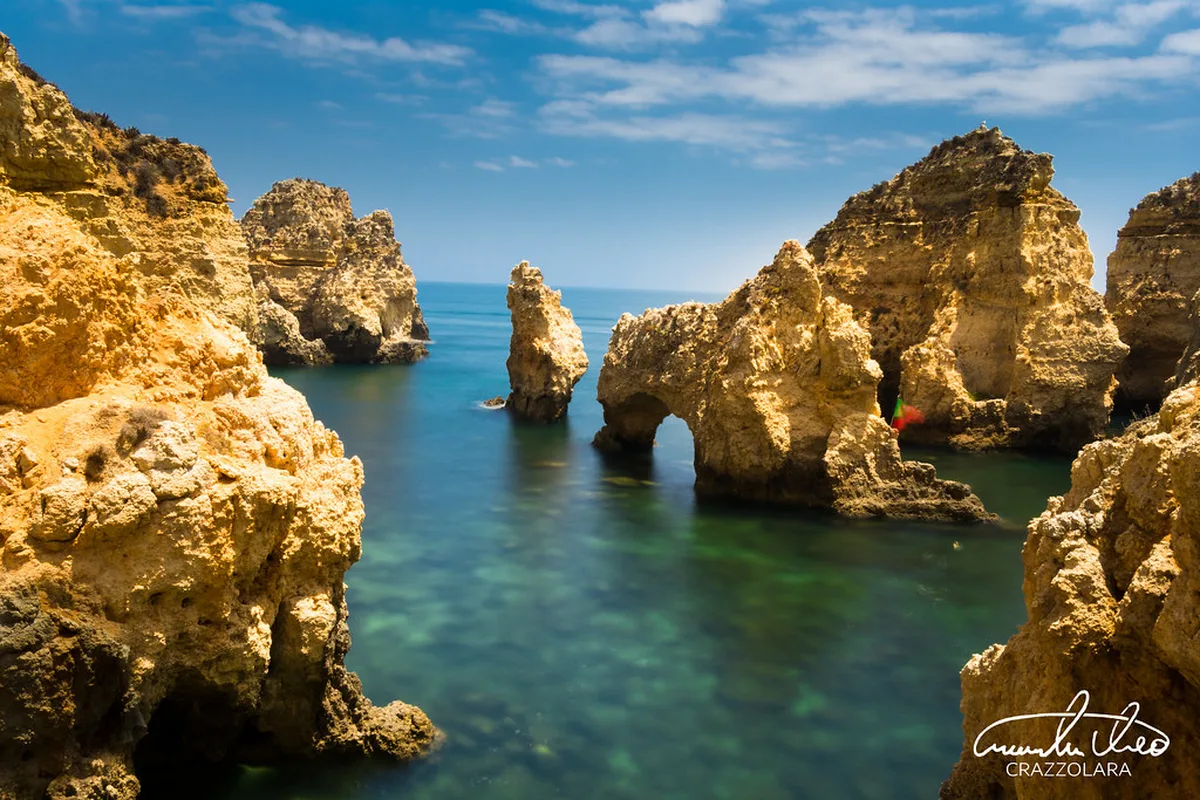
Lagos beaches are intimate and visually extraordinary. Praia do Camilo, Dona Ana Beach, and Praia dos Estudantes sit beneath towering ochre cliffs carved into arches and sea stacks by Atlantic erosion. Reaching them involves descending wooden staircases, which limits crowds and creates a sense of discovery. Ponta da Piedade — a headland of golden rock formations just south of town — is among the most photographed coastline in all of Portugal.
Albufeira beaches are the opposite experience. Praia dos Pescadores stretches directly in front of the Old Town and is flat, wide, and easy for everyone to access. Praia da Oura near the Strip is similarly broad and well-serviced. These beaches handle enormous summer crowds gracefully because there is simply so much sand. Jet skiing, parasailing, and banana boats are available from most access points.
Families with strollers or elderly travelers will find Albufeira's beaches far more manageable than the staircase-accessed coves of Lagos. Serious photographers, cliff hikers, and kayakers will find Lagos irreplaceable. If scenic power is your benchmark, Lagos wins clearly. If ease of access matters more, Albufeira is the practical choice. For more detail on specific spots, see our round-up of the best beaches in the Algarve.
Albufeira's Two Worlds: Old Town vs. The Strip
Most guides treat Albufeira as a single place. It is not. The Old Town and the Strip (officially Areias de São João) are physically separate and serve completely different types of traveler. Understanding this split before you book accommodation is the single most important piece of Albufeira planning.

The Old Town is the historic center — whitewashed buildings, a charming main square (Largo Engenheiro Duarte Pacheco), and cobbled lanes leading down to Praia dos Pescadores. The average visitor age is in the mid-thirties. Families, couples over 30, and anyone who wants a genuine evening atmosphere without aggressive touts should stay here. The Old Town is quieter, prettier, and roughly comparable to Lagos in feel, though smaller.
The Strip is a 600-meter stretch of themed bars, neon-lit clubs, and cheap food venues aimed squarely at 18-to-25-year-olds. Think Benidorm-on-the-Atlantic. It is loud, relentlessly commercial, and the source of Albufeira's polarizing reputation. If you book accommodation near the Strip expecting a relaxing Portuguese holiday, you will be disappointed. If you book it knowing exactly what it offers — cheap drinks, high-energy clubs, and a beach within walking distance — it delivers perfectly on its promise.
The walk between Old Town and the Strip takes about 30 minutes along the coast. Taxis and tuk-tuks cover the route for a few euros. A third distinct zone worth knowing: the eastern Albufeira coastline from Santa Eulália to Olhos de Água, where most of the large all-inclusive hotel complexes are located. This area is far from the Strip's chaos and suits families with young children who want a pool, kids' club, and calm beach without any party atmosphere.
Nightlife and Dining: Cultural Evenings vs. The Strip
Lagos nightlife centers on the historic center around Rua Candido dos Reis and the adjoining squares. Expect wine bars, craft beer spots, and pubs with live acoustic music rather than nightclubs. The atmosphere is social but low-key — you can hold a conversation at a normal volume. A few spots stay open until 02:00 or 03:00, but nobody wakes the neighbors. This suits travelers who want evenings out without committing to a full club night.
Albufeira's Strip runs on a completely different frequency. Bars open at 22:00 and prime time is 01:00 to 05:00. Drinks promotions are aggressive — €1 shots and free entry deals are standard. For a celebration trip, stag party, or anyone who came specifically to dance until sunrise, nothing in the Algarve matches it. The Old Town offers a middle ground: busier than Lagos, calmer than the Strip, with several good cocktail bars and live music venues in the main square.
Dining in Lagos skews toward authentically Portuguese. Family-run tascas around the old town serve grilled dourada, cataplana stews, and amêijoas (clams) at prices aimed partly at locals. In Albufeira's Old Town, the choice is wider — over 600 restaurants and bars cover everything from traditional grills to pizza, burgers, and international cuisines — but the quality is more variable and the menus are written in five languages. Lagos rewards diners who explore; Albufeira makes the whole process frictionless. If you want to try a specific Lagos restaurant, book ahead in July and August — the town has fewer seats than Albufeira and good spots fill quickly.
Family and Budget Considerations: Which Town is Better?
For families with children aged roughly 3 to 11, Albufeira in its eastern resort zone is hard to beat. Large hotel complexes with pools, children's clubs, and supervised beach areas provide a complete package. Zoomarine (a marine theme park) is a 10-minute drive from the center. The flat beaches are safe for young swimmers and easy for parents to manage. Albufeira Old Town is suitable for families too, though it can get hectic in high season.
Lagos is a better fit for families with teenagers. Coastal trail hikes, kayaking through sea caves at Ponta da Piedade, surfing lessons, and the historic slave market (Mercado de Escravos) at the old town center all provide substantive activities for older kids. The town is compact enough for teens to move around independently without parents worrying. Nightlife in Lagos stays reasonably contained and does not spill aggressively onto the streets the way the Albufeira Strip does.
On price, the two towns are broadly comparable. Accommodation averages €80–€160 per night for a standard double in peak season for Lagos, and €70–€150 in Albufeira, where more large-resort inventory keeps rates competitive. Budget travelers can find hostels in both towns for under €25 per bed. Eating out costs roughly the same — a full meal with wine at a mid-range restaurant runs €20–€35 per person in both places. Where Albufeira has an edge is all-inclusive package deals that can undercut nightly accommodation costs significantly for families booking far in advance.
Solo Travel Suitability: Safety and Social Scenes
Lagos is one of the strongest solo travel bases in southern Europe. The hostel scene is dense and active — places like Rising Cock, Amber Hostel, and Bura Social Hostel run regular group activities including surf lessons, cave boat tours, and evening meals. Solo travelers naturally cluster at these events and at the bars around the old town. Making plans with strangers you met two hours ago is a normal Lagos experience.
Albufeira is social but skewed toward groups. Most visitors arrive with friends, families, or as part of organized packages. Breaking into pre-formed social circles is harder. That said, the Old Town has several bars where locals and solo visitors mingle comfortably, and the Strip's chaotic energy does create its own kind of accidental socializing. Female solo travelers generally report feeling safe in both towns, though the Strip late at night warrants standard big-nightlife precautions — stick to lit streets, keep your phone charged, and pre-plan your route back.
Both towns are statistically safe with Portugal's overall low crime rate. Lagos's compact size — you can walk from one end of the old town to the other in 15 minutes — means it is easy to navigate alone, even on a first visit. Albufeira is more spread out, which makes solo navigation slightly more demanding after dark in unfamiliar areas near the Strip.
Day Trip Potential: Exploring the Central vs. Western Algarve
Lagos sits at the gateway of the western Algarve, opening access to a stretch of coastline that is far less developed than the central zone. Sagres — the dramatic headland at the southwestern tip of continental Europe — is 30 kilometres west and makes an outstanding half-day trip. Sagres Fortress and the nearby Cabo de São Vicente lighthouse are among the most atmospheric sites in Portugal. Inland, the spa town of Caldas de Monchique and the Serra de Monchique hills provide a complete contrast to the coast.
From Lagos, the Ria de Alvor estuary (15 km east) is worth an afternoon: boardwalk trails through wetlands, migratory bird watching, and the relaxed village of Alvor itself. Silves, the Moorish former capital of the Algarve with its terracotta castle, is 40 minutes inland by car. For wine enthusiasts, the Alentejo border region starts about an hour north and several quintas run day-tour experiences.
Albufeira's position in the central Algarve puts Vilamoura Marina (15 km east) and the Benagil Cave (25 km east) within easy reach. Boat trips from Albufeira to Benagil Cave are among the most popular day excursions on the coast — the cave's cathedral-like interior is stunning. Silves and the inland cork forests are also accessible in about 30 minutes. Faro, the regional capital with its old town and Ria Formosa natural park, sits 40 minutes east and makes a satisfying cultural day out from Albufeira. For a three-town comparison, our Lagos vs Albufeira vs Faro guide weighs up all the options side by side.
Shoulder Season Realities: October to April
Both towns look dramatically different outside July and August — and this is where the Lagos vs Albufeira comparison shifts most sharply. Travelers planning a spring or autumn trip to the Algarve need to know this before choosing a base.
Lagos maintains genuine life in the off-season. The surf community is year-round; the hostels stay open; the tascas and wine bars serve locals as much as visitors. October to April brings mild temperatures (averaging 16–19°C), green hills, cheaper rooms (often 40–50% below peak rates), and a pace that many travelers prefer to the packed summer. The coastal trail walks are better in cool weather, boat tours still run to Ponta da Piedade, and you will never queue for a restaurant table.
Albufeira's Strip shuts down almost entirely from November through March, with themed bars and nightclubs closing their shutters and large sections of the New Town resembling a building site. Plan accordingly if traveling outside peak season.
Albufeira's Old Town remains reasonably functional through the shoulder season — most restaurants and bars stay open, and the quieter atmosphere is pleasant. The Strip, however, shuts down almost entirely from November through March. Themed bars close their shutters, nightclubs go dark, and large sections of the New Town resemble a building site waiting for summer to arrive. If you travel in March or October and expect the full Albufeira experience, you will find half the town boarded up. The eastern resort hotel zone is similarly closed for much of this period. For spring breaks, Easter trips, or autumn getaways, Lagos is the more reliable choice by a significant margin.
Practical Logistics: Parking and Rental Car Realities
Neither town makes car ownership easy in peak season, but for different reasons. Lagos has a compact historic center ringed by ancient walls where no practical parking exists. The best strategy is to park in the large free-to-cheap lots at Meia Praia (across the river, 5 minutes on foot) or near the bus station and walk in. Paid parking inside the walls runs roughly €1.50–€2.00 per hour in summer. The old town itself is entirely walkable, and most cliff beaches (Dona Ana, Camilo, Porto de Mós) are reachable from the center in 20–30 minutes on foot or by a €5–8 taxi.
Albufeira's parking situation depends on which zone you stay in. Old Town parking near Praia dos Pescadores is scarce in July and August — expect a 20-minute search or €15–€20 per day in supervised lots. The Strip area and the eastern hotel zone have more parking supply but require a car for most beach and attraction access. If you are staying in an all-inclusive resort east of town, a car is optional but convenient. If you are based in the Old Town and just want beaches and restaurants, you can manage without one.
Faro Airport (FAO) is approximately 40 minutes from Albufeira and 70–75 minutes from Lagos by car. Shared shuttle services run to both towns and are worth booking in advance; prices are typically €15–€20 per person to Albufeira and €25–€35 to Lagos. The train to Lagos from Faro takes around 1 hour 50 minutes and costs roughly €8 — scenic but slow, and Lagos's historic city center sits 1 kilometre from the old train station. Rental cars from FAO run €30–€60 per day in peak season for a small automatic, depending on how far in advance you book. Booking 6–8 weeks out in July/August routinely halves the cost.
The Verdict: Should You Choose Lagos or Albufeira?
Choose Lagos if you want a genuine Portuguese experience, dramatic cliff scenery, a strong solo or couples travel base, and a town that works equally well in June and in November. Lagos is also the right choice for families with teenagers, hikers, surfers, or anyone who values authenticity over scale.
Choose Albufeira if you want wide accessible beaches, a full-scale resort infrastructure, proximity to Faro Airport, or you are traveling with young children and value all-inclusive convenience. The Strip is the right choice if you are 18–25 and came for a party holiday. The Old Town is the right choice if you want a beach holiday with better food and a quieter atmosphere than the Strip provides.
If you have the time, spending two to three nights in each town gives you a complete picture of what the southern coast offers. They sit 38 kilometres apart on the A22 — roughly 30 minutes by car. The contrast between them will make both places more interesting than either would be alone. Whatever you decide, the Algarve coastline will exceed expectations.
Frequently Asked Questions
Is Lagos or Albufeira better for families?
Albufeira is generally better for families with young children due to its wide beaches and proximity to theme parks. Lagos is a fantastic choice for families with teenagers who enjoy hiking, kayaking, and exploring historic sites.
Which town has better beaches, Lagos or Albufeira?
Lagos has more scenic, cliff-backed coves like Praia do Camilo which are perfect for photography. Albufeira offers much larger, sandy beaches that are easier to access and better for long walks or sunbathing with large groups.
Is Albufeira more expensive than Lagos?
Prices are very similar, but Albufeira often has more budget-friendly resort deals and cheap dining on the Strip. Lagos has more boutique options which can drive up the average cost of a stay for luxury travelers.
Can you do a day trip from Lagos to Albufeira?
Yes, the drive takes about 45 minutes via the A22 highway. You can also take a bus or train, though the train stations in both towns are located outside the main centers, requiring a taxi.
Which town is closer to the airport?
Albufeira is closer to Faro Airport, with a drive time of approximately 35 to 45 minutes. Lagos is further west and typically takes about 60 to 75 minutes to reach by car or shuttle service.
Choosing between Lagos and Albufeira depends on the type of memories you want to create. Lagos offers a romantic and historic backdrop that feels uniquely Portuguese and timeless. Albufeira provides a vibrant, high-energy atmosphere that is perfect for a fun-filled summer break. No matter which you choose, the Algarve will deliver one of southern Europe's finest coastlines.