
How Many Days In Guimaraes Travel Guide
Plan how many days in guimaraes with top picks, neighborhood context, timing tips, and practical booking advice for a smoother trip.
On this page
How Many Days In Guimaraes
Deciding how many days in Guimarães you need is the first step to exploring Portugal's birthplace. Most visitors arrive on a day trip from Porto and leave satisfied. One full day covers the castle, the ducal palace, and the historic center with time to spare for a cable car ride up to Penha Hill. If you want to go deeper — the old market, the Citânia de Briteiros archaeological site, a slow dinner in the squares — two days is the sweet spot.
Guimarães is compact and easy to navigate on foot. The entire UNESCO-listed historic center can be crossed in under fifteen minutes. That makes it ideal for travelers who dislike getting lost between sites. Many people wonder is Guimarães worth visiting if they only have a short vacation. The answer is yes — the city rewards even a half-day stopover, but it gives far more to those who linger.
Must-See Guimarães Attractions
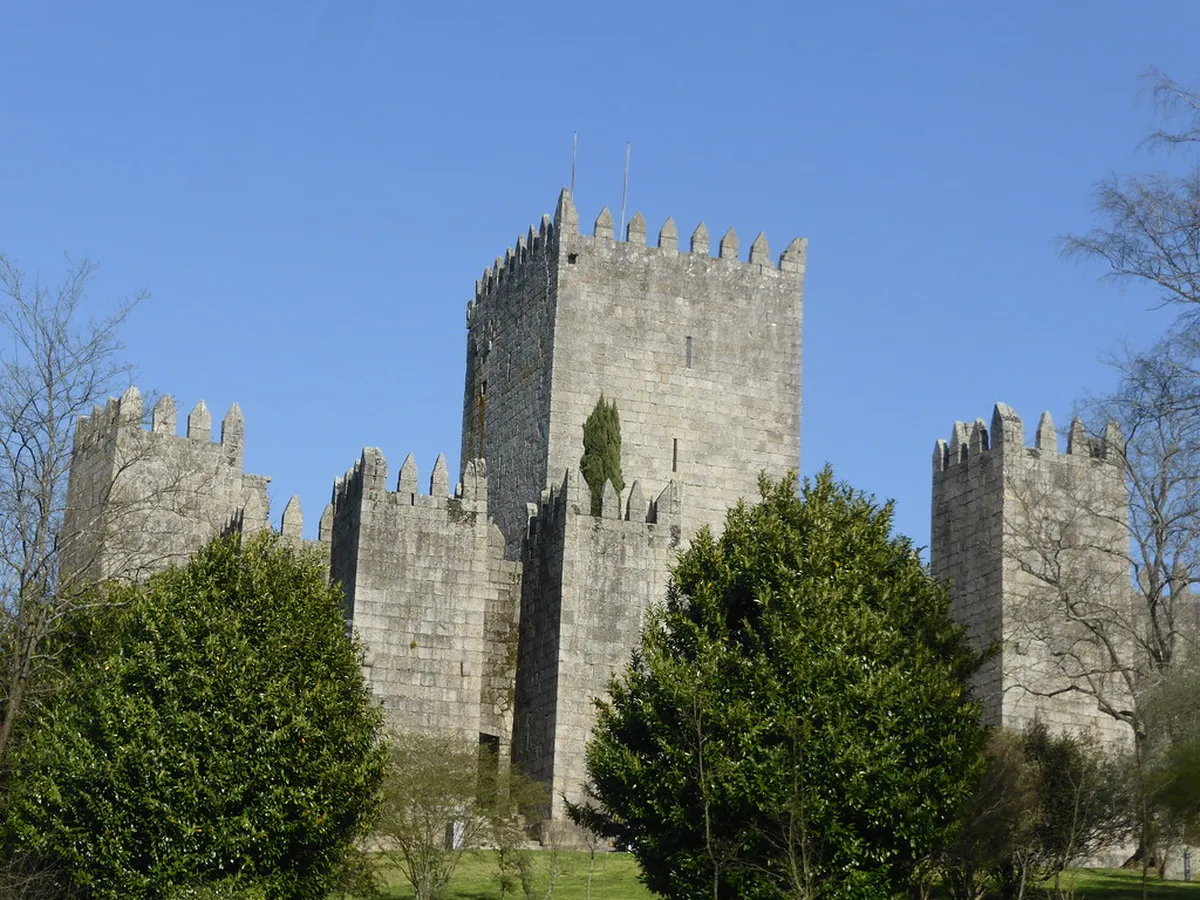
The historic center of Guimarães is a UNESCO World Heritage Site, and the density of significant monuments here is remarkable. Start your morning at Guimarães Castle, the tenth-century fortress perched on a granite outcrop at the top of the hill. This is where Portugal's first king, Afonso Henriques, was born in 1109. The battlements are in excellent shape and walking the top of the walls gives sweeping views over the rooftops below.
Directly downhill from the castle stands the Palace of the Dukes of Braganza, a fifteenth-century manor house with distinctive tall brick chimneys inspired by French Gothic architecture. Inside, the palace holds over sixty furnished rooms with tapestries depicting the Portuguese conquest of North Africa and a substantial collection of period weapons. Budget around 45 minutes for a proper look through the interior. Combined entry tickets for the castle and palace are available at either entrance and save a few euros.
Between the two landmarks sits the tiny Igreja de São Miguel do Castelo, one of the most historically loaded buildings in the country. This simple Romanesque chapel from the twelfth century is where Afonso Henriques was baptized — the original baptismal font still stands near the entrance. It is free to enter and easy to miss, so look for the signs just off the path from the palace to the castle gate.
At the bottom of the hill, Largo da Oliveira is the beating heart of the old town. The square is anchored by a Gothic shrine and the Igreja de Nossa Senhora da Oliveira, a church that dates to the tenth century and houses a silver altarpiece along with the actual tunic King João I wore at the Battle of Aljubarrota. The café tables spilling out onto the stone pavers are the best spot to sit for a coffee and watch the city move around you.
Museums, Art, and Culture in Guimarães
Culture visitors should not miss the Alberto Sampaio Museum, located in the old cloister attached to the Igreja de Nossa Senhora da Oliveira. It holds a strong collection of religious silverwork, medieval vestments, and painted panels. The cloister itself is quiet and atmospheric — a useful break from the busier streets outside. Entry costs around €3.
If you prefer contemporary work, the José de Guimarães International Arts Center sits near Largo do Toural and focuses on pieces from Africa and Asia alongside the artist's own collection. The building is a striking modern intervention in an otherwise medieval city and is worth a look even if contemporary art is not usually your thing.
Guimarães was named European Capital of Culture in 2012 and the legacy is still visible. The Vila Flor Cultural Center, housed in an eighteenth-century palace, runs concerts, theater, and temporary exhibitions year-round. Check the schedule before you travel — if there is a performance on the evening of your stay, it makes a perfect anchor for a second day. The terraced gardens behind the palace are free and open daily.
Parks, Gardens, and Outdoor Spots in Guimarães
Penha Hill is the most rewarding outdoor excursion from the city center. The Teleférico de Guimarães cable car departs from a station about fifteen minutes' walk southeast of Largo do Toural. Return tickets cost €4.50 for adults and €2.25 for children, and the ten-minute ride rises to 617 meters above sea level, giving aerial views over the Minho countryside. Operating hours in 2026 are generally 10:00 to 18:00, extended to 19:00 in summer — check before you go, as missing the last car down means a steep hike back.
At the summit, massive granite boulders worn smooth by centuries of wind and rain create a landscape unlike anything in the city below. The Santuário da Penha, a modernist church built between 1930 and 1947, is incorporated into the rock formations themselves. A network of walking paths connects the sanctuary to several viewpoints; the summit at 613 meters offers a 360-degree panorama and on clear days you can see as far as the Atlantic. Allow ninety minutes to two hours for the full experience including the cable car rides.
Back in the city, the Monte Latito park surrounds the castle and palace on the northern hill. This shaded green space is popular with locals for afternoon walks and has several benches with good views over the terracotta rooftops. Largo do Toural, the main civic square at the edge of the old town, connects the historic center to the modern city and is a natural endpoint for a walking loop.
The Iron Age Site Most Day-Trippers Skip
Twenty minutes by car from Guimarães is the Citânia de Briteiros, the most significant Celtic archaeological site in northern Portugal and one of the most important in the entire Iberian Peninsula. Dating to the Iron Age — roughly the first and second centuries BC — this was a large fortified settlement of the Castro culture, the Celtic peoples who occupied the region nine centuries before the birth of Portugal as a nation. The site sits on a hilltop and its circular stone house foundations, paved streets, and defensive walls are remarkably well-preserved.
Most day-trippers never make it here because there is no public transport from Guimarães to the site; you need a car, a taxi (around €20 each way from the city center), or an organized tour. If you are spending two days in Guimarães, a morning at the Citânia de Briteiros is the single best way to fill the extra time. The entry fee in 2026 is €3 for adults. The site museum in the nearby town of Braga holds many of the excavated finds, including the famous Pedra Formosa, a decorated stone slab unique to this culture.
The combination of a medieval city and an Iron Age settlement within twenty minutes of each other is rare anywhere in Europe. Travelers with any interest in pre-Roman history will find the Citânia far more compelling than spending additional hours rewalking streets already covered on day one.
Where to Eat in Guimarães
The local cuisine in northern Portugal centers on bacalhau (salted cod), caldo verde soup, rojões (pork chunks), and Vinho Verde wine. Guimarães also has a claim on the Francesinha, the chunky Porto sandwich served in a beer-and-tomato sauce — you will find strong versions here, not just tourist imitations. The must-try local pastry is the Torta de Guimarães: a flaky, half-moon pastry filled with egg, almond, and a note of pork fat. Try it at Casa Costinhas, whose recipe traces back to nuns from the former Convent of Santa Clara.
For a sit-down meal, Solar do Arco on the edge of the historic center occupies a seventeenth-century manor and serves traditional Minho cuisine at around €15–20 per person. Adega dos Caquinhos is a no-frills family restaurant with honest home cooking and affordable daily specials. For something more ambitious, A Cozinha por António Loureiro is a Michelin-recommended restaurant near the castle that is excellent value at lunch — booking ahead is essential. Check our Guimarães restaurants guide for full details on each option.
Avoid eating on the main tourist squares unless you are happy to pay tourist prices. A short walk into the streets behind Largo da Oliveira cuts prices roughly in half. The Rua de Santa Maria and the area around Praça de São Tiago have several small tascas popular with locals that offer a prato do dia (plate of the day) for under €10 including a drink.
Where to Stay in Guimarães
Most visitors arrive as a day trip from Porto and do not stay overnight. If you are planning a two-day visit, staying in the historic center makes far more sense than commuting from Porto each day. The old town is small and almost everything is within a ten-minute walk, so location within the center matters less than quality and price.
The Pousada Mosteiro de Guimarães is the most atmospheric option: a converted monastery on a hill above the city with period furnishings and grand common areas. Rates run €140–220 per night and it is consistently ranked as one of the best hotels in northern Portugal. At the mid-range, Hotel da Oliveira sits directly on Largo da Oliveira and has rooms facing the medieval square — a worthwhile upgrade for €150–175. For budget travelers, Hotel Mestre de Avis sits just outside the historic center at €50–75 per night and is clean and comfortable. See our full Guimarães accommodation guide for current pricing and booking advice.
The evening atmosphere in Guimarães is worth staying for. Once the day-trip coaches leave around 17:00, the squares calm down considerably. Locals occupy the café tables for drinks after work, restaurants fill with residents rather than tourists, and the illuminated medieval facades feel genuinely magical. Travelers who have experienced both say the overnight version of Guimarães is a different city from the daytime one.
How to Reach Guimarães
The train is the easiest and most popular option for day-trippers from Porto. Direct urban trains run from Porto's São Bento station to Guimarães throughout the day, with departures roughly every hour starting around 06:00. The journey takes 75–85 minutes and a return ticket costs €7.20 (€3.60 for children) in 2026. One important detail: some trains split mid-journey, with certain carriages branching off toward Braga. Check that you are in the correct carriage before departure — ask at the platform if unsure. Check the current timetable at www.cp.pt. The Guimarães train station sits 700 meters south of the historic center — a flat ten-minute walk along Avenida Dom João IV.
Check the train split warning before boarding from Porto. Some afternoon services split mid-journey, with certain carriages diverting to Braga. Ask at the platform which carriage serves Guimarães if you are unsure — boarding the wrong one adds an hour to your journey.
Buses from Porto's Campanhã station also serve Guimarães multiple times per hour via Rede Expressos and Flixbus, with one-way tickets generally under €10. The bus journey takes slightly longer and drops passengers at a different point in the city, so the train is preferred for most visitors. If you are driving, Guimarães is 50km from Porto via the A7 motorway — roughly 45 minutes. The main tourist car park sits north of the historic center near the Paço dos Duques; street parking inside the old town is very limited. A full day in the car park should not cost more than €10.
From Lisbon, Guimarães is a 3.5-hour drive or a train journey requiring a change at Porto's Campanhã station. Most travelers from Lisbon combine Guimarães with Porto into a broader northern Portugal itinerary rather than making it a standalone day trip from the capital.
Guimarães or Braga — Which Should You Do?
Most visitors to Porto face the same question: Guimarães or Braga? The two cities are 22km apart and both reachable from Porto on the same train line. Braga is the larger city and has more monuments — but they are almost entirely religious: baroque churches, a famous hilltop sanctuary (Bom Jesus do Monte), and the cathedral. Guimarães has fewer sights overall but they are more varied, and the medieval character of the old town is denser and better preserved. If you are choosing just one, Guimarães is the stronger pick for most travelers who are not specifically focused on religious architecture.
The ideal plan is to visit both on separate days. They complement rather than duplicate each other — Guimarães for medieval history and Iron Age roots, Braga for baroque grandeur and cathedral culture. It is technically possible to see both in a single long day, but each city deserves a full day to do it justice. If time is very limited, Guimarães pairs better with Porto day-trip energy: one focused historic site, walkable center, and easy cable car excursion. You can plan your route using our Porto to Guimarães day trip guide.
How to Spend a Day in Guimarães
A single day in Guimarães is enough for the major sites if you structure it well. Start at the top of the hill where the castle and palace are located — morning light is good here and the crowds are thinner before 11:00. Allow two hours for the castle and palace combined, then work your way downhill through the historic center toward Largo da Oliveira. The narrow streets of Rua de Santa Maria are on this path and worth slowing down for.
Take lunch near Praça de São Tiago, which has good restaurant options and a more local feel than the main tourist squares. By early afternoon, head to the cable car station for Penha Hill. An hour and a half on the mountain is the right amount — enough to see the sanctuary, walk to a viewpoint, and explore some of the boulder paths. Return to the city center around 16:00, when the light on the medieval facades is at its best for photographs.
If you arrive by the first morning train from Porto, you can realistically be back at the station by 18:00 with everything covered and time for a final coffee in the squares. This is a comfortable pace — not rushed. Visitors who try to also include the Citânia de Briteiros on a day trip tend to feel the squeeze; that site works better as a second-day extension.
A Suggested 1-Day Tour of Guimarães
This itinerary covers all the major landmarks within a standard eight-hour window and follows a downhill route that minimizes backtracking. Arrive at the train station by 09:30 to get a clean start before the tour groups arrive.
- 09:30–10:00 — Walk from the station to the historic center via Avenida Dom João IV. Stop briefly at Largo República do Brasil, where the modern town transitions into the UNESCO zone.
- 10:00–10:30 — Coffee and a Torta de Guimarães pastry at a café near Largo da Oliveira. Browse the square before the crowds build.
- 10:30–12:30 — Visit the castle and the Palace of the Dukes of Braganza. Buy the combined ticket at either entrance. Walk the castle battlements first, then descend to the palace. Detour into the Igreja de São Miguel do Castelo on the path between the two.
- 12:30–14:00 — Lunch in or near Praça de São Tiago. Solar do Arco for sit-down traditional food, or Café Oriental on the main shopping street for cheap daily specials under €10.
- 14:00–15:00 — Walk through Rua de Santa Maria, Largo do Toural, and find the "Aqui Nasceu Portugal" inscription on the old city walls. Browse the Alberto Sampaio Museum cloister if it interests you (€3, 30 minutes).
- 15:00–16:30 — Cable car to Penha Hill. Walk to the summit viewpoint and explore the boulder paths. Return on the cable car before 17:30 when services become less frequent.
- 17:00–18:00 — Return to the center for a final drink in the squares before heading to the station for the Porto train.
Most visitors find this route avoids the worst crowds at peak times and covers the city without feeling rushed. Adjust the pace based on how long you spend at each museum — the castle and palace together rarely need more than two hours for most travelers.
| Duration | What You Can See | Best For |
|---|---|---|
| Half Day (4 hours) | Castle + Palace + historic center walk + Largo da Oliveira café | Porto day-trippers with tight schedules |
| 1 Full Day (8 hours) | All of above + cable car to Penha Hill + lunch in local tascas + museums (Alberto Sampaio or José de Guimarães) | Most first-time visitors; covers everything except Citânia |
| 2 Days | All of above + Citânia de Briteiros Iron Age site (morning trip) + evening in the squares without crowds + slower meals + Vila Flor Cultural Center | History buffs, slow travelers, those returning for the pre-Roman experience |
| 3+ Days | All of above + day trips to Braga (22km) + Penha boulders explored fully + cooking classes or guided experiences | Immersive travelers combining northern Portugal sites |
Guimarães Planning Cheatsheet
The best time to visit is spring (April–June) or autumn (September–October) when temperatures are mild and the narrow streets are less crowded. July and August bring more visitors and warmer weather, but the evenings remain pleasant. Northern Portugal is noticeably wetter than the south — pack a light jacket regardless of season. Guimarães sits at an elevation where afternoon cloud cover is common even in summer.
A budget of €50 per person covers a comfortable day trip: return train from Porto (€7.20), castle and palace entry (€5–7 combined), cable car return (€4.50), a sit-down lunch (€12–15), and a pastry and two coffees (€5–6). Museums add €3 each if you want them. Parking for a full day in the main car park costs under €10 if you drive.
- Train from Porto São Bento: hourly departures, 75–85 minutes, €7.20 return. Check split-train warning for Braga carriages.
- Castle entry: €5 adults. Palace entry: separate or combined with castle. Both open from 10:00 daily in 2026.
- Cable car (Teleférico de Guimarães): €4.50 return adults, €2.25 children. Operates 10:00–18:00, extended to 19:00 in summer.
- Monday caveat: some smaller museums have reduced hours or are closed — the castle and palace remain open.
- Cobblestone streets are steep and uneven near the castle. Flat-soled shoes or trainers are strongly recommended.
Wear flat-soled shoes or trainers for Guimarães. The medieval cobblestones near the castle are steep and uneven, making high heels not just uncomfortable but potentially unsafe. The terrain is especially slippery when wet, which is common in northern Portugal even in summer.
Frequently Asked Questions
Is one day enough for Guimarães?
Yes, one day is perfect for seeing the main historical sites like the castle and palace. Most travelers visit as a day trip from Porto and find they have enough time for a relaxed lunch. You can cover the entire historic center on foot within a few hours.
Which how many days in guimaraes options fit first-time visitors?
First-time visitors should stick to a one-day itinerary focused on the UNESCO World Heritage center. This allows you to see the birthplace of Portugal without feeling rushed. If you love slow travel, staying overnight lets you enjoy the squares after the day-trippers leave.
How much time should you plan for Guimaraes attractions?
You should plan about four to six hours to see the major attractions comfortably. This includes time for the Castle, the Palace of the Dukes, and a walk through the old town. Add two hours if you plan to take the cable car up to Penha Mountain for Guimaraes Travel Tips Travel Guide and views.
What should travelers avoid when planning their visit?
Avoid visiting on Mondays if you want to see every museum, as some may have limited hours. Do not wear high heels because the medieval cobblestones are very uneven and can be slippery. Also, try not to arrive too late or you will miss the castle's closing time.
Is Guimarães worth including on a short itinerary?
Guimarães is definitely worth it because it is one of the most beautiful cities in Portugal. Its historical importance and charming atmosphere make it a highlight of the northern region. Even a half-day visit provides a deep look into the country's royal heritage and architecture.
Guimarães is a destination that perfectly blends royal history with a cozy, small-town feel. One day covers the highlights; two days opens up the evening atmosphere, the Citânia de Briteiros, and a proper meal in the local tascas without any rushing. Either way, the city's compact size means you will leave having actually seen it — not just glimpsed it between transfers.
Whether you are exploring the castle battlements at 10 in the morning or sitting in a square as the tour buses pull away in the late afternoon, Guimarães delivers. Pack comfortable shoes for the cobblestones and check the train timetable for split-service warnings. Everything else will take care of itself in this remarkably well-preserved corner of northern Portugal.
 10 Best Tips for Timing Your Visit to GuimarãesJune 8, 2026
 Free Things To Do In Guimaraes Travel GuideJune 8, 2026
 9 Essential Tips for Visiting Guimarães CastleJune 8, 2026