

Is Guimarães Worth Visiting? My Honest Portugal Review (Updated 2024)
Is Guimarães worth visiting? My honest review covers pros, cons, what to expect, and practical tips for your Portugal trip. Plan your visit confidently.
On this page
Is Guimarães Worth Visiting: An Honest Portugal Travel Review
Yes, Guimarães is absolutely worth visiting. Known as the birthplace of Portugal and named one of the BBC's top destinations for 2026, this compact medieval city packs in a UNESCO World Heritage historic centre, a hilltop castle, and one of the most authentic local markets in the north — all within easy walking distance. If you're based in Porto, it's one of the best day trips you can make.
Why Visit Guimarães? The Honest Verdict
Guimarães earns its place on every northern Portugal itinerary not through hype, but through substance. The city was officially founded as Portugal's first capital in 1128, and that history feels palpable the moment you walk through the cobblestone streets. The stone archways, painted wood balconies, and preserved building façades make the old town look almost unchanged from the 15th century.
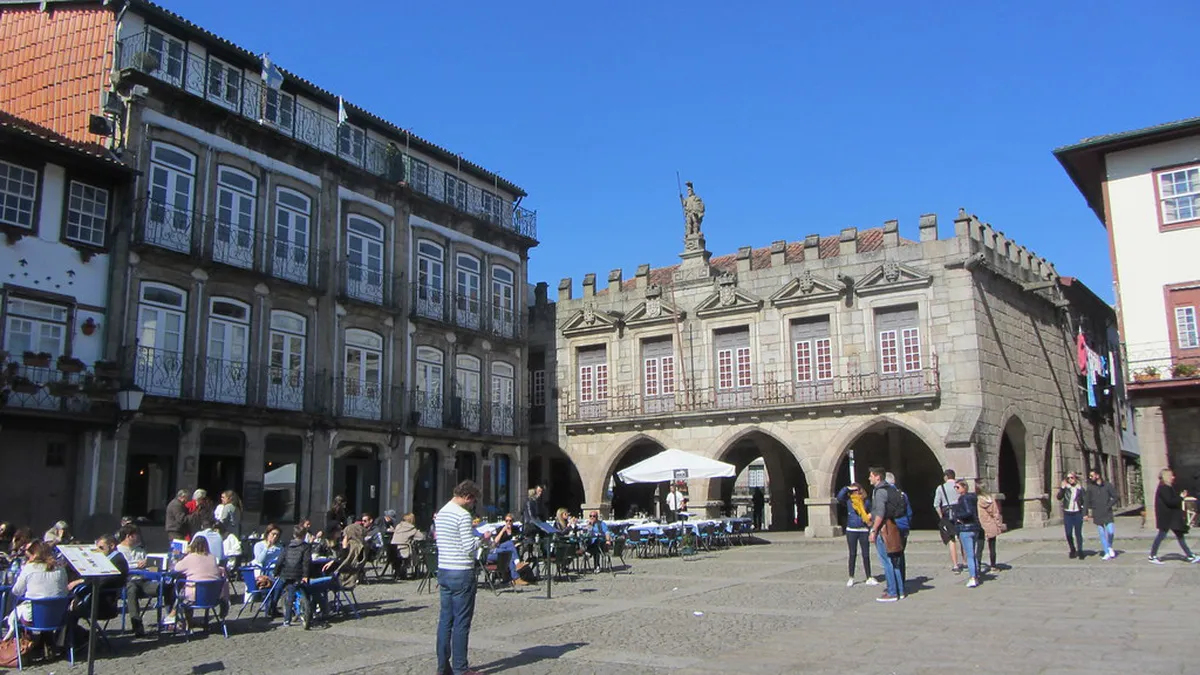
Guimarães holds UNESCO World Heritage status for its historic centre and is officially recognized as the birthplace of Portugal — the 10th-century castle here is where the nation's identity took root. This isn't just architectural significance; it's where Portuguese sovereignty began.
In 2026, the city holds an additional distinction: it's Europe's Green Capital this year, recognising its investment in green urban spaces, cycling infrastructure, and environmental quality. That means improved cycling paths, a renovated riverside promenade, and more pedestrianised zones through the historic centre than you'd expect from a city of 160,000 people. Walking is genuinely the best way to get around.
Is it worth it over staying in Porto? If you have a day to spare, yes — without question. The crowds here are far lighter than Lisbon or even central Porto, the food is affordable, and the two main monuments are within five minutes of each other on foot. Anyone combining Porto and Braga into a northern Portugal trip should route through Guimarães for at least a full day.
What to See: Castle, Palace, and the Churches You'll Actually Remember
Guimarães Castle is the city's defining landmark, built in the 10th century to defend against Moorish and Norse raids. Entry costs €5, and it opens daily 10:00–18:00 (last entry 17:30). Walk the ramparts for views over the rooftops — arrive before 10:30 on weekdays and you'll have the battlements to yourself. There's a VR experience inside for an extra fee, but most visitors skip it; the castle itself tells the story well enough.
A five-minute walk downhill is the Palace of the Dukes of Bragança (Paço dos Duques), a 15th-century ducal residence rebuilt in the 20th century and now a museum. Standard entry is €10, but the palace has been partially closed for restoration work — tickets are currently discounted to €5 as a result, and the exhibits that remain open are well-curated with information available in English, French, and Spanish. Buy tickets online to avoid the single-ticket desk queue. The palace was the highlight for most visitors I spoke to, even with parts cordoned off.
Two churches deserve more attention than they typically get. Igreja de Nossa Senhora do Carmo (Largo Martins Sarmento 57) is free and worth a visit for the ornate tilework — note it is closed Saturdays and Sundays, open Monday to Friday 09:30–17:00. The Santos Passos Church at Campo da Feira is free to enter; for €1 you can climb the stairs to an upper gallery with what locals genuinely consider the best panoramic view in the city. Contactless card payment is accepted for that €1. Igreja de Nossa Senhora da Oliveira in Largo da Oliveira charges €2 and is one of the most beautiful Gothic interiors in northern Portugal — go up to the organ loft if it's accessible.
The Church of Saint Francis (R. Padre Gaspar Roriz 124) rounds out the list. Entry is €3 for adults, free for under-12s. It opens Monday to Saturday 09:30–12:00 and 15:00–17:00, Sunday 09:30–13:00, closed Mondays. The exterior azulejos are among the finest in the Minho region — if you only have time for one church interior, this is the one.
How to Spend a Day in Guimarães: A Practical Itinerary
Start at the top and work downhill — this is the advice walking tour guides give and it genuinely saves you energy. Begin at the castle by 09:30, ideally after a coffee at one of the cafés on Largo da Oliveira. The castle and the adjacent Igreja de São Miguel do Castelo (the small Romanesque chapel where legend says Portugal's first king was baptised) together take about 45 minutes. From there, walk five minutes down to the Paço dos Duques for another 45–60 minutes.

By midday you'll be back in the historic centre. Largo da Oliveira is the natural lunch stop, surrounded by affordable restaurants serving Caldo Verde, grilled bacalhau, and the regional Francesinha sandwich. After lunch, visit Igreja de Nossa Senhora da Oliveira (€2) and walk 10 minutes to the Santos Passos Church for that €1 panoramic view.
If the afternoon allows, take the Penha cable car up to Serra da Penha — tickets are €7.50 adults, €3.50 children, and the ride gives sweeping views of the city and the valley. The park at the top has forest walking paths, giant boulders, and grottos. Allow 90 minutes. The cable car operates daily but check seasonal hours at the station before going.
End the day in São Tiago Square for a twilight drink. If you're staying overnight, check the schedule at Vila Flor Cultural Center — events run year-round and the attached café is one of the better bars in the city. The walk from the castle area to the cultural centre takes about 12 minutes.
Train, Bus, and Driving: Getting to Guimarães from Porto
The train is the most comfortable option and costs €3.55 each way. Trains depart from Porto's Campanhã station roughly every hour from around 06:00 to midnight, and the journey takes around 75 minutes with stops. One important detail: some trains split en route, with part of the train heading to Braga and the rest continuing to Guimarães. Check the carriage signage carefully before you board — it's a common mistake even for locals.
The bus is faster and cheaper. Rede Expressos and FlixBus both operate from Campanhã, with tickets starting at €2.95 and a journey time of roughly 45 minutes. Buses run frequently throughout the day. The bus terminal in Guimarães is about 15 minutes on foot from the historic centre.
Driving from Porto takes 40 minutes via the A7 motorway under normal conditions. Parking inside the city is readily available — free parking exists at R. de Dona Mafalda 9, though it fills up by mid-morning on weekends. Paid parking at Parque do Campo de S. Mamede or Parque das Hortas typically costs under €10 for a full day. If you're planning to combine Guimarães and Braga in one trip, driving makes the connection easier since the two cities are only 22 km apart.
Rideshare from Porto (Bolt or Uber) is possible but costs €30–50 one way and can be difficult to book for the return leg due to lower driver availability. Tour options from Porto range from around €65 per person for group tours covering both Guimarães and Braga, up to €150 for private half-day tours. These are worth considering if you want commentary at the monuments rather than self-guiding.
Guimarães vs. Braga: Which One to Choose?
Both cities sit within the Minho region and are less than 30 minutes apart by road, so the comparison comes up constantly. The short answer: Guimarães is medieval and civic, Braga is Baroque and religious. They attract visitors for genuinely different reasons.
Guimarães centres on the national founding myth — the castle, the palace, the streets where the Portuguese nation took shape. The atmosphere is quieter and more reflective, with a young student population (the University of Minho is based here) that keeps café culture lively without turning the city into a tourist circus. Braga, by contrast, is packed with elaborate Baroque churches, the famous Bom Jesus do Monte stairway sanctuary, and a more energetic commercial centre. It earns its nickname — the "Rome of Portugal" — through sheer density of religious architecture.
If you only have time for one, the decision usually comes down to interest: medieval history and a calmer pace points to Guimarães; ornate church architecture and a hillside sanctuary points to Braga. Many visitors do both in a single day from Porto, spending a morning in Guimarães and the afternoon in Braga. It's possible but rushed — you'll feel like you've seen the highlights without absorbing either city. A full day in each is the better option if your schedule allows. Staying a night in the area and splitting your time is worth the extra cost.
Where to Stay and Whether to Stay at All
A day trip covers the main monuments comfortably, but staying overnight reveals a different city. Once the day-trippers leave by 18:00, the historic centre becomes genuinely peaceful — locals fill the café tables in Largo da Oliveira, the Francesinha restaurants stop having queues, and São Tiago Square gets its evening rhythm. That quieter version of Guimarães is hard to access on a day trip from Porto.

For accommodation in the historic centre, Hotel da Oliveira (on Largo da Oliveira itself) offers a four-star experience in a prime location at around €170 per night. Casa do Juncal is a smaller guesthouse option inside the old town at around €120–140. For something more unusual, Pousada Mosteiro de Guimarães is a converted 12th-century monastery on a hilltop above the city, with period furniture and a medieval atmosphere that justifies the €140–220 rate. Torel Royal Court, another boutique hotel in a historic building, sits at €150–250.
Budget options exist just outside the historic perimeter. Hotel Mestre de Avis comes in at €50–75 and is cheerful and comfortable. If you want to base yourself between Guimarães and Braga to cover both cities, 1720 Quinta da Cancela is a farmhouse-style guesthouse about 20 minutes from each city (note a two-night minimum applies).
Local Food and the Market: The Side of Guimarães Most Visitors Miss
Most day-trip guides focus on the castle and palace, but Guimarães has a food scene that genuinely rewards a longer visit. The must-try local sweet is Torta de Guimarães — a crunchy, half-moon pastry with buttery layers and a rich egg-and-almond centre. It has a slightly savoury edge that comes from traditional recipes using pork fat rather than butter. The original Casa Costinhas bakery near the Convent of Santa Clara is where you find the best version. Toucinho do Céu, a denser almond cake, is the other convent sweet the city is proud of.
The municipal market (Mercado Municipal) is worth an hour of your morning before the monuments open. It's housed in a large covered hall with permanent vendors selling fish, meat, cheese, and bacalhau alongside seasonal fruit and vegetable stalls. On market days you'll find temporary vendors outside selling what they've grown or gathered that week — the kind of food provenance that even dedicated farm-to-table restaurants in Lisbon can't match. It's a genuinely local scene that hasn't been packaged for tourists.
For sit-down meals, Adega dos Caquinhos is the straightforward family-restaurant choice for salted codfish and Vinho Verde. Cervejaria Martins does a well-regarded Francesinha. SALA 141 suits anyone wanting lighter Mediterranean food with good vegetarian options. Tasquinha do Tio Júlio is the late-night classic — open most of the night and frequented by everyone from students to businessmen.
Practical Tips Before You Go
Several attractions are closed on Sundays and Mondays, including Museum Martins Sarmento (Tues–Fri 09:30–12:30 and 14:30–17:30, Sat–Sun 10:30–12:30 and 14:30–17:30) and the Church of Saint Francis (closed Mondays). The Castle and Palace are open daily, making them safer bets if you're visiting on a weekend. Check attraction websites before you go — the Palace discount and partial closure situation may change through 2026.
The historic centre is hilly in the area around the castle, so comfortable walking shoes matter. For anyone with mobility limitations, electric tuk-tuk tours cover the historic centre for around €20 per person and are genuinely useful here — not just tourist gimmicks. The terrain between Largo da Oliveira and the castle involves a noticeable incline that can be tiring in summer heat.
Visit in April–May or September–October for comfortable temperatures and smaller crowds. June to August gets hot and tour groups descend on the main monuments by 11:00. Arriving before 10:00 on a weekday gives you the castle ramparts and palace courtyard largely to yourself. The city is compact enough that even a first-timer can navigate it without a guide — the main monuments are within a 10-minute walk of each other.
Several key attractions close on Sundays and Mondays — including the Church of Saint Francis and Museum Martins Sarmento. The Castle and Palace stay open daily, but if you're visiting a weekend and want full access to all church interiors and museums, plan accordingly or choose a weekday visit.
Frequently Asked Questions
How much time do you need in Guimarães?
You can see the main highlights of Guimarães in one full day. However, to truly soak in the atmosphere and explore at a relaxed pace, consider an overnight stay.
Is Guimarães walkable?
Yes, Guimarães is very walkable, especially its historic center. The main attractions are close together, though some areas involve gentle inclines. Comfortable shoes are recommended.
How to get to Guimarães from Porto?
The easiest way to get to Guimarães from Porto is by train. Direct trains run frequently from Porto's Campanhã station and take about an hour. The station is near the city center.
Guimarães earns its reputation as one of the best day trips from Porto — and as Europe's Green Capital in 2026, it's investing in making the experience even better for visitors. The medieval centre, castle, palace, and local food scene combine into a destination that is easy to visit but genuinely rewarding to linger in.
A day trip from Porto is enough to tick the highlights. An overnight stay is enough to understand why the city inspires such pride in the people who live there. Either way, Guimarães is worth your time.
See our Guimarães things-to-do guide for the broader city overview.
 Óbidos Castle: Complete Visitor's Guide (2026)June 11, 2026
 9 Essential Tips for Visiting Guimarães CastleJune 8, 2026