
Óbidos Castle: Complete Visitor's Guide (2026)
Everything you need to visit Óbidos Castle in 2026 — the wall walk, Pousada hotel, history, entrance fees, Ginja, and the Medieval Market explained.
On this page
Óbidos Castle: Portugal's Best-Preserved Medieval Fortress
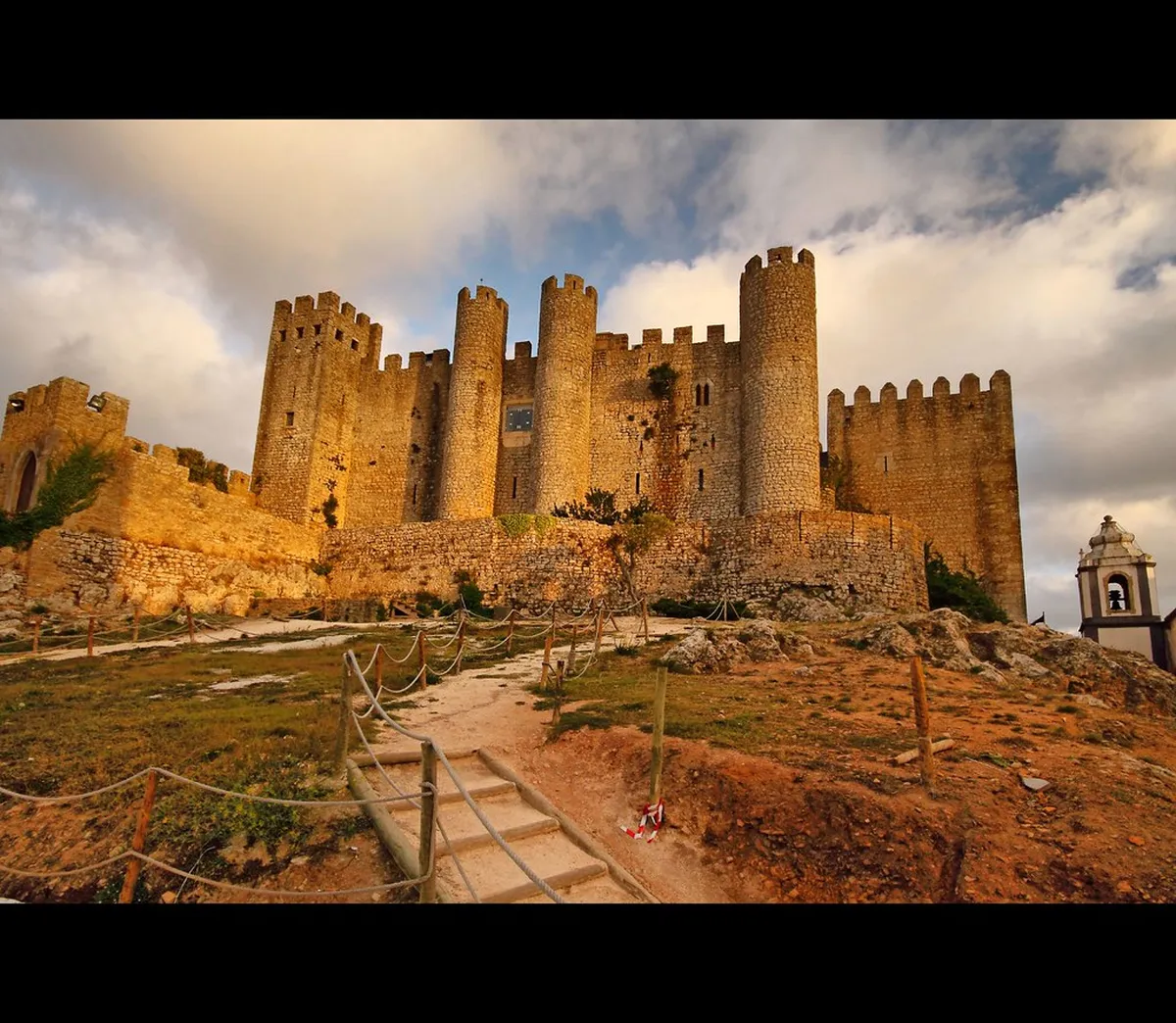
Óbidos Castle is one of Portugal's most complete medieval fortresses — voted one of the Seven Wonders of Portugal in 2007 and still largely intact after nearly nine centuries of continuous use. It crowns a compact walled town about 80 km north of Lisbon, making it the most accessible major castle in the country for day-trippers from the capital.
First-time visitors should prioritize walking the castle walls for panoramic views and exploring Rua Direita. This main street offers easy access to shops and Ginja tastings. Consider a guided walking tour to gain historical context. These activities provide a comprehensive initial experience.
The castle today serves three overlapping roles: a free-to-walk archaeological monument, a luxury hotel built inside the keep, and the stage for Portugal's biggest medieval market each July. Understanding which parts cost money and which do not will save you confusion at the gate.
This guide covers everything for a 2026 visit — the wall walk in practical detail, the Pousada do Castelo hotel, history and legends, Ginja tastings, the Medieval Market, and how to get there from Lisbon.
Visiting Óbidos Castle: What You Need to Know First
Óbidos Castle dates to Roman times, but the structure you see today is largely Moorish and medieval Portuguese. After King Afonso Henriques recaptured the town in 1148, successive kings reinforced and extended the walls. The main towers were built in 1375. In 1282, King Dinis gave the town to Queen Isabel as a wedding gift — the origin of Óbidos' enduring nickname, the Village of Queens. Visitors coming from Lisbon will find Óbidos is the perfect complement to the capital's urban attractions.
Entry to the town and its walls is free. You walk in through the Porta da Vila, an ornate 18th-century gate covered in blue-and-white azulejo tiles, and from there the entire 1.5 km circuit of battlements is open without a ticket. The castle keep itself is now the Pousada do Castelo hotel — non-guests can look into the courtyard from the adjacent square, but the interior rooms and garden terrace are for hotel guests only.
The Old Arms Square (Praça das Armas) behind the castle is where festivals and the Medieval Market take place. It offers open views over the surrounding Oeste countryside and is free to enter year-round. Allow at least 3–4 hours for a comfortable visit; a full day is easy if you linger in shops and cafes.
The Castle Wall Walk: Views, Hazards, and What to Expect
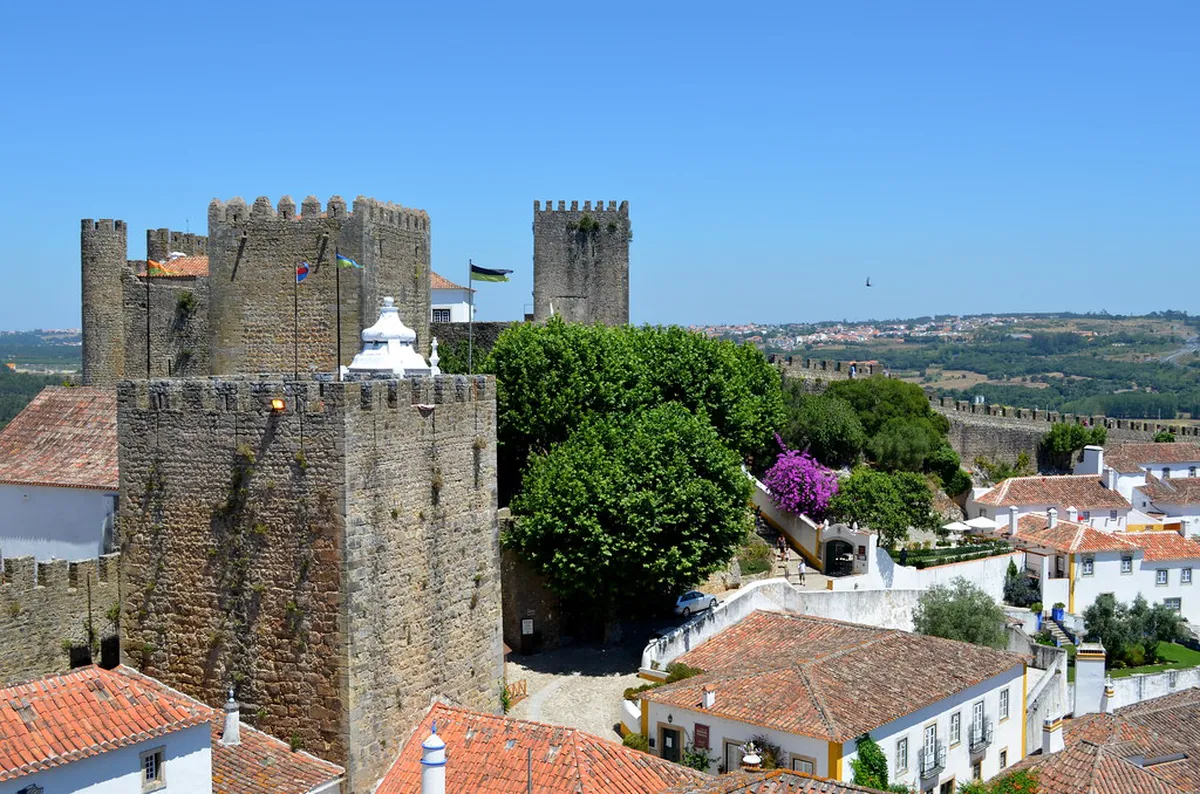
Walking the battlements is the single most popular activity in Óbidos, and rightly so. The walls stand 13 metres high in places and run for roughly 1.5 km, encircling the entire historic centre. From the top you get the town's terracotta rooftops on one side and the flat Oeste farmland and distant lagoon on the other. On clear days you can see as far as the Atlantic.
There are no handrails on any section of the wall walk. The stone path is worn smooth in places and narrow enough that two people cannot always pass comfortably side by side. This is not a walk for young children, for anyone with vertigo, or for visitors with limited mobility. Wear flat, rubber-soled shoes — sandals and heels are genuinely dangerous here.
The easiest access point is near the Porta da Vila at the south end of Rua Direita. Follow the signposted ramp up to the battlements and walk north toward the castle towers. The full circuit takes around 30–45 minutes at a relaxed pace. Go in the morning (before 10:00) or late afternoon (after 16:00) to avoid the worst of the summer crowds and to get better light for photography.
The wall walk is free and has no set opening hours — you can walk it at any time during daylight. There is no ticket booth and no online reservation system. Simply follow the stone ramp up from the main street and you are on the walls.
Staying Inside the Castle: The Pousada do Castelo
The Pousada do Castelo is one of the most unusual places to sleep in Portugal. The hotel occupies the former royal palace inside the castle keep — the same building where Portuguese kings stayed when visiting the town. It has just nine rooms, which makes it more intimate than most castle hotels in Europe. Prices in 2026 run roughly €150–350 per night depending on season and room type, with the tower rooms at the upper end of that range.
What survived the catastrophic 1755 earthquake are two Manueline (late Portuguese Gothic) windows from the 1500s and the royal coat of arms carved above the main portal. Almost everything else was rebuilt in a restoration project that began in 1932. The hotel garden and small terrace are only accessible to guests, but they offer views down over the town that you cannot get from the public wall walk.
The main practical argument for staying here is time: guests can walk the battlements at dusk and dawn, after day-trippers from Lisbon have left. The town at 07:00 on a summer morning — quiet cobblestones, no tour groups — is a completely different experience from the same streets at 11:00. Rooms book out quickly for July (Medieval Market period) and for long weekends, so reserve at least two months ahead for peak dates. Book directly through Pousadas de Portugal for the best rates.
The Village Inside the Walls
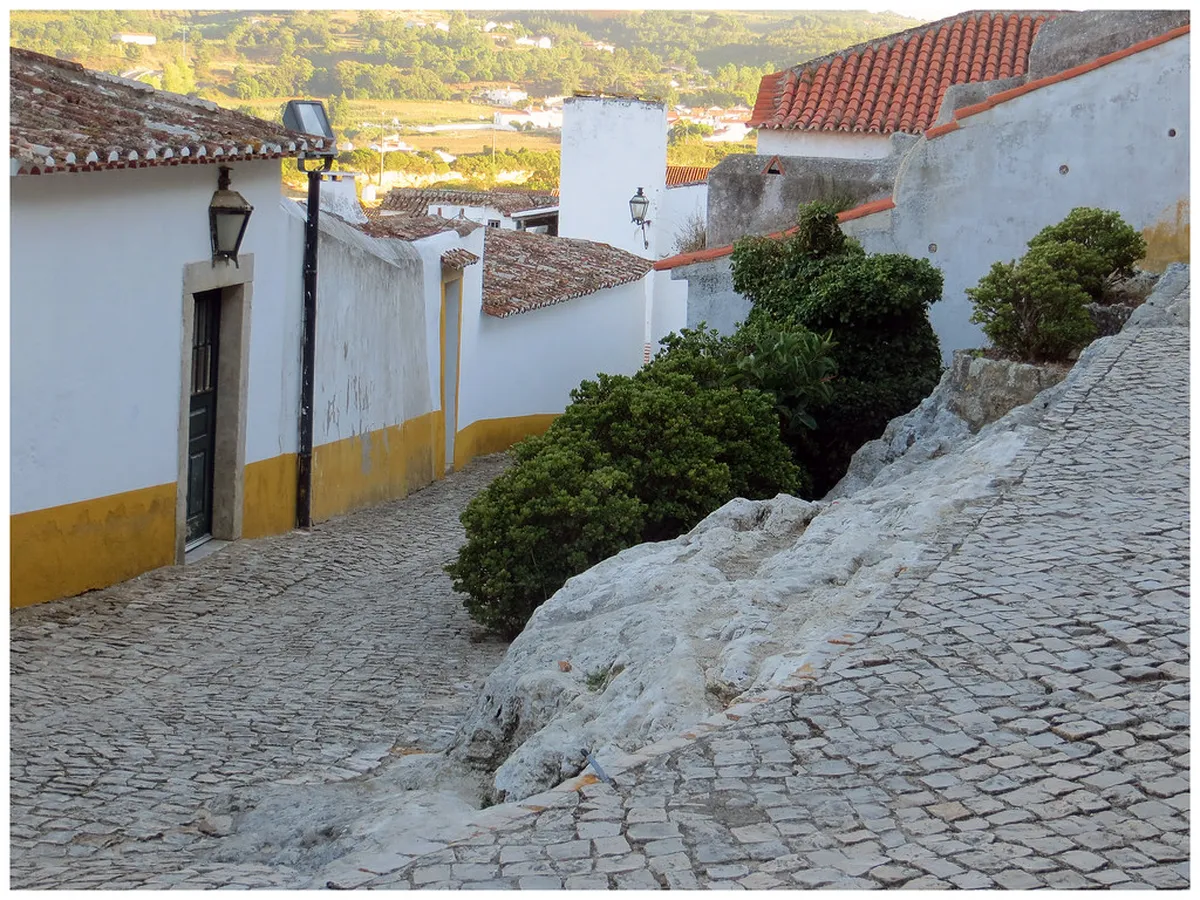
The walled town of Óbidos is compact — you can walk end to end in under ten minutes — but it rewards slow exploration. The main artery, Rua Direita, runs straight from the Porta da Vila gate to the castle square, lined with whitewashed houses whose window boxes overflow with bougainvillea. Artisan shops, bakeries, and Ginja stalls occupy most of the ground floors.
Entering through the Porta da Vila is an experience in itself. The passage is lined entirely with blue-and-white azulejos depicting scenes from the Passion of Christ. This 18th-century tile work, attributed to a local artist, is some of the best decorative tile you will find outside a major museum. Take a few minutes here before walking up the main street.
The side alleys off Rua Direita are where the town gets quieter and more residential. Seek out the Igreja de Santa Maria on the main square — it has a fine interior with 17th-century painted tiles — and the smaller Igreja de São Pedro nearby. Both are typically open without charge during daytime hours. The full list of things to do in Óbidos goes well beyond the castle itself, particularly if you have a full day.
Óbidos Ginja: The Tasting You Cannot Skip
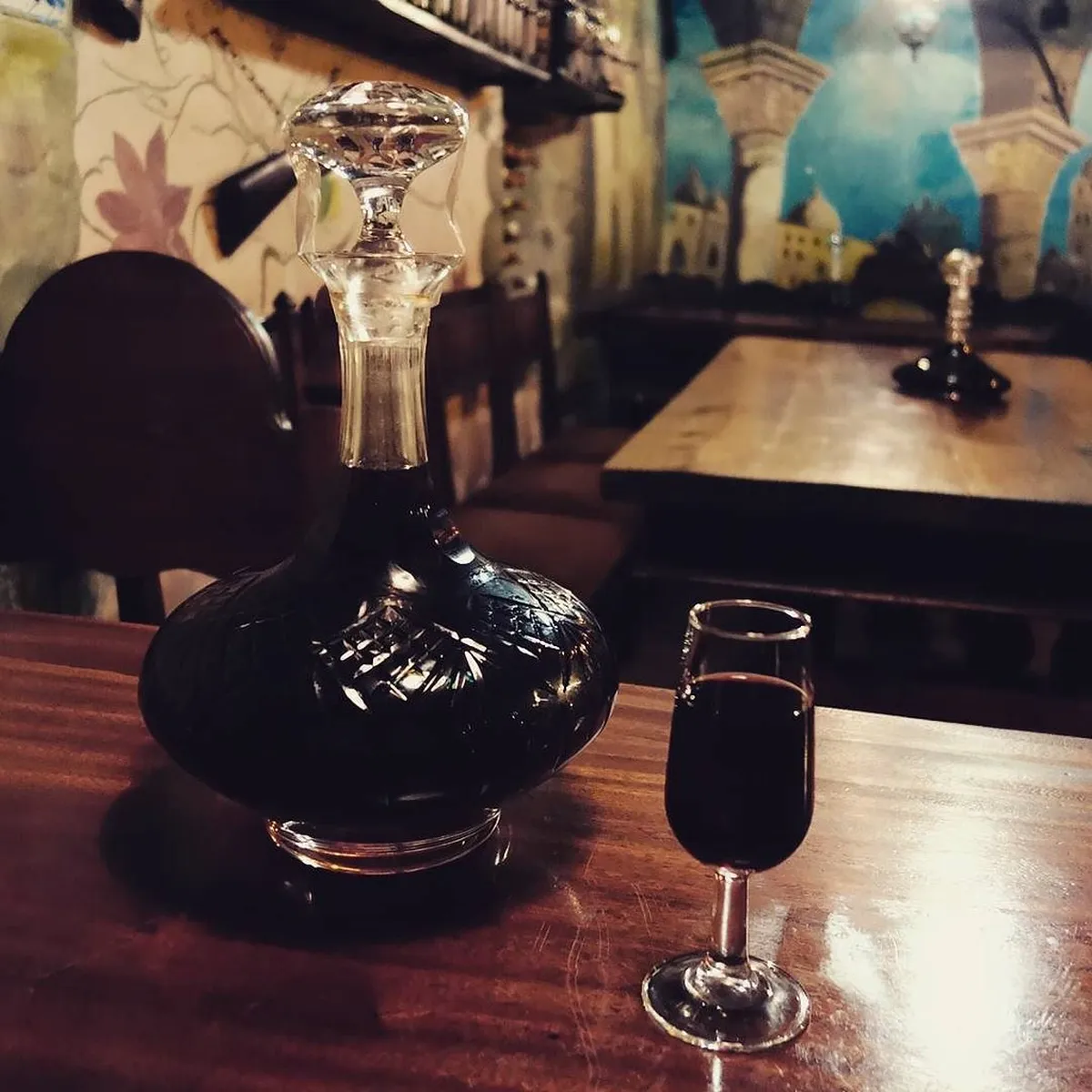
Ginja de Óbidos is a sour cherry liqueur made from Morello cherries macerated in aguardente (Portuguese grape spirit). The recipe is traditionally associated with monastic production in the region and has been made here for centuries. At around 20% ABV, it is sweet and potent — one chocolate cup is roughly one shot. Most shops on Rua Direita give free tastings; a single Ginja in a chocolate cup costs around €1.50.
The chocolate cup presentation is specific to Óbidos — you will not find this format in Lisbon or Porto. The cup is made from thin dark chocolate and is meant to be eaten after drinking the liqueur, not discarded. Ask for "Ginja em copo de chocolate" if you want to be sure you get the traditional version. Bottles (35 cl or 75 cl) are available in every shop for €4–12 and make practical gifts.
A lesser-known local pairing is Ginja with Pão de Ló de Óbidos, a molten-centred custard sponge cake sold at a few no-frills bakeries just off the main street. The contrast of tart cherry liqueur and warm egg custard is genuinely memorable. Look for the cake in shops that appear to have been there for decades rather than the tourist-facing stalls at the gate entrance — the quality difference is noticeable. Learn more about Ginja de Óbidos cherry liqueur.
Legends and History That Make Óbidos Different
Óbidos has an unusually rich tradition of local legend that goes beyond the standard Portuguese castle narrative. Queen Isabel — canonized as Saint Isabel of Portugal in 1625 — is the town's most venerated historical figure. Tradition holds that during her stays in Óbidos she would slip out of the castle in disguise to distribute bread to the poor, acts that became associated with miracles and her later sainthood.
A persistent local story describes a hidden tunnel connecting the castle to a nearby convent, supposedly used for secret escapes or communication within the royal court. No archaeological evidence has confirmed it, but the story has been told for generations and features in most local guided tours. It captures something true about the castle's dual identity as both military stronghold and royal residence — a place where politics, faith, and secrecy coexisted.
Perhaps the most striking historical footnote is Óbidos' survival of the 1755 Lisbon earthquake, which killed tens of thousands and reduced much of Portugal's capital to rubble. Óbidos remained largely unscathed. For locals at the time, this was taken as divine protection — an interpretation that deepened the town's religious identity and its sense of being set apart from the rest of the country.
The Medieval Market: What to Expect in July
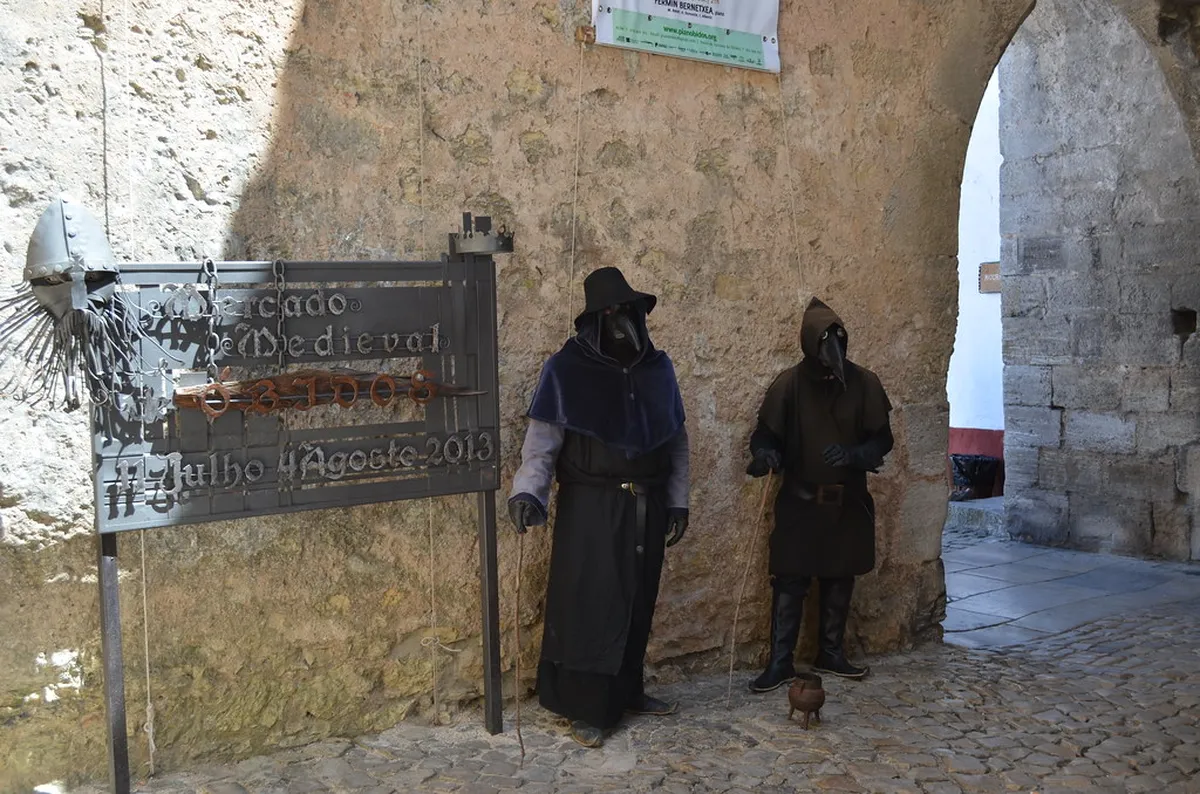
Every July, Óbidos runs its Medieval Market for approximately ten days — one of the largest and most detailed historical reenactments in Portugal. The entire town converts: street signs disappear, vendors wear period costumes, and euros are exchanged at the gate for maravedis (the event's medieval currency) to use at food and craft stalls inside. The exchange is mandatory — you cannot buy inside the market in euros.
The programme includes jousting tournaments, fire shows, battle reenactments, and musical performances by troubadours and period ensembles. Craft workshops run throughout the day where you can watch (and sometimes try) blacksmithing, weaving, and pottery. Taverns serve dishes based on historical recipes — roasted meats, bread baked in wood-fired ovens, mead — rather than standard Portuguese fast food.
Practical details for 2026: an entrance fee applies during the market period (typically €5–10 per adult, children under 10 usually free; confirm exact prices via the Visit Portugal website as dates and pricing are announced each spring). The town fills completely on weekends; arriving before 10:00 or on a Tuesday or Wednesday avoids the worst congestion. Car access is restricted — the municipality runs shuttle buses from parking areas outside the walls, or join an organized transport from Lisbon.
Practical Tips for Visiting in 2026
Crowds are the main challenge at Óbidos, not logistics. The town is tiny and absorbs visitors unevenly — by 11:00 on a summer weekend Rua Direita is shoulder-to-shoulder, but arrive at 09:00 and you will have the walls to yourself. Mid-week visits in shoulder season (April–May, September–October) offer the best balance of good weather and manageable crowds.
Parking is free in the large lot just below the southern entrance (signed from the N8 road). It fills by 10:00 in July and August, so plan accordingly or use the overflow lots 10–15 minutes' walk away. Comfortable, flat-soled shoes are non-negotiable — cobblestones on the main street are uneven, and the wall walk requires grip. Bringing a small bag rather than a large rucksack makes navigating the narrow alleys easier.
- Wall walk: free, no ticket, no handrails — flat shoes required, not suitable for young children or vertigo sufferers.
- Pousada do Castelo: approximately €150–350/night; book directly at pousadasofportugal.com.
- Medieval Market entrance (July): approximately €5–10; confirm exact price each year via the official tourism site.
- Ginja in a chocolate cup: approximately €1.50 on Rua Direita.
- Getting there from Lisbon: Rodotejo bus from Campo Grande terminal takes around 1 hour; roughly 32 weekday departures. By car: A8 motorway, exit at Caldas da Rainha junction, then 10 minutes south on the N8.
The town has no ATM inside the walls — withdraw cash before arriving. Most shops accept cards, but the Medieval Market maravedis exchange requires cash. For a deeper look at the surrounding area, the Óbidos day trip from Lisbon guide covers bus timings and combined itinerary options.
Combining Óbidos with the Oeste Region
Óbidos sits in the Oeste (West) region, a short stretch of central Portugal that packs in more historical sites per kilometre than almost anywhere else in the country. Alcobaça Monastery (40 km north) and Batalha Monastery (55 km north) are both UNESCO World Heritage Sites and easily combined into a one- or two-day circuit. Nazaré, the fishing town famous for its enormous winter surf, is 35 km north.
If you are travelling from Lisbon, a logical route combines Óbidos in the morning with Alcobaça in the afternoon and a night in Caldas da Rainha (5 km from Óbidos), where accommodation costs significantly less than inside the Óbidos walls. Caldas da Rainha also has a ceramic tradition — its distinctive phallic pottery is genuinely old, dating to the 17th century, and worth a brief stop at the municipal market.
For planning a wider itinerary through Portugal, consider where to stay in Óbidos and whether an overnight makes sense given your travel pace. The town's charm is most apparent in the early morning and evening after the day-trippers leave — which is the single best argument for booking a night, whether at the Pousada or in one of the smaller guesthouses just outside the walls.
Frequently Asked Questions
Which Óbidos Castle options fit first-time visitors?
First-time visitors should prioritize walking the castle walls for panoramic views and exploring Rua Direita. This main street offers easy access to shops and Ginja tastings. Consider a guided walking tour to gain historical context. These activities provide a comprehensive initial experience.
How much time should you plan for Óbidos Castle?
Plan at least 3-4 hours to thoroughly explore Óbidos Castle and its village. This allows time for walking the walls, browsing shops, and enjoying a Ginja tasting. A full day is ideal if you want to visit museums or relax at a cafe. Factor in travel time from your starting point.
What should travelers avoid when planning Óbidos Castle?
Avoid visiting only for a quick stop; Óbidos deserves leisurely exploration. Do not forget comfortable shoes for the cobblestones and uneven castle walls. Try to avoid peak midday crowds during summer if possible. Also, avoid leaving without tasting the local Ginja liqueur.
Is Óbidos Castle worth including on a short itinerary?
Yes, Óbidos Castle is definitely worth including on a short itinerary, especially as a day trip from Lisbon. Its compact size allows for a meaningful visit in just a few hours. The unique medieval charm makes it a highly rewarding stop. It offers a memorable experience even with limited time.
What are the best things to do in Óbidos beyond the castle?
Beyond the castle, explore the charming Rua Direita for artisan shops and local treats. Visit the Igreja de Santa Maria and the Porta da Vila for their historical beauty. You can also sample Ginja liqueur in chocolate cups. Discover more things to do in Óbidos for a full experience.
Óbidos Castle is one of the most complete medieval sites in Portugal — and one of the most accessible. The wall walk is free, the village is compact enough to cover in an afternoon, and the Pousada do Castelo offers a genuinely rare chance to sleep inside a working royal fortress. Whether you are coming for a day from Lisbon or building a longer Oeste itinerary, the castle rewards the visit.
The details that matter most in 2026: arrive before 10:00 in summer, wear flat shoes on the walls, bring cash for the Medieval Market currency exchange in July, and book the Pousada well in advance if you want the dusk-and-dawn experience that no day-tripper gets.
 9 Essential Tips for Visiting Guimarães CastleJune 8, 2026