Ilha de Faro Beach Guide: 10 Essential Planning Tips
Discover Ilha de Faro with our expert guide. Learn how to get there, where to find the best surf, top-rated beach bars, and tips for exploring Ria Formosa.
On this page
Ilha de Faro Beach Guide: 10 Tips for Your 2026 Visit
Ilha de Faro is the barrier island that holds Faro's main beach, Praia de Faro. It sits just ten minutes from the city centre and five minutes from the airport, yet it feels worlds away. One side faces the open Atlantic; the other borders the calm lagoons of the Ria Formosa. This guide covers how to get there without losing your morning to traffic, which side of the island suits you, where to eat, and what every first-timer gets wrong.
Why Visit Praia de Faro
Praia de Faro is a city beach that still feels local. Most visitors here are residents from Faro rather than package tourists, which keeps the atmosphere relaxed and unpretentious. There are plenty of things to do in Faro if you want to combine a morning of sightseeing with an afternoon on the sand. The island is the rare spot in the Algarve where you can surf, paddleboard, birdwatch, and eat fresh grilled fish all in one day.
The dual nature of the island sets it apart from every other Algarve beach. The southern ocean side delivers consistent waves and open-horizon views. The northern lagoon side offers shallow, wind-sheltered water and access to a protected natural park. Choosing which side to base yourself on is the most important planning decision you will make, and we walk through it in detail below.
Faro also wins on convenience. Travelers comparing Faro versus Tavira for their holiday base often overlook that Faro is the only city in the eastern Algarve where you can step off a flight and be swimming within thirty minutes. That proximity to the airport matters if your itinerary is tight.
How to Get to Ilha de Faro
There are three ways to reach the island: bus, ferry, or car. Bus is the most practical for the majority of visitors. The Próximo Bus 16 runs from Faro bus station via the airport and stops at the bridge crossing. Bus 14 covers a similar route from the city centre. Both services run every 30 to 40 minutes during the day in summer, dropping to roughly every hour in the evening. A single ticket costs around €2.30 and cannot be bought as a return. Download the Próximo app before you leave — it shows real-time bus locations so you can time your arrival at the stop instead of waiting on a pavement in the heat.
One detail most guides skip: the bridge is so narrow that the bus must stop halfway across. You walk the final 200 metres on foot. The bridge has no footpath barrier, so pedestrians share the lane with passing cars. Walk in single file and keep to the right. Children and pushchairs need extra care here.
The seasonal ferry departs from Cais da Porta Nova, near the marina in the Old Town, between June and September. The crossing takes about 20 to 30 minutes through the salt marshes of the natural park. It is the most scenic approach and avoids the bridge entirely. If you are staying in the historic centre of Faro, the ferry is the obvious choice.
Driving is the only option that gives you full flexibility, but July and August turn the bridge approach into a bottleneck. The traffic light system at the single-lane bridge causes queues that can stretch back 20 minutes or more between 10:00 and 18:00. Parking on the island itself (Avenida Nascente) fills completely by around 10:00 on peak summer days. The large dirt car park on the mainland side of the bridge is free and almost always has space — leave the car there and walk or catch the bus across.
- Bus 14 or 16 from Faro bus station, via the airport — journey time 20–25 minutes, fare €2.30
- Ferry from Cais da Porta Nova — journey time 20–30 minutes, runs June to September
- Car — free parking in the dirt lot before the bridge; island parking full by 10:00 in peak season
- Próximo app — real-time bus tracking, available on iOS and Android, free to download
The seasonal ferry from Cais da Porta Nova (June–September) takes 20–30 minutes through the Ria Formosa salt marshes and is the most scenic way to arrive — ideal if you are staying in Faro's historic centre. Download the Próximo app for real-time bus tracking so you are not waiting in the heat.
Ocean Side vs. Lagoon Side: Which Is Right for You
The island has two completely different characters depending on which shore you face. The southern ocean side is where you come for waves, sun-loungers, beach bars, and the full Algarve experience. The northern lagoon side fronts the Ria Formosa Natural Park and offers calm water, wildlife, and solitude. Most day-trippers never cross to the lagoon side, which is a mistake.
| Feature | Ocean Side (South) | Lagoon Side (North) |
|---|---|---|
| Water conditions | Waves, strong current, gets deep fast | Shallow, calm, no surf |
| Water temperature | 18–21°C even in August | Often 2–3°C warmer in summer |
| Best for | Surfers, bodyboarders, adult swimmers | Young children, SUP, kayaking, birdwatching |
| Crowds | High near bridge in summer | Low year-round |
| Facilities | Bars, restaurants, sunbed rentals, lifeguards | Minimal — bring your own water |
| Sunset view | Faces south — limited | Faces Faro city — spectacular at dusk |
Families with children under eight should strongly consider spending part of the day on the lagoon side. The water is shallow for a long distance from the shore, there is no surf, and the temperature is noticeably warmer than the ocean. Equipment rental shops near the bridge on the lagoon shore offer kayaks and SUP boards by the hour.
What to Expect: Sand, Water, and Atmosphere
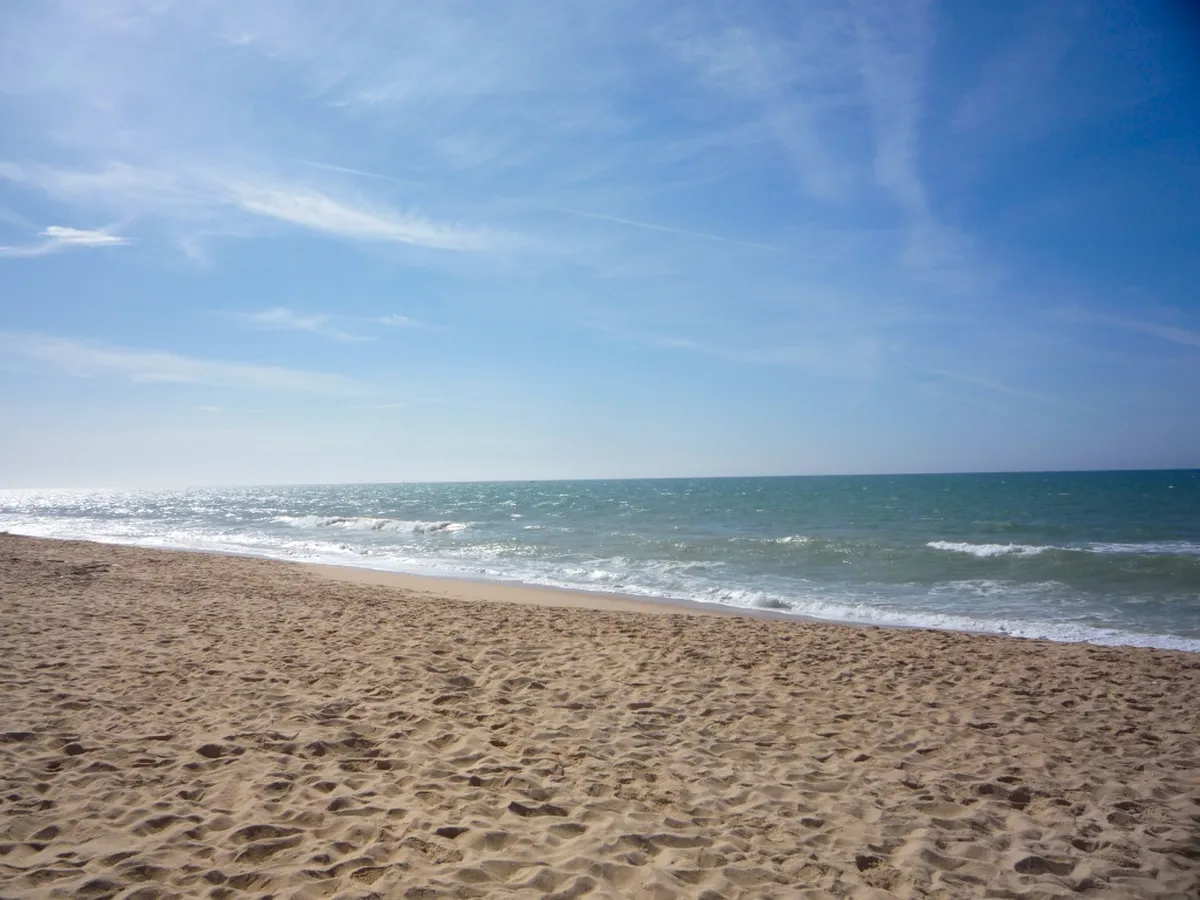
Praia de Faro sits on the Península do Ancão and stretches roughly five kilometres of soft, fine golden sand. The dunes back the entire length — this is a dune beach, not a cliff beach, which puts it in a different category from most Algarve postcards. Dunes mean the sand stays soft underfoot even in the hottest months.
Water quality on the ocean side is consistently high. The beach holds Blue Flag status most years, which certifies the water quality and beach management standards. That said, the Atlantic here is colder than many visitors expect. Even in August, surface temperatures typically sit around 18–21°C. The seabed drops to depth faster than you might anticipate — a child who is knee-deep one step can find themselves waist-deep the next. Non-swimmers and weak swimmers should stay in shallower sections, and parents of young children should keep them close. Lifeguards patrol the central section during the official season (June to September), but coverage does not extend to the far eastern end.
The area around the bridge is the busiest part of the island. Bars, restaurants, shops, and sunbed rental stalls are all clustered within 500 metres of the bridge entrance. Walking east along the sand for ten to fifteen minutes puts most of the crowds behind you. The beach becomes wider, quieter, and more natural the further you go. Experienced local beachgoers know to head straight past the first cluster of sun-loungers.
The Atlantic at Praia de Faro is colder than most visitors expect — surface temperatures sit around 18–21°C even in August. The seabed also drops to depth quickly: a child knee-deep one step can be waist-deep the next. Lifeguard coverage applies only to the central section (June–September) and does not extend to the far eastern end of the beach.
Scenic Beach Walks and the Wild Eastern End
The walk east from the bridge entrance is the best free activity on the island. A wooden boardwalk runs along the dunes, protecting the vegetation and making the path easy even in flip-flops. After roughly 45 to 60 minutes of walking you reach Praia da Barrinha, the far eastern tip of the peninsula. This section has no bars, no shops, and almost no other people even in peak summer. The reward is a pristine beach with wide dunes and clean water. Carry at least a litre of water per person — there is nothing to buy once you leave the central zone.
Further east along this undeveloped stretch there is also an unofficial nude beach. It is not signposted, but locals know it as the section beyond the main crowds. The informal nature of it means it comes and goes depending on the season. If solitude and a more free-spirited atmosphere appeal to you, keep walking east until the groups thin out.
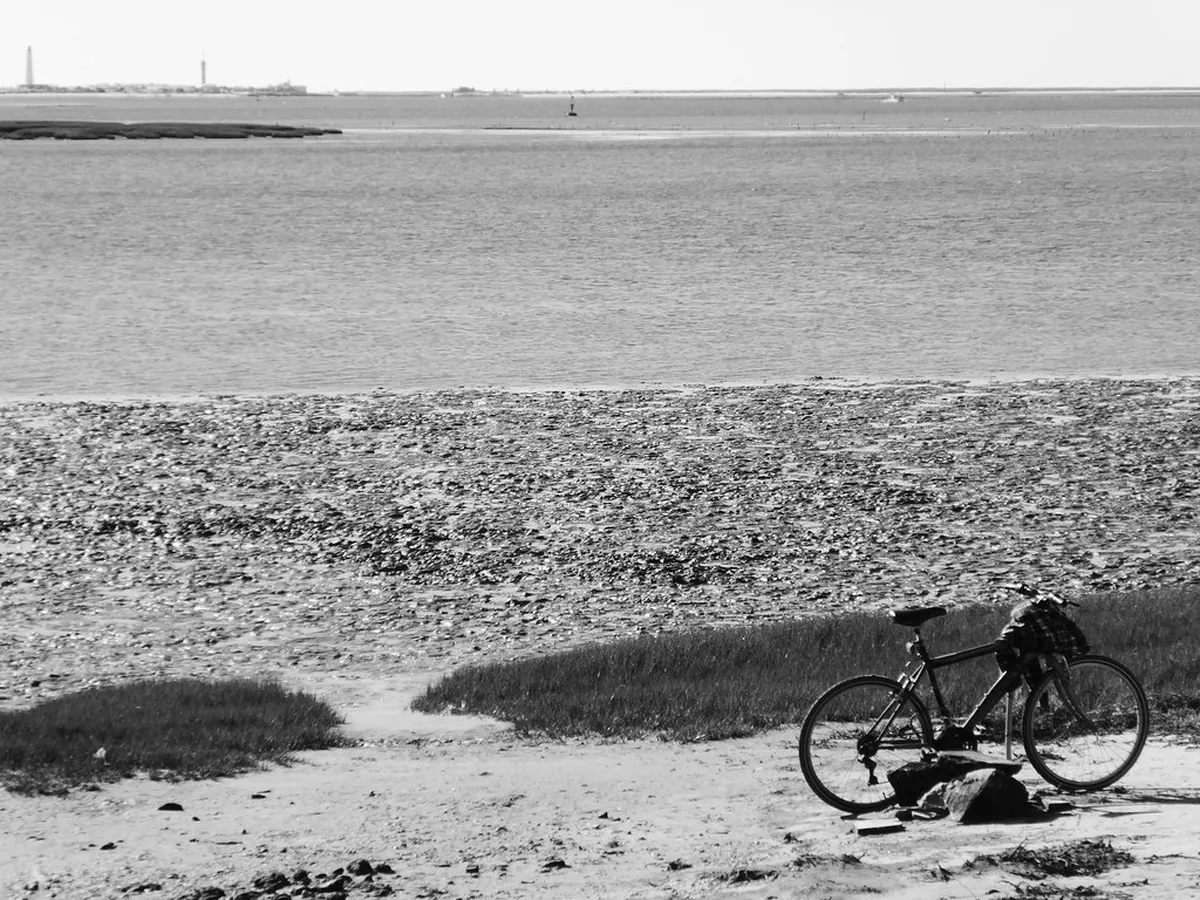
For a shorter and more structured experience, rent a bike from Aeromar hotel near the beach. A day rental costs around €15. The back roads around the lagoon side of the island are flat and quiet, and cycling lets you cover the full length of the island in a fraction of the walking time. It is also the best way to reach the lagoon-side bird hides without fighting through soft sand.
Water Sports: Surfing, SUP, and Kayaking
The ocean side is a reliable surf spot throughout the year. The beach breaks here work for beginners and intermediate surfers, and local surf schools on the main stretch offer lessons and equipment rental. Winter swells are larger and attract more experienced riders, but summer surf is gentle enough for complete beginners. Kitesurfing is also popular when the afternoon sea breeze picks up.
The lagoon side is where you go for flat-water sports. Stand-up paddleboarding and kayaking are the main activities, and both can be rented from shops near the bridge on the Ria Formosa shore. Paddling into the lagoon channels lets you see the ecosystem from water level — egrets, herons, and mullet schools are all common sightings. The calm conditions make SUP accessible even for people who have never tried it before.
Exploring the Ria Formosa Lagoon
The northern shore of Ilha de Faro borders the Ria Formosa Natural Park, one of the most important wetland systems in Europe. The park covers 170 square kilometres of lagoons, salt marshes, and barrier islands. It is a major staging ground for migratory birds — flamingos, spoonbills, avocets, and purple herons are all regular visitors. Birdwatching peaks during spring and autumn migration, but there is something to see year-round. You can read more in our Ria Formosa natural park guide for the full birdwatching calendar.
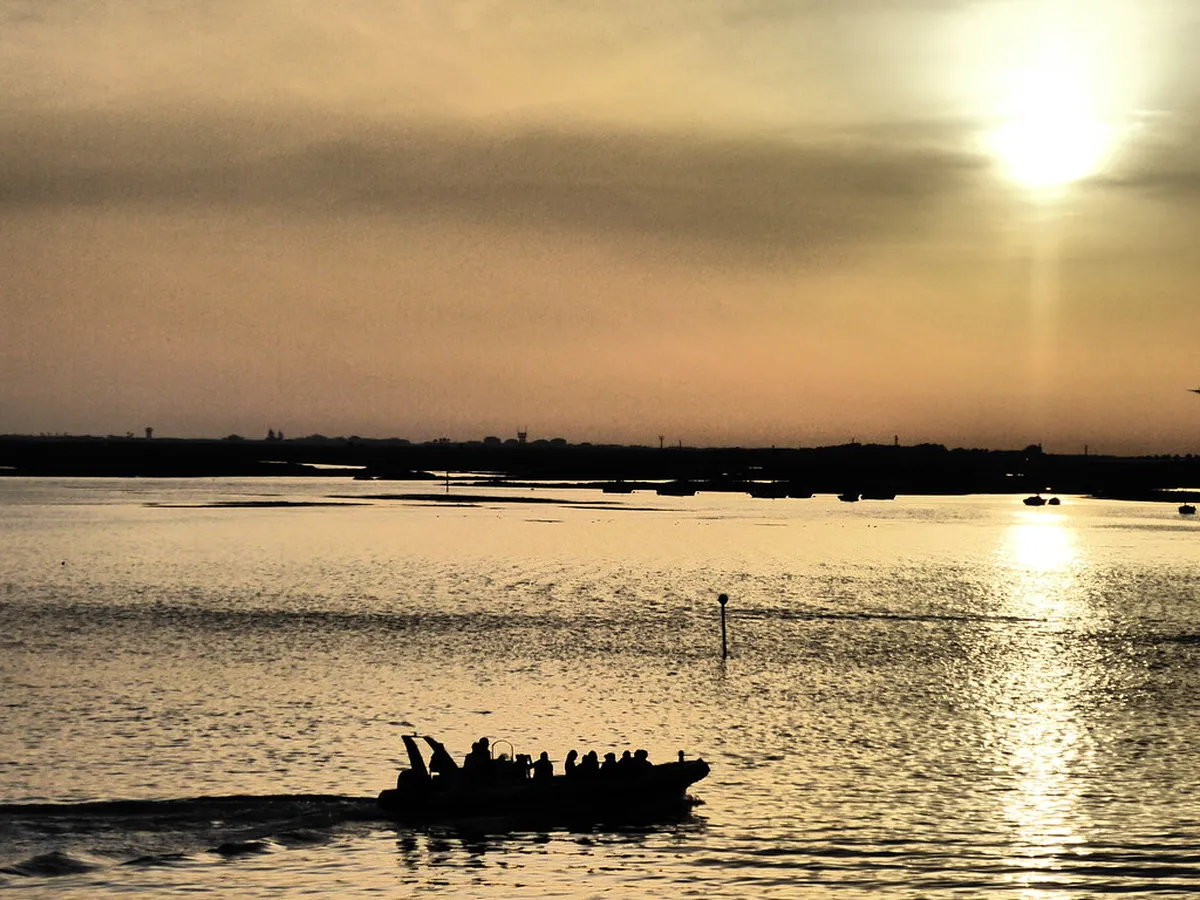
At low tide, the mudflats on the lagoon side are exposed and you can watch local fishermen harvesting shellfish using traditional hand tools. This is an everyday scene for Faro residents that most tourists miss entirely because they never cross to the north side of the island. The lagoon side also offers the best sunset viewpoint on the island. In the late afternoon, position yourself on the lagoon shore with Faro's city skyline in front of you. As the sun drops, the steeples of the Old Town and the water tower glow orange across the water — a view no competitor guide has thought to recommend specifically.
Beach Facilities and Accessibility
Praia de Faro holds Blue Flag status, certifying water quality and beach safety standards. Lifeguards are stationed at the central sections of the beach during the official summer season (June to September). Public toilets and showers are located near the main bridge entrance and are free to use. The beach is wheelchair accessible via ramps at the main entrance — the hard-packed sand near the bridge is manageable, though the softer sections further east are more difficult.
Sunbeds and sunshades rent for approximately €15 to €20 per pair per day. The main zone of rental stalls is within a short walk of the bus stop. If you want shade without the rental fee, bring your own umbrella — the beach is wide enough that you will not be crowded out. There are no cash machines on the island, so withdraw money in Faro before you cross.
Best Restaurants and Beach Bars
Fresh grilled fish is the default order on the island. Most of what you eat here is caught that morning. Restaurante Ze Maria and Restaurante O Rui both sit close to the bridge and serve straightforward Portuguese seafood at honest prices — expect to pay €12 to €18 for a main course. Wax Restobar has a terrace facing the ocean and is the go-to spot for cocktails at dusk, when the evening crowd starts to arrive.
Prices at island restaurants run slightly higher than in the city, partly because of the logistics of supplying a small island and partly because of the location premium. That said, the gap is not dramatic. A full meal with wine for two typically costs €35 to €55. For nightlife beyond the island, our Faro nightlife guide covers the city options after the beach bars close.
Where to Stay on the Island
Staying on the island is a niche choice that suits surfers, solo travelers, and anyone who wants to be on the sand before the day-trippers arrive. Options include social hostels, small guest houses, and short-term apartments. Wax Hostel overlooks the Ria Formosa and has free private parking — a significant perk given the island's parking situation. Apartamentos Barracuda suits travelers who want more space and self-catering facilities.
The proximity to the airport is the biggest practical advantage of staying on the island. A taxi from Ilha de Faro to the terminal takes less than five minutes. Plane noise is audible during the day, but most visitors find the beach access more than compensates. For a broader comparison of the city's accommodation zones, see our guide on where to stay in Faro.
Top Excursions and Nearby Attractions
Boat tours depart from the lagoon side of the island to the more remote barrier islands of the Ria Formosa. The Ria Formosa boat tours to Ilha Deserta are consistently rated among the top experiences in the region. Ilha Deserta has no permanent facilities apart from one restaurant — Estaminé — and pristine beaches that never get crowded. The Cabo de Santa Maria, the southernmost point of Portugal, is a 2km walk from the Ilha Deserta landing point along a wooden boardwalk through untouched dunes.
Ilha da Culatra is another option, reached by ferry from Olhão or on seasonal tourist services from Faro. It has two small fishing villages, Culatra and Farol, connected by a beachside footpath. There are no cars or paved roads on the island. If you want to combine a full day of island-hopping, planning your best day trips from Faro in advance will help you fit multiple stops into one excursion. The Faro Old Town is only a short taxi or bus ride away and worth a morning visit before you head to the beach.
Frequently Asked Questions
Is Ilha de Faro worth visiting?
Yes, it is absolutely worth visiting for its unique dual-sided nature and easy access from the city. You can enjoy both the wild Atlantic waves and the calm Ria Formosa lagoon. It offers an authentic local vibe that is often missing in larger resort towns.
How do I get from Faro city to the beach?
The easiest way is taking the Próximo Bus 16 from the city terminal. It runs frequently and stops at the airport before reaching the beach bridge. Alternatively, a seasonal ferry operates from the old town pier during the summer months.
Can you swim at Praia de Faro or is it just for surfing?
You can definitely swim at Praia de Faro on both the ocean and lagoon sides. The lagoon side is especially popular for families because the water is very calm and shallow. Surfers typically stick to the ocean side where the waves are more consistent.
Is there free parking at Ilha de Faro?
There is some free parking on the island, but it fills up very quickly during the summer. We recommend using the large dirt lot located just before the bridge. From there, you can walk across or take a short shuttle bus to the sand.
How long is the walk to the deserted end of Faro beach?
The walk to the eastern tip, known as Praia da Barrinha, takes about 45 to 60 minutes. It is a scenic trek along a wooden boardwalk through the dunes. You might want to book boat tours if you prefer visiting remote islands without the long walk.
Ilha de Faro rewards visitors who plan ahead and look beyond the central cluster of sun-loungers. Arrive before 10:00 to beat the bridge bottleneck, spend time on both the ocean and lagoon sides, and walk east if you want quiet. The combination of easy city access, two contrasting water environments, and a working natural park makes it one of the most interesting beach destinations in the Algarve.
For the full city overview, see our guide to our complete Faro guide. Pair this with our Ria Formosa boat tours and Ria Formosa Natural Park guides.
 Faro Old Town Walking Guide (2026)May 26, 2026