

Lisbon Buses and Carris Guide: Routes, Tickets, Tips (2026)
Plan lisbon buses carris guide with top picks, neighborhood context, timing tips, and practical booking advice for a smoother trip.
On this page
Lisbon Buses Carris Guide
Navigating Lisbon's hilly streets is far easier once you understand how Carris works. Carris is the city's main surface transport operator, running hundreds of bus routes, five tram lines, and three historic funiculars. Everything runs on the same Navegante ticketing system, so one card covers the whole network.
This guide covers the full picture: ticket prices, how to load and use a Navegante card, day pass options, monthly passes for residents, and the practical details that save you money and frustration. We also include the Carris Museum for anyone who wants to understand the history behind those famous yellow vehicles.
For a broader overview that puts buses in context alongside the metro, ferries, and trams, see the Lisbon transport guide on this site.
First Things First – The Transportation Network
Lisbon's public transport is built around four operators that share a common ticketing platform. Carris handles surface transport — buses, trams, and funiculars. The Metro de Lisboa runs four underground lines (Blue, Yellow, Green, Red). CP (Comboios de Portugal) operates suburban trains to Sintra, Cascais, and the Azambuja line. Transtejo and Soflusa run the river ferries crossing the Tagus. You can find comprehensive route information and real-time tracking on the official Carris website and metro details on Metropolitano de Lisboa.

The integration means a single Navegante card works on all of them. You tap once per journey and the right fare is deducted automatically. This is far more convenient than buying separate tickets for each mode of transport.
Carris buses are identified by their bright yellow color. Most routes run from around 06:00 to midnight. Major corridors like the 728 (eastern to western waterfront) run every 10 to 15 minutes during the day. Night bus services cover key routes after midnight on weekends.
If you arrive by ferry from across the Tagus, the Lisbon ferries guide explains how to connect directly to Carris buses at the terminal. The two networks are designed to interlock at waterfront hubs like Cais do Sodré and Terreiro do Paço.
Single Journey Tickets – Your Options Explained
There are two main ways to pay for a single trip. The standard single ticket (Carris/Metro) costs €1.85 when loaded on a Navegante card, or €1.66 when you use Zapping credit — Lisbon's term for pre-paid balance. Tram tickets bought directly from the driver cost €3.10, nearly double the card price. Bus tickets bought on board also carry a premium at €2.10 per trip.
The standard Carris/Metro single ticket is valid for 60 minutes from first validation. Within that window you can make unlimited journeys on Carris buses, trams, and funiculars. You can also use it for one metro leg, but you cannot re-enter the metro system a second time on the same ticket.
Ferry crossings are priced separately: the popular Cais do Sodré to Cacilhas route costs €1.50 each way. There are no return tickets, so budget for two single fares if you plan a round trip. CP suburban trains start at €1.45 for one zone and €1.75 for two zones, also loaded onto a Navegante card.
The Navegante Occasional Card – Truly The Tourist's Best Friend
The Navegante Occasional Card costs €0.50 and is valid for one year from purchase. You buy it at any metro station ticket machine or authorized agent. Once you have the card, you can load it with Zapping credit or a day pass whenever you need it. The card itself is reusable — top it up every time you visit Lisbon.
Zapping top-up amounts run in steps: €3, €5, €10, €15, €20, €25, €30, €35, and €40. For a weekend visit with a few rides per day, €10 is usually enough. For a three-day stay with suburban day trips to Cascais or Sintra, €20 covers most travelers comfortably. A full week of heavy use typically needs €30 to €40.
Always validate your card on the yellow reader when boarding. The card must be tapped at the start of every journey, even if you are transferring between two Carris buses within the same hour. Ticket inspectors board randomly and the fines are not negotiable.
A detailed Navegante card guide on this site covers top-up locations, zapping vs. day pass trade-offs, and what to do if your card runs out mid-journey.
The Zapping One-Operator Rule: What First-Timers Miss
This is the most common misunderstanding about Zapping credit. Many visitors assume the 60-minute validity works like a London Oyster transfer — one fare covers a metro leg plus a connecting bus. It does not work that way. With Zapping, each operator change triggers a new fare deduction. If you take the metro from Oriente to Baixa-Chiado and then board a Carris bus, you are charged twice: once for the metro (€1.66) and once for the bus (€1.61).
The 60-minute window applies within a single operator's network only. On Carris buses and trams you can hop on and off any route freely during the hour. On the metro, Zapping covers a single journey — you cannot re-enter the metro on the same deduction after exiting.
The standard Carris/Metro single ticket (€1.85) does allow metro-to-bus transfers within 60 minutes, but only for one metro trip. If your itinerary involves frequent metro-to-bus switches throughout the day, a day pass is almost always better value than Zapping alone. Running three separate metro+bus trip pairs costs around €11.10 in Zapping charges — the same as a full Carris/Metro/CP day pass.
With Zapping credit, each operator change triggers a separate fare deduction — the 60-minute transfer window only applies within a single operator's network (e.g., hopping between Carris buses). If your day involves three or more metro-to-bus trip pairs, a day pass at €6.40 is almost always cheaper than paying Zapping per journey.
Day Pass Options: Maximum Flexibility
If you plan to take more than three or four journeys in a day, a day pass outperforms individual Zapping deductions. The basic 1-Day Travel Card costs €6.40 and covers Carris and the metro for 24 hours from first validation. You can spread that 24-hour window across two calendar days if you start late in the afternoon.
Enhanced day passes cover more of the network at a higher price point. The Carris/Metro 1-Day pass costs €7.00 and is the right choice for anyone staying in central Lisbon. The Carris/Metro/Transtejo (Cacilhas) 1-Day pass costs €10.00 and adds ferry access, ideal for a day across the river in Almada. The Carris/Metro/CP 1-Day pass at €11.00 is the best deal if you plan a day trip to Sintra or Cascais — the train alone would cost €4+ each way.
Day passes are available at metro station ticket machines. The interface runs in English and Portuguese. Buying at the machine is faster than queuing at a staffed counter, and the machines accept both cash and card.
Payment Options: Cards, Contactless, and Cash
Since 2023, Lisbon's buses, trams, and metro gates accept contactless payment directly from a debit or credit card, smartphone, or smartwatch. You tap the same yellow validator as a Navegante card. This is useful as a backup when your Navegante credit runs out unexpectedly.

Note that CP suburban trains do not have contactless technology at the time of writing in 2026. You must buy a CP train ticket at a station before boarding. The ticket is loaded onto a Navegante Ocasional card, so you still need the €0.50 card if you plan to use the train network.
Paying cash on board a Carris bus costs €2.10 per trip compared to €1.61 with Zapping. Over a week of daily travel, that premium adds up to several euros. Always load your card in advance at a metro station machine, a Payshop kiosk, a CTT post office, or a MOB store rather than relying on the driver.
Monthly Passes for Lisbon Residents
Residents and long-stay visitors should look at the Personalized Navegante card, which unlocks monthly passes at fixed rates. The Metropolitan Navegante covers the entire Lisbon metropolitan area and costs €40 per month for adults. Students under 23 pay €10 per month, and residents over 65 and children under 18 travel free.
The Municipal Navegante is restricted to Lisbon, Amadora, Loures, Oeiras, and Odivelas and costs €30 per month. If you live and work within those five municipalities without needing suburban trains, this is the more economical option.
Getting a Personalized Navegante requires a passport-sized photo, a valid passport or EU ID, and a Portuguese NIF tax number. The standard application process takes 10 to 14 days and costs €7. An express service (€12) at Cais do Sodré station and Marquês de Pombal Metro Station can produce a card the same day or next business day.
Carris service centers at Santo Amaro (Rua 1º de Maio, 101) and Arco Cego (Av. Duke of Avila, 12) are both open weekdays 08:00 to 19:00. The self-service Kiosk VIVA at Fertagus Pragal station creates a card in one minute and operates 05:00 to 02:00 daily — useful for travelers with early or late schedules.
Where Your Navegante Card Works – A Comprehensive Network
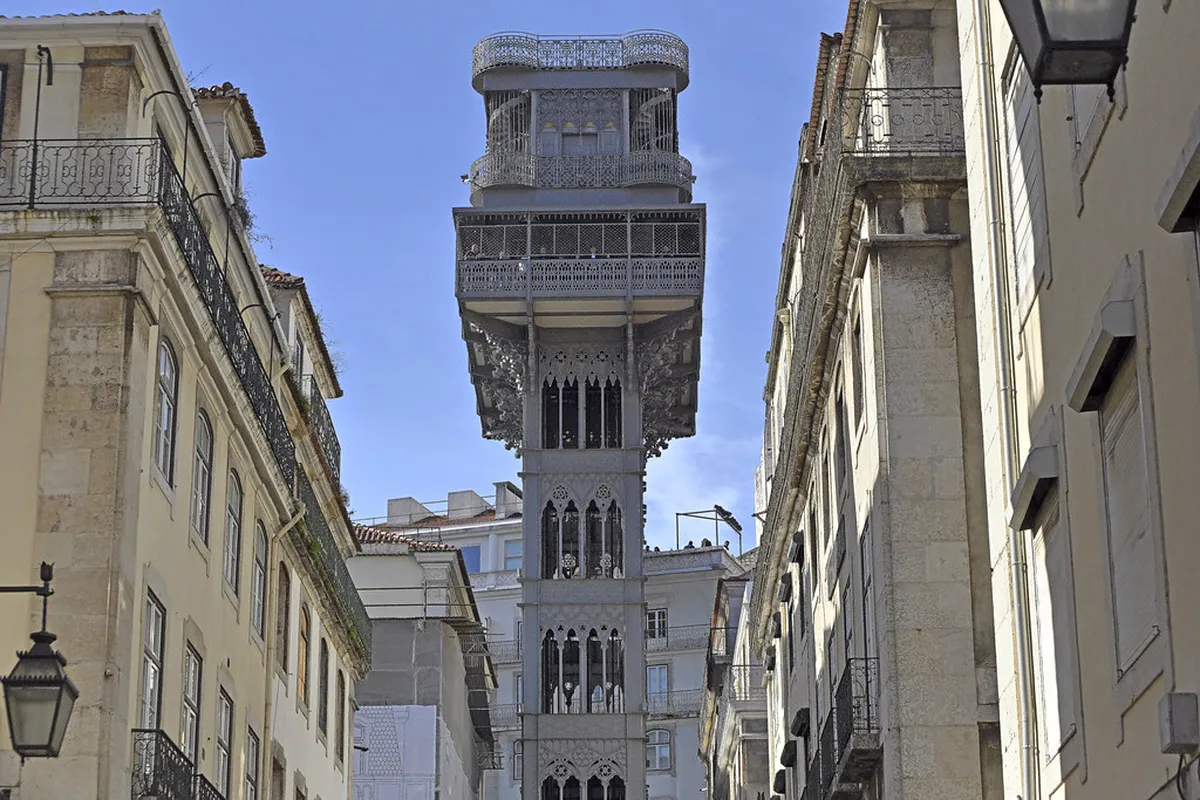
The Navegante Occasional Card is accepted across Lisbon's entire urban transport network. All four metro lines, every Carris bus route, trams 15E and 28, and all three funiculars (Ascensor da Bica, Ascensor da Glória, Ascensor do Lavra) fall under the same system. The Elevador de Santa Justa, the Neo-Gothic iron lift that connects Baixa to Chiado, is also covered.
Beyond the city, the card works on Transtejo and Soflusa ferries to Cacilhas, Trafaria, Porto Brandão, Seixal, Barreiro, and Montijo. South of the Tagus it also covers Fertagus trains, Metro Sul do Tejo, and TBC Barreiro buses. In the Cascais corridor, MobiCascais buses extend the card's reach to the coastal towns.
For suburban rail to Sintra and Cascais you will need to load a CP ticket rather than just Zapping. This is the one area where the card acts as a container for a separate ticket product rather than a universal tap-and-go fare. Buy these tickets at CP ticket offices or self-service machines inside the train stations before you board.
Carris Museum (Public Transport Museum)
The Carris Museum sits in the Alcântara district inside a working transport depot at Rua 1º de Maio. It traces the history of Lisbon's surface transport from horse-drawn carriages through electrified trams to modern low-floor buses. Vintage trams are displayed in full working condition inside the original depot halls.
Entry costs around €4.50. The museum is closed on Sundays and public holidays. It is a worthwhile stop on a rainy afternoon and a genuine contrast to the typical tourist circuit. The small gift shop sells transport-themed souvenirs that are difficult to find elsewhere in the city.
You can reach the museum by bus — several Carris routes stop nearby in Alcântara. Full details on opening times and current ticket prices are listed on the official museu.carris.pt website. The museum is also close to the LX Factory market area, so it combines well with a Sunday afternoon stroll (though check the museum's closure on Sundays and visit the market instead on that day).
Insider Tips for Smart Travel
Tram 28 is one of Lisbon's most photographed routes, but it is also one of the most crowded. Pickpockets work the tram regularly, particularly on the Alfama stretch. Keep valuables in a front pocket and avoid holding a phone out at open windows. If your goal is transport rather than the experience of riding the tram itself, bus 737 covers much of the same corridor with fewer tourists and less congestion.
Rush hours run 08:00 to 09:30 and 17:00 to 19:30. Tram 28 and bus routes through the historic center become very crowded during these windows. If you are heading to Belém for the monuments, take the 15E tram or bus 714 before 09:00 or after 10:30 to avoid the peak.
The hop-on hop-off tourist buses operate on a separate network and do not accept Navegante cards. They typically cost €15 to €25 per day. The regular Carris network covers most of the same landmarks at a fraction of the price — the 728 and 714 routes between them reach nearly every major site from Oriente to Belém.
Download the Carris app or use Citymapper for real-time arrival data. Both apps work in English and pull live GPS data from the buses. This prevents wasted time at stops where a route is running 10 to 15 minutes late due to city-center traffic.
Tram 28 is a known pickpocket hotspot, especially on the Alfama stretch — keep valuables in a front pocket and avoid holding your phone out at open windows. Bus 737 covers much of the same corridor with fewer crowds if you're after transport rather than the iconic tram experience.
Getting Around Lisbon with Buses: Practical Notes
Children under four travel free on all Carris services. Carry documentation to prove your child's age if an inspector asks. Riders with reduced mobility should look for the blue accessibility symbol at bus stops — newer Carris buses have low floors and space for wheelchairs. Accessibility is improving but not yet universal across the entire fleet.

For late-night travel after buses stop running, Lisbon taxis and ride-hail apps like Uber and Bolt fill the gap. Bolt is typically cheaper; Uber is more consistent in surge pricing. Both apps work well throughout the city.
E-scooters and e-bikes from Lime, Bird, and Bolt complement the bus network for short gaps between stops. The Gira bike-share scheme has dedicated docking stations at many metro exits. These micro-mobility options are billed per minute via their respective apps and link to a credit or debit card directly.
Mastering the Carris network takes one day of practice. By your second morning in Lisbon you will know which line to take and when to tap your card. The yellow buses offer a ground-level view of the city that the metro simply cannot match — use them as a travel tool and as a way to see the neighborhoods between your destinations.
Frequently Asked Questions
Which lisbon buses carris guide options fit first-time visitors?
First-time visitors should prioritize the Navegante occasional card with zapping credit. This option offers the most flexibility for exploring various neighborhoods without worrying about specific ticket types. It works across buses, trams, and the metro for a seamless experience.
How much time should you plan for lisbon buses carris guide?
You should allow at least thirty minutes for most cross-city bus journeys in Lisbon. Traffic can be unpredictable, especially in the historic center during peak tourist hours. Always check a real-time app to see the most accurate arrival times for your specific route.
What should travelers avoid when planning lisbon buses carris guide?
Avoid buying tickets directly from the bus driver as they are much more expensive than pre-paid options. You should also avoid traveling during the evening rush hour when buses are very crowded. Never forget to validate your card upon boarding to avoid potential fines.
Is lisbon buses carris guide worth including on a short itinerary?
Yes, using the bus is essential for short itineraries to reach attractions like Belém quickly. It saves you from long walks and allows you to see more sites in a limited timeframe. The bus network is often more direct than the metro for many popular tourist spots.
Understanding the Carris bus network is the key to a successful and stress-free visit to Lisbon. By choosing the right tickets and planning your routes, you can navigate the city like a local.
Whether you are visiting historic museums or relaxing in a park, the yellow buses are your most reliable companions. We hope this guide helps you enjoy every moment of your Portuguese adventure.
Safe travels as you explore the vibrant streets and stunning viewpoints of this magnificent capital city. Remember to keep your Navegante card ready for your next big discovery.

 Lisbon To Coimbra By Train Travel GuideMay 26, 2026