Lisbon Funiculars and Santa Justa Lift Guide (2026)
Plan lisbon funiculars and santa justa lift with top picks, neighborhood context, timing tips, and practical booking advice for a smoother trip.
On this page
Lisbon Funiculars And Santa Justa Lift
Lisbon is a city built on seven steep hills that offer breathtaking views at every single turn. The historic funiculars and the famous iron lift have solved the problem of climbing those slopes since the late 19th century. Four of these machines survive today and are officially classified as National Monuments. Together they form a living transport network that doubles as one of the most scenic rides in Portugal.
This guide covers the Santa Justa Lift and all three surviving funiculars — Glória, Bica, and Lavra — with practical ticket prices, route details, and timing advice for 2026. It also covers the newer free lifts and the recently reopened Graça funicular, so you can plan your day without wasting time or money on avoidable queues.
The Engineer Behind Them All
Every historic funicular and lift in Lisbon traces back to one man: Raoul Mesnier Ponsard (1848–1914), a French-born engineer based in Porto. He was commissioned to solve the city's steep accessibility problem during its rapid urban expansion in the 1870s and 1880s. Ponsard designed all four surviving monuments as well as similar projects in Braga, Nazaré, Funchal, and Porto.
A common myth claims Ponsard worked directly under Gustave Eiffel. No written evidence supports this. What is documented is that Ponsard studied in Paris, that Eiffel spent time in northern Portugal between 1875 and 1877, and that Ponsard was clearly familiar with Eiffel's iron construction methods. The neo-Gothic decorative vocabulary he brought to the Santa Justa Lift shows that influence most clearly.
The original funiculars ran on a water-counterbalance system: the upper cabin's tank filled with water, increasing its weight and pulling the lighter lower cabin upward. Water shortages made this unreliable, so the system shifted to steam in the 1890s and was fully electrified from 1912 onward. The electrical mechanism still drives the three surviving funiculars today.
Santa Justa Lift
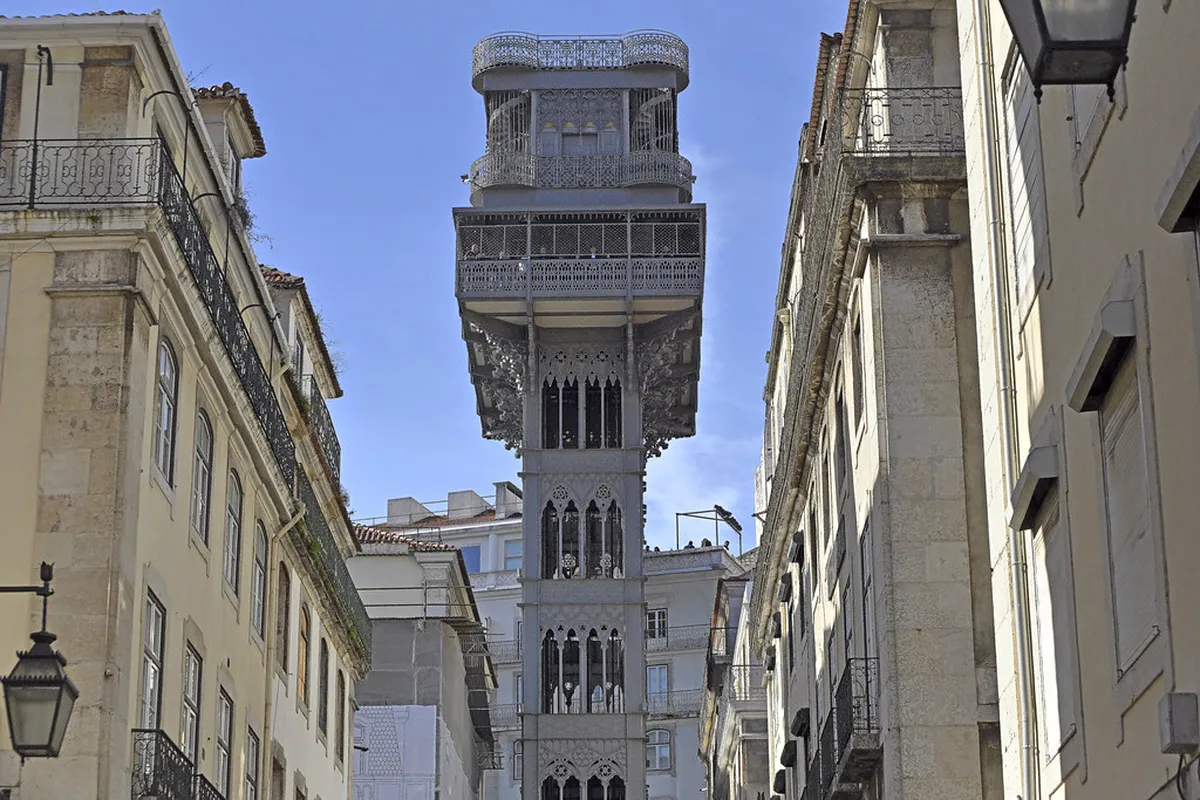
The Santa Justa Lift is the only vertical lift in the group and the most visited. It opened in 1902 on Rua de Santa Justa in the Baixa district and rises 30 metres to a walkway that connects to the Largo do Carmo in Chiado. Built in cast iron with neo-Gothic lacework and wood-panelled cabins, it was classified as a National Monument in 2002. The two original cabins still operate using the mechanism Ponsard designed — including a parachute braking system that has never been deployed in an emergency.
In 2026 a single-ride ticket bought at the machine costs €5.80. A Viva Viagem card loaded with Carris credit brings that down to roughly €1.65 per ride, the standard zapping fare. Queues at the ground-floor entrance can stretch to 45 minutes or more between 10:00 and 17:00 from April through October. Arriving before 09:00 or after 18:00 cuts that wait to under five minutes.
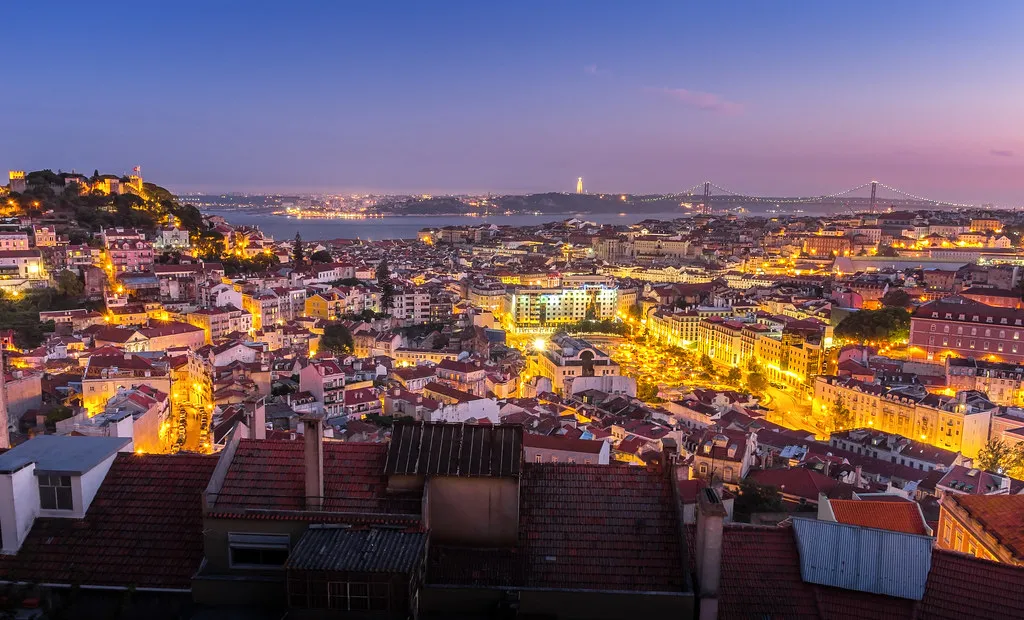
The lift connects Rua do Ouro (Baixa) to the upper walkway overlooking the rooftops toward the Tagus, the castle hill, and Eduardo VII park. From the walkway a short pedestrian bridge leads directly into Largo do Carmo, where the roofless Gothic Carmo Convent stands — its vaulted arches destroyed in the 1755 earthquake and never rebuilt, now housing an archaeological museum.
You can check the Lisbon's other tram routes for alternative ways to reach Chiado if the lift queue is too long. If you only want the viewpoint and not the ride, see the free access hack described below.
The Free Santa Justa Viewpoint Hack
Most visitors queue for the lift to reach the upper walkway, but there is a completely free alternative that almost no one uses. Walk up to Largo do Carmo in Chiado — reachable on foot from Rua Garrett or by the free Carmo Lift at Rua do Carmo 79 — and step onto the Carmo Terraces. The walkway connects directly from this side at no charge. You reach the same upper platform with the same panoramic view of Baixa and the river without paying €5.80 or waiting in line.
The catch: you cannot descend in the lift cabin from the top without a valid ticket. The free access only works for the viewpoint itself. If you want the full experience of riding the original wood-and-iron cabins up and down, buy the ticket. But for travellers on a tight budget or short on time, the Carmo Terraces approach gives you the view in under ten minutes from Chiado.
The free Carmo Lift at Rua do Carmo 79 takes you straight up to the Carmo Terraces, where you can step onto the Santa Justa upper walkway at no charge. This side entrance is almost always queue-free, even in peak season.
Glória Funicular
The Glória funicular opened in 1885 and runs along Calçada da Glória, a 265-metre route that curves slightly as it climbs — giving it an average incline of around 17 percent. The lower terminus is at Praça dos Restauradores, steps from the Hard Rock Café and the Restauradores Metro station. The upper terminus drops you at Rua de São Pedro de Alcântara in Bairro Alto, right next to the São Pedro de Alcântara viewpoint garden with its fountain and benches overlooking the castle hill.
Tickets follow the same Carris pricing as the other funiculars: €3.90 for a single ride bought onboard, or the standard Viva Viagem zapping fare of around €1.65 if you tap in with a loaded card. Operating hours in 2026 run approximately 07:30–23:55 Monday to Friday and 09:00–23:55 on weekends, though you should verify on the Carris website before visiting since service can be suspended for maintenance.
In September 2025 the Glória funicular was temporarily suspended after a serious accident in which a cabin derailed and struck a building, resulting in fatalities. The investigation focused on cable failure and maintenance gaps. By early 2026 the line had resumed service following a full safety inspection and cable replacement. If you are visiting in 2026, check the Carris service status page on the day of your visit to confirm the line is running.
The Glória funicular resumed service in early 2026 after the September 2025 derailment accident. Always check the Carris app or website for current service status before making the trip to Praça dos Restauradores — the line can be suspended for ongoing maintenance without advance notice.
Bica Funicular
The Bica funicular is the most photographed of the three. It opened in 1892 and runs along Rua da Bica de Duarte Belo, a narrow flower-lined street in the Madragoa neighbourhood between Rua de São Paulo (lower terminus) and Largo do Calhariz in Bairro Alto (upper terminus). The route climbs the Santa Catarina hill. The two small cabins pass each other at the midpoint of the track, and because they move slowly, passengers sometimes exchange words through the windows — a detail unique to this line.
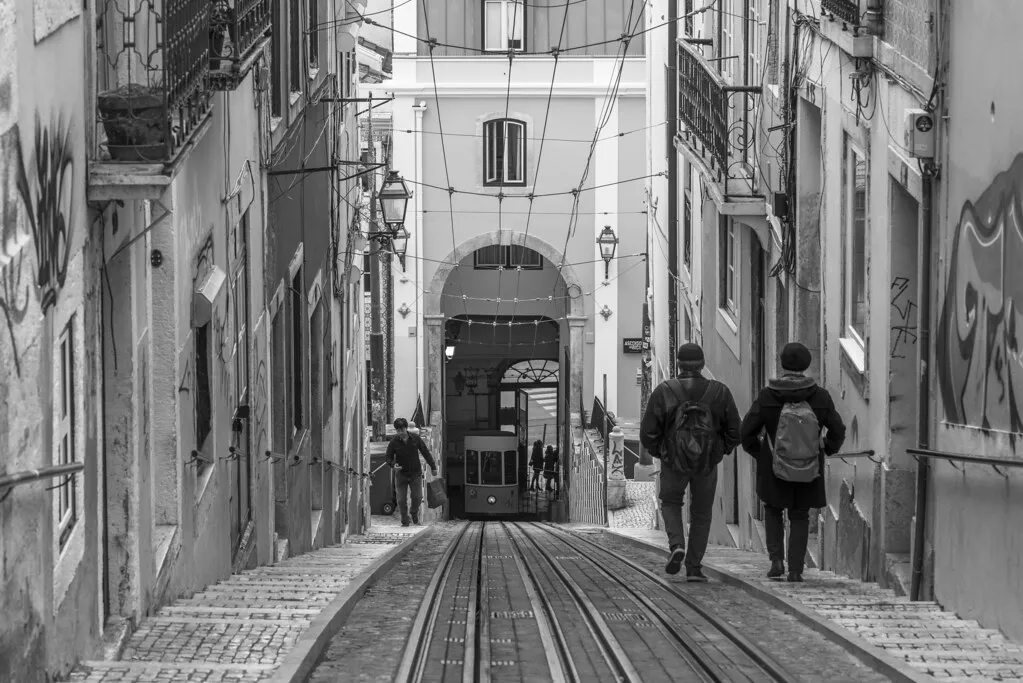
The Art Nouveau entrance at the São Paulo street terminal is tiled inside and worth a few minutes of attention on its own. In 2010 the street artist Alexandre Farto (known as Vhils) wrapped one of the cabins in a reflective metal film as part of the Carris "Art in Movement" programme. In 2013 a second cabin received a coating printed with a pattern based on traditional Portuguese cobblestone. The Bica funicular is also by Ponsard and follows the same Carris fare structure as the other lines.
To reach the lower terminus, walk west along Rua de São Paulo from Cais do Sodré station. The street is about a ten-minute walk. From the upper terminus at Largo do Calhariz you are a short walk from the Bairro Alto bars and the Miradouro de Santa Catarina viewpoint, which faces directly over the river toward the bridge.
Lavra Funicular
Inaugurated in 1884, the Lavra funicular is the oldest surviving funicular in Lisbon and the steepest of the four national monument lifts, with an average incline of 22.9 percent. It connects Largo da Anunciada (lower terminus, off Rua das Portas de Santo Antão) to Rua Câmara Pestana on the Santana hill. The lower street is well known for its Portuguese seafood restaurants and the nearby Coliseu and Politeama concert halls, which makes it easy to fold into a visit to that part of the city.
The Lavra gets far less tourist traffic than the Glória or the Bica. It does not terminate at a famous viewpoint or a popular neighbourhood bar scene, which is exactly why it appeals to travellers who want to experience the funicular as a working piece of city infrastructure rather than a tourist spectacle. There is a small miradouro near the upper terminus that offers an unobstructed view of the city from an angle most visitors never see.
Same Carris fares apply here. The line typically operates from around 07:50 to 19:55 on weekdays, with shorter hours on weekends. It sees very little queue at any time of day and is the best option if you simply want to ride a funicular without waiting.
Newer Free Lifts Across the City
Lisbon has invested in several modern public lifts since 2013 to improve accessibility on its steepest streets. All of them are free of charge. The Castelo de São Jorge–Baixa system consists of two connected lifts: the first is at Rua dos Fanqueiros 178 and carries passengers up to Rua da Madalena; the second, in the former Chão do Loureiro market building (now a car park), continues to Costa do Castelo near the castle gates. Together they spare you most of the climb to São Jorge Castle.
The Santa Luzia Lift in Alfama connects the Santa Luzia Viewpoint to Rua Norberto de Araújo and opened in June 2015. The Carmo Lift at Rua do Carmo 79 links the lower Chiado shopping street to the Carmo Terraces at the top, and was restored in 2015 alongside the terraces. In 2024 the city reopened a brand-new Graça funicular, connecting the Mouraria neighbourhood (lower terminus, Rua dos Lagares) to the Miradouro Sophia de Mello Breyner Andresen in Graça. This short line carries 14 passengers, runs on a single track, and revives a connection that was dismantled in 1909. The Graça miradouro at the top is one of the best panoramic viewpoints in the city and sees far fewer visitors than the Portas do Sol or São Pedro de Alcântara.
You can use the Lisbon transport guide to map these free lifts alongside your funicular visits and avoid unnecessary backtracking.
Tickets and Practical Planning for 2026
The Glória, Bica, and Lavra funiculars are operated by Carris and accept the same payment methods as the trams and buses. A single ticket bought onboard from the driver costs €3.90. Tapping with a Viva Viagem card loaded with Carris credit costs around €1.65 per journey. The Lisbon Card covers unlimited rides on all three funiculars and is worth buying if you plan to ride trams and the Metro as well. Cards are sold at airport arrivals, at the Lisboa Welcome Centre on Praça do Comércio, and at most Metro stations.
The Santa Justa Lift uses a separate Carris ticket machine at the entrance. The single-ride fare is €5.80 in 2026. Viva Viagem zapping applies here too at the standard rate. The lift operates from approximately 07:00 to 23:00 in summer (May–October) and 07:00 to 21:00 in winter. These hours can shift; check the Carris website on the day.
Use a Lisbon Viva Viagem card if you plan to ride more than two lifts or funiculars on the same day — the savings are immediate. Buy tickets individually only if you are riding one line as a one-off experience. For the Santa Justa, arrive before 09:00 or after 18:30 to avoid peak queues. For the Glória and Bica, weekend mornings before 10:00 are the least crowded.
Always confirm service status on the Carris app or website before heading out, especially for the Glória line following the 2025 accident. You can also check the Lisbon's Carris bus network for alternative routes if a funicular is suspended on the day of your visit.
Frequently Asked Questions
Which lisbon funiculars and santa justa lift options fit first-time visitors?
First-time visitors should prioritize the Santa Justa Lift for its views and the Bica Funicular for its classic charm. These two offer the most iconic photo opportunities. You can find more tips on the Portugal Wander blog to plan your route.
How much time should you plan for lisbon funiculars and santa justa lift?
Plan for at least two hours if you want to ride the main lifts and take photos. Queues at Santa Justa can add an extra hour during peak tourist seasons. Early morning visits are always the most efficient choice for travelers.
What should travelers avoid when planning lisbon funiculars and santa justa lift?
Avoid buying individual tickets from the driver because they cost nearly double the price of a prepaid card. Do not wait in line for Santa Justa if you only want the view. You can walk to the top platform for free from Chiado.
The historic funiculars and the Santa Justa Lift remain the most charming way to navigate the steep hills of Lisbon. By using a transport card and arriving early, you can enjoy these national monuments without the stress of long queues. These mechanical marvels offer a perfect blend of practical transport and living history for every visitor to the city.