Lisbon Metro Guide: Lines, Tickets and Prices (2026)
Plan lisbon metro guide with top picks, neighborhood context, timing tips, and practical booking advice for a smoother trip.
On this page
Lisbon Metro Guide
The Lisbon Metro is the fastest and cheapest way to move around the city. Four color-coded lines cover 46 kilometres of track across 55 stations, running from 06:30 to 01:00 every day of the year. During peak hours trains run every 5 to 7 minutes; off-peak and late at night expect 10 to 12 minutes between services.
This guide covers everything you need to know in 2026: ticket prices, the Navegante and Zapping options, major interchange stations, accessibility, and the one coverage gap that catches first-timers off guard. For a broader look at surface transport, see the getting around Lisbon.
Metro Tickets and Fares
Every passenger needs a Navegante card — a reusable plastic card that costs €0.50 at any station machine. You cannot share the card between two people; each traveler must have their own. The machines accept coins, notes, and bank cards, and display instructions in Portuguese, English, French, and Spanish.
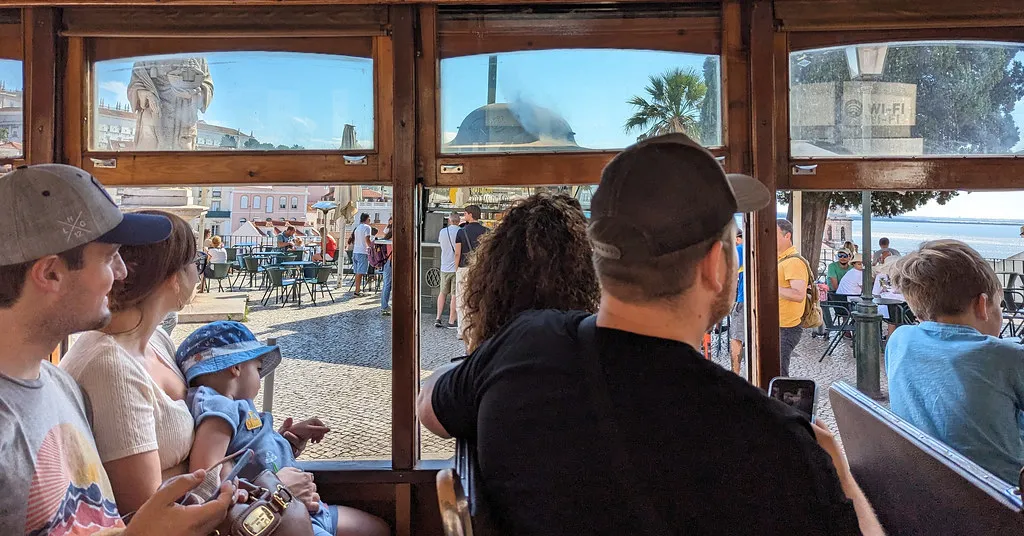
The 2026 fare options are straightforward. A single journey costs €1.90. If you load the card with Zapping credit (a prepaid balance from €3 to €40), each metro ride drops to €1.72 and each tram or bus ride to €1.35 — this makes Zapping the best-value choice for anyone making three or more trips a day. A 24-hour unlimited travel ticket costs €7.25 and covers the metro, all Carris buses, and the historic trams, though it does not cover the suburban trains to Sintra or Cascais.
Since 2026, contactless bank cards and mobile wallets work at the entry barriers. The contactless fare is €1.92 per journey — slightly above the Zapping rate but useful if you only need one or two rides. The Lisboa Card also grants free metro travel and is worth considering if you plan to visit multiple paid attractions in a single day.
Keep your Navegante card or receipt after validating it. You must touch out again when you exit — if you forget, you may be charged a penalty fare at the next validation. To check your remaining Zapping balance, insert the card into any station machine.
| Ticket Type | Cost (2026) | Best For |
|---|---|---|
| Single journey (standard) | €1.90 | One or two rides |
| Single journey (Zapping) | €1.72 | 3+ metro rides per day |
| Bus / tram (Zapping) | €1.35 | Surface transport with same card |
| Contactless bank card | €1.92 | Occasional visitors, no card needed |
| 24-hour unlimited pass | €7.25 | Full day of metro, bus and tram travel |
| Navegante card fee | €0.50 | One-time reusable card purchase |
Loading your Navegante card with Zapping credit cuts the metro fare to €1.72 and tram rides to €1.35. For any visit involving three or more journeys a day, Zapping beats a 24-hour pass until day two.
Navegante Card and the Zapping Ticket
The Navegante card can hold only one type of fare at a time: either single journeys, a 24-hour pass, or Zapping credit. Loading it with Zapping is the most flexible option because the same balance pays for the metro, buses, trams, and ferries across the entire metropolitan area. Zapping credit even works on the Cascais and Sintra suburban train lines, deducting €2.00 per train journey — a big advantage over a standard single metro ticket.
If you arrive at Lisbon airport and plan to explore the city plus take a day trip to Sintra, buy a Navegante with €15 of Zapping credit at the airport station machine. This covers your airport-to-city transfer, several days of city hops, and the return Sintra train without standing in separate queues. The credit stays valid for 12 months, so any leftover balance is not wasted.
The Navegante card guide goes deeper on the monthly and annual pass options, which are worth considering for stays longer than a week.
The Four Metro Lines
The Blue Line (Linha Azul) runs from Reboleira in the northwest to Santa Apolónia on the riverside. It passes through the heart of the tourist zone — Marquês de Pombal, Avenida, Restauradores, Rossio, Baixa-Chiado, and Terreiro do Paço — making it the line most visitors use most often. The train station at Santa Apolónia, departure point for long-distance Alfa Pendular services to Porto, is also on this line.
The Green Line (Linha Verde) forms a loop through the city center, sharing Baixa-Chiado with the blue line and terminating at Telheiras in the north and Cais do Sodré in the south. Cais do Sodré is the most important interchange outside the center: it connects to the Cascais suburban train and to the Cacilhas ferry. The Red Line (Linha Vermelha), the newest, is the one airport travelers use — it links Aeroporto directly to Oriente and São Sebastião, where it joins the blue line. The Yellow Line (Linha Amarela) runs north from Rato to Odivelas, serving mostly residential areas; tourists rarely need it except to reach Campo Grande for Lisbon Zoo or the city museum.
One coverage gap matters: the metro does not serve Belém, Alcântara, Estrela, or the highest streets of Alfama and Graça. For Belém, take the E15 tram from Cais do Sodré. For Alfama, ride to Santa Apolónia or Martim Moniz and walk. In those neighborhoods it is often quicker to go on foot than to loop back through the metro.
Major Stations Worth Knowing
Baixa-Chiado is the busiest tourist station. Blue line and green line trains both stop here, so it is the main interchange for the city center. The Baixa exit leads to Rua Augusta and the Santa Justa Lift; the Chiado exit delivers you — via a long escalator — to the Carmo Convent, Bairro Alto, and the top of the Santa Justa Lift. If your hotel is anywhere between Rossio and the waterfront, this is your home station.
Marquês de Pombal connects blue and yellow lines. It sits at the top of Avenida da Liberdade, within walking distance of Eduardo VII Park, and is the practical center of the northern tourist zone. Oriente on the red line is the gateway to Parque das Nações — the Oceanarium, Vasco da Gama mall, and long-distance coach and rail connections all cluster here. Cais do Sodré at the end of the green line is your jumping-off point for the Lisbon to Cascais train and the ferries south across the Tagus.
São Sebastião on the blue and red lines sits beside the Calouste Gulbenkian Museum. Campo Grande, where green and yellow meet, has a bus terminal with regional services to Óbidos and Ericeira. Rossio on the green line is the station for Sintra suburban trains — after your metro ride you walk straight into the old Manueline station building to board the train.
Accessibility: What the Maps Don't Show You
Not all Lisbon Metro stations have step-free lift access, and the gap is significant enough to plan around. Every station on the Red Line — including Aeroporto, Oriente, Alameda, and São Sebastião — has platform-level lifts. This means travelers using wheelchairs, heavy luggage, or pushchairs can use the entire red line without obstruction. The same applies to most newer stations built or refurbished after 2000.

The problem is concentrated on the older blue, green, and yellow line stations in the city center. Several of the busiest tourist stops — including Rossio, Terreiro do Paço, and some exits at Baixa-Chiado — lack lifts and rely on stairs or escalators only. Escalators fail occasionally, which can strand a heavy suitcase. Before traveling with reduced mobility, check the accessibility map on the Metropolitano de Lisboa website, which marks each station's lift status in real time.
All trains, regardless of line, carry priority seating clearly marked in yellow near the doors. These seats are reserved for pregnant passengers, elderly riders, people with disabilities, and adults with small children. During rush hour the carriages fill quickly — if you hold a priority seat entitlement, do not hesitate to ask. Equally, if you are occupying one, give it up when needed.
Bicycles are allowed on the metro outside of peak hours: before 07:30 and after 09:00 in the morning, and after 20:00 in the evening on weekdays. At weekends there are no peak restrictions. This opens up an itinerary where you cycle the flat Tagus waterfront and hop on the metro for the hilly sections inland — a combination none of the tourist leaflets spell out clearly.
Staying Safe on the Metro
Lisbon is one of Western Europe's safer capitals, but the metro carries the same pickpocket risk as any busy urban system. The highest-risk moments are boarding and exiting at crowded tourist stations — Baixa-Chiado and Marquês de Pombal in particular. Keep bags in front of you with zips closed, and avoid holding your phone near the closing doors where it can be snatched from outside the train.
Avoid displaying large amounts of cash or expensive cameras on the platform. If you need to check a map, step to one side at the exit rather than stopping in the flow of foot traffic. Most stations have CCTV coverage and emergency call buttons on the platforms; staff are present at larger hubs during operating hours.
Late at night, after 23:00, some smaller stations feel quiet. Choose carriages with other passengers and stay near the center of the platform. Lost property is handled at the Marquês de Pombal lost-and-found office — if something is taken or dropped, report it there on the same day.
Pickpocket risk peaks at Baixa-Chiado and Marquês de Pombal during boarding and alighting. Keep bags in front of you with zips closed, and avoid holding your phone near the closing doors where it can be snatched from outside the train.
Getting from the Airport by Metro
Lisbon Airport sits on the Red Line at the Aeroporto station, directly outside the arrivals hall. A single metro ride to the city center takes around 20 to 25 minutes to Baixa-Chiado. You will need to change lines once — typically at Alameda (green line) or São Sebastião (blue line) depending on your destination. The change takes 2 to 4 minutes and both interchange stations are clearly signed.
Buy your Navegante card at the machine before the barriers — you cannot board without it, and contactless payment is only available at the barriers themselves, not from a standing start. If you are traveling with a large wheeled suitcase and your hotel is in the Baixa area, note that the escalators and stairs at Baixa-Chiado can be awkward with bulky luggage. Oriente station, one stop before the airport on the red line, has full lift access and connects to taxis and Uber pickups in a wider covered area.
For onward travel from the city to day-trip destinations, see the Lisbon to Sintra train guide or the Lisbon to Cascais coastal train page. Both routes start from metro-connected mainline stations.
Practical Tips for First-Time Riders
The station art is genuinely worth slowing down for. The red line stations are the most striking, featuring large-scale tile panels and sculptural installations by contemporary Portuguese artists. Campo Grande has baroque-style azulejo panels; Cais do Sodré features scenes from Alice in Wonderland; Oriente is designed around light and steel. Budget five minutes at a new station before boarding — it costs nothing and many visitors miss this entirely.
Download the official Metropolitano de Lisboa app before you arrive. It shows real-time train arrivals, service alerts, and lift status for each station. The platform screens display the next two train departure times, but the app lets you plan ahead if there is a line disruption. Strikes do occur occasionally in Portugal — checking the app the night before a critical journey is a sensible habit.
The metro runs until 01:00, which is later than most tourists expect. Lisbon's nightlife in Bairro Alto and Cais do Sodré wraps up well after midnight, and you can use the metro for the return journey rather than paying for a late-night taxi. The last trains from Cais do Sodré on the green line depart just before 01:00 — check the departure boards at 00:30 to confirm the last service to your stop. For more on connecting with Lisbon buses for the final leg home, the Carris guide covers night bus options on routes the metro does not reach.
Frequently Asked Questions
Which lisbon metro guide options fit first-time visitors?
First-time visitors should focus on the Blue and Green lines, as they serve the most iconic historic districts like Baixa and Alfama. Using a 24-hour pass is the easiest way to explore without worrying about individual fares. You can find more details in our Lisbon transport guide.
How much time should you plan for the Lisbon Metro?
Most journeys between major tourist spots take between 10 and 20 minutes, including walking time within the stations. During peak hours, trains arrive every 3 to 5 minutes, making it the most efficient way to cross the city. Always allow extra time for transfers at busy hubs like Baixa-Chiado.
What should travelers avoid when planning a metro trip?
Avoid traveling during the morning and evening rush hours when trains are extremely crowded with local commuters. Do not leave your valuables in easily accessible pockets, as pickpockets often target distracted tourists. Also, remember that paper tickets can become demagnetized if kept near coins or cell phones.
Is the Lisbon Metro worth including on a short itinerary?
Yes, the metro is essential for short trips because it connects the airport directly to the city center in under 30 minutes. It allows you to maximize your sightseeing time by avoiding surface traffic and unpredictable bus schedules. Most major landmarks are located within a five-minute walk of a metro exit.
Mastering the Lisbon Metro is the key to unlocking the full potential of your visit to this vibrant and historic European capital. By following the tips in this lisbon metro guide, you can navigate the city like a local while saving both time and money. Whether you are heading to a museum or a riverside park, the underground network offers a safe and efficient path to your next adventure.
 Free Things To Do In Guimaraes Travel GuideJune 8, 2026
 7 Essential Things to Do in Anjos, LisbonMay 29, 2026